E9: "Attention is the New Currency" | Brendan Short
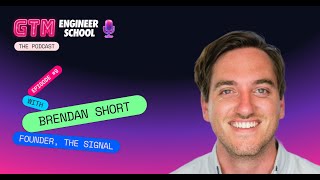
Brendan Short explains GTM engineering as a cross-functional role that replaces the old SDR playbook with AI, rich signals, and first-party data. He builds systems in client stacks over three months, then hands them off, and advocates defaulting to AI as a thought partner using tools like Clay and ChatGPT.
Chapters
Foreign.
What's up, GTM builders? It's Jared and Matteo again, and welcome to the GTM Engineer School Podcast. We're in just 30 minutes. We interview top GTM engineers to uncover principles, workflows and tools in this emerging discipline. Our guest today is none other than Brendan Short, creator of the Signal, the substack separating GTM tech signal from noise. Brendan is easily one of the most distinguished and articulated voices in GTM engineering. His essays when should you hire a GTM Engineer? And the AI first sequences 2.0 manifesto are absolutely must reads for modern operators who are embracing go to market engineering. He believes attention is the new currency in the AI era and we couldn't agree more with him. On top of regularly publishing the signal, Brennan also runs a GTME consultancy where he focuses on custom clay implementations for B2B SaaS on a fractional basis. He's actually hiring top tier engine operators to help him out. So if you already have some clay experience and you're hungry for learning, make sure to reach out to Brendan. Before the Signal, he co founded Groundswell, where he learned the hard way how messy data can kill your ability to scale. He also ran the auto SDR function at Apollo and LED SDR ops and enablement for Zoom Video Video. So he's been in the trenches and automated things before. It was super cool. Just to give you some perspective, he booked 1800 meetings per quarter at Apollo with zero human effort. I would like me some of that. We'll dig into those convictions, his playbook for content first outbound, and why he thinks every GTM team will need a full time prompt. Engineer Brendan, welcome to the podcast.
Hey, thanks for having me. Appreciate it. I'm. I'm excited to chat with you all. I want to learn from y' all too, so thanks for having me.
All right, fantastic. Well, we'd like to kick this off by asking, how do you define go to market engineering?
Yeah, it's a good question. So I think there's a bunch of different definitions out there. First of all, I think that they're. The definition is evolving. So at least from my perspective, I, I think this thing is like what I find very interesting about this space is like there is not yet a known playbook. There is not a definitive guide that is established. Well, I'm sure in this conversation talk about why that is, which I think is interesting. But I see a GTM engineer as somebody that gives a go to market team leverage. So I see them as somebody throughout the entire life cycle. So everything from top of funnel Kind of marketing demand gen through pipeline generation. So kind of the SDR function, traditional outbound or warm outbound signal based selling stuff all the way through sales cycle. AES efficiencies throughout that post sale, churn prevention, upsell, cross, sell and win back. So that full cycle I think a GTM engineer should touch and give leverage throughout that. So, so that would be my definition. I think the last thing I'd add is like a great GTM engineer is somebody that is technical as in like ops technical. Maybe some like SQL that I don't think they need to know how to code but it's very helpful if they can. And then I also ideally want to see someone that is, that has kind of like a sales background. So they have sales acumen. They know what does a good fit company look like, what does a good fit title look like? What does good messaging and copy look like? Churn prevention, like all that sort of metrics. So I think they need to have some like ideally sales background as an SDR and ae. So that's how I would today define that role.
When did you see things start to really accelerate? What, what was, what was the moment that you're like, okay, something big has changed. I've got to pivot, I've got to teach others how to do this. What, what was that?
I mean there are, there are like GTM engineers that are much better than me. I would like barely even consider myself one. I'm like technically okay, but I'm not great. I, I would say I have a unique lens in that I've started a couple of sales tech companies and I've kind of worn every hat in a go to market Org. I've been an sdr, I've been an ae, I've been a sales leader. I've been on rev ops teams at big companies. So I think that's an advantage that I have is like I have kind of a lens into the different departments and the different quote unquote jobs to be done. But there are people that are much better at clay than me. They're much better at any sort of like AI tooling anyway. There's people that are much better than me. I would say that the thing that changed for me, that made me that kind of piqued my curiosity about this space is just simply that the old playbook of go to market wasn't working like it used to. I don't think it's completely dead, but I think that the playbook doesn't work like it used to. And I Felt that firsthand through a couple of experiences.
And what is it that wasn't working? What, what was the Playbook? How did you know it stopped working?
So for Pipegen, very obviously like hiring a bunch of SDRs, giving them a B2B database tool and a sequencing tool and just saying, okay, go do a hundred activities a day and you're going to hit your 12 meetings a month quota. That doesn't work like it used to. And it used to work. I ran that Playbook. It used to work quite well. The like Aaron, Aaron Ross kind of predictable revenue playbook. I also think that like efficiency throughout the sales cycle, so even for AESC doesn't work like it used to. I think there's just more noise than ever before. There's more competition than ever before, there's more software than ever before. The job has gotten a lot harder. And so when I look at that, I think the thing that I see is the old Playbook doesn't work like it used to. And so I'm currently in search for like, what is that new Playbook? And I do think that the GTM Engineer is one answer to that. And I think that the opportunity of that role is, is massive because again, it's about leverage in my mind, like the GTM engineer is creating efficiencies with AI and automation so that you don't have to just throw headcount at the problem. And I think that's the way that we kind of did this for a decade at least in my time and then kind of berserk era days of 2020, 2021, 2022 even was like, oh great, like money is free, we can just hire more people. And then that just dropped off a cliff basically overnight. And so I do think that there's just this, this like combination of the old Playbook not working and now there's this new tool called AI that is insane and magical and also super new and super hacky and super weird and super hard to figure out and fast moving. And the model changes every week and the new, you know, a new tool pops every week. And so I like the chaos of this current moment in time. It's hard for me to keep up and I was spending a lot of time in the space and so I think that there's. The last thing I'll say is I do think in this current moment, like the GTM Engineer, I've seen it anecdotally, like talking to CROs, talking to founders, you know, series C company, and they're like, we don't need this GGM engineer. We think it's like a silly title. Like, that's fine, but, like, what are you doing? Like, show me what your tech stack is and show me how you're deploying AI and they're stuck in 2018. Frankly, I think Jason Lemkin is right in saying, like, people that don't adopt this stuff, they just won't have a job to the degree that they do in. In a couple of years. It's. It's a hard truth to swallow, but, like, I just, I believe it and I'm seeing it firsthand.
Very interesting.
Big shifts going on. And speaking of shifts, we're going to shift into the lightning round where we ask you just a few quick questions. Get your take. Want to take it away, Matteo?
Let's do it. All right. What's your favorite CRM, Brandon? HubSpot, Salesforce or Atio?
So it's.
I mean, I would say it depends. I think the reality is like tech stack, there's. There's not a single tech stack that I think is great. I think it depends. And so if you're a big company, I still think Salesforce makes a ton of sense. I'm actually very bullish on HubSpot. I think HubSpot is like pretty impressive. People actually love HubSpot. I've never heard people say that about Salesforce. And then adio. Seems cool, I think. I think Adeo is like actually starting to do some cool stuff on the CRM front and like, from what I understand anyway, like doing some real revenue numbers so, like people are actually buying it and. And so that's cool. And then there's like kind of a new crop of AI CRM companies that have popped up now that I think are also very interesting, like Clarify or coffee AI or day AI. So I think there is even tools like rocks are like if you squint, I think. I think a lot of the tools in the go to market space could potentially kind of become a CRM over time. So I think the CRM space is very interesting. Yeah, this is rapid fire, so I'll shut up now.
Love it, love it. Keep it going, keep it coming. And we'll make sure to have also all of these niche CRMs AI powered in the show. Notes. Let's move on to your top LLM, Claude GPT or anything else.
I particularly find myself using ChatGPT the most specifically. O3 is incredible. I have like a little shortcut on my phone, a little haptic thing and you can double click and Then voice mode comes up for ChatGPT. So I would recommend doing that. I do like Sonnet 4 a lot, particularly for writing. And actually their anthropic visualizations are very, very good. So it depends, I guess is my answer for that one too.
And when you say like visualization, is it like mermaid code for flowcharts or.
Something else specifically so you could put in? One I did recently was for like I had a slide deck of a bunch of different things about the company. So like their ICP and key buyer Personas where they win deals. It was like a 40 page slide deck and I uploaded that and basically just said build this into a one pager and it's basically like an infographic. And it was really good. It was really good. And now they have artifacts so you can actually start. I haven't played with this too much, but you can basically build these things out, share them publicly and then the person could take that link and then kind of tweak it and make it their own. So they could take what you've created and then like kind of just make it iterate on it. Exactly right.
Love it. What about your top enrichment tool?
My top enrichment tool probably is building the thing that I, that I am doing some of and I want to do more of is is building kind of more custom AI workflows. I wouldn't even call them agents. So using something like a 4 oh mini, just customizing a prompt and pointing it to very specific Things or using serpa.dev to grab data points and then pass that into a chatgpt prompt I think is a very interesting way to string things together. And then the other one I would shout out is a company called Sumble S U M B L e dot com. It's a guy that started Kaggle. I have no affiliation with them, but I'm just a big fan. It's a very, very dead simple tool to use. You can start using it for free, which is very nice. The thing that they mostly are focused on is technographic data that they get from job descriptions which are like pretty publicly available. And so if you want to figure out like what data warehouse a company is using, you can just type in Snowflake and you can see every company of, you know, sort by different size companies. And you can see that at scale because anybody hiring a data engineer is going to mention ideally you have proficiency in Snowflake. And so they're, they're scraping that data from job posting. So it's a very elegant tool that is simple but powerful.
Very cool. And what's your top overall GTM engineering tool?
I do use probably clay the most. I do think that they have done a great job on a bunch of fronts. And then I think LLMs, like, directly are very interesting. I've also started to play around with some vibe coding tools I like Lovable the most personally. So that would be another one of, like, building kind of like a lead magnet or. You know, I was talking to somebody yesterday and they were like, hey, we have plans to redo this web page, you know, in Q3. And, you know, I was like, let me just try to hack something together and talk to Super Whisper and dropped it into Lovable and iterated a couple of times, nothing crazy, and then just sent them a link and said, hey, what do you think of this? And they're like, this is amazing. This is, like, exactly what we want. So I think that's like, I'm trying to retrain my brain to just kind of be more AI native. And whenever there's a problem, it's like, I don't want to put a deck together and present on it next quarter. Like, what can we just ship literally in the next 20 minutes? So I would definitely encourage people to start vibe coding if they haven't yet. I think GTM engineering and vibe coding are starting to flirt a little bit, but my prediction is they will become very close buddies in the coming months.
I love that. And I think, like, it's, you know, it's not just about these labels, but it's amount of mindset that is behind these aggregation or consolidation of these roles that, you know, the poster era that you mentioned, mentioned is calling for, you know, fierce competition. No money. Speed is the competitive advantage. So you gotta just like, ship before even putting or, like, faster than putting together a brief. Like, I've read that somewhere, like, ship faster than briefing, you know, like, and I thought, I think, like, that's like, super telling of the space that we're living in and the moment of the market. All right, let's close the lightning round with, like. We just wanted to get your thoughts on your most underrated tool in gtm. Maybe you mentioned it already, but worth asking you anyway.
Yeah, I. I think Sumble is probably one that's, like, more underrated that people don't know about as much. I. I would say the other one actually is. And again, like, I'm trying to retrain my brain to do this more and more, but just going to whatever model is, is your favorite. And so for me, that would be 0.3right now in ChatGPT and just brainstorming with it on the problem that you're trying to solve. I think this is like, it's very good. It's like, it's not perfect, but it's really good. And as just like a sparring partner, a thought partner, it's incredible. So to be able to say like, hey, and. And I would use Voice Note, super easy. You just dump a bunch of text in there. I use Super Whisper, which is free. It's just like a much better dictation tool. And just talk to it for three or four minutes and just say like, hey, this is the problem that I'm trying to solve. I'm trying to build a little no code tool to authenticate into Salesforce. How would you think about it? What are the options? Here's what I'm trying to accomplish. I can't code like I did this the other day, drop it in there and like, it will just give you a bunch of ideas that you can go back and forth on. It will spit out some code if necessary. So I would definitely go directly to LLMs to kind of use them as thought partners.
Very, very interesting and big lover of Super Whisper personally. All right, let's switch a little bit topic and talk about system design. So when you approach, you know, like your fractional roles and new clients and you have to, you know, build new motions or new workflows, what are the building blocks of your GTM stack? Can you walk us through it?
Sure. So the way that I typically work with companies anyway, I'm typically working with like kind of a series B, series C or maybe further along, even public companies, so they already have a stack in place. I am, I am like maybe a little bit different where I'm not coming in with like, hey, this is my stack. I'm building in my own environment and we're going to ship stuff. We're just doing outbound. It's like pretty embedded in the systems, the tools and the teams that already exist. I also just work for three months with the company and then I, by design, I'm like irrelevant. And so I am building things that like they can run with when I leave, which is challenging. I can't say that I have a hundred percent cracked it. It's really hard to do. Again, these systems are like very hacky and precarious in many cases, but they're getting better. The way I think about this stack is like, what is the thing that you're trying to solve for? I think is like probably I don't like to think about it tool first, I like to think about a problem first. And if I'm trying to solve a problem that I don't have a tool for, then I need to go buy a tool. And so again like I would go into ChatGPT I typically am building either like a signal based selling system or I'm building like a foundational data set so accounts, contacts, tiering, kind of doing some AI workflows within that. In either of those cases I often will use chat GPT as a starting place. So Signals is a good example where it's like what are the top 20 signals you want to as a business we should be tracking. This should be very specific to the company. And when it's like hey we want to go scrape whether they're SOC2 compliant or not, that's like a helpful signal. Or once they become SOC2 compliant then and only then do you go say okay, do we have a tool that can do that? And if not let's go buy a tool that can do that. So that's basically how I think about building it and then orchestrating it through something that can waterfall multiple data sources that can build workflows and you know, cargo N8N make I think are great tools as well. And then the last thing I'd mention is I think the downstream systems are basically like pushing it into Salesforce or whatever CRM you're using and then pushing it into like an ad platform or sequencing tool or alerting a rep via Slack of like a thing that happened. Those are basically the only ways that, that I'm, I'm trying to minimize the enablement required for the reps to kind of digest the information that I'm putting in front of them.
Love it. So again like LLMs and yeah to run research basically layered on top with waterfall enrichment providers and to orchestrate then push to a CRM where stores all the data there and eventually get pushed to either sequencer for outreach, ad for retargeting or targeting and or one to one outreach with to a sales rep. That's right. And you know like especially I think like what's interesting that you mentioned is that through your experience at larger or later stage companies, you know like and you have to really come in and work already with a base layer of system and tooling and processes. Right. And I'm sure like there's a bunch of trade offs that you come across, you know like from your ideal, coming from your ideal hacky, you know like AI native world and Mindset. Well, can you tell us a bit more about these trade offs and how do you actually overcome these both in your client relationship which I think is like would be very interesting for your audience but also just to get as a consultant to get to outcome that you are promising your clients. Right. Which is like increased productivity and pipeline.
Yeah. I think that the question is like scoping and like this is maybe more specific to like consultants or agencies or fractional folks but I think choosing clients is super important and then scoping it. I'd say the internal, the, the, the analogy here is not too far off though. Like when I bet at big companies, you know, Apollo is 900 people and Zoom was I don't know, 3,000 people or something when I was there. I think it's, it's similar where like you're building out okrs, you're building out goals and it's like hey, this is the thing that I'm trying to increase, I'm trying to increase AE efficiency by taking their win rate from an average of 15% to 18% and, and that would be a huge win if I can figure out how to do that and then projects will roll up into that metric. And so it's pretty similar when I come in to do a project is like you have to be aligned with scoping that I think then the question is more around like are there actual blockers to get the job done? And I haven't really run into. Unless I like don't get systems access which has happened with one client. There's not really a blocker that I run into that's like, you know, they need to be bought into this and I'm going to tell them hey, I need access to all of your gong recordings, I need access to Salesforce, I need to talk to a few of your best reps. Like as long as that stuff is stated up front, I think you can kind of figure out with whatever tech stack within reason. You know, I'm not talking to like non tech companies in the middle of nowhere with three employees. Like they have some crazy weird tech stack or non existent tech stack. They're all like pretty, you know, even if it's a little bit of a bigger company, like maybe they use Gemini instead of OpenAI and so we need to tweak our prompts a little bit. But like it's nothing too crazy. I think it's more a matter of like honestly I found that recently it's more a matter of the mindset of the customer and it's that Thought of like, hey, we're going to put it together, a scoping doc to put this, prioritize it in Q3 and like we could have shipped something in the 30 minute meeting talking about what we want to put in that scoping doc, we could have shipped something already. And so it's really just reframing the mind shift of having a bunch of process versus just shipping something and moving very quickly. And I think that's like a mindset of a, of an AI native company or an AI native worker that like, honestly, I think y' all are perfectly positioned to train people in this way of like building AI native workers is like this, in my strong opinion. I have very, very deep conviction that this is the future and there is very little content around this. And if you can have this be very specific to the go to market engineer role and even more broadly, go to market orgs, I think it's like there's just so much potential in educating people on how to do this. So anyway, that's why I'm excited about what you guys are doing because I think that there is just a really big need for education around this mindset shift and then tactically how to actually execute this stuff.
Thanks, Brendan. And yeah, we definitely feel that there's a lot of demand. And hey, thank you for helping to get the word out for Cohort 1. That was tremendous.
Yeah, of course. It's my pleasure.
Yeah, you have a tremendous following, a great audience, and you must just have a real pulse on everything that's going on from all the people that interact with you on LinkedIn and other places. So I'd love to drill into, you do these three month projects. What's behind how you structure it? Why three months? How do you choose your projects, which direction to go in, what you're going to really help them on, what you're going to drill down on. If you can give an example, even if you need to anonymize it to protect the innocent. We'd love to hear, you know, one or two of your sort of favorite projects and kind of what was life like before you got there? What was that aha that you had? And then, you know, how did you leave them in a better place after three months?
Yeah, sure. Originally picked three months because I. That was as long as I wanted to consult for. And so I just told clients, I'll work with you for three months, but I can't work with you beyond that. I think I'll probably consult for longer than that. At this point, I feel content with the work. So I think it'll probably be more than that. But I don't necessarily like, think I'll be consulting in a year or two. I don't know what I'll be doing. Hopefully vibe coding something of my own. But I have found three months is very interesting because people have again, going back to the earlier conversation, like, basically everybody I talk to agrees that the old playbook doesn't work like it used to. And then secondly, they have, they see this kind of opportunity for AI and efficiency. And so I think the convergence of those two things is, is where doing a project is interesting, it's easy to buy for three months because it's like, hey, you're gonna pay X amount of dollars and in Y amount of time, you're gonna see the results. Whether it's great or good or bad, you're gonna see results in 90 days. And that I think that's pretty compelling to people, it seems. And a win is a company I worked with called Bravado, which Sid Hill is a CEO. He's talked about us working together publicly, so I think it's fine to share. But we basically went in there and built some systems to identify through their own first party data. So like marketing, engagement and then third party data. They have a pre vetted database of candidates, sales candidates. So you know, like anytime a VP of sales opened up a job rec, we wanted to know about that. We wanted to then see, are they an ICP fit, are they a key buyer Persona for us, AKA a VP of sales? And then have they engaged with marketing content in the last 30 days? And then some other things, how much funding, some other kind of like basic data points. And we would basically just automate that whole process and automate an email to them. And it was like giving them values, like, hey, here are a couple of candidates that I think might be a good fit for you. And then there's like, okay, that started to work. And then there's so many other ideas that Sahil wanted to test. And he literally was like, hey, I want to hire. I was working with Andreas Wernke on this as well, who was awesome. And you know, Sahil was like, can I hire you guys? Like, no. He's like, well, I need somebody full. I need a GTM engineer full time. And so then we actually ran a search for him and found, interviewed a bunch of people and then found a GTM engineer and then onboarded that person into the system that we had already built, which was a clay that we custom built an integration Into Adio, which they use that custom integrated into Apollo. And so that's like a great outcome where they're like hey, in the 90 days we found success. So much so that like we want to bring somebody on full time in house. So, so that's like a fun project. I think the other one I would call out is I found that data work is really interesting. Foundational data work is what I call it. As you start building automation and especially as you start building agents on top of this stuff, the data really matters. And AI is incredible at getting data that like typically you would have at least I historically have had like maybe an outsourced worker going and manually getting certain data points for me and or the best reps are doing this for their named accounts. Now we can actually build agents that will go do this, scrape this at scale across multiple data points and then we can run this at scale across tens of thousands or even hundreds of thousands of accounts in their CRM. And this thing is just always up to date. It's like a living breathing thing that is that are getting the like basic data points and waterfalling basic data points like employees and revenue and location. But then more interestingly are like what I call rich data points. So things like, you know, whether somebody has been, has become SOC 2 compliant in the last 90 days for a certain company that's very interesting data point. Or whether they're expanding to Europe because they do GDPR compliance for a certain company that's very interesting. Or for bravado, whether they just opened up a job rec for an ae, that's a very interesting time to go reach out to that company. So these are the types of quote unquote rich data points that you can have AI scrape, pull in and then actually push into downstream systems to be able to have really, really good account data and really good person level data in your CRM at all times. You can cut books of business off this, you can do cohort analysis board decks like this. This just helps everything downstream. So I think that that's the other type of project that is really well suited for like hey, we're just going to go build this thing in the in you know, 90 days and then that's yours. It's all in your systems. I'm going to walk away and you don't have to keep paying me. It's a very interesting way to kind of deploy AI at scale.
And when you're helping companies get these rich data points, do you typically recommend that they enrich all the accounts in their CRM or does that get too unwieldy or too costly?
It doesn't get costly. Often. What we'll do is we will enrich the data in a tool and then we'll push the output to Salesforce. Sometimes we'll push certain data points to Salesforce, but you can think about like if, if we line up, you know, seven or eight data points and then the. Let's say it's seven data points. The eighth column, say in a clay table, is like, hey, this, we want to tier either high fit, medium fit or low fit based on the seven data points leading up to this. And then we'll just push high fit into Salesforce so that kind of that final outcome. And then maybe like an AI summary field that shows like why they're high fit. Well, we haven't run into any issues of it being too expensive to push this data in Salesforce. No.
Okay, but you're not adding 50 different fields into Salesforce. You're pushing the synthesis that, the output. I like it.
It's not 50 fields, but it's like eight fields. So we're, we're often pushing eight fields though. Yes. Mo. Most of them, like they already have. I'm doing a project right now. We're pulling in 10 fields. I think seven or maybe eight of the fields they already have in Salesforce. The data, there's not great coverage and the accuracy is not great and it's not like up to date. It's not living, breathing and being updated every week. But we, we only added two or maybe three data points. So yeah, it's not too crazy. And I don't think you need 50 data points. I think there's like two or three really interesting data points that if you can get those at least that's been in my experience and talking to probably 20 or 30 companies in the past few months about this, I think there's a handful less than five that are really, really valuable if you can get them.
All right, awesome. Now I think I want to pick your brain a little bit on skill sets and trends and forward looking.
Yeah. So like Brendan, why don't you tell us a bit more about, you know, you touched upon having an AI native mindset. What does it actually look like in concrete? Like what skill set and things people need to learn how to do. You know, like to become. Be proficient at GTM engineering.
I've got a, I've got a reminder on my desk here that says build ainative and it says as models. As models improve my customers, experience improves that's my favorite definition of what AI native means. I think this is for companies. I think it's also for people. So the way I would answer that question is basically, whenever I have a task, my first reaction should be, how can AI help me do this? That's the thing that I'm genuinely trying to, like, retrain my brain to do. So instead of, like, opening up a Google Doc and starting to type out, like, a document, like, go to AI and say, how would you frame this document? And give me a structure? And like, I'm probably not going to take all of it, but there's one or two little nuggets in there that are like, oh, yeah, I probably wouldn't have thought to include that data point. That is Right. And what's interesting then is I then have a prompt that the next time I want to write that same document for another customer, I can use that exact same prompt, but use their customer name. And the document that gets generated next month will be better than the document that was generated today because the best engineers in the world have improved the model over the next 30 days. Right? And so I have the best engineers in the world working for me. If you're using OpenAI, if you're using Gemini, if you're using anthropic, like, you literally have the best engineers in the world working for you. And I don't know of a time in my life where that's been the case. And so when I think about AI native, it's like, how do I answer questions using the best engineering power in the world? Like, I don't know, it's kind of crazy that more people are not just, like, doing this. I. I don't know. I mean, it took me a while, so I'm not actually that surprised. It took me probably nine months to really understand the power and the leverage that AI gets. And I'm still not by. By no means, like, do I fully understand it. I'm not saying that at all. But I have conviction now where basically every week my conviction grows. And so I think that's like a very. I haven't seen anything like that in my career. So, yeah, that's my answer, is default to AI is my answer.
And where do you see when you used to encounter this friction, right to this new mindset, how did you overcome it? Or what was the aha moment that said, okay, now I need to just go and vibe code, or just need to go default to? Because, you know, in my experience as well, there's a lot of just Inertia and just go back to what you've been doing or what you know, it works. And that's probably been you know, like the residual of our previous generations as well way of working. That's like we're just like inheriting in a way. But how do we, how have you rewired, you know, like. Or are you rewiring your brain in that sense?
Yeah, I think it's like a muscle like anything else and like a habit. I am still like forming that muscle, the, the prop. So, so two things. One, I just published a post titled something like, I don't know, the, the point of the post was like I didn't have one aha moment with AI, but instead it was like a hundred little flickers over a nine month period. That's been. My experience is like there it wasn't like, I mean chatgpt, I will say was kind of a pretty big aha moment when 3.5 came out in whenever that was November of 22. And I've had a couple pretty big moments. But more so it's like these little things. This thing yesterday where I was like, oh, Q3, there's like a, you know, we're gonna put a deck together and we're gonna present and, and try to get resources to build this new page. I was like, I wonder if I could do this thing. And then 10 minutes later I sent them a link and like my mind was blown and their mind was blown. I think there's just a ton of these little moments. So that's number one. And then number two is most of the time it's harder to use AI. It takes longer to use AI. It's easier just to build the Google Doc the way that you normally have. I, the other analogy I, I use is if you have like an intern or you know, like a junior employee, it's often just easier to rewrite the blog post that they wrote or whatever. It's like, hey you, you made these mistakes. I'm just going to rewrite it for you. But it's better if you can say hey, these are the mistakes you made. Here's why can you go rewrite it again knowing that the next draft is still not going to be as good as the one that you could just put together in 10 minutes. And I think that's, that's how I think about AI is like to go improve the prompt because it didn't give me the output I wanted. Like it's going to take, it's going to take some time. It's kind of annoying. It may not actually work in the end. I may actually have to go back, write the blog post from scratch. But what I get nine out of 10 times, frankly, things don't work as good as if I did it manually. But the one time that it does, it just gives you so much leverage. It pays back the fund is how I it's like a fund dynamic where it's like investors invest in 20 companies knowing that 19 are going to fail, but the one that hits pays back the fund. And I think about that as well of like a growth experiment is the same thing. It's this portfolio of bets. I think about it with AI experiments in the work that I'm doing is like 9 out of 10 of these things actually fail. But the one that hits is like it will now save me hundreds of hours over the next year. And so that's super worth it to have nine failed experiments that took me 20 or 30 minutes each. Love it.
Thanks for sharing.
So Brennan, for anybody out there that is not aware of your substack the signal, can you just give them a little taste of it?
Yeah, sure. So I am writing about the future of go to market. I'm trying to explore it publicly. I think about it as just kind of like a public diary. Things that I'm learning, things that I'm trying to learn and just sharing it, sharing that publicly. And you know, when I find things that are interesting, trying to share out that alpha as well. I explore tools and talk a lot about AI. So yeah, would love for you to check it out.
All right, fantastic. Well, I think that's a wrap with Brendan Short, someone who manages to be both humble and ahead of the curve. For sure. We've covered a lot. We've covered. Let's see why the old SDR playbook is breaking down, how rich signals and first party data are quietly becoming the new growth engine and what it actually means to think like an AI native operator. You got to think AI first. One thing that stuck out for me was Brendan's reminder that we're we've now got the best engineers in the world working for us through LLMs. And that shift from hiring headcount to building leverage. Thinking like a fund manager as well isn't just coming, it's already here. And so big thanks to you, Brendan for dropping so much insight into all of you for listening.
Thank you for having me. Appreciate y' all and stoked to continue to watch what you do in the space. Thank you for everything you're doing.
Yeah, that was enlightening. Brendan, thanks so much for making the time.
Yeah, of course. Happy to do it. Happy to do it. Yeah. Enjoy the conversation. Thanks for it. Felt cathartic. So thanks for letting me jabber. All right.
Anytime.
Take care, Brenda.
Awesome. All right, thanks, guys. Adios.
More from Matteo

Roll Claude out from one laptop to the whole GTM org | Sam Gong & Zach Vidibor









