The #1 MINDSET That Makes You INSTANTLY More Attractive

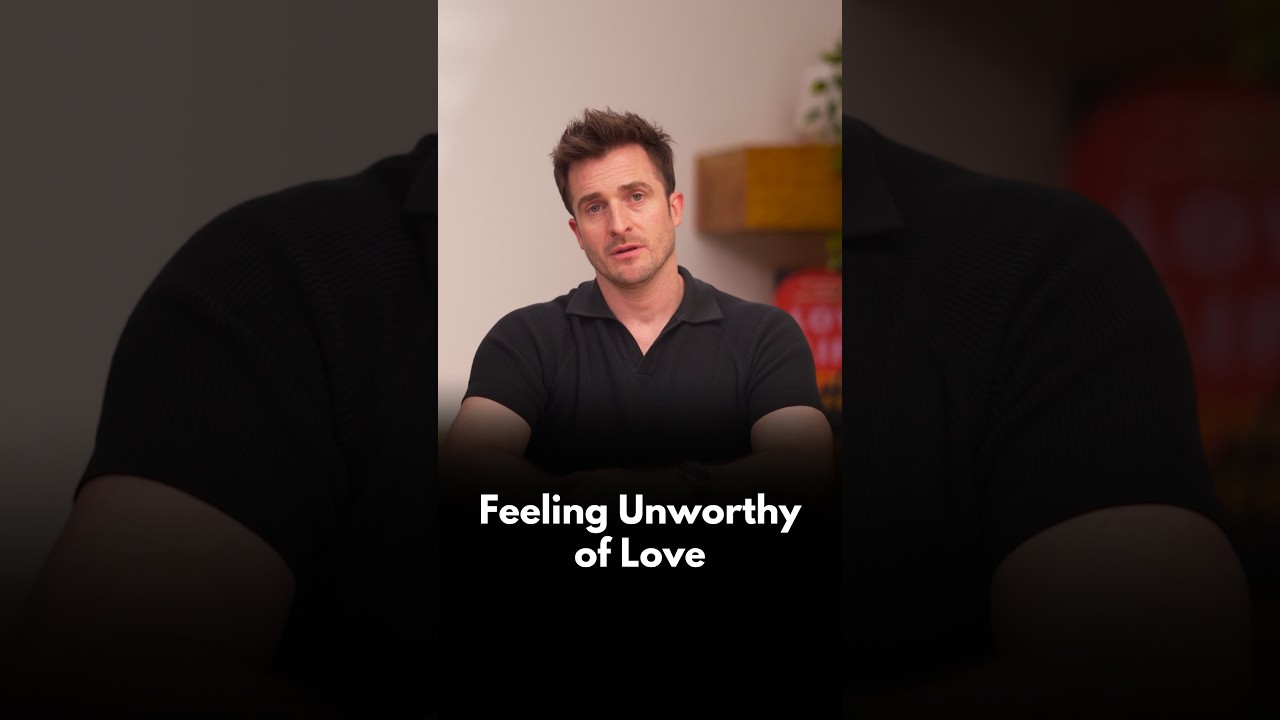
Matthew Hussey opens a three-day series with 15,000 participants, arguing that presence and calm make you more attractive. He shows how triggers create catastrophic stories that amplify suffering, then teaches self-compassion and internal dialogue to reframe them as growth opportunities.
Chapters
Welcome to the Calm Method. Delighted to see all of you here. I have your comments right in front of me here where I can see you all and interact with you all. I'm really grateful for this. I have to say, before we went live, I was reading just all the different parts of the world that you're in right now. We're doing this from our home here in LA, but I see we have people from literally every corner of the earth. And I have to say, I'm really humbled. I'm really humbled by how many people are here. We had 15,000 people sign up to be part of this, and that is an extraordinary number. Wow. didn't run any advertising to this. This is just people who have discovered it through my social media and people who are on my mailing list. And the fact that there are so many of you who are here and, you know, I see these comments from people saying, you know, I've just been so excited about this. I've been so looking forward to this. And it always means so much to me to sit here and read comments from people saying, I'm so I've been looking forward to this. I'm humbled after doing this for 18, now 19 years. I'm humbled by how many people care about what I do and feel connected to what I do and my message and put their trust and their faith in me. So, I'm so happy you're here. I feel really grateful. I want to just state an intention as we go into this. Because firstly, I truly believe that what is going on up here in our mind determines our quality of life, period. Whatever is going on in our lives right now, whatever hardship you're in, whatever difficulty, whatever breakup, whatever loneliness, whatever difficult dating experience you're having right now, whatever uncertainty you're experiencing in your life, I truly believe that our experience of life is more than anything else determined by what is happening in our mind, the quality of our thoughts, the quality of our emotions. And over the course of these 3 days, and starting with today, we're going to learn why it is we feel stuck in the same emotional patterns that, for many of us, have haunted us for our entire lives. What's going on when we get triggered by people or events, and how can we put ourselves back in the driver's seat of our own emotions, both in our love life and everywhere else in our life too. But I wanna set an intention, which is to say, this isn't a YouTube video. This is something I've painstakingly designed over the previous weeks as a free experience. I wanted everyone to be able to do this. I did not want this to be exclusive. And when I put on a free experience, I don't think, how little can I give? I think, what can I give that's genuinely going to help people that I can possibly give with my own time constraints in my life? And I have a 10-month-old son next door who I hope won't scream his way through this, and my wonderful wife, Audrey. And, you know, we have so many things going on. We have a retreat next month. But I really try to engineer these experiences to be something that actually is valuable. I think we live in a world today where we feel like if it's free, it's worthless. If it's free, there's a catch. I really design these, which is why, by the way, I can't do many of these. I did one— shout out to anyone who was there for 5 Days to Mend back in July, I think it was. When I design something like this, it's rare because I genuinely design it with being helpful In mind, that if you never do another journey with me, if you don't ever buy one of my programs, or come to my retreat, or anything else, you can still say, that 3 days, I can't believe I didn't pay $1,000 for that. I can't believe that this was free. That's my intention for this. I want this to genuinely be helpful for you. And look, I will— my promise to you is I won't hold back these 3 days. I'll give you as much as I possibly can in the time that we have. And if you find it helpful, come do a bigger journey with me. Stay with me on the process, not for me, but because it's working for you. That's the deal. Okay? And I, over the next 3 days, my intention is for us to genuinely be present with each other, because an enormous part of presence is— or an enormous part of calm is presence. And we live in a world today where we're really struggling to be present. I don't know about you. I find it harder to focus than ever. There are so many things distracting us. There are so many ways to doom scroll. There are so many ways to get lost in our phone or our laptop. You know, most of us, the digital equivalent of when we go to a room in our house looking for something, and then we get to that room and we can't remember why we walked into that room, that's what we're experiencing online, on our laptops, on our phones all the time. You know, we open an app or we go to our phone, and then before we know it, we've spent 30 minutes on some social media nonsense, and we forget why we picked up our phone in the first place. This is the opposite of calm. And YouTube has become a place where it's very fragmented information. And listen, I'm very grateful that YouTube exists. It's allowed me to reach so many of you. But YouTube is not a great home for a genuine journey, something that truly changes us. It's a great introduction, but what YouTube's algorithm rewards, and what every social media algorithm rewards, is entertaining fragments. And entertaining fragments don't change our lives. What— that's why, by the way, we can repost 1,000 inspirational quotes and they can do nothing to move the needle on our lives, our happiness, the results we're getting in life. What changes our life are journeys, genuine processes. So, given that it's— this is happening live, given that this is happening over 3 days, and this is a very, very rare opportunity for us to do something like this together, especially if the content of this is something you desperately need. Give me your full attention for these 3 days. Don't dip in and dip out. Eliminate the distractions. Just be here with me for this time. I promise you, you'll get the rewards for this by actually showing up and being present. Treat this like you just paid $1,000 for it. Treat it like you paid $4,000 for it, and you just showed up to a 3-day course, and you're like, I'm gonna get my money's worth from this. Treat it like that. I promise you, you're going to get so much out of this. I want to just do a shout-out to the Calm Community. For everyone who's already in there, I really appreciate your comments and the love you've shown me. By the way, the chat function is now open, so you can chat to each other. If you haven't yet joined the Calm Community, that's going to be an essential piece of this 3-day process. Not only are we having a community to go through this experience together with, we're also going to do the Q&A after each session on YouTube in inside that community. So, I will be answering questions of you. You might even get to ask me your personal question. I'm going to be doing that at the end of each session, but that's going to happen in the community, because that's the only place I can actually bring people on live with me and do some live demos. So, that will be in there. The Q&A will be once we're done here, which will probably be In about 90 minutes. It might be an hour, but if I run over a little, it might be 90 minutes. Clear the space in your diary now. I promise you it's going to be worth it. Now, look, I know that on a deeper level, we're looking at what's going on in our minds. Why are we as reactive as we are? How can we change it? How can we get control of our emotions so we don't get hijacked? But if we forget all of that deeper stuff for a moment, who here just really, really wants to find love? Like more than anything else. I just, I want to get that out in the open because I know so many of you know me through love advice, dating advice, relationship advice. Who here wants to learn everything we're learning over these 3 days, but like, Your biggest goal in life is to find love. So there's a lot of you in here right now. I can't even keep up with the names. Patricia, Lauren, Laura, Justine. Who here would not just like to find love, but would like to Make having a relationship enjoyable, instead of a relationship being something in itself that makes you spiral. How many people here have some kind of a relationship? Maybe you're dating someone, maybe you're seeing someone more seriously, maybe you're in a long-term relationship, but you can't enjoy it. You cannot find enough calm within yourself to actually make the most of that relationship, to be your most attractive, to be your most impactful, to just enjoy it. Like, forget having an impact on them when they're around. When they're not around, you'd like to not be suffering because you're scared that they don't love you, or they don't feel the same way about you as you feel about them, or you're worried that them not texting you for a few hours means that they're changing their mind, or that they don't love you as much as they did yesterday. So many of us can't— and listen, I've been there. The reason I can talk so fluently on these subjects is not just because I've studied them for many, many years of my life. It's because I am you. I am you. You know, I joked yesterday or this morning in a post about like, you know, having— I would lovingly refer to myself sometimes as having like broken brain. You know, in my moments where I'd like playfully be defeated, I'd be like, I just got—I have a broken brain. My brain just is—I have broken brain syndrome, you know. And then—and I know, you know, some of us have that feeling in life. Like I have just—I've been through too much. I've experienced too much. Life has—life has beaten me, knocked me around so much that maybe it—it just too much has happened for me to operate like. I see normal people operating, people who don't struggle with all of this. I just, maybe I will never be that. Maybe I'll never be able to be that simple. Maybe I'll never be able to feel that calm or that happy or that peaceful or that confident because too much has happened in life. Who here feels that? Like, I just, like, there's almost, there is an embedded belief that maybe I'm— I'm just too broken. Like, I'm not in a place where I can be like that. You see other people, and the reason I refer to normal people is not because I mean normal people, obviously. It's because that's how we feel on an emotional level. I'm fucked up. Everyone else is normal. Right? So, there's so many of you. Yeah. So, I'm here to tell you that no piece of advice I have ever given, or will ever give, about how to communicate, what to say, what to text, what to do on a date, how to have the commitment conversation, how to have exclusivity conversations with someone, all of that, there is no single thing that will transform your life, your love life, your relationships, your abilities in attraction to be your most attractive self, like what I am about to share with you in the next 3 days. Nothing even comes close to having such a seismic effect on the opportunities that will come to you, and how confidently and joyfully you can grasp those opportunities, With the tools that you will have by the time we get to Thursday of this week, by the time you wake up on Friday with the tools that you'll have. So, like I said, set aside the distractions. Your phone, put it on silent, put it on Do Not Disturb. Turn the TV in the background off. It'll all be there later. It'll all be there when you're done here. And if you're struggling, by the way, if you're like, oh, but I need— I'm itchy. I need other things to do. I need to multitask. You're already— that's already signaling one of the ways that you're moving away from calm. Because so much of calm is presence. And if we can't bring our focus to bear on something important, then how are we going to do it when someone texts us something that is confusing and we need to focus on something more productive than analyzing their message for the 53rd time? How are we gonna do it when someone doesn't text us at all, or shows us mixed signals, and we need to be able to connect back to what's truly important, our value, or what's important in our lives, and not get hung up, and obsessed, and hijacked by this person? How are we gonna do it there if we can't do it here? This is training. The training begins now. So, and by the way, the kind of confidence that this is going to build has nothing to do with how good-looking you are, how successful you are, the shape of your body, your age— none of those things that people get insecure about and use as a reason not to be confident. This is a Kind of confidence that is available to every single one of us, and you're gonna have access to it. It can give you a level of attraction you have never experienced in the past. And more importantly, you'll actually feel in control. You won't feel at the mercy of everybody else in your life, whether it's the person you're dating. How many people right now feel like your emotions are subject to the behaviors of the person you're dating? How many people feel that? How many people feel like your emotions are subject to a particular family member who triggers you, or makes you lose your mind, or sends your nervous system into a state of hypervigilance, or panic, or that sick feeling you get in your stomach? That someone has that unique ability to send you there? Or it could even be people, strangers, or people at work, situations socially that make you feel like you're not enough, or make you feel scared. Situations where confrontation happens in life, and you feel like it happens, and you can't calm down afterwards. It just takes you over. Or maybe there's situations where you fear seeing someone. Who here in their life has someone you fear seeing? I do. Maybe an ex, maybe a certain narcissist in your life, someone who has been a toxic presence, and you fear seeing this person. Even just the thought of an interaction with that person hijacks your body. You can feel it in your body on a visceral level. We all have these scenarios that come up for us over and over again. And let me tell you, there is no shame in feeling any of these things. I am the per— I can show you just from the last week alone, many, many, many emails and DMs that I have received from psychologists of all different levels and all different backgrounds, psychiatrists, healers, who themselves Struggle with these things, who have told me, I'm so looking forward to this, Matthew. I'm someone who helps other people with this stuff, and I still struggle with it myself. I've got people who have emailed me to say, I'm ashamed, because in every other part of my life, this doesn't happen to me, but in my dating life, I am uniquely able to be hijacked, and in some cases, so much so that, you know, I have to go to medication for it. Because the uncertainty of dating is so intolerable to me. If any of this relates to you, you are in the right place. And I wanna start by actually getting a sense of who is in the room, and what you're going through. What are your common emotional patterns? What are— maybe let's start with what are some emotions that you struggle with and repeat over and over and over again? Do you have a favorite? And I don't mean literally a favorite, but do you have like an emotion that for you is like, this emotion is just— it's the same emotion that captures me over and over and over again in my life? What is the default negative emotion that you go to? So self-judgment, anxiety, stress, fear. Some people saying fear of abandonment, irritation, fear of rejection, needing approval. There's a lot of self-judgment. I see that, those words coming up a lot. Worthiness or feeling of unworthiness. Yeah. Okay. So, let me ask you this. What is a common, and maybe even the most common trigger for you for that emotion? And if you can't think of a common one, maybe you can even just think of the most recent one. What's a recent way that that emotion got triggered for you? Let's just see what people say. So, being ignored. What's a situation like? Give me a scenario. Like, what's something that's just happened, maybe as recently as this week or even in the last 24 hours, That has done this. So someone said silence. When people go, a lot of people saying when people go silent, not being seen, anticipatory grief, tone of voice, seeing my ex, disrespect. I want you to. Think about for a moment, a moment this week, because this stuff is really, really important and powerful. The best training ground are the things that are real to us now. It's not something that was real to you 5 years ago that you remember was a hard time. Like, what's real to you today? What's been real to you in the last week? And how much did it impact you? How much did it impact your life? How much did it impact your ability to enjoy life? Now, for some of you, we've got like— some of the common themes here are uncertainty in dating. For how many people it's like, uncertainty in dating is the big one for me? It is intolerable. I can't— I'm okay if I'm not dating, although I have a different trigger, which is my loneliness when I'm not dating, or maybe my anxiety that I'm never gonna meet anyone, anxiety about the future. Anxiety, or maybe even self-loathing that I'm not doing anything about this part of my life. But the moment I try to alleviate those anxieties and I step into dating, oh my God! It whatever peace I have found as a single person is immediately taken from me. I there is no peace for me when I'm dating because as soon as I start liking someone, as soon as I feel my my heart is on the line again, as soon as I feel I can get rejected, as soon as I get into intimate with somebody, and I can feel used. As soon as someone can start giving me mixed signals and create uncertainty that I can't solve on my own, my peace is gone, which, by the way, explains why many people, for like, they oscillate between the— what they feel is untenability of being single. It's unbearable to be single for too long. But then, It's unbearable to try and date, so I'm gonna stop dating, and be single again, and just be happy with that, but then that slowly starts to become unbearable, and I go and date again, and now I date again, and it's unbearable. I can't do this. How many people go through that cycle? You're like, whichever way you go, you feel triggered, you feel activated. For some people, the trigger is, my life isn't where I want it to be. So, I'm single, I want a relationship, maybe I want kids, I want marriage, I want a family, and I feel miserable like that every time I see someone who has that. Every time I see a new Instagram post of a friend of mine or someone I know, someone in my network who's just had a new baby, who just got married, who just got engaged, it just floods me. With anxiety, or resentment about my own life, or a feeling of being left behind, a feeling of not being good enough, depression. How many people feel like they've got themselves into this incessant cycle of comparison that almost now feels compulsive? Like, I have no control over it. And it doesn't— I'm not saying you see a friend getting married and you wish the worst for them. Although somewhere in the back of our mind, like, we're human beings. Even people who are not bad people have thoughts like, why does— why do deep down I'm not rooting for their success? What's going on with me? And we can even be ashamed of that. What is it about me that's not rooting for their success? Right? And it's, of course, it's not— it doesn't come from a place of we're horrible sadists who want the worst for everyone. It can come from a place of such dire unhappiness on a deeper level, or such fear on a deeper level, such resentment. On a deeper level that it actually makes us have thoughts that really aren't us, right? But it doesn't mean we wish anyone harm. It can just mean, I'm just— this signals something to me that terrifies me about my own life. I feel, yes, I feel jealous. Yes, I'm truly envious when I see something. Yes, I feel sad when I see this, right? For some of us, it's our mistakes. Our triggers are our own mistakes. We look back on a life where we wish we had done things differently, where we wish we had approached things differently, where we wish we had made a different decision along the way, and we learn to hate ourselves for those mistakes. We feel like they've cost us so much, and we hear all of this stuff about self-love, and it's like, how can I love the person who got me into this position? I hate myself for getting me into this position, and we end up If we're not careful, we hate ourselves more than we hate anyone in the world, because we have this feeling of, I did this to me, or, I'm not— this all happened because I'm not good enough. For some people, the trigger, and tell me if you relate to this one, the trigger is hope. Hope is the trigger. How could hope be the trigger? Well, because as long as I think maybe one day it will get better, I'm constantly waiting for that day, and when that day doesn't come, I used to have this, with chronic physical pain. For many years, I had terrible chronic physical pain, and every time I would find a new doctor, or a new possible cure, a new treatment, a new something that might take away this pain, I momentarily got my hopes up that finally I was going to feel better. Finally, it was going to change. And then, you know, I kind of got elated, and I got this kind of high, even though my physical condition hadn't changed. I had this high that it was gonna get better, and then when the treatment didn't work, I would go into an even deeper low. I'd go into an even deeper depression. So, for many of us, hope is the trigger. Isn't it? How messed up is that? That we get told hope is a good thing, but hope itself can be the thing that makes us miserable. For some of us, the trigger is an ex. There's someone in our life that, you know, we can't We cannot stop thinking about. I cannot get over this person. I can't seem to move forward through this heartbreak. I can't get them off my mind. I think of them compulsively. And then we get scared that, you know, it's like we don't just get scared because we get triggered. We get scared because we're like, how am I still getting triggered? How am I? How is this person still impacting me emotionally? And then that thought becomes the secondary scary thought. How do these triggers affect you? This is my question: How do they affect you? Make write a comment. You know, maybe it's they take me out of my life. Maybe it's I can't get my work done. They impact my health. I— someone said, I can't sleep. I can't focus. Keeps me stuck, says Michelle. Someone said, I feel like running away. I shut down. I can't start fresh. Losing faith. I put up walls. Can't eat. Irritable, can't enjoy life, mental fog. And I'm sure all of us here relate to one, if not all of these things on some level. I want to approach this question from a different place for a moment. What would be possible If you were able to change how much these triggers impacted you, if you were able to change how much you were able to get emotionally hijacked, if these things didn't impact you in the same way? Really think about that for a moment. What would improve in your life? What would be possible? How would it impact how people would see you? How would it impact how attractive you were when you were dating someone? How would it impact the balance? Not that relationships are a power struggle, but like your personal power. In a relationship? Your ability to have your own personal power that's not impacted by somebody else. What would that do for the relationship? How would it impact how you show up to people in your life? Someone said, I would be at peace and in control of me. I'd feel safe all the time. Make me more confident. It'd make me healthily detached, not— which is important to distinguish between unhealthily attached— detached. True independence. Be more grounded while I was dating. That's an interesting one. I'd be more proud of myself. Hmm. I believe that one of the most painful things about the ways that we feel ourselves get hijacked in life is this feeling that it never changes. I actually think that that's the scariest thought of all, because we think about all of the ways this impacts our lives, ways it might make us sabotage, ways it might push people away, ways it just makes us generally really unhappy and unable to enjoy this life. But the scary thought is the idea that it will never change. I just, I can't feel better. I will never get over this. I'm just stuck here. I have been triggered by this my whole life, and I can't help it. I always struggle with this, and I just, I don't know why. What's wrong with me? I'm so affected by other people. I rely so much on other people thinking the right things about me. I'm so scared all the time of uncertainty, of rejection. I'm so on edge. I feel like my body is literally controlled by other people. My entire nervous system is controlled from the outside. And that scariness of, I've tried everything, is what makes us get catastrophic about it. That's when I joke, I'm half joking, that feeling of like, I'm just— I've got broken brain. Like I'm just broken. I am just broken. And like I said, I relate to this. You know, I consider myself, you know, a part of that club of people who relate to the idea of not being a simple person, of being a, you know, a bit of a complicated little soul. And And it's easy to feel like that's never gonna change. I know that over the years, people's perception of me has been very different to what is going on in my head so much of the time. I know that there have been times where I've been helping people in their love lives while I've been struggling in my own. And I know that feeling of watching somebody else who seems like they don't overanalyze everything, Like people who, you know, just they react to a situation completely differently and it's much more simple. And you, you, they, you go, how do you do that? And they go, I didn't really, I don't know, I just didn't really overthink it. And you go, how the fuck did you do that? What are you talking? What do you mean you didn't overthink it? Like how did you not do that? Because for those of us who either have a certain makeup, or we've been through certain things, those of us who have not had it easy in life, who in some ways have had a rough go of it, or a complicated go of it, it's never that easy. It's never that easy. So, and it can literally be like trying to learn how to dunk from an NBA player who's 7 feet tall. And we're 5'11. You know, it's like, I can't— I can't— how— what can I learn from you about how to dunk? We are different heights. So, I really believe that we learn so much— not that we can't learn from people who are naturals at things, we can, but we learn so much from people who have been through the same things we have, who understand what it is to feel sick with anxiety in a relationship because we sent the wrong text, and now we're blaming ourselves that we've ruined everything, who feel like they made a mistake and it's cost them their person, and literally can't think straight, can't eat, can't sleep, are spinning out internally in a way no one would even know the hell that is going on inside their mind. And that feeling of, I would do anything. Like, you ever had that feeling in a relationship of, I would just do anything to make this person love me the way I love them? You know, can I just go to a shop like the one in the film Obsession and just find one of those little sticks? The shopkeeper goes, no, you just to just to be clear, if you break that stick, all sorts of hell's going to break loose if they become obsessed with you on that. Oh, you already broke it. Okay. Oh, you broke it five minutes ago. Like that feeling of I just I I can't live in this state. And whenever anyone says like, oh this this is. These feelings are like, you choose, you choose whether you get triggered or not. You choose, like, this is a choice. No, it fucking isn't. It's— anyone who has experienced any kind of trauma in their life knows that feeling of something happening that there's an instantaneous bodily reaction. Like, for some of you have been through a lot in your lives, to put it lightly. Yeah. And if you hear someone at the door, or if you hear a door slam too hard, or you suddenly hear a siren in the background, you can feel it in your body. Some of you have been through enough that when someone calls you and says, I need to talk to you about something, your immediate response is, who died? Yeah. What happened? Like, your brain goes to the worst possible thing, and they're like, oh no, I just wanted to let you know that I don't know if I can do this Friday for lunch, for dinner. And you're like, oh my God. And now you have to decompress from that state because of the language someone used. Don't— you can't tell me that that's a response. It's a— there's an instinctive— it— something happens and your nervous system lights up. It's like a switch got flipped in our body. But we do have the space if we take it. To choose what happens next when that switch gets flipped, and our choices matter in that moment because those choices will shape our entire life. They shape how calm we are, how we come across to other people, how attractive we are, how powerful we are, how much respect we command. Ultimately, most importantly, they shape how happy we are. They shape what opportunities come to us. They shape what opportunities we're able to hold on to. That's what I mean by this is the most important work we could possibly be doing. And I'm going to move on to our First tool here today. But as I do, I want you to understand there's nothing that I'm going to give you over these 3 days that I don't use regularly in my life. I'm excited not just because this is the deepest work I do and it's gonna show you what's possible. I'm excited because— I'm excited. I'm sharing with you, like, my favorite toys. I'm sharing with you things that changed my life, not just past tense, every day. And I want this for you because I know, I've been doing this a long time, I know how much more free you can be than you are right now. I know that most of you, maybe all of you, don't even realize yet what's possible for you. When you tap into the kind of, a kind of power that's not even conscious to us right now, when we're trapped in our narrow cycles, our narrow groove of what we've always done. I mean, and I'm excited for you because you deserve better. You deserve to be happy. You deserve to experience life as more fun than you're experiencing it as right now, as more joyful than you're experiencing it as right now. A friend of mine once said to me, we were working, many of you know him, his name's Jameson Jordan. He shot my videos for a long time, one of my best friends. And I remember years ago, he looked at me and I was in my triggered state, which work puts me in a triggered state a lot, and I've had to work very hard on that. And one day he looked at me with this strained look on my face and he said, when's the fun gonna stop? Isn't that like a kind of damning phrase? He looked at me and he said, when's the fun gonna stop? Like, in other words, when are we gonna start enjoying? Like, when is this gonna get fun? When are we gonna enjoy this? When are we gonna allow ourselves To have a good time with this? Why does it all have to feel so difficult all the time? And I think so many of us relate to that on a life level. Like, when does the— when's the fucking fun gonna start? When do I get to feel at peace? When do I get to feel happy? You deserve that. I am— in the tools that I'm gonna give you, I'm not going to be dogmatic. I'm not someone who subscribes to any one technique or set of techniques. I borrow from everything. I have no qualms about if something works, if something's useful, I take it on. I think of like my Bruce Lee, uh, his philosophy for martial arts, which is not subscribing to dogmatic way of practicing martial arts, but just taking what's useful from everywhere, I apply to the world of self-development and healing. So, you don't have to come here and think there's some agenda with a certain way of thinking. There's not. It's about finding what's useful from any modality, from any practice, and bringing it into one comprehensive place. And as I see it, I get paid to make things simple. I get paid to take complicated things and disparate things and things that people find overwhelming when they're trying to study them separately and bring them into one unifying and simple coherent set of ideas and strategies that you can actually practice. So, let's just start with something— there's an important foundational basic we need to have. Okay. Firstly, when we get triggered, at the point of being triggered, there is the pain of being triggered. Okay? There's the pain of being triggered, and that hurts. It sucks. It's not a nice feeling. But what turns this pain into something unbearable, intolerable, is how we relate to the pain of being triggered. How do we relate to the pain of being triggered? What story do I tell myself about this? Okay? So, someone did something. It's making me anxious. But now, because I'm anxious, I think, uh-oh, because I'm anxious, I'm gonna sabotage this relationship. I'm gonna do what I always do, which is ruin it. I'm never gonna be— And so, now we have story, right? Because I've been triggered, I'm now going to ruin this relationship. Or, because I'm triggered, they are now going to find me unattractive. They're gonna see through my confident facade. They're gonna see, they're gonna really see me, and they're gonna see the ugliest part of me, and that's gonna mean they're gonna leave. Or, I'm always gonna be this way. I'm always gonna be this way. Oh my God! I got triggered! Or some, like, it could be your ex, right? My ex. I thought about my ex again, or I saw something About them on social media. It triggered me. It made me upset. It made me sad. It made me miss them. It made me grieve them all over again. And then I tell myself a story of, I'll never be over them. I'll never be over them. And that story turns catastrophic. Okay? So it goes from being a fact, something triggered me, to a story. It became catastrophic. Now, when something becomes irrationally catastrophic, which by definition, with the information we have today, being catastrophic is irrational, we call it a cognitive distortion. A cognitive distortion, which by the way, even that in itself is a calming thought. Ah! This right now, this— what I'm feeling about the catastrophic feelings I'm having about this, which are, I got anxious, they're gonna see me as unattractive because I'm anxious, they're gonna leave me, they're gonna think I'm gross, they've just seen the ugliest side of me, they've seen the side of me that I tried to keep locked up when I was on the date, and I was trying to say everything perfectly, and be the right kind of person, and be playful, and be carefree, and show that I don't care that much where it goes, because I can just leave you anytime. I don't care about you. Fuck you. I'm fine. I'm just gonna have a good time on this date. You're not that good looking. I mean, yeah, of course you're stupidly hot, but you're not that good looking. I'm fine. I'm fine. I'm just gonna make another joke. I'm gonna drink a little wine. I'm gonna have fun. I'm gonna leave. I'm not gonna text you first. I'm just gonna go to bed, because I'm fine. I don't really care if you text me. I'm fine. Fine. What are you talking about? Why are you being so hysterical? I'm not being hysterical. And then, of course, they do something, and we we maybe have an anxious moment where we leak a little of that fear, and we go, oh, they've seen me! Oh, that's it! It's over because they've seen me. They've seen who I really am. So now, but when we see that, ah, that story, they're now gonna not want me. They're now gonna think I'm. So ugly, so unappealing, so unattractive. They're never going to want me. That's— I've gone somewhere. Ah, that's useful. Cognitive distortion. Ah, I can— that's actually a pressure valve in itself, just bringing awareness. What did I say? Presence is an antidote to all of these, the feelings of anxiety and fear and all of these things that are the opposite of calm. Just bringing awareness to what's going on, this process. Ah, okay. This is actually fine. Problem is this, how I'm relating to this. So, I'll— and then, by the way, if something does— but let's say, let's say this person doesn't respond to you after you have an anxious moment, right? So, they did leave. Well, firstly, we don't even know if that's why. We have no idea, right? So, it's not— we don't know that that's the reason they decided. They might have been someone who wasn't serious in the first place. But now what we do is we say, here we go, another one left. Another one left. I'll never find anybody because I'm this way. I'll be alone forever. I wanna read you something. Someone sent this message, and this was someone who was doing the Heartbreak Journey I did back earlier this year. And they said, I won't mention this person by name, but they said, in this Heartbreak Journey, I've been reflecting a lot and redirecting my focus inward since that's within my control. Otherwise, I get stuck in my victimhood, or I keep the poison alive in me by rekindling my rage, hurt, disappointment, resentment, maybe even temporary hatred. Something that has come up for me is how I have participated in being harmful in my ways of relating to others. In addition to the heartbreak itself and the feelings of worthlessness, I'm also feeling less and less confident because of how behind I feel I am. Right? So now we have a story and I'm behind, right? There's a very emotive tone to that story. I'm behind. Right? Even that is an interesting one, isn't it? Because that concept of behind, people wouldn't say that if they met the love of their life and then tragically they lost the love of their life to an illness. They wouldn't then say, I'm behind. They'd say, I've just experienced A tragedy, a loss. But people who suddenly lose their partners to tragedy or life circumstances don't tend to say, oh no, I'm so behind. And the situation is exactly the same in one sense. These are 2 people who are now not partnered. One of them's not partnered because they didn't find a relationship or because relationships in the past haven't gone well. Another person is not partnered because they lost someone. Same situation today. Both of them happen to be single people, but very different emotional stories behind them. One says, I've experienced a tragedy. One says, I'm behind. That's interesting. So, she goes on to say, my introspection has revealed to me a mountain of patterned behavior that I have to work work on, a lot of it rooted in childhood. It's almost to the point that I feel I may never be healed enough or good enough. Watch what's happening now. It's almost at the point where I feel I may never be healed enough or good enough to be ready for someone in the future, nor able to be a good partner to them. So now we're getting into the territory of that cognitive distortion, of that catastrophe. It leaves me feeling Like, maybe people are justified in not choosing me, regardless of how not okay their methods of not choosing me were— cheating, lying, disrespecting, discarding. So now, it's, no one's ever gonna want me, and it's all my fault. They are fully justified in not wanting me. I'm someone who's committed to therapy for decades at this point, and rarely has shied away from change or self-growth. It is not for lack of effort that my progress seems so slow or insufficient. Right? So now, of course, we're building a case. And the case is, I've done all of this stuff. It hasn't worked. Therefore, I'm justified in the catastrophic thinking that I'm now saying is factual thinking, that maybe I'll just never— maybe I will never be healed enough. She goes on to say, what advice do you have for someone like me? Who feels, who doubts that they will ever be healed or ready enough to attract or be good for the kind of partner we wish for? Who here relates to this? So, this idea of, I get triggered. I then create a story about that trigger. I'm always gonna be alone. It's never gonna work out for me. We can call this a secondary trigger. So, this is a primary trigger. This is the first trigger, but then this becomes the secondary trigger, and this is the part that we can intercept. And I'm gonna show you how. And by the way, this concept that it's, this is just me, this is just who I am, is not true. You is a changing concept. So, the first rule is we stop over-identifying with the past. We see today as a chance to draw a line in the sand. Okay? The second rule is this: When I feel this trigger, I'm gonna start— and this is one access point for calm— I'm gonna start By allowing this trigger to trigger something other than what happens here. Because we have primary trigger, secondary trigger. What if we changed the secondary trigger? What if your trigger became an immediate invitation to self-compassion? And we do that by first Asking ourselves, how old is this? How long have I had to suffer this trigger? How long has this been the case for in my life? And we don't need to know where it came from exactly. We may know, we may have a good sense, we may have done a load of therapy that's helped us unpack that. That's not the point of this session. But the point is, Just the awareness of, wow, something just happened and my body went into this immediate fight or flight state, or freeze or fawn. That something happened. Like, I've been through something. I've experienced things that have made me this way. Just that realization is useful. And people may say, yeah, you know, that's obvious. Of course, something made me this way. But I mean, really connect to it, that you are a person who, in a different time in your life, had something happen that wired you up in a certain way, with a certain set of beliefs, with a certain set of bodily responses. That has meant that when something happened, you immediately got activated. That should be an immediate trigger for sympathy, for empathy. Not pity, but genuine sympathy. I— someone said, what is self-compassion? Self-compassion is the moment where you say, Wow, something like almost you see yourself as a different human and you see like someone has just been incredibly triggered or activated by something and you think, wow, something happened. Something happened to that person. I don't know what it is, but my God, that's what a hard way to live. Right? We get to do that for ourselves. God, it's hard for me to be the person who can't even— like, someone doesn't text them back for a few hours and it takes them over. It makes them feel like they're gonna die. It makes them feel like the world's gonna end. It makes them feel like all of a sudden their entire worth gets called into question. That's so messed up. I feel for the person who feels that. That's the beginning of this, right? Is that self-compassion. Someone just asked me about ghosting. You know, I see, how can we implement this when we get triggered if someone ghosts us? Think about ghosting. When someone ghosts us, all our focus goes to one of two places. It either goes to them or it goes to, and you know, how angry we are and how hurtful that, you know, how awful that person is. And but it also goes to all of that analysis of why this happened and what did I do wrong and how did I mess it up so badly that someone didn't even give me the decency of, of get a courtesy message on the way out. What I'm— and then it goes inwards. I'm worthless. I'm not good enough. I'm not even worthy of Someone sending me a text to let me down or giving me a call. What's wrong with me? Or it goes to, why do I keep picking these people? I'm broken. So now what we have, this is where self-compassion is nowhere to be seen. Because what we actually have is a person who has just been hurt. We have a person who's just been treated badly. And instead of showing up for the person who's just been treated badly and saying, that's— wow, I'm like, that really— I'm so sorry that that happened to you. Like, instead of being there for that person and acknowledging how much that hurts, we start shaming and blaming that person either for creating the ghosting or for picking the person who did the ghosting. So that we're going to talk more about this. Don't like I because I know this isn't this is easy to say hard to do, but stay with me because I'm going to give you a very interesting example of this that happened to me in my life this week in the last week. But the key the key concept is this: What if my trigger? Can— I'm trying not to say trigger too many times, but what if my trigger can be the trigger for a different trigger, right? In the past, my trigger takes me straight to self-hatred, self-blame. It's all gonna go wrong. I'm gonna fail for the rest of my life. I'm always gonna be alone. It takes me straight to that place. A very— there's a secondary trigger there. But what if we changed the secondary trigger to something really positive? Someone treats us poorly in dating, it becomes an immediate trigger for self-compassion. Someone does, or maybe they don't even treat us poorly. Let's step outside of the realm of ghosting. Someone does something that they didn't do anything wrong, but it really activated us. This is the advanced level. We see this person, we see us. Through the lens of someone who's now, instead of looking at us in that moment and going, I'm so pathetic. What's wrong with me that that happened and it made this happen in me? I've got such an extreme response to it. Instead, what we do is we see that we are a person who has had an outsized response to something that's happened and we widen our aperture. We widen the at the holistic context in which we see ourselves, we extend the timeline and we go, man, what happened with this person, with me, that my body got wired up in this way? Isn't that sad? That's so sad, you know, that whatever I've been through It's like, if it's easier, think of an animal. When you go to a dog shelter and there's a dog that when you go to pet the dog, it reels and it backs into the corner and squeals and is terrified of you, and you literally just went to give it a loving touch. Do you go, "The fuck is wrong with that dog? The fuck is wrong with this dog? Like what is this dog's pathetic." Like no, most of us would look at that dog and go, "Wow, what happened? Like what happened? This dog has been through it. I'm trying. I'm here trying to give this dog some love, and this dog instinctively recoils." Because they feel threatened. What happened? So, self-compassion is being able to take that and turn it inwards. Self-compassion has become a very overused buzzword in self-development therapy culture. It's lost a lot of its meaning and a lot of its potency, but it can be a highly practical thing once we know how. But we're going to go a step further than just recognizing that there's all of this self-talk that happens as a secondary effect on the back of a trigger. We're going to start understanding that I can build a relationship With that part of myself that is scared. And this is— we're gonna have multiple tools for calm over the next 3 days, but this one's a big one. Every trigger is an opportunity to build an unbreakable bond with ourselves. Who here has, you know, Maybe you've tried self-love, maybe you haven't. Maybe you've heard a lot about building a relationship with yourself, but you're like, what does that even mean? Blah, blah, blah. Like, how many people, you know instinctively that you abandon yourself, you know instinctively that you treat yourself poorly, or you speak to yourself badly, or the inner voice, the inner critic is incredibly loud for you, but the concept of actually having any kind of a productive or positive relationship with yourself is It just feels so difficult. You're like, I'm so good at showing compassion to everybody else. I'm so bad at doing it with myself. I'm so great at giving other people grace. I'm so terrible at giving myself grace and leeway. How many people relate to that? So, this is, this is the part where it gets practical. I wanna tell you about something that happened for me this week, because if we're gonna get good at this, what we have to do, we have to learn how to talk to this part of ourselves that's scared or reacting, because there's a part of us that's like, something's happened and that part of us is like an open wound that's just been touched, activated. And it might have got angry, it might have got scared, it might have got anxious, it might have gotten depressed, it might have Something happened, right? It had a reaction. How am I relating to that part of myself? And this is where we develop a map of our mind, of what's really going on for us in these moments. And I wanna invite you, as we talk about this, to start to consider your own mind map, the inside of your mind and how it operates in these moments. I posted something this week, and for most of you, it probably went over your heads. But for the people you saw it— who saw it, it got a really divided reaction. I— we were in the middle of, you know, a week where we were posting a lot about this event. And talking about it, and at one point I was like, you know, let's let's I just want to post something personal from my life today and from from our lives today. And it's always a risk when you do that. It's always scary to do something like that because now you're not talking about a project you have. You're not talking about an event you have. All of a sudden, you're talking about yourself. How many people here have, you know, there's any kind of work you do or, you know, service you provide, or maybe you are your own service, where you're now in the world of putting yourself out there online in any way? Who here has, you know, has to do that in any way as part of their work? Or by the way, who here would like to be more present online as part of their work but holds themselves back. I've been doing that for 18 years and there are times when I've handled criticism well, there's times where I've really not handled criticism well. And this week I had a moment where I got criticized and it triggered me. It sent me into this little spiral. And, you know, I wouldn't even normally necessarily make— I wouldn't have made another post talking about this. I would— this would have just been a private moment to myself and, you know, with me and my family. But because we're here, and I'm always conscious of being too indulgent with personal examples because It's not— this isn't about me, but I think that I— when I was thinking about, do I talk about this? I thought, you know what, I think it might help some people. I think it might be illustrative. So, I basically, I wrote a post that talked about— I won't give you all the details because you could go back and read it if you want, but I basically made a post about how I am so grateful to my wife, Audrey, because she overheard me talking to someone about how one of the things that's been challenging in the last 10 months of being a new parent was my mornings having been just completely obliterated. And I'm someone who enjoyed the mornings. I worked out, I got myself together, I got my mind in gear for the working day. That used to be very sacred time to me, and then it wasn't, or it still was, but I wasn't able to use it. Audrey overheard that conversation, and Audrey, being the extraordinary person she is, came to me and said, hey, I heard you talking about your mornings. I want to get you your mornings back. I know that time is really important to you. I want to figure out how to get your mornings back into some kind of an order. And so, I went on to write about that. I used a certain phrase. That— so firstly, people were not happy with this, or at least a significant portion of people were not happy with this, because they were like, what about Audrey's mornings? She's a new mom. You know, this is so typical, a selfish guy who's all about himself, and she's thinking of you. When do you think about her? It was like a— it was like immediate kind of, um, uh, criticism. And then I used a line where I said, And, you know, my mornings are still— basically I said, my mornings are still kind of a mess. You know, it's not like we— you can't just fix my mornings because we're both parents. And I said, I still need to, you know, I still want to get up and help with our son. And people heard that language and they went, help with your son? Suddenly it was, you're a parent too. Your son is your responsibility. And all of a sudden it turned into a thing that way too. So I'm reading these comments. In fact, I woke up to these comments. In fact, I didn't wake up to these comments. Audrey woke me up to these comments. Audrey's sat right here. She woke me up and she was like, hey, that post, it got some negative comments and I just want to let you know because And I was like, wait, what? So I was half asleep, I read these comments, and immediately my body went into this highly, highly triggered state. And in this triggered— my initial trigger was there was this instinctive sense of fear, of a kind of almost like a little panic. And in that moment, something— this is what we have to get used to when we get triggered. If something happens and we have this outsized reaction to it, something has been— some part of us has been touched. It might be a vulnerable part of us. It might be an incredibly fearful part of us. But it's, you know, for me there was this immediate instinctive, like, like a fear, and I could feel my body get hijacked in real time. When I started to think about it, you know, which I didn't do until a little bit later, I thought I'm, you know, what was that fear? I'm really— that was a moment of like really being scared of being disliked. But was it just being disliked because I, you know, I put myself out there all the time and there's people that don't like me, so that's, you know, that's not new. What was it? Well, in a way, people were calling me a bad husband and a bad parent all in the same post, like I wasn't showing up as a parent. Which I really not only did I resent, but I was also scared. It like touched a part of me that I'm someone in my life who guilt is an easy trigger for me. So it you know every moment I'm working, I'm always like I'm not spending enough time with my son, or I'm not like I think about that. So that touched a nerve of guilt there, and I was like ah this so there's. That feeling. There's, well, what if? And then, and then on top of it, it was— and people would say, there were literally comments from people saying, what an emotionally unintelligent post from someone who professes to be a relationship expert. So now in my head, I'm a fraud. Like, people was, what do you— like, it's almost like whatever the most The, the— some really challenging moments are when people literally say a line that your inner critic— that I think of it as like a universal inner critic. Phil Stutz and Barry Michaels would call it Part X. There's different names for it, but if you just think about it as like the, the negative voice in our head that's just like telling us negative shit all the time. This is like, was a chorus of people saying the things that the negative voice in my head would say on my worst day when it was trying to trip me up. So now I'm a fraud. Now I don't know, I'm not even good at my job. I couldn't— I've spent the last 18 years of my life standing up for women and being someone who's been on the side of women. And I, like, now I'm— this is internalized misogyny from me that I use the word help and— But now, but of course, I'm trying to also now protect myself in that. So now I'm getting angry, right? And I'm like, these people don't fucking know me. What are you talking— they like, what do you— they have no idea what they're talking— they have no idea how— and I'm going into all of these debates in my mind about how wrong people are. And that gets me into what all of us get into when, you know, where someone makes us feel shame or someone makes us feel scared. We get into this like internal tribunal where we put ourselves on the stand and we're like battling it out within ourselves. And I'm simultaneously terrified that, what if someone said something that's true? What if I am a bad husband? What if I am a bad dad? What if I am a fraud? What if I don't know what I'm doing? What if I am emotionally unintelligent? What if I am deep down just a giant misogynist? What if, like, what if all these things are true? And then on the other side of it is, fuck everybody! Like, I don't want to do— if people are going to turn on me that quickly after how, like, the years and years I've done this, then screw it! I don't want to do this anymore. So then it goes to a very protective place. So you see these swings that can take you to some really unproductive places. I I have my own coaching. Like, I'm not, you know, I'm someone who regularly does coaching in my life. I have people that I trust, people who I respect, who I always have there to help me see any blind spots I have. And I happened to have a coaching session that weekend booked. And I sat in this coaching session and I said, all right, This is what I wanna work on, 'cause this happened this week, and man, the timing is crazy because I'm doing this event on the Calm Method next week, and that morning I was not calm. And I need to— I wanna figure out what that was. Like, I got triggered and I went into a little spiral, and I wanna understand, like, what's going on with me in that moment. And so we did an exercise, and I said, you know what? A part of me got touched. I want to meet that part of me and find out what's going on. And that part of me that was terrified of that rejection and it going, you know, like the, you know, All of all of these things, and by the way, was most the more I connected with that part of me, the more I realized what this part of me is most scared of is that they're going to be abandoned. Like that deep down, like the deepest fear is I'm bad. I'm bad. That like I'm look there it is. I'm bad. I'm a bad. It's there it is. It's decided. I'm a bad person. That's where my That's what that part of me was deeply afraid of. And I did part an exercise that's rooted, by the way, in different disciplines, whether it's, you know, you could talk about it as being from Carl Jung, you could talk about it as being from Parts Work, IFS, you could talk about it being from The Tools. There's all different disciplines that utilize this work in one way or another. But what I did was I asked that part of me, what What do you need? Like what? I'm I'm here now. What do you need? And it said something really interesting to me. It this is what it said. I and see if by the way maybe some part of you will relate to this. It said to me every day of every week of every year. You drive me to create things. Like, you expect me to make vlogs, you know, YouTube videos every week. You expect me to put out interesting and creative social media posts. You expect me to go and deliver speeches. You expect me to be in front of thousands of people in these live events. And every week you demand so much of me. You just demand me to keep being— Inspired in my approach and keep being creative and do more and do more and do more and do more and do more. And then the one time I say something, or not even the one time, just as soon as anything I produce doesn't get a perfect reaction, you fucking turn on me. You immediately side with everybody else. What I want from you is to stick up for me, to side with me. Like, at the very least, give me a generous interpretation of what I was trying to do. But instead, you didn't get the exact result you wanted from my work, and people, some people applied a really ungenerous interpretation of what you were saying. And you immediately fucking sided with them. What the fuck? Like, I'm tired. I'm tired of that. I'm tired of you not giving me a generous interpretation. Can you next time? And so I asked, I said, next time, what can I do differently? Like, I'm so sorry. You're right. You're right. I should have turned my back to all of that. Whether people were right or wrong is irrelevant. Whether they were right or wrong is not the point. I should have turned my back to those people in that moment and faced you and been there for you. And I said, what? What do you want me to do differently next time? And he said, next time, just be with me in that moment. Like, just can you turn and face me and stand by my side and celebrate me in that moment and apply a generous lens to me? Here's the crazy part about this, guys. On Sunday, I had a new video come out, and it was a video about, uh, it was a flirt— it was a video about flirting. And I, by the way, when I made this video, I didn't think it was that deep. I was like taking movie clips and putting them together and like pointing out what was interesting about these scenes from the point of view of flirting. But days after I put out this post that got some bad responses. This video got some mixed reviews, right? More than I'm used to. And there were some negative comments. Like, some people were like, uh, it's just a movie, for God's sakes, why are we taking our life lessons from movies? There were people who said, like, it was just like, there were people who were just telling me the point I was making was wrong, whatever. There were just negative comments. Not all, but like enough. And it's funny because I don't normally do videos like that. That was a different video. It was a different kind of style of video. It was like a new thing. I was like, listen. So we put it out and it got like some different interesting divided reactions. And I felt for a moment that little feeling come up of like, I felt that hint of I was a And I was about to turn to that part of me and feel like almost angry at like, why didn't we see that this wasn't gonna go down well? Why didn't we see that this wasn't gonna work? Or why didn't we— and instead, I remembered that training. I remembered that new— ah, the trigger becomes a trigger for a new trigger. I need to find a better way of saying that. But the trigger became an invitation to have my own back because I got— I felt that little, like, negativity from other people, and I felt almost like I was about to turn and start directing it towards myself. And I remembered, oh yeah, like, this, this part of me does so much for me every single week. And in this moment, this part of me had tried to do something new with a video to take a risk to see if it could work. So then I turned, I literally imagined turning to that part of me and I went, hey, thanks for trying something new. I really appreciate it. Like, thank you for trying. We like, some people might have liked it, some people didn't like it, whatever. I really appreciate you tried something new there. That was cool. I appreciate you trying something new. I appreciate you being bold. That's— now all of a sudden, I've got my back. And it doesn't matter what the chorus is saying on the outside. I'm not externally validated because I'm giving me what I need in that moment. I'm giving me what I need in that moment. And it's that when I give myself what I need, when I'm able to show up for myself, when I'm able to give myself what I wish the world was giving me, and the same is true for you in dating. When you're able on some level to provide yourself with something you're looking for from the outside, or at least if you can't provide yourself with a romantic relationship, but you can certainly show yourself that you'll never disown yourself. You can certainly— you can't, you know, make someone else accept you, but you can certainly show yourself that I'll never join other people in rejecting you, right? And it's funny, my coach went as far as to say that day, she was like, you know, there's There's a, uh, like, I want this part of you to feel like he can be more bold because you've got his fucking back. I want him to feel like he can be more creative because you're standing beside him, not you're gonna join everybody else the moment people turn on him. Like, you're worried about having your pants pulled down? Pull your own pants down. Be seen as a misogynist. What, that's the, that's the big fear, is you're going to be seen as a misogynist? Fuck it, be seen as a misogynist. Like, she was joking but not joking at the same time, and saying, what can you— what's that fear that you can actually turn around and confront in that way? So, I wanna give you a little way to take this and apply it to yourself, which is I want you to think about a time this week where you were triggered. Where you lost all sense of calm. And I want you to immediately see that as a moment that you get to engage with yourself differently, where you get to notice that something happened. Some part of you was touched, some scared or inadequate or anxious part of you was touched, maybe afraid to be... Found out, or afraid to be abandoned. And I want you to turn to that part of you and actually ask, like, what's— hey, what are you afraid is gonna happen? Like, let's take an example. Someone is, you know, there was a lot of examples when I looked inside the Love Life app where we're gonna be doing the Q&A. There were a lot of examples from people. Saying, when people are confusing me with their signals, I go into this obsessive analysis of whether they like me or not, and rereading messages, and trying to figure out what's happening. And all of it is this desire for certainty on the outside. But we can turn to that part of us that's scared, And say, what is it you're afraid is gonna happen? And it might be, I'm afraid that this person's, like, not gonna like us after all, or maybe they already don't, or maybe they've lost interest and they're gonna hurt us. They're gonna eventually reject us. And you can say, well, what are you afraid What'll happen as a result of that? Like, well, maybe we'll be alone forever. Or you might say, what are you afraid this means about us? If this person does eventually fade or doesn't like you, what are you afraid this means about us? Well, I'm afraid that it just means we're fundamentally unlovable. Hmm. That's hard. That must be really hard. What are you afraid I'm gonna do to you if this goes badly? Well, I'm afraid that you're gonna reject me too. I'm afraid that you're gonna think I'm not good enough. I'm afraid that you're gonna join them in telling me how unattractive I am. You know, in the same way, for me last week, I'm afraid What are you afraid of? I'm afraid that you're gonna join me in— that you're gonna join everyone out there who's criticizing us and telling us we are these things, and you're gonna start telling us we are those things. That you're gonna believe them and you're just gonna decide that about us. Hmm. What do you need from me? What do you need from me? I need you to make this person text us back. Okay, well, I can't do that. I need you to make this person love us. Okay, I can't do that. I need you to show me that you're not gonna abandon me along with everybody else. I can do that. I need you to show me that you don't agree with everyone, that I'm just deeply unattractive or unlovable. Okay, well, I don't think you're unlovable. In fact, I— here are all the reasons I think you're very lovable. And I'm not going anywhere. I'm not going anywhere. I can't promise you that you're gonna find the love you want today, tomorrow, next week, or 6 months from now. I can promise you that I'm not going anywhere, and I can promise you that I'm not gonna join everyone else in rejecting you. And I can promise you, when somebody else treats you poorly, I'm not gonna join them in treating you poorly. And I can also promise you I'm not gonna let you go down the easy path of just playing it safe forever from now on because you're afraid, 'cause I owe you more than that. I owe you more than that. So what we're doing here is we're developing a dialogue with ourselves. For how many people, be honest, is this kind of dialogue just Alien. Be real. Like, how— for how many people is like that? If you're really honest, this kind of like way of turning to yourself, this dialogue with yourself, is alien. It is a new concept. Hmm. By the way, Zayna says, what if we don't believe this positive talk? I haven't said anything unbelievable. When this part of you asks you to believe something that's unbelievable, you don't have to. You're not giving false hope. And if what you mean by that is, I don't find anything about myself lovable right now, that's the work. That's the relationship we need to start building. So, this is what I want— this is just day 1, right? We got 3 days and shortly we'll move to some Q&A. But I want us all today to come alive to the idea. That there is this living relationship that we have with ourselves. Most of us take these parts of ourselves we're afraid of and we bury them, right? I'm terrified of these parts of me. I'm terrified of them being exposed. I'm terrified of being seen as that. But what we're gonna do differently is we're gonna invite them to the table. And we're gonna start beginning a gentle and compassionate dialogue with these parts of ourselves, and I promise you, it's gonna change the game. This isn't the only tool. We're gonna have other tools, but once you can do this alone, it is a superpower, because for me, I can tell you right now that that tool of, this happened, I learned how to talk to that part of myself, I found out what that part of myself needed, And I all of a sudden had— was able to develop a very compassionate lens towards that part of myself. You're right. I do. I do put you through your paces every day. I demand so much of you. I am so, you know, every day I give you new assignments, and I give you new things you have to do, and I don't even give you a choice in the matter, and I work you to the bone. And then as soon as anything goes wrong, I turn on you. How fucking dare I? How fucking dare I? Right? So, it's— that was an immediate level up for me, and it was so cool to have a video come out, and then see some negativity, and immediately for it to be not a trigger for self-hatred, but an immediate trigger for putting an arm around myself, and being like, you tried something. That was cool. That was cool. I appreciate you trying something new. Right? That's an immediate level up. This is so powerful once you're actually doing it for your situation. And what happens is you can, like, feel yourself starting to get triggered, and immediately you have a way of diverting it, or you have a way of recovering, really. Even if you lose it and you get triggered, you have a way of— your recovery time shortens dramatically. It's not 5 hours, it's 5 minutes. It's not 5 minutes, it's 5 seconds. So, I wanna just do something with you real quick before we go. And by the way, we have— for those of you who are coming in through, you know, during, in the middle of this, we have an entire community that we're doing this with this week. This isn't just happening on YouTube. We have our Love Life App where everyone who's doing The Calm Method gets to go and join inside that app in a space we've created specifically for The Calm Method, completely free as an addition to this. And we're going to be doing Q&A at the end of each session. So, once we're done here, I have one little exercise I want to do with you before we finish here today. And tomorrow, by the way, I'm going to show you a practical implementation of this stuff. That's gonna have— like, you're gonna have it at your fingertips. And I'm also gonna give you a tool that I use every single day of my life without fail. I've been teaching this on retreats for, God, 18 years, for as long as I've been doing retreats. It's evolved and adapted and become better and better over time, but it's something I use every single day. I couldn't live without this tool. So, tomorrow I'm gonna be giving you that. But we're gonna finish today with a little exercise, and then we're gonna go to a Q&A. For this part of it— and if, by the way, if you're not in the Community, there should be a QR code that you can see on your screen. If you scan that QR code, it will take you through to that Community so that you can join us in the conversation that's happening. There's a live chat in there. You can post, you can talk to each other, share what is making you vulnerable right now. Share how you're approaching this right now. But let's just finish with a little exercise before we go to that Q&A. This, you don't need your pens for. You can close your eyes for this, as long as you're not driving, of course. But we'll just close our eyes. This will take no more than a couple of minutes. But let's just finish with a framing that I think is gonna be helpful to us all as we continue on this little journey together. I'm gonna count down, and when I get to 0, I want you to close your eyes. 5. 5. 4. 4. 3. 3. 2. 2. 1. And close your eyes. Let's start by acknowledging that these. Parts of us that we're afraid of, you know, the part of us that feels like when someone doesn't text us back, they've seen that we're not good enough or they're going to reject us. The part of us that feels scared and weak in the face of someone toxic or someone who's hurt us in the past. The part of us that gets anxious in Our love lives or in a relationship. We get so terrified that these parts of us are just who we are, and that leads to that catastrophic thinking. This is just who I am. There's no escaping me. But a calming thought is just realizing that this is a part of you. It's not all of you. Because we're not one thing. We're also the other moments where we handle things well. We're also the other moments where we're quick-thinking or competent or bold. Where we don't feel anxious, where we feel peaceful. We're not one thing. So any of these negative feelings we have, they don't have to define us. In fact, what we can do is rather than running away from these parts of ourselves, we can put an arm around these parts of ourselves and say, look, I get it. You're a part of me. You're a part of me. I'm not gonna shy away from you. You're there. I'm not gonna reject you, 'cause I know your biggest fear is that you'll be rejected for being this way, that you'll be rejected for being anxious, scared, depressed. I'm not gonna reject you for that. I'm responsible for you. So I'm not going anywhere. The truth is that especially in our love lives, there's always going to be a degree of uncertainty. We all in life exist in this condition of radical uncertainty. Inside a relationship, we don't have certainty. We don't know what's going to happen. We can't guarantee our partner won't fall out of love with us or leave us. We can't guarantee that we won't get sick or our partner won't get sick. We can't guarantee how long our own life is. We certainly can't guarantee what's going to happen in our relationships. And if we're dating, if we're brave enough to go out there and date, we exist in a radical state of uncertainty, not knowing if someone will like us as much as we like them, or whether they're going to communicate in ways that we need, or whether they're suddenly gonna go back to an ex. And we have 2 choices with that. We can either avoid uncertainty altogether, or we can train ourselves to tolerate higher degrees of uncertainty. And part of that is recognizing that none of this stuff we're feeling is This feeling is so old. It doesn't even belong to us. It belongs to every human being who's ever lived. The feeling of uncertainty in relationships isn't ours. It's part and parcel of living. I'm not special. And when someone comes along and makes us anxious because they haven't given us quite the treatment we want, or they're not showing us as much certainty as we would like, or their signals are becoming mixed, in that moment we feel triggered, we feel scared, we feel anxious. I can't eat. I can't sleep. I can't— oh my God, I can't get through the day. I want you to tell yourself, This situation isn't special. In this respect, this person isn't even special. I can feel just as anxious about somebody else. I have felt just as anxious about somebody else. Maybe many people in my past. If this is a pattern in my life, if this is something I'm scared never goes away, then I at least have one calming thought. What is that? Thought, which is that the situation that's producing this feeling is not special. It is not that important. I want you to imagine looking at that person or that thing that is making you feel nervous, anxious, triggered in whatever way, guilty, Down on yourself, inadequate, questioning your worth. And I want you to look at this situation or this person and say, you're not special. I felt this shit many times. In fact, this only matters to the extent that you are opportunity for me to practice this work, this work I came here to do, this work that will expand me every time I get to practice it. That's what's exciting. It gets really exciting when we get to a place where When we get triggered, we can actually get excited because our trigger becomes an invitation. An invitation into a deeper relationship with ourselves. An invitation into an expanded version of ourselves. That alone changes the emotional frequency of the things that trigger us. The next time you get triggered this week, I want you to go, ah, practice, and remind yourself, this situation, this person, this scenario I'm in is not special. This is not special, but it is an opportunity. This is exactly what I came here for. I get to do the work. This resistance is what's going to allow me to build this muscle, and that muscle I'm building is the relationship I'm building with myself. There is nothing more important to me in this life right now than building that relationship with myself. There is nothing more important, because if I build that relationship, the world— this world, this external authority, the opinions of other people— it has none of the same power over me. Can I still piss people off? Sure. Can I still turn people off? Sure. Can I still make mistakes? Sure. Can I say the wrong thing? Can I do the wrong thing? Sure. Can I be unattractive? Sure. But I've got my own back, and I don't abandon myself. I just get better. I get better with my arm around myself, and that changes everything. So with that, I want you to count down from 5. When you get to 0, open your eyes. 5, 4, 3, 2, 1. Open your eyes. This is just day 1, my friends. It's just day 1. We are gonna go over to the community and I'm gonna answer some questions. We'll do some live coaching. It's really special that we get to do this together and I'm really grateful that you're here with me. I know you could be many places right now. I know there's I know that there are many other things you could be doing. I know that presence and focus is the hardest thing in the world to ask people for today, but I'm with you. And as long as you keep showing up, I'm not going anywhere either. So let's continue this journey. Come with me now to the app. On the screen, there should be a QR code where you can come and join me in there. And don't worry, by the way, if any of this is confusing and if you're like, how do I apply this? That's why we're here. This is a practice. We're going to get better at it. Just by being here and hearing this language and understanding that there's different ways of approaching this, I promise you, that alone is expanding you. That alone is opening up new pathways. We're going to have a great little Q&A inside the app right now. Go to the app now, and I'll join you in there. Team, is there anything else you need from me before we close out here? Okay, we're ready. Little Big Knits, Kimberly, Dorothy, Suzanne, Sarah, all of you who are here right now, thank you. I massively appreciate all the love you're giving me in the comments. This is great that we get to do this together. So, we'll join you now in the app. You're ready, guys? Yeah. Yeah? Okay. All right. We're going to close out here, but we continue now for a little bit longer inside the app. Even if you want to come and just listen to a question, come listen to a question. This is where the rubber meets the road and we get to actually practice this stuff. So, come join me in there now, and I will see you in just Well, 60 seconds or so. All right, I'll see you there. Thank you, everyone. And by the way, just so you know, the, the next live content session tomorrow will happen at the same time as today, and the same will be true on Thursday. We've got 3 days running. Stay for this whole thing. It's going to be an incomplete process if you leave at the end of day 1. I know you've still got questions. That's the whole point. So, keep joining us. Don't throw in the towel on day 1. I promise you, you're on a path now that's going to help you. Very good. People are asking about the app. Can you just tell them to go to the QR code? Yeah. For anyone asking about the app, just go to the QR code. Take your phone and scan the QR code that's on the screen right now, and it will take you through to the app where we're going to go and do that Q&A. Okay? And we're going to start that any minute. Yes. And anyone who's asking, by the way, this is free. There's no cost to getting inside the app. We've created this space just as a complement to this work that we're doing. So, we wanted this to be available to everybody. Come join us for this. It ain't happening again next week, so make the most of it this week. All right, I'll see you shortly.