15 Things You MUST Do After Uploading a YouTube Video
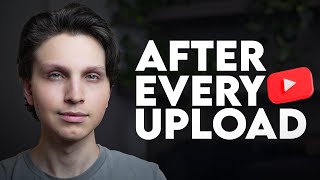
Matt Parr, who runs 12 YouTube channels, walks through 15 steps to take immediately after uploading a video. Most creators skip these post-upload actions like optimizing titles, thumbnails, tags, and community engagement, leaving traffic and revenue on the table. Following even part of this checklist puts you ahead of most competition.
Chapters
Most YouTubers think their job is completely done after they hit the publish button. They upload their video, maybe they share it on social media, which by the way, I do not recommend at all, and then they just hope for the best. But here's what they don't understand. What you do immediately after publishing a video is just as important as the video itself. And if you're not optimizing these critical steps that I think everybody should be doing after they upload a YouTube video, you're essentially leaving views and subscribers and potentially even money on the table. Now I personally run 12 different YouTube channels channels and a community of over 11,000 different YouTubers. And I can tell you that the ones that succeed are the ones with a systematic approach to everything they do after hitting the upload button. And that's exactly what I'm gonna share with you today. I'm gonna show you 15 essential steps that you need to be doing after uploading every single video if you wanna optimize your chances of getting views, subscribers, building an audience, and growing your channel. And before we dive in, let me just be clear about something. These aren't just random tips that I've heard online. These are the exact steps that I personally follow across across all of my different channels. They're the same strategies that I teach to creators within my community who are getting real results. And yeah, this is going to require some effort, but here's the thing. Most of your competition isn't even doing any of this. So when you implement even half of these strategies, you're already ahead of 90% of other creators. And the first thing is to optimize your video file name. You might even just export your file with a file name that has nothing to do with the video that you're uploading. Due to the fact that you might just use the default file name when you're exporting your video, or even worse, you upload a video directly from a camera with no editing at all. And that's a huge mistake in my opinion. You might be saying, Matt, why would your YouTube file name even matter at all when you're uploading a YouTube video? This might seem like a small detail, but here's why it matters. When you upload your video to YouTube, YouTube can see your file name along with all the other metadata that's directly included on the file. In my opinion, if you don't name that file something to do with your video, then you're missing an opportunity to give YouTube additional context to what your video is about. So what you wanna do is name the file name as close to the name of the uploaded title of your YouTube video as possible. I always just do a one-to-one title, so exactly what the title will be, that's what the file name of the video will be. Now admittedly, this probably matters very little on your YouTube video, but in my personal opinion, why not optimize every single little thing that we can? And this is literally just a simple step that'll take you a couple seconds. You just right-click, rename your file, if your file isn't exactly named your title. So not the most important ranking factor at all, but it's an easy win, takes you 10 seconds to implement before you even upload your video. Now what about after your video is uploaded? Well then you're going to need a title, which brings me into the second thing that you should do, which is perfecting your title strategy. Titles are one of the most crucial elements of your video's success. But where most people go wrong is they either pick a title that's way too complicated or way too vague. A good YouTube title has to have 3 simple things. First of all, it needs to include a keyword that people are likely going to be searching for. Secondly, it needs to create curiosity to make people wanna click. And thirdly, it needs to accurately represent what's going to be in your actual video. Now the way that I like to approach titles is by just asking myself, if somebody saw this title in either their search results or in the suggested video feed from another video, would they want to click on it? Would they immediately understand what they're gonna get and be curious enough to click? And what most people don't realize is that your title can be edited after you upload your video. So if you're not sure between 2 or 3 different title options, and what I personally like to do is to get a bunch of different title options, keep them stored in a document, and then pick the top 3 of those. And then if one title isn't performing to your standards or you're not getting as many views as you usually do, then a couple days after uploading, you can swap it out for another one of those variations, and then you have even another one in the bank. It's always good to have multiple different title options. And a quick hack you can do as well to find god-tier titles is to take a bunch of the best videos regarding how to come up with great titles on YouTube. You can literally just search how to find great titles on YouTube copy-paste those links into something like the TubeMagic transcription tool, which is in the micro tools of TubeMagic, and then download those transcriptions, upload it to an AI of your choice like ChatGPT or Claude, and then you can literally chat with that saying, hey, I want to make a video about the best tricks for training your dog to sit. And then your AI will go through all of that best information and then give you titles like, for example, 13 Tricks That Dog Owners Don't Know About to Teach Your Dog to Sit. That's potentially a really good title, and you'll get a ton of options like that if you use trick. Now the third thing is to write a fully optimized description. Descriptions in my opinion are very underutilized for SEO. I see so many people literally just put a link right at the top of their description, which I do not recommend doing at all. Here is exactly how I approach descriptions on all of my YouTube videos. I use a 3-part structure starting with the first part, which is a paragraph that accurately describes the video rich with keywords. So if I'm doing that video about how to train your dog to sit, my description is going to read something like, in this video, I show you 13 unconventional ways to teach your dog to sit, and you will not believe the third trick in this video, which is an absolute game changer for dog owners. This way we're hitting those keywords like dog, sit, train, all in your description, written in a natural way that also builds curiosity to want to watch the actual video and see what is said in the video. Secondly, then I add a link to a very long video on my channel. So if you know anything about me and the methods that I teach and everything, I teach people to make a super long video on their channel that sells something at the end of it. And this is how I have students that make tons of money from YouTube. But this can also just be a video on your channel that's very long. And the reason for that is that if you send people to a very long video on your channel, you're gonna rack up what's called session time. This is basically how long somebody spends on YouTube after watching one of your videos. It's a very underutilized statistic that not many people know about. You can easily do this just by linking to a very long video that's related to your content. Now, if you're not sure what that video should be or anything else, I do have a pretty much word-for-word script as to what to say in that video. If we ever work together, I can give that to you. But after you link to that video, then I typically include links to any paid offers that I have, as well as links to social media or anything else, and then a short description of my channel as well. —so I have those consistent keywords that'll go across all my different videos—implementing something called similar metadata, which ties all your videos together 'cause they all have at least something linking them all together. And then your videos will appear in the suggested video feed of your own videos, so it just gives people one more chance to watch another one of your videos and then potentially another. Another pro tip as well is you can transcribe your videos and then include portions of those in your channel description. But personally, I like to write it myself. It literally takes me like a couple seconds. and I can get that done very quickly. Number 4 is pertaining to strategic links in your description. As we mentioned, we'll put links to a very long video on our channel as well as any paid offers that we have, but also put links to any tools that you talk about throughout your video, and ideally have those links be affiliate links. Now, a great tip for adding links in your description is to use a tool like Rebrandly so you can rebrand those links to your own domain. And also, so if you use the same link in a lot of videos' descriptions, If you ever need to change all of them at once, you can change the destination URL of one of your links on Rebrandly, and it'll change all of the links on all of your videos at once, so you don't have to manually go in and change every single link at the same time. Also, a quick tip: if you are gonna be including affiliate links, make sure to add a very small relevant section of your description that says, "This description contains affiliate links where I will earn money from them." This is a required disclaimer that you should give anytime you have an affiliate link in the description of your videos. And also a quick tip on that: feel free to add multiple other disclaimers as well. For example, if you're giving health advice or talking about subjects like making money or anything else, you can feel free to put a quick disclaimer like, obviously this isn't financial advice, or this isn't health advice, make sure to consult a doctor. Now the 5th thing is to create strategic playlists. Hardly anybody uses playlists anymore, and most people really overlook it. However, playlists can actually be a really good idea to implement on your channel. And what you want to do is you want to have every single video you upload fall into a playlist category on your channel. Now if it doesn't, you can create a new playlist for it. However, what I recommend doing is seeing the most common categories that you upload videos in. For example, for my channel Make Money Matt, that's going to be stuff like how to grow on YouTube, how to make money on YouTube, and so forth. So obviously, naturally, I'm going to have playlists for each of those subjects, and then when I'm uploading a video, I'll add that video to the playlist. You might be saying, Matt, why does this even matter at all? Well, number one, it ties all those videos together. I think it's just one more way you can tie those videos together in the algorithm to potentially send people from one video to another And then also, if you get viewers in a playlist environment as opposed to an individual video that they're watching, then those people will automatically go to the next video in the playlist after they're watching an initial video. And naturally, this is going to drive up your session time a lot. So it is a great idea to implement. Plus, you can organize your channel homepage as well, which is always nice. Number 6 then is to design multiple different thumbnail options. Your thumbnail is just as important, if not more, than your title. Because it's a visual representation of what your video is going to include, and if you have a bad thumbnail and nobody wants to click, even if you have the best video in the world, you're not gonna get any views. So it's very important we have a great thumbnail. How do you do it? What I do and what I personally recommend is to create 3 different variations of thumbnails for your video. And what I typically like to do is to model what already worked. I don't like to just guess, I don't like to just come up with something that might work, it might not. The first 2 variations at the very least should be based on thumbnails that have already gotten a ton of views. And then the third one can be something that you're trying out, maybe it'll work, maybe it won't, some idea that you've had, or it can just be another thumbnail modeling success. And then when you're uploading your video, you'll see a box that pops up that allows you to do an A/B test. This allows you to split test 3 different thumbnails at the same time, and I almost always do this every single time I upload a video. 'cause then YouTube will automatically split test those 3 thumbnails and then choose the absolute best one to keep on your video long term. Now a quick note on that is that if you're not getting many views in the beginning, obviously the data is gonna be limited, so it might take a little bit longer in order to get statistically significant data. It can sometimes even take weeks. However, once your channel grows, you'll get that data in a couple days. Now your thumbnail should be easily readable even if it's very small. Keep the text big, keep the primary object big in the thumbnail as well. Ideally, it also elicits some type of emotional response like curiosity, excitement, surprise, or even concerned. And this automatically tells the viewer what they're gonna get from watching your video. But the number 1 tip is to model what has already worked. Don't reinvent the wheel. Number 7 then is to add relevant tags. Now there's been a lot of debate whether YouTube tags matter or if they don't. Personally, I do still think they provide a little bit of value, especially in the very beginning of uploading your channel when YouTube has no idea what your videos are about. And in my opinion, if YouTube has given us the option of adding tags like they do a description or like they do titles, then in my opinion, why not use it? But make sure you use it in the right way, making sure to put tags that accurately reflect what that video is about so that your video gets pushed to an audience that's actually interested in those topics when YouTube tests your video to a very small audience. If it does good to that audience, they can push it out even broader. So how do you find these tags? Well, I like to use a mix of both broad and specific tags. So I'll typically do a title tag, which is basically the entire title of the video as the first tag, and then after that I'll do specific tags related to the video. So if it's a video about things to do after uploading a video, just like this video right here, I'm gonna put tags like how to grow on YouTube, how to get more views on YouTube, how to upload a YouTube video, and so forth. And then towards the end of the tags, I'll do some more broad tags that are then consistent across all of the videos on my channel, further implementing similar metadata so that all of my videos will be linked together, so to speak. So one of my own videos will be in the suggested video feed of all of my videos. And some examples of tags that might be at the very end might be "how to grow on YouTube" or even just "YouTube" itself. And then I'll also put a channel tag at the very end, so if my channel's called Make Money Matt, that'll be a tag I put at the end, as well as my name, Matt Parr. Number 8 then is to add a relevant end screen. An end screen is simply a video that pops up after watching your video in which you can direct people to watching another one of your videos. Another way you can link videos together. And what I recommend doing here is to put an end screen to that super long video that you have on your channel that I mentioned earlier. Now if you don't have a very long video on your channel, you can also just choose the Best for Viewer option, and YouTube will choose the best video to show to your audience. And you wanna plan for this when you're actually creating your content as well, to have a verbal call to action saying, "Check out this video right here to discover whatever your video is about." Also, you wanna either physically point to it if you're on camera, Or if it's a faceless channel, you wanna have an arrow that pops up saying, "Check out this video right here." Number 9 then is to add cards to your video. Now cards are the little things that pop up in the corner of your video that allows people to click to watch another video. And you can put these throughout your whole video, so it's not just at the end like end screens are. And it's just useful if you ever mention any other videos to be able to link to them very easily. I've also heard from some YouTuber friends who put cards right after their— where audience retention starts going down. So after they upload a video, they'll look at where their audience retention graphs start to decline, where people start to click off their videos, and then they'll place a card right before that moment. So they're trying to salvage viewers to go to watch another one of their videos. Admittedly, this is something I often forget, so a lot of times I don't do this, but I've tried it a couple times and I might have got some viewers that otherwise I wouldn't have. Number 10 then is to place ad breaks. So if you upload videos longer than 8 minutes long, you can put multiple ad breaks on your videos. And this only applies if you're monetized, by the way, but if you are, you'll see this screen right here that'll pop up. Then you can choose to add mid-roll ads on your videos. You just check that to make sure your video's monetized. And then there will be a button to manage mid-rolls where you can actually manually place them if you want. If you're gonna do it manually, then you just wanna put an ad at least every 1 to 2 minutes throughout your video and then taper them off towards the end of your video, spacing them out more and more. However, what I typically do is just let YouTube add them automatically because they wanna optimize for making as much money as possible. So that will in turn make you as much money as possible as well. Number 11 then is to use the private upload strategy. This is something most creators don't know, that they should actually upload their videos as either unlisted or private before they publish it on their channel. And in that time before they publish it, they should complete all their different optimization steps. And this gives YouTube time to process what the video is about, analyze all the metadata that you gave it fully. And a lot of people don't know this, but when they upload videos to YouTube, YouTube will automatically have that video be private. So if you start uploading video and then you close out of the uploader, your video will automatically be private, and it's like that until you hit publish. So you wanna wait for all the checks to run and everything like that before you publish your video, which can take anywhere from a few minutes to a few hours. Number 12 then is to use subtitles in multiple different languages. I don't know why most creators completely ignore this, especially if they're running an entertainment-based channel. So if you're doing an entertainment-based channel, or even a channel where you don't sell something from your channel, I think this does make a lot of sense to use YouTube's automatic dubbing feature. This makes your content accessible to non-native speakers of whatever language your videos happen to be in, and it can get you discovered in international markets where your video might blow up, for example, in Japan where it didn't in Taiwan. But the languages you wanna do first are the biggest languages on YouTube, like Spanish, Portuguese, French, etc. Now the reason I recommend doing this on entertainment channels is due to the fact that your main revenue source is going to be ad revenue. So in that case, you just want your videos to be seen by as many people as possible. However, if your main revenue source is selling something from your channel, like it is on this channel right here, Make Money Matt, then if I dub my channel into multiple different languages, I'm gonna be getting people who aren't necessarily able to buy my programs due to the fact that my program is only in English. So in that case, it might be an exception where you don't want to do that, but I just want to give you that option because Why not use it if you have it? Number 13 then to do after you upload your video is to watch your video immediately. Sure, it gets you a bit of watch time, it gets you your first view, but honestly that doesn't really matter that much since you're watching from your own account. Really, this is just a good opportunity to play it through at 2x speed and to make sure there's no mistakes in your video and everything looks good. See if you missed putting a card at a certain point in your video. I always do this even to this day, even though I don't edit any of my videos or anything like that anymore. And on most of my channels, I don't even make the videos. but I always like to watch through them real quick just to make sure everything's good after I upload them. Number 14 then is to add links from your Shorts to your long-form content. If you are using YouTube Shorts, then you have an opportunity to drive traffic to your longer videos by utilizing something called the related video option. This is an option on YouTube after you upload your Short in order to link that Short to a longer video that allows users to then click to watch that video. Then you can send people to an opportunity that will get you more watch time. Also, long-form videos have better monetization potential, so might as well utilize this. Number 15 then is to engage with your community. Finally, once your video is live, a lot of people think that their job is done and then they just leave their computer or their phone or however they uploaded their video, but it actually isn't. Just take 5 or 10 minutes after you upload your video and answer any comments that you have on your channel. This can either be on the video that you just uploaded if you're already getting comments, but if you're not, go through your comment section on your past videos by going through the Community tab within your YouTube Creator Studio and answer comments on a bunch of your videos. But here's the secret: don't just reply with thanks, but instead reply with an open-ended response that will make people want to come back to your channel. For example, if someone says, "This is a really good video, I loved it," reply with, "Oh, I'm really happy to hear that. What did you like so much about it?" This causes them to come back and leave yet another comment, which gives you more engagement, and also it will drive up your watch time because they might watch a bit more of your video. And also this keeps your channel top of mind, which is very important for the video that you just uploaded because they might come back to your channel then and then watch that video as well. Now at this point you might be saying, Matt, this sounds like a lot of work to do for every single video that I upload. And you're right, it does take effort, it does take consistency in the beginning, but here's the thing: most of your competition isn't doing any of this. And once you start doing this on a regular basis, it gets easier. You might have heard me mention the fact that I run 12 different YouTube channels, most of which are completely faceless. You might be wondering, how am I able to do that? How have I been able to make YouTube into a business that has allowed me to never work a traditional job and everything like that. Well, I've actually got a completely free training that's here on YouTube. You can check it out next to me right here. And in this free training, I'm gonna show you exactly how I do that, the best niches to do this in right now, the new way of doing faceless YouTube channels that nobody's talking about right now. This is basically a free course right here. You're gonna get so much value from it. Trust me, watch this video. You will thank me for it later. And also, feel free to click the link down in the description if you ever wanna work with me and my team where we can just make your videos for you and do a lot of those for you. Make sure to check that out down in the description. My name is Matt Parr, and I'll see you there.
More from Matt

I Let GPT-6 Astra Run My Faceless YouTube Channel For 60 Minutes and THIS Happened

Stop Waiting for 1,000 Subscribers to Make Money on YouTube (Do THIS Tonight)




I Tested Letting Claude Fable 5 Create a YouTube Channel for 1 Hour and THIS Happened

