WARNING: These YouTube Niches Are Now BANNED
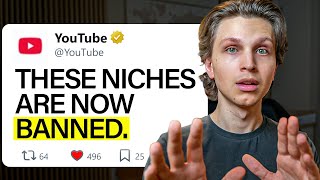
Matt Parr warns creators that YouTube’s enforcement has dramatically tightened in 2025, effectively banning several high‑risk niches. He illustrates the crackdown with four detailed case studies – the AI‑education channel HowToAI, the celebrity‑news channel RomeyRoh, a massive AI‑generated misinformation campaign around the P. Diddy trial, and the fabricated true‑crime channel True Crime Case Files – each terminated for violating spam, deceptive‑practice, or misinformation policies. Parr then explains the underlying policy shifts: the July 15 2025 Partner Program update that bans “inauthentic” mass‑produced content, and the May 2025 mandatory AI‑disclosure requirement that forces creators to flag realistic AI‑generated elements. He enumerates the niches most likely to be targeted (faceless sensational compilations, make‑money‑online, AI‑slop/Reddit‑scrape channels, true‑crime, news/political commentary, celebrity gossip, police‑body‑cam compilations, and un‑licensed compilations). Finally, he offers concrete survival tactics – add genuine human commentary, original research, unique perspectives, or an AI‑avatar persona; disclose AI content via YouTube’s checkbox; and use his AI toolkits (TubeMagic, Vid.ai, Invid.ai) to enhance value rather than churn low‑quality “slop.” The video ends with a call to action to watch his free course on profitable, compliant niches.
Chapters
There's some specific YouTube niches that you should always avoid no matter what, and they might as well be banned from YouTube. Now, YouTube doesn't go out and they don't ban specific niches, so to speak. However, YouTube is terminating thousands of channels right now, and I've never seen anything like this before in my past 10 years on YouTube. But what most people don't know is that it's actually very easy to avoid potentially losing your channel and potentially losing out hundreds of thousands of dollars in revenue that your channel could have made you. My name is Matt Parr, and if you are a content creator who is using AI in any part of your video process, this video is especially important for you to watch. But it's also super important to watch if you're in any of the niches that I'm about to share with you. You might be saying, Matt, YouTube has always cracked down on spam and certain types of content. How is this any different what's happening right now? Well, let me put this in perspective for you. I personally have been doing YouTube for the past decade. I run a bunch of different channels myself. I've coached over 11,000 other YouTubers. I've seen plenty of policy changes throughout my time, including algorithm updates, monetization shifts, and new community guidelines. With what's happening right now, people feel like YouTube is waging war on their channels, and that's because certain detection systems on YouTube have gotten so much better, and certain niches you should really just steer clear from. But don't worry, because YouTube isn't doomed. It's not over. You just need to understand these changes and learn how to avoid them at all costs. Now I'll be telling you all of these niches in just a minute, but first I wanna share some channels that were actually recently terminated on YouTube and then tell you what they did wrong, if they did anything wrong. Because with a lot of these terminations going on, a lot of people are wondering why would YouTube be doing this? Because at the end of the day, YouTube makes money if people make money on the platform. And by YouTube banning people, it actually hurts themselves. So why in the world would they be doing this? Well, the answer is a lot more simple than you probably think. I'll be answering that. I'll be going into the exact niches that you need to avoid at all costs. But first, we need to take a look at some of these channels that recently got terminated. Now, let me start with what is, in my opinion, the most shocking termination that sent shockwaves throughout the entire YouTube automation community recently. And that was earlier this year. The channel HowToAI was terminated from YouTube. Now, the channel's owner, who's this guy that goes by Leo, explained that he received the first strike a year ago and then received 2 strikes literally consecutively on a few of his new videos. As you might know, if you get 3 strikes on your channel, your channel is completely banned. Now, HowToAI wasn't just a random channel. It was one of the best educational channels in the space. It was bringing really impressive numbers in terms of views and revenue. I believe Leo said the channel was doing over $1 million a year. Now, obviously channels were getting taken down before this as well, but this started a really big conversation on social media, and eventually I started noticing a pattern. This pattern almost led me to getting my channel deleted as well. So the question here is, what the heck is really happening? And I'll get into the real reason that this channel, at least in my personal opinion, was banned. But first, let's look at the second case study of a channel that was banned which was by a creator named RomeyRoh who had a channel in the celebrity news niche that was taken down without any warning. He then went on to submit an appeal. He explained his content, provided context, asked for a review, and YouTube's response was shockingly quick. Within minutes, his appeal was rejected. The generic YouTube response said that his channel was probably hacked and that the new changes went against the community guidelines. But think about the appeal decision for a second. A human being could not possibly review a channel's entire content library "Read an appeal, investigate the claims, and make an informed decision in a few minutes." This was clearly an automated system that was making the final call on this. And what this tells us is that YouTube spam detection has become so advanced and so aggressive that creators are being judged by AI systems and not humans. And once those systems flag you, there's almost no way to get a real person to review your case. This is the new reality of YouTube right now, and as scary as this is, you might be thinking, is YouTube even worth doing anymore with like stuff like this happening? But if we look at it from YouTube's point of view, they really don't have any other options. And I'll explain why in just a moment. But now let's look at case study number 3. You might have remembered earlier in 2025 when the P. Diddy trial was making headlines around the world. Dozens of channels were pumping out these AI-generated videos about the trial, making false claims, creating fake testimonials, spreading outright misinformation of other celebrities giving their opinion on the trial and everything else. Stuff that those celebrities literally never even said in their lives. In these videos, we're of course getting massive views. The more controversial and crazy they are, the more views they're gonna pull. But according to several news reports, just 26 YouTube channels created roughly 900 videos about the P. Diddy trial that accumulated nearly 70 million views in just a year. That is not a small operation. That's literally an industrial-scale campaign for doing this. So how do these channels operate? Well, they would AI-generate thumbnails showing celebrities like Jay-Z, Usher, Brad Pitt, Oprah, and others on the witness stand with completely fabricated quotes. One video showed Jay-Z crying with the fake quote, "I will be dead soon." Another claimed that Brad Pitt testified against Diddy, even though that never even happened. None of the quotes were real. None of those events ever happened. But the videos looked just real enough that viewers believed them. They used AI voiceovers that sounded professional. They recycled case trial news mixed with AI-generated images. They created completely fake narratives that made it seem like major news events were actually happening. Now, YouTube's response was to terminate 16 of these channels and then demonetize several others. This was at least what was publicized in the news when YouTube did this. And it's pretty obvious why this one happened. I mean, they're just spreading blatant misinformation. But here's what this situation really tells us. YouTube is actively hunting down channels that create fake AI-generated content around very sensitive topics, especially like trials, elections, and public health. Now the thing is that videos like this have always been spread on YouTube. This is not just like some new thing that's happening, but YouTube's detection systems have gotten better. And really, the YouTube terms of service haven't really changed that much, but what has changed is better detection mechanisms for that type of content. And when misinformation reaches getting 70 million views, it's not a simple policy violation, it's a threat to YouTube's entire credibility as a whole. Now, before we get into all of the niches and I share with you exactly how you can easily avoid this, let's look at the fourth and final case study, because with making this video, I feel like I should let you in on another really big case that shows how dangerous AI content has become and why YouTube is cracking down so hard. So in February 2025, this year, a YouTube channel called True Crime Case Files was getting millions of views on documentary-style videos about gruesome murders. One video in particular went super viral, got nearly 2 million views, described this horrific crime that supposedly happened in the specific town in Colorado. The production quality looked professional. The narration sounded legit. The details were specific and they were very disturbing. Everything about it seemed real. People were so convinced this was actual true crime coverage that they started contacting Denver Post asking why they haven't covered this major story. Elizabeth Hernandez, who is a reporter at the paper, started investigating. She searched for any record of the crime— police reports, news coverage, court documents, anything. She found absolutely nothing. And the reason she couldn't find anything is because the murder never happened. None of the crimes on the channel were real at all. The creator was using the pseudonym Paul, and in interviews with 404 Media, he admitted that he had generated over 150 videos using ChatGPT for the entire scripts and AI image generators for visuals. They were all completely fabricated. The thumbnails were designed to be as clickbaity and as disturbing as possible because obviously the more sensationalist that is, the more views it's gonna get. But viewers believed they were watching real documentaries. Now it's probably not too surprising to learn that YouTube eventually terminated this channel, but not just for spreading misinformation. They terminated it for several violations of their guidelines. And when Paul was interviewed about it later, he tried to defend his actions saying, It needs to be called true crime because true crime is a genre. He wanted the audience to think about why they care so much that it was true, why it matters so much to them that real people are being murdered. But YouTube and the public didn't buy the excuse, and most people think what he did was wrong. So at this point, you're probably asking, Matt, what do YouTube's actual policies say about this? Because if the policies haven't changed, like you said, they haven't changed, then how are all of these channels getting terminated? Well, I'm gonna break all that down for you, exactly what's in YouTube's Community Guidelines. I'm gonna give you direct quotes from their official policy documentation so you can see this for yourself, and I'm gonna show you niches that you need to be avoiding right now because these niches might as well be banned. Now obviously specific niches aren't banned on YouTube, so to speak, like I mentioned, but in my opinion you should avoid them, especially avoid doing them in specific ways I'm gonna show you so you can avoid your channel being banned because it's pretty easy to do and I'm gonna show you how to do it. So if we take a look at the policy documentation under YouTube spam Deceptive Practices and Scams policy, they explicitly prohibit content that intends to scam, mislead, spam, or defraud other users. This includes posting large amounts of untargeted, unwanted, or repetitive content, content where the main purpose is to drive people off of YouTube, content that primarily monetizes another channel's work, and videos with misleading metadata and thumbnails. And here's the key phrase that's getting these channels terminated: This is especially true if there's a serious risk of egregious real-world harm. What this means is that YouTube has always had these rules in place, but now they're enforcing them aggressively when it comes to AI-generated content that could mislead viewers about real-world events. And that actually brings me to the policy update that changed everything. On July 15th, 2025, YouTube implemented updated guidelines for their YouTube Partner Program. Specifically targeting what they called "inauthentic content." And YouTube's head of editorial, Reen Ritchie, tried to downplay this as a minor update to their long-standing policies. He said it was just designed to better identify content that is mass-produced or very repetitive, and he's insinuating content that doesn't provide value to people. But let's be real about what this update actually does. YouTube updated their monetization policies with more detailed guidelines about what type of content can earn creators money and which cannot. The exact language states that content must be significantly original and authentic to remain eligible for monetization. Now, I've created a complete detailed video on this and I explained what the new changes are. So if you're a content creator, this is an incredibly important video for you to watch. I'll make sure to link it down in the description. But to give you a short overview, if you're using AI to mass produce content at scale without adding any significant human creativity originality, and especially most importantly, value. So someone can walk away from your video having more value that they had than they came in, whether it's entertainment or educational value, you will lose monetization or get your channel terminated entirely. Now, another critical piece that so many creators are completely missing and is causing terminations left and right was that starting in May this year, YouTube implemented mandatory disclosure requirements for AI-generated content. And this is not optional, by the way. This is a very strict requirement that if you violate it repeatedly, can lead to content removal or even suspension from the YouTube Partner Program. And what YouTube requires is that if your content includes realistic AI-generated or altered elements, you simply have to check a box as you're uploading a video saying that it includes altered content as a setting in your YouTube Studio. This specifically applies when content appears realistic but does not reflect actual events. You have to disclose if you're making a real person, for example, appear to say or do something that they didn't, altering footage of real events or places, or generating realistic-looking scenes that didn't actually occur, or if you use AI to create synthetic voices for real people. So this is pretty easy. You just check a box when you're uploading your videos and you can still use AI 100%, but you have to make sure to check that box because YouTube is owned by Google. And Google owns DeepMind V03, which is the state-of-the-art AI video model that they're now also implementing onto YouTube Shorts. So YouTube is totally fine with AI, at least from what I'm seeing, but only if your AI-generated content gives people value. And for sensitive topics like elections, public health crises, or ongoing legal matters, YouTube adds a more prominent label directly on the video player. And based off of my personal experience from being in contact with people running thousands of different channels in my community, I can tell you that one of the biggest reasons channels are getting terminated right now is because they're not properly labeling their AI-generated content. Even if the content itself isn't spam, if YouTube systems detect realistic AI-generated elements and you haven't disclosed them, then you're at risk. So think about that. You could be creating completely legitimate, valuable content, but you forget to check a box in the YouTube Studio and it could pose a risk to your channel. So now that we understand the policies and the enforcement, let me break down which niches are extremely dangerous to be in right now. And I'm not just talking about niches that might have issues in the future. I'm talking about niches where channels are getting mass terminated right now. And the first niche is faceless sensational entertainment channels. You might be saying, Matt, what do you even mean by that? What I mean is that if you're running a channel that uses clips from other creators, uses AI voiceovers, and doesn't add significant commentary or transformation, then you're definitely in danger with your channel because YouTube is actively targeting channels that simply compile content with little to no effort. And the days of just slapping together movie clips or just completely AI-generated images and then AI-generated voiceover of a story that doesn't even make sense— this is not content that's bringing value to people. So those days are over. Unless you're adding genuine analysis, unique perspectives, or significant creative transformation, then your channel is at risk. Niche number 2 is the make money online niche. This is one that hits pretty close to home, honestly, due to the fact that my channel was also affected by this and I almost lost my channel. I was only one strike away from my entire channel getting deleted. And we saw that example earlier of that channel HowToAI. Even though that guy running it, Leo, was teaching legitimate strategies, helping hundreds of thousands of people, his channel still got terminated. Now I'm going to make some speculations on why this happened, but in my opinion, they're pretty informed due to the fact that I've spoken to so many people with make money online channels, and I've been studying this niche for years and years at this point. But the reason that I think this channel got terminated is due to the fact that it's making claims of you're gonna be able to make this much money specifically if you just watch this video. And in my intuition, I think that agencies, especially within the United States like the FTC, are putting pressure on companies like YouTube to take any videos or channels down that make these big claims because it reflects really badly on YouTube and it could even get YouTube into legal trouble. So YouTube, in an effort to protect itself and even the creators on it, are taking down content that looks like it's promising that somebody's gonna be able to make specific amounts of money. So I actually got 2 strikes on my channel, and if you get 3 strikes on your channel, your channel's completely deleted, due to the fact that I've uploaded a lot of videos showing people different methods of making money online and everything else. And even though I show legitimate methods, and I always make disclaimers that obviously not everyone's gonna make money. This is in no way a guarantee you'll make any money at all. YouTube especially is looking at titles and thumbnails and seeing if you're promising people that they're gonna make any money. If you put, for example, in your thumbnails, you're gonna make $100 a day, or if you put in your title, "How to make $100 a day guaranteed online," that's a terrible title. That's something that YouTube is likely going to ban. And I actually had a playlist of some of the biggest make money online videos on all of YouTube that I went into several months later after I made the playlist and half of the videos were missing. So this tells me that those videos were either taken down directly with strikes on the videos or the channels got strikes. So then it pressured them to go ahead and private those specific videos. That being said, there is a way to do the make money online niche in a really good way. And if you need to see an example of that, you can look at what I've been doing on my channel over the past few months now. I've tried to really shift my entire channel doing less so videos like how to make money online and doing more so how to build a real online business with YouTube. That's the kind of vibe you want to do. And a huge tip and a trick for this as well is to make a custom GPT using something like ChatGPT of the YouTube's terms of service where you just copy paste all of them in there and then you can go ahead and run any video ideas you have through that GPT and it'll tell you whether it thinks that that idea is a risk or not. Now the third niche that is a huge problem that you should avoid at all costs are AI slop channels. AI slop channels, at least in my opinion, are channels similar to those revenge story channels that you may have seen on YouTube that literally just scrape Reddit and then copy-paste stories directly from Reddit into their own content. Huge copyright concern, number one. Number two, even if you don't get hit for that, it's literally just AI generated. You're just literally having an AI bot make those videos and it's not providing any original value. It doesn't matter if the stories are entertaining. It doesn't matter if your audience likes them. If YouTube systems detect that your content is heavily AI generated, without significant transformation, your channel could get banned. Another example of a channel that got banned was from this guy named Aris, who posted on Twitter that he had a channel that helped people relax and sleep, and his channel got terminated without any warning. So in my opinion, if you're gonna do like meditation-style videos or relaxation-style sleep videos, make sure that you have an actual voiceover in the background of the video. Don't just do, for example, sleep sounds and AI generate a song or don't just, you know, take a song from the YouTube audio library and have that be playing in the background, or a song from YouTube. If I'm doing that niche, I would make sure to have a guided meditation throughout the video. It's not just like a mass-produced, low-quality video. Niche number 4 is the true crime niche, because after that true crime Casefile situation, YouTube especially is looking at these true crime channels really carefully right now. And if you're creating content that could be mistaken for real crime coverage but it isn't properly sourced, verified or disclosed that it is fictional, because you can do fictional stories on YouTube, but you have to say like, this is a scary story, this is a fake story, then you could be violating YouTube's policies. And especially if your content involves kids in any way, that's a huge no-no on YouTube. That's something I've seen YouTube is cracking down really hard on right now. Niche number 5 is news and political commentary. Any channel that's creating content around current events trials, elections, or political figures where you use AI-generated elements without properly disclosing that, you know, AI was generating this is going to probably get banned. The P. Diddy situation that I mentioned earlier proves that YouTube will aggressively remove misinformation around sensitive topics. Similarly, there's this other guy on Twitter, Noah Morris. He also got one of his political channels deleted because of misinformation and quote-unquote spam content. So if you're in that niche, you need to be extremely careful with your content. Make sure it's true. Make sure that AI is not just making up random quotes from people before you upload it. Niche number 6 is celebrity drama and gossip. If you use AI-generated thumbnails with celebrity likenesses, fabricated quotes, or misleading titles to drive views, then your channel's at a huge risk because they consider this deceptive metadata. If your thumbnails show celebrities in situations that they weren't actually in, or your titles make claims that aren't true just to get clicks, your channel could be at risk. Now, as a YouTuber and a full-time content creator myself, I honestly believe that almost no niche should be taken down on YouTube. I do think it makes sense to put disclaimers, especially if something is just blatantly untrue, or especially if it could be very harmful or something. I do think there should be disclaimers on those types of videos for sure. But to just take these videos down en masse and have an AI doing it, especially if people don't know the information— like, imagine you didn't come across this video right here today. You might have not have ever got this information. You could mistakenly, innocently have done something wrong that you didn't even know, and then your channel's banned. You don't even get an explanation for it. So thank God you came across this video today. So I can show you exactly what to avoid. Now, the next niche is the police body cam niche. If you do this the wrong way and if you cut specific clips to make it seem like something is happening that didn't actually happen, that especially could have an effect on some ongoing legal trial or something like that, then that could put the channel at a huge risk. So you need to make sure that you're not editing things in a way to portray things not as they were. Also, you should avoid compilation videos where you just take other people's videos and put them together as a compilation. Especially if you don't have express permission from them, unless you're doing an original voiceover on top of the video. So I've talked about all these different niches to avoid. Now let me show you the secret for actually staying safe on YouTube, even in some of the niches that I just went over. And that is that you need to add genuine human value. This includes commentary. Now you can use AI voiceovers as well. It doesn't have to be your own voice. I personally would use a voice that not many people have used. You can feel free to use my own even. It's on ElevenLabs if you'd like to use it, or you can even clone your own. Also, original research definitely helps a lot. A lot as well. Unique perspectives, actual creative input, having an avatar even be the face of your channel, so to speak, like channels like Yellow Dude, who's doing an incredible job in the health niche on YouTube, who's absolutely crushing it. Also channels like Zinni Studio, who's clearly an AI avatar, is doing incredibly good as well. Builds trust, and you build an actual character and an actual connection with the people who are watching your channel. These are what separates channels that survive from ones that get terminated, in my opinion. So you can use AI tools. I personally own several AI companies, including TubeMagic and Vid.ai, Invid.ai will actually generate full 20-minute YouTube videos from a script. But you don't just want to AI generate a script and then put it in there and then say, hey, it's good. No, you can use AI to help you with generating your videos, but you need to make sure that your video actually provides people value. And by definition, the way to make the most valuable video, at least in my opinion, is to take the information from all of the top videos on the subject that you're making a video on and then put it all into your own video, then your video by definition would be the best in terms of value. And that's what my second AI software, TubeMagic, helps people with. They can go in and paste in context video links to multiple other videos that they're recreating, and it'll take all the information from multiple different videos, putting it all into their own video, and then it'll structure it and write it in a way to keep people's attention on YouTube. Plus you can choose a word count and everything else. So I've tried to build my AI tools in a way to actually give people more value instead of just generating crap that you could just generate with something like ChatGPT, which is just gonna pull in random information out from the internet that's not going to be formatted directly for YouTube, and it's not going to be very good. So the thing is that these YouTube policies have existed for a long time on YouTube, but YouTube's AI detection systems are better than ever now, and they can now scan content at scale and identify patterns that could indicate if content is mass-produced or AI-generated, super repetitive and low value, or something that poses a significant legal risk to the company. So make sure you check that box box when you're uploading videos if your content involves any type of like AI character or anything else where an AI is saying something that they didn't actually say. And don't worry, you will not be punished if you do that check mark. Your video performance will actually not even be affected at all according to YouTube. Now before you panic and you say that YouTube is over, I actually dealt with similar stuff back in 2015 where I've had issues with my channels back then in terms of using music that was accidentally copyrighted, or in terms of using a clip and have an issue with that. And I had my parents, I had teachers, I had friends telling me that YouTube is not going to be a long-term thing. It's not going to be here 10 years from now. But here I am sitting here 10 years later making more money than I've ever made on YouTube. Last month we did over half a million dollars from YouTube in my companies. I'm not saying that to brag whatsoever, but I'm just saying that to show you that I think YouTube's only going to get bigger over the next decade. But it's the people who use it the right way who are going to be the ones that win. And you could look at this as some of these channels that are getting deleted and are getting banned and everything else. That lowers the competition for you in some regard. Now, whether you agree or disagree with what's going on, we do have to play by YouTube's rules if we are going to stay on the platform in good standing and grow a big business. Because at the end of the day, YouTube makes money if you keep people on the platform. And YouTube also makes money if people see ads. And the only way they're going to surface ads is if your videos are legal, they actually provide significant value so people actually want to watch them, and your videos are advertiser-friendly. User-friendly. In my opinion, the way to make sure that your videos hit those specifications are to make sure you're in one of the best niches on YouTube and you do YouTube in a specific way. Now, I recently did a video on my channel which is basically a completely free course that you can watch, and in that video I go over the niches that are really good on YouTube, that actually work for doing YouTube right now, that are allowed on YouTube. And I also go over the kind of weird ways that I'm monetizing this niche and how I'm monetizing channels from the very first day I start them. I know that sounds crazy, but I'm gonna actually back it up for you in this video right here next to me. Feel free to check it out. I'll show you exactly how I'm doing this, exactly how I'm making millions from my channels. Now obviously it's not a guarantee you'll make any money, but I'll show you exactly what I'm doing right here. My name is Matt Parr. Hope you got value from this, and I will see you there.
More from Matt

I Let GPT-6 Astra Run My Faceless YouTube Channel For 60 Minutes and THIS Happened

Stop Waiting for 1,000 Subscribers to Make Money on YouTube (Do THIS Tonight)




I Tested Letting Claude Fable 5 Create a YouTube Channel for 1 Hour and THIS Happened

