In this weekly AI news roundup, host Matt Wolfe reviews the most notable developments across the AI industry. He begins with Anthropic’s Claude Duet, a proactive personal‑assistant agent that can schedule tasks, draft messages, and integrate with dozens of productivity tools, though it remains in limited beta. He then shifts to two major security incidents: a 20‑year‑old PHP vulnerability that AI (GPT‑5.6 Sol) helped expose, leading to rapid exploitation across the web, and a breach of the Railway platform that exposed encrypted environment variables and API keys, forcing many developers to rotate credentials. Wolfe highlights HyperAgent’s new integration that lets ChatGPT subscribers run a team of AI agents without extra subscriptions. He details OpenAI’s recent Codex & Work updates, including context caching, edit‑in‑place messages, locked chats, and the general availability of the Decisions API built on GPT‑6 Luna. He showcases new tools such as Ideogram’s vector‑SVG generator, ElevenLabs’ Chimera lip‑sync system, Perplexity’s open‑source decision models and Mac‑run Perplexity Computer, and the growing tension between “agent‑friendly” versus “agent‑blocked” websites, citing Amazon, Yelp, Shopify, and others. Additional highlights include Mistral’s VoxDroll 3 voice agent, Canva’s Craft image model, rumors of an upcoming OpenAI GPT‑Image 3, Zoom’s deep‑fake detection for enterprises, Microsoft’s MAI‑DXO medical superintelligence model, and Unitree’s X2H robot demo. The episode ends with a call to subscribe for future AI roundups.
Chapters
Here's the AI news you probably missed this week, starting with Claude Duet. This appears to be Anthropic's answer to ChatGPT's Dots, Meta's Muse, xAI's GrokBot. This is their personal assistant that not only does things on your behalf, but is also sort of proactive in alerting you to things maybe you should be doing. So we can see here that it's proactive. It says, morning, Nicole. For today, health permit, hiring decisions, Northfield renewal. So this doesn't appear to be a response to somebody prompting it, but the actual agent going and being proactive and reminding you of things that are happening. We can see it then follows up with more details as well as suggesting something the app could actually take care of for you on your behalf right now. As we can see, it can use tools. It says pulling from point of sale, your online store, CRM, support, payroll, and bank. And it even presents like a nice clean dashboard. This actually looks better than like what we might get out of Dots or something like Muse because it's got this dashboard right in line with the rest of the agent chat. And like I mentioned earlier, similar to Dots and Muse and some of these other tools, it will reach out to you before you actually ask it to reach out, even going as far as drafting up messages for you to just go ahead and use for things. It could help draft up emails for you. And let's be honest, it seems like it can do a lot of the stuff that we've been getting out of Dots and Muse and GrokBot and things like that. Now, I would demo this one for you personally, but they didn't open it up to everybody. If you're on a Pro or Max plan, you can join the waitlist, and they're sort of, I guess, picking and choosing who gets off the waitlist because I do know some people have access, but I haven't been chosen yet to actually try this out, so I can't demo it for you. They also mentioned that it does handle sensitive information well. It says they're releasing it with a dedicated classifier and safety system prompt that checks each message and guards against leaks of sensitive information, so you don't have to worry about getting a message that includes your credit card numbers or government IDs or anything like that. As As far as what it'll connect to, it appears to be able to connect to all of the usual suspects: Gmail, Slack messages, QuickBooks, Stripe, Gusto, LinkedIn, DocuSign, HubSpot, Canva, Shopify. So a lot of the same apps that we're getting in all of the other agent platforms. I do really like the way Duet looks in their demo video, especially that dashboard. It looks really clean. I've been a big fan of using Dot and Grokbot so far, so I'm excited to try Duet when I can finally get my hands on it. Unfortunately, I do not have access to it yet. I am I have been in communication with people over at Anthropic, hoping to get my hands on it soon, in which case I'll do a bit deeper of a dive on it. Now, while Duet was probably the biggest launch of the week, I say launch in air quotes 'cause most of us don't have access yet. The biggest story of the week was probably all of the cybersecurity issues that have happened. And these are like big issues, things that affected a giant percentage of the web. The first one being, well, the PHP issue. If you're not familiar with PHP, it's a programming language for the web. And And by some accounts, up to 70% of websites use PHP in some capacity. It's the programming language behind Wikipedia, WordPress, Drupal, DeviantArt, 4chan. A lot of the internet uses PHP. The Verge here actually put together an account of sort of what's been going on with PHP, but here's kind of the big idea behind it. The vulnerability was actually found by OpenAI earlier this week. GPT-5.6 Sol was used to identify the PHP exploit before attackers did, so they actually got ahead of this one and shared a tool that lets developers check if they're using potentially vulnerable version of PHP that needs patching. Now, as a result of this, a handful of websites around the internet had to go down for a little bit to patch these vulnerabilities. Now, it's interesting to note that the vulnerability isn't a new vulnerability. It's actually been present in PHP for 20 years. However, actually exploiting it required an exceptionally complex chain of steps at the edge of what human researchers could practically achieve. However, because we now have powerful AI models, it's much easier to turn that kind of obscure bug into an actual dangerous vulnerability. The CEO of Cloudflare, Matthew Prince, said that in the 10 hours before it was publicly announced, they saw thousands of attempts to exploit this bug. That jumped to tens of thousands in the 45 minutes post the announcement that this vulnerability existed, and to hundreds of thousands within 2 hours, and millions now. So as soon as people were made aware that this vulnerability existed, it was getting exploited Like crazy. If you're not familiar with Cloudflare, it's sort of this layer that lives between like where your site is hosted and the domain name, and sort of traffic gets routed through it for, let's just say, speed and security reasons. Now, all said and done, this didn't do a ton of harm other than a bunch of websites around the internet had to temporarily go down to patch this. However, it does kind of show the amount of havoc that AI can wreak on websites and the internet as a whole, because this was a bug that's been around but just too difficult to exploit. And now that they have AI models, they can exploit some of the most difficult bugs we've ever seen. The security firm Wiz called this among the most severe vulnerabilities discovered in software history. But that wasn't the only big issue we got this week. Also this week, the company Railway got attacked, and an unauthorized third party may have accessed encrypted environment variables, and some of them obtained the decrypted contents. So if you're watching this going, I have no idea what that means, so let's start with what Railway is. Railway is sort of an infrastructure layer where people build web apps sort of host all of the backend database and information for their web app. Now, when they say they got access to environment variables, environment variables are often like API keys. So if a company built an app that uses OpenAI or Anthropic as part of the app's infrastructure, they would store their API key for OpenAI in the environment variables. So companies that built their apps on top of Railway have a chance that their backend variables were accessed And whoever accessed them was able to get access to their API keys to use tools like OpenAI and Anthropic. And if that's the case, people or company or entity that exploited it now has access to use your API keys, which would charge you. So they could go and use OpenAI or Anthropic tools and it would charge whoever owns the API key. And because a large volume of online apps use Railway's infrastructure, That's potentially a lot of API keys and environment variables that people got access to, which basically means a ton of companies that build apps had to scramble this week to go rotate out their API keys and deactivate old API keys that might have potentially gotten compromised. And all of this is happening because AI is getting better and better at coding and cybersecurity stuff. And we're just kind of at this tipping point where AI is so good that it is starting to like break the internet. And yeah, where we go from here is kind of scary. Luckily, it does feel like some of these AI companies are trying to stay right on the edge of it and solve these problems like right before they happen, like we saw in the case of the PHP incidents. But in the case of the Railway incidents, the damage is done and it's leaving a lot of developers scrambling to go and change out API keys in their environment variables. And also, it's really scary if you're building stuff online right now because Because if this happened to Railway, who's to say it can't happen to Vercel or some other platform where your web app or website is hosted on? I mean, honestly, it doesn't feel like much is safe right now, and that's kind of a scary thought. Another cool update this week is from HyperAgent. If you're already paying for ChatGPT, you can now use that same subscription to run a whole team of AI agents inside of HyperAgent, which solves the really annoying problem of having to sign up for a million subscriptions across all these different platforms. And if you don't know what HyperAgent is, It's basically a platform built around the idea of hiring AI agents that work more like employees. You can create different agents for different jobs like research and content generation, analysis, operations, like whatever. And they have multiple agents and multiple people all working together inside the same room. So now instead of paying for another separate AI plan just to get started, you can simply sign in with the ChatGPT plan you already have. Or if you want more usage, you can choose one of HyperAgent's paid plans and get $100 in bonus credits. So check it out in the link in the description box. And thanks so much to HyperAgent for supporting my channel and sponsoring this portion of today's video. So like I mentioned a couple weeks ago, OpenAI said that over the next 28 days, each day will either ship one thing that is a clear improvement to Codex or Work users, or they'll ship a full reset. The last 2 weeks I've given you an update of everything they've shipped so far, so I want to continue that this week and let you know what they've shipped in the past 7 days. For the most part, it's been another set of sort of smaller updates and more resets. So on day 12, they made improvements to Codex and Work that increased the effective usage you get. They did it by reusing context across subagents, keeping context cached longer, and improved request routing that allows them to increase cache hits. Day 13, they didn't release anything, so they gave a reset. Day 14, they released a new quality of life improvement. You can now edit previous messages within a thread In the desktop app. I didn't quite understand this, and I think James here said what I was thinking. I'm genuinely confused as to what this means. So a prompt I've sent earlier, I can go back and change? Does it register like a steer? Thibault said it registers as time travel. But then VB here, who also works at OpenAI, says, We discard all model outputs and tool calls post the edited message. This makes it so the model doesn't get confused overall from confounding messages. So I guess it's kind of like going back and starting over from a specific point, which I don't quite understand how that's much different from just like steering it in a different direction and like forking it off. But I don't know. That was the update from day 14. If somebody has a better understanding of what this actually means, feel free to comment below the video. Let me know. Day 15, really nothing of note. So they gave a reset. Day 16, you can now cache for 12 hours in the API and for logged-in users across Codex and Work, we keep cache forever. And you don't have any penalty for coming back to an old conversation or resuming after a few hours and are now guaranteed to hit the cache. And then day 17, you know, the day I'm actually recording this, uh, they give us another reset. So again, all fairly minor improvements. The cache one from day 16 seems fairly significant, like you're going to use less tokens more often when you're having conversations because it's going to refer to the cache more often. That seems pretty cool. Other than that, everything feels very pretty minor. OpenAI rolled out a locked chats feature where you can actually lock your chats behind a PIN. So somebody opens up your computer and opens up your ChatGPT account, you can have chats that aren't easily accessible unless a PIN is entered. I don't have it in my account yet, but this notification does say locked chats are rolling out gradually. So if you don't see it, then it's probably not available in your account yet. They also announced broader availability for the Decisions API. I feel like this is like The third time they've announced the Decisions API. They announced it during Dev Day, and then like a week later they announced that it's available for more people. And then this week again, they made another announcement about it. But it does say today we're making the Decisions API generally available. Built with GPT-6 Luna, the Decisions API focuses on Luna's intelligence on questions with bounded answers. So basically, instead of you giving it a prompt and it giving you an output it back with a bunch of text. It could either give you an estimated probability of something, it can pick from a selection of choices, or it can give a score of something. A few weeks ago, Jev was all the rage. This is basically OpenAI's response to Jev, and, uh, for the 3rd time they announced it again. All right, let's move on to some things that we can actually play with right now. The company Ideogram, which has their own proprietary image generation model, they actually rolled out a vector model this week. So now you can generate clean editable SVGs. If you head on over to ideogram.ai/models/vector, you can prompt it to generate whatever you want in vector format. Now vectors are like infinitely scalable, and also you can edit elements within the vector. So here's a vector I did with a wolf howling at the moon. I did get slightly early access, so I've been playing with this for a few days, and you can see that I can select individual elements of this and edit this image here. If I prompt it to generate a monkey on roller skates, and about 30 seconds later we have some vector graphics with monkeys on roller skates here. We did get a couple wonky ones with some extra legs, so maybe vector generation isn't quite as dialed in yet as image generation. But luckily we got 4 to choose from, and 2 out of the 4 look pretty solid. And once again, because it's a vector, I can select different elements in this and edit it however we want, and I can download it directly as an SVG as well. The company ElevenLabs introduced Chimera this week, which is a tool that combines SeedDance 2.5 and ElevenLabs V4. So you can give it an image and an audio file, and then it will sync the audio with the image and make it look like the person in the image was speaking whatever was said in the audio file. I went ahead and gave it a try here. I uploaded an image of myself, and then I had ElevenLabs generate some audio for me. So this does
To settle. You do not need to force yourself to relax. You do not need to get to relax. You do not need to get rid of every nervous feeling. Simply notice that you are here, breathing, listening, and preparing.
You get the idea. But the funny thing is, I gave it a picture of me standing there, and it didn't actually use that image even once. It put me on a stool, it did a close-up of my face, and at one point it has me looking at myself in a mirror. So never actually using the original image I gave it. Gave. You can give it a prompt to steer, I think, what the visuals look like. I left it blank to see what would happen, and you see what it gave. It gave multiple shots. It wasn't just one shot all the way through. But I do think the lip sync is kind of decent. Last week I was looking at a different lip sync tool that didn't really look that close at all, and I actually think we're getting closer and closer. I did find like a little bit of like bugginess and issues with the UI. Like when I open this up and click on text-to-speech, if I give it a ton of text here, the like submit button goes off the screen, so I can't even submit down here. I mean, I could kind of hover over it and submit it, but it's like way off the screen, and for whatever reason, the scroll is not working, so I can't scroll down to see it. If I start selecting text and drag, it eventually lets me see it by like dragging text down here, and now I can click Generate Speech. And if I do generate this speech, it'll do the whole process of generating it, but then when I click Use Speech, it'll give me an error saying combined reference audio is 120 seconds and it can't exceed 30 seconds. Like, isn't that something that it should tell me when I put in the text? Like, I pasted text and it should warn me, this is gonna be too long for what you're trying to generate. It can only be 30 seconds. I don't know. It seems like a bit of a miss with the UI here, but I do think that the voice syncing is fairly impressive. Although it is kind of weird that it didn't use my original image and add me speaking from that position. But I guess that's more of a SeedDance 2.5 issue. All right, I've covered a handful of things. I've probably talked about the biggest stories already, but there is quite a few smaller stories that I want to break down for you. So let's break them all down in a rapid fire.
Pew pew pew pew pew pew pew.
Let's start with Perplexity here. They just released two of their own decision models. I just talked about decision models earlier. If you've seen anything about Jev or you understand what's going on with the OpenAI decision models. Well, now Perplexity has their own version of decision models and they just open sourced them. They have a 4 billion parameter model and a 27 billion parameter model. And according to this benchmark chart here, the 4 billion parameter model is all the way to the left, telling me that it's the best at whatever this benchmark is showing here. While we're on the topic of Perplexity, their Perplexity Computer model can now run fully on a Mac. So Perplexity Computer is kind of like Perplexity's version of like an OpenCLaw or a Hermes or their own agentic software that can go and do a bunch of tasks for you and use tools and things like that. And in the past, the computer aspect was on cloud computers that Perplexity owned. Well, now you can fully run Perplexity Computer on your own Mac if you want. It looks like it runs Quin 3.6 and they recommend 36 gigabytes of unified memory or more to be able to run this. I find this whole narrative to be really interesting right now websites are closing their doors to AI agents. So OpenAI, Meta, and Google want AI agents to go do everything for you. Recently Amazon stopped letting agents do shopping on your behalf on Amazon, and they're starting to block these agents from being able to do that for you. Well, this week more companies are starting to block agents. Yelp and Delta Airlines and JP Morgan Chase and Charles Schwab, Cars.com, Amtrak— like more and more sites are starting to say we only want humans operating on our We don't want agents coming and doing the work for them. Now, the reason I find this narrative to be really, really interesting is because companies are going to have to start to decide whether they want to build their sites to be agent-friendly or to be only for humans. And there's an issue because as more and more humans start to use agents, they're gonna want to direct their agents to the websites that are friendly to agents, obviously. However, these companies, they're worried about agents being able to to use their website because now it moves them a sort of layer down the shopping stack, right? Now instead of somebody going to Amazon to buy something, they're going to ChatGPT Dots or Duet or Muse and telling it to go buy something for them. Their agent is going over to Amazon and then making the purchase on Amazon. Now if an agent can go to Amazon and make the purchase, Amazon's worry is, okay, now that I'm further down that that stack of who's doing the shopping were more interchangeable in the past. When somebody wants to buy something, they go to Amazon, they look it up, they buy it. If agents are doing the shopping now, you might say, go buy me this thing, and your agent is going to go and find the website that maybe sells it the cheapest, or maybe find the website that gets the delivery to you the fastest, or whatever your criteria is. And now your number one source to go buy the is not, I'm gonna go straight to Amazon. It's, I'm gonna go to my agent and have my agent buy the thing for me. And Amazon is now interchangeable. Now Shopify has embraced this. Shopify has gone and said, all of our sites are agent-friendly. So now if you tell your agent to go find me this thing and buy it, it's much more likely to go to a Shopify-based store because Shopify is allowing the agents to go and shop on it where Amazon is not. So So it's just gonna be this really interesting dynamic where these big companies are gonna have to decide, do we wanna be human first? Do we wanna be agent first? If we do go agent first, then now we're interchangeable. But if we go human first, then the agents aren't gonna be using our site on people's behalf. So we might lose sales that way. And I don't know how this is gonna play out. I just think it's this really interesting thing. I think a lot of sites are going to have to eventually allow agents. agents to do the shopping, because if more and more people are allowing their agents to do their shopping on their behalf, they're going to miss out on a lot of sales if they keep on blocking agents. I don't know how it plays out. I just think it's fascinating. Anyway, since I just mentioned Yelp, I'll mention this right here as well. Yelp can now call on your behalf to check wait times at a restaurant. So although Yelp is blocking other agents from using it, Yelp is trying to be your restaurant agent of choice. So you can't go use to do stuff on Yelp for you, but if you go and use Yelp directly, you can now have Yelp call a restaurant for you and check on wait times and ask about menu items and things like that on your behalf. The company Mistral released a new AI voice agent called VoxDroll 3 this week, and it actually looks pretty impressive.
We are 2 humans speaking with one voice agent.
So which one of us is speaking right No.
Artur. Kayla introduced herself first.
Cool. So you're doing more than just listening and generating speech.
Yep. There are 3 stages streaming at once, and the context also shapes how I speak. Can I
interrupt you there?
Um, you just did.
Cool. So you can handle an interruption. And are you still following us?
Yep. I'm diarizing you in real time. The reasoning model is closely following what's being shared as we're talking.
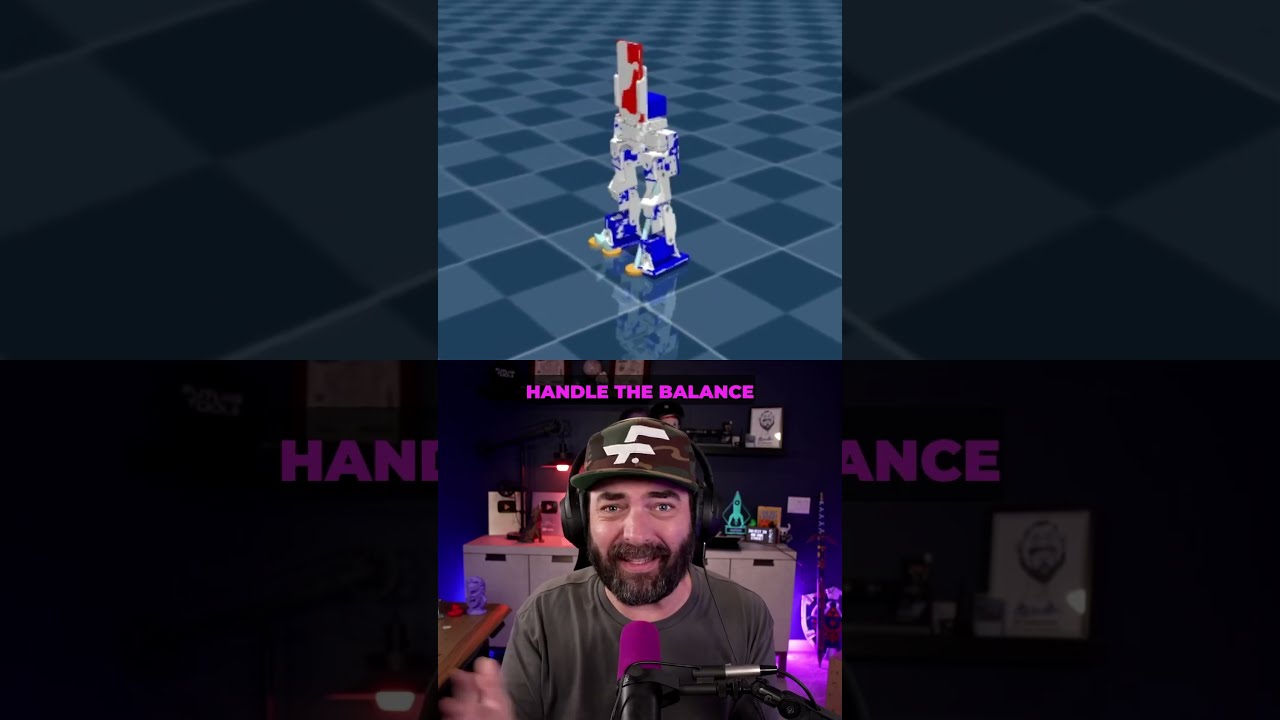
So you get the idea. It can listen to multiple people speaking to it, know which one is speaking. It can do tool calls on your behalf. You can interrupt it, and it just seems like a really impressive voice agent model. All right, moving on to image generation models. The company Canva released their first image generation model. Now, full disclosure, I do have a small investment in Canva, but that never affects what I say editorially about any of the companies I talk about. This new model is called Canva Craft, and if you remember a couple years ago, Canva actually acquired Leonardo AI, which had their own proprietary image generation models. And it turns out this new model, they use the same research team to help them create this new model. If you're a user of Canva, it is available inside of the Canva platform as well as inside the Canva API. So inside of Canva, if you want to use it, click on the DreamLab tab and you'll be using their new image generation model. Since we're talking about image generation models, let's jump over to the rumor mill for just a second here. This testing catalog website seems to believe that we're going to get a GPT Image 3 model This Aurora Red Alpha model has been popping up on some of these leaderboard comparison sites, and names like Aurora Red Alpha, Aurora Green Alpha, and Aurora Blue Alpha have been noticed inside of OpenAI's API. So this isn't actually confirmation that we're getting a new AI image model from OpenAI really soon, but usually when we get leaks like this, it's usually not too far off. too far behind. So don't be surprised within the next couple weeks we get a brand new image model coming out of OpenAI. This week Zoom introduced an AI tool to give enterprises greater visibility over AI activity. Basically it's for deepfake risk detection. So if you're on a Zoom call, it will help you determine if you're actually talking to a human or being deepfaked. I don't know, it's kind of been a couple years now, but there was a lot of stories where companies were getting scammed out of a lot of money because like a CEO of a company was being deepfaked and was asking for money to get transferred to certain Accounts, and the employees did the transfer thinking they were actually doing it for their boss, but it was really a deepfake on the live stream with them. So it seems like new suites of tools are popping up to help prevent that from happening. Microsoft put out this article this week as well called Building Medical Superintelligence. They have a model called MAI-DXO, and they claim that it's 1.7 times more accurate than physicians. They also claim it's more than twice as accurate as physicians using textbooks and the internet, and nearly 4 times as accurate when they diagnose without those resources. So some pretty interesting research coming out of Microsoft with a model that, who knows, may end up in your doctor's office soon to help diagnose, or at least like double-check the diagnoses of the doctors you're dealing with. And finally, let's end on robots because this video has been going viral. Unitree put out this video for X2H Kung Fu Legend Guardian. When we watch this video, we can actually see this Unitree H2 unit doing like flips over a car. We could see it actually kicking and sort of denting a car, beating up the front hood of a car, jumping from 4 meters high. They even put like fireworks on its feet and made it do flips for some reason. Here it is actually protecting somebody from an intruder and stepping between them. And then there's some interesting clips here of the robot seeing somebody trapped under a car and And then lifting the car up. And then in probably the funniest one of them all, this one sees a car coming at a kid and then thrashes the kid down. The funniest thing about that to me is right here you see the car coming and the car's going in like ultra slow motion, but then the robot pushes it over way harder than the car would have even hit it. And then when you look at this lifting the car up, a lot of people have issue with them lifting the plastic bumper here because that bumper would most likely pop off of the car. So a lot of people are thinking because most of the car is off the seat here, there's something else helping lift the car here. And to be fair, I don't think any of what this video is showing where it's doing the flips and the kicking and stuff, I don't think it's doing any of it autonomously. I think there's somebody actually controlling it and it's more of a demo showing what the robot's sort of mechanical capabilities are. But I don't believe for a second that it's actually lifting all the weight of this car here. And it pushing this kid out of the way to me is just hilarious. Because that looks way more damaging than what the car would have done. But yeah, that's an interesting video that's been going viral this week. But that's what I got for you this week. It was actually another kind of slower week this week. The biggest stories were Duet and a lot of those cybersecurity issues that were popping up. But there's always stuff to talk about. I'll probably never have a video where there's nothing to talk about this week and I just have to skip it. So if you want to stay looped in on all the latest latest AI news, make sure you like this video and subscribe to this channel. Again, I'll drink from the fire hose. I'll keep up with all the news all week and stay overwhelmed for you, and then give you one video at the end of the week that will help you understand everything that happened in the world of AI. Again, if that's something that interests you, make sure you like this video, subscribe to this channel. I do record these on Thursday, so if any big news came out really late Thursday night or on Friday, it'll probably end up in next week's video. But again, that's what I got for you today. Hopefully Hopefully you learned something. Hopefully you feel really looped in on what happened in the world of AI. But that's what I got. Thanks for hanging out. Thanks for nerding out. Hopefully I'll see you in the next one. Bye-bye. Bye.