Crazy AI Tech Everywhere (The CES 2024 Experience)
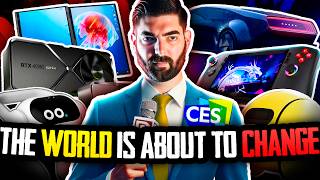
Matt Wolfe walks through CES 2024 to show how AI is embedded in everything from pillows to grills. He spots robotics, computer vision in retail checkouts, AR glasses, and autonomous vehicles everywhere. The tension: cloud AI locked behind subscriptions versus on-device processing that actually works offline.
Chapters
I just got back from CES 2024 in Las Vegas, and it was wild. I intended on going to this event and making a vlog out of it, but I just felt like a total dork walking around, holding up a camera and talking to myself throughout the event. So I started to make a couple clips. Doing that felt dumb and decided to just capture a whole bunch of B roll instead and then share my experience of CES instead of trying to do it in that vlog style. Maybe someday I'll feel comfortable doing that. Right now, still don't. So my goal with this video is to not only show off all the cool tech that I came across, but to kind of give you an idea of what the CES experience is like, to share some of my thoughts about what's in store for the future. Because when you go to an event like ces, you are literally looking into the future. You're seeing what all of the biggest companies in the world, all of the brand new startup small companies in the world that are developing cool tech, and everybody in between are, are building and trying to put out to the world. So you truly get this glimpse of this is where everything's headed now. Some of the stuff that's being built and shared will probably not take off and ever get picked up by normal consumers, but some of this stuff, you see it, you're like, wow, that's pretty game changing. And so I want to walk you through my experience, the cool stuff that I came across, and my thoughts about where all of this is headed now. It is practically impossible to describe the scale of this event without actually being there. The event spanned across something like 30 different venues, and there was over 100,000 people. I think one of the numbers I saw was 120,000 people come out to CES. The amount of the crowds and the amount of walking and the amount of venues this is spread out across is just massive. It literally takes over the entire city of Vegas for the week. And there's really just no way to describe the amount of people that are there and, and the amount of exhibits that you can possibly see now. I only made it to five or six of the venues for this event, and I was walking so much that I literally had to stop at a CVS one night and go and buy insoles for my shoes because my feet were killing me. After the first two days of the event. The scale is huge. Now, there was definitely some common themes throughout this event. The biggest, most prevalent theme was that they are putting AI in everything. And I literally Mean everything like this AI pillow, this AI pillow from Motion Sleep, this AI mattress from Deruchi, this AI office chair from Back Robo. They had AI fridges and AI washers and dryers from Samsung, AI smart lamps from Nobi, AI grills from Sear grills, AI barbecues from Neocer, AI cooking gear like AI pressure cookers and food process and air fryers, AI stethoscopes for doctors, AI bird feeders from Birdify, AI bird feeders from Xinvo, AI telescopes like this one from Celestron here AI backpacks with programmable faces and stuff, AI cosmetic companies. And how can we forget the Hyper AI box from Hyper Appliance, which actually probably does something pretty cool, but I didn't learn much about it while I was at the event. Now, just because they're adding AI into everything mean that a lot of these products aren't actually pretty cool Products like the AI bird feeders, which when a bird flies up to the bird feeder, it turns on a camera and then automatically identifies what the bird is and then sends a notification to the end user about what bird just ate out of their bird feeder. Kind of cool. Same with the telescope. It uses computer vision models to find the exact stars or constellations or planet that you're looking for. So they are adding AI into everything. Some of its gimmicky, the backpacks, but most of it is actually pretty interesting. Samsung is adding AI into their TVs to automatically upscale videos from whatever their current resolution is up to 8K. And one of my favorite AI tools that I came across was this Timekettle tool, which is actually a real time translator where I can say something into this box in English and then it will translate it automatically in almost real time to whatever language the person you're talking to speaks and, and vice versa. So you can have full conversations with somebody in a different language just by speaking with this box. There's also a couple earpieces which you can see kind of sliding out on the end where one person can take the earpiece, the other person could take their earpiece, and you can have a back and forth conversation, each speaking your native language. I thought that was pretty cool. Now, one thing that I couldn't help but notice about all of these AI products is that pretty much every single one of them needed to connect to the web and to actually run the AI processing. A few of them, like the AI Smart Lamp, actually does the AI processing in the device itself. But the majority of these tools, you still need that Internet connection. It still needs to go to some sort of cloud GPU to run the AI mechanism that's built in, and then the data comes back to the device. So if you are ever not connected to the Internet, the AI portion of that device isn't going to work. Many of them even required extra monthly fees to get the service to use those Cloud GPUs, meaning that you have the cost of the device and then another monthly cost to make sure that the AI features on the device keep working. In my opinion, this isn't the way of the future. This isn't necessarily what people want. Yes, they want these AI functionalities in their tools. I think there's a lot of additional benefit to adding AI to a lot of these products, however, requiring extra subscriptions to be able to use the AI, forcing you to have to connect to an Internet connection in order to use the AI. That's not the future, in my opinion. The future is the AI processing on the device and you can use the AI functionality whether you're close to a web connection or not. That's where these things need to get to. And there was quite a few keynote announcements about some of these bigger chip companies trying to develop chips that you can actually run AI on the device, taking it from the cloud, which is where it is primarily down to the device itself. And that brings us to all the users and potential users out there. But as of right now, most of these devices are sort of proofs of concept of what sort of AI functionality can we add into these tools. But I don't necessarily think that a lot of these tools are ready for primetime yet. I don't think this is necessarily what many consumers want. Yes, early adopters like me and a lot of the tech nerds that go to CES will probably buy a lot of this stuff just because they're early adopters and they like to to test out the latest new gadget. But the majority of the population is probably not gonna want most of these AI enabled products yet until they can run the AI inference on the device. But saying that lots and lots of cool AI stuff, still a lot more AI stuff I'm gonna talk about in this video. Now, another piece of tech that was prevalent everywhere was robotics. And I know robotics is sort of a general term that kind of encompasses a lot, but pretty much everywhere you turned, there was some sort of cool AI robot that was capable of improving your life in. Now they still have a lot of the same issues. They still need to be connected to the Internet. A lot of these tools the AI runs In the cloud as opposed to locally. But there are a ton of really cool robots coming out that can help people with all sorts of things. Now they showed off a lot of robots that can help in manufacturing like these Walmart warehouse robots here. There was a ton of robotic arms that were capable of doing things like sorting recycling into the proper bin. They had robots that can see and sort shapes into the properties hole. They had delivery robots. Here are some more concepts for delivery bots. They had really cool lawn care robots and robot lawnmowers. Lots of robot lawnmowers. Seriously, these things were everywhere at the event. This one was outside of the event. They had a handful of robot pool cleaners like this one and this one. They had AI robots that would do your bartending for you, like this one from Doosan. They had a robot barista that would make coffee for you, like this one from Richtek Robotics. They had robots that could cook you stir fry and robots that could make you ice cream. This robot is designed to be a front desk assistant at your company or hotel. And this one from LG was specifically designed to be a hotel assistant robot. This robot from Enchanted Tools is designed to make people feel better when they're in the hospital. It's designed to roll up to kids and have conversations with them and be a fun way of entertaining sick people essentially. It can also carry stuff around with this customized tray that it has and items to different patients. There was these giant robots from Lotus Robotics which I don't actually remember. The use case of the one on the right kind of looks like a Zamboni machine, but I'm not 100% certain what these ones were actually designed for. They had a whole bunch of these robot dog type things that would do tricks for you, like this one here and this one here that rolled over for me. There was even a company called Field AI that sold these adapters to turn your robot four legged friends into autonomous four legged robots. But one big theme this year was robot assistants that were kind of multi purpose that can roll around your house and do certain things for you. Amazon showed off this robot called Moxie which you can have conversations with and ask questions and get helpful advice from. This company. Ogman Robotics had a little bot that can actually throw a tennis ball for your dog, feed your dog and keep an eye on your pet when you're away. LG showed off their new little robot assistant, I think it was called Q9 that can roll around the house and help with various things. Samsung unveiled their new robot assistant called Ball E which can roll around your house and project things onto the wall for you. There was this robot from TDK which helps with stuff around the house or something as well. It had robots that can roll up and down stairs easily, like this one from a company called Moben. They had this robot which creepily followed me around as I moved. And there was a bunch of various humanoid robots like this one from Unitree that we can see kind of stomping on the floor here. And this one from Kepler Bot, which the battery was so heavy they actually had to hang it from a chain when it wasn't in operation. So the robots were really, really cool. The technology just keeps getting better and better. And the nerd slash early adopter in me just wants all of these robots. I want to play with all of them and see what they can do. There's this sort of weird future slash nostalgia that comes up when I see a lot of this robotics, you know, the. The cool, like robot stuff that we were promised when we were kids from shows like the Jetsons. Seems like we're getting closer and closer to that reality. And that sort of futuristic nostalgia of it just kind of makes me want all of this stuff. But to be honest, I do find quite a bit of them to be still pretty gimmicky. While I love the idea of a robot that'll take care of my dog and play fetch with it, there is something kind of sad about that. My dog would probably love it, but you also sort of remove that human dog interaction and little robots that move around the floor and project things on the wall. While it sounds like a cool idea, I don't really see myself using it that often. Like it's not a big enough pain point for me when I have a zoom call to come and just sit down at my computer and do the zoom call, or even bust out my phone and have the zoom call over my phone. Like it's not super solving a pain point for me, it's just kind of cool. I also find myself wondering a lot when I see these humanoid robots. Is creating the humanoid form factor really that good of an idea? When I saw that robot hanging from a chain because when it was powered off, it didn't have the proper hydraulics or whatever it needed to continue to keep that robot standing. So are we all just going to have robots that hang from chains when they're not being used? Or whenever you flip the switch off, they just kind of collapse onto the floor? Like sometimes I wonder why is the humanoid form necessary? And I understand that we live in a world designed by humans, and the humanoid form is going to best mimic humans in the ways they do things like opening doors and picking up objects and things like that. But isn't there a better form factor that's probably easier, cheaper to create, that doesn't need to be hung from a chain because it can't balance without its own battery power? I don't know. I'm not a robotics expert. I just love nerding out and seeing this stuff. So there's probably a lot of people in the comments that know way more than me about why we truly want this humanoid form in robots. Next up, let's talk about computer vision. Because computer vision seems to be getting baked into everything, and it was super prominent at this event. A good percentage of the booths that you walked up to actually had computer vision models watching what you were doing as you were walking through the booths. Now, this company right here that I checked out, I actually thought was pretty cool. They're called Luxonis, and they make these little computer vision cameras that you see here, but it actually does the AI, the computer vision on device. So you don't need to connect to the web to actually use this computer vision camera. You can set it up in your store or your booth or whatever, and it will just run the computer vision model and show you what things are as they're passing by. There's also some cool examples of some computer vision self checkout, where you put the items inside of the self checkout scanner. And then you can see over here, it uses computer vision to see the exact items that you put in without scanning a barcode. And then it can put together the pricing and all that sort of stuff for you without the needing to scan individual barcodes. You just load up your items, it looks at them, figures out what they are, and then puts a price tag on it. There was also this cool computer food tray scanner where you grab a tray of food like this, you put it underneath the scanner, and it scans what food is on the plate. You can know the exact calorie count of the food. You can know whether it's got gluten in it or other allergens. And one of the really cool features of this, when I was talking to the, one of the creators of it, is you can scan your food before you eat it. It knows how many calories it is, what foods are on the plate. And then when you're done eating, you go and scan the plate of leftovers, and it will tell you exactly how much food you Consumed. All said and done, there was also a lot of computer vision models designed specifically for vehicles like this company. Helm AI is a company that helps car manufacturers get computer vision models set up in their cars to detect what's going on around the car. Here's this sort of open prototype of a car that shows all the cameras and all the sensors around one of these cars so that it can detect everything that's going on around it. And you can see in the background, sort of the depth sensors and top views and everything these cars are seeing. And here's another example that looks at the driver to tell if the driver is tired or distracted. You can see here it knows when it's looking at its phone. And what I thought was cool is it's using these sort of same open pose bones that we see in things like Control Net for stable diffusion. Now, the next big trend that I, I noticed everywhere at CES was, well, this stuff, mixed reality, virtual reality, augmented reality, or as the cool kids call it, spatial computing. They had all sorts of augmented reality glasses, like these Letin reality glasses that you can kind of see what I was seeing through them. But one thing that I really noticed about a lot of the augmented reality stuff is that the form factor of these things is looking more and more like what we just expect from regular glasses. Xreal was everywhere at this event. They had one of the biggest, most impressive booths because they, they've got some amazing augmented reality glasses that only run a few hundred bucks, unlike Apple Vision Pro's 3500 bucks. And the cool thing about these Xreal glasses, they just look like a normal pair of Ray Bans that you'd probably want to wear anyway. But this tech was literally on display everywhere. Here's a company called Nemo that was demonstrating their AR glasses as well. And being at this event really helped me understand all of the various use cases there are for this mixed reality tech. Here's a vehicle that I came across that had augmented reality in the windshield and this little button that he's pressing here in the center. Well, that activated chat GPT inside the car. And in another cool piece of tech, we have Leia Inc. Which actually makes 3D monitors that you don't need glasses to wear. You can't really tell. But that car there was actually in 3D. And when I come around to these screens here, these are actually displaying videos in 3D. You just can't represent it on camera. It's one of those things that you need to see it in person to actually grasp the 3D ness of the video we're seeing here and the people using it. No glasses. Surprisingly, there was also a lot of talk about the Metaverse at this event, including this massive booth from Kali Verse where they were showing off their Metaverse game, where the characters and items you purchase in the game actually become NFTs. There was this AI companion with a face where you could essentially talk to, like ChatGPT, but it gives it a face. And there was some pretty cool VR stuff there as well, like this VR roller coaster. You could tell that this person here is absolutely thrilled to be riding. Here's another VR 360 degree simulator that I never actually saw demoed, but it was there on display. And of course there was a whole bunch of haptics companies that create these suits that help you feel the experience. And here's another demo of them putting something on their hands, I'm assuming to help feel some of the motion. Also, can't talk about haptics without talking about this tool called the Handy. Won't tell you what it's used for, but yeah, they had those as well. I've said it in so many videos in the past. I'll say it again. I really think that 2024 is going to be the year of mixed reality, with Apple Vision Pro coming out with their headset with less expensive options, like the options available from companies like Xreal. The Meta Quest 3 just came out. The use cases for AR and VR are huge. You've got the 3D monitors with eye tracking. We're getting smaller and more stylish glasses. There's so many engineering use cases and healthcare use cases, use cases for people with disab gaming use cases watching sports and even 360 degree workstations where you can have computer monitors all the way around you. Now it's hard to go to CES and not talk about the vehicles. They're some of the biggest, most expensive, craziest displays at the event. And this year it was all about the electric vehicles, like this little car here called an MIH or a meh, or this concept car from a Honda, which I believe is meant to be one of their autonomous vehicles. Whether or not we ever actually see this on the road, who knows? But this is one of the cool concepts they showed. Here's a van concept from a Honda, which has this pretty cool LED display on the front of it and the inside looks more like a limo than it does a van. So pretty cool. But again, an early concept that who knows if we'll ever actually See these on the market. Here's a cool, what I think is an electric truck. But what I really like about this is how the bed actually sort of folds into the actual cabin, giving you extra room to put stuff between the whole car all the way out the back of the bed of the truck. I thought that was pretty neat. Here's like an electric taxi concept by Kia. Inside looks pretty futuristic and kind of cool. Here's a Mercedes cla concept car which is their electric, again, just a concept. Who knows if we'll ever see it. Here's a car that was over in the TCL booth. That's a pretty cool looking electric car, but again I think it's just a concept. Here's another concept car from a company called called Tog that looks to be a pretty cool looking electric car as well. Here's another concept car from a company called Vallejo. Here's a fully solar powered mini car, looks like a little golf cart kind of thing, but powered by solar and actually street legal. Only goes up to 25 miles per hour so you can't really put it on the freeway. But looks pretty cool. And these futuristic looking cars were pretty much all over the place. But the coolest car that I think I saw there had to be this car called the Mobis by Hyundai. So this car is actually able to turn its front wheels and its back wheels totally to the side and move in all sorts of crazy directions. It can twist the wheels and spend 360 in place without actually moving in any other direction. And if you're bad at parallel parking, you can just turn all of the wheels 90 degrees and just slide right into the space that you're trying to get in. Now that was the coolest thing I've seen. A lot of the other cars looked really cool and futuristic, but. But this is a car that actually looks like it'd be very, very useful because you could pretty much get in and out of any space with this car. Again, another concept car, but one I really hope is on the market because this thing's just cool. They also had a handful of fully autonomous cars on display as well. Like this LG Able car here, which you can see doesn't even have a steering wheel in it. You just sit in it and it takes you where you need to go. There was also this funky looking Mercedes Benz concept car. There's this VW self driving van which does actually have a steering wheel, but it says self driving on the side so you know it's intended purpose. This company, tier 4 had this autonomous taxi looking thing. Once again, no steering wheel, just seats that face each other on the inside. Then there was this other similar concept from this company called Zoox, which looks to also be kind of like a robo taxi. And you can see on the inside just has seats that face each other and no steering wheel. They also had some flying vehicles on display, like this one person helicopter from a company called Schaeffler. It's got room for just one person and I don't see any steering mechanisms in there. So it looks like it's designed to be autonomous. Would you fly in one of these? There's also this flying drone concept here that kind of looks like a helicopter crossed with a drone, but it does look like they have a little stick shift that you use to steer around with it. But probably the coolest flying vehicle that was there was this one from a company I believe called X. You can see it looks like a supercar but with drone propellers on the roof of it. And then I wasn't actually there when they brought the propellers in, but somehow the propellers can actually fold into the car and you just drive it on the road like a regular car. This thing was absolutely crazy looking in person. They also showed off some new wireless charging technology for your car where you install this box and then there's a little mat. And if you park your car over that mat, it will charge up your car without you having to actually plug in the plug. Hyundai also showed off this cool electric digger that for some reason looks straight out of Starship Troopers to me. And then there was this interesting looking off road prepper tank thing that they showed off as well. Kind of cool. Apparently this is what trailers of the future are going to look like, maybe. There was also a ton of electric bikes and scooters on display. These things were everywhere at the event, like this electric bike and this electric bike and this electric bike and this electric bike and this electric bike and all of these electric bikes. Here's some bikes from Cougu and these electric bikes. And this is an interesting electric motorcycle concept from Horwin. And here's another electric motorcycle concept. I wouldn't really say these Horwin bikes are my style, but it is cool tech nonetheless. Scooters were a big hit at this event, like this Reebok scooter here and these scooters here, which let's go ahead and zoom in on one you can see is made by Bugatti. They even had some really cool underwater scooters where you just kind of hang on to Them and they propel you through the water as well as this scooter, which was clearly made to go in the snow. So while I'm not a big car guy myself, some of the vehicle technology that was at CES was really impressive. It was the vehicles that really make you feel like you're stepping into the future at this event. Now, another big trend that was everywhere at CES was these giant LED walls. They were everywhere around the whole event. Like, I'm sure you've seen the behind the scenes of like the Mandalorian, where they film on sets and have giant LED walls behind them to avoid shooting on location. That kind of technology was everywhere at ces. They had demos of life size cars moving front of these LEDs. You probably can't tell on this video, but that car on the screen is a full size car, and there is robot arms turning and moving that car around as it travels across the screen that you're seeing here. And the more you walk around the event, the more you pop into stuff like this where there's just monstrous screens demoing vehicles and people and things like that in front of them. They even had rides like this LED tunnel that a little train car drives through, and then the tunnel starts moving around you to make it feel like the train is moving. Or this ride where people are sitting in these chairs on a platform hanging from the ceiling and they're moving through a world that's all on a giant LED screen. They even let people get inside of a Rivian and they would shoot video of them inside the car. So you had a little keepsake to take away with you. For example, here's some final footage of me taking a ride in the Rivian here. It came out pretty good and it looks pretty dang real. Here's some people playing football on a giant LED wall. And even Walmart, which was so big it had own booth outside, had a giant LED wall as an entrance. And when you walked into the Walmart booth, they actually had what they called a 4D experience, where you sit down, the chairs move, and as the ride is going, you're staring at, you guessed it, a giant LED wall. Probably the biggest showstopper of the event. The thing that most people seem to be talking about were LGs giant transparent TVs. These TVs you can fully see through, and they have something going on the screen, but they also have this like black film that rises on the inside to turn it into a normal looking tv. So if you don't want it to be transparent anymore. You don't have to run it as a transparent TV anymore. One of the interesting use cases for this is like display walls in a bakery where the glass in front of the bakery looks like normal glass, but then you have cool stuff going across the screen in front of the bakery item. This is one of those technologies that's really hard to describe it or show it off on video, but when you see it in person, it actually is really impressive looking. But LG wasn't the only company displaying this technology. This is a TV here from rca. It's also completely transparent. You can see all the way through it and it's thin and you can see through it from both sides. In this shot, my hand is actually behind the tv. This is Samsung's transparent micro LED tv. And this one was one you really have to see in person. The video does not do it justice at all. There's depth to this. It's clear you're seeing pictures on the front glass, but there's also glass in the back with pictures on it as well, giving it this sense of 3D depth. It is just really cool, but hard to describe without actually being there. Here's another one from a company called Dongwu where these are all completely transparent displays as well. You can see, here's one side of the display, I walk around and I can actually look, look through the display on this side as well and see all the people on the other side. Here's one from a company called Mux Wave, which was hanging from the ceiling. This was a transparent TV as well. And here's more of that tech from a company called Nano ar, where you can see on this screen and on this screen, these are meant to be transparent windows essentially. They also had these really cool like hologram fan things that were everywhere where it's a fan and then they project something on the fan and it gives this effect, this illusion of whatever's being projected on the fan as actually being 3D and spinning and moving. And they even had one set up with a green screen where you could stand in front of the green screen and then get yourself projected onto the fans. So the display technology was just absolutely insane. I can't imagine myself putting a transparent TV in my house. There's not really a huge need for it being transparent, but I do see the use cases in businesses like storefronts. I can see in the future people replacing their entire front window of their storefront with these 3D displays. So as people are walking by the stores, all sorts of animations and Things can be happening on the actual windows that you're walking by. I kind of see a future where that is what's going to happen, especially as the price of this technology comes down. You'll just be walking through Times Square in New York and every window is going to be an LED transparent window with, with animations and special offers and deals and discounts and things like that flashing on the window. Whether that's a better reality than what we have now or not, you know, that's up to you to decide. But I do think that's where things are going. So those were pretty much the biggest trends that I saw at ces. AI is going into everything. Robots are getting better and smarter at doing tasks that we all used to have to do manually. Computer vision is getting better and better, and the use cases are starting to pile up for what we can actually use computer vision for. Mixed reality and ar, VR, spatial computing, whatever you want to call it, is getting bigger and bigger, and I really, really see that picking up momentum. There's some really cool vehicles out there, and everything seems to be going in the direction of both electric and autonomous. There are some cool flying car concepts that I saw, but none of them feel very close to actual reality yet. None of them feel like we're going to be getting our hands on them anytime soon. And then the giant LED walls and the transparent displays, obviously the LED walls have been around for a while. The transparent dis, brand new. All of that tech is really, really cool. I think there's bigger commercial use for those than there are consumer use for those. But nonetheless, being the nerd that I am, I just thought the tech was really cool and wanted to show it off. Now, there was a handful of other things that I saw at the event that didn't really fit into any of the categories that I showed you. So I'm going to rapid fire show off some other really cool tech before giving you my overall final thoughts of this event. I really thought this unistellar smart telescope was pretty cool. Cool. It's not AI, but you were essentially able to tell it what you wanted it to point to. It knew where the star or constellation or planet or whatever it is you wanted to look at are, and it would automatically move to that position. It could take great photos of it, and then you could even send those photos to other people, to their smartphone or whatever, and share what you're seeing in the telescope, even if somebody wasn't standing right next to you while you were looking through the telescope. There was this genesis Systems water maker, which essentially pulls moisture from the air. It generates something like a gallon every 10 minutes of water just by sucking moisture out of the air. You can hook it up to your house and use this as your tap water instead of using the water that's coming in from the public system. They had this home beer making system where you just plug in all the ingredients and after a couple days, you have ready to drink beer. Cheers.
Pretty good. They had this Barcys automatic drink maker, which made mixed drinks for you. You just pour in the ingredients and it would mix them all up with the right proportions and serve it for you. Cheers.
It's good, too. I thought this giant generator that also doubles as a tent was pretty cool. If you hate going to get a manicure, here's a company called Nimble that has an automated manicure system for. And then you have this, which is a privacy mouthpiece. You can play games with people. Put this over your mouth. The people you're playing games with can hear you, but nobody that's in the same room with you can actually hear you talking. I didn't actually know there was a need for this, but apparently it's for, like, kid gamers who want to play with their friends and talk crap and don't want their parents to hear them talking. So that's also a thing. So after going to this event, my feelings on it are that CES isn't just a tech expo. It's a whole experience where every company there is trying to one up the other company. They're all trying to create the biggest, wildest, most creative displays to draw your attention to them. Attendees get to play different games at the event. They get to ride rides at the event. There's virtual reality and augmented reality experiences that they can try out. There's free giveaways everywhere, because, again, people want to attract you to their booth and their swag. So much swag. Every booth has something that you can take from it. Personally, I'm a huge nerd. I like to collect stickers. I even have a binder where I keep all the stickers from these events that I go to, because, again, I'm just a huge nerd. But you'll come home with a lot heavier of a suitcase than what you left with. But at the end of the day, if you're at ces, you actually feel like you're a part of something. There's this shared experience that you're having with thousands of other people who are all in awe and wonder of what you're seeing. Right now and realizing that this could be one of the of the first times anybody has ever seen this tech. And also you feel like most of the tech you're looking at is a glimpse into the future. You're getting a little teeny peek at what's to come. And if you're someone like me who likes to make predictions, who is an investor and who is always trying to figure out where the puck is going, CES is the place in the tech world to know where the puck is going. You're seeing what all of these companies are building before the rest of the world. You're seeing what tech they're basically betting is going to be the next big thing for consumers. And some of the tech there truly has the potential to change the world. And being one of the lucky people that gets a chance to see it before the rest of the world is just what makes the whole experience worth it. And I had an absolute blast. I was in Vegas for six days, two days just for media, four days for the conference. My feet are blistered, my legs are tired. I felt like I was going to lose my voice when I got home from talking to so many different people. People. I was up late every single night, either meeting with people or sorting through all of the footage that I recorded throughout the day, and it was exhausting. But I cannot wait to go back next year. I joked with one person who was at the event that this is basically Disneyland for me. This was my happy place. Getting to see all of this cool tech and nerd out with the people that are building the tech or just as excited about the tech as I am. That was the place I wanted to be. Be. And I am so excited to go back next year and see what tech is coming out then and how far AI and mixed reality and spatial computing and vehicle technology and giant LED screens and all of this stuff. I can't wait to see how far they come and what advancements everybody's made since then. Because at the pace all of this is happening, especially as somebody who covers AI, it's going to be a whole different world from this year to now next. Things are just happening that fast, and ces, to me, was proof of that. Now, I know this video was a little bit longer than my normal videos, and it was a totally different style with all the B roll and footage that I shot. But I want to get out to more events like this. I want to see the future before everybody else. I want to know what tech is coming down the pipeline. So I'm really hoping I can get out to more conferences, more events like this, and make more videos like this. Even if they're not my most viewed video in the world of YouTube. A lot of YouTubers take this approach of one for you, one for me. This one's for me. This is one of those videos that I was excited to make. I was excited to go to the event and be there and get immersed in it and then come home and make this video. And this video was one that I had a lot of fun making. But knowing how my videos do on my channel, probably not going to be one of my more popular videos. And that's okay. I got to have this experience and hopefully I brought you along for the ride to some degree and gave you a feeling of what it was like to be at Cesar Guests. So thank you so much for tuning in. If you like videos like this, if you like AI, if you like future tech, make sure you subscribe to this channel and like this video. That will ensure more videos like this, as well as my AI tutorials and news videos show up in your YouTube feed. Thank you so much for tuning in. Really, really appreciate you. I'll see you in the next video. Bye. Bye.
More from Matt




AI News: Dots, GPT-6.1 Sol, Sonnet 5.5, Gemini 4, and everything you need to know




