Factory AI Can Build Any SaaS App in Minutes | Matan Grinberg Interview
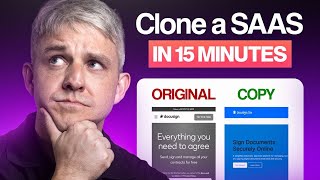
Matan Grinberg built Factory AI, a platform where agents called droids automatically build SaaS apps. They demoed a working DocuSign clone built in minutes, and discussed how the tool handles enterprise software and what it means for developers.
Chapters
Can you build an $8 billion startup by yourself using AI agents? Well, today we're going to find out. We have on Matan Grinberg, the founder of Factory AI, one of the best kept secrets in Silicon Valley. With Factory AI, you can actually build a real company just using natural language. Up until now it's only been used by huge companies, but today they're releasing it to everyone and announcing it on this podcast. So you guys are getting in on the ground floor, so let's just jump right in. Matan, man, thanks for coming on the show.
Thank you for having me.
I've been thinking for a while I really wanted to get you on here because I've been hearing from friends in Silicon Valley for the last several months that, you know, basically Factory is like Devon, but actually works. I mean, at least that's what they've been telling me, you know, and I've heard so much about Devin. You know, Devin, like launched a little over a year ago, was super hyped up, in my opinion, overhyped. But then I was like wondering like, well, why haven't I heard about these guys? And then I saw this tweet yesterday. Let me, let me share this tweet real quick.
Oh boy.
Devin and Friends are finally a product category. You know, we've been working on this problem for over a year now and many didn't believe it. Great to see that the world is realizing. And he kind of like lists out the category and he lists out two products that are brand new. Codex from OpenAI and Jules from Google. And Devin and I thought it was kind of funny he said, Devin and Friends. I would have thought, you know, Devin and Factory. But he just left you guys out and, and then I looked into your website, you know, and you know, your approach seems more practical. Like instead of Devin seemed to be kind of pitching, hey, we're going to replace all of your engineers. You seem to be more about, like you're empowering, you know, engineering teams. So I'm just. My question is, you know, why don't people know about you guys yet?
We've been very heads down for kind of the first basically two years of our existence, just working with enterprises, deploying factory to these enterprises, improving the product from there. And so that's why we've been a little less outward. But you know, over the next couple weeks, we're at a point where it's pretty important for us to change that and be a lot more open, get a lot more developers in the platform because we're at a point where we've found not only does the factory platform dramatically help enterprise engineers, but we kind of naturally see them start bringing factor to like their side projects or trying to sneak it into other avenues. And it's really at the point where, you know, we feel the product is, is mature enough to, to start appealing to even more audiences than just the enterprise.
That makes a lot of sense to me. But maybe our listeners are like, what's Devin? Because some people may not even know exactly what Devin is. Maybe like at a high level we should explain too. Like what is factory? Like what, what do you guys do? And why should people care?
So we factory, we are building droids.
Okay. Robots.
Yeah. So basically soft software robots that, you know, solve all the ugly tasks in the software development lifecycle. And so a lot of people, especially, you know, if they're not that familiar with engineering, might think engineering is just coding. The reality is, especially at these large enterprises, developers don't just spend their time writing code, but they actually spend a majority of their time on all the stuff that goes in before the code and all the stuff that goes in after. And so that's like understanding and planning and PRDs and design docs and then you get to the coding part and then after the code there's the review, the testing, the maintenance.
Yeah.
So we're kind of focused on the whole like end to end.
So my understanding is you guys are doing general release now. So you've been, you've been serving enterprise customers kind of silently building this for two years, making great progress in a lot of head to heads. I heard you guys even have been beating Devin often. And so now that it's actually out there, maybe we can just like show people what it can do. Like so they'll actually, you know, we could talk forever, but if they actually just see it.
Yeah, let's, let's jump into it. So obviously, you know, the use cases that we do in the enterprise are, I guess, you know, obviously very valuable but a little less visually pleasing. So I thought it could be fun to build a little toy version of DocuSign within factory just to get a sense of how factory helps, you know, agentically automate some development tasks.
Cool. So we're gonna like build like a billion dollar company here today.
Yeah, yeah, let's see what we can do.
Who owns it? AM I like a 50, 50 partner in this or how does this work?
Fair enough. If you, hey, if you help guide the droids, then you get a stake. Okay, cool. All right, so here you can see we've landed on the factory dashboard. We have a chat interface. So, you know, pretty standard. Nothing too new here with lms. We also have these four droids. And so these are our agents. We call them droids because agent is kind of synonymous with poor quality. Right. And for it's for, you know, different tasks that you might want to do. So, you know, knowledge droid is maybe you're trying to create a design doc for some large engineering tasks that your org will be doing. Again, that's a little bit more enterprise angle code droid. This is really the kind of the one that everyone really wants to see, which is, you know, whether it's 0 to 1 or end to end plus 1, having the ability to go into a code base and kind of build end to end features. There's the reliability droid, which can integrate with tools like Sentry or datadog and if you have any outages, it can go in and, you know, create an RCA and even solve those issues.
I like the approach for the droids because it seems like you have these like specialized droids that do a specific thing versus a lot of these, you know, AI agent companies. Whether, you know, I. I'm friends with Yohei Nakajima who did Baby AGI and it was a great concept. But a lot of these like that and Devin, they kind of promise they're going to do everything and then they kind of fail at almost everything. I like the fact that you guys have like specialized ones that do specific things.
The name of the game with agents is you want them to be as reliable as possible. And so if you could have them focused on certain core competencies in their workflows, it makes that reliability a lot easier. And so I just hit enter on, hey, let's build out a toy version of DocuSign from scratch. And so the code droid is now going in, creating this plan. So, you know, here we have this general implementation plan project set up, user authentication, document management, potential challenges, asking some clarifying questions. Now if I was going to be doing this a little more thoroughly and you know, for production grade right now, I might, you know, be a little more thoughtful in my responses, but I defer to you. Let's just get a quick version up and running locally and then we can iterate from there. So, you know, it's asking me some very thorough questions like what tech stack? Which core features do you like this system to include? Authentication? These are good questions. I'm just saying, you know what, you pick. I don't have time for this right now, so obviously in the enterprise setting, you're going to be much more picky about this when you're not going purely from scratch. But we can see its thinking process here as it's going in and starting. And so now it's going to go and see, here we have it running a command locally. So point here is that there are a lot of agents that run purely locally. And so that's like a tool like Claude code or any of the IDE agents, they only run in your local environment. And then there are some of the other agents like Codex or Devin, which only run remotely. What's incredible about Factory is we have the ability to do both and you can parallelize in both. So as you're delegating tasks, you can say some, you know what, I'm confident in our tests, I'm confident in our acceptance criteria. I'm just going to go delegate that and send it to the cloud. And then there are some where it's like, I actually want to be pretty involved. So I want this to work on it agentically, but locally.
And I think you said it, Greg Brockman was talking about this too, right? Like, that's part of the vision in the future for OpenAI with Codex is like, that's going to eventually do that. And then you were telling me, like, basically, Factory already does what OpenAI is envisioning eventually doing. What's the benefit of that kind of hybrid approach?
It allows these systems to have a silhouette that's much more similar to what we as humans have, a silhouette. So, like, for example, when I'm working, that looks like an agent working locally on my device, right. Whereas when a colleague of mine is working, it's essentially equivalent to like some cloud environment, you know, writing code. And then how do I see the code that they're right? Well, they'll submit a PR and then I'll go and maybe look at their branch, Right. And so this way it allows you to kind of spin up either more copies of yourself or more copies of your colleagues.
Makes sense.
And so it's kind of like, you know, a manager might think, hey, here are these tasks that I'm going to do. Here are these tasks that I'm going to kind of delegate to a colleague. So you, as kind of a pilot of this, of this ship, kind of get to say, hey, which of these tasks will I monitor? Which am I going to go send off? And, you know, I'll see the.
Yeah, so local is like giving you superpowers, and remote is like giving your team Superpowers. And with Factory, you kind of get the best of both worlds. It's awesome.
Exactly right. Exactly right. And so what happened here is, you know, it was asking permission for certain commands. I just turned on auto save and auto run. So now it's kind of just like full autonomous mode. We'll just like go run the commands. So you can see it's creating some repos, creating some folders. Now it's just up and running, you know, and it's going to. Going to create a few files because you can't make DocuSign just in one file. So we can kind of have this running in the background here and we can check in once it's. It should, you know, create all these files and then spin it up and so we'll check it out.
Yeah. So this is basically like your YOLO mode or something? Like it just like.
Basically, yes. Except what's nice is when you serve Enterprise, YOLO mode is not something that anyone ever wants. Right, right, right. Not only do you have this ability to just have, like, look, there are different levels of risk for the auto accepting of CLI commands, but also as an admin, you'll have the ability to whitelist or blacklist certain commands. So you might not want to allow any sudo commands because it could do some interesting, pretty serious damage. Or you might want to really restrict which folders you're even allowing the agent to get to.
How do you make that list of commands that can't be accepted? Is it like you just, you just type it? You just, you just create it or like.
Yeah, in the admin settings, yeah. It's pretty clear that software development is going to change dramatically over the next five years. An incongruence that currently exists is that everyone says it's going to change dramatically, yet the current paradigm, pretty much what it looks like, is putting AI onto existing workflows.
Right, right.
Like the existing workflow that developers have had for the last 15 years is working in the IDE and writing every single line of code there. We've applied AI into the existing workflows, which is these AI IDEs. But the reality is every big platform shift has involved, like, very significant behavior change. Right. Like, what did you know in the, in the Internet transition, what happened? People went from getting most of their information from books to, like, doing this, and that's how they get their information and mobile. What happened? People went from, like, walking around with their heads up to like, on the run. Like that.
Yeah.
So very visceral. Very visceral. Behavior changes yet AI, which is supposed to be the platform shift that puts all these others to shame. What are the most used products? Well, it's like ChatGPT, Perplexity, Co Pilot, Cursor, ChatGPT and Perplexity, that's just Google with better results.
Right, right.
It's the same behavior. And then similarly with like Copilot and Cursor, it's essentially the same behavior, which is like the IDE behavior. Now you're may pressing some slightly different keys more often, but it's not like a viscerally changed behavior.
Right.
And that's because we're still kind of, we haven't hit that full transformation yet. And what we're really focused on with, you know, our droids and with the ability to have them local and remote, is this is the new behavior that's going to emerge where the center of gravity of software development will change from coding to instead understanding and planning and then testing to make sure that these agents, when they go and submit their PRs, they did satisfy the constraints that you had in mind.
Yeah, that makes a lot of sense to me. You know, I, I really like the guy Primagen. Do you know him on YouTube? Yeah, of course, yeah, yeah, he's awesome. And, but he's, you know, he's, he's, he's slightly warming up to AI now, but at first he was really hating on AI and it's just because he just, you know, he's passionate about the art of just coding itself and it. But you know, engineering the, you know, the point is to create things, right. To solve problems.
Right.
And that's what engineering really is about. Even if we love it, you know, that doesn't mean that's the best way to do things in the future. That's why when I, when I saw Factory's website, I was like, oh, this is, this is, this, this feels more like the future.
And also to your point, it's about building things. And the, the kind of harsh reality of building things was you have these constraints in your. So what does it mean to build something? Well, you have an idea.
Yeah.
And that idea is defined by some constraints. Let's say your idea was Spotify. It's like, okay, well you have this social music sharing app. You know, we want low latency, we want to make sure we have. Obviously there's a business side of like having all the agreements with the record labels, but from the product itself, it's like, you know, some low latency, high fidelity music sharing that has social features, playlists all that stuff. Well, those are certain constraints that you have in your head.
Right.
And what you need to do to actually build that is you need to turn those constraints into machine readable language, which is, that's the why we have these, you know, programming languages. What's getting unlocked now is that translation from you to the computer. It used to be, you know, you needed however many years of an education and years of experience to actually learn how to do that translation.
You hire people and like hope that they actually did the work and did what they said they were doing.
Money. Yeah. Also it's like that's difficult. Not a lot of people have access to be able to hire that many people or to raise the capital to do that. Whereas now if you're able to translate those constraints that you have in your head, you can, you can kind of speak to a tool like Factory and it will translate those constraints into the software itself. And so it lowers so many of those barriers and kind of again, refocuses like what has made the best engineers and the best product thinkers. It's not that they know every little detail about every little language, but they're the best at thinking about those constraints and understanding what does my customer want and how do I translate that into these constraints. Yeah, totally.
Thinking more about the customer and spending more time on that and the experience of what problems you're solving versus dealing with bugs.
You're right, right. It's like, no, no one enjoys doing it. And that's the equivalent of that in like the enterprise is like there's so many like menial, tedious tasks that enterprise engineers have to do.
Right.
It's not why they got into engineering in the first place. Right. And even something that you mentioned that I think kind of is, is a really interesting point to me is you want to build something cool or make something cool. But the thing is you can't just go to an LLM and say, hey, make me something cool. Because when you say cool in your head, there are certain things that, that, that means that the LLMs don't know. And so this new era of software developers, who's going to, who are the like, best going to be the best people will be the ones that when they think cool, they know how, what that, like, how do you elicit that from the model?
Right.
Because if I just said make me something cool, probably I'm not going to be happy with it. Because in my head when I thought cool, I really meant something else.
Right? Right. Yeah.
I mean, I used to be, I used to Be a physicist. I spent a lot of my time with mathematicians and there's so many people who fell felt more comfortable explaining ideas with math than with words because sometimes like words, words are very difficult. And similarly, like engineers, like, sometimes it's very difficult to describe what you mean in words as opposed to in like, you know, programming language. But understanding how to speak that to the models without writing out all the code yourself, I think that's going to be a very powerful skill.
It's kind of awesome that we're having this conversation right now while like a billion dollar company is being built in the background.
Yeah, exactly. Yeah. I mean it looks like it's doing roughly the right thing. It's making some layouts, some loading spinner, login, register, dashboard, up, uploading, document, creating signature. That's good, you know, got to have signatures and DocuSign.
So yeah, honestly, most people are wasting hours switching between AI tools instead of letting them do the real work. You know, that Constant jumping between ChatGPT, Google Docs and your spreadsheets, it's crushing your productivity as possibly even overloading your computer. Google's Gemini brings AI directly into your workflow. No more app switching. This five minute guide shows you exactly how you can set yourself up for success. You'll learn how to extract insights from spreadsheets without formulas, how to create multiple types of content with one prompt, and a cool little extension hack for building your own knowledge base. Scan the QR code or click the link in the description. Now let's get back to the show. I mean, it seems like the fact that you are like tapping into like the existing systems inside of companies where they already, you know, use ticketing systems, everything else like this seems like a more natural fit for enterprises. And I think it makes a lot of sense because, you know, we talk about this in the podcast a lot. Like I had Greg Eisenberg on and we talked about like what's the future of business and things like that. And it feels like a lot of companies, maybe not they're starting to wake up to this, but in the aia, it's going to be more and more important to keep reinventing yourself right as a company. And if you don't, a lot of companies are going to have a business. I mean, I think we're going to see, we're going to see lots of like multi trillion dollar companies and people are going to be shocked. They thought trillion was a big deal. It's going to seem like a small number in the future and we're going to See, a lot of companies that you thought were going to be around that are no longer going to be around, and it's because they didn't reinvent themselves. And, you know, if I was a big company, I would be looking at something like this and thinking like, okay, this is something I can actually get my teams to use. It fits into our existing systems and it allows us to make our teams happier to actually do work they want to do and to try new things because they need to be trying new things right now.
You know, it is a little bit scary to think about, like, oh, there are a lot of companies that, you know, if they don't reinvent themselves, it kind of. There are certain things that become obsolete. But I think on a micro scale, it's a little alarming or a little concerning, but I think on a macro scale it's happening because things are becoming more efficient.
Right.
Which I think is actually a great, A great story, right? Like something that we talk about a lot is, you know, even when we build factories, the Henry Ford quote, which is if you ask people what they want, they would say, faster horses. And sometimes you need to kind of look past what people are asking for and build that. Build that automobile.
Right?
And something that there's a big change is like in a world with horses, there is. The structure of the economy is very different than a world with cars, but net. Net, the world is much more efficient. And so short term, there are things that change, but long term, you know, people who want to visit their families, they're able to do so faster. If you have a medical emergency, you can get to a hospital faster. So it's like sometimes when you have these step function changes in efficiency, like the way the world has been built will change a little, right? But net, it's kind of a narrative of, like, things becoming more and more efficient. And I think that's always a good thing. And it's all the creative people, the smart people, the great engineers, the great product thinkers will get to work on higher leverage, more efficient problems, which I think is a net good for the world.
Yeah, I, you know, and I agree with the smarter people benefiting from this a lot, but I also think people who are just like, average will also do quite well because as long as you're very persistent and willing to grow, grind and hustle, like, I think this is gonna be amazing for those people because, like, maybe before they, they weren't the best coder and, and they'd, they'd go talk to some engineer and be like, hey, here's my idea. And the person would be in the back of their head go, okay, cool, idiot. You know, and like, actually judging them based on what they judged their IQ to be or whatever. But now with tools like this, they can just go talk to the AI and build the thing and spread it out there into the world, which wouldn't have been possible before. So that's. That's, like, super exciting.
And. And I think that's also. It kind of hits on something that I found very compelling, which is a lot of people are saying, oh, you know, all these models are kind of commodifying IQ or intelligence, so that now, like, it doesn't matter if you're not that smart, because whatever the model at your fingertips, you can have whatever intelligence you need. And so then the question is, okay, well, a prior theory is that the world is kind of like your success or your ability to do well is kind of defined by IQ and how hard you can work and that sort of thing. And in this world where, like, this work is via API or this intelligence is via API, what is this new metric that will determine, like, success or not success? Something that I think is kind of interesting is the idea of agency being the determining factor.
Yeah.
So even if you're not the highest iq, if you have the will to go and build things, as opposed to kind of being passive and lazy, that's going to be the determining factor. If you have that agency, you can go and use all these models that have that intelligence on demand for you that might be experts in all these niche fields that you don't have time to. To become an expert in.
Yeah, I think that's right. I still think IQ is gonna be a big advantage. Honestly, I think this is gonna amplify people who are high iq. Maybe they'll get ahead even further.
I mean, a question is how. How is. How closely is agency tied to iq? Which I think is a.
Right.
Yeah, interesting question.
That's a whole other conversation.
All right, so we look like we are up and running here. I might just ask, can you run this locally on port 3000? So just gonna ask to set this guy up. Still connected to my local machine, so looking good. And we should be able to check out our little docusign. And we are good. This is our little DocuSign toy.
Okay. You got a landing page? I mean, does it do anything? I mean, that's. You. Come on.
Yeah, we got. We got a landing page. The callers, you know, could. Could do some work. I'm not sure how I feel about this. Not sure how I feel about this logo. But you know what? We asked for DocuSign. Let's see.
So should DocuSign toy? Why not DocuSign toy?
Yeah. All right, so let's try a little login. So again, we see we're missing some of these logos, but these are. You know, we'll get our designer in here to make it look cooler. But, yeah, I think the demo account is userexample.com. passwords, password. Looks like we're in. My1Password's trying to save my password here, but seems pretty sweet.
Jesus.
And yeah, so, you know, we can make some templates. We can take a tour. Let's see. I wonder if this tour actually works. Maybe not. Let's upload a template. Okay. Throw in a PDF. Let's throw in factories. One pager. Yeah, Factory, one pager. And I'll send it to myself, Upload the doc. It's pretty sweet.
Okay.
Looks like a dog. Let's add a signature. There we go.
Jesus Christ.
Add an initial field. There we go.
Is this going to send an email too? Is it going to.
Is it actually going to send it? Let's send it. Well, I mean, I don't have access to that email, but let's send it for signature. And we can see I now have one awaiting signature over here. So, you know, I don't know about this layout necessarily, but, you know, we can adjust it.
Okay, Send me the docs to own half of this. Okay, we'll launch it.
All right, so here we see. So we. I have one to sign. So let's go and sign it. Click to sign. Can add my signature. Click to initial, add the initials. Seems pretty legit. Complete signing. There we go. And now we have one completed.
That is. That is amazing.
Oh, and we have a little activity log here as well. It's pretty sweet.
That is incredible.
Let's go back to the. To the dashboard. Okay.
Okay. So Factory is amazing at coding and creating a SaaS app. It overuses blue for sure.
There we go. Hey, you know, we can. We can make it red. And that's the thing is, yeah, we can go back into Factory and adjust from there. Right. I think, honestly, the first thing that would just make this look a lot nicer is all these, like, placeholder icons. Like, having those that would make this look pretty sweet here. We even have templates already. Um, I think a big thing would be maybe adjusting some of the ordering here. Like, I think this is a little too much scroll when there's not nothing populated in there. But honestly the only thing missing for this is like hooking it up to a database.
Right.
Like to a proper backend and then all of the compliance stuff that I'm sure DocuSign actually has to deal with. But, but you probably, you probably could.
Talk to a factory and get a lot of that done. Maybe not all of it and be at Docusign level, but like close enough.
I mean for, for, for one shot in 15 minutes. This is a very, very solid start.
Yeah. So like if you're an entrepreneur watching this, I mean in theory, you know, DocuSign is like a 8. I think they're like a 8. 6 billion company. Right. So in theory you could create something at that level as a, even a one person team, which is just mind blowing.
It's pretty, it's pretty exciting to see the. And I think it's really also cool because it just means that barrier to creating that next $8 billion company.
Yeah.
Is that much lower.
Right.
Because now instead of the let's say 500 engineers you might have needed to make that, you know. You know. Kidding. But you know, it just allows you to build these things out much faster. And even within the enterprise, in large orgs, there are a lot of times where people, there'll be teams of like 20 building out internal tools and it'll take them just a huge amount of time when really the internal tool is a means to an end.
Right.
Allows you to get to that end faster.
Very cool. So you've been serving the enterprises for the last year or two and now you're. It's generally available. Is that the, that's what's happening right now?
That's right. Yeah. We, we're fully ga. We have a teams plan now that's just to start. $40 a month, you can invite other teammates for an additional. At least for now. $10 for every additional user.
That's all.
That's all. That's crazy.
Okay.
Yeah, I mean I think the, the thing that we're seeing is just a lot of, a lot of small teams are really liking this and you know, our focus still remains on the enterprise, but there's something that delivers value to, you know, a demographic that's slightly different than what we initially targeted. There's no reason, initially there was a reason for the sake of focus to not kind of open that up, but now we have the scalability. We just want to put this in more people's hands still early. I'm sure there are going to be things that you know, People have a lot of feedback. There might be things that they want to adjust and we're very eager to hear. But yeah, I'm, I'm excited to put it in more people's hands.
That's awesome. And you know, so I'm wondering, like, I see where it's at today. I think it has so much potential. I mean, where do you think Factory is going to go in the future? Like, what's your, you know, let's say this is a super successful, you know, GA launch and everyone loves it. And when people start talking about Devon, they now say Factory and you become part of like the, one of the category leaders. Like where, where does Factory go in the next, like three to five years?
Yeah, I mean, I think the, the big thing in the, in the near horizon is being this kind of unified platform for software development. Right now a developer kind of lives a very fragmented life between GitHub, between their ide, between Slack, between Google Drive, between Notion Linear, all these different tools. And in a similar way to how a startup like rippling kind of unified HR and IT into one place, that's what we want to do with software development because there's just so much time spent crawling between all these different platforms and you know, kind of pulling in all that information and that slows down the, that journey from idea to feature or idea to product. And Factory and our droids are going to have access to all of these tools and they'll meet you whenever you need. So just like, you know, anything that's kind of most convenient is you need to do the least in the way of getting there. And I think for us, we want to meet developers where they are in these existing tools, but then also provide them this nice new comfy home within Factory where they can even start their project as well. So whether it's, you know, you have a very long Slack thread that's an important conversation about product feature that you want to build out, you can then tag Factory. It's going to go and start, you know, creating a first pass either like Design Doc or even a PR based on that. Or if you have backlogged tickets in your Linear or Jira, tag a Droid and it'll go and submit a PR to solve it.
That's amazing. So like, like, even executives can be talking in Slack and like, you know, they have an idea versus like going and bothering the engineering team. They can just like have a first pass at it and see if it's actually close to what they were imagining. And then maybe, then maybe Hand it off to the engineering team to take it to the, the next level 100%.
I mean, something we've seen like that kind of naturally emerge that we weren't expecting is PMs at some of these enterprises we deployed to kind of got their hands on Factory. We didn't initially plan on deploying to them and it kind of raised the bar for what is like a demo or a proof of concept internally or also, you know, there's so many times where PMs would need to ping front end engineers or full stack engineers to change copy or to add a page, this or that which like just slows down and they hate it.
They hate it. It's like the, it's like the.
Everyone hates it. Let me go in there. Just.
You could just do. If you knew what the hell you were doing.
Yeah, exactly, exactly. And so now they don't need to do that at all. And they're bragging like, hey, look, I just shipped some production ready PRs. And if you're an engineering leader and you're worried like, oh no, my PMs are going to start submitting a lot of PRs, what's great about Factory is we also adhere to your best practices. So if you have pretty thorough docs in your org about like here's how we write tests, here's how we ship features, here's like our contributing guides, the droids will adhere to that. And so if someone's trying to ship a pr, it'll actually go in and make the changes to make it adhere to whatever standards that you have.
That's awesome.
And so it kind of keeps in check and makes sure you're not just like introducing a lot of kind of vibe coded PRs in there. But you know, adhere to the enterprise standards.
Yeah, yeah. Somewhat contributed to the vibe coding trend with Rally Brown. I think it's cool. I mean I think for like simple little apps it's cool, but I think for anything complex it starts to break down. And I think, I think it's brilliant how you guys have started with enterprises and now kind of worked toward regular people can use it as well. Because you know, I think also like companies like OpenAI, I don't see them anytime soon like building something for the enterprise where they build everything out that the enterprise would need. Right. They're going to start with more consumers because I mean ChatGPT is a consumer app as of now. So I love the strategy. You keep saying droids, like why? I mean, I know you kind of touched on it earlier but, like, are you not concerned about George Lucas or anything like that?
Yeah, no. So we actually initially were incorporated as the San Francisco Droid Company.
Yeah. Okay.
We were advised by our lawyers that Lucasfilm is very litigious, and we decided to rename to the San Francisco AI Factory. But we really loved the name. Honestly, our customers really love the name, too. I can't tell you how many times people are like, I speak with the droids or something like that. And so now I think it's more just. It's going to be a sign of success when we get our first cease and desist from Lucasfilm.
Oh, I can ping George. Chore as you want. Like, crazy side story. So I don't know, George. But like, before, when I. Actually, the reason I have lore.com is I was partnered with Barry Osborne, the producer of Lord of the Rings in the Matrix. We were trying to make movies, do it together. And, yeah. You know, almost became like a. Somewhat like. Almost like a father figure to me, even though we're like business parties, you know, One thing I think about a lot is, you know, what should I be teaching my son? Right. Like, in the AI age, you know, should he be learning to code? Should I teach, you know, what. What. You know, it's hard to know what he's going to do in the future. Right. Would you still, you know, if you had. I know you're. You're too young to have a kid right now or probably are. If you did have a kid, would you be teaching them to code?
Yeah, I mean, I think 100%, unequivocally, just like, I think, you know, even though I don't need to do, you know, multiplication that often these days.
Right.
I think understanding the things that underlie all of the technology around us will always be important.
Right.
I think similarly, like, understanding, like, machine code doesn't really matter or like assembly doesn't really matter. But to have that full kind of systems understanding of the different layers of abstraction will always be important. Whether you're a software engineer, a product builder, whether you're a theoretical physicist, it's still important to understand kind of the bare bones of what underlies whatever it is that you're working on. And I think what we're coming to terms with is there's kind of going to be a mountain of material that we no longer need to know, but it's still like, you will be at a huge advantage if you are familiar with that.
Yeah, yeah.
So, yeah, I think coding is incredibly important. I think mostly for the the, the way it teaches you how to reason and how to think.
Right, that's what I was going to.
Say in that systems way, thinking about constraints. Again, I think that methodical way of thinking and reasoning through problems, that's always going to be valuable. That's what like I was a physicist before and there's a funny thing where there are a lot of physicists in a lot of the foundation model labs. And is it because there's a lot of black holes involved in LLMs?
As far as we know.
Because yeah, as far as we know. I don't know. Yeah, maybe this is, maybe this will age poorly. But the reality is, you know, working on problems that have very difficult reasoning and require a lot of, require like the synthesis of a lot of different information and reasoning about it in a pretty like non trivial quantitative way and kind of a systems way, that is just a valuable skill, no matter what, whatever domain you end up applying it to. Now, I think this next generation should not necessarily be brought up the same way we were.
Right.
Because they should also be native in how to use these tools. Just like how in eras before people would spend a lot of time, like with an abacus doing calculations. It's important to know, okay, I can do the calculation myself. But once you're past that, it's like, okay, now use a calculator from now on and just remember you still know how to do the math because now you can use it and have much higher leverage.
Matan Imagine you have a time machine. You travel to the year 2050. Let's say you get out in San Francisco and what do you see? What's different in the physical world, digital world, life, whatever.
So I maybe have a hot take here, which is, I think the arc of technology is actually exactly an arc in that kind of where did humanity come from? But like in nature, like hunter gatherer, like kind of there was no discernible technology other than maybe some sticks and stones and tools and whatever. I think we're kind of about to hit the apex where like now you look out in San Francisco and you see like Waymos and all the. All like you see so much technology everywhere. I think as time goes on, we're going to kind of go back down and reduce the presence of technology as much as possible, which you can kind of see the early, early starts of with. I mean there's so many especially I mean in San Francisco.
Are you saying everyone's gonna like destroy all the Waymos or what do you.
No, no, I'm just joking. But it's like, people, when, as we get so much, like, efficiency and so much value out of, like, medicine and technology and all this, I think you're already seeing, like, early inclinations of people trying, like, there's all these movements about, you know, cold showers or like, MMA and all. Or all this. Like, you know, people spending a lot of time in Asia getting all this sunlight and kind of going against the, like, pure technology for everything. Like, people spending a lot more time.
So the tech's going to be the background turning things. Amazing. And we're not going to very much.
SF is a bubble and the rest of the world is going to look very different and will adopt things in a slower pace.
Right.
I think San Francisco is going to kind of come back around and have a little bit of a. Like, how can we have the same enablement with minimal presence from these things? Also we're going to, like, this also is skipping over the probably 20 years of, like, robotics that is going to be at that apex, which I think maybe at some interim between where we are now in 2050, we're going to have by far a larger robot population in San Francisco than human.
I agree. And I mean, I'm here in Kyoto. I've actually been, you know, trying to advocate for the US and Japan to work together on this stuff because I think Japan would be a perfect place to be testing the robots too.
100% open to it. 100. Yeah. I mean, growing up, I was inspired by Gundam and all the.
I almost wore a Gundam shirt today because the whole droids thing. Yeah, yeah, it didn't.
That's awesome.
Cool. Yeah, so I agree with that. And actually, I think, you know, OpenAI just announced the whole thing with Jony. I've right where they're going to be building devices. I was like, you know, in one of the first episodes of the Next Wave, I said that. I was like, I think one of the big things in the future was like a future prediction is that, you know, the iPhone is not going to be the last device for humanity. It's not going to be the last way that we interact with technology. And the fact that we're all just like, staring down at our phones right now, like, you know, looking like morons. I'm hoping that eventually goes away and we have better ways to interact with technology. And I think AI will actually enable that. So it kind of fits with your vision for the future. Dude, this is. This has been awesome. Is there. Is there anything you want to tell people, like, how can they build a billion dollar startup with a factory. Like how they can. How can they get started with Factory today?
Yeah, go to, go to Factory AI and get started. Go in, check it out. If anything's not up to your liking or if you have any questions or thoughts, just shoot me an email. Matanafactory AI.
Cool. Is there, Is there anything special for Next Wave listeners?
Yeah, so we have a very special deal for Next Wave listeners. I believe it should just be in the link in the show notes.
Awesome. That's great. Should people follow you on social media or maybe like follow Factory? I think it's Factory AI on Twitter.
Factory AI on Twitter. Give us a follow. We'll be posting all of our updates, demos, that sort of thing.
Cool. That's awesome. Well, for anyone listening and hopefully you're finding the episodes useful. So please, if you would. It'd mean a lot to me if you would subscribe on YouTube, you know, if you're listening on Apple or Spotify, subscribe there. And yeah, thanks, man. It's been awesome to talk.
Thank you.
More from Matt




AI News: Dots, GPT-6.1 Sol, Sonnet 5.5, Gemini 4, and everything you need to know




