Google Is Losing The War On AI (A Breakdown of The Event)
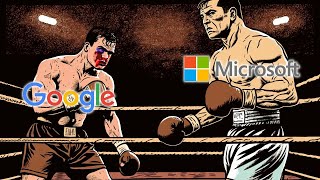
Matt Wolfe breaks down Google's Paris AI event and finds it underwhelming next to Microsoft's recent demos. Bard, Google's conversational AI, is only available to limited testers. Most features feel incremental, and Google disabled comments on the YouTube upload.
Chapters
So if you ask me right now, Microsoft is winning the war on AI against Google. This morning, Google did a live presentation from Paris where they broke down some of the cool stuff they're working on with AI. And to be honest, it was pretty underwhelming. Let's take a look. So the first thing to note is when you look at the YouTube page where this presentation was actually published, they turned the comments off. I don't know if it's because the comments were overly negative or if they turned it off before any comments came in because. Because they thought they would be overly negative. But this presentation didn't really reveal a whole lot of exciting new information. We're gonna take a peek at some of the highlights. So let's take a look at some of the best moments from this presentation. So the first, like, nine minutes of this video are Google basically saying, hey, look at all this stuff we've already been doing in AI. And they talk about Google Translate and they talk about Google Lens, and they talk about all the stuff that they've kind of done in AI already. So it's a lot of like, hey, they're doing cool stuff in AI. But at what we've done, I'm going to skip past that and let's kind of get into the good stuff where they start to talk about, here's what's coming.
Let's say you get a message from your friend who sent a video exploring Paris. Like, to learn what the landmark is that you see in the video, you long press the power button on your phone, bring up Google Assistant and tap search. Green Assistant connects you to lead, which identifies it as Luxembourg palace, and you can tap to learn more.
That's pretty cool that it's coming to your phone, but the problem is it doesn't feel new. I mean, we've already seen all sorts of apps, and I'm sure in your Twitter feed, you've seen ads for. Take a picture of this tree and see what kind of tree it is. Take a picture of this coin and it'll tell you, you know, how valuable that coin is. Those kinds of apps have already existed. Google's just saying, look, we're adding that in now as well. From a consumer standpoint, from all of us that have been in awe of Mid Journey and chatgpt and tools like that, it feels like, okay, that's cool. But we've. We've seen that before. All right, so now we're getting into the good stuff. I fast forward a little bit. They're finally going to talk About Bard. Let's see what they got to say, because this is what everybody was anticipating around this event. So let's check it out here.
We made significant contributions to the scientific community, like developing the transformer, which set the stage for much of the generative AI activity we see today.
So basically what he's saying here is, you know, all that technology you've been seeing from OpenAI and stable diffusion and all that kind of stuff, we developed the underlying technology. Yes, ChatGPT is well known and everybody's talking about that, but, you know, that's like really our tech underneath it. All right, let's say you're in the.
Market for a new car, one that's a good fit for your family. Bard can help you think through different angles to consider from budget to safety and more, and simplify and make sense of that. Bard's suggestion to consider fuel type might spark your curiosity, so you can ask IT to explain the pros and cons of buying an electric car and get helpful insights. We all know that once you buy a new car, you'll have to plan a road trip. Bart can help you plan your road trip. You can take your new car out for a spin. You. You might ask Bard to help you find scenic routes, interesting places to stop along the way, and fun things to do when you and your family get to your destination. Bard seeks to combine the breadth of the world's knowledge with the power, intelligence, and creativity of a large language model. It draws in information from the web to provide fresh, high quality response. We're releasing Bard initially with our lightweight model version of Lambda. This much smaller model needs significantly less computing power. We just took our next big step by opening Bard up to trusted testers to make sure it meets our high bar. Quality, safety, and groundedness before we launched.
It more broadly, they announced Bard. The demonstration they gave was pretty much like, hey, this does the same thing as ChatGPT. Yes, it's groundbreaking technology, but still, what's novel about it? There's nothing there that makes us go, ooh, this is exciting. I need to use Bard over Chat GPT. Or I need to use Bard over the new Bing GPT. That's there, right? It just feels like they're showing us stuff that we've already been excited about. They're showing us stuff that cool. We've already been playing with that already, though. What you're showing us here is you're doing the same thing that ChatGPT has been doing, and we're giving it access to a handful of trusted testers but you can't use it yet. That's not that exciting to anybody watching this. Am I the only one who's sitting here going, you just showed off what ChatGPT has been doing for people for months now and saying, but we're not going to give you access to it. We're only going to let some private testers use it. We want to make sure that it's safe for everybody. What does that really mean? It's not going to reach through my screen and slap me or anything as far as I know. We need to make sure that this is okay for your eyes. We're going to make sure we're protecting you so soon.
If you ask what are the best constellations to look for when Stargaze? New generative AI features will help us organize complex information and multiple viewpoints right in search results.
Now I'm sure you built this first, but the problem is Microsoft beat you to the punch because this is exactly what they showed off in their demo of the new version of Bing and the Edge browser in yesterday's live conference. You're sort of literally a day behind what Microsoft is doing with this functionality here.
We're transforming Google Maps once again evolving our 2D map into a multi dimensional view of the real world that comes alive, starting with Immersive View. Immersive View is a brand new way to explore that's far more natural and intuitive. It uses AI to fuse billions of street view and aerial images to create a rich digital model of the world, letting you truly experience a place before you step inside. Let's take a look at at the Rijksmuseum in Amsterdam.
Okay, so this so far is actually pretty cool. Like that's one of the few things from this video that I find to be fairly impressive is that it's using AI to generate all of these cool 3D maps and stuff. But at the same time, it doesn't feel like a huge improvement from what we're getting with Google Maps.
Considering a visit, you can virtually soar over the building, finding the entrances and get a sense of what's in the area. With the time slider, you can see what it looks like at different times of the day and what the weather will be. So you know, when you visit, I.
Think we already have the technology to know what the weather's about to be.
You can even glide down the street, peek inside and understand the vibe before you book a reservation. This stunning photorealistic indoor view is powered by Neural Radiance fields.
Now Neural Radiance Fields. That's actually kind of a buzzword among AI and augmented reality and some of that kind of stuff. Right now, people shorten it down to Nerf. Nerf. That's been around for a little bit now. Luma Labs has some really great Nerf technology that you can actually use on your smartphone. So right now, if have a modern iPhone or a modern Android phone, you can actually do what he's talking about yourself. So while this is cool and probably new to most people, it feels very similar to what we've already seen with a lot of the, like, you know, virtual home tours and things like that. Like that technology has existed. This is just slightly higher image quality of those, like, virtual tours that we've already seen.
You can also see if a restaurant's lighting is good for a date night or if the outdoor view at a cafe is the right place for lunch with friends.
I'm out here scoping out the neighborhood. Whenever I come to a new city, I'm always on the hunt for great coffee. So let's see what I can find. Tapping on the camera icon in the search bar, I'm able to see coffee shops as well as other categories of places like restaurants, bars, and stores. I can even see places that are out of my field of view. So I'm really able to get a sense of what this neighborhood has to offer at a glance. But let's look at coffee shops specifically because I really need some caffeine.
So this is just like a cooler, slightly more augmented, augmented reality version of what we've already got, right? We've already got Google street view type stuff. We can already look at a Google Map and see where various coffee shops around town are.
All right, so it looks like we have a few good coffee options right around here. I'm able to see if these places are open if they're busy right now and if they're highly rated. This one looks pretty good, so I'm gonna tap on it to learn more. Okay, this looks pretty good. High star rating. This looks really tasty. And it's not too busy right now, so I'm gonna head over there and grab an espresso.
I like how it says it's not too busy right now live. It says as busy as it gets.
Back to you, Chris.
Wow, thanks, Rachel. We're launching new maps features for EVs with Google built in to make sure you have enough charge no matter where you're headed first. To help alleviate range anxiety, we'll use AI to suggest the best charging stop. Whether you're taking a road trip or just running errands nearby.
I was in a Tesla like six years ago with that same exact technology in it, right? So that's been in Teslas forever now. I mean, I can already map myself to the closest gas station with like any mapping app, so I don't feel like this is super duper exciting.
For our first example, I would like to welcome the Blobs to the digital stage.
Thank you, Blobs.
Thank you, Blobs.
Now, some of you might recognize the hallmarks of good opera right away. And if you aren't familiar with the world of opera singing, this exciting experiment created in collaboration with artist David Lee, is for you and will be your gateway to learn more. What you hear aren't the voices of the opera singers, but instead the neural network's interpretation of what opera singing sounds like.
I mean, that's kind of fun and cool, but I don't know the practical use case of it yet. Now they go on and they talk about some cool, like image recognition stuff that they've been working on and there is some technological advances that they are talking about in this video, but I just feel like there was nothing really exciting and novel. If you compare this to the presentation that Microsoft just put out about Bing and Edge and all of the chatgpt stuff that they're rolling into that it was just so much more exciting. It just felt like there was just cooler innovation happening there. Everything from this presentation, while most likely groundbreaking, I don't know all of the science behind it, but from a consumer standpoint, from a, hey, let's get the public on our side. Let's get the public talking about us. Let's get the public excited about what Google is doing again, because Everybody's talking about OpenAI and Microsoft right now. They didn't really do a good job of that and they just kind of went, look like AI is a big topic right now. Look at all of the stuff that we've built in AI that you've already been using. And then when it came to the topic that everybody really wanted to hear about, which is Bard, their alternative to ChatGPT, they didn't talk about it that much. They kind of said, we're giving it to a few people to test and we're, we're making sure it's safe for you to use. Eventually you'll be able to use it. Yesterday Microsoft is like, here's the new Bing, go play with it. In the battle that's been happening this week, which, you know, I've been making a few videos about this topic over the last few days. This has just been too hot of a topic to not bring up. Like the Google Microsoft AI war is in full swing right now. And if you ask my opinion on it, Microsoft's winning. Google's kind of dropping the ball a little bit. I've heard a lot of people on my Twitter, a lot of people in our discord saying I might switch to Bing, I might start using the Edge browser. What Microsoft is doing is really cool. And Google meh, there's a war going on and it's fun to watch. And I think no matter what, us as consumers are going to be the winners of it. If these two tech giants battle it out, we win because we're going to end up with the best technology. Whether it ends up being Microsoft or whether it ends up being Google or whether it end up being something coming out by Baidu in China. Who knows? We're going to end up getting the coolest tech to play with. But as of right now, Microsoft feels like they're winning the battle. I'd love your opinion on it. What do you think of what Google's rolled out? Tell me in the comments. I'd also love your opinion. Do you like videos where I'm sharing my opinions and sort of reacting and commenting on some of this AI stuff that's coming out? If you like these types of videos, maybe I'll make more of them. I just wanted to make this video because this is the news of the moment and I think anybody that has an interest in AI should be paying attention to what's going on between Google and Microsoft right now because it is a full, full out war and it is fun to watch and I love talking about it. And if you like nerding out about all this cool like AI stuff and cool tech, check out FutureTools IO. This is the website where I curate all of the coolest AI tools that I come across and I sort them and I filter them and right now there's almost 700 of them. If 700 is overwhelming, click on Matt's picks and find the tools that I'm like, these are the coolest ones and hopefully that'll make it a little less overwhelming for you. And if you just want the tldr, you could click on this free newsletter here and every single Friday I'll send you just the five coolest tools that I find every single week. I think you'll really dig it, so check it out. Also, we do have a brand new discord that's getting close to 1500 members and this Discord is super, super active. A lot of cool techie people talking about AI. So come hang out in our Discord as well. You can find it at futuretools IO Discord. So once again, thanks for letting me nerd out and hanging out with me on this YouTube channel. If you this and you want more of this kind of stuff to show up in your YouTube feed, make sure you press the like button. Also, if you haven't subscribed yet, that would really help me out. Thanks so much for watching. I'll see you guys in the next one. Bye.
More from Matt




AI News: Dots, GPT-6.1 Sol, Sonnet 5.5, Gemini 4, and everything you need to know




