Here's Where AI Is Headed (Feat. Dmitry Shapiro)
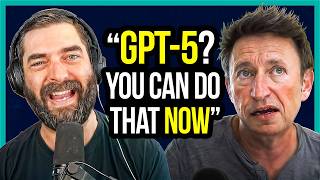
Dmitry Shapiro, founder of Mind Studio, explains how AI will create the most value running invisibly behind the scenes, not through chatbots. He builds no-code automation that chains different language models together for tasks like resume screening and sales follow-up, and argues that AI safety work should be tailored to specific use cases rather than treated as one universal problem.
Chapters
If you're paying attention to AI at all, I really think you're going to find this discussion valuable. A lot of what we talk about is counter to the common narrative that people hear in the AI world. And there's a lot of things that I think people believe is where AI is going, where our discussion tries to prove that. No, maybe it's actually going in a different direction. The following is a conversation with Dimitri Shapiro, the founder and CEO of Mind Studio. Now, Mind Studio is a no code automation platform that leverages all of the various AI models to to put AI more behind the scenes. So you build these automated workflows within Mind Studio that leverages tools like GPT4O or LLAMA3 or Claude Opus, and then instead of having to prompt all the time, these workflows just happen behind the scenes. Now, in this conversation with Demetri, we are going to touch on Mind Studio and what it does a little bit. But the majority of this conversation is all about the present and future of AI. The, the use cases that it's great for right now, the use cases that it's going to be good at in the future, where all of this is headed. It's a really deep dive conversation on what two people that are in the trenches with AI all the time see as where this is all headed hang out. Enjoy this conversation. I know I love talking to Dimitri and I think you're really going to enjoy it as well. Can you break down your story a little bit and how you even got into AI and the genesis of Mind Studio?
I. I was born in Russia. When I was 10 years old, moved to Atlanta, Georgia and grew up there. One day my dad took me to see this movie called War games in like 1983 or 84. And I saw it and I was like, oh my God, I love this. I got into computers then I was just like fascinated instantly and you know, was a professional developer for a decade plus and then started my first company in 2000 called Akonics. It was an enterprise software cybersecurity company. I built that, raised $34 million. We had over 2 million seats deployed, did that for five years. That company ended up getting sold. I started another company called Ve, which was a competitor to YouTube, raised $70 million for that. That's when we first started doing a lot of work on recommendations. This before YouTube even had recommendations. People that like this also tend to like that. And there's sort of like a bunch of machine learning stuff. And then after that I went to MySpace and I was CTO of MySpace Music and there we did a lot of AI as well, obviously looking at recommendations and connecting people and things like that. Then I went to Google and I was at Google from 2012 to 2016. The first two and a half years. I ran product on these three teams that were using machine learning and then left Google in 2016 to start this company. Kind of as soon as we saw ChatGPT come to market, my co founder, Sean Thielen and I, it was really clear to us these things were going to get more and more powerful. There were going to be more and more of them. We predicted OpenAI was not going to run away with everything. These things were going to go to commodity and sort of the ability to be able to do applied AI, to be able to take like all of this raw material of intelligence and allow individuals, businesses, you know, whoever, to mold it into the right forms to be able to get stuff done. I tend to describe AI as sort of being this, like intelligent goo that you can sort of form into anything and get it to do anything. Right. But by itself it's just goo, but it's really malleable. And so if you know how to, like, form it into different things, you can create amazing things with it. That's when we started building Mind Studios a year and a quarter ago. And yeah, and here we are.
Now, as someone who, you know, obviously sees all of the models because you have a tool that's sort of model agnostic. Right. MindStudio uses any of the large language models that you want. Is there a model right now that you feel is sort of the ideal model to be using?
Yeah, GPT 3.5 Turbo.
Really? So you prefer that over like GPT 4O or Opus or one of those?
It is clear from what is useful in getting real work done. You want to keep cost low, price is important. You want to keep latency low, performance is important. And for most of those things, GPT35 Turbo shines. You can kind of throw anything at it. It's inexpensive, it's fast. Now, again, to your point, like we support any other model and some people say, no, I need, you know, GPT4O and I'm just going to use that. And I love that. Better, as they say in the south, bless your heart.
This is wonderful. You love it, use it. We allow you to use it. You want to run your own inference, even if you don't need to run your own inference, but you just want to do it. Fantastic. Do that.
What are some of the, like, standout, cool use cases.
The AIs the enterprises are creating tend to kind of fall into the following categories. There's like some form that gets filled out and there's sort of data that's being accumulated. And it used to have humans sort of sit there and try to process that data. And so that might be resumes that are coming in, right? So a big government agency that gets thousands and thousands of resumes a month used to have like groups of humans sitting there processing these resumes. Like the AI does that and sort of triages it and classifies it, you know, asks for more information if there's not enough information, like for example in the form, for whatever reason they forgot to put something in or they put something in and it's ambiguous. Well, it used to be like a human had to like reach out and say what did you mean? And all that. No humans need to be involved there anymore. AI can do all of that stuff automatically. Then there are AIs that do sort of like multi step workflow when a lead comes in. Used to be a human had to go, you know, sort of start this process up and start that process up and go get some information. So like project management type things that used to require sort of like really well organized people or sort of a well instrumented sort of workflow process sort of being tracked by Kanban. Like anything that you can sort of track by Kanban can now be automated by definition. Things that require multiple steps that might sort of need to be fired off at asynchronously and when the data comes in then sort of continue down the path or things that are analyzing things. Sales is a obviously super important process in any organization bringing in revenue. It's a resource intensive process from a human standpoint, right? Like they're sort of like self service things where like you just go to our website and like read about our product and put in your credit card and buy. That's great. But for everything else that requires sort of human salespeople within that is a giant lift. Because salespeople, first of all, there's diversity in their skill set and their ability to be able to engage customers and do stuff. There's time limitations, only so many hours a day and things like that. And so like sales automation is a common pattern. Let me give you an example. Many conversations that everybody's having now on video, for example, tend to have agents transcribing agents that join, right? Fireflies, otter, et cetera, right. Most of the time that just like sort of goes somewhere in some bucket and it Sits there and maybe it gives you like some kind of an action itemy thing or whatever, but that's kind of it. Well, now what people or enterprises are doing is setting up AIs that basically watch the bucket that gets the new transcriptions and then fire off a series of steps that the AI is doing, which is evaluating as sort of like a third party listening, the humans communicating with one another. And this one, of course, is on the side of the salesperson and sitting there and saying, is this prospect ready to buy? Are they asking the buying question? Or are they saying they're going to buy? But they probably are not going to buy because they haven't asked all the questions that would be required to truly demonstrate that they understand what the product does. They're nodding their heads, they're saying yes, but the AI doesn't think they're understanding the product. In fact, maybe let's give them some additional collateral that's specifically custom made for them by the AI that helps them see the product from a different angle or preemptively answers their questions that they were too afraid to ask because they didn't want to look like a fool. They didn't want to ask stupid questions, which is a common problem in sales. Salespeople want to sell. They tend to get this thing called happy years. They think prospects, right? Or by the prospect doesn't want to be mean. And so the prospect saying, yes, this is a great product, I love it. Of course, I could see it in my company. And everybody loses. And the AI sort of is sitting there saying, hold on, boys or girls, let me explain to you that you're not seeing each other in the right way. And like, let's get this deal done right? And so like this kind of intelligence injection into sales where the AIs can spend, meaning that can scale scale. It's not blocked by hours in a day. It can process every meeting, it can process every conversation, it can ask all the what if questions, it can generate all the content follow up that's needed that would have never been generated by a salesperson because the salesperson wants to go to the next call. And so follow up is really hard for salespeople. AI trainers is really interesting seeing a lot of those keeping teams aligned. Every organization is constantly changing, evolving. The market is changing. And so retraining people and keeping them aligned as the organization shifts and evolves is really, really hard and requires teams. And that doesn't scale for most organizations. They can't get the team if they're small or medium. If they're too big, the teams move slowly. Now, AIs can do that, and that is extraordinarily important. And again, at scale, that's transformative. So organizations are about to get radically more aligned. When they're more aligned, out comes productivity and out comes success.
Do you think the current large language models are better at sort of reading between the lines of the context of what we're trying to say than humans? Because you're talking about SalesPeople, and an AI salesperson is going to be very, very patient with the person on the other end and answer all their questions and keep going with them. For a real human salesperson is, like you mentioned, going to want to get off the call, close the sale, get off, move on to the next one if possible. Right, but you were talking about how these AI models can actually sort of read between the lines and understand that, okay, they're saying they like the product, but maybe, you know, there's some extra information there that's just trying to get them off the call so they don't have to keep on going with the sales call. Right. So do you think the AIs are at a place right now where they're actually better at sort of reading between those lines than humans are?
Absolutely. Than most humans are. I'm certain that there are some humans, great, empathetic, insightful people, salespeople or anybody else. Some people are just better at reading the situation, reading the room, understanding other people, really listening than other people. And those are rare. So most people don't have that skill and don't have the patience and sort of don't have the time for it. And so, yes, today's AIs are dramatically better than the vast majority of people at doing that of, like, looking at the situation and again, sort of asking the questions, what's not being said here, what might be being said, what else could it mean? And sort of like sort of enumerating all of the potential configurations of kind of this reality of the situation and then saying, oh, these things are missing. Let me introduce those in. Because if you introduce those in, all of a sudden the understanding changes and the conversation change.
I want to look at the future a little bit. You and I, when we met up in person, it was right around the time ChatGPT just launched their GPTs. And I think you said something to the effect of like, yeah, they'll be hot for a minute and then nobody's going to talk about them again. And that's what happened. Right. Nobody's really Talking about custom GPTs over in the GPT store anymore. Do you have any other sort of future predictions? I know right now the big narrative that OpenAI is pushing is the voice narrative. You know, the her narrative of all of this AI is going to happen conversationally versus us typing in prompts. What are some of your predictions? Do you think that that's the correct narrative? Do you think the voice is the future of this all and, you know, what other sort of predictions might you have?
No, I don't think that voice is the future. Not that it doesn't have applications, it certainly does. And. But I think as we were talking about a little bit earlier, I think the real power of AI is going to move to things that just happen behind the scenes and you're not interacting with it. Human is the bottleneck. The best situation is when there are people out there that know what you want done or what you need done and go off and are able to do it. If you have to tell them what to do, if you have to ask them what to do or you ask them to do something, then that slows it down. If you have to teach them to do something and be sort of precise about asking them what you want done, well, that's more difficult, right? It requires more time, more miscommunication, etc. And so the more we can get humans out of the loop of having to give any kinds of commands to AI, the better. And so typing, by the way, is faster for many people than speaking. And so the speaking becomes an issue there as an interface. But even typing, you know, even if you type 150 words a minute, that's still like restrictive. I'm certain that again, if we fast forward, you know, one to two years, most of the things that AI is used for has nothing to do with typing or speaking, has nothing to do with humans being in the loop. Humans benefit from it and humans get involved periodically when they need to be. Because a human wants to hear from another human in a sales situation. It's like human talking to AI that's selling them something. Even though people are trying to do that now. I actually think that's a completely wrong approach. That certainly is a novelty. Nobody wants that. Nobody wants to be talking to an interactive voice response unit, which we've had forever, right? Like when you dial American Express and you talk to the thing that says press 1 for this or say your say this or say that, like, isn't that frustrating as hell that to say that? That's right. You just want to talk to a Damn human. You want to do it. So the more we can have humans talking to humans and AI doing sort of everything else, the better. It's better for everyone. There should be sensors everywhere, you know, periodically. Now I wear the meta smart glasses. You can ask it to see things and, you know, hear things and query and all that. And so we'll have the ability to, when we need to speak to information technology, we can say it, we can type it, it understands us. That's great. But again, the real productivity gains, the real innovations, the real things that can scale are all things that require human to get out of the way so they can sort of work at inference and line speed and just get stuff done.
I have the meta ray bans as well. This might just be more of a me issue. It might not be a common thing, but honestly, I feel awkward as hell talking to sunglasses, right? Like when I'm out in public and I have like a question, I'd much rather pull out my phone and like either Google it or ask chat GPT than spend like press a button and be out in public talking to my sunglasses. It just feels weird to me. It might be a generational thing, right? Like the next generation of people coming up that may not have that same sort of insecurity around it, but for me, I just feel weird.
I totally agree. The real values that there are now sensors that we are wearing that can see the world through lenses and can hear the world. And again, the more a human gets out of the way and the more things sort of happen autonomously where the human might be sort of prompted with like, oh, I've got some context for you here of like the situation that you're in that you should know about. And maybe that comes through audio or maybe you look at your phone and whatever, where the AI sort of listening in the background and paying attention in the background. And again, it's sort of this third party that's really sort of present in understanding it and not, oh, you know, hey, Matta, do this or that, like that. That, that can't be the right.
Right. It feels like it's. It's going in the direction of. It's going to be a little bit more predictive and sort of know what you want from it. Like, for example, if you've got these sunglasses on, it knows that maybe you want some extra information of what's going on in the world around you. Or, you know, maybe you want to know if somebody's coming up behind you, it can like let you know in your ear hey, there's somebody walking up behind you or things like that where it's more predictive and it's giving you solutions without you having to necessarily prompt it. It's just kind of knowing the environment and trying to be helpful in the moments where it feels it can be helpful.
Yeah, I'll give you a killer app for most people. Most people are really terrible with names. And so if somebody's coming at you, if the AI says that's Matt, that's a killer app.
Yeah. Especially if it's in glasses with like a heads up display or something too. Like hey, like it's got a name tag above the person or something, you know?
Right. Yeah, to your point, it's got a. Different people have different needs and today Meta does not understand the difference between our needs. It does sort of the same thing. That's wrong. It's not very valuable, that's generic. But as soon as you can, for example, like using Mind Studio, create a custom agent for yourself versus a custom agent for others, what does it do? Well, now it becomes a platform. And again now with predictive things, whatever it is that you want it to make you smarter at in real time, it can do and that becomes powerful.
Right now one of the hottest topics sort of in the AI world is the safety, security, alignment stuff. I would love to get a little bit of your thoughts on that discussion. You know, obviously over at OpenAI they just sort of disbanded their alignment team and then Sam Altman went and created a sort of new safety board where he is the head of that safety board. But then you have Yann Lecun out there saying, yeah, but we're not even close to being where we need to worry about this stuff yet, so why is everybody freaking out? There's like all of these different narratives going on around the safety and alignment issue. And so I'm just curious you're just sort of overall general thoughts on it.
I agree with Yann Nakun that this while again, theoretically it makes sense that, you know, alignment and safety is a thing, I think sort of this generic alignment of large language models doesn't make sense because alignment is different for different use cases and different parties that are using AI, but it's an unsolvable problem to create something that's aligned for everyone. It doesn't make sense. Can you put constraints on it of like don't teach people how to create a bomb?
Sure.
Again, we've been doing that kind of stuff forever. There's nothing sort of special about that. I'm not sure that Sam is wrong in sort of disbanding that team. The right place to do alignment is at the level of like, what is it that you're using it for? If you're an enterprise and you're using this thing to help your salespeople be more productive, more effective, more whatever, that's the place where you sort of fine tune this alignment, where you give it more nuanced instructions on how to behave, what to do, what not to do, et cetera. And again, that might be different than some other part of the process that you're doing.
When I think of like alignment in this sort of general sense, when it's just sort of generally being used, I almost think of it in the sense of like the paperclip maximizer scenario, right, where you basically tell an AI to go make paperclips at whatever cost and then it starts eating up the human resources and deciding that, you know, like, it does whatever it has to, to do to make more paper clips, even at the expense of humans. And from that perspective, I totally agree with Yann Lecun because I don't think large language models are going to get to a point where that's an issue. I don't know enough about the sort of algorithms and the math and all the stuff underneath it to talk super intelligently about it. But from my understanding, a lot of these large language models are basically predictors of the next word, right? They're basically the data and statistics and predicting the next best word in the statement based on the prompt that it was given. And that technology, I have a hard time seeing it get to AGI and getting to like this paperclip maximizer scenario because it doesn't totally understand what it's doing. It doesn't understand the logic behind what it's doing. It just understands its training. And that's sort of how I see it from my view of where we're currently at in large language models. But again, I'm not an engineer, I'm not a scientist.
Yeah, look, I actually think that you, you don't need to be an engineer or a scientist in this case. So again, let's maybe play around with this for a second. So let's say that you took a large language model and somehow connected it to some factory that produces paperclips and has the ability to source more materials to produce paperclips. And this thing did its token completion and said, oh, what I need to do is order a bunch more raw materials and sort of arbitrage the cost and Whatever, you could come up with this kind of a scenario. It can do that. Now you can say, give me a plan to do it. And this might be one of the plans. Let's deplete the world of all precious metals, make paperclips out of. And then, you know, theoretically it was connected to a factory, it could go ahead and run the machines and do it. But like, so what, who would do that? And what does that mean? You could do that now? I don't need a large language model to do that. Like, if I wanted to sort of do that, I can write a simple Python script that does that too.
Yeah, but even in the scenario that you're mentioning, somebody could go and unplug this machine still.
Exactly. Yeah. There's a show called Electric Dreams, I think it's an Amazon original. And I think second episode in this thing is called the Factory, which sort of has a scenario like this. It's like this post apocalyptic world where it's like this factory and it just like produces junk, robbing raw materials from the world and sort of buy drones, delivers this to these like now primitive people that are just living at the like edge of the factory and it just like drop stuff. It's like killing all the raw materials, you know, siphoning them off and just giving them junk. And finally they have to like break this factory. But, but.
That'S generally silly. The problem a lot of us are experiencing right now is like all of this weird sensationalism about AI and I think this talk, right, about alignment and danger and fine tuning and massive disruption and all of that is sort of, sort of taking a lot of the oxygen in the room where if you sort of got rid of that and looked at just like practical uses, it's freaking amazing. It's insane what you can do now in again, automating things and making all of us better and smarter. Incredible. Don't need to wait for GPT5,6 at all. You can do that now. You just need to put a little effort into telling the damn thing what you want it to do.
How do you describe MindStudio?
MindStudio is a platform that can be used by any kind of organization to transform itself and modernize its processes, to automate a bunch of things that used to be done manually and automate them completely, sort of freeing up people to do other things, making it much more efficient, higher quality, etc. Create custom new business applications for humans to use, sort of replace a bunch of old off the shelf SaaS, products that were all sort of cobbled together. Average Enterprise has over 130 some odd SaaS products that it uses and so you can sort of replace those. You need fewer products to do a lot less, but do exactly what you need it to do. It's a no code platform so just people in any organization can quickly learn to use it and transform their operation. It can also be used by individuals. We have workflows, thousands and thousands of individuals news Mind Studio to automate their own workflow.
Thanks once again to Demetri for doing this interview with me. I had an absolute blast having that conversation with him. I hope you enjoyed it. If you want to hear more conversations like that, make sure you check out the Next Wave podcast. That's the platform where I tend to do a lot of long form deep dive interviews along with my co host Nathan Lands. And if you want to learn more about Dimitri and Mind Studio and what it's capable of, I will link up Mine Studio in the description so make sure you check it out. It is a really cool platform. I've used it myself. I've demoed it in past videos. I plan on making more videos about it in the future. It is a really, really cool tool that I am happy to talk about because it's super helpful. Thank you once again to Demetri. Thank you so much for tuning into this video. I really, really appreciate you. I hope you enjoyed it and I will see you in the next one. Bye Bye.
More from Matt




AI News: Dots, GPT-6.1 Sol, Sonnet 5.5, Gemini 4, and everything you need to know




