How to Build an App with AI in Minutes
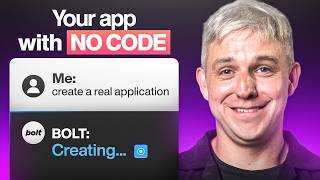
This content was created by Matt Wolfe. This content was uploaded by Matt Wolfe. This is a YouTube video titled "How to Build an App with AI in Minutes" created on September 9, 2025. It features a conversation between Nathan Lands and Eric Simons, co-founder of Bolt, discussing the capabilities of Bolt, an AI tool for rapid application development. They explore how Bolt allows non-developers to create full-stack web applications quickly and easily, the integration of hosting services, and the impact of AI on entrepreneurship. The conversation also touches on a large hackathon organized by Bolt and the evolution of AI models in coding.
Chapters
What if I told you you could build a fully functional website in under 60 seconds that's live on the web? Today we have on Eric Simons, the co founder of Bolt, one of the hottest AI startups. Eric's going to show us how to use Bolt to create an application that before would have cost hundreds of thousands of dollars to make, and now it costs next to nothing. So if you've ever had an idea for an app before and got stuck because you couldn't code, you couldn't find a technical co founder, this episode is going to unlock so many opportunities for you. So let's just jump right in. Eric, thanks for coming on the X wave.
Awesome. Yeah, thanks for having me. Excited to be here.
You know, so I've been following Bolt for a long time and I know you guys also did this awesome hackathon. Like, was it like a month ago or so?
Yeah, yeah, yeah, absolutely, absolutely. Happy, happy to go over all that and yeah, maybe I'm happy to show like, maybe you should demo a quick demo of like what Bolt is and like what, you know, what you can use it for and that sort of thing.
Yeah, for sure. Yeah, let's, let's just do that. Just jump right into it.
Cool. Yeah. So in short, it was almost a year ago. Exactly. We launched Bolt and the idea was like, you know, what if ChatGPT could actually make web apps, you know, and mobile apps, because that, you know, now there's like a lot of these things that can do that, but Bolt was really the first one that could actually build full stack web applications just by like typing text in a box and hitting enter. And Bolt improved a ton, you know, over the past year since we originally launched it. But we've like stayed true to the roots of the thing of just having it be this really, really simple interface where you can literally, it's just a text box and you can type in what you want to build with it. We have some example templates you can use down here, but for the purposes of this demo, let's just say make me a dashboard for viewing company metrics or something. Right. And so you can imagine a very common use case folks use for bolt are like PMs designers at companies that are using this instead of Figma to prototype out their applications because it's way faster to just type in words into a box and you can show something.
Real that actually works. And like it's easier to talk about that versus like some design file.
Exactly. Right. So if you kind of come back to like, you know, Marty Kagan wrote this book. You know, it's kind of like the foundational, like how to build products sort of book. I think it's called like Inspired, if I'm not mistaken. But he had this like a concept of high fidelity prototypes. And really the core idea is, you know, if you're going to make a prototype, you want it to be as true to form as possible, to get the most high, highly accurate feedback from the end user on whether or not it's like something they would use.
Right, right.
And prior to this type of tool existing, the fastest way to create a prototype was dragging stuff around in Figma and then basically showing people JPEGs and being like, does this look good? If it passes that test, then maybe you get some engineers to like spend a couple weeks prototyping something that is a real application to put in front of them. But it just took too long. It was too expensive to do.
Yeah, I feel like there could be so much loss in translation there too. Of like, you think you understand the idea, but when you actually get your hands on it, it's like, oh yeah, that's. I don't, I don't really like that dead on.
Exactly. Right. And so where it's. And what Bolt has to like kind of flip that around where it's like you can just like come in and start prototyping an idea that's like a real application you can try out.
Right.
I just type some random thing in and it's gone ahead and you know, gone and created a dashboard that we can like look at with our different business, business metrics and like whatever have you. And you can actually pull in like your company's design system to this thing. So it actually build applications and use, use the libraries your company does. So it's like on brand. Right. With, with your company's apps.
But how, how do you pull that in? Is that like from like Figma or something like that as like a library of like your fonts and colors and all that kind of stuff?
Absolutely, yeah. So you can actually, you can actually pull it in from your figma. So if you go to the Bolt homepage, there's like a Figma button. You can paste it in there. Kind of cool. Like in front of any figma URL, you can just put Bolt new in front of it and then it'll automatically suck it in other ways. Like if you have like a, you know, if you have a coded version of your design system, like an NPM package or something, you can actually configure that in Bolt and say, okay, our design system lives in these packages in our NPM registry and it'll actually install from there and use those things.
Oh, that's awesome.
Yeah, so like, that's like, we're like one of the, I think the only company that actually allows that at this point where, you know, where we've designed it to be able to pull in from arbitrary registries, pull in from Figma, et cetera. And so yeah, a lot of companies use us for rapid prototyping, et cetera, in collaboration amongst folks on the team. And what's cool is if you want to, as you get feedback, you can just go to Bolt and you can prototype and give it direction and say, let's make this optimized for mobile devices and use a blue color theme or something. Yeah, I don't know. But like you can, you can keep interacting with and chatting with it and building this interactively. So it's like very simple. You don't have to be technical to use the product. And so, you know, it's, it's been a game changer, you know, across the spectrum for businesses for like PMs especially, and even for entrepreneurs that are like going and building their first application ever and like trying to launch a startup on their own. Cool.
And I assume you get all the code for this too, that you could hand off to a developer like once you prototyped it?
Yep, absolutely. Yeah, yeah. And so that's. To me, that's like one of the most magic things about this entire transition happening where you can have, you know, AI just spit out actual code is this is all it is using again, the same code your company does or, you know, if you're starting a company, it's using like React, which is like typically the default choice or whatever have you. And you can, you can instruct it to use anything for that matter. But yeah, you can take this code. We actually have an integration with GitHub, so you can like commit this to a repo and like have it be committing there. We have integrations for deployment and that sort of stuff built in. So, you know, this is not like some proprietary thing, like, you know, maybe WIX or Squarespace. Right. Sort of is. This is like something that's actually really, really focused on kind of real, real workflows and use cases.
Yeah, that's kind of, I was kind of thinking about it like, who is your competition? I mean, I know there's like lovable and Vercel V0 and like, you know, and, and then obviously there, there's ides like you know, Cursor and Windsurf and then there's agents like Devon and Factory. I am kind of wondering like where this all goes and like do they all converge in some way or are they all serving different markets? You know I kind of, I kind of see Devin and Factory a little bit more targeting enterprises and enterprises that also have engineers. It feels like with what you guys are doing is great for like replacing the website builders and things like that, but maybe you're thinking about it totally different than I am.
Yeah, I think it's like, I think that it's somewhat the website builders. I think for us we're very focused on having this be a tool that people are using for rapid product development. So again I think like the figma use case of like we're making prototypes, giving feedback and iterating that strikes me as really our lane and where we are having really, really great results. That said, a lot of our prosumers we have two ICPs that we see on our prosumer side. It's largely filled with people that are entrepreneurs building their startups, that sort of thing. On the B2B side it's entirely like PMs at companies doing rapid prototyping and they're kind of largely the same use case where everyone is both sides there are trying to iterate towards great products.
The prosumer side of it though, they really, really care about having production grade hosting and things of that nature which like the businesses also care about in regards to creating real prototypes they can share internally and that sort of thing. Um, but, but that there's just a little bit of a weight, emphasis difference between what these two different types of users are doing. But, but it's like kind of a classic product led, you know, growth sort of motion for us.
Look, Vibe coding is the fastest way to go from idea to shipped product and most marketers are completely sleeping on it. And here's what's wild. HubSpot just dropped 10 vibe coding prompts that'll take you from I have an idea to an actual working product in hours. You get the complete zero to ship framework with prompts at every stage from ideation, technical optimization and scaling. It's the entire package. Get it right now scan the QR code or click the link in the description. Now let's get back to the show.
Do you guys provide any kind of hosting or anything like that right now or. No, we.
Yeah. So by the time this is live like so tomorrow we're actually announcing this but basically we have actually integrated hosting directly into the product. Product. I'll go and hit publish. So. Oh yeah, this is. Okay, so this is actually time production. I'm feature flagged right now, so we get to see it actually in action. This breaks, by the way, it's because I'm feature flagged and this is like going, yeah, sure. So what's, what's cool is like this has actually been kind of a big problem. So like I said, it broke it. So like this is going out tomorrow. But what's really cool about what we're up to here with hosting, a lot of the, the tools today for Vibe coding, they're very fun. They're kind of like, they're fun toys, but they don't actually set you up to build and scale your product to millions of people, right? Or even, even thousands of people. There's been a lot of stuff in the news around databases being deleted by other folks and like security issues, etc. And a lot of the issue is that the Vibe coding tools, like the web based ones, like Lovable and Replit, whatever, the way that they've approached hosting your applications that you make is that they actually have like, they kind of tried to home roll their own hosting infrastructure. And the problem with that is that all these, we're, all these companies are about the same size. Like we're like 45 people. So is Level, so is Replit. If, if you're going to go and scale databases and servers and DNS, it's it to do it well and reliably, right? For, for actual businesses. It's a whole business in itself. And so what we ended up doing is we have partnered with Netlify and Supabase, which are some of the best companies in the world for databases and hosting. And we've actually taken their offerings and for the first time ever like brought it underneath one interface, like one seamless experience inside a Bolt where you're not even like, you're not signing up for a Nullify or Supabase account. It's actually just part of Bolt. Like every Bolt project has its own production, hosting and database associated with that. So when you create a project on Bolt, it automatically has those things and it's being scaled and supported by the netlify and Supabase with us. So you can actually go and scale things to millions of concurrent users, right, with these different tools. So Bulbus is actually really the first Vibe coding tool that's going to actually have this amazing type of idea, 2 million sort of experience, right? So exactly the big thing we're rolling out tomorrow.
Yeah. So it feels like you guys could really in theory dominate like the whole like 0 to 1, basically. Right. Like, it sounds like you guys could be the best at that. Like just from idea in your head to like it's, it's now a real thing and it's actually published on the web, which is awesome.
Yeah, exactly. And again, and you're, you're, you're spot on, which is like the, the, the folks that you prime. The people that are primarily using Bold are not developers. Right. So like when you look at Cursor that, that the, the inverse is true. Like mo. Nearly everyone using Cursor is a developer.
Yeah.
The people that are using Bold are people that have a great taste in products and, and business. Right. And they have good, good intuitions around those things, but have never had the technical knowledge on how to actually build, you know, a product themselves from the ground up as far as like writing code and that sort of thing. And so Bolt for them is really their, their tool to actually go in and take direct control of the building their products and experiences. And then to that end, it's been a very important part of that. And this is like a lot of the growth of the other guys too in the space have been seen from this type of archetype. But the issue is it's not just about building a prototype or building an out. You have to have this thing wired up to be able to actually be secure and actually be. And not have these crazy obvious holes of them. Right. And so, and that just strikes us, it's important to have as a first grade thing in the experience to the end, we are using Bolt hosting. We are actually hosting Bolt on Bolt hosting. We use the exact same stuff, you know, for this and you know, and even like Lovable also uses the same stuff as what Bold Hosting is. Right. So it's like we're really the first company that's actually, it's. If you, if the, the tagline is, you can go from idea to production or whatever in a prompt. If, if the Vibe coding tool itself is not using their own hosting, that's like a, it's a big red flag.
There's been a lot of this where like everyone's saying the stuff is secure and stuff, but if you really believe that, like, why are you, why are you kind of selling people one thing and not actually using it yourself? Right? But that's. It kind of goes to show though, like where what we think is important from the user experience, you Know of what help people actually get their ideas online in a secure way that will actually.
Yeah, I think that's awesome, you know, because obviously, you know, I lived in San Francisco for 13 years, I'm in Japan now and obviously in Silicon Valley, there's a huge bias towards engineers, which, I mean, I love engineers, I code myself a bit. But you know, it always like people who were like, great at business or marketing or sales, they, they were such, such a disadvantage. People don't realize like you can launch a lot of things now and it's not a big deal. People used to be worried about like launching something and it failed and like, oh my God, people are gonna think you're a failure. People forget things like a week later now. Yeah, you literally were just trying new ideas and seeing what works with something like Volt.
Absolutely.
Well.
And I think that to me is like the.
What, what I. For, for like people that are entrepreneurial. I think this is the, the best thing really in the past, like, you know, decade that's, that's come out as far like the capabilities to be able to iterate this fast. Because like, to me I look at, like, I look at early stage entrepreneurship, like finding product perfect fit is, it's, it's purely a numbers thing. Like, it's a numbers. How many shots on goal can you take? Like how many iterations can you take?
Because it's, it's all how fast too, right? Like the speed matters a lot.
Bingo. Right. Because it's like your speed dictates how many shots on goal you got. Right? And this increases that by like an order of magnitude. And so that's, that to me is like, what's why, you know, every entrepreneur should be using these things because we've had just dozens and dozens of startups that have used Bolt to build their, their mvp, go and prove it out and have gone and raise their seed rounds, you know, to, to continue scaling their, their company out. And I did. I love hearing that. But yeah, that's to me it's like, and all the integrations we're building in as well, like what we're doing with like our Bolt cloud offering stuff is again, it's like these are things that if it wasn't just built in, you'd have to go and figure out how to set these things up and get them all configured and da, da, da. And then if you're not technical, it's like the agent's not going to know how to use these other things. Right. So having it all built in, it's like, now you can come to Bolt and be like, hey, buy my domain, deploy that thing to production, go and add this feature and just knows how to do all this stuff across all of the infrastructure that you don't even know what it is and how it works, but it does, right? And you can build a business. Amazing.
Yeah, it is amazing. I think it's a good moment to talk about the hackathon because it fits really well into talking about all the new opportunities for people to be able to create things. So maybe tell me about the hackathon and if we could show me some examples as well, what people built.
Yeah, absolutely. Back. Back in, I think it was like March or April. This guy kp, who runs the startup stuff over at Paddle, he tweeted out. This idea is like, if I was the CEO of Bolt, you know, I would, I would throw the world's largest hackathon and have it, you know, giant cash prize, have Guinness World Record, actually like validate with the world record title. It just is a lightning rod to like get entrepreneurs and builders to come and actually try out this, you know, these new tools, like. Bullshit. Um, because the key reason is a lot of people still have not. Are not aware that they can actually go and build startups and, and, and, you know, tech products themselves with, with bolts and other things. So I, I tweeted back, I was like, cool, let's do. I didn't know who he was, but I was like, let's do it. And a couple hours later, we had like a. Over a million dollars of commitments if the thing went like viral on Twitter and whatever. And so we ended up, we gave, we got roped into the world running the world's largest hackathon, which I will tell you in retrospect, I'm used to heck of a lot more work than I would have ever expected, but it was, it was, it was incredible. We had, I think we had like over130,000 people that participated in this thing. And. Yeah, and, and the, the, the top folks that won the thing. It's, you know, it was amazing. Like, I think the first prize was like 100 grand. The second prize was like 75 or 50.
Did you say 130, 000 people?
Yeah, 130, 000. Yeah.
Christ.
Huge. Massive. Massive. It was just, it was just crazy. Yeah, our, our cloud and inference bills were through, through the roof. But. But yeah, it was, it was, it was really. It was such a cool initiative that we ended up doing because it was. There's so many, I mean just so many people that came from all different walks of life and backgrounds. Some people that were, that were engineers. Most people were not. They had never. And they were just like, hey, I. I'll give this a shot. Like I'll go and you know, build something cool. And so I think the, the, the, the fellow that won first place, I go and pull up our, our acts were like we need had some of this stuff on.
And so this hackathon was all in person. They, they all had to be there.
Or it was all global actually. Yeah.
Okay.
We had an in person components kick the thing off the chain smokers threw a concert for, for this. That was how this thing kicked off. Believe it or not. They're like investors in our company. And so in San Francisco there was a, A, A concert to kick off this hackathon which is pretty cool. Other than that, it was like pretty much online though. Yeah. So this, the, the. I felt the one first place, super cool guy, he made a AI app that actually lets you like edit videos with AI. So like, you know, I don't know if you've done a lot of, you know, video editing. It's kind of a little bit.
Yeah, yeah.
And so it's like the idea of having an AI integration or agent where you can actually just tell it, hey, like go and take these parts, clip them together and da da niche like does it pretty magic, right?
Right.
So we ended up making a, you know, a actual app for this. I'm so I can find the, the URL.
You know. You know I, I own, I own lore.com and there's been so many people who've told me Nathan, you should be using, you should be doing that with Lore. That's what Lore should be.
Good. I mean it's like, it's, it's a really good idea, you know, but let's see if he has like a demo video here or something. I know we have one as part of the hackathon or whatever have you. But. And let's go, let's see. Two minute, highly reel. Let's give it a shot. Let's see how this works. Go and sign in. Anyway, so. But it is really sophisticated application actually because you could actually, you know, he had a full timeline scrubber and everything. And I mean it was like a full on, you know, project. Go and see. I've now tested this recently and he.
Used bolt for all of this.
Yeah, yeah, he used the bolt was, was the tool that he used to primarily. So you can kind of see like the, you know, the inner. This is like, you know, this is not, you know, super trivial stuff to make here, right? Especially in the course of just like a month, like, right. Pretty, pretty wild. And so you can, you know, chow with it and actually, you know, tell it to edit it and whatever have you. But it was like this is like a very reasonably sophisticated application, right? Just like an idea. This is like a real startup. I mean you think about like a couple of years ago, the idea of a one person building something like this is this would have taken like a year, you know, like to, to build solo, right? By made this, you know, entirely through prompting. So that was. This is the guy that won first place and then on second place was this guy, his name sir. So he made this app called Weight Coach. Basically the idea is it allows you to, you know, keep take control of like what you're eating and to like help create recipes for you based on the ingredients you have. Help you like, you actually get down to like the target weight that you're looking for. And I think it actually uses AI to go and like create recipes and you know, go and you know, create different aspects of the experience. Which is like really cool because there's like these weight loss apps, you know, that you can download. But his is like, I thought was very interesting because it was something where it actually got to know you and like your preferences and could actually think outside. It wasn't like, hey, here's like five different recipes that are like hard coded into this thing. It's like it can actually go and dynamically adjust to like, oh, I'm traveling. Okay, well here's something you could do in that area, blah, blah, blah, right? So basically very, very cool app that he made. And this is actually a native mobile app. So this is not just like a web app, it's actually a native app which is something unique that like Bolt is the only, one of the only web based tools where you can like make a native iOS or Android app with the thing. But yeah, so couple, a couple of the cool, cool hackathon projects that came out of that.
That's awesome. Yeah. I was sitting there thinking when you were talking about this, I was like, I was remembering back that one of my, my cousins in Alabama was asking me like, hey, I've got this idea for an app. You know, I used to have tons of people in my family, like, you know, because I knew I was, you know, having some success in San Francisco. And they were like, I have an idea for an app and you know, how would I make it or how would I get started? I was like, oh God, I guess you got to go learn. You got, you gotta go learn this programming language for like a year. You gotta learn whatever and then maybe make a prototype and it's probably not gonna work. And I just told him that too. I was like, it's probably not gonna work. You got this idea, it sounds great. You're gonna, you know, you probably should do it though, because you're gonna learn a lot. And you know, and I do wonder like if that would have changed things if they could have just like went to something like this and just tried it and, and then in a day saw if their idea had any merit or not.
Absolutely. Yeah. I mean, I think. And that's like, you know, to my co founder and I, he and I actually grew up down the street from each other in Chicago and he and I learned how to code together when we were like 13. And then we've been building stuff together ever since and awesome. This, it's like, we look at this, we're like, this is like the thing we're building, the thing that we wish we had when we were 13 years old because it's so painful to have to learn how to program from scratch. And the drop off is just huge. Like a lot of people have interest in this stuff, but just to, to do anything, it's like there's all this random, you know, kind of archaic things almost you have to become good at. That's really ancillary to the point of actually building something and then you're just getting started.
That doesn't mean that you're gonna have any success at all.
100, 100. And, and so I think that, you know, it seems, and this is like Greg says this, this, this kind of vein of thinking a lot, but like you already started to see an explosion here of ideas and products that just would have never existed before. Because just the sheer, you know, the sheer drop off that inevitably happens if you have to know how to set up dev environments and how to code and like, and then getting good at coding to the degree you can actually make something that's beautiful and like, yeah, it can scale and stuff. I mean that's like, it takes years to even just get to that point and then you get to start taking shots on, go on an actual way.
Right, right, right.
So yeah, I mean, it's just transformative, right, to how.
How startups, the dynamics of startups in, in general, you know.
Yeah. I do think for this whole like you guys owning 0 to 1 too, like for like average people. I do think Bolt is the best name. I know you've talked about this before, but maybe if we could briefly go into like how that happened, like from like Stack Blitz to Bold. Because I, I feel like I heard of Stack Blitz. I think I, I think I did on, on Twitter or something at some point. I'm not entirely sure.
I think, you know, back in 2017, Albert PI, my co founder and I, he and I launched Stack Blitz, which is web based ide. And the idea was, I mean what we really, we wanted to make it as easy to build like full stack web applications as it was to use Figma or canva. Right? Like that was the idea. And we gotten really the idea, I guess kind of started because back when we first came to the Valley in 2011, 2012, we'd had the good fortune of bumping into Dylan Field and Evan Wallace when they were first starting Figma. And back then they didn't have a design tool. Their pitch, the initial pitch was this demo of a 3D ball dropping into water inside of a browser tab. And the pitch went basically along the lines of browsers have become very powerful. You can now do complex graphics rendering in them. And so if you can create a rendering engine that runs in a browser, you can bring design to the browser in the same way that Google brought Docs and email, et cetera. And that'll be hugely valuable. Obviously we've seen how that story has played out now. And so back in 2017 we, we saw the, for the first time, like, oh, it might be possible to do that same play but for development environments. So for the first time you can actually mount dev environments in a browser using the end user's, you know, CPU memory, et cetera. And that would be huge. For the same reason was for Figma and Google Docs and whatever have you. And so we started the company in 2017, we launched that technology in 2021. A lot of developers, that was very cool. But over the couple of years after that, like we had millions of developers using the product for free every month. We just could not get anyone to pay us money. And that was like, by and large, like, if you think about, you know, what's really the difference between Stack Blitz and Bolt. Stack Blitz was an IDE where you still had to know how to code. Like, you didn't have to set up your environment, but you still had to know how to code, which is, which is huge. Like that is not a small, you.
Know, yeah, when you were saying, I was like, to me that would have been a great for like maybe competing with like Code Academy kind of thing where like you're actually teaching people to code or something like.
Yeah, yeah, exactly, exactly now. And it's funny because Stack Blitz, we started Stabiliz because we were competing with Code Academy on our previous company in a sense. Like we were teaching people how to code online, needed an online environment to do that and that's really where stackblit kind of popped out of. And, but, but there wasn't, you know, there wasn't an obvious way.
For us to make money or at least the things that seemed obvious. We tried. All the other competitors tried. No one, no one figured out how to make money on cloud ideas in any meaningful way. It was just a mirage. And so that came to the last year. We've been around for seven years as a company. We still like over half the money we'd ever raised in the bank at that point. But it was like we've been at this for a long time and if we don't, you know, if we can't figure out how to make a venture scale business, like it just doesn't and we don't have a clear paths to doing so, like what are we doing here?
Right.
And so we were, you know, the decision was made like if we don't have something by the end of the year, you know, that's like changes the trajectory, we're going to start spinning down the company or getting acquired or like whatever. Right. And so what we ended up doing is we tried, we launched a couple of different products last year. All of them were very cool. But you know, the first couple we launched didn't get the commercial traction the we were, you know, hoping to see. And you know, when we launched Bold, it was the last experiment that we were going to run. We were launched in October, our board meeting was in November where we were going to, you know, begin disassembling the company.
Yeah.
And hey, surprise guys.
We got, we got this, this Bolt thing.
Yeah, yeah, totally. Right? I mean it was, it was, yeah, unexpected for literally everyone at that point. But I mean when, you know, we've been around for seven years and we got to like 700k of ARR. And then we launched Bolt. In the first 30 days we added 4 million of ARR. And then the month after that we went to 20 million and it was.
Just like, yeah, wow.
It was, it was crazy. And so it was like, and there's a lot of these stories now These companies that are, that can, they're seeing these like revenue ramps like we did. But we were really the first one that actually like saw the, that type of hockey stick and we're like, what the hell is going on? Yeah, but that was how Bolt came to be is. It was, you know, really like, you know, it was an idea I'd had earlier in the year. And then once we saw the Sonic 3.5 model from Anthropic, I was like, okay, this is actually, this is like viable like this. This, the coding models have really caught up and this would be an interesting product. We had no idea it would be as well loved and received as it has been and grow as fast as it has been. Like we thought we would add like the best case scenario in our view was we add 100k of ARR by the end of the year off this. That would be amazing. And we cleared that I think on like the first or second day or something, you know.
Well, dude, that's, you know, congrats on that. I mean like the fact that you did that for seven years and so like you were just like hustling and like, you know, barely holding on and you know, and then had this huge success. That's amazing. Now I did kind of wonder like, God, why, why didn't he just start a new company, like have a new cap table and everything? Like, you also probably didn't know exactly how things were going to play out with Bolt and everything.
Well, it relied, it actually relied on, on technology we had made. Right? I mean like okay, the, in the browser dev environment stuff, like when you go to Bolt, like that is all that technology we made over the past seven years, like that is what is actually making that, that possible. We built bolt in 90 days because we had spent seven years building this technology to run dev environments. So it was a very natural product progression actually.
Cool. I'm curious, you know, which model are you guys using right now? Like primarily like with Boulder? Have you switched over to GPT5? Are you still using Claude or like what are you using?
Yeah, we primarily use cloud. I mean we Claude to have doing co generation stuff. Like Claude has the best models. Yeah, we've also, we were, you know, one of the launch partners on GPT5 and GPT5 is a great model. I think there's certain areas where we're using it. But you know, Anthropic is just, I mean they've just done a really good job of really lasering in on software code gen and just being the best in the world at that. And, yeah, I think, I think they're doing a lot of interesting stuff there where I suspect that they're going to be. They're going to be the preferred tool for. For some time. You know, maybe other things will come, but, you know, it just, it seems like they've, They've really. That's the, really the niche that they're focusing on and, and, you know, the focus matters a lot.
Yeah. Yeah. You know, I went on. I went on vacation for a few days and I came back and like, Twitter was full of, like, all this, all these people arguing over GPT5. And some people were like, you know, it's. It's amazing. Otherwise, like, it's horrible. And this is like the end of AI. It was all a big bubble, we're all done for. And it was like, what the hell is. What did I come back to? What did I come back to? What the. You know, I tried GPT5. It seemed really good. Like, you know, not like a gigantic step forward, but like a nice step forward. I thought it was really smart how they had, like, switched to, like an automatic model because, like, for the average person, the UI was horrible. And then now everyone's basically like, forced them back into having the same kind of UI again or similar. I'm just curious, what are your thoughts on, like, you know, AI progress and, you know, have things stalled out or are they just, you know, what do you think about AI progress?
Yeah, I think, I mean, as far as it depends on like, the dimension.
Of it, but like, coding and like, building applications.
Yeah, I think on coding, I think that we're. I think that there's. There's very meaningful improvements that we've witnessed across model to model, especially across the, the anthropic family just over the past year. Like, it seems like the, the RL stuff that's going on there has legs and, and has a lot of room to run. Looking at the more AGI stuff, I mean, I think, I think that all these things are kind of reliant on new approaches being invented and proven out. Right. So I think on the current, you kind of take the current state, you know, like the whole idea of like, scaling things up like that has topped out. But, you know, the adding, like, the reasoning and, you know, RL stuff has kind of moved the needle a bit in a way that you couldn't have forecasted. So I think we might see more stuff there. But it's like, you know, kind of a tbd.
Yeah, I guess it's Kind of hard to know. That's also going to like cap out too like the, you know, the, the thinking, the reasoning side, is that going to continue to scale up or is that also going to have diminishing returns? It's kind of hard to.
It might. Right. I mean I think we're going to, there's just going to be a lot of new research and invention done. But I think even with the current state of the stuff we're looking at, a lot of the game is even, is like moving away from like do we have the best model? And kind of moving more towards do we have the best model that's designed to work well with agents. Right. Because when you can actually, if you think about like how a human brain works, it's, it's kind of rare. We're just like off the, off the top of your head on any given sufficiently complicated question, you will just zero shot an answer that is completely perfect.
Right, right.
It makes sense that maybe we can get machines to be at that point. But it seems like a pragmatic way to approach this is like yes, assume that there's going like, you know, that's maybe the North Star or whatever. But like you know, you're the way in which people, people think is by bouncing things around and going back forth and that's like what agents do. Like Claude code is, is going and looking at different files and like kind of digging in and sometimes it'll hit like a dead path and like what it's trying to figure out and it'll revert back and like, you know, blah blah, blah. And so to me it's like, it's actually more important that there's the area where their innovation is, is ripe and it's like early days is really making that sort of, of critical thinking really, really good and making good at tool calling and like for building agents and, and that sort of thing. And so I think it actually kind of matters less about the specific model capabilities because even with like some of the frontier models, like I just, I, I don't think we're really maxing out what they can do if you actually have a really good agent that's orchestrating them, but that also relies on the models themselves being trained to be, to work better as agents. So I think, I think there's like, there's some number of years we're just focusing on that is going to yield some incredible results I think.
Yeah, it seems like that plus more compute and we'll get like amazing progress for at least like three to five years for sure. You know, AGI, you know, you could argue that AGI is like 20 years away or like we've already reached it, like depending on your definition. I mean.
Yeah, yeah, but and I think too just it's going to take time for the application layer to actually fully utilize even the current state of the art. Right. And so I think that like, you know, there's not actually to me an urgent need for these things to go like 10x better tomorrow for this. Not like this is, this is real. Like there's, there's real, there's real revenue coming into us and other companies and like there's a lot of new innovation happening that's not even related to the models getting better. So I think it's just, I think from that end, I think it's, it's going to be transformative on just how the world operates without really needing some giant step function any short period of time.
Yeah, I think the average person doesn't even realize how good the current models are. They're just using as like a basic chat bot or Google for sure.
And they're not using, you know, there's just not a proliferation of products that are really leveraging these things to the max and integrating into people's workflows. Like it's taking time. Right. And that's like the same thing we've seen with every other wave of technology where it's like the adoption of cloud services, you know, adoption of the Internet. It's like it kind of takes time for there to be proliferation of these, of the builders who are delivering the services and the consumers that are purchasing them. Them. Right, yeah. And there is, it is going faster than ever has been in previous cycles. But even still, it's again coming back to like for our products, like most people don't know that they can write software, right. And so like that's, you know, the, the TAM is like 98 of the planet, right. There's not even 100 million people that are using these. There's not even like, yeah, I do.
Wonder how you reach those people because like, I think a lot of them, even if you told them, they're like, okay, I don't get it. Like, what do you mean? Like, even if you just told them, they like they, they wouldn't be able to process it. Like that was actually real. You could just go type in and it would make a website for you or an application, whatever. Like people have a hard time, you know, grasping that.
Yeah, exactly. And so again, a lot of this is like, it's really people, builders and actors need to go and solve the last mile problems of these things at the application and distribution side of this problem side. And so I think I, for those reasons, I think I feel like everyone, and maybe in large part because of some companies have been just like hammering about AGI for the past five years or whatever. But yeah, it's like, I think there's some expectation it's like AGI or bust. Like this is not zero sum. Like maybe all paths lead to that, but like that's not needed. Like if you look at software development specifically, what's the, what is the value of going and like creating products that, whose purpose is to like go and basically rewrite all of the world's software? Right? I mean that's like, that's what we're talking about here. Like we can just, with, with Bolts and other products you can go and just build new software that replaces previous human written software. You know, the market size then has like trillions of dollars, right? You can rewrite how the world works with just basically the current state of technology. So yes, that's kind of my take on what's progress or not. But I think just like pragmatically it's like this is. We haven't even scratched the surface of the current level of capabilities as far as applying it into the world and still improving. And that's crazy because again, even with the current state of the art, there's so much more to be done.
Cool, dude. Eric, this has been awesome. It's been fun. Where should people find you online and.
Yeah, for sure. So yeah, like our Bolt is like Bolt New. That's the domain. You can find me on Twitter just at Eric Simons.
Cool, man. It's awesome. It's been awesome. Thank you.
Awesome. Thanks for having me.
Sam.
More from Matt




AI News: Dots, GPT-6.1 Sol, Sonnet 5.5, Gemini 4, and everything you need to know




