How Yohei Nakajima Created an Autonomous Startup Founder: Baby AGI
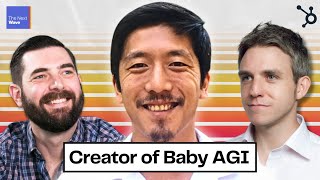
Yohei Nakajima built Baby AGI, an autonomous-agent framework that got roughly 1 million views after he open-sourced it. He iterated through 70 projects before this one, experimented with different model combinations like Claude Opus and Haiku, and found practical uses: research, meeting prep, generating game levels, automating websites.
Questions this video answers
May 21, 2024.
About one million views.
Around project number 70ish.
Up to Baby Fox (he mentioned variants through Baby Fox).
Rebuilt from scratch with a new, fully graph-based architecture.
Chapters
Autonomous agents will have huge impact. And I think just the question is a matter of when. So I started building tools that were based on code, and it was so fast that I started prototyping just one or two things a week. Sometimes it was something we use at our VC firm, and sometimes it was just a pure experiment. People started asking this seems like it's more than an autonomous startup founder. So I was like, all right, make the world a better place. And I just started thinking of ways to make the world a better place. And of course it went viral, dude. Got to a million views quickly. I was like, all right, so this is more than an autonomous startup founder. And one of my friends had commented, bro, did you just build a baby AGI?
Hey, welcome to the Next Wave podcast. I'm Matt Wolf. I'm here with my co host, Nathan Lands, and today we have an amazing guest for you. Today we are talking to Yohei Nakajima and we're going to be talking all about AI agents. So thank you so much for joining us today. We're really excited to have you on the show and excited to dive in with you.
Thank you for having me, guys. Nathan, good to see you again.
Yeah, good to see you again as well. Yeah, I think it'd be kind of interesting to tell people, I mean, in an odd way, you know, talking to you about baby AGI about a year ago now, which seems crazy, it's been a year, but maybe, you know, a lot. A lot of the audience probably doesn't know what baby AGI is or how. How did you get that crazy idea? And how did a VC who can't code create this thing that went super viral?
Well, yeah, so the background is that I'm a VC and I like to build as partially a hobby and as a way to learn. I was more of a no coder before. I've always coded, but not that good at it. So I've always been more of a no coder. But when AI came out, I could suddenly just have AI write the code. So I started building tools that were based on code. And it was so fast that I started prototyping just one or two things a week. Sometimes it was something we use at our VC firm, and sometimes it was just a pure experiment. And I think it was project number probably around 70ish. I was looking at hustle GPT, which was when people were using ChatGPT as a co founder, saying, I have a thousand bucks, how do I grow it? And then just doing whatever ChatGPT told them to do. And I thought that was a fascinating experiment and wanted to be involved, but it was too busy and I thought, can I automate the human part? And so that led to a challenge over the weekend to prototype a autonomous startup founder. And so of course I went to ChatGPT and said, I want to prototype an autonomous founder. Here's how I think it should work. Can you give me the code? Then after some iterations, it started working. So I posted a demo online and it went viral. It got to a million views quickly. Then people started asking, this seems like it's more than an autonomous startup founder. So I was like, all right, make the world a better place. And I just started thinking of ways to make the world a better place. And of course at this point it's just reasoning, so it's just text. But I said, make as many paperclips as possible. And the first thing I said was, this is actually unsafe, so let's first come up with safety protocols. And I was like, all right, so this is more than an autonomous startup founder. And one of my friends had commented, bro, did you just build a baby AGI? So that's where the name came from. I was like, all right, this is popular. Academics are loving it, I need a paper. So I went to ChatGPT, dropped in the code and said, give me an academic paper. And I posted on my blog as my paper and then I had a tweet thread about the paper and then I open sourced the code and just each time it just went viral. So just a week of just non stop notifications. I learned about EACC that week and about Doomers because they were both in my DMs. Some people loved it, some people hated it, but it was an absolutely wild week.
I love how that the paperclip maximizer scenario was one of your first tests that you wanted to see how it would go.
Well, what's funny is somebody tagged Yud and then he obviously he actually retweeted or commented on it, which I think got the doomers noticing me.
So what's the current state of Babyagi? Where does it stand today?
At first, after I released it, some people, people jumped in, started contributing. I'm not a developer so I don't know how to manage it. So I had some community members who are willing to help support it. So they were managing the PR for me, but there just wasn't much support behind it. And then I wanted I had some more ideas around the framework and I realized I wasn't actually good at reading other people's code. So I just went back to my original and started modding it. And I went to my group and I was like, what should I do with it? They're like, why don't you just create a classics folder and just stick it in there? So then there was like Baby B AGI, Baby Cat AGI, where I basically used Baby AGI as a way to introduce design patterns that I thought were interesting and useful for building an autonomous agent. So I got all the way up to Baby Fox AGI. It was in alphabetical order and each time I introduce self improvement memory, like new ux. And then at some point I think around Baby Fox I was like, the code's getting a little clunky, I feel like I'm stuck a little bit, I need to solve something else. And I kind of took a break. And then as of a month ago, I just got back into rebuilding BB AGI from scratch with a new architecture that's fully graph based. So I just started tweeting about that because it's looking pretty good, but that's, that's the current state.
Are there any specific models that you, you really prefer to use? Because it seems like back when Baby AGI first came out, I mean we had, I, I don't remember if GPT4 was out yet, or if it was still GPT3.5. But then there's just been an explosion of LLMs, right? You've got all the Claude models, you've got Google's models, now you've got the Llama models. Is there a model that you think would work best as an agent? Or do they all, are they all kind of similar? What are your thoughts?
There's, I think picking the right model is extremely helpful in getting your agent to be more reliable, faster, cheaper. And then of course there's fine tuning and there's a lot of techniques you can do. For me personally, I'm much more interested in ideating around new design patterns. For that it's easiest to just use the most powerful model, even if it's slow, just to get it working. And then if that new design pattern works, then I'll go, then I in theory could go back and optimize the model, the prompt, but oftentimes instead of doing that, I just open source it and move on to the next design pattern. So I, I, so the answer is I have not really thought too much about the model. That being said, in my newest Baby AGI, I'm actually using a library called Light LLM that lets me switch between Models easily. So I have started using Claude Opus and Haiko.
I mean, I remember when we talked before, I think one of the use cases we talked about was like, research was like something would be like a straightforward first use case that like, hey, these agents could go off and talk to each other and kind of figure out like, hey, let's go do some research. Whether it's like you're starting a new project or researching a new market or whatever. Is that still like one of the use cases?
Yeah, that was one that was working pretty early on. I mean, within a few months of Baby AGI launching, there was a plenty of tools that I, you know, I was using. Baby Ag was one of the tools I was using all the time to prep for meetings, a common one right at the. Right after Baby Asia, and a whole bunch of big company of execs reaching out, wanting to pick my brain. I was like, they might as well just network. And one of the regular queries I had was research this company, their revenue drivers, their cost drivers, and their business units as separate web searches. Create a summary of that company based on that research, and then give me three strategies that leverage large language models for each business unit that would be impactful to their bottom line. And then it would just let it run. It would take like five to 10 minutes. But then it would give me a report which had somewhere between, you know, 10 to 20 something ideas that I could then bring to the meeting. And I could just skim through that in 10 seconds and then cherry pick three or four that I thought were good and sound really smart in every meeting.
So it made you sound smart, but was it actually, like, useful advice? Did you feel like it was actually.
So what I found it was helpful was it skipped that initial ideation. Right. Oftentimes when you're presenting an idea, there's the initial divergent thinking, where every idea is a good idea. Let's just research, let's collect all the ideas and then you switch to a conversion thinking mode where you're like, all right, now let's pare it down to the best idea so that we can present it.
Right.
I found that these agents, or AI in general, but especially if you have these agents, you can just automate that diversion thinking part. So you're presented with all the ideas that have taken everything into account. And then you. And then I think people are still probably better at that conversion thinking part, which is like, let's really apply it to the current nuance and like, pick the handful that are most relevant.
Yeah, sounds super powerful. I just wonder. It feels like it hasn't really taken off in terms of people using it though, Right. So, like, I wonder what the roadblock there in terms of use is.
So I think there's a learning curve for sure in using autonomous agents like the one I just described.
Right.
I was typing in, hey, can you give me a report? Can you research Company X and then research their cost drivers and revenue drivers? I think for most people, they would just want to say, hey, I want strategy, I want LLM strategies for Company X, and they want the LLM to think through what the search should be to get that done for that. Right. And so in a talk I did last week, I talked about the difference between kind of what I call handcrafted agents, where you're handwriting each prompt and like API call and you're designing the full flow, versus what I would call like a specialized, general, specialized autonomous agent that's kind of dynamically generating its own task list. I think when we think autonomous agent, we're thinking of the latter one, right. If it's handcrafted, it's almost just like a zapier workflow and it doesn't feel autonomous if you're writing it yourself. In building these more dynamic agents that generate its own task list, one of the things I found was having good task flows to feed it as examples helped this get better. Today, the companies that are generating revenue are creating what I think handcrafted agents, where they've plugged all those in and that the executive can just ask a rough question and the team has thought through how the AI should break it down. And I think where we're going with it is that eventually these kind of skills will become more dynamic and we'll get the AI to be better at dynamically creating these task lists. But we're just not quite there yet where it's good at it all the time.
Interesting. It seems like there's some kind of opportunity there for some kind of new kind of SaaS or something where the company just subscribes to this agent service and it's like, I want an agent to do this. And like, well, we have that like custom tailored for your needs kind of thing. And like they just sign up for the service and yeah, that would be interesting.
You know what would be awesome is like, there's so many kind of like brainstorming strategies and whatnot, right? There's like coaches and there's like different strategies on, like, how to brainstorm. It'd be great to have like a database of like something like that, but, like, tailored to specific tasks. And like, given like a rough task, it like, breaks down like a really good, smart way that an expert would do it. And if there was a massive database that I could just subscribe to and just like pull task list and, and then say, take this task list and adapt it to our own, that would be pretty valuable.
Well, after this episode goes out, I mean, one might pop up.
Or we'll all go build it together.
Yeah, exactly, exactly. So I was, I was recently watching this, this TED Talk recently with Mustafa Suleyman, who's now the CEO of Microsoft AI. He made a comment at the end during the Q and A portion about how when it comes to AI, one thing he doesn't think we should do, AI autonomy. And so I just wanted to hear what your thoughts are on, like, that comment.
I don't get it. Like, we can, like, why are we not going to. Yeah, like, clearly someone's going to. So we should figure out, like, how collectively how we should do it, how to do it well and safely.
Yeah. He seemed to be playing this, like, odd game of like, trying to be on the E ACC side as well as the doomer side. It was like this odd thing where like, he was basically like, we should accelerate, but we should not have. It shouldn't be like, you know, improving itself. It shouldn't be going off and doing its own thing.
Yeah, I feel like most of the engaged with saw that and was like, that's, that's pretty much my task list right now, like trying to get.
Yeah, Well, I mean, most of the stuff that's, that's been out so far, it'll. They'll actually ask you, do you want me to take the next step? Right.
It'll.
It'll essentially suggest the next step and then say, do you want me to take this next step? Yes or no. Right. So even, even most of what people have played with so far has had that, like, extra layer of like, are you sure you want to do this step? Are you sure you want to do this step? And I mean, I don't know if that's really the future of agents. I feel like people want to be able to give it a prompt, walk away, go to dinner, come back, have their task completed. But so far it seems like a lot of those safety measurements have been built in.
Yeah, I think, I mean, I think we're still trying to figure out how to get all this AI to work, how to work. Well, what are the correct again, design patterns, UX patterns? I Think we're all still trying to discover that some of those questions were.
Also to reduce costs as well. Right. I think when we first talked about. Because if it just keeps off running and it's not waiting, it's not asking you any questions, it could go off and just like run up your API bill for OpenAI or whatever to like thousands and thousands of dollars.
Well, there was also a little bit of a tendency from time to time where it would get stuck in a loop. Right. It would sort of do a search, not find what it was looking for, do a search, and it would just kind of continuously loop. And if you just walked away for hours, you just rack up those API costs.
Yeah.
I think when we talk about autonomous agents, one thing that, like, there's qualitative decisions and quantitative decisions and there's types of decisions that we can trust a computer to and some that we can't. And I think it's, it's worth pointing out that I think like, half the stock trades are autonomously done by like, essentially what's an autonomous agent that's only using quantifiable information. And as we move to more qualified, you know, like, qualitative stuff, it gets, it gets a little bit trickier. But I think it's ultimately just like, what are the tasks that we can, we can automate today? And if we can start relying on it, we can slowly, slowly figure out like, you know, more and more things that can be automated.
So HubSpot just put out this really cool checklist. It's called the AI Adoption Checklist. And if you're trying to implement AI into your business in any way whatsoever, this checklist has you covered. From security to privacy to planning to training, this has you covered. Click the link in the description below and grab the checklist today. Well, yeah, so one thing I do want to bring up as well is that, you know, we've probably all seen Devin, right, from I think, Cognition Labs, right. And this is an AI agent that can help with coding. You give it a task that you want it to do, it writes the code. I think it sort of double checks its own code, iterates, optimizes, and sort of as this loop until it sort of figures out the right code and completes the task. Well, they were just valued at $2 billion and the company's only six months old. And to me, that's. That's kind of crazy that a company that is that new got that kind of valuation. Do we see this as like the sort of next venture capitalist push? Is this Where a lot of the money is going to start to flow is some of these companies that are building these more autonomous agents.
I mean, I think everybody agrees that autonomous agents, when they work, will have huge impact. And I think just the question is a matter of when. And so it's no surprise that I think some VCs, right, if there's enough VCs, some are going to think that it's very soon. And if it is very soon, it's worth making a big bet. That being said, I'd say there's all types of VCs and the types of VCs who make 2 billion valuation bets into a company six months old is pretty different from a VC who's from an emerging manager micro VC, which is myself. And I'd say that an emerging manager micro VC probably has more in common with an AI builder, at least from my perspective. There's somebody building that, so I can't really speak to that specific valuation. I think it's just a different type of company building.
Totally makes sense.
Yeah. I mean, Devin seems amazing, like the concept, but there's also been a lot of controversy, at least on Twitter, people saying, like, is it even real?
Here's my guess, right? And I mentioned handcrafted agents versus, like, autonomous agents, if you think about developers. And like, some of the Devin skills they showed was like, let's run a code. If there's an error, let's look at the code and decide where to add a print statement. Let's run the code again, read that print statement, and then based on the code, the new print statement, guess where we need to fix the code, fix the code, and then run it again if it's an error loop. This, to me, feels like a handcrafted agent. Every developer has done that themselves. So it's a very like, it's not like you don't need an AI to make up that workflow. And there's probably a couple other ones that are common enough that a team like Devin should probably build that tool in a modular way where each step is a modular skill so that the AI can in theory, dynamically pick and choose and combine them together. But at least based on their demo, they've gotten it to. You can teach it these handcrafted agent skills. Like, if you're doing this, like chain tasks this way, if you teach it that, then it'll do it that way. But as people start using it, there's going to be edge cases where there's like a new flow that the team hadn't thought of or that Devin hadn't run into, then it might not be as good and stable. So getting those stable is going to come through people using it, figuring out where it doesn't work, and then maybe even.
Describing it to Devin. So it does it right and stores it in its memory so that the next time it's asked, it can do it that way better. So that's my kind of gut guess on where they're at, which would explain why their demos work, why people who are using it are getting good results for the type of task that they've gotten good at, but they're probably still working out. Some of the edge cases would be my guess. It would just the reason I wouldn't go public yet.
Are there any like major technical hurdles that you're seeing to getting to the point where I can just say, hey, go build me this website and then I walk away, go to dinner, come back, and then the website's just built for me, everything's done. I mean we, we have really powerful large language models. Most of the large language models now can work with tools they can interface with APIs, things like that. What do you think the holdup is from, from where we are now to getting to that?
So I think part of it is people's expectation when you said, go build me a website, if I wanted to build a tool that can build you a general personal website, maybe with a blog, I could probably build that website and build that tool if I dedicate myself to making it work really well. The challenge is if I put it out into the market, someone's going to go say build me a SaaS website or build me a game website and suddenly this tool doesn't work because it didn't create that website. And so how do you present that? Do you go really, really niche, in which case no one really cares, or do you present the big picture that you want to build, in which case there's going to be edge cases that don't work. And I think that's one of the big blockers is kind of figuring out there are probably agents that are good at certain things, but maybe they don't go viral because it's such a niche group. And then the ones that promise too much are going to hit the market and they're going to run into edge cases and people are going to say this doesn't work. And I think that's one of the hold ups. But I think within that, what you're finding is that some people who discover the right tool for themselves are getting a lot out of it, or the people who can see past the mistakes and are willing to just treat it like a new employee that's just much cheaper. Those people, I think are getting value out of these agent type tools and workflows today.
Yeah, that makes sense. It's the little nuances of exactly what you're looking for. And everybody that uses the tool is going to have slightly different nuances to what they need out of it.
I'm wondering whenever we get to the point where we can not only make a website, but come up with the concepts, like I imagine like a future product lab where, you know, you, you're like, I wanted to run experiments in this sector and like the agent actually goes off and like comes up with like the plan and like, yeah, come, you know, give me five landing pages for different angles on this, you know, that we could attack. And then I wonder how many years off we are from that. And also just like how much that changes business when you can just like ramp out new experiments like that.
Again, going back to like, if it's a use case that a lot of people want, I don't think we're that far away from it. Right. I, I use, I use an, an AI diligence tool that will spit out a 30, 50 page report on any given company or industry within 30 minutes. It's a very specific, what I call handcrafted workflow. Get a ton of value out of it. And it makes sense to build that tool because it's a workflow that every investor, every consultant goes through it, which is going and researching the company, the news, the data, all that kind of stuff. One of my favorite stuff that came out after Baby AGI was autorpg, which was using Babyagi's framework to auto design a full game level, the storyline for that game level, the characters, their script, and then to a point where they can just upload it and make that level playable by the game. Again, it was just a rough demo and I think they're still cleaning up the actual back end of it. But I mean, yeah, it's pretty cool stuff.
Yeah. One of the things I want to ask you about was something you mentioned in your TED talk that I found really fascinating. And you made a comment about how with AI we essentially have access to the sum of human consciousness or the ability to chat with the sum of human consciousness. And I'm paraphrasing, you probably said it way more eloquently than I did, but I want to kind of talk about that statement and what you meant by that?
Yeah, I mean if you think about these massive models, they are trained on massive corpus of text written by millions of people. It's their words and again it's a filtered list of words because it's only stuff they publish. But when you ask a model a question, they're answering that based on the writing of millions of people. And so I think what I said was that it's probably the closest thing we have to chatting with our collective conscious, which I think is just a really fun way to think of the tool and play with the tool and ask questions against the tool. Actually one of the first experiments I did early on this was in the Da Vinci days was I actually had it write a 42 page book on what it means to be human. And I talked to like family and why not? And I just, I was just like, I want to know what like the average like two pages about like what family means to a human is and.
How did that book come out?
It was great. It's like a Google Doc. I just like made it for myself as like an experiment, but it was like a, it goes through like family, death, life, you know, all those like basic human concepts. It was a. There's a book I loved called Tuesdays with Mori, which was actually the inspiration for it, but it goes through some of the key aspects of life. But I basically just did that with an AI instead of with a wise man named Worry.
Now I don't know if this is a rabbit hole we want to go down or not, but I'll bring it up anyway. So you know, you know, continually along those lines, when a lot of people are out there talking about like, oh, these, these large language models are biased in one way or the other, does that sort of mean that like the biases is sort of what the majority of humans, you know, believe I would.
I feel like that's a dangerous jump. I feel like.
It'S fair to say that the bias of human society is probably in there somewhere. But then there's also the bias layer of who has access to the Internet, which has ties to wealth and bias layer of who's willing to, who has access to technical knowledge because people who had access to blogging earlier, there's more content out there. So there's a layer of bias beyond what the bias is of the world ingrained into the model. So I would say that as long as you're making that clear, I think that's fair to say that that that bias is reflected in the model to some extent.
Yeah, that's very cool. And I just, I love that, I don't know if you call it an analogy or that way of thinking. Right. I love that idea of we're chatting with sort of some of human consciousness when we're talking with these AI bots because I mean, they're trained on, you know, trillions of bits of data from the, you know, all of humans putting this information on the Internet and just looking at it from that way. When I was watching your TED Talk, that one statement just flipped a switch in my brain of like, oh man, that, that is so true.
I remember when I was a kid and I don't think this is even true, but actually somebody told me that like every, you know, anything with mass has gravity, right? So that if you, if you wave your hand that like in a very, very minuscule way a star is like moving slightly because of your hand movement. Now I think it's actually, I looked it up. I think it's actually false because there's like some diminishing. But I think theoretically speaking, that idea of having a minuscule aspect on something extremely large and far away has always fascinated me. And I think it's fascinating to think about all the people who published on the Internet, right. Some of their ideas and words in a very indirect way are now we're consuming it. And there's, there's, there's like an immortality to that that, that just fascinates me.
Well, yeah, and even hundreds of years old, right? I mean, it's, it's trained on data from the, the Bible and the Quran and the, all of it, right? So like hundreds, thousands of years old as well.
And it'll be trained on this podcast that we're doing right now, which is kind of wild, right? Like we become part of this infinite collection of all of humanity, right? Like all of the stories of humanity.
This is, this is a whole rabbit hole. I do think I've been talking more about autonomous agents recently, just because of the talk and a couple panels. But the reaction from enterprises are very interesting, right? There's the ethics, job displacement. Those are all discussions that are happening around autonomous agents. How and when do you replace tasks from humans doing it to autonomously? What is the long term impact of it? And then one of the crazier ideas that I got some reaction of was the idea of an autonomous CEO at some point available 24, 7, can talk to all employees in parallel, has access to all company data, and has at least consistent and transparent bias.
Yeah.
I'm curious how you respond to people when, when the sort of job displacement question comes up. You know, being somebody that creates a lot of content around AI. In my comments and things like that, I, you know, I get love, but I also get a lot of hate from people that are like, oh, you're.
Part of the problem.
You're, you're, you're out there sort of spreading the message of the thing that's going to take the jobs from people. What sort of response do you find yourself giving people when they are asking about, well, is what you're talking about going to take our jobs?
Looking forward, I can see the argument as to why autonomous agents will displace jobs and I can see why there's a reason to fear that. Potentially I do. But looking back on it, I also know that many smart people had that exact same fear about almost every single technology that came and all those technologies ended up being Net job creators. So I'm humble enough to assume that I'm not necessarily, I'm just as likely to be as long as all the people in the past. And if I'm going to go with just what I've seen in the past and if I'm looking from a third party, I would assume that the next technology would be a net job creationist engine. Again.
Yeah, I mean when I just look at things like AI art for instance, everybody's worried about the fact that AI can generate art, but it feels like the same arguments that happened when Photoshop came out and most likely the same arguments that came out when cameras were invented. And you know, and you can sort.
Of go back, there's cars, printing, press, radio, tv. Right. Every single time, like something, you know, and yes, there's, there's pros and cons of every, every single technology and each.
One of those created new careers that didn't exist prior to them.
Exactly. Yeah.
It feels like people will get better jobs as well. As my opinion, like it'll a lot of the like tedious parts of work, the work that people don't actually like doing, that's like soul draining kind of work, a lot of that will get replaced. And so I, I think that with this new technology people have more free time and they can actually explore things they actually enjoy doing for work. Versus like oh yeah, I need to enter this data into this form.
Like, yeah, I feel like AI's already sort of replaced data entry and I know for me it has like, I don't manually enter stuff into spreadsheets anymore because AI can do it for me just as good as I can, yeah. But it didn't take anybody's jobs. It just made me more efficient.
Yeah, I think jobs will change, right? I mean, if you look on a super small scale like our venture fund. Right. As I had mentioned, I have this diligence tool that does all of this research for me, but it doesn't mean that I'm never going to hire people into my fund. It just means that when I hire, I'm not going to be looking for that skill set. I don't need somebody who wants to spend time searching the web and copy pasting stuff into a document. I want someone who I'm okay with, someone who sucks at that because what I want is different skill sets. And so I think the jobs do change around what AI can automate. But that's always been true in any technology. Right. If there's certain tasks that technology will replace, then just figure out what other tasks will support, will be needed to support that.
I want to talk a little bit about like the venture capital world for a minute too, specifically as it relates to AI. Right. Because there's this narrative. We had Greg Eisenberg on the show, we talked to him about this exact concept. But there's this narrative that SaaS companies don't really have a moat because almost all of these platforms are either built on existing APIs or open source platforms. And anybody could go and use AI to build a SaaS that connects to these APIs or these open source platforms, even if you don't know code. I mean, you know what, what you've managed to do is, is kind of proof of that concept. But so like I look at some of these companies that like when I was really bubbling up at the end of 2022, beginning of 2023, that seems to be when the sort of big like boom happened where the world consciousness started to realize that AI is getting really popular. Right. And we saw platforms pop up like tools that were like, hey, we can summarize PDFs for you or chat with your PDF or tools like that. Some of those companies raised capital early on when they first popped up. But then you know, fast forward a year and now you can just do that directly inside of ChatGPT or Cloud and who's going to go buy a chat with PDF software? So when you're looking at like potential companies to invest in, are there things that you're looking at that might future proof the companies? Like what, what sort of criteria are you looking at?
I think there's two parts. I mean being an early stage Investor. Right. Investing at Pre Seed, I'm comfortable with the idea that my companies might pivot. So at Pre Seed, I mean, team comes first. Right. If I'm talking to a team that's closely following what's happening and is able to adapt quickly, that can be enough. But kind of thematically, which I think is more the question around for us at least, we do try to get deep into both the building and testing of tools in talking to customers to build conviction around the direction that we think AI is going to go and looking back on how the models have advanced in the past to get a sense of where we think the models.
Are going to go.
And it's through that we have conviction in certain types of plays. We feel like this is going to be a good play versus conviction that certain plays won't work. And then a lot of plays are just like, we're not sure what the right play is here. And then as an investor, we tend to invest in the areas where like, I have strong conviction in this play and there's plenty of other really interesting ideas where I'm just like, not don't really have conviction in that just market direction that I might pause and like watch a little bit.
Makes sense. I mean, I've been, you know, slightly connected. I've been wondering, like, with the VC, like, how will it look in five or 10 years? Because it'll probably be really different.
I mean, I'm interested to see what happens in terms of like lowering the cost of companies starting and what those teams look like. I mean, that's been a consistent trend, right, over. Over decades where the cost of starting companies continue to get lower. So. So I hope to see that what we've seen is the VC landscape change as well. Right. We saw VCs becoming smaller and smaller and more micro and micro at the same time. We have seen some shifts around crowdfunding, around syndicates, rolling funds. So we are starting to see some innovation over the last less than a half decade, I'd say is where we've started to see a lot more innovation around vc. So it'll be interesting to see where it goes.
Are there any tools or research or anything that has come onto your radar that's really exciting you, right?
Man, that's a good question. I feel like that's constantly. Yes. I'm curious to learn more about what Sakana is doing by combining models, that kind of modular approach of mixing and matching models and being able to use them as different models. I think that's a fascinating area right now the overarching trend seems to be like, let's throw more money and more power to get better performance. But I think if we can start playing around with more modular models and start combining them, we can start seeing different economics and plays there. So I'm really fascinated by that.
Yeah, something like that seems great for agents. Right. It's like depending on what use case, you can change out the model. Like, okay, right now I don't need the smartest one and I don't need to spend a fortune on it.
Another area is Web3 and I feel like I've seen a lot more that's been really bubbling up with Web3 coming back. Everything from, you know, data, you know, data marketplaces on Web three, IP plays leveraging kind of AI first IP plays on Web three as well as agentic Web three. Right. Help agents, pay, help agents have an identity.
This might be more of a rabbit hole than we want to go down today. But what's your definition of Web3?
I mean, I think the simplest is one is technologies that leverage the blockchain. I might be on.
A smaller group that kind of sees Web3 as almost a philosophy and ethos, but I actually think most people would disagree with me there.
Yeah, I mean, I'd probably agree with you when it comes to the whole blockchain sort of crypto discussion, I think the technology, the sort of distributed ledger concept I think is really, really powerful. I think a lot of drifters and bad actors and people trying to really push the make money narrative has really screwed up the sort of Web3 blockchain concept. But I do think the underlying tech is really powerful and I do think it's the future.
Yeah, And I always thought it was kind of wild too. Like, you know, it's a great marketing term. Sure, Web3, but it's like when Web2 happened, which was like all the big social companies, that term kind of came out. You know, I think Sarah Lacey and a few others started spreading that term. And that was like, after the big social companies were already working, they'd already like really dramatically changed the Internet. Like, people were using Digg, they were using Facebook, they were using MySpace and all this stuff.
Right.
And then that term kind of came out versus web3 was like, here's this cool concept.
It's got banding issues for sure.
Yeah, yeah.
So, you know, as we kind of wrap up here, a large portion of the audience that listens to this show is, you know, small medium businesses is a HubSpot podcast. What advice would you give to business owners that are seeing AI, they're seeing all of this stuff bubble up. Maybe they haven't experimented with AI yet. What would you tell them to do as sort of a first step to get their toes wet with AI for their business?
I mean, I think for anybody who's played with it will tell you that the first couple of times they played with something like ChatGPT, they were pretty blown away by its capabilities. I think it's pretty low hanging fruit to start there. If you haven't like pull up chatgpt, I think there's a free version. Some people tell you, oh, the free version is not good enough, but realistically just start playing with it, right? And I think for most people when you, when you ask it a couple of questions, when you're blown away by it, you'll start thinking of hey, how can I maybe use this at my work? And it'll ask you a couple questions that's relevant to your work. And again, my guess is that a majority of people will be blown away by its capabilities there. And hopefully just by doing that a little bit you'll start thinking of ideas on how you can start using it. And initially I just nudge people to use ChatGPT or any pick an AI tool and just start playing around with it so that you get into the habit. For people who are more creative, pick an image generation tool like Midjourney Stable Diffusion or if you're a music person then pick Suno or Udio. Then just pick an AI tool and just start playing with it and just get into that habit. And then once you do, I think the ideals will start coming and just know that some of the stuff you're going to try won't work. But if you keep trying stuff, they'll keep discovering new cool ways to use it.
Well, very cool. Thank you so much for joining us on this show today. Where should people go learn more about you, go check you out, follow you on X? What's the best place to learn more about you and what you're up to?
Probably the, the the place I post most is on X Twitter. I'm constantly posting about AI discoveries RVC fund for a lot of the stuff I build. I do have a build in public log at Yohei Me where you can see most of my experiments. Some of them are have tutorials, some of them are just pure experiments in plays. But those two are the probably two most interesting places.
Amazing. Awesome. Well, thank you so much for joining us today. This has been such a fun and fascinating conversation. I'M so glad that you were able to make the time to do this with us today, and I couldn't appreciate you enough for doing it, so thanks again.
Thank you for having me.
More from Matt




AI News: Dots, GPT-6.1 Sol, Sonnet 5.5, Gemini 4, and everything you need to know




