INSANE Tech at This Wild AR/VR Expo (AWE 2024)
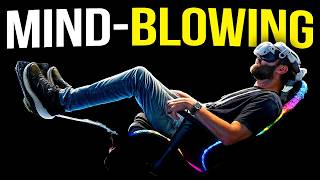
Matt Wolfe tours AWE 2024 in Long Beach and finds the real progress in haptics and wearables, not headsets. He demos the Tap gesture controller, Yaw motion seats, Haptix full-body haptics, and a compact prototype from Big Screen. Palmer Luckey was on a panel.
Chapters
So I was just recently out in Long Beach, California for the Augmented World Expo. This was my second year going to it. And if you're not familiar with Augmented World Expo, it is a fairly large convention focused on virtual reality, augmented reality, haptics and all that sort of thing. There's speakers and there's panels. But for me, the coolest part about this event is the showroom floor where all of the companies that are building in the AR VR space demo their latest and greatest latest products. So you get to try out new VR headsets, new AR headsets, new haptic suits, haptic gloves, various simulators and all sorts of cool stuff. Now, I know this event isn't specifically focused on AI. There is quite a bit of crossover between AI and augmented reality and virtual reality. But to be quite honest, that wasn't really why I went. I just love tech, I love emerging tech, I love futuristic tech. I love seeing the latest and greatest toys and getting to try them for myself. In fact, you're probably going to see that as a little bit more of a theme on this channel, where everything isn't going to always be all AI all the time. I think there's so much other cool emerging tech that would be fun to explore. And if you're fascinated by AI, I would imagine that kind of stuff is really fun for you as well. So I guess this time around when I went to awe, my big objective was to try to kind of find how far we've come from. Last year. I was at last year's event and I was blown away. But that was really like my first experience with virtual reality and augmented reality. At the time. I didn't own any virtual reality headsets, I didn't own any augmented reality headsets, I didn't own any of the toys yet. And so that experience absolutely blew my mind because it was my first time trying any of that. It was literally my first time trying the meta Quest Pro at the time. So this year I wanted to try to how big the gap was from what I saw last year to what I saw this year. To be quite honest, when it comes to the virtual reality headsets, I wasn't as blown away. This year it felt like fairly marginal improvements on the actual technology. Last year I got to play with the Quest Pro. This year they had Quest Threes everywhere. And when you're in those headsets, to be honest, it feels like a very marginal improvement between the two. The pass through is a little bit better on the Quest 3. Last year, Apple Vision Pro wasn't out yet this year, a lot of the demo booths were demoing stuff inside of Apple Vision Pros. So that was kind of cool to see. But the areas that really sort of interested me this year that felt like pretty decent improvements were more in the areas of like haptics and wearables and devices that you sit on or stand on to try to make the VR experience more immersive. More so than the actual headsets that I put on or the immersion of some of the apps and games that I tried. That stuff kind of still felt about the same as last year, if I'm being totally honest. So in this video, I want to do a quick breakdown of a handful of things that I saw that were either new to me and were first time experiences for me, or felt like pretty big improvements from what I actually saw last year. Starting with something called Tap, which was this little bracelet that you put on your wrist and it made it so you can use something like the xreal Air glasses, but then navigate them like an Apple Vision Pro, where you just do like hand gestures to navigate the menu and what you're doing. That felt like a pretty big leap. Now I have an Apple Vision Pro. I'm kind of used to doing the hand gestures inside of my Apple Vision Pro, so it felt very natural to me to use the hand gestures. I had a little bit of an issue with it. Like when you're wearing the bracelet, the sensor is on the bottom of your wrist right here, and so it needs to actually see your fingers. So if my hand was like this and I was pinching or doing a gesture and this little sensor couldn't see my fingers and it didn't pick up what I was doing. I had to kind of keep my hand pointed down like this to make sure that the sensor saw my fingers. And that at times got a little annoying because I wanted to treat it like the Apple Vision Pro, where I'm just kind of like minority reporting it, like moving stuff around. But a lot of times I would do that and the sensor wouldn't pick it up. I had to like remind myself, oh, tilt your hand down so the sensor sees it. But that was something I didn't see last year. That felt pretty cool. After having spent some time with the Apple Vision Pro, there was also a company there this year called Free Aim. They were like little roller skates almost that you strap your feet onto and then you can walk around in VR. And they were letting people demo this. I actually signed up to get a demo and when my demo time came, I Got to the spot and they were actually behind schedule on the demos and I actually had to leave that day. So I actually didn't get to demo it myself, but I did watch a lot of other people use it and it seems like a more practical way of doing the sort of walking in place. We recently saw the Disney Imagineering thing where the people were walking around on this little like treadmill type thing. But the treadmill, you could walk in any direction on it. This felt like a more practical version of that, you know, maybe a little bit more heavy. You're gonna notice them strapped to your feet. But honestly, it kind of makes more sense than having those giant machines that you sort of run in place and they have like the anti slip where you're trying to run. This to me felt more practical for like at home use than having a big device in your room. There's also some really cool gadgets that you could sort of like ride on. There's a company there called Yaw Y A W. And you actually sit down in this device and it feels like you're on a roller coaster. So you sit in it, you put on the VR headset and it's synced to what you're seeing on the screen. So the device that you're in sort of moves around and makes you feel feel like you're on that roller coaster. The demo I was actually in was like an underwater demo. So it was like this submarine thing. And I was sort of like moving around underwater on this submarine. But you feel all the motion. You're seeing what you see in the VR, but you're feeling all of the twists and turns and things like that as you're going around. That was really fun. And I asked him, I'm like, is this for like arcades or is this something you think people will have in their home? And he said, yeah, this is a consumer device. This is something we anticipate people will want to put it in their homes at some point. But it was really fun. I mean, it felt like you're on a roller coaster or something doing all the moves. Another company that I thought was pretty cool was a company called Simtek. It was like this virtual hoverboard and not like a hoverboard from Back to the Future, but like the hoverboards we see in reality right now where they have the two wheels and you kind of lean your feet forward and backwards to move forward and lean backwards to go backwards. At first it was sort of disorienting and I almost got like this weird motion sickness from it because you just sort of lean forward little bit, you move really fast. And I was playing this shooter game while moving around on this hoverboard, and after a couple minutes my brain sort of got used to it and I really, really enjoyed it. I actually didn't want to stop playing, but I noticed like a line was forming and people were sort of waiting to play with it. So I'm like, all right, I should probably get off this and stop playing now. But I found that to be really, really fun, but a little disorienting when I first got on it. If you tend to get a lot of motion sickness, this one might mess with you a little bit because it did with me at first and I don't normally get motion sickness. A company that I did actually test out their device last year and they were there again this year was a company called Haptics H A P T I X. And it's this company where you strap on this, like, big old backpack and then you put on these gloves and then you go into VR and you can actually feel everything that you're seeing. And there was actually, like, feedback when you go to pick stuff up. So you would go to grab an item and you would feel the item on your fingertips and you squeeze it and you would actually feel a little bit of feedback on your fingers when you went to go squeeze it. And you can actually tell you were grabbing the item and you can move it around. They had like a cloth that you can run over your hands and it actually felt like that cloth is running over your hands. It's a wild experience. Like it really feels like you're holding and touching the things you're seeing now. It doesn't feel exactly like what that thing would have felt like if it was real life. It's more of like a. I don't know how to explain it, but like a vibration sensation on your hand when you're touching the things. Almost like a very low level static shock feeling. But you do feel that feedback and you can tell that you're touching stuff and grabbing stuff and picking stuff up and it messes with your brain. It's really cool, but it definitely, like, tricks your brain into thinking you're really touching these things. Another company that was there last year that was there again was this Spacetop. This is like a computer, but it doesn't have a monitor at all. You just put on glasses. And I believe they were using the xreal Air Ultra glasses is what they were demoing with. And you Have a keyboard, and you can use a mouse or the touchpad on this thing, but the monitors are in the glasses and you can see 360 degrees around you. So you can set up screens all around you. It's kind of like what the Apple Vision Pro promises, but it has a keyboard and, you know, mouse type deal. And you can set up everything around you. You can have, like, your browser watching YouTube in front of you, your calendar off to the right, your messaging platform off to the left. Maybe behind you, you put, like, a game. So you're playing for a little bit, and then you turn around and play your game. I don't know. But you can have a 360 desktop, and it's not just 360 around you. You can have stuff, like, right in front of you, stuff up here, stuff where you're, like, looking straight up at the ceiling and there's things on the roof. And it's a really cool sort of immersive computer. And it's really designed so if you're, like on a plane or a train or any sort of public transportation, you can do whatever you want on your computer and nobody else can see what you're doing. Now, when it comes to the actual headsets, there was three different headsets that I tried this year that I didn't get to try last year, so it was my first time experiencing them. One of them was actually new, and I don't even believe it was there last year. And that was Sony's headset. And that one was really good. They go over your eyes just like a normal VR headset. You can actually flip them up and look around and then put them back down and fall back into this immersive world. And then this really cool demo where there was a camera and you can move the camera around and you can move lights around, and it would change the lighting and it would change this scene. And you were in this sort of, like, virtual movie set, and you can move things around, move props around, move cameras around, move the lighting around. And as you were looking in this virtual world, you saw how the lighting changed. And you got to see, like, what it was seeing through the camera. And it was just this really cool experience. And the headset was really good. I was actually shocked by how good the Sony headset was. Now it might have passed through. I'm not sure if it did. The demo they were showing didn't have pass through. So I don't know how good the pass through on that headset is. But the virtual reality that was on it felt very immersive and very good. I mean, up there with the Quest three and the Apple Vision Pro, I would put it on, like, a similar level. I also tried a headset called the Pico Headset. That was the first time I'd ever tried that headset. And I played a game called Taebo Reboot, like this sort of martial art fitness thing where you do punches and kicks and ducks and stuff like that. And it was a workout. It was really fun, really immersive. I felt like in it. But I kind of sort of regretted doing that demo because that demo made me sweat. And I did that demo sort of early in the morning. And then I sort of felt all awkward for the rest of the day because I. I sweat during that demo. And I was like, oh, everybody probably thinks I stink or something. But the Pico headset was really good. I was really impressed by that. It was also the same headset I was using when I was doing that little hoverboard game earlier. And the Taebo Reboot, Pretty good workout. The other headset that I got to try this year that I didn't try last year was the Magic Leap headset. And it's not because it wasn't there last year. It was. I just didn't get to it because it was one of the most crowded boosts at the event. And once again, this year, it was also one of the most crowded boosts at the event. But Niantech was there, the company that makes Pokemon Go, and they were doing demos of some of their tools, and one of their demos use the Magic Leap headset. So I actually got to play with the Magic Leap headset during the Niantic demo. And the Magic Leap headset's more of an augmented reality headset, so you can see everything around you, but it will augment and add things to the reality around you that you're seeing. And it was really good. There is, like, a giant sort of processing battery pack that you got to hold on to, unlike the xreal Air glasses, where pretty much all the electronics are in the glasses. But the visuals, the way it augmented things onto the world around you, was really impressive. Like, I'll probably end up getting a pair of those because I was really impressed with them. And, yeah, that's really about it for the things that really blew me away. If you want to see my video from last year at Augmented World Expo, I'll make sure to link that one up as well, because that one you actually hear about my first experience, really trying a lot of these VR headsets for the first time and being blown away by trying those for the first time this year. I wasn't really blown away by any of the headsets, because I feel like I've kind of gotten used to virtual reality and augmented reality at this point. But I was really impressed with a lot of the haptics and sort of, like, ride on. I don't know what you call them, wearables and ride ons and those kinds of devices. That's the stuff that really impressed me this year. I also had the opportunity to sit front row during a panel where Palmer Luckey spoke. And if you don't know who Palmer Luckey is, he's basically the original inventor of the Oculus Quest, which obviously eventually got bought by Meta. And then Palmer was sort of pushed out of that company. But he did a panel. It was a really, really good panel. And the other person on the panel with him was a guy from a company called Big Screen. And during this panel, he showed off the headset that they're working on now. And the headset fit in a little tiny tube that was, like, smaller than my water bottle. And he opened this little tube, and he pulled out these goggles that just look like little, small ski goggles. In fact, they looked very much like the goggles you see in Ready Player One, but even smaller, and they fit in just like a little tube. Now, I didn't get to see what the goggles look like on the inside, but they sort of tease this and show that this is what they're working on. And maybe next year we'll get to play with that and actually try something like that on, because that's one of the biggest issues with virtual reality headsets right now, is they're big, they're bulky, they're heavy, they heat up, they make you sweat. There's some issues with it. So they want to get that form factor smaller and lighter and less noticeable for being on your head for a long time. So I can't wait to play with something like that next year. But there you have it. There's my breakdown of the stuff that I found really cool from this year's Augmented World Expo. I'll most likely be going back next year. I met so many amazing people at this event. This was the first time I went to event where people stopped me in the hallways, like, every three minutes because they watch my videos. And that really, like, blew me away. I didn't think I would get recognized at an event like this. I mean, maybe one or two people but it was like nonstop. Everywhere I turned, somebody was bumping into me and wanting to get selfies and I just thought that was really, really amazing. And the people I met there and got to have long conversations with about AI and VR and xr, that's what those events are really, really about. I love seeing all the cool tech. I love trying it on. But even more than that, I love just like meeting people in person and nerding out about AI and nerding out about cool tech and speculating on what the future holds and talking about creating content together. And just so much fun stuff comes out of hanging out at these events and interacting with people. So if you're one of the people that bumped into me at this event, say hi in the comments. That was so much fun for me and it really, really brightened my experience at this event because everybody was so friendly and so much fun and we're all just giant nerds and it's so much fun to just hang out with other giant nerds. That's it. That's my recap of Augmented World Expo out in Long Beach. Hopefully you enjoyed it. I want to be doing a lot more videos on futuristic and emerging tech outside of AI. I'm still going to talk about AI, don't get me wrong, the Friday AI news videos. And as cool new announcements come up and cool new tools come out, I'm still going to talk about that stuff. But I'm also going to start to dabble in a little bit more of this emerging tech and future tech and going to some events outside of the AI world and trying to show you some other stuff that's been going on that's maybe not on your radar yet. And I'm excited to do that. So hopefully you stick with me on this channel and let me bring you into that world a little bit. Really, really appreciate you. Thank you for tuning in. If you like videos like this, give this one a like. It'll make sure more videos like this one show up in your feed. And if you definitely want to see more of them, also subscribe to this channel and that'll help me out a lot and I really appreciate it. So that's it. I'm done rambling. I'll see you in the next video. Bye. Bye.
More from Matt




AI News: Dots, GPT-6.1 Sol, Sonnet 5.5, Gemini 4, and everything you need to know




