Lindy AI UPGRADE: Prompt to Create Agents, Replacing a $180k/yr Job & More
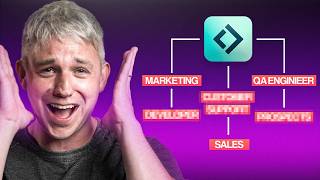
Lindy 3.0 lets you build AI agents by describing what you want in plain language, no coding needed. The agents can control apps and websites to handle full tasks like QA testing, prospecting, or invoice processing. Flo Crivello, Lindy's CEO, says one agent replaced a $180k/year QA job.
Questions this video answers
Lindy 3.0
6,000 integrations (released about six months prior, per Flo)
Anthropic
"$180,000 a year" (claimed replacement-equivalent for QA)
700 minutes (≈10 hours), mentioned by Flo as the wait period before proceeding to order
Chapters
What if building an AI agent were as simple as texting a friend? This week on the Next Wave, I sit down with Flo Crivello, founder and CEO of Lindi, the AI agent company everyone in Silicon Valley is watching. After a year in the lab, Lindy.
Is unveiling Lindy 3.0.
And Flo is ready to show us why it could change how we work. We demo agents that run your CRM qa, your product book, groceries, block spammers, and scout competitors all through natural language. Imagine if every employee at your company had an army of AI interns. That's actually possible today. Before we get started, we spent a.
Lot of time working on these episodes.
And getting on the best guests possible.
To help make sure that you're prepared.
For the age of AI. But most of you who listen aren't subscribed.
So if you can please take a.
Moment and subscribe, you just click the little button. Now let's dive in with Flo Crivello.
Hey, Flo, thanks for coming on.
Hey, Nathan. Yeah, thanks for having me.
Yeah. I think yesterday you showed me two demos of new things that you're building at Linde, which I was just blown away by, and I'm like, okay, this is, this is perfect for our audience and everyone's going to get a ton of value out of both of these. I don't know if you're calling them features or they're new products, but maybe you can, maybe you can just kind of explain and then we can just show people and jump right in.
Yeah, it's a revamp of the app, really. We've been working on it for like six or nine months at this point. Like the entire team, we call it like Lingi 3.0. So it's basically an entire rewrite of the app. And what it consists of is like the long term vision of what we want to do is build an AI employee. And we are driving towards maximal capability and maximal ease of use. It should be able to do anything that anyone can do on a computer. By contrast, today, in order to build agents, you either have to code or even no code tools like Lindy. It's sort of a pain in the ass. It's a no code tool, but you have to drag and drop. You need to have a technical mindset and the capabilities. We've always been bottlenecked by integrations. We made a big announcement six months ago. We released 6,000 integrations at once and we were like, that's it. We will never need integrations again. And it turns out like we are always blocked by integrations and that's why Anthropic is doing mcp, right. It's like ah, like we're going to build this like universal protocol but it's never going to be enough. And so what we're releasing with 3.0 is we are releasing an agent builder. So you can just talk to it. It's just a prompt and you have a back and forth conversation and just builds the agent for you. It's actually really cool because the agent builder is built with Lindy. So it's like we don't even have an admin tool to build the agent builder. We just use Lindy ourselves and that's, that's the Lindy and then we have computer use. So the agent builder takes care of the usability, ease of use part of the house and computer use takes care of the capability side of the house. So it's like the final integration basically like you can just see your computer and use it and it works. It's shocking. It works.
That's crazy. Yeah, we should show people. But you talk to Lindy and like if I want an agent for whatever checking my email or checking websites or whatever I wanted to do, you just talk to it and you kind of. Then it creates the first version or something. Then you probably can go in there and tweak it I would assume.
And that's what it is. It's like I have created an agent to manage my personal CRM and it's literally just like help me manage my personal CRM. And it's like, okay, I'm going to create an agent. This is what it does. If you want to add to your CRM, if you want to retrieve from your CRM and let me just create the agent for you and that's what it's created. Like feel shot.
Right in actuality. And this is why I want to show video. I want to be real with people. People who have experience with lovable or these vibe coding applications. They know that this actually takes one or two minutes. So it makes for a pretty boring demo because we're just going to sit for a minute looking at it. But it creates this agent and then I can be like, okay, who are AI founders? I know and I pre populated this fake CRM, a bunch of fake names, but it's like hey, these are the people you know. Or I can go like, hey, add John Doe to my CRM, he's the founder of Acme Corp and it adds a row to my Google sheets.
So right now, is this mainly with Google sheets, like, in theory, could you guys add, you know, connections to HubSpot or other CRMs in the future or how does that work?
We do have connections to HubSpot. It's actually like the most used CRM on the platform. Oh, right here. No, 100%. So you can just use any connection you want. That's what, like the 6,000 connectors that we built are still going to be useful for.
Awesome. And for anyone listening, what do you think? Have you guys had people testing this like, other people yet outside of Lindy? And what are the main use cases that people are using it for?
Oh, yeah, no, it's been live for like, we've been in private beta for like weeks at this point, like maybe even months. The main use cases are, I think, like, CRM management is a really, really big one. Like go to market applications are like a really big one. So it's like SDR workflows, account executive workflows, like marketing and like content production workflow. Like, I can give you an example. This is the new design of the app and I'm in love with it. I think it looks gorgeous. But I can give you an example of like, super simple example, like, find me 10 software engineers working at Zapier.
And right here it's like, I found 10 software engineers. I just like a previous task where like, I did the same. It's like, boom, these are the names and I can just click and these are like actual people who work at Zapier.
Oh, that's amazing.
Could it go the next step and help you contact those people? Or could it not do that?
It will be able to do that. This one path I just took where it goes through this main text box right now, it cannot connect to your personal accounts just yet. This is an unauthenticated action, the prospecting action. But the Gmail action is going to be authenticated. We're going to release that in a couple of weeks.
Awesome. So with a computer use, could it just go use your computer eventually and use LinkedIn? How is LinkedIn everyone going to deal with stuff like that? It seems like at some point that's going to be crazy.
That is another really big use case. So I can go like, reach out to. I can go Flo Crevillo, who works at Lindy on LinkedIn and he's going to reach out. I actually think for this one we also have an action. I'm not 100% sure or it's going to use computer use right here. So it has found the LinkedIn and now it is starting a computer.
Again. This is an example of computer use while it's booting. I can show this other demo. It's getting very meta because now we're using Lindy as a QA engineer. For Lindy, we have created this agent that you can see. It's super simple. It's like, okay, every hour you start a computer, you log into Lindi, we've given it credentials, you create an agent, you test the agent and then if it failed, you send a message to the on call channel on Slack. And right here just logs in. This is all completely automated. This is the agent that logs in, enters the credential, creates an agent, and end to end creates an agent from scratch. It's a pretty simple agent at first. It's like an agent that sends and receives messages.
It tested like, hello, can you hear me? So this is an agent talking to an agent and it works.
Wow, that's amazing.
I would be remiss if I didn't mention, I feel like at this point it's a tradition every time anyone talks about computer use, agents, like they talk about grocery and flight booking.
Is that what this does? Is it do anything else?
I do have an agent that does that for me. So you can see every week it wakes up, it puts. Maybe this is tmi. Like this is my grocery list on doordash. It's pretty tame stuff. The cucumber, brussels sprouts, all of that stuff. And then you see it, it just goes on doordash and it's searching for everything. It's like looking for brussels sprouts, adding them to the cart. Same for like steaks, salmon, all of that stuff. And then in the end it just orders and I received the groceries. Like this is how I do my groceries there.
And can you set up a timer where it does it automatically and you don't have to do anything or do you have to kind of approve it every time or what's this steps there?
That is how it is set up. Right now I'll actually switch to the flow detail. So every Friday at 5pm it's like an end of week thing. I've actually changed it. So now it sends me an email to me and my girlfriend and it's like, hey, this is the grocery list. Do you guys want to add or remove anything?
And then it waits 700 minutes. That's an interesting one. It's like 10 hours or something. I don't know why I did that. So it's like it waits like 10 hours, basically in the morning after.
If we don't reply, it just assumes that the grocery list is good and then it does the grocery for us. And when it's done, it sends another email to say it did it.
That is crazy. I'm going to set this up another one.
This one is so simple. And it was also created with Agent Builder. I'll actually show you. You can see the prompt was. People ask me, how did you create this agent? I'm like, with Agent Builder, it's literally just. You talk to it and literally it's like, I have a bunch of spammers in my mentions on Twitter. I want you to create an agent that wakes up every three hours and blocks them.
That's it. It just wakes up. I changed it to every 12 hours because I'm not spammed that much. But, like, 12 hours is good. And then.
Goes to my mentions finds. Like, this guy, I met a blogger who released his awesome analysis. Like, releases stock information every day. He is very good and deserves our attention. Rainbow emoji. It's like, boom, blocked. And so I no longer have spammy bills on Twitter. It's just like, oh, that's great. That blocks them for me. It's amazing.
You know, I have this account on Twitter, I have the name Learn on Twitter, and I'm not really using it right now, but occasionally I check it and, like, it gets tagged by, I don't know, hundreds of people a day who are, like, just talking about random stuff and then tag, learn. For some reason, I would love to use this and just block all of them.
I mean, now it's literally, you can just prompt it, just ask you to do it, and I'll do it for you.
How does that determine who's a spammer? Like, like, would it possibly, like, block people they shouldn't who were, like, just like, leaving a comment underneath? And it was just kind of like a generic comment like LFG or something like that, or, you know, so it happened once.
Like, it, it, it. I. I prompted it to, like, the AI Grief Tales. You know, like old people who are like, it's completely over. OpenAI release the thing. Like, nothing will be the same again. And it started blocking them. And I'm like, hey, don't block. Don't block mentions of AI Grief Tales.
Hey, I put out one of those, like, every month or two. So, I mean, hopefully you didn't block me. You know, you got to feed the algorithm occasionally.
You know, yeah, they look spammy, but they're harmless. So Look, I've just prompted it and I'm like, hey, like, those are examples of spammy.
Yeah, that's awesome.
Okay, let's be honest. Your AI prompts aren't giving you the results you deserve. But with a little coaching, you can transform from basic prompts to engineering conversations that get you exactly what you want from ChatGPT. That's what this playbook delivers. Not just random prompts, but a step by step system with the exact techniques top AI professionals use every day. You'll have your own personalized prompt engineering system that delivers customers consistent results. Get it right. Now scan the QR code or click the link in the description below. Now let's get back to the show.
How are you? Like the new version of Lindy, you know, Lindy 3.0? Like, what's the main way you're using it?
We're using it a lot for. Well, the QA stuff is awesome. Like, it's basically replaced the QA engineer for us. Like, this is the kind of thing we would have paid $180,000 a year before, you know, and now it's just Natan. Prospecting is another awesome one. We have built an agent that goes on LinkedIn and finds the posts. There's a lot of posts that are like, I have built this awesome agent, like comment agent to get it in your DMs and all of that stuff. And so we call it like comment farming. Like when people do that, we can see who's commenting, the agent, and so we can reach out to them by DMs as well. And we can be like, hey, reach out to the person. And we actually reach out to them in a personalized fashion. So like, Lindy goes on LinkedIn and clicks and looks at the profile and then sends them a message just like, hey, we saw your committed agent. Do you want to know more about different agents that we could deploy for you?
Are you doing tactics like that to see who's following your competitors and things like that and interacting with them?
We do have an agent for competitors snooping. Absolutely. And that's the kind of thing I think that's like the beauty of AI agents. I think people underestimate the extent to which they're like, oh my God, I'm going to be able to save money because I can replace stuff that humans used to do. But actually what you can do is that you can ask these AI agents to go much deeper than humans did. So, for example, the customer, the competitor analysis agent. It is kind of shocking how open salespeople are sometimes about numbers on their LinkedIn because I guess the numbers are like all the resumes, right? But like they can say bragging rights and. Yeah, yeah, I have closed like $4 million of revenue in one year, you know, as like one of three reps. Or like I have closed like ACV $300,000 average contract value and whatnot. And I'm like, this is interesting. And I couldn't ask a human on my team, I would never ask a human on my team to like every month go and open the LinkedIn profiles of every single salesperson, of every single one of my details and see what they've posted. And all of that stuff I kind of.
You would ask to do that would probably be like a lower.
Bad by people. It'd be like a lower level employee who would do something like that and maybe they'd make more mistakes and whatnot. If you did have someone do that.
That's right. So with AI agents, I feel no shame. I can ask you to do this thing. And it's like an analysis that would have taken a human. I go so deep, this would have taken a human like two or three full days. I'm never going to spend two or three full days doing competitor analysis. As a startup. I can do it with agents. So.
Content production, we are in the process of rolling out an agent. This one is really good. It's a combination so agents can work together. So there is one agent that's like a content strategist and there is one agent that's a content producer. So the content strategist comes up with a bunch of ideas of videos and then it forms them out to a bunch of content producers. The content producer produces the content on VO3 and then posts it on Instagram and TikTok and YouTube. And then after it posted it a week later, it wakes back up, it looks at the videos it posted and it's like, okay, how did they do it? Both in terms of views and in terms of comments, like, what did people like? And it reports the findings back to the content strategist, which then uses these learnings to plan the next batch of content. Like, I'm sorry, we've been working on this for like two and a half years. Like to me, like, the fact that I can describe this workflow with a straight face just blows my mind. It's just insane.
And it's crazy. Like all this kind of stuff, like even me, like, you know, I know how amazing it is, but I have to like, try to like, you know, almost like, have like a beginner's mindset to, like, remember like, how amazing all this is. You know, you told me like three years ago, it's like, what, what the heck? What the hell are you talking about? There's no, you know, that's crazy. Especially like five years ago, I would have no idea that something like this was gonna be possible. But now it's like every time I have a new guest on, they tell me something that's insane.
I agree. We, we, we, we, we feel this quite a bit in the office. Like, we were at the office last night at like 10pm and we were like whiteboarding the plan. Basically, okay, we're going to do this, we're going to ship that, then we're going to work on that.
And then 12 months from now, we're going to have basically something that approaches AGI, right? Approaches an AI employee. You can just talk to it and it does it. And I'm like, guys, how insane is that? We just thought it's the plan. It's not a Sci Fi book. It's like, no, no, no. It's the roadmap.
Right, right. I mean, since the last time we talked, this already seems like half the way there compared to what you showed me last time. You've already made the fact that you can literally just talk to the AI and it helps you kind of create the agent versus you having to go manually, set everything up or use a template, whatever. That's a huge step forward.
Yes, yes. And this is us, right? Like, this is the application layer, then there is the model layer. Imagine what's happening right inside the labs. I find it kind of strange that the labs basically right now are doing victorylapse. Like they are saying, we've got like, super intelligence is coming, guys. Like, we're in the takeoff right now. We've basically got AGI and now we're like on our way to asi. It's weird.
And most people are just like, yeah.
Okay.
No biggie, you know?
Yeah, yeah, yeah. Which is why, like, I'm in these group chats and there was this conversation the other day. I'm like, in all of these AI group chats and there was this one, one with a bunch of founders and they were bemoaning the frenzy around AI these days. They were like, I'm so tired of it. And I totally get it. It's like, I'm so tired of it. There's so much grandiloquence to just so much hucksterism. So many people just promising the Moon and all of that stuff. And I'm like, look, there's always going to be hucksters. But I believe that AI is actually underhyped. And I'm saying that knowing full well how hyped it is. And like, guys, like, brace yourselves because if you're tired of it now, this is only the beginning. Like, it's going to get wild out there.
I agree. I actually have a presentation right now that starts with AI is underhyped.
Massively under hyped. To me, it's kind of like if you're like in the early 2000s, you know, and there was like the dot com bubble and you're like, ah, I'm so tired of the Internet. Internet. Like everyone's stuck in the Internet. Use the Internet and can't wait for it to be over. All the hacks still sucking by the Internet, can't wait for it to blow over. I'm like, yeah.
And I knew it was a scam. Look, they crashed.
It's.
The Internet's done. It was all bs.
Exactly. Exactly.
And then the entire world changed. And. Yeah, and people can't realize that, you know, AI has, in my opinion, has the potential to be way more impactful than the Internet. I mean, you're talking about intelligence, you're talking about powering robots, you're talking about it's so much bigger than the Internet. And then most people, they, I think the average person right now, a lot of them would be comparing this to like just like crypto or something. Like they think it's just like, okay, it's a, you know, it's another new thing. And it's like they're not getting the paradigm shift that's happening right now for all of humanity.
I think some people compare it to the Internet, some people compare it to the automobile or the electricity. Some people compare it to the wheel of fire. Again, I'm going to be one of these grand, eloquent.
Huxtails. But I think I compare it to life. I compare it to the bills of life on Earth.
Yeah, yeah.
I think it's a new life form, basically. And I think it's going to be that deeply transformative.
I agree. I, I say electricity because I feel like people can slightly comprehend what I'm saying, but like, and maybe they think it's like exaggeration, but I agree, like, this is, you know, we're creating a form of life here.
Yeah.
Anyways, it's, it's, you know, it's, it feels weird sometimes. I saw somebody posting about this the other day, where they're talking about, like, how it feels like less than. Way less than 1% of people get what's happening right now. And it's just an odd time to be alive and understand what's happening. And I used to kind of, like, you know, I kind of find it funny now, I guess, just like, all this is happening, and most people just think this is like a cool chatbot or something.
Do you ever feel like vertigo? Like, do you. Do you yourself, like, feel overwhelmed that you're like, this is wild?
Like, oh, yeah, totally. Especially because right now with AI, I'm like, you know, juggling four different. Four different little businesses. They're all cash flowing and getting involved in more things, and AI is just enabling that where in the past, there's no way I would have been able to have done that. And now you're showing me this, I'm like, oh, maybe I could be doing more.
And with my personality, it's like, why not do more? Of course I'll do more.
So, yeah, I feel like that's a common journey that people are going through. And at first they are ignorant, and then they find out about it and they're skeptical. Then they're really excited. Then they get so excited that if anything, it gives them vertigo. They're like, this is insane. This is way bigger than anyone is realizing. And then I feel like the final stage is almost one of denial. It's like once you get past the point of vertigo, some people hang out there for a while. I certainly was there for a very long time, and I feel like at some point it turns almost into a shrug. It's like, yep, I guess it's coming. It's like, I don't know what else to do or say about it. I guess I'm just going to keep living my life in a normal way until it happens.
Yeah, well, I mean, you know, we had this conversation last time. I think it ended kind of slightly on a dark note. You know, I am more on the optimistic side of where this all goes. So for me, maybe it's a little bit different than you. Like, you, I think you're kind of a little bit more worried about where the technology goes. And not to say that I'm not worried at all, but I'm definitely more optimistic. So for me, I'm definitely on the side of, let's accelerate this as fast as possible. And for me, the main thing is, you know, making sure that the US and its allies win at this. Right.
That.
That's like my Overall goal in life right now is like, I've been trying to think, like, what can I possibly do in my life that's actually important? Any small little thing I can do to make sure that countries that care about freedoms and civil rights actually win at this. And if that's what spreads around the world, that's what's important to do. Especially since I'm not Sam Altmer, Elon Musk, or anyone who's going to contribute to a foundational model.
Yeah. And look, for the record, I am 90% optimistic. I think there's a 90% chance that everything goes well. I'm just saying, Even if it's 10% chance of literal extinction, that's very high. That's much too high for comfort. But look, even if things go well, I think to some extent there is a degree of instinctual mammal reaction where it's like, change is scary. I think it's just like, we currently live in the Middle Ages and we're going to be catapulted into the year 20, like 3000, right. And it's going to be. It's going to be. It's going to be weird and, and, and fast and overwhelming. Yeah, totally.
I mean, I, you know, it's actually, I was having this conversation with my mom the other day or maybe like a few weeks back, and, you know, if. If I talked to her like, 20 years ago, there's no way she would imagine that she'd be like, on YouTube all the time.
Right.
And checking all these websites all the time. I mean, like, life for, like, people all ages has already, like, dramatically changed, like, dramatically over the last 20 years. Especially last, like 10, five to 10. And it is amazing that we just adapt. So it feels like, yeah, we are going to be catapulted into this crazy new future. And I think people are just going to get used to things over and over. It's going to be.
It's going to be. You're right, you're right. I think, you know, you're totally right. Actually, humans. Humans or very adaptable. And it is true that we've gone through many waves of dramatic change. If you think of COVID right, It was like, all right, I guess that's life. Now we just get used to whatever is going on almost alarmingly quickly.
Yep, definitely.
So we probably. One other thing I've been thinking about, too, is to get back more on talking about some material things for people who listen, like business owners and things like that who are listening. You know, one thing that's really crazy Right now is like. It feels like the landscape is getting. It's getting really hard to predict where anything is going with companies. Like, I've seen like, Perplexity announced comments. So they've got a browser now and it feel like, okay, well, maybe the browser is going to touch. It's like almost like a new operating system in a way, with AI. It's going to touch everything. You know, you guys are like, interacting with CRM now. HubSpot's connecting to quad CP? No, the MCP. Uh, Claude announced today, or maybe today or yesterday that they're going to be, you know, doing emails and managing your contacts. It's like, it feels like almost all of the different companies are like, stepping on each other's toes in one way or another. And I think in the past it feels like, oh, you know, Google's doing this and you can kind of predict what they're going to do next. And it feels like all the major companies are all going to. Are all fighting for, you know, things that have a lot of overlap right now.
No, I've thought a lot about it and I. There is one friend that I argue with all the time about this because, look, if it is true that code production is going to basically be free, if it is true that you're going to be able to build any product you want in one prompt, there's a very big if here. But if you really believe that you can build something even perhaps as complex as a CRM in the limit or an email client with just a prompt, then it's true that the last moat left and the last barrier to entry is distribution. I think it really means that.
Production and product is going to basically be worth zero. And I think we're going to have these immense conglomerates of mega apps and the kind of conglomerate that so far right now there's two mega apps. There's the Google ecosystem and the Microsoft ecosystem, the Office suite. Those are the two players. They give you email, they give you documents, they give you directory, they give you like, file system. All of that stuff, right? Like, like team collaboration, all of that stuff, right? Like, it's telling that the only two companies that have been able to pull this off are today like two or $3 trillion companies. It's just really hard to build that much product, you know, And I think like, Salesforce has been trying to be this big app as well, but they're doing it in a different fashion. They're like, they're acquiring the quiet quip for like, the office suites, the acquired Slack for like the collaboration and all of that stuff.
It is, I think it is likely that we start to see more mega apps now because product is going to be less of a differentiator and less of an obstacle. And as a result, I do think that it is likely that the intensity of competition increases dramatically over the next few years.
How do you think about that when you. I'm not sure if you talk about it. You do angel invest in some startups, correct?
Yeah, quite a bit. Yeah.
How do you think about that right now? Because like, you know, I, I recently invested in a. I'm not gonna say the name, but like a startup that's doing kind of, you know, kind of mixture between like using AI for email and CRM. And then I see what you're doing, I see what HubSpot doing, I see what Clyde just announced. I'm like, okay, yeah, so maybe they already have like, like 10 competitors. I thought they had like one.
Yeah, yeah.
How are you thinking about that with your angel investing?
I don't. I think like one of the advantages of being an angel investor instead of a VC is that you get to be delightfully undisciplined about your investments. Like you get to do like vibe based investments.
This is a smart guy. I like him. And I like to, you know. Yeah, totally, totally.
I think I, I'm also like a product guy. I'm like, that makes total sense. Just a rat. Like, look, I was one of the first checks in lovable. I was like, fuck yeah, I can type this thing and get a website. Fuck yeah, that sounds great. You know, take my money.
I should have. Anton was messaging me and like I was busy and I, and I actually wasn't right. I started writing checks of like maybe like three, three or four months after that actually my first angel checks and I was just like. And I messaged him later. I was like, oh, I'm so busy. Yeah, I'll check it out sometime. And just like never checked it out.
And every so often I actually met recently a vc and this is my point about angels getting to be undisciplined. I met a VC who passed on them and they told me we couldn't get to a point of view on the future of the category and who's going to be the winner and what's going to be the moat. And I'm like, I totally get it. I get things from their point of view because they sign huge checks and I'm so glad I'm not in their shoes. I'm like, yeah, the vibes are great. I love the product. I love the guy. I just put the check in and.
He was hustling on Twitter super hard back then. So I think just from that alone that it would made a ton of sense to invest because I remember he was putting out tons of videos like, oh, yeah, I'm building this, I'm building this with it. And I think it was even called lovable at that point. He was calling it somebody else early on.
Engineer, AI engineers, a GPT engineer or something. Something like that. Yeah, yeah, yeah, yeah, yeah. So I don't, I try to not overthink my angel investing.
Yeah, exactly.
You know, the, the midweek curve, I think that's, that's, that's kind of that like invest people in good products and everything's gonna, it's gonna work out. Right. Makes sense. Cool.
We probably should end with like some key takeaways of like, how can people, you know, anyone who's listening to this right now, when can they try the new Lindy? And then what would you tell people? What are they going to be able to do with this that maybe they couldn't do before?
Yeah. Right now you go to Lindi AI, there's a big text box and you type what you want in there and it's going to do it for you. I think, again, that's the beauty of it. AI agents are no longer a cool thing that you see a lot of people hype about on Twitter. It's like, no, it's here, you got a text box, you type something, you get it. It's that simple. What people are going to be able to do with it. Think of it as a really smart, really cheap, really fast intern. And you have infinite interns now. And so that's my point about the competitive analysis is I have infinite interns and imagine I have a full time intern doing insane competitive analysis. That's what they're doing.
Anything that you find yourself doing more than twice, it's like it'll take you. Basically any task can now take you about five minutes to automate fully end to end. And so if you're going to spend more than five minutes doing this task over the next month, just create an agent for it. And basically, if you do it well over time, your job should consist more and more of just operating your agents, just orchestrating your entire agent ecosystem. Yeah.
Inside of an org, who do you think are the main people who'd use Lindi? And, and do you think you should have someone who like kind of manages all the Agents or like everybody. Now that it's simple, everyone should just learn how to do it on their.
Own for whatever role they are. It's both like we do see companies that tends to be a champion inside the company. Like every company has got the AI guy, right? So like that's really helpful to have. Yes, you should have that person that creates a bunch of agents. But again if you fully embrace, which we do, like if you fully embrace the vision of the employee. Should every employee report up to the same person inside the company? I don't think so. I think you really want everyone in your company to turn down. Basically everybody got a promotion. Everybody.
You're a major of like an unlimited amount of interns.
That's right.
The more creative you can be, you know, more productive you can be, you can make more and more of them.
Yeah, that's right. And I think insofar as you have a centralized person, that person's job should be to facilitate this transformation inside the company. I really view it as it's the same thing as digital transformations like ah, we're moving from like pen and paper and faxes to computers and from computers on prem to cloud. It's the same thing. You're moving from humans to an AI first company and you expect everyone to pitch in and everyone to turn themselves into these managers of AI agents. And so you sort of need a little bit of, you need someone to constantly be a wind in the backs of people because otherwise the status quo is going to win and people are going to get stuck in their habits. But yeah, no, I think the functions I think again go to market. I think prospecting is a really big use case. Like SDR account executives coaching people is a really big use case. We've got AI agents now sitting in every meeting in the company and they report on meetings, they coach people who are in meetings, engineers. It's really useful for code reviews for QA as well. To test your application for recruiting is really helpful. It's basically a form of sales recruiting for accounting. It's more and more helpful for any sort of batch document processing. Like we've got a company that receives a lot of invoices and they have an agent. It uses computer use because it uses QuickBooks and the QuickBooks API is not good. I don't know if anyone from QuickBooks is listening to us, but the API is bad. And so we were never able to make it work. And so now we're just going through the backdoor and we're using computer use and it just Receives invoices by emails, looks at like the invoice number, all of that stuff finds the vendor on QuickBooks, like enters all of the information.
Again. It's a really smart intel.
I was sitting there thinking about what is it going to do to performance reviews? Okay, I've successfully set up 10 Lindy's and someone comparing it to someone else. Oh, this other one's actually got. This person's got 30 Lindy's going and they're all producing results. That'd be like how you judge how well an employee is doing based on how many Lindy's they're properly have set up and operating.
You are kidding. But we have one employee and they're killing it. They're just like, absolutely. Everyone's like, oh my God, they're the goat. I don't know how they do it. And we as a user of Lindy, you receive an email at the end of every week that's like Lindy saved you X hours this week. And this employee shared a screenshot of their report and their report goes like, Lindy saved you the equivalent of 40 full time employees this week. It's like 2000 hours. It's like, oh my God, that's how you do it. We basically have a whole different org inside the company that we didn't even know about. This person just got a whole org of like 40 agents working for them. It's actually much more than 40 agents, like thousands of agents. It's like the equivalent of 40 full time employees worth of work. Yeah.
And it's kind of wild then. Do you pay them a lot more money because of that or the company owns the setup of the agents. It's kind of complicated, right?
The company does own the agents, so don't give them ideas.
I want you. They're saving you 40 times the money. Give me 10 times more money, you know.
No, it's also costing us a pretty penny. Employees at Lindy have like unlimited Lindy credits, but like it's very expensive actually. The tokens are so expensive. And so our own Lindy build is outrageous and we're very happy to do it because in the end our overall burn compared to how fast we're growing is actually really slow, really small. And that's because I actually think we spend almost as much in tokens as we do in humans. Wow.
Is most of that money going to Anthropic or OpenAI?
Anthropic is the default model today. And yes, most of it is being Anthropic. Geez. Should have invested in them. Yeah, they'll. They're good. Yeah.
Cool.
Well, it's.
It's been great having you on here. I think this has been a useful episode for people and, you know, there's, like, anyone who's listening, they should check out Lindy and try it out.
Yeah, 100%. Yeah. Thanks for having me, Nathan. Yeah, it's been great.
Thank you.
Sam.
More from Matt




AI News: Dots, GPT-6.1 Sol, Sonnet 5.5, Gemini 4, and everything you need to know




