OpenAI's Stargate Project Is INSANE! Everything You Need To Know
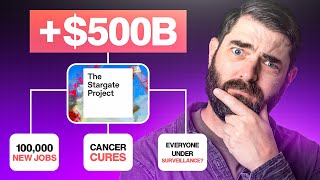
Podcast episode (Next Wave) featuring Matt Wolfe and Nathan Lands discussing the newly announced Stargate project — a proposed $500 billion AI infrastructure initiative led by SoftBank, OpenAI and Oracle — plus related AI developments (DeepSeek R1, OpenAI model roadmaps, agents/Operator). Hosts weigh economic, geopolitical, surveillance and open-source implications and possible timelines for AGI/ASI.
Chapters
I did test Deep Seek. I mean it was impressive. It's better than Claude.
It felt like a pretty monumental week between the Stargate, between Deep Seek, between announcements from OpenAI and 03 coming, the.
Stargate blasting a hole into the platonic ether to summon angels.
Just like go find all the news and put it on my website for me. I'm gonna go take a nap.
Yeah, yeah.
Hey, welcome to the Next Wave podcast. I'm Matt Wolfe and I'm here with Nathan Lands. And this week has been a fun, fairly monumental week in AI. It's been a really, really big week. I think the biggest news in the world of AI this week was the Stargate project. I'm sure you heard all about it, Nathan, but the Stargate project, Donald Trump announced it alongside Masa Yoshi son. Masayos.
Masayoshi Son, yeah.
Sam Altman and Larry Ellison of Oracle. Right. They were all together up during this press conference, all sort of taking turns explaining why they're excited about this project Stargate.
You know, it had been rumored for like probably the last six or even nine months about that they were working that Sam Altman was working on something like Stargate, that he had been having conversations with Masayoshi san. You know, a lot of people in America don't know who Masayoshi is. Masayoshi started SoftBank, which is kind of like, it's almost like the AT&T of Japan, I guess is one way to describe it. But also they branched out into many different ventures including they raised one of the largest venture funds in the world in collaboration, I think with some of the Saudis.
I believe they were also the largest investor in WeWork.
Yeah, yeah, yeah. They had the Vision fund, which I think was the largest venture capital fund ever. Right. Masayoshi aims big. And actually I, in my previous startup, one of my main investors was Taizo san, his brother, his younger brother. And actually I got to be pretty good friends with Taizo san and also really good friends, like a lot. Even like even closer with his right hand man, Atsushi Taira. And Atsushi, he was the right hand man, Masayoshi for like, for like over 10 years. But yeah, so, and so there have been rumors that they were trying to build something like this together, that there have been, you know, conversations about it. And then I think when it was around the time when Trump won the election, I believe there was some kind of press conference where with him and Masayoshi and they talked about, okay, $100 billion and is what Masayoshi was Saying, and Trump told him, make it 200, you know, and so now they're coming out today and saying, or the other day and saying they're like, oh, this is actually going to be a 500 billion dollar AI infrastructure project. Like, yeah. And so just to give people a context, I mean that that's the largest infrastructure project ever in human history. The only, the closest thing is like maybe there's a city that Saudi Arabia built which was around $500 billion, but that's an entire city that they built the infrastructure for and all the buildings. Definitely in terms of technology, this is the largest infrastructure project ever in human history.
So I've got the tweet up here, so I'll sort of dig in on like a few of the like elements just to sort of like make it super clear. But so the Stargate project is a new company which intends to invest $500 billion over the next four years in building new AI infrastructure for OpenAI in the United States. Right. So this is specifically saying we're going to build this infrastructure for OpenAI to use. Right. So that's, that's a very important element and we'll probably get into some discussion around that in a little bit here. But they are building this multi hundred billion dollar infrastructure for OpenAI. So they're going to begin deploying $100 billion immediately. They claim it's going to secure American leadership in AI, create hundreds of thousands of American jobs and generate massive economic benefit for the entire world. And if you watched any of the press conferences, there was the press conference inside the White House and then there was another sort of interview that happened between those same three people out on the White House lawn. If you watched any of those, they really, really focused in on how this was going to benefit health. Right. Larry Ellison talked a lot about how people are going to use AI and give all their health records to AI and AI is going to sort of pre diagnose things and you can take your sort of pre diagnosis, diagnosis to a doctor and the doctor could sort of confirm the results. He also talked about how this infrastructure is going to find the cure for cancer and is going to create a vaccine for cancer and it's going to solve like pretty much like every sort of health ailment that plagues mankind. Right? Like that's, that's sort of the vision that they, they pitch to everybody, creating hundreds of thousands of jobs and also solving all of these health issues. Their tweet doesn't really go into all the health issues, but you know, that was what they really, really honed in on on the press conference. So the initial founders in Stargate are SoftBank, which is Masayoshi Son, OpenAI, which is SAM Altman, Oracle, which is Larry Ellison and then mgx, which I'm not super familiar with, mgx, maybe you know.
A little bit more about Medicine's company.
Oh well, there you go. So that's, they're the company that I guess is going to be really honed in and focused on the, the medicine stuff. So SoftBank and OpenAI are the lead partners for Microsoft bank being the financial part of it, OpenAI having the operational part. Masayoshi Son's actually going to be the chairman of this company and then they have some key tech partners arm who makes basically all the chips that go into mobile devices these days. And Masayoshi owns the majority owner in that company, Microsoft. I mean, I think the Microsoft is in the mix by way of OpenAI. Right. Nvidia, Oracle and OpenAI, they're all the key technology partners in this project and they've already started building their first mega data center in Texas where which once that data center is built will be the largest data center ever, ever built on the planet. Right. So all of, all of us are looking forward to continuing to build and develop AI and in particular AGI for the benefit of all humanity. We believe that this new step is critical on the path and will enable creative people to figure out how to use AI to elevate humanity. So that's the big sort of pitch. There's, is that it is this company that's really kind of OpenAI, Oracle and SoftBank coming together to create this $500 billion AI infrastructure to essentially get to AGI and to create new jobs. While the process of building, I feel like the create new jobs part might be like more of a short term thing. I don't think.
I think there's a reason. Yeah, yeah, I think there's a reason they focus on the drug discovery and all that kind of stuff because like, yeah, messaging wise it's like, okay, like long. What also will AI do? Yeah, there could be some job loss. But you know, as we've said before on the podcast, you know, there's good and bad sides of AI, but we both believe that AI in general will have a, you know, a positive outcome for humanity.
Yes.
And that even if people end up doing less jobs, a lot of it will be jobs that they didn't actually want to do and there, there will be more abundance in society that people can live better Lives. So I, I'm personally, you know, super excited for this. You know, it's like when we first started the podcast, we're talking about, like, how big of a moment this is in human history. Right? That was like, one of the first episodes we ever did talking about that. And, and that's exactly the stuff that Masayoshi's talking about. I kind of wonder if he's reading my newsletter.
Yeah.
Because, like, I would talk about, like, the, I was talking about, like, the golden age of AI in America, but that's what he was saying to Trump multiple times.
He kept on saying, this is the golden age. This is the golden age. Right.
But I do, I do believe it's, it's true. It's like this is a moment where you could, like, reimagine everything using AI. And, and also, you know, you're talking about, like, you know, get into talking about deep seek in China and the progress China's making. But this is a moment where, like, yeah, the AI wars have begun.
And this is, it's a monumental moment. Like, I really, really think this is a big moment in sort of the trajectory of human history. This is like, yeah, the beginning of the Manhattan Project, right? Like, yes, this is like a big step in saying we are going to be the dominant leader in the world. We, we are going to be the first ones to hit AGI. And, you know, probably not long after that, asi, that is sort of like what they're doing. They're planting their flag in the sand and saying, we are going to lead this. Right. And it's, it's, it's the beginning of what I feel like is going to be like essentially the space race between us and China, right?
Yeah. And it's what I, what I've said before, like, you know, I live here in Japan. I'm like, eventually America's going to have a huge advantage because of their partnership with Japan, especially when it comes to robotics in the future. I still strongly believe that. And so the fact that this alliance is between an American company and a Japanese company is, I think, is really promising for the future.
Look, we all know the world of search has been a roller coaster lately. Here's something not many people realize. AI can actually be an opportunity. Just hear me out. What if you can use AI to accelerate your search? Well, HubSpot has dropped a guide that will help you dominate search in the AI era. It has everything you need. AI powered SEO tools, techniques for content optimization, and future proofing techniques to stay ahead of the evolving algorithm this guide will give you the competitive edge to stay ahead in an AI world. You can get it for free at the link in the description below. Now back to the show. I am very, very excited. I lean mostly optimistic, but I do have some things that I actually made a whole YouTube video about it and I made a whole sort of tweet about it. And you know, it might come off as a little tinfoil whale hat, conspiracy theorist sort of thing, but I think my, my concern around all of this is specifically around Larry Ellison. I'm not sure how much you know about Larry Ellison, but you know, he's the, he's the CEO of Oracle, but.
Oracle, he's notorious in Silicon Valley. Like and it's interesting too, he is friends with Elon Musk. Now Elon Musk kind of seems to be pissed off about this whole thing.
Yeah, Elon Musk is not happy about it. He's already talking crap on Twitter about it and. Yeah, uh, but yeah, anyway, with, with Larry Ellison. So Oracle was originally founded as a company to build databases for the CIA, right? So it was originally they had a different name. Their very first project was called Project Oracle. Project Oracle was designed to build databases for the CIA. And to this day Oracle still has like government contracts with the CIA and various, you know, three letter government agencies here in the U.S. right. So you've got that element of it, Right. Also, Larry Ellison just about four weeks ago did like this investor meeting to all of like the Oracle investors. And while he was on stage he was talking about envisioning a future where everybody was under surveillance. Right? There's, he was talking about how there was cameras on drones, cameras on buildings, cameras on police, cameras on all the, all the newer car models, all have cameras. And he was talking about how all of this data is going to get fed to a data center somewhere and then AI is going to analyze all of this and when there's anything that pops up that the AI deems is worrisome, they're going to alert the authorities automatically, right? So when I say I have like some concerns, Larry Ellison is the one that like his background with working with all the government agencies and also like literally recent statements within the last like four months about how, you know, he wants all this surveillance and he sees a world where people and police officers will fall in line because they're always being watched. Like, yeah, that is the future he wants to build. He's publicly talked about that. So that to me is a little worrisome, honestly. And then also just sort of going Further down this rabbit hole. I feel like that meme of. Of always sunny in Philadelphia where he's like, connecting all the dots and he's got, like, the pin board and he's like, tying strings together and stuff.
Recent board members that open AI brought in house to be in the open AI board, one of them is an ex member of the nsa, and the newest one is a member of Black Rock, one of the executives at Black Rock, which is, you know, the world's largest investment firm that has huge, like, political ties and tries to steer the politicians. Like, if there is an Illuminati, Black Rock's kind of part of it anyway. Okay, Done with all the conspiracy stuff there. But, like, when I'm starting to put all those pieces together, it makes me wonder if, like, outwardly the motives they talk about are building new jobs, curing cancers, creating new vaccines that will prevent, you know, cancer from ever happening in the first place. But inwardly, Larry Ellison needs a massive data center to collect all this video footage so that he can use AI to analyze it and keep tabs on the people. Just throwing that out there.
No, yeah, that was my whole, like.
Rant and ramble that I put on Twitter.
But I get what he's saying. Like, I do think that actually, you know, AI will be good in that way that you can have customized medicine in terms of the monitoring and the surveillance stuff. Yeah, I saw that. I thought it was kind of, you know, alarming, but I, you know, I've read a lot of sci fi books on the topic. I've always been of the opinion that that's probably going to happen in the future, that that's going to be, like, inevitable. And I don't like it, but I don't see any way around it because people do really value safety. And in the future, as AI gets better, it's going to be harder and harder to argue against safety. And so I do think you will have AI systems to do, like, mass surveillance and stuff like that. I. I think that's going to be really hard to avoid. Slightly comforting that, you know, Masayoshi and Sam Altman. I don't think they're, you know, all for surveillance, like, you know, like Larry is. So hopefully there's a balance there.
Yeah, I would imagine so. But I, I don't know where Trump stands on it. I don't want to get, like, deep. I don't want to get into the politics of it all. I don't know where he stands on it. But obviously, you know, the. This new company has the backing of the US government. Like one of the last executive orders that Biden signed before he left office was an executive order to allow AI data centers to be built on federal land. Right. So basically data centers can be built anywhere in the country. The government can basically give land for these data centers. And clearly, you know, Donald Trump was the one who sort of announced this new Stargate project before introducing the, you know, the three main players. So they have the backing of the federal government.
Which do you mean the money though? Because I'm not sure that it's.
No, no, no, not the money. I don't, I don't think. I think the money's mostly coming from Masayoshi Son and, you know, maybe some from Oracle and OpenAI. But it seems like Masayoshi Son is sort of responsible for the financing of it. But it sounds like the government is essentially saying, we're not going to get in your way to build whatever you want to build. That's kind of my takeaway from it is like they have the backing, not in a financial sense, but in the like open doors sense. Right.
And they're probably going to get things like, you know, they want to go through as many regulations to get things set up and it'll be all be fast track. That's kind of my understanding of it.
Yeah. Yeah. But then like talking about OpenAI, right. I sort of like highlighted the fact that OpenAI, like they are building this for OpenAI. Well, to me, that sort of brings me back to the whole podcast between Joe Rogan and Mark Andreessen. Right. Mark Andreessen made a comment on that podcast about how he was in closed door meetings with the government where they basically said don't even pursue building AI companies at this point. Right. Essentially saying connection. Yeah, Essentially saying that like there's going to be like one true king, like one main AI player. So if you're the, you know, if you're trying to build an AI company, you're probably going to fail because we've already sort of picked our winner. And Larry Ellison made an offhand comment during that sort of outside the White House interview the other day. He made a comment that this has been in the works for a while now. He didn't say how long, but like.
Right.
I'm assuming they've been working on this long before Donald Trump was in the picture with it. Right. So it makes me think that maybe this was some of this stuff that Marc Andreessen was referring to that like they already knew OpenAI was going to be it like, months ago, you know?
Yeah, that could be. I mean, like, if you were. If you were the government. I mean, I can get it from the government's perspective. Like, it's kind of like, do you want multiple companies building the nuclear bomb? No, you probably want one and you want to be in control of that. Yeah. I don't know. Like, I mean. But also, Elon Musk is very close to Trump, so I think you will see other. Like, I think we're going. Like, even though OpenAI is going to have a lot of support, I don't think that means that, like, you know, X AI will not. Or that anthropic or Google. I don't. I. I think you're going to see these kind of projects from all of them. I. I believe.
You think so.
Yeah, I think so. I think so.
I hope so. That's what I would prefer to see. Right. Like, I would kind of prefer to see not just one company controlling all the power with this kind of stuff.
Yeah, but. But this is like what we talked about with open source before. It makes me way more pessimistic about what chances open source has, because obviously one of the reasons that Sam is getting the finance to do this is because the stuff we've discussed on this podcast, they are probably seeing some amazingly promising signs from the internal models that they're building now that they've learned how to scale up, test time, compute, and they got 03 in three months. And they're kind of mapping out what that means. And there was even an interview today where they start talking about 04 and saying, like, yeah, we're expecting that to also come kind of faster than people might anticipate.
And the improvement seems to just kind of keep going up at a very fast rate. So if that's true, they're like, yeah, AGI is basically here and all you need is more compute. And possibly we have asi, like a, you know, basically kind of a digital God that you can create as long as you throw, you know, $500 billion at it. So it's. I think there's no way it's just gonna be just them going after it. There's no way, like, now that that's a known thing and now that flag's been planted there and like, yeah, we know this is a possibility, and I think everyone will be going after it. So that's why I think you see Elon Musk talking so much crap, because before this announcement, it was announced kind of like the cluster AI cluster he was building was going to be the largest in the world. And then it's like, oh, by the way, $500 billion.
Yeah, yeah. They're having a data center measuring contest.
Yeah, yeah. But also, you know, there's also, you know, and then, you know, not to get political, but there's also a reason they're all going to Texas and places like that.
Yeah.
As discussed before, this is going to require a major rethinking about like energy, you know, the creation of energy and things like that because these systems are going to require massive amounts.
One of what I the things I heard about why they wanted to build out in like western Texas specifically is it's one of the spots in the country that gets the most sunshine and heat all year long. Right. And there's tons and tons and tons of open land in Texas. Right. Especially west Texas. I've driven from Austin all the way to San Diego. There's hours and hours of driving where there's just nothing. Right. And it's also the area that gets like the most sun throughout the year. So the, you know, the reasoning for it is partially political but also just geographically there is the land there and there is also the sunshine to, you know, get assistance from the solar power, obviously. Right.
So yeah, but there's also like less restrictions on generating energy and using energy.
Yeah, yeah. I mean there's definitely multiple reasons they're choosing that location, but you know, just the geography of it is also one of the big reasons as well.
Yeah.
But yeah, I find it, I definitely have like mixed feelings about it. When I first saw it, I'm like, this is amazing. We're going to see AGI like way sooner than anybody thinks. And that means we're probably going to see ASI way sooner than anybody thinks. And you know, maybe we are going to enter in this like sort of post capitalistic world fairly soon sooner than most people realize where we don't have to work if we don't want because AI is just going to do everything for us. And then I started seeing a lot of the like Larry Ellison stuff and then I started thinking about the more like regulatory capture sort of element of it that OpenAI now seems to be really tied in with the US government. I'm curious, like who else do you think could provide the sort of financing to do like OpenAI has Masayoshi Son, who's essentially going to help them get to $500 billion over the next years to build. Who else has that capability?
Yeah, that's interesting. And also even with like Masayoshi, I Do wonder where the money is coming from. I don't think he has all that money.
No, no, he's raising it. I mean, even Elon said like, he's only got $10 billion secured or something, but I don't think Elon knows, actually.
Yeah, I don't think he does either. I mean, he might have heard from a friend or something like, oh, they were trying to raise money, this is how much they had committed at the time or something. But I think like I said, with probably the internal data that OpenAI has, that is what's making the fundraise that large and that possible. Because if they didn't have the internal data showing that, like, oh yeah, here's 04 and 05 is going to be like in like three to six months after that and it's going to be this much better. Like if they couldn't show that, they wouldn't be raising all this money. They have something incredible.
Yeah. Well, I also think just the fact that they, you know, they had the President announce it and they did the whole announcement with the White House and everything like that, that's only going to help them raise. Right. Like, knowing that they've got the support of the US Government, it's not going to hurt their ability to raise. Right. That's going to. That's only going to help them raise the money. I think after all the press conferences and all of that kind of stuff, I think it's going to get a lot easier for them to actually come up with the funds to actually do this thing. Yeah, I just, I just wonder who else, you know, I mean, you've been saying it on podcasts since the very beginning. Like, nobody's catching up with OpenAI. And if nobody else can build data centers like this now I really believe nobody's catching up with OpenAI.
I have been saying that. Right. For a long time. A lot of people were like, what are you talking about? Look, Claude's great. And all this stuff. Like, I don't know, like, just things I've heard from friends who know Sam Altman.
The signs internally have been very positive for a long time. Despite, you know, the outside, the drama that people saw, you know, from the company. Yeah, I don't know, the, like, literally the only one I can actually imagine. I've been saying this for a long time. I do believe it's eventually going to be OpenAI versus Elon Musk. Like, I've been believing that for a long time. I think Google will try to catch up. Who knows, maybe Google will even have to try to make an alliance with Elon Musk or something like, who knows, like, what will happen there, like, long term. But I do believe that's the only one who could attract the talent and the capital would be Elon Musk.
How big is the data center that Elon Musk is building?
Like, 6 billion. And a lot of it came from the Middle East. And see, even the thing with the open air, you know, the Stargate, probably a lot of that's Middle east money, quite honestly.
Well, one thing that Scoble brought up too, he mentioned this in an ex post I saw earlier today, is like, there's been a lot of talk about essentially running out of data. Like, if you've scraped the entire Internet and all of the data has already been sort of grabbed, like, what do you need $100 billion data center for? Like, where is the data coming from? Right, so that is an interesting question too, right? Like, I'm sure with a 5 billion, $6 billion data center, do you really need that $100 billion data center to. I don't know. Like, that was a question that he raised.
But there was some recent research that came out showing some success using content created by the AI to teach the AI, like to train the models using synthetic data.
Synthetic data, right?
Yeah, synthetic data. And so the early signs seemed kind of promising. And this was not from OpenAI. So I assume that the, like, the O3O1 Pro models are good enough to actually create synthetic data. That's actually helping improve the models. And so if that's true, I mean, that's what people have been saying for, you know, the last six months or so. If that's true, in theory, that's no longer a problem. They can just keep producing new content and actually training their models on that. And then like, like also, you know, we've been saying is like, you know, they can keep scaling up with test time, compute, so they can just throw more processing power to give these models more juice to actually think. Yeah, you could, you could spend infinite money. Like, how much energy can you throw at it? The same. The more you throw at it, the smarter it will be.
Not to mention if, you know, there is a goal of putting cameras everywhere, that's all new incoming data, to build like, you know, world models or whatever. Right. If you've got cameras and drones and on body cams and on cars and on, you know, on companies, put them on their buildings or whatever for their own sort of security and they're trying to collect as much of that footage as they can. That's going to require some pretty massive data centers to be able to pull all of that in and sort of analyze it for AI. But I also can see all of that data being what they use to train, like actual world models to understand physics in the world around us and how things and people and objects move through the environment. Right.
Maybe some of our listeners are like, okay, cool. What does it mean for me? Like, anything we've said on this show about like, timelines just like cut that in half or less now. Like literally a lot of things that may have, we may have been saying three to five years. Some of those things may be one or two years now. Like, development is going to increase. And like I said, the reason they're able to raise this much money is OpenAI has something amazing internally that they're showing investors.
Yeah, I would believe it. And they still are maintaining their partnership with Microsoft and Microsoft is still getting access to any sort of new OpenAI models that they develop, according to Microsoft. Right. Which means Clippy is going to get really good, really, really quick.
But Microsoft did not invest. I mean, so like, they're acting like that's not a signal. To me, that's a signal. I mean, like in Silicon Valley, if somebody invests and then they don't follow into the next round, you try to frame it as not being a negative signal, but that is some kind of signal. And I don't think it's a negative signal on OpenAI's part. I kind of think that OpenAI wanted to have other partners. So it's like, yeah, Microsoft's one of our partners, but look, we got all these other partners.
The impression that I get is that the scale that OpenAI has in mind is bigger than what even Microsoft Azure can, can provide. Right. Like, I think they're, they're imagining this sort of scale that's just sort of unfathomable for us.
And that's what I said before. I said, like, people talking about, like, Microsoft's going to take an over, take over OpenAI. I'm like, I envision the potential future where Open I, OpenAI acquires Microsoft to not to deal with their contract with them anymore. Like it's the other way around.
I wonder if there's a world where XAI and Elon actually get rolled into this new project. I know, I know Sam Altman and OpenAI. Sam Altman and Elon Musk have been beefing on X and whatever. Right? But, but if they're both really in it for the good of the country and building, like, the, you know, super intelligence. Makes me wonder if there's a, you know, a world where they bury the hatchet and work on this together.
Well, it's crazy, you know, because, like, Sam Altman definitely, like, you know, I think I told you before, like, I did a speech at Stanford, and Sam was there at the same time, and I know politically he was at the time pretty far left. I think he's, like, kind of switched now, being more somewhere in the middle.
But he definitely all opportunistic.
That's what he's. Yeah, he hated Trump, for sure. Like, that's definitely for sure. And so I do wonder now, it's gonna be kind of odd, but, like, I wouldn't be surprised if that happens. It literally would be some kind of deal brokered by Trump between the two of them. Like, hey, guys, make up. It's for the best of America, you know, But I've been saying this for a while. I do believe that OpenAI owes Elon Musk something. I really do. Like, I think it's crazy that he owns no equity in OpenAI. I think that's ridiculous. Like. Like, early in the early days, like, of OpenAI, like, everyone in San Francisco, when they would talk about the company, they would talk about Elon Musk.
Yeah. The first time I ever heard of OpenAI was with Elon Musk attached. Right. Like, that. Very first time I ever heard of it, it was like, this was another Elon Musk company.
Yeah. It was like his company and, like, Sam Altman's helping run it. It was like that. That was at least the messaging externally that was being presented to people. And then also, like, the main talent, early on, he helped recruit the capital. He, you know, he provided some of it, but also it was from his friends.
Yeah. Didn't he bring on Ilya? Like, I think Ilya was working with Elon in the beginning.
I think he did.
I could be wrong about that. Don't quote me.
Yeah, no, he. No, he. My understanding is he did. And so a lot of the main talent he brought on and the capital and just the reputation. And then also that's having someone like Elon Musk brings so much talent to you too. Just like, oh, it's Elon Musk AI Company. I'll go work there now. And so the fact that he owns nothing is crazy. So I would. I would love if something happened where Elon Musk owns a small piece of OpenAI and they have some kind of, you know, technology sharing deal. But like, will that actually work? I have no idea. I don't know.
Anyway, there was another really big piece of news that came out this week and it is related to open source and China, right. This week we got deep seek R1, right? And there was already these deep seq models out there. But the R1 is this new like research model and I did test it on a live stream and I tested it side by side with 01, just standard and 01 Pro. 01 Pro definitely still outperforms Deepseek R1. It was definitely giving me more like quality in depth responses. But comparing it to 01, they felt pretty even, which to me blew my mind. For an open source model, I know you have, you have some opinions on it. Obviously the models out of, out of China. We saw our good friend Matthew Berman was doing some testing with it and he asked him, he asked it about like in Taiwan, part of China or something like that, right? Yeah, yeah, I think he asked if like Taiwan was part of China and it basically said Taiwan is part of China and anybody who opposes this thought will be shut down or something weird like that.
It wasn't exactly that, but yeah, it.
Wasn'T that paraphrasing, but it was basically saying like, any plans for independence, independence will not work or something like that, right? It was some wording like that, which I found really interesting when I actually asked that same exact question. Like I put the exact same prompt into Deep Seek and it just said, sorry, I can't answer that. Let's talk about something else. That's what it did when I put the prompt in.
That's why I've been calling it like open propaganda, you know, like open source. I don't know. It's open propaganda. I mean, because it is like, okay, so why is China allowing this model to be open source and be out there? The Chinese government is allowing it. And to me, that is why they're doing it is because they know that people love open source. It's a great way psychologically to have people go, oh, it's open source, I love it. But there's other things going on here. Like what? The reason they're allowing it is because if it becomes one of the biggest models, they get to kind of, you know, control reality and, and you know, full disclosure, man, like, I did live in Taiwan, I studied Mandarin. There kind of bias. I love Taiwan.
That is just, you know, there is biases built into pretty much every AI model, right? Like, you know, a lot of the US models refuse to talk about certain Things or sort of share their own political bias that was trained in as well. Right. But yeah, I mean, I definitely see that. And the fact that it's actually open weights though, people can take this deep seek R1 and fine tune it and sort of essentially trade out all of that bias if they wanted to. Right. Because the model weights are open source as well. Like you can actually take the weights and fine tune them if you want. So, you know, as a whole, as a model that's open source, I do think it's really, really impressive that We've gotten to O1 level this quickly. Right. Like, you know, they're, they're constantly talking about the gap between when we released GPT 4 to 01, look at how big that gap was, and then 01 to 03, that was only like a three month difference. Well, we're seeing that sort of same scaling happen in open source as well.
There was a tweet from, I can't remember if it was from Roon or is one of the OpenAI guys. And he was kind of saying, I expect to see a lot of, you know, new reasoning models that, you know, in the next, you know, few months in open source and other areas that don't fully get, you know, how it's done. Or like, he's basically kind of alluding to like, OpenAI is doing something a little bit different than you think. It's not as straightforward is what you think. And I kind of still think that's probably true. I think that's why OpenAI is moving faster than anyone else. They have discovered something. But I did test deepseek. I mean, it was impressive. It's better than Claude. It's definitely in the ballpark of 01. I found that in some ways it was better than 01 and in some ways it was worse. Like, I found some, I tested it on coding after you sent it to me or you told me to try it. And I found that said like, I, in some ways the code was better. In some areas I was like, oh, that's amazing, it's actually better. And then it would do some things that were pretty dumb that 01 would never do. I think there's something missing in the reasoning side of this. There's something they're not getting that OpenAI is getting. There's some technique that they've discovered that this model is not using because there were things like, for example, just even things it would hallucinate more. It would imagine files and things like that. They didn't exist. I was like, what, like how this is a reasoning model. Like, shouldn't it have like checked to see that that file actually existed? It's actually hallucinating that. That's like.
Well, one thing that I do like about the R1 model though is like you can literally see everything it's thinking as it thinks. Right? It actually, you can see it go, all right, let me test this. Okay, that didn't work. Let me test this. That's not the right way to do it. Let me test it. And it's literally showing you everything. It's trying and testing and going back and forth. And I think that's pretty fascinating. But I, but I also think there is a reason OpenAI is, isn't showing you all of that. Right. Like, it does show you some, but it's almost like a summarized version of how it thought as opposed to the whole thinking process.
Yeah, there's some secret sauce there that I think that they've discovered. And that's why I've been saying for a while, like, even like, you know, I'm a huge fan of Elon Musk, but he was kind of saying, oh, we're going to have this new model and it's going to be better than OpenAI. It's going to be the best in the world. You know, I don't know if that's the case. I think that you can't just, you know, okay, you have more processors and now you've trained a larger model. I don't think that's, that's the game. Like, I think OpenAI is playing a different game now. They've learned that it's a combination. You're training the model with more data, but also there's a whole test time compute there and some kind of secret sauce that they have discovered. So yeah, I don't know what to say from that, but it is amazing that like with Deep seq, I guess the one takeaway is like you've been saying before, eventually we are going to have open source models that are like somewhat close to the best models. Maybe they're not as good in some ways, but you're going to be able to have like models that you can run on your local machine that are really freaking good.
Well, and the reason that I pointed out to you that I thought you might be interested in it was more the fact that there's actually an accessible API for it right now. Right now you can't use O1 or O3. Well, you can't use O3 at all right now, but there is no, like O1 API. So you can't just use it inside of something like a cursor or a wind surf or something like that.
Oh, you can. You can use OH1 in. You can use O1 in cursor.
Oh, you just can't use O1 Pro yet, right?
Correct, correct. And then there's a lot of limitations on 01 and cursor too, I think, unless you put in your own API key. But, like, if you're using it by default, it's like, very restrictive. Like, you run out of, like, queries or prompts or whatever. Very, very, very fast.
Oh, so even when you're using the API, they still rate limit you.
Well, if you put in your own API key, they don't. But if you're using just like the cursor plan or whatever, it's very strict. It's probably because the O1 API is more expensive. So they have some kind of, like, system where it's like, if you're paying us 20 bucks a month, we're not going to allow you to run up some gigantic 01 bill and then we pay for it.
Okay. Yeah. For some reason it slipped my mind that O1 had an API available, and I'm like, oh, well, here's an alternative to O1 that has an API. But I guess talk to me first, Matt.
It's O1 Pro that doesn't. And actually, it's worth noting too, that Sam Altman has been being way more public about their, like, upcoming plans recently. Like, he's talking about, like, O3 minis coming in the next two weeks, which is like, holy crap. That's like.
Although he did say O1 Pro is still better than O3 Mini. Did you see that? Yes, because there was a. Like, under the, under that tweet, somebody asked him, how is O3 mini compared to O1 Pro? And he said, O1 Pro is still going to be way better at most things.
Yeah, well, I mean, we had seen some benchmarks that had shown that, like, maybe a few weeks ago. But the big thing, the big difference will be that O3 mini will be really fast. And also it's really cheap for OpenAI to operate. Right. So it should be a model that's like, better than Deep Seq, way better than 01. That's very fast.
And the other comment that he made on that same tweet is that they're going to release it with an API, which.
Yes. Yeah. But also even that the O3 Pro is going to have an API. So like, apparently O3 and O3 Pro are coming. So they're going to continue to the thing where now that they've learned that you can just throw more compute at the models, they can always have a better model available just like throwing more compute at it. Right. And so they will continue to have the O3 like a pro model. And the amazing thing there was I was concerned that they're gonna like increase the price to like 2,000 or something because I was like, well, I might actually pay it. Like if it continues to get better and it replaces me hiring an engineer, I might actually pay that. But he said it's gonna continue to be $200 and that the O3 Pro model will have an API as well. So that's.
So the O3 Pro is going to be on the $200 model. Yes, that's because that's the one where they were like, it cost like three grand per task right now.
Well, they said that they'll figure out how to make it cheaper and apparently they seem to think that they probably have or they're going to have by the time it comes out. And the latest information too. Like, I forgot who it was. If it was like their chief product officer, something like that. He was interviewed by the Wall Street Journal.
I saw Kevin. Kevin Wheel. Kevin Weil.
Yeah, yeah, yeah, exactly. Yeah. And he said that the current plan is that the O3 model, not the Mini, the Mini, should be coming in the next week or two. Maybe by the time you're listening to this, it may already even be out. But that the full blown O3 models, which probably means O3 and O3 Pro, they're currently like, timeline is like two to four months. So I mean, it's just, you know, for someone who's been using O1 Pro and like the last episode we did where I showed you how much value you can get out of 01 Pro if you give it tons of context. To imagine that we're about to get a model like three to five times smarter than that in the next three months is just blowing my mind. Like, because, like.
Yeah, well, and we're about to get agents. Like, I mean, don't hold me to this, but like the week that this episode's going live, we might already have agents or it might be announced this week according to the information. Yeah, yeah, the, the sort of browser use. Here, let me. I'll actually pull this up on my screen just real quick because I have it open. But like, apparently according to the information, OpenAI is preparing to release a new ChatGPT feature this week that will automate complex tasks typically done through the web browser, such as making restaurant reservations or planning trips, according to a person with direct knowledge of the plans. They're calling it Operator. And so like this says this week.
Yeah, and actually there was some kind of benchmark leaked recently showing Operator versus Claude's computer use, showing the operators way better, like not perfect. It was like a lot of stuff. Like Clyde was like in the 50% success rate and then the operator was like in the 80 something percent success rate, but still, yeah, dramatically better. And that's actually when we talked about computer use before, that's what I said. I was like, I've heard that like OpenAI has stuff internally. Yeah, yeah, yeah, that's pretty good. They're just not happy to release it yet. Right. And that's how Claude released their thing very early, but no one really used it because it wasn't that great. But it sounds like, I mean, they're saying it's gonna be able like do stuff for you, like make reservations online, buy things for you. Just like basic stuff you would do in the browser. Probably when Operator comes out, you'll be able to just tell it, hey, go do that for me. And then it'll, it'll just do it.
Yeah, yeah. I mean, and it's, it's really a pain in the butt to set up the anthropic version. Right. Like if you want to use computer use, you have to do it through Docker and you have to, you have to get it all set up and you actually have to use it with their sort of crappy browser like on a remote computer. And it's, it's not a great experience, I would imagine. Clot or when ChatGPT rolls it out, it's just going to work in your own browser. It's going to be a lot more seamless of an experience.
Yeah. So exciting times. I mean, we're about to have AI that can just code full products for you. You just talk to it and it makes the whole thing like this is probably this year and you're going to have AI that can just use websites for you and do whatever you would do on your computer, do it for you. It's exciting. I mean, a lot of stuff that just is time consuming, stuff that you don't want to waste your life on, then you're not gonna have to waste your life on it.
I can't wait till the day where I'm just like, hey, I need to update my future Tools website. Go find all the news and put it on my website for me. I'm gonna go take a nap.
Yeah. Yeah.
Which is funny because I don't think that's actually that far off.
Probably not. It's probably not. I. I actually set up that. The thing with Chad GPT where it sends you little notifications or whatever, it's not. They definitely need to improve that experience, but it's kind of cool. It's been sending me little Japanese words to learn. It's been sending me little summaries of AI news.
Yeah, I've done it too. I set up a daily task list to find any AI news from that morning and don't find anything from like before today. I only want the most current news and it sends me an email every morning to let me know that it's done it and I click the link and it shows me what it found.
Yeah, and it's useful, man. I mean, I. I tried it recently in my. One of my newsletter issues to see if anyone would complain. But like, I just took like the news that I, you know, a summary of the news and then used whisper flow just to like talk to my computer about my own thoughts on the matter. Yeah, right. Did that for like 10 minutes. Handed it off to O1 Pro where I had provided all this context of like what's good newsletter issues and what's not. And it edited all my words and like, looked really good and everyone seemed to like it and it dramatically reduced how long it took me to create my newsletter issue. You like, you know, instead of taking like a few hours, it probably took me an hour to finish everything. And so I'm just like, this new world is so exciting where you just like all the. All the kind of work that you don't like doing. You know, I like sharing my opinions. I don't like sitting there like editing for like hours and doing all that. Yeah, yeah, it's gonna do all that for me. It's awesome.
Yeah. Yeah. I saw Dario Amadai from Anthropic. He was also on. Was it the Wall Street Journal that was doing all the interviews out at that sort of Davos thing? Yeah. So he was on there and he was saying it was. They were actually asking about like the jobs and he essentially said that like what they've found and what a lot of research has shown is that when you give people like all of these automations, it doesn't actually take away too many jobs. It just makes people way, way, way more efficient at the stuff they actually want to be doing within their job. And he was talking about how.
Basically so many people have been trying to use AI to replace jobs, but if you start using AI as a way to like sort of enhance jobs, they find that the effectiveness of those people is way better than when you use AI to replace jobs. Like the efficiency and the output and that sort of thing is like dramatically improved when they're using AI to actually like improve the things and also hone in on just doing the things that are like their core competencies and letting AI do all the mundane stuff. So, you know, I think that's sort of the, the next phase. I mean there might be a, a phase beyond that where it's just kind of like, all right, AI and the robots do everything and we just get to travel and live our best life. That might be like a future phase, but I think the next phase that we're moving into is like we get to focus on the stuff that we actually enjoy doing in the work that we do, while AI does all the sort of mundane, boring stuff we just don't want to do because it's repetitive or whatever.
Yeah, totally. I mean like, like I'm already seeing that in my life right now. Just the fact that like these things are about to get three to five times times better and it appears that that's going to start happening like every three to six months, not every like two years. Yeah, it's just amazing. I mean, because like, and then now that you got Stargate, I don't think people are like processing like they're not updating their priors of like what, they're not like reimagining like what's going to happen based on the new data because like things are going to improve faster than you expect. If you're listening to this.
OpenAI also recently talked about like, you know, the, their last models took like, I think a year and a half or longer than a year and a half to train and they were like maybe like 50% to 100% better. You know, the new O3 model, they're seeing like a, you know, 3X improvement in a matter of three months. Yeah, I mean, so this is, we're entering a new phase of development here where things are, you know, we're talking about probably like 10 times improvements speeding up by 10 times or more.
And now, and now there's going to be a hundred billion dollar data center worth of compute behind OpenAI to move even faster. So I, I think you're going to see that sort of exponential growth continue. Right. Like it's Just going to be a vertical line pretty soon.
Well, also there's going to be now, now that that's, you know, that's been announced. I mean, you're going to see Elon Musk and everyone else raising more money to go after this faster too. It's not going to be just OpenAI. It's going to be everyone else is going to be investing more into this for the race. So for sure it's going to happen faster.
Yeah. Well, we did say there was actually a lot to talk about. We had a lot to talk about there. It was, it felt like a pretty monumental week between the Stargate, between deep, between, you know, the announcements from OpenAI and O3 coming. There was a lot, a lot, a lot of big stuff that I felt like we needed to kind of deep dive and unload and hopefully anybody who's just sort of listening to this podcast and checking in to stay looped in, you feel a little more looped in. You might feel a little bit more optimistic, you might feel a little bit more scared. I don't know.
Or think about what Stargate means for the future. There was this tweet and it's kind of philosophical, but Rune shared this tweet. You know, people are like, why is it called Stargate? You know, and Rune's like a well known guy who works OpenAI. He's like, a lot of people know who he is, but keeps anonymous. He's not Sam Altman. A lot of people think he's Sam Altman. He's not. Friends have told me who he is. But he had this tweet, the Stargate blasting a hole into the Platonic ether to summon angels. First contact with alien civilizations. So that's, I mean, I think that is kind of a summary of like what Stargate means. I mean, like this is, we are like summoning the angels. We are making contact with a new intelligence, you know, an alien intelligence. And that will be artificial super intelligence. It will be like us discovering something beyond anything we can imagine. And that's what this is designed to do. And so it's just, you know, I think it's important for people to take a moment to kind of try to take that in. It's a lot to take in, but that is what humanity is trying to accomplish right now.
Wild. Well, hopefully, hopefully these aliens are coming to save us and not to destroy us. I choose to lean into the optimism and, you know, I believe that it's all going to make humanity better and make us all better and more improved augmented humans that, you know, help us get more done that we want to get done. So I'm, I'm looking forward to the future. I'm excited about it. There are some little concerns, but I still lean mostly optimistic on all of this and I know, I know you do as well. And I think on that note we can go ahead and wrap this one up. I think we've sort of unloaded everything we have to say about about all of these big announcements that came out this week week. If you liked this episode and you want to stay looped in on all of this latest AI news and hear some amazing interviews and discussions and deep dives around ways to practically use AI in your life, make sure you're subscribed to this either our YouTube channel or audio channel wherever you listen to podcasts. This podcast is available all over the place. We'd love for you to subscribe and thank you so much for tuning in. Hopefully we'll see you in the next one.
Sam.
More from Matt




AI News: Dots, GPT-6.1 Sol, Sonnet 5.5, Gemini 4, and everything you need to know




