She Built NotebookLM. Now She’s Creating The 'Spotify of AI'
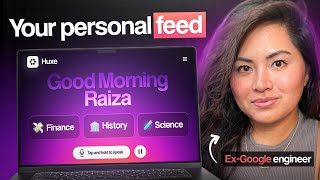
Raisa Martin left Google's NotebookLM team to start Hux, an audio-first AI that generates personalized shows from your emails, calendar, and interests. She explains how people use it during morning routines and while working, and the tension between making AI helpful without manipulating users.
Chapters
Welcome to the Next Wave. Today we're joined by Raisa Martin. She helped build and shape NotebookLM at Google, one of the most interesting AI products to come out in the past year. Now she's working on Hux, a bold push towards true personal AI. And wait till you see what she's working on. It's straight out of like a sci fi movie. So let's jump right in with my conversation with Ryza Martin. Ryza, thank you for coming on the X wave, Nathan.
Thanks for having me.
Yeah, it's great to finally kind of virtually meet you. I guess I'm just curious, like, how did you go from doing NotebookLM at Google and to now you're doing this new startup?
I do think we did get connected right after Notebook kind of blew up, you know, towards the end of last year. And coincidentally that was around the same time that me and my co founders, we were like, hey, we've done it. This thing's, you know, gone big after working on it for about two and a half years. And we were like, what do we want to do? You know? And I think a lot of folks honestly were like, well, duh, right? Like, stay at Google, your careers are going to take off. And it was, it was like the common sense thing to do. But what was funny was like, I kept waking up in the middle of the night and I was like, darn. Like, I really want to do something else. You know, I kind of. I feel like if there was ever a time to do a startup, it will be now. First for until like, so many interesting reasons. And it's so funny because people are always like, wow, you must have had such a great idea to quit your job. But I'm like, I don't know who you think I am, but you're just.
Like, I want to start something. Now's the time.
Yeah.
I was like, you don't need an idea. You can just go do anything.
Well, let me teach you something. How it works in Silicon Valley is later you. You rewrite this story and you had a. You had a perfect. Everything was figured out. You knew what you were doing.
100%.
Yeah.
Love being a genius.
Yes.
But no, I mean, like, honestly, we were just like, wow, if we could ever feel that there was a time to do anything new, to do anything interesting, and, you know, to just have the courage to do it, it was then. And so we quit. And we actually spent like a month, honestly, just like brainstorming, hanging out at my house and just like drawing on pieces of paper that we would just, like, pass around to each other, and it was just like, a lot of fun. And so where we eventually ended up is actually not too different, I would say, from, like, what helped NotebookLM take off. But we knew there was something interesting in the audio space, and hence Hux was born.
Cool. And your co founder, did he work with you at Google or.
Oh, yeah. So my. My two co founders, Jason and Steven. Jason was a sole designer on NotebookLM. Stephen was one of the tech leads on NotebookLM. We. We've worked together, the three of us, for years. And so we already had just, like, really, really good of, like, a working relationship. And, you know, they're my friends. And so it was actually really easy. The day that I was like, wow, I really would like to do this. I was actually at breakfast with Steven. We usually got breakfast together. I was like, hey, Steven, do you want to do a startup? And he was like, thought for a second, he was like, okay.
That easy.
That was kind of it. And I think, you know, people also ask about that. They're like, oh, you know, how did you pitch your co founders? And I'm like, wait till you hear it.
Yeah. Went to coffee and said, hey, what do you think? Let's just quit Google and go do something.
Yeah, that was pretty much it. And I think that was. That was the best way to do it because we were like, all right, we'll figure it out later.
All right. You've heard how powerful Notebook LM is, but that's just scratching the surface. We created a complete guide showing you how to use NotebookLM and Gemini to do 10 hours of research in 20 minutes. Whether you're analyzing competitors, developing content strategies, or learning a new market, this guide is gold. Scan the QR code or click the link in the description. Now let's get back to the show.
Yeah. So have you figured it out? Like, I mean. Cause I looked at your website a little bit, you know, hux h u x e.com if anyone listening. And for me it's like, okay, so what she's doing is because when I heard NotebookLM, and for anyone who's not familiar, you know, you can. You can throw a bunch of text or documents, whatever, into, you know, an LLM, and it generates podcast episodes, basically, where you actually hear two. Two hosts talking to one another. And it is amazing tech demo. Like, when I heard it, I was like, this is crazy. And. But I was also like, is Google ever actually going to figure out how to make this go mainstream? I don't think so. And so When I look at your website, I'm like, okay, maybe that's what she's trying to do. Like, she's trying to find the right angle to actually make something like that go mainstream. And so is that kind of. And, like, what's the inspiration for it?
So I think it's close. I think we are still, I think, collectively as people, software builders, people who are interested in products of which I think there are, like, lots of these people now, especially with AI, I think we are still collectively kind of like, feeling at the edges of what actually is sort of the killer use case for AI. And there's certainly a lot of these, right? Like, coding is a really big one. ChatGPT, as your friend, is, like, a huge one. But I think we're still trying to find, like, more of these mainstream use cases, and I think there are many, but it requires a lot more product work. And so for something like hax, our actual sort of initial nugget that we led with was this, like, a really simple idea, which is like, how come you always have to go first, right? Like, how come the AI doesn't go first? And it's such a. It's such a simple provocation, but it's actually hard to sort of bring it to life. And so when we walked through the different ways we might do it, audio was just one of the most straightforward, most fun ways to do it, where I always tell people about this analogy of, like, growing up, one of my favorite things to do is I would wake up and I would turn the radio on, like, first thing in the morning, right? And I would just listen to the broadcast. Mostly I just cared if school was canceled, but then if it wasn't, it was fine. I would listen to, like, whatever else I was saying, and I was like, what is the. You know, what is the analog to life today, Right? And, like, with AI, you can do something interesting, which is, like, personalized radio, a broadcast that's made just for you. And so then we just started riffing on it, and it's actually caught on and become quite interesting.
Yeah, that makes me think of that feature that ChatGPT rolled out. What's it? Pulse, I think.
Pulse, yeah.
Which is cool. I've been seeing it because I talk to ChatGPT, like, daily, like, about my business. I'm building Lore.com right now in all these crazy meetings, trying to keep track of all of it and what's going on and what I'm learning. And Pulse has been, like, really useful recently, but I still haven't Gotten the habit of checking it. And like, I definitely could see that audio could be great for that. Where literally, like in the morning, when I do my morning walks, if I had something that was like, relevant to, like, what I'm actually currently thinking about or doing would be awesome.
Yeah. And I, when we talked to our users, you know, we had this sort of insight in the beginning. We put it out there and ultimately we were like, people will tell us, right? Like, what's good about this or what's not good about this and we'll see if there's actual legs to it. I think one of the most fascinating things is once we started talking to the people that are users of Hux, every person would start their stories with like, oh, yeah, I love to use it when I'm driving. I love to use it when I'm brushing my teeth. Actually, one time I think I talked to nine people in a row that mentioned they use it while they're brushing their teeth. And I was like, whoa. It's like, am I being pranked? It's like, where did all these people come from? Why did they tell me they were brushing their teeth? But it really sort of illuminated to me that there is something interesting today. Right. When you're building products, you could start from a technology perspective and say, okay, whatever, this technology is cool, I'm going to go build something around it. Or you can just build around what people are already doing or their habits and try to hook into it. And so for us, that's largely like the morning routine. Like, people want things in the morning that help them feel like, all right, this is helping me, so start by day. And it's really interesting you brought up Pulse because we were like, okay, right? What is good about Pulse? What is good about Hawks? Like, what are the things these products have in common that we can ultimately learn from? And it really is just kind of like an idea of an AI that knows you, right?
Yeah. I'm really curious, like, how you know. So it seems like you guys are taking more like a human centric approach to AI design, which I love. I'm curious, like, how do you get data into hux? Like, how do you learn about somebody?
Yeah, so there's a couple of ways that we do it. During onboarding, you can connect your email or you could connect your calendar. You do both. You can connect multiple emails, which was a really big feature request for a while. I've actually found this has been super helpful for me, just listening to my work and personal email while I am brushing My teeth. Super useful. And we also have an interest picker, just super simple, just like tell us what you're interested in or just type it out. And the collection of kind of like the onboarding signals, along with like the things that you do listen to and engage within the app, is what populates it going forward. And so one of the things that we actually have started doing for people is when you listen to something on Hux, like in the app, when you open the app again, it generates a totally new episode of that, that show. Right. So today, like I was listening to one that was like interesting history, particularly with food. And it was like episode two, here's another food. And I was like, oh, this is pretty great. And so I think it's like kind of the same feeling you kind of get when you're on Wikipedia and you're like clicking around the links and you're like, wow, I'm getting smarter. It's like creative and it's like for very little work.
Interesting. Yeah. I wonder if there's any way you can, like, I feel like if I was listening to something, I'd want some way to signal to the AI what part of what I listened to was actually interesting to me. Is there any way to do that yet?
Not yet. We don't know the best way to do this because a lot of our list, a lot of our users are listening when they're doing something else. And so it's, you know, to take.
The, can't survey them or whatever, like, hey, stop brushing your teeth and like.
Answer the survey, tap it or something. And I think there's a little bit of signal we're able to capture when people interrupt. Because the shows are fully interactive, you can interrupt anytime, you can ask follow up questions. So we get a little bit of signal there. But we think there's probably better ways. There's kind of like generically we can identify themes that you like, adjacent interests and things like that. And so we'll probably start there first.
Yeah. I wonder if there's any way to get data out of ChatGPT and put it into this. Is there is.
I think that's the holy grail.
Yeah.
Because like, you know, I, I, so there's, I know there's two companies. One I invested in Super Memory and there's also Mimo or Mim0, whatever it is. Um, and I think possibly there's something there where I think they can kind of like they connect to ChatGPT. But that might be kind of confusing because then like for a user, you'd have to tell them to use somebody else. So that's kind of tricky. You wouldn't really want to do that. Like, hey, go install this plugin, then go to ChatGPT. And then, you know, but. But if you could figure out some way to get that data just right in, that would be phenomenal. Like, I can see that being huge.
That is. That is huge. I think there's a lot of things like it, you know, between your browsing data, your maps data, data, your Slack, we think about these as kind of very interesting data stores that some of it, I think, is more directly related. Right. So, for example, with ChatGPT, like, if I was asking about some issue persistently, maybe, like, I don't know, I'm dealing with, like, this medical thing. Like, that's probably something that you can create content out of. But then one of the things we actually talk about really frequently is the stuff you shouldn't make content out of, either because it's not interesting or it's, like, not appropriate. The user doesn't want to be reminded of it. And so we think about that as much. Right.
Where I'm like, having some super personal conversation. You're suing someone, you've got some kind of family drama, and it's like, here's a podcast about your. Your argument yesterday. You want to relive that?
Exactly, exactly. And so I think that's why these data stores are super interesting. And I'll say, like, on a. On a final note, there. There is so much to like when you get a good picture of a person's life where you can connect the dots for them. Right. Like, maybe you don't think the things you think about at work or in your personal life or in your hobbies. Right. Are connected. But actually, when we've looked at, for example, like, my data, when we started studying it with Hawks, we were like, well, actually, it turns out that, like, all of your interests kind of like, can be hoovered up together as, like, history, science, technology. And that's kind of it.
Yeah, yeah.
And it is really interesting. Or you're like, oh, you know, these are kind of like the different poles that make the person.
Where do you see that going long term? And is this all about somebody exploring their interests and learning more, or is there something else that after you have that data, you can help them do? Or like, how are you thinking about that?
So the way that we've thought about this is that there's not really. We don't really know of anybody else that's really studying sort of like proactive AI in the sense that it is actually really hard for the machine to go first. Right. You do need a little bit of knowledge about the user and then you have to sort of figure out how can I create a title so interesting that they would click on it, which is like the first layer and the second layer is then getting them to listen to the whole thing. So we think about it as kind of like a funnel of passive content is like a gateway to a totally different type of AI interaction that I don't think we've had much of an opportunity to learn about yet. Because everything we are learning about with these AI tools is very much like dependent on the user's intention. Right. Like when I go to, to, for example, like when I go to Claude code, like I'm not randomly in cloud code, like I'm trying to get a job done when I'm in chat GPT, I'm asking this question and it's very much like I'm trying to pull value out of the tool versus I'm here to be like delighted or I'm trying to get ready for the day, which is a much more broad goal. And so I think that what we'll probably learn is that users will probably want to take this one of two ways. We think it's either the content direction, which is fully like entertainment focused, right? Kind of like TikTok, Netflix, whatever, like I just want a personal kind of content space, or it will go in the direction of assistance, which is, hey, this is like next generation assistance, which is passive content that is proactive is the first layer of it. And so I think we're slowly discovering it's probably more likely the second one.
Especially if, you know, like what I'm working on or what I care about. If you can start proactively suggesting things to me that I could be doing, whether it's learning something I need to learn or something I should be doing. And then especially if you could help me in some way with that.
Yeah, it's interesting too because I think we're learning a lot about. We talk a lot about like stuff that AI can do and we talk a lot about automation. But I think that in real life, most people, what most people find helpful is is not really AI doing stuff for you yet. It's actually interesting. We see a lot more of like summarization catching up, explaining something to me, like we're still there and I think we still have a lot of opportunity to get that right. And like, honestly Just like, earn people's trust. Because I think if you can get these tasks, you know, to a place where it's like everybody is like, doing it and it's like very normal to listen to like your AI assistant, like, summarize your emails for you, it becomes a lot easier for the next step, which is like, okay, respond to this guy, right, or pay that bill or.
Make sure it'd be so important, right? Because, like, yeah, there's a, there's a fine line there, right? Like, are you manipulating me? Like, like, like this thing that's helping run my life, is it helping me? Or are you, like, manipulating me to extract more value out of me?
Yeah, exactly, exactly. And I think, like, helpful. Helpfulness here is like, really interesting because, for example, right, like whenever you make a suggestion to a user, I think it's interesting to think about whether or not that user would have done that anyway if you hadn't made the suggestion. And so that's the type of thing that we think about, which is like, hey, before we step in that territory of making suggestions, let's just help with like these really basic kind of like passive content tasks.
Where are you guys at with Hux right now? Like, is it private? Is it launched? And do you have like a demo or anything you could share?
Oh, yeah. I mean, right now anybody can download the app. It's available ON Android and iOS. You can go to hux.com we do tell people it's super early and every version of the app that we launch actually changes the app. And I'll show you a quick demo on my phone. We just launched a new version that actually.
We ship the shows and episodes that I was telling you about earlier. But you can see here at the top you have. It's called the Daily Brief. And when you play the Daily Brave, it'll just go through your emails, your calendar, and it goes through all the topics that you're interested in. But then it also shows you. You can see here there's like a feed of interesting shows that it thinks like, you'll be interested in. So in this case, it's actually, it's a funny title, but it's so niche and it's something that I actually really care about, which is basically, what's the effect of ultra processed foods on your body? This is like one of those things where you're like, I don't know if I would have, like, sought this out. But it actually is like a digest of like the report on how ultra processed foods affects your body. And I was like, wow, this primarily.
Knows that from your emails, or it knows that from, like, things you've told it or things you've listened to before or like, what's. Yes.
So at this point, it's things I've listened to before, but things like, things like my news, for example. Right. Like that's very much informed by, like, my emails. And it knows, like, I'm a startup founder, it knows I'm into AI, but you can see that pretty much all of this is like, AI news.
Yeah.
That I could listen to. And you can kind of see there's like, more here. And then every, every single one of these has, like a show associated with it.
I wonder if this is one of those companies where it could be smart to, like, highly target a specific first ideal user or something. Right? Like, if it feels like this is one of those startups where it's almost like, you know, superhuman, where they targeted VCs and it helped them raise tons of money. You know, I can imagine this being super useful for VCs because, like, they email a lot and then you can easily identify what companies they're looking to fund or interested or categories, stages. And you could, like, give them a podcast of, like, who. Who raised money for these kind of companies this last week. That way they know to ping those people to at least initiate a conversation in a relationship. Right. Which is what all the best VCs do is like, monitor that and then try to reach out to people. That could be interesting if you could, like, target someone, like, make it work. They all use it, and then you expand to other kinds of people.
But yeah, no, I think, I think that's right. And I think that we actually, at this current stage, we're starting to see these cohorts emerge organically too, which is, you know, what kind of person wants to listen to a personalized radio show in the morning?
Right?
And it is like a specific sort of people. But I think that it's right. I think they are largely early adopters, but I think that they reflect, like a broader user base for sure.
So where do you see, you know, let's say Hux is super successful. You know, you've nailed personalized AI and you're one of the leaders in personalized AI. Like, where do you see the future of the product?
I. I think a lot. I actually go back to a lot of, like, sci fi. I mean, I. I love a lot of, like, science fiction, like Star Trek, read a lot of books, watched like every sci fi movie. Right. And I think about how so much of what we've watched in these movies like, that are actually, like, really positive sort of technological experiences are still not here today. Right. Even though we are kind of talking to our phones, we're kind of talking to our computers. AI is like, the farthest we've ever gotten in terms of, like, this whole, like, talking and audio thing. It still is not quite there. And so if this goes well, what I kind of imagine is like a broader shift in how we use our devices.
Right.
Because today we are largely, like, on our screens and tapping on our keyboards, and that's how it's been forever. Like, it just hasn't really changed. But I imagine that what will actually be monumental and very, very interesting is when we actually make the shift from typing away at our computers to actually talking and listening. And that will just be a very, very different kind of, like, human computer interaction. Yeah.
I'm hoping that's where things go, and then we end up more in the physical world. Like, you know, people always ask me, like, are we going into the Matrix? You know, And I'm like, I don't. You know, some people might, but hopefully not everyone. Like, hopefully we, you know, actually AI enables us to actually go out and live our lives and helps me solve a lot of the tedious work I don't really want to deal with and helps me learn things I want to learn, meet new people, do new things. That's. That's what I'm hoping for.
No, I agree. I actually largely agree. And I think we are correctly in that timeline. Right. Where it's. The more that I think about it, the I sort of observed for myself. I really like it when I'm in the real world. I like talking to people. I like taking a walk. I like hiking. I like driving. I like, you know, playing music and doing my chores in the kitchen. Like, this is sort of what I think gives a lot of people joy. But we are still, you know, largely living our lives on screens for one reason or another. So I think technology, that sort of helps us embrace both, which is like, look, maybe the feeling is that I can't walk away from this work or I want to be productive. Something that sort of satisfies both of those, I think, is an interesting thing to pursue. And I feel like audio actually is one of the right solutions for that.
Where do you think AI is at right now today? Like, you know, there's a lot of people who think that we're in some kind of bubble right now or that progress, some people say progress is stalled, which I haven't seen. But, like, what is your take on, like, AI overall right now? And, like, outside of Hawks, I mean.
I think it's interesting because I feel like if you based it off of what the people are saying on X, Right, or on Twitter, you would think that, like, we're on this, like, sort of constant, like, roller coaster of, like, we're on top of the world or the cycle is ending. No, we're on top of the world. Nvidia earned.
It crashed again.
And it crashed again. But I think that in real life, um, for most people, it's probably, like, a little more stable than that, to the extent that the products that you're using out there as an everyday person is still just chatgpt. And I think about that a lot because when I think about the. The emergence of things like Instagram, Right. Facebook, Google, these were the apps that started to take up space on my phone. And so when I think about the cohort of AI apps that are going to take up space on somebody's phone, to me it's like there's just one. It's just a chatgpt. So what's number two? What's number three? What's number four? Right. What does it do for the everyday person? And so the utility has to be so generalized that you can think about every kind of person consuming it. And so, to me, I think we're still very, very early. I do think we're probably in some kind of bubble, but hopefully it's the kind of bubble that just leads to a lot of, like, infrastructure building that helps support, you know, apps number two and three and four and so on.
Yeah, makes sense. Yeah. I mean, I think people hear a bubble. They think, like, there's no substance behind it. Like, there's definitely substance behind everything in AI. So if people get carried away and, like, there's some overinvestment, that's just part of the process, in my opinion.
Yeah. Yeah. I mean, it's just exuberance, right? I think. Yeah, rightfully so many of us are excited and I think just with anything that's new, like, there's just a lot of fumbling. There's a lot of fumbling around. As much as, like, we want. Want to sound confident and say we know where we're going, I think the truth about, you know, exploration is that we're gonna make mistakes, some of us are gonna get lost, but it's gonna be okay in the long run.
Right. You're talking about, like, how, you know, everyone just uses Chat pt, which is totally true. Like I, I've tried to be a person like on X before where I'm like, oh, I'm trying these new things and like, yeah, the reality is I, right now I literally use ChatGPT as my main thing. The main way I use AI. And then for coding, I primarily use Factory. I also have used cloud code. Both great. And that's mainly it. Occasionally complexity and that's mainly it. I do worry a little bit about that, like, especially now that chat PT's memory is so good, you know. You know, Google just had their, their new Gemini 3 Pro come out and it's awesome. It's really good. It doesn't have my memory and so I just haven't used it besides like testing it, you know, after it was shared with me. I'm using the model in Factory now for coding. Like I had, I had my head update my website yesterday. I'm like, hey. Which I thought was just. Was mind blowing to me because usually I've been so horrible at design. I asked it, hey, what do you think about my website? Are there any ways you could improve it? And here are like my three. Here are three brands I like, you know, for me, like Palantir and some others. Right. Like, here's some. And like they just did like a facelift on my website. I'm like, what?
Yeah, I think it's design. Yeah, yeah, yeah.
It's crazy. Yeah. But I'm still not using Gemini as my main AI app. So I do wonder, like, how, you know, is everything going to be chatgpt? Like, is there going to. Hopefully there's going to be things like Hux and all these other apps and ChatGPT, does it just eat everything?
Well, yeah. I mean, I think it's also because like, there's just such a limited amount of time in my day. Right. And even though all of these products have come out, it's not like my days changed.
Right.
And so I think that the apps still have to map really closely to the thing that I am doing or the thing that I am trying to do. And I'm sure some of these things will change. But until that time, until the solution sort of squarely slots into something that majorly takes up my life or my day, it's probably just not going to happen. And I think about yesterday actually, the team and I were talking about how good Gemini 3 is. We're like, wow, this is pretty impressive. It's really cool. We played around with it and then we were like, how many of us are going to use Gemini, like Gemini the app. And we had a funny little debate where we were like, why don't we. Does anybody know? And Jason, my co founder, who's a designer, he was like, it's because the background isn't black on the app. And I was like, what? And we all opened it and we had this funny realization that it's like an off blue, black background.
You know, I do wonder also if that's a perception thing. I do wonder if it's because Chatbot was the first one that people used. So there's, it's anchored in people's mind that that's what AI looks like. So anything that's not that is non standard.
I think, I think that's true. I think there's a lot to it. I also feel like I, I do think that even though ChatGPT is largely the same since it launched, right. It's just like a text box that I press enter on hasn't changed very much. It has a very, very high level of polish on the app. Right. It's like it never bungles. When I press enter, the answer always renders correctly. And so I think that there is a certain level of polish on the app that I'm just like, I don't really want to try another thing because it's not going to be this.
Yeah, totally. Like, even like, you know, Grok is getting pretty good and I've tried the app though. I'm like, just like in a daily usage, the UI as well as the memory features lacking is just like. No, I'm just. ChatGPT is my default still.
Like I, Yeah, I have an opinion that I feel like is very unscientific, but I swear that it's also the personalities of the models because I use ChatGPT for my personal mobile use case. But Claude is kind of like my work friend. Right. And it's like interesting, you know, I feel like we would normally never say these things about the AI, the AI sort of like apps, but I do really feel like I appreciate the way Claude answers my questions. And how else would you describe it except friendly?
It's like a personality, a nice guy. It's like, it's even the name. Right.
He's like a nice co worker. Yeah. So I, I appreciate it.
Yeah. That is interesting. Yeah. Maybe the future, that's. That's what it is. Like. Yet Gemini needs like a personality. What is Gemini? It's almost like. It's like, it's almost implies two personalities too, with a name Right. It's like maybe they need like a different brand too, right?
Like, yeah, yeah.
Because Claude, I can imagine, like, oh, that's like a friendly dude or something. Like, you know, not intimidating guy, just like easy to talk to person.
You know, I genuinely like, I feel like if you're like, all right, what does each of these, you know, apps look like as like a person? I think, like, it wouldn't be hard. I feel like this is a good litmus test. It wouldn't be hard for people to describe them. You know, like when you just said that, like, I didn't even realize it, but I'm like, oh, yeah, Claude for sure has a beanie, wears glasses.
Like, yeah, yeah, yeah, yeah.
You know, so it's not hard. And I think that that definitely plays into it.
Yeah, I, I mean, I've actually kind of slightly. This is my personal life. I've kind of slightly made fun of Claude for that reason in the past. But. But I do still like it in like certain, in certain contexts. Like you just said, like, just like casual conversations about things. Yeah, it's like a great friend there.
Exactly.
One thing I like to ask a lot of guests. You know, I have a 12 year old son and I always think about, what should I be teaching him right now?
Oh my gosh, this is a great question. I just tweeted about this like last week and it was because Alexander Wang was on tvpn, right? And he had said something like, here's what, here's the advice I would give every 13 year old. And he said, learn vibe coding. And I remember I was watching it and I was like, huh, I don't know. I don't know if I agree with it. I probably don't. And I had tweeted about it and I would say like 90% of the people who reacted to my tweet were like, pretty supportive. They were like, oh, I agree with you. I'll tell you my answer in like a second. But then like 10% of people were like, you're gonna be poor. Like, the advice you're giving to people is going to land them into, you know, poverty. And what I had said was, and I still believe this, and I do also have a 14 year old. The thing that I would encourage every person in that age is to sort of study and absorb the things that I think make us uniquely human. And I had to really think about this about like, hey, what is it? Right. Especially as we start to see these models become better and better at coding and even, you know, think about the example we just gave about like Gemini 3 making suggestions, tasteful ones, to your landing page, right? Like that you, you kind of imagine it's like, wow, that was tasteful, right? That could have been uniquely human, except now it's doing it. And so the thing that I had said was like, go watch movies, play sports, learn musical instruments, go look at art and see if you feel anything, read.
That's what I told my son too. I was like, you know, as long as, as long as you do it in moderation, like, it's actually good to like, play games and watch movies. As long as you're not doing it all the time exclusively, it's good. Just like culturally take this in. And there's also little lessons in all of these, you know, different things. Not all, but a lot of kind of movies. There's little lessons.
It's a good kind of foil, right? Because it sort of challenges you to feel one way or another. And I think the reason why I would encourage this is like, you also learn a lot about yourself. Like, for example, I hate the Little Mermaid, but I don't think I could have learned it if I didn't watch it. And there's a kind of like a weird reason why I don't like it. But I love like all these other movies, right, that I watched when I was a kid. And so I think like, doing the things that make you uniquely like a person and gives you these like, opportunities to like, connect with other people. Like, if all we did was like vibe code when we were kids, like, what are we going to talk about? Like, how was your vibe coding when you were 13? It's just like, right. It's just very one dimensional. And I understand that. Like, you know, a lot of the people in the comments were like, that's like one of the ways to sort of elevate your status in society and make money is like, get a job. And so I definitely understand that, but I think that's like, more than anything, what will set you apart is like, who you are as a person. So just like, invest in that.
Yeah, totally. Yeah. That's one thing. You know, I. I'm in Japan right now, probably moving back to California, but wow. I've been out here for about three years. And, you know, that's one thing about the schooling and stuff here is like, people just push their kids to constantly be studying. And it's like, how do you have time to find out who you are? That's like really important versus just like rote memorization things that AI can do like. Oh, you know, so I've been trying to like, you know, and my son obviously wants to like spend more time like doing new things. And so we, you know, I've tried bipcoding stuff with him just to like, so he was aware of it existing. So like we've tried replit, we've tried Factory and some other stuff and, and he thought it was so cool to see that. But you know, now he's like wanting to make, you know, like a Roblox, you know, game and things like this. And I was like, okay, but first like, you know, and I'm not great at coding, but I know enough that I can teach him some bas for sure.
And I actually think, you know, this is, I think the difference between like studying just like coding or vibe coding versus like, hey, take the time to understand like computer science. Right?
Yeah.
Well, how do these things work? Where, where do they come from? How should I think about building applications? Because even today, like we talk about this all the time. AI coding is like a really great capability of these models, but it still requires like a person to put these things together, particularly for complicated things. And the, the real boost here is that we can build more and more complicated things that do more sophisticated tasks, you know, but it's like humans and AI together.
Yeah. I think even if kids end up using AI for everything for coding in the future, it's really good for them to have some understanding of like what's actually going on under the hood, even if they don't understand all of it. But my son actually started with like explaining to him CPUs and RAM and things like this and also showing him the command line too. And he was like, what? That's like, you could actually move around the folders and you can change stuff. And this all is just like a graphical interface on top of that kind of. And it's like, you know, he was, he was mind blown to like learn that, you know.
Yeah, yeah. And so that's probably what I would tell every 13 year old is like, go do things that are fun, follow your curiosity and you know, take CS50 at the end. At the end.
Yeah, yeah, yeah, yeah. One last fun question I like to ask people. So, you know, so you're in San Francisco, you get into a time machine. Maybe it's like a Bill and Ted kind of time machine, like a, you know, phone booth or something. You get in, you get out, you're in San Francisco. It's, it's 2050. Like what does it look like.
Oh, I love this question. I just watched the Matrix where I was like, oh, I hope it's not. I hope it's not that.
You know, I don't know if, you know, actually, I. Crazy story, but, like, I actually partnered with the producer of the Matrix.
That's crazy. Well, it's one of my favorite movies. I haven't seen it in a while, so I was rewatching it and I was like, you know, easily. Right. It could be this. Right. Thinking about it and, like, kind of thinking that far ahead. But then I thought about one of my other favorite movies, which is Big Hero 6, and I don't know if you've seen it.
Yes.
Big Hero 6 is so cool because it's like, it's easy. You have young people able to, like, go to schools that are dedicated to building cool technology that they're interested in. You build machines that are just, like, super helpful. And, you know, you just watch Big Hero 6 and you feel great. And I kind of imagine. Not that literally, but just, like, how it feels. Right. Which is like, this is how I think it's supposed to feel, which is exciting. It's optimistic. Everybody, for the most part. Yeah, everybody for the most part is, like, really helpful and collaborative towards each other. And you can tell, like, the fictional city they live in is called Stanford. Tokyo, I think.
Yeah. Which is like, that's why I actually showed to my son a bunch because, like, he. He grew up in San Francisco, but then he's been back and forth to Japan.
Yeah.
Most of his life. So, like, he loves it. It's like, it's a mixture of his two worlds, you know, and it's. It's a. It's a great movie. Yeah.
Yeah. And I think that to me, if I could be in a time machine and that's what I stepped out of, I'd be perfectly happy.
Well, dude, Risa, this has been. It's been great. Been a great conversation. I appreciate you coming on. Where should people find you online? And. And also if you want to. I mean, obviously they should go to Hux, you know, h u x e.com and check and check it out. But yeah, where. Where can they find you online? And if there's anything else you want to tell the audience as well for you off here.
Yeah, I mean, I would love it if folks want to try hux.com we also have a Discord server. It's got, I think, 6,000 people in it now, but it's pretty active and people are so helpful. Like, I love you know, I always tell the people that we have five folks on our team and an extended crew of 6,000 more, and it's really great.
That's a. That's a great community. 6,000.
It's super cool. And on X, where I primarily say random things, it's Rise of Martin. Cool. If you want my advice for 13 year olds, that's where you can find it.
Yeah. Awesome. All right. That's been awesome. And thank you so much for coming on, Nathan.
Thank you so much. Thanks for having me.
More from Matt




AI News: Dots, GPT-6.1 Sol, Sonnet 5.5, Gemini 4, and everything you need to know




