The $100M Marketing Strategy Behind Clay AI
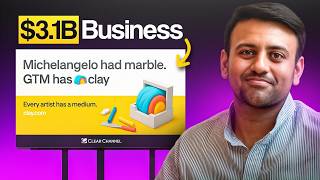
Varun Anand of Clay talks about building a $100M marketing strategy through creative out-of-home campaigns and experiential activations. The company hires for curiosity over credentials and evolved from an automated spreadsheet into a go-to-market AI platform, starting with agencies and moving into enterprise.
Chapters
Welcome to the Next Wave podcast. Today we're doing a special episode live here in San Francisco for HubSpot Inbound. And we have a special guest host, Carly Baker from HubSpot, who's going to have a great conversation with Varun Anand from Klay. If you haven't heard of Klay, they recently raised a round at a $3.1 billion valuation and they've become known as the kings of using AI to go to market. So if you're interested in how you can grow your company using AI and go to market, this is the episode for you. So let's just jump right into it.
Good morning. Good morning. Thank you everyone for being here with us today. Super excited to be able to kick off Inbound right before Yamini's keynote. Just got to sit down and chat all things Clay. Yeah, I would love to kick off exactly what you had shared, which was when I was in my Uber, I saw your billboards everywhere. Your billboards and our billboards.
Okay, great.
Yeah, I guess we have competing out of home campaigns going on, but I.
Think out of home is a big like under underrated thing. Like I don't think people do this remotely as much as they should be doing. It's really cheap actually. Like, if you raise venture capital and have money, it's actually surprisingly cheap for the mindshare that you get. But I also think most of them are quite boring. Like most of these ads are really sad.
So tell me how you think about creativity, specifically with out of home and with billboards.
Well, first of all, I can't actually take any discredit because it's actually this woman, Jessica on our team who is maybe the most creative human being I know. And Bruno leads our marketing and like Sarah and Tanner and Hudson are on our brand team. We, by the way, as like a separate aside, I think we over invest in brands brand. You know, it's one of those investments that makes you look good if the company works. But if it doesn't work, then that was a really bad idea because you just wasted all this money on something that doesn't really matter. But I will say it's less of a. The reason I'm starting with this brand thing is because you can't just like come up with something creative, like do it. Like there's a lot of steps that go from, you know, four years ago to now of like, okay, actually having a very creative out of home campaign because I mean, first of all, it's like kind of, it's very core to who we Are it's like core to our identity. Like the logo for example is inspired by this extraordinary artist silhouette and creativity and art like runs through the company's DNA in a lot of different ways. And then we obviously back it up with like the money we invest through it. Like we have a full time claymation artist on staff this week. We're doing all these events that are very creative. So like we hired Snoop Doggs like, like a joint roller person and, and he's doing a class for people on how you can roll your own joint. That sounds very fun. Number two, there's like a kung fu fighting scene that's being filmed. So if you've ever wanted to be in like a kung fu fighting scene situation, this is your moment. Right. And so I'm not, I'm not kidding. Like it's seriously, there's a professional who's going to come in and is going to coach you about how you can like be in this like battle scene and, and they film this whole battle scene and, and it's like pretty sick. This is, this is what I mean by like the creativity of like and like we invest in that and because again, it feels authentic to us.
And I definitely want to dig into that a little bit more too because I think when we think about brand, often we think so much about sort of what the online experience is, I think specifically in the tech space. And to be able to sort of bring those core brand values and be able to do something really against a grain irl, I think is really important. I mean even, even when we're here and even when we're at conferences, right. It's like how many of you have four happy hours to go to tonight? So like leaning into sort of connecting your irl, connecting your out of home, connecting like sort of the core values of your brand and being able to do the experiential stuff is super important. I do think the more and more and more saturated that the Internet gets, the more important those bespoke events are going to be. And to be able to have someone, it's very hard to find someone who can be the steward of having those ideas and making them actually feasible and sort of tying them back to your icp. Right. I think it's very easy to be an ideas person and not have an idea sort of how to take those and connect the dots and be able to sort of make sense in the whole ecosystem. And so it sounds like Jessica is your person.
Yeah, well, I'm not totally sure how much like, you know, joint Rolling really connects to our icp, but I think it's just finding ways for people to connect that feel like human and nice and fun and refreshing and like, do things people actually want to do. All right, you've heard the ways Varun is using AI to do some next level things. Well, we just dropped the database of all databases and we're not talking about those typical use cases that make your email sound better. Our database has over 100 unconventional AI use cases across 30 industries. Each use case includes how you can implement it, difficulty level, required tools and metrics to measure for business impact. This database was made to give you that unfair advantage. Get it right now. Scan the QR code or click the link in the description. Now let's get back to the show.
I know one thing that you talk about very openly and as you've shared about Jessica here, is that you're really a champion for your people. And a lot of folks that come to Clay, yourself included, sort of come from non traditional backgrounds and sort of you and Clay really take bets on sort of more non traditional hires and really champion that and use that as a part of your strategy. I would just love to hear more sort of about the intentionality about that and sort of how maybe, maybe that's shifted and sort of what other people can learn about maybe like taking some of those bets.
Yeah, I actually don't think it's that risky or that much of a bet. I just think it's the philosophy, how we think about it. Basically, the art of interviewing and recruiting is just understanding who a human is. And I think people too often try to make value judgments about who people are. And people like. When you're interviewing someone who oftentimes feels like, hey, oh, this person's smart or this person's dumb or this person's good at their job and they're competent or they're not. And it's like easy to do that, by the way. I used to do that all the time just to call myself out on that. But I think the real point is just understand who they are as a human. And they're kind of like a blank canvas when they come in front of you. Right? And your job is to fill out the blank canvas. You use pastels and watercolors and the references and the interviews, they all kind of piece together into filling out the story of who this human is. And then once you understand who they are, then you can kind of try to understand, okay, what is the fit? Right. Instead of like, like, let's just say you Thought someone wasn't competent or wasn't smart or whatever, something like that. It's not actually those things. It's actually just that, hey, they need more mentorship and guidance and help and support than you are able to provide in your current structure. Right. Maybe they should work at Google because they have a lot more of that than like some fast growing startup like Clay, because that's not going to be able to give them that structure and support. Right. And where someone's going to be successful. So I think it's just thinking about people in this, like terms of fitness and like, where are they in their journey of life and what are they looking for and what, what do they need to be really successful? Like what does it take for you, Carly, to be unleashed? You know, like, like what does that take? I just met this guy Brandon, who is the founder of Humans of New York. And yeah, I've been a fan of this for a long time. So it's pretty cool for me to like meet this guy and I like talk to him and I was like, how do you get these people to basically open up their whole life stories to you in like seconds, right. And then like get deep and honestly, the same. The answer he gave, which is so similar to what happened with Izzy and Sarah, is you just have to be naturally curious. And I find in interviews a lot of times, like even myself, by the way, you ask for like, what is the best question you can ask? Like, how do you do this? Honestly, none of that matters. If you're actually naturally just really curious about understanding who this person is, the questions kind of come out naturally. And the same thing happened with Brandon, the humans of New York, and people feel that natural curiosity and they lean in because like you're a stranger, you sit down, you're like, hey, can I take photos of you and post on the Internet? Right. Like, that seems off. But if you're naturally like eager about understanding who they are, people respond to that. And then the same thing applies for interviews. And so I think that principle is kind of how we're able to like understand who they are and like find the fits for them in the organization.
Yeah. So I want to take sort of the philosophy and thought that you have around hiring and talk about sort of how that's related to just the pivot and sort of the changes of Clay as a product over time. I think there's actually actually a lot of parallels in your sort of personal. And the team's personal curiosity has really played into that. So can you talk about Sort of just the journey of going, you know, just sort of from fancy spreadsheets to going all in, to being a full sort of go to market AI powered tool and sort of how that story maps with how you think about hiring.
In like late 2021, early 2022, we called ourselves like a spreadsheet that would fill itself and it did, but no particular audience that well. And I think that really reflected a lack of commitment and a lack of focus and a lack of. Yeah, from, from all of us. And so basically there was a moment where we were like, okay, let's commit and where should we commit to? Well, I think there's this pull here in this go to market space and then we kind of need to understand where to start. And so for me, I was like, okay, well this is a broad audience. How do we narrow it down to something that we can start with? I talk to a lot of different people and the only audience that I was feeling any type of pull from were our like agencies, like these cold email agencies, marketing agencies. That's where I felt immediate pull. And so we just kind of focused on them.
Now, in retrospect, it might seem a little silly, like, okay, are you gonna like, if we went to go raise venture at that time and we were like, we're building software for cold email agencies, I don't think that like pitch would have landed very well. I don't think it would have won the HubSpot pitch contest because that's not like a big market or whatever. Right. But I think these things are very unpredictable. There's also a good book on this, by the way, Greatness Cannot be Planned by Ken Stanley. The reason I resonate with the premise of that book, which you can kind of guess from the title, is that greatness can't be planned. And greatness could be defined as part of market fit. It could be defined as an iconic company, whatever. You kind of have to follow your instinct and your curiosity and each step and each stone unlocks the next one. Right. And all you're trying to do is just get to a place like a base camp place. Right. And so, and so that's what happened here where we bought our curiosity. We started with these cold email agencies. We didn't know where that was going to lead, but we knew we were helping them. And we knew we were helping them because they felt the pain so acutely because they had lots of clients. And then we were kind of able to parlay that into them posting about us on the Internet. We were able to Parlay that into working with our clients, take that and meet with, work with other startups and SMBs and eventually like our first enterprise customer is rippling and then Vanta and OpenAI and so we were able to take that and like get momentum with like these enterprise customers. And then each kind of. And the way it works is each. The bigger companies look at the company right below them. Right. And so the onion kind of unfolds in that way. Yeah. And then that's kind of been the journey of how we've grown. And then, and then from the product perspective we've like gone from really just a spreadsheet to a data enrichment tool and to now like a go to market platform that we call like an IDE maybe that lets you kind of come up with any idea really quickly, execute those ideas and kind of execute any growth play. And we're still on that evolution because I still don't think we're achieving that vision remotely as much as we want to.
I want to talk a little bit about sort of the intersection of curiosity and the fact that we're sort of increasingly more and more in an AI world where I think curiosity is being sort of put on the sidelines. I'd love to hear from you personally as someone who really champions curiosity. Sort of any exercises or anything that you do or encourage others to do to sort of stay in touch with that side of the side of yourself or just to build that up. Sort of as you know, being curious or finding information or getting ideas is sort of easier than it's ever been in the age of AI.
You're right that it's more difficult because people basically just default chatgpt for everything right now. And I think there's a lot of trade offs with that that are not so obvious because yeah, you have these AI tools and people are like, okay, immediately just go use them. And then like you don't think about what happens because of that. Right. So like for example, a lot of people use ChatGPT as like a therapist, right. And like what are the trade offs of that? Right? Like are people then not going to talk to their friends about their problems? What does that do to friendships? You know, what does that do to our social circles? So I think that's like this challenge. I don't. And then, and then also, by the way, that's exacerbated. Like in San Francisco where we are now, there's this whole push to like996 and like those types of companies which Clay, by the way, definitively Is not. And I think those companies also kind of, that philosophy kind of exacerbates this problem actually. Because people like, they, like, they kind of view like success as like a treadmill, right. Where a lot of things come from, from curiosity, from openness, from creativity, from having time and space to think about problems. I actually just read this article last night about this guy Jun Su, who is an economist and mathematician at Princeton. And he just won the Fields Medal, which is like the best prize in mathematics. But he was a high school dropout and. He was a high school dropout to study poetry and, and then didn't actually get into math until like his sixth year at like Seoul University or something. And, and then like, and, and if you look at his days, like, you wouldn't ascribe any of those things to actually being good at like doing good things like getting your work done. Like his wife almost like didn't get married to him or divorced him because like he couldn't like do the basics of like household items and stuff. Right. But that creativity and that magic and that space that he creates is what enabled him to like come up with these breakthroughs that, that, that warranted him a fields battle. Right. And I'm not saying you need that type of thing for everything you do. Right? But I think you just need that space and that time and it's hard to do that when you're in this like treadmill, you're in this grind. I feel like I've still been evading the core question of like, how do people actually do this practically? And so I don't have a great answer of how people can be more curious. I think they just have to like, want it and they have to create space for it and they apply it in their day to day.
Well, that's a great answer. I want to hear from you about sort of creative use cases or things that you're seeing customers doing that you just never sort of had the idea of sort of your customers using play in that way. Just sort of to follow the thread of curiosity and creativity.
Yeah, if I remember correctly, there's a lot of things like my EA just started last week and she had a creative use case in her bootcamp where she like found all the GMs of all the fancy hotels and all these places and, and got their contact information and sent them all like a very personalized like letter that makes it so that they're more likely to give me an upgrade when I go. She calls it nice hacking. I have encouraged her to make a LinkedIn post about that. Ivy from our team like created a builder in clay for like finding tennis court courts and hiring tennis coaches and stuff, which is pretty creative. Like there's like a use case of like tracking all the new content on like HBO Max and Amazon prime and Apple TV and then like having like, okay, what, what scores do they get on run tomatoes and IMDb and, and like what should you watch this week? Right, so these are all kind of like very fun creative use cases in your personal life. I can give like a real work one too. There's a logistics staffing company for example, and they serve warehouses of a very particular size because that's how much they have and. But the traditional data sources for warehouses kind of suck actually and aren't very good. So what to do? Well, they're like, okay, well maybe AI can help. And it does actually. So they actually use clay to automate finding all the warehouses in Google Maps and then they use AI to analyze the satellite images. And then in the satellite images they count how many parking spots are around the, around the warehouse and then they count how many cars are in the parking spots. And it turns out that that's the best predictor for headcount size and warehouse size and everything else. Another one, I'll hit you with Canva. You guys all know canva big company. They one of their products helps you keep your brand consistent across lots of different social channels. So they use clay to automate social listening on LinkedIn and Twitter. Then they like use AI to analyze those posts and be like, are they on brand or off brand? And if they're off brand, it's like, hey, like the font is off, the coloring is off, the spacing's off. Then they're like, okay, well let's find out how to design. Let's message them and be like, yo, you just posted this on LinkedIn yesterday. It's off brand. Here's why it doesn't need your brand guidelines. That's not good for you. Like here's how we can help, right? So it's like timely, comes with a solution, it's very effective. So those are some like in the wild creative use cases.
I love those. All very different. I think the as. As tools sort of become more natively integrated in workers lives, we're going to see so many more of those sort of personal use cases where they're building using a tool at work and they're expanding that into how they're using it in their real life. And just like tools and software being more Natively, I think as a part of just people's lives outside of work, which is something we've never haven't really seen before, at least at this type of scale. Yeah, I think is very interesting. I think we have time for one more question. I do want to go back more towards the product side and just hear sort of what you're building for 2026 and beyond as AI is sort of continuing to, to grow and shape technology as a whole. Like what are you really focusing on and where are you looking to grow with the product?
Yeah, I think there's a lot. I mean I think basically our ambition is to like build a space where it's very easy to come up with ideas really quickly, execute them and then the ambition of those ideas can be really, really high. And I think we are meeting certain elements of those problems, that ambition right now to certain audiences, but definitely not to everyone. And to all these use cases and like the bar to access product is super high right now. How do we make that more accessible? So we're working on like lovable esque, like interfaces in clay to make that really much more accessible. How do we like help you be way more creative in those and be a thought partner to you. How do we help you like be way more ambitious? And so like we're considering like agent based, node based architectures to help you do way more absolve away the tables in some ways and like, and be more ambitious. So there's a lot kind of coming up, coming up down the pike that we're really excited about. Um, and I think and then also like how do we expand into new audiences, right? Like how do we not only just help robots teams but how do we help like marketers do ABM in data ways? How do we help reps be more efficient in their day to day, right. So I think there's both surface area and scale of ambition that we're excited about and kind of a lot coming down the pipe.
Are you more excited about sort of surface area or scale? Like how are you sort of balancing.
It's a tough balance because when you're ambitious and like I was just talking to our friend G. Caban, like he was asking me about our ambition and it's like he was like, oh, he was referencing this other company and their ambition is like to become 100 billion dollar company and it's like I don't care about that. Like I'm not trying to like that's not the point. The point is actually the point is that a lot of people in this room are starting companies, running companies. And, and, and when you, when you have an idea or when you start your new company, we want your first instinct to be, to use Clay the same way your first instinct right now is to open up your phone and call it Uber or Waymo, like, or search something on ChatGPT. Like that should be the default mindset. And, and, and then not only is that the instinct, but we meet that promise, right? And we actually help you do something that genuinely grows your business in a, in a, in a way that's differentiated and that we are, that's an, that's an ambition and we're, we're trying to meet that, but that's kind of where we're headed.
Well, thank you so much everyone for joining us. This breakfast and this conversation was presented in partnership with Clay, of course, with our HubSpot for startups, which is your go to place where tools and resources and exclusive access to the starter community at HubSpot with Mindstream, which is HubSpot Media's premier AI newsletter. And then of course the Next Wave, which is our AI podcast and newsletter. We're really excited to share this conversation. We'll be available in just a couple weeks both on YouTube and on audio for anyone who wasn't able to join us or if you want to revisit the conversation. So we'll send a follow up with that. But thank you so much, Varun, for the time this morning and thanks everyone for joining us and we'll see you over at 9:30 for Yamini's keynote next door.
Yeah, thanks guys.
More from Matt




AI News: Dots, GPT-6.1 Sol, Sonnet 5.5, Gemini 4, and everything you need to know




