The Rise of Voice-Based AI Interfaces
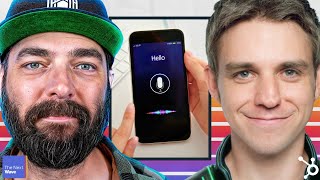
Podcast episode (Next Wave) hosted by Matt Wolfe and Nathan Land discussing voice as the next primary AI interface. They cover recent voice-AI products (Hume’s eevee), funding (Hu AI $50M Series B), advances from OpenAI and others in realistic voice cloning, risks (scams, deepfakes, regulation), business/consumer use cases (translation, AI agents, audio dubbing), and AI-generated music and its impact on musicians. The hosts give practical takeaways: experiment with voice tools, plan for voice-first workflows, and adopt simple safety measures (code words).
Chapters
I think the big aha moment for a lot of people is going to be that probably in the next six months to a year that the main way people are using AI is voice.
Hey, welcome to the Next Wave podcast. My name is Matt Wolf. I'm here with my co host, Nathan Land, and we are your chief AI officer. It is our goal with this podcast to keep you looped in on all the latest AI news, the coolest AI tools, and set you and your business up to to be ready for this next wave of AI that's coming. And today we're going to talk about what we think is actually the next wave of AI, your voice. In this episode, we're going to talk about why we think voice is the next big thing. We're going to talk about the tools that are available so that you can use voice. We're going to talk about the scary risks and why this could be fairly damaging to the world if things go in the wrong direction. We're also going to talk about how AI is taking over the music world and what potential options are out there to solve some of these problems. So a really, really fascinating episode. Lots of cool stuff we're going to talk about and excited to share with you. So let's go ahead and just dig in.
Yeah. So today, when everyone thinks about AI, most people are thinking about text, using text to talk to AI, you know, like ChatGPT, Claude. But I think the big aha moment for a lot of people is going to be that probably in the next six months to a year, the main way people are going to interact, I believe, is going to be with voice. And this company, Hu AI, just raised $50 million in their series B, and they just launched a product called eevee, which is empathetic voice interface. And I tried it yesterday with my son, and he was blown away. He's 10 years old. He tried it out and he was like, what is that? And he saw the little line on it where it's showing the emotions, and he started talking to it, and he was just freaking out because it was detecting the emotions in his voice and then responding accordingly.
No, it's really interesting. I played around with Hume. I actually made a YouTube video where it was like, the AI news recap, but in one piece of it, I played around with Hume for a minute, and it was kind of funny because I was like, hey, Hume, how you doing today? Or something like that. And it was like, I detect that you're angry. Why are you angry? And I'm like, I'm not angry. I think I was probably like, when I make videos and when we record podcasts like this, I tend to ramp up my energy and, you know, I'm probably a little bit more excited than if I was, you know, just talking to you in real life face to face.
Right.
And I have a feeling Hume sort of picked up on that sort of extra excited energy and is like, what is wrong with you?
Yeah, yeah, yeah, yeah, yeah.
But anyway, you know, basically back to the bigger point here is that I do feel like we're entering this world where right now most of the prompting we do is with text prompting. You go to ChatGPT, you go to Claude, you go to one of these platforms, right? And you type in what you want it to respond to. But I feel like over the last decade or so, the tech world has kind of been training us that no, your voice should be a mechanism for interacting with the computer. Right. With things like Siri and what's Google's version? Google's assistant version, Is it not Google Home? Yeah. But anyway, the point being, like, we have all of these smart devices. We've got our phones, we've got our Alexas, we've got stuff like that. That is, I think, where things are going, right? You're going to be actually speaking to these things instead of typing prompts. And with things like Hume, we're going to actually get even more context for it to analyze when it gives us feedback. Right. The rumor has it that at WWDC this year, Apple's big developer conference that they do every year, that's kind of where they make the big announcements. It was WWDC last year where they announced Apple Vision Pro. This year the big expectation is going to be a lot of AI, right? And I think a lot of people are speculating that Siri is going to get AI into it. What they're going to use for the AI, we don't really know yet. You know, we, we do know that there's been rumors going around that Apple and Google might partner and that Apple might use Gemini 1.5 for Siri behind the scenes. But then also Apple just released a research paper. The week that we're recording this, Apple just released a research paper called Realm R E A L M. And it's basically their large language model that they designed for a mobile phone that is actually very good at reading the context of what's on the screen. It can actually view a mobile phone screen and use that context to sort of inform the large language model before it responds to You. So a lot of people are thinking, well, maybe that's what's going to be in Siri, right? So maybe you're on an app, you're using the app, you might be able to go, siri, hey, this app isn't working. Can you help troubleshoot it for me? Siri will actually be able to see your iPhone scroll, see what's going on, and possibly help you through whatever issue you're running into. If they use this Realm language model that Apple just put out the research for, but where they actually go with it, I don't think anybody's gonna actually know until wwdc, which is, I believe, in June of this year.
I think it's crazy that, like, you know, Alexa and Siri both came out like 10 or 11 years ago, right around the time when the movie her came out. Everyone thought this technology was gonna, you know, improve every year and was gonna be amazing. And so a lot of people, I think they think, oh, this stuff is not gonna get better because, like, look, it still almost the same product. But they don't realize, like, when like GPT5 comes out, if you built something like Alexa now with like GPT5 under the hood, how dramatically different of an experience that that's going to be. And, and I'm sure Alexa will be upgrading soon too, because, you know, Amazon just invested, what was it, like $4 billion into anthropic, something like that.
Yeah, well, they initially invested like 1.75 billion or something. And then when all this data came out, that OPUS is actually beating the latest version of GPT4 and all of the benchmarks.
Yeah.
Amazon came back to Anthropic and said he, maybe we'll put even more money into you guys. And then I think they invested like another two and a half billion or something like that.
Right.
So we're going to have Jarvis in our house pretty soon, if you want to.
Yeah. And if you think of that from like a business context, you know, as a CEO or a manager, like, how amazing is that going to be that instead of having to type everything to your AI, you can be like really quickly like, hey, you know, this is going on, or, hey, can you check this report for me? Or can you check, you know, do I have an email from so and so? And can you respond to that, doing all of that by voice, like, how much more efficient you'll be as an executive using these kind of tools?
Yeah. While we're on the topic of voice too, OpenAI just put out some new research as well. Right. OpenAI just put out an article on their blog saying that we've got this really, really good voice model where with. I don't remember what it was exactly, but, like, 15 seconds of training data, we can replicate your voice, and then you can type in whatever you want. It'll say that thing.
Yeah.
But then OpenAI in that same article went, but it's too powerful, guys. It's too strong. It's too scary. We can't let you use that yet. Which to me is just wild because we've already got it, right? We've got 11 labs. 11 labs already to do exactly that. Right. We've had, like, Uber Duck. There's been. There's been a whole bunch of models out there already that do exactly that. And OpenAI kind of coming out and saying, like, we do it too, but we're not giving you our version because it's too good. Kind of weird.
So when I saw eevee from Hume, I was like, okay, that's probably, like, the best I had seen so far. Like, on the emotional side, that's. It's amazing. The texture, emotions. But you could still kind of tell it's not a human. And with 11 labs, pretty good, but you can still kind of tell it's not a human. I don't know. The demo I saw, I believe it's from OpenAI. That was the most realistic one I had heard. I was like, okay, that's like 99.5% there. Yeah. Like, if I didn't know this technology would existed, I would not know that was AI. I would think that was a real person talking.
Yeah.
Yeah. The other ones are, like, 95% there. But when you get to, like, 99, like, people just. They don't know that it's an AI and that's where it's. You know, I can get that. Yeah. That could be kind of scary that you could just be pretending to be anyone and no one would know.
Well, totally. But I also think that, you know, people like you and I who are immersed in it on a daily basis are probably a little more adept at actually spotting AI. Right. Like, I feel like I'm really good at when it comes to AI images and going. I can tell, like, instantly that it's AI now because I've seen so many AI images. I feel like I'm getting that way with Voice now, too, where I can pretty quickly grasp, okay, that was done with AI. But I mean, how many people have actually been fooled already by AI voice using things like 11 labs? I mean, that that. That kind of sort of brings us into the. I guess, kind of the next thing that I want to talk about is like, the scary part about all of this AI voice technology that's. That's coming out right now is, you know, there's been stories of a scammer calling up somebody's parents and saying, hey, we kidnapped your daughter. And then they would use a voice sample of that person to convince the person on the other side of the phone, like, oh, they really have my daughter, and collect ransom money. Right. There's also that. What was it, the $25 million scam that happened over Zoom. Like, remember when we talked about that for a little bit, like, so, I mean, that scary stuff's happening right now.
Yeah. And I think that was here in Japan, I believe. And so, yeah, somebody impersonated an executive, or I think they impersonated with the cfo. It was like a top executive at a big company and called people up and people didn't know that it wasn't a real person. And they end up wiring, what was it, 25 million or something like that. It was a lot of money that they just wired off to some scammer.
Yeah, yeah. The tech to do the trickery is already out there. Yeah, but like you said, like, yeah, OpenAI is the best one to come along so far. But it's already out there. Like, people can already do this right.
Now with this kind of technology. There's already laws that this kind of stuff is illegal. Like. So I guess the challenge is the scale will probably be greater because, like, it'll be easier to scam people now.
Yeah.
Right. So. And that is probably an area where you'll need AI to help, like, you know, find scammers and things like that. Right. Which, you know, hopefully doesn't go into, like, Big Brother territory where we're using AI to, like, monitor everyone. But, you know, possibly that's is slightly going towards that direction. Like. Yeah, you need AI to, like, figure out, like, so and so's scamming people and then look at the data and then go. Go get the person.
Yeah. I'm not somebody that, like, is anti regulation. I actually think regulation to some degree is a good thing in the sense that I feel like regulation gives companies bumpers to stay within. I think that could be a good thing. Right. I think right now there's a lot of AI companies out there that are developing and they're going, well, we don't know what's going to happen with regulation, so let's just keep on pushing the limits. But I do feel like regulation to some degree gives them some bumpers to stay within so they know they're not overstepping their bounds. However, when it comes to AI, I don't feel like regulation works at all because bad actors are going to be bad actors. Right? So we can go out there and say, like, hey, we're going to regulate. You're not allowed to clone people's voices with AI and dupe people. Well, that's. You already can't do that, right. Whether it's law or not, you know, it's already highly unethical. People already see that as a negative thing. I'm pretty sure it's already a law that you can't do that anyway. But yeah, yeah, the technology's out there. It's out there in open source form, it's out there in closed source form. It's out there. People are going to be able to do it. So how do you, like, what is regulation going to accomplish in that sense? I don't really understand the regulation argument here.
You know, most of the politicians have very little, like real life business experience. And so like when they think about regulation, a lot of times it's just like, okay, is the public scared of this technology? Well, okay, then I'm going to regulate it. It's like, is actually good for your country? Is it good for like business? Is it good? You know, are you just literally responding to some polls? Is that all that is?
And you know, without going too deep down, like the sort of political rabbit hole, there's lobbyists, right. And a lot of the government is run by the companies who are paying for those people to be where they are in the government. Right. So what I think what the big fear is, and I know this is something, whether you love them or hate them, that Gary Marcus has talked about a little bit in the past.
Yeah.
Is that what happens when we get too much regulation with this is what it's going to end up doing is concentrating the power into a few small companies. Right. What's going to end up happening is the, the companies like OpenAI and Microsoft and maybe Google and some of these big corporations that are pushing for the regulations may end up driving the regulations in ways that really favor their company, but really do not favor the little guys.
You know, that's kind of like the biggest divide that's happened in Silicon Valley recently is like you got the divide between like the Sam Altman, you know, side, which is also kind of aligned with YC and then the Marc Andreessen VC side where they're like, yeah, this is basically regulatory capture here. Like, they're like trying to go out there and like say, yeah, what we're building is very dangerous, so you should please regulate us. That's an odd thing to ask for. Like, why are they doing that?
Please regulate us and we'll be on the board to decide what those regulations are.
Yeah, yeah, yeah, regulate us in this exact way that we want that no startup can afford. Yeah. And oh, by the way, open source is very dangerous. And so that's kind of been like the undertones of it all too. It's like when they're talking about regulation, it's like open sourcing of AI is very dangerous. That's almost always the undertone. It's like, well, if you don't have open source AI, then yeah, you will end up with like one or two companies that controls all the technology. So. So that's why I'm like, very hesitant of like. Like, I'm not going to say there's no regulation needed. Like, maybe there are. There's regulation needed for like, you know, deep fakes or, you know, AI voice at some point, but like just speeding into it and trying to regulate everything. Kind of like what's going on in Europe a little bit right now. Like, that's not the right approach.
You know, a lot of, A lot of where my head's at too kind comes from like the crypto space right where there's been looming regulations forever. But a lot of the regulations never end up happening. So a lot of the companies that are trying to build are like, am I going to build something that's going to end up getting regulated out of existence? So like, a lot of people and companies in that crypto space are like, just tell us the damn regulation so we know what bumpers to stick with it. And we're not in this limbo. But when we're like talking about AI, I feel like it's a different story because it's like you do have the open source, you do have the closed source, you do have the companies that, you know, have a better foothold within governments than the little guys. You do have all these other nuances I think really muddy the waters. And also I feel like regulation is just going to make it easier for the bad actors to be the bad actors while the, the people that are trying to do right lose abilities essentially. Right along with all the negatives that we just talked about, there are still some positives of this, this voice AI that's coming out. I think there are some use cases that I think could be very valuable. I know for me as a content creator, using it for, like, dubbing is really, really helpful. Like, if I misspeak in one of my videos, I don't have to go back in record and, like, overdub something. I can open up a tool like Descriptor 11 Labs, type in the words that I meant to say, and then just use that and dub it into my video. So I've actually used some of these tools to sort of fix a misspeak in some of my videos. So that's like. That's one really good use case for some of this. AI voice.
Yeah. And human. They're kind of pitching that it's going to be used for therapy and things like that. Right. Which is exciting. You know, it's kind of, you know, could be weird to talk to a robot, and that's how you're getting your therapy. But, I mean, who knows? Like, when it gets good enough, you know, I guess that'll be a thing. It does kind of make me think of the movie Her. Right. You know, where you've got this guy who I think, Matt, you haven't seen the movie.
I've not seen it. And I feel like you should. You should take my AI fan card from me.
Yeah. You've seen Ex Machina.
I have seen Ex Machina, yes.
Okay, okay, okay. You're okay. You're like. You're halfway there, you know, so with her, you've got, you know, Joaquin Phoenix playing this guy who's, like, got divorced. He's very sad. He's writing these authentic love letters, even though he's, you know, it's like a service. So he's like, basically writing fake love letters. They're not really authentic. He's the one writing them for people and very lonely guy. And then he installs this AI operating system and. And he, you know, first he thinks, oh, it's just like this kind of cool toy or something. And then next thing you know, he's fallen in love with it. Right. And at some point, you know, not to give spoilers, but, you know, at some point it kind of outgrows him. Yeah, basically. And then, you know, at some point it's like, okay, it's obviously, you need relationships with actual humans. Right. So as a supplement, though, I could see this being great for therapy. Like, maybe you have a real therapist and then you have, like, the AI is like, okay, when I can't talk to the therapist. Can't talk to him all the time.
Or what if the therapist's advice to everybody is just buy more GPUs?
Jensen. Jensen's taking over. He's got. You're wearing his shirt. The more you buy, the cheaper it gets. Or whatever his slogan is.
The more, the more you save.
Save money.
The more you buy, the more you save.
Yeah, but. But, you know, also, I think about, like, translation and stuff. So, you know, I. I recently tweeted about, like, you know, I got engaged in Japan and I was using AI to kind of facilitate the conversation because I can speak a little bit of Japanese, but not enough to have, like, a deep conversation. And then, yeah, without this technology, I wouldn't have gotten engaged. And, like, my life's a lot better now. And I'm sitting there thinking about, like, God, what is that? You know, how's that going to be when you have, like, AI voice with this too? It's kind of exciting. It's kind of weird too. Like, I don't really want the AI voice to be, like, the main voice she hears from me.
Yeah, yeah. I'm actually curious, right? How does that interaction look when you guys have conversations with each other, you and your fiance?
Yeah.
Do you, like, have a phone between you? You speak in English and then it says it out in Japanese and then she says it in Japanese and it speaks it back in like, what does that look like? I'm just curious.
Oh, yeah. At first it was almost entirely using the phone and occasionally would use Google Translate. But, like, Google Translate's results are really bad. It almost always has a mistake. But the reason you use Google Translate is the simplicity. Right. It's faster, you're not waiting a result. It's like just. It's right there. But it makes so many mistakes. And a few times we had, like, complete misunderstandings because we were using Google Translate. I'm like, let me put this into ChatGPT. Oh, okay. Like, you said something totally different. You know, I'm not gonna go into details, but there's once or twice where it was like, oh, geez, like, we really misunderstood each other on something, like, you know, something big. But, you know, but now how it's kind of evolved. So at first it was like, entirely using mostly ChatGPT, especially when we weren't in person, it was ChatGPT a lot. And then in person, it was a lot of Google Translate because it's faster.
Right.
And then now how it's kind of evolved now is, you know, I speak a little bit Japanese. My son from a previous Marriage. He's half Japanese. And so I've, you know, I've got a little bit of exposure to Japanese, and. And then she speaks a little bit of English. She loves American movies and things like that. Right. So she knows. She knows some words. Right. But she just can't, like, you know, say a whole paragraph or something.
Right.
So now it's kind of evolved where in person, we mainly use ChatGPT for, like, something really detailed, like a long conversation. Like, a really deep conversation would be using AI. But for other little things, we've, like, got little words and things where we know, you know, we can communicate. Basic thing. I use custom instructions with ChatGPT to tell it how to teach me as well.
Oh, nice.
Like, don't just translate it, but actually break down the keywords underneath the translation. And so when it would translate for me, it'd be like, oh, here's this word, and then here's hiragana for it, which is. Japan has, like, three writing systems, and hiragana is the simplest one. They teach kids first. And so I'm like, show me hiragana, because I know hiragana.
Yeah.
And so not only was it translating, but it was. It's been teaching me at the same time. And I think I didn't properly explain that on Twitter because people were like, dude, you're gonna have to learn Japanese. I'm like, but, yeah, but it's been an amazing tool. Like, this relationship would not have happened without that. And, you know, not even just in a. If you think about, like, a personal context with relationships, but, like, business relationships. Like, what is this gonna do for people? Where now you can go meet a business person in Japan or China or Saudi Arabia or whatever, and you can use their local language. Probably, like, have a little device you put down on the table or something. Yeah, you talk, and you'll probably, like, automatically spit out something, whether it's in their headphone or whatever.
Yeah, it already exists.
Like, probably the next six months. Yeah, it exists, and the quality is okay, but, like, it'll probably, like, in the next year will be, like, really, really, really good.
Yeah, I was at. I was at CES back in January, and there was a company there called Timekettle. And Timekettle has these little earpieces. They just look like, like, AirPods that you'd get from, like, Apple. Right. That's kind of what they look like. And there's two of them. I put one in my ear. You put one in your ear? I just speak naturally in my language. But what you hear in your earpiece is translated automatically for you and vice versa.
So Babel fish.
So we could just sit there with those, those little earpieces in and have a conversation. Right? Within two different languages.
Yeah.
So I mean that, that already exists. You know, you see it at like un, right like when you look at like UN meetings where somebody's up in front of the whole UN speaking. Everybody in the UN has like one of those little headphones in. But I think there, it might even actually be a human translating for every single person there. I don't know for sure.
That's my understanding is that is what it is.
Yeah. So I mean, eventually I think all of that's just going to be like an AI just automatically translating it for whatever language you turn the dial to, you know?
Yeah, it's in the book, what Hitchhiker's Guide to the Galaxy.
Right.
Where they have the battle.
It's been two decades. I've read that book.
Yeah, it automatically translates it for you, like. Yeah. So we're heading there like in the next year, which is going to be amazing. So yeah, there are products that are like niche products that some people know about, but there's not like a mainstream like amazing automatic translation, you know, device or product.
And I would imagine most people are just going to want to use the thing they've already got in their pocket. Right. Like, yeah, most people probably are going to go in and invest in something like that when they can pull out their phone and just sort of hand it back and forth.
I bet there's like five to ten well funded startups right now working on this. I'd be shocked if there's not like, like it'll be, it'll be a next wave that you'll see in the next like six months to.
I like what you did there with the next wave.
Yeah, yeah, there'll be like five of those like all of a sudden, you know, and it's because, yeah, it's a great idea. Of course somebody's going to, you know, build that and win in that market.
Well, I think the smartest move that a company can do is for Apple to just build it into the AirPods somehow. Right. Like if everybody already has these little AirPods sitting around, like just build it into there where somebody can speak to me and like it'll use the processing on my phone. Right. The phone will be in my pocket. But these can already hear and they can already produce sound back into my ear. Right. So why not listen to what they say, send the information to my phone, translate it, send it back to my AirPods. Like, there's almost no doubt in my mind that it will eventually just be built into like our earbuds that we use now.
That'll help business so much. Like, you'll be able to go do business in so many more countries with less misunderstandings. Like right now, if you travel around the world, like when you go to other countries, they don't speak your language. Like, yeah, sure, some places might speak English, but still it's kind of daunting when you go to a country where they don't speak English and now that'll be gone. Like, you just put in your ear and off you go. And so that'll really start to connect the world more, I believe, make people understand each other better than people currently do.
Yeah, absolutely. The other topic I want to talk about real quick before we wrap up here is AI music has had some really big advancements within the last few months. I don't know if you've had a chance to play around with Suno version 3 yet, but it can make like.
I haven't.
It can make up to two minute songs. It actually writes the lyrics, creates all the background music and sings it. And like, the songs are actually good. Like I've played some on some of my YouTube videos and people are like, I'm actually digging this song. I could listen to that. Like, they're actually good songs. And it's just so, so, so impressive what they're doing with, with the music now. But also on the flip side of that, that coin, 200 artists just this week that were recording this, 200 artists all signed a position to try to stop the advancement of AI in the music industry because creates an existential threat to their, their income, their, their business model. Right. So like on one hand, like the AI music tech is getting so mind blowing good that we can just create whatever song we feel like listening to right now and it'll be a unique, good, interesting song that we like. But on the other end of the spectrum, all of the traditional musicians and all of the bands that we grew up liking and the current pop artists of today are all fighting hand and tooth against it.
Yeah, I want to try out the new suno. So I haven't tried it yet. I heard about it, it sounds amazing. I'll probably try it right when we got here. But yeah, I created something like the top Twitter threads back, you know, many, many months back now like on AI Grimes where she had like a. She's allowing people to use Her. Her voice to make songs, which, you know, that's kind of on the one side of the spectrum, which seems to be pretty rare because everyone else, most of the top musicians, seem to be like, yeah, don't use my voice, especially without my permission. And so, like, that. The other big one that came out was the A.I. drake song. And that song, you know, I'm a kind of Drake fan. Like, I mean, I like, like, five of his songs. I'm not like a hardco, but I heard that. I was like, oh, yeah, this is now one of my top five.
Yeah, yeah, yeah, yeah.
I put it on my phone. I was listening to it when I went to the gym and everything. I was like, this is crazy that this is an AI Drake song that's not from him. And then all of a sudden, you know, people started having their Twitter threads taken down, the YouTube videos taken down. Anything that had AI Drake in it was, like, gone.
Yeah.
And so I was like, oh, wow. He, like, realized that, like, that's a big, like, if there's a song that's almost as good as his songs coming out.
If there was a smart way for musicians to monetize their voice being trained in the AI systems, all the musicians would be on board. But right now, there's no real smart way for them to make money if their voice is being used. Right. But, like, if it got to a point where I go and create my own variation of a Drake song with lyrics that I created, it sounds like Drake. It's good. People like it. And whenever that music gets played or when the song is generated, I don't know how the monetization would work. But if there's a way that Drake made some money every single time that song got played, he would be all for it. Because now, yeah, he can make a million Drake songs can be made, and he's making money off of all of them. But the problem is these artists have no way of actually making money off of their voice being trained in there. And I think a lot of these companies want to figure that out, because if they can crack that code, how do we actually incentivize musicians to be a part of this? Musicians will probably be a lot more likely to be involved in it.
Yeah, I kind of feel like we're gonna probably need, like, some future AI to help us figure out how to do that. You probably don't even know this, but, like, my last startup binded, that's kind of what we were going after. So we were doing attribution on the blockchain and trying to automate royalties and things like that. So we experimented with music. We ended up doing images because, like, it was the easiest way to get started. I went out to Washington, D.C. and met with people in the copyright office. I spoke on a panel in Washington D.C. with the copyright office. And. And, man, it is, like, hard. It's very hard to, like, track these things and make sure it's actually authentic and then handle the payments.
You've got Spotify, right? And Spotify, they've got some sort of model where every time a song gets played, the musician gets a, like a fraction of a penny or something. But if you're a popular musician getting millions and millions and millions of downloads a month, it adds up. They can make a living off of it. And I feel like a lot of people are sort of looking at Spotify is like, we gotta do something like that. But I feel like it's so much more complicated than what Spotify is trying to do, because if you train all these voices into an AI and then somebody goes and creates a song, you know, how do you know exactly which voices it's pulling from to create this song? Maybe the voice is a blend between Drake's voice and Eminem's voice, and it's like a hybrid. Now, do they get paid for that? Like, there's so much more, like, intricacies involved.
And do they get paid? And does the publisher and all these other people get paid? Like, who. You know, who all gets paid and then, like, existing contracts they already have that may, like, prohibit those kind of things.
Honestly, I think it's just going to require new contracts, like a rethinking of that industry, essentially. Right? Like, the music industry already had to reinvent itself when streaming came along, right? Everybody buy CDs, everybody bought albums. Now, do bands even make albums anymore or do they just drop songs? Right? Because, like, the music industry's train changed so much. I just feel like they've got to figure out what is this next evolution, because the change is going to happen. It's not like them putting out, like 200 of them signing a letter is going to stop anything. It's just sort of making their feelings known. But it's not going to stop anything.
Yeah, I mean, it's kind of like with like, Napster, like, yeah, you know, they tried to stop Napster, but that kind of technology and torrents, everything else kept evolving and, like, you know, it's hard to stop technology, right? And so, yeah, when there. When there's 10,000 Drake songs out there AI Drake songs. Like, what are they going to do? Like, you know, a million AI Drake songs.
Yeah.
Are they really gonna be able to stop all of that?
Am I gonna go pay to listen to a Drake song? If I can use a tool and just generate a new Drake song like, that I've never heard before.
Right. And I do wonder if it's gonna lead to a world, too, where, like, you know, you. You almost, like, freeze culture in place, which I hope does not happen. I hope, you know, culture keeps advancing and there's new creative works. But I hope we don't, like, freeze culture in place where it's like, okay, you've got the Beatles, you got Michael Jackson, you got whoever, and, like, you're, like, replicating their voice to make new songs. And, like, that's like, the famous song for all of time.
No, I think it'll keep evolving. But I do think AI is just going to be another tool in the mix, Right. I think. I think people are going to figure out creative ways to use AI I think AI can be a great tool for, like, musicians to collaborate with other musicians without the other musician need to be involved. Like, maybe Eminem goes in, like, produces a song, and he wants, you know, Drake to cameo on the song, and Drake just doesn't have the time. Well, Drake could license his weights to Eminem. Eminem can generate the clips that he needs from Drake, work them into his song. Drake gets paid, Eminem gets Drake on his song, and they never had to meet up in person. Right. I think there's something there if they could just figure out all the logistics of it.
Yeah. And, like, bringing it back to AI voice. And you could be, like, mixing all of this with your voice too. Right. You'd be like, yeah, change this part of the song or add something here or add Drake in this part. Like, doing a lot of that with voice. That's gonna be. You know, that's gonna be a new creative experience, which. Which probably would be great because, like, people can say more in the flow. Right? Be more creative, like, without having to, like, go manually, touch all these tools. Like, you just kind of making the music and, like, you know, going with the flow.
So now that we've talked about AI Voice and AI Music and where all of this is headed, you probably want to know, all right, what are. What are the takeaways? What. What can I do with this information? And there's a few things when it. When it comes to, like, the risks and dangers of AI, One of the things I actually told my Parents is that if they ever get a call from me or my wife or one of my kids, we have a code word. Ask for that code word to make sure it's really us. I mean, if I'm just calling to say happy birthday, you don't ask to ask for the code word. But if I'm asking for money, if I'm, you know, if, if I'm saying there's a problem or I was in a car accident and need money or somebody was kidnapped and I need money or something that sounds really, really out of the ordinary, ask for me, ask me for the code word to verify that it's really me. Because that is something that I think people should start doing because the AI voice is only going to get better and better. So I think that's like one of the things that you should really, really take away. Another thing is I think you should go and use a lot of these tools. I think you should try 11 labs. You should listen to the OpenAI voice stuff. You should listen to the Suno music. I think the more you get immersed, like we've talked about, the deeper we go down these AI rabbit holes, the better we get at detecting whether this is AI or real. It's almost like, you know, back when Photoshop came out, people had a hard time telling whether something was photoshopped or not. But over time you see enough of it and now people can go, okay, that looks like it was probably photoshopped. I feel like the same kind of thing can happen with AI audio. Over time, you'll probably get better and better at detecting AI. That's not to say it's not going to get better. And at some point it will be undetectable. But short term, you should probably be using these tools, hearing them, understanding how they sound, and you will probably get better and better at seeing these little nuances or hearing these little nuances in the audio that give away that it's. That it's made with AI. Well, and I think the other key takeaway too though is that like a lot of the, like circle all the way back around, bookend it to how it started of like the other key takeaway is that all of this is going to turn to voice as opposed to typing.
One thing people need to realize is this technology, it's not just like a sci fi movie like her now, it's here now. And you'll probably see in the next six months to 12 months that the main way people are using AI is voice. And so as a business leader, executive employee, you should be thinking about, how are you going to be able to use these tools in a year from now with voice that you can't currently with text? And, and how is your life going to look differently when you can just talk to the AI and have it help do work for you? You'll even be able to do things like create AI agents where you'll be able to send out the agents to do little tasks for you and command them by voice. Right. So that's coming very, very soon. So imagine be planning for that and you'll be in a way better position than people who have no idea this technology exists.
And if you have a business that has content online, it's really easy these days to make an audio version of that written content as well. So I think a lot more people are going to also consume content via audio. Right. I, I think the prompting is going to be more audio based where we talk to Siri, we talk to Alexa, we talk to these tools, and it sort of goes and does the prompt based on what we say to it. But I also think the reverse is true where over time, more and more people might consume their content that way as well. So if you have a blog with written content, throw that content into 11 labs and have it a podcast audio version that people can listen to as well. Because now you just have another format that makes it more likely that somebody's going to consume the content that you just created. So I think that's another, like, takeaway for businesses listening to this is lean into this, use this technology. It's actually a really cool way to make audio versions of your content.
Yeah. And I think, you know, in terms of, you know, people should be playing too for, like, how they can use this internationally. Right. Like, this is going to open up so many opportunities that your business can't currently take advantage of. You know, think about like, okay, people who speak different languages. I will be able to have business meetings with them. Or think about if you're making videos or written content that you didn't turn into audio, you'll be able to turn that into like 100 different languages. Right. Like, what does that mean for your business? So I got. So everyone should be thinking about that right now. And hopefully we'll do the same with the podcast. Hopefully we'll have this in Japanese in the next six months or something like that.
Exactly. That brings up another question. When you proposed, did you actually propose with the cell phone, like a translator?
I tried to not use it and then it was, it was, it was necessary within 30 seconds. But I tried my best. And the other thing I didn't mention is, you know, my son, he's bilingual. He speaks English and Japanese both perfectly, or at least for a 10 year, you know, 10 year old. And, and so occasionally, you know, he helps translate, which I try to make sure he doesn't do that too often. It's like, kind of, you know, annoying for him, but, but, but, but he was there as well, like in another room. So I was like, well, worst case scenario, I'll be like, you know.
No.
Very cool. Well, AI is, is. Is changing lives and building relationships. So exciting times are in bringing love to everyone.
And.
Yeah, okay, go watch the movie her.
I'll go watch the movie her. And on that note, I think we can wrap this one up. Awesome. Well, thank you so much to everybody for tuning in. Please like this video and subscribe to our channel if you haven't already. It really, really helps get our podcast in front of more people. If there's somebody that you know that this episode can be helpful for, send them the link, let them, let them tune into this episode. If you're on a podcast player like Spotify or Apple, give us a subscribe and maybe even leave us a review. We really, really appreciate it. It helps spread the word of this podcast and shares this information with more people. So thanks again for tuning it.
More from Matt




AI News: Dots, GPT-6.1 Sol, Sonnet 5.5, Gemini 4, and everything you need to know




