The Truth About Sora 2 (Nobody’s Saying This)
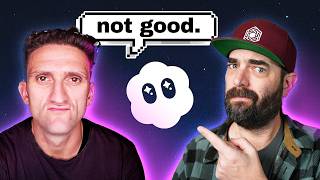
Matt Wolfe breaks down why Sora 2 hit #1 on the App Store: it lets you train your own face as a deepfake and invite friends as cameos. The novelty wore off fast for him, but the app kept growing because other people's videos stayed entertaining. He compares it to Meta's Vibes and weighs what it means for Hollywood.
Chapters
Sora2 has been out for a couple of weeks now, and so far we've seen everything from Stephen Hawking at the X Games to the Queen of England off the top of the ropes at WrestleMania. But now that some of the hype has died down, I've been wondering, how is Sora 2 really doing? What is the industry response been? And will the Sora 2 app see widespread adoption and continued use? Let me tell you what I see. But first, what is Sora? It's both a new AI model and a new social media app. The new AI model is like the the evolution of Sora. It can generate realistic and animated videos with audio now, so sound effects, music, talking, things like that.
And it's really good at generating real people. You can quickly train yourself into the model through a 30 second process that scans your face and has you say three numbers and that's it. You're trained in and can generate videos of yourself doing or saying anything. Look at this mess.
I'm covered. Mud therapy, baby. And the model is a pretty big leap in realism and it has already fooled tons of people on the Internet into thinking they're actually real videos. Then there's the social media app side of Sora. And it's basically a TikTok like feed of AI generated videos. But before we dive deeper, let me step back for just a minute because a few weeks ago Meta announced their new Vibes app. And the concept is pretty similar. A social media feed of purely AI generated videos. And when that news came out, pretty much everyone was commenting that nobody wants this. Even the AI enthusiasts that I know showed zero interest in Meta's Vibes. I even mentioned in my news video a few weeks ago, I couldn't see using this and I have no clue who they're making this for. But then the Sora app was released and it was seemingly the same concept, a TikTok like feed of AI generated content. However, there was one big difference. The thing that made Sora interesting and fun for people is that other users could allow you to use their likeness and make videos with those people in them. If a celebrity like Mark Cuban or Jake Paul gave their likeness to Sora, anyone can generate videos of those people doing whatever they wanted. And people definitely did. Feeling a little heavier these days, but that ain't stopping me. What's also cool is that you could put yourself in videos with these other people, even if you don't actually know them in real life. And this made all of the difference for this app. App versus Vibes. People wanted to generate videos of themselves and their friends in weird AI generated situations, or create videos hanging out with their favorite celebrities or tech CEOs. And so while I said that nobody wants this app, when meta Vibes came out and nobody cares about a feed of AI generated videos, I was right in the sense that I still don't think anybody cares about vibes. But I was definitely wrong in the sense that nobody wants a feed of AI generated videos because, well, if you make it so you can put yourself in the videos and your friends and celebrities in the videos, that apparently makes all the difference in the world and makes it an app that people actually want to use. And, well, as of right now, it's number one in the Apple App Store. Go on any social media platform and there are still a ton of AI haters saying that no one wants this. But I mean, if you look at the App Store, it tells a completely different story. The challenge with AI right now isn't that there aren't enough tools, it's that we have way too many. You've got one app for generating scripts and another one cutting out clips and another for captions, and none of them actually talk to each other. And if you're running a big content operation like me, it can easily start to feel like a giant disjointed mess. And that's where make.com comes in to help. It's basically a big central hub where all of my tools finally connect to each other. The visual platform lets you build out entire systems of AI agents and automations that actually work together in real time. Instead of just explaining it, let me show you one of the ways I use it. I created what I call the content repurposing agent. And every time I upload a new YouTube video, this workflow kicks in. Here's what it does. First, a transcription agent grabs the full text of my video. Then a highlight agent finds the most engaging 30 to 60 second clips to cross post. Then a captioning agent writes a simple script around those highlight clips and gears them specifically for each platform. TikTok, Instagram, shorts, etc. At the same time, a design agent generates new cover photo ideas and even quote graphics for reels and LinkedIn. And finally, everything gets dropped into my Google Drive folder for easy posting. And with Make Grid, I can see the whole thing in motion. Which clips got generated, which captions are trending, even performance data feeding back in so the workflow can adjust next time. So instead of spending hours cutting up content and writing captions, I've got a system of AI agents doing it automatically. It saves time, keeps everything on brand, and lets me focus on creating instead of constantly repurposing and cross posting. And the reason make stands out from the other platforms is because it's not just automation, it's orchestration. It lets you connect agents, tools and data into one living system that can adapt, scale and self optimize. So if you've been wondering how to actually operationalize AI in your business or your creative workflow, this is the way. And right now make is giving my audience one month free of their pro plan when you use the link in the description so you can Whether you're a creator, a marketing agency, or building out a startup, now is the best time to try it. Check the link in the description, grab your free month and start orchestrating your AI workflows with Make. Thank you so much to make for sponsoring this portion of today's video. Now let's get back to it. So here are my actual real thoughts on the app. I was pretty obsessed with the app. For a couple of days. I had a ton of fun putting myself into videos with my actual friends as well as people that I've never actually met. One of the coolest parts, in my opinion, was that you can pull other people into your videos as cameos and they would actually get a notification and see the video in their cameo feed. It became a fun little strategy to get myself onto the radars of others. They'd see a video of us in it together and well, best case scenario, they see it and follow me back. Worst case scenario, well, they see it and I just never hear from them and nothing really changed. The ability to connect with others via little AI slop videos was actually a ton of fun. Even if it felt kind of dirty to get sloppy, let's get dirty. It's also super fun to make your likeness publicly available. And I know this sounds scary, but it's actually really cool to see what other people generate with you in it. I've had a blast scrolling my cameo feed and seeing all the weird situations and environments people have put me into saying all of that. I've had zero interest in the actual main feed. I just want to generate videos of me with other people and I want to scroll my cameo feed of what others have generated of me and that's all I've really cared about so far. Now here we are, it's a couple of weeks later, and I don't think I've opened the app in over a week. The novelty has completely worn off for me. However, the interesting thing is that my account is actually continues to grow and thrive without me even using the app. It's this weird thing because other people are creating videos with me in it and it's continuing to give me and my personal brand visibility on the app. This sounds like the worst idea you've ever had. I mean, I've grown by hundreds of followers in the last week and today is the first time I've actually opened the app in well over a week. So it was a lot of fun at first, but for me, me, the novelty has worn off. Now I see myself just using the app when I need something specific made and ignoring most of the social aspect of the app. However, that doesn't change the fact that this model is actually really, really good. It's so good, in fact, that it's actually starting to fool people, just like that Pope and the puffer jacket we saw out of midjourney a few years ago. So, yeah, the model itself is really good. The app, on the other hand, I personally think it's more of a novelty that like midjourney or stable diffusion, once you've run out of weird random stuff to generate, you kind of get over it and just want to use it as needed. Everyone else on the Internet has been sharing their thoughts around Sora too as well. One of the most prominent takes is the one from none other than Casey Neistat, probably my favorite YouTuber of all time. He likens content to a funnel. The big side is all of the content being created. The small side is the content that's actually good that people want to watch. He questions what happens when the large part of the funnel gets so massive and anyone can just pump out 100 or a thousand videos every day. Well, what then? Will our feeds just get overwhelmed by AI slop and drowned out the good stuff? Where YouTube legend Roberto Blake shared his opinion on this and, well, he strongly disagreed that that was going to happen. What should we be thinking about when it comes to like the AI slop conversations?
I think the claims of the death of the content creator, the organic content creator, are greatly exaggerated. I think it's the same fear mongering that I saw about everything. I saw the fear mongering, God knows how long ago about Photoshop would be the death of art and the digital art was not art. I remember with same thing with digital photography versus film. I've been here over and over and everyone always says this time it's different and it never has been and it probably never will be. I actually respect the audience enough to think that they are discerning and that they can figure out what is valuable, what is quality and what is not. Now, if you're already making human slop, then you might worry if you're already a human slop creator. I understand the insecurity straight up, and.
I kind of agree with that take. But I also wonder, will future generations even care if it's AI generated if it feeds them that dopamine hit that they were coming to social media for in the first place? If this tech gets so good, can companies like Meta and OpenAI just use reinforcement learning to understand what you like and generate videos in nose you would want to see without any human actually typing the prompt. Well, humans get completely extracted away from the actual process of creating content. These are the questions that most of the AI skeptics are asking, and right now I think they're more valid than ever, given what we've seen from Sora so far. Now, I don't know what the future holds, but Sam Altman, the CEO of OpenAI, thinks that this can be rolled out in a way that makes it better. Better for humanity, in fact. Here's something that Sam wrote on a blog post about Sora too. He said the majority of users looking back on the past six months should feel that their life is better for using Sora than it would have been if they hadn't. If that's not the case, we will make significant changes and if we can't fix it, we will discontinue offering the service. Now, do I truly believe that Sam will shut down Sora too if they can't prove it made people's lives better? Not even a little bit. But it does show that Sam and the team are thinking about a lot of this and trying to preempt some of the negativity that they know is going to come. But honestly, I see no world where they just decide to shut it down. One last quick thought before I wrap this video up. Where does this actually leave Hollywood? The reality is that Hollywood is already using AI. They're using it quite a bit, actually. Every single person that I know that works in Hollywood has told me similar stories. They've told me that the company they work for uses AI. They just don't make it super public because, well, they know there's going to be some backlash if they do. So it's already happening, but it's just happening for quick, short use cases that you can barely notice in the grand scheme of the final project. They're making, but I also have this belief that humans are actually more impressed by great feats accomplished by other humans. Humans take the human element out of it and people kinda just care less. People aren't that impressed by AI generated images or AI generated videos anymore. However, works of art that took months or years to create or actors putting on the performance of a lifetime are typically still seen as super valuable and really impressive by people. And I don't think that changes because of AI. I think humans adapt and I think humans continue to gravitate towards things they know and impressive humans helped create. So I'm excited and I'm impressed by Sora too, and this is the worst that it's ever going to be. However, I'm even more impressed by a human or a lot of humans coming together to make something really impressive. So in that sense, maybe Sora 2 itself is the real work of art and the AI slop that it generates is just the byproduct. Mud Therapy Baby thank you so much for nerding out with me today. If you like videos like this, make sure to give it a thumbs up and subscribe. Subscribe to this channel. I'll make sure more videos like this show up in your YouTube feed. And if you haven't already, check out FutureTools IE where I share all the coolest AI tools and all the latest AI news. And there's an awesome free newsletter. Thanks again. Really appreciate you. See you in the next one.
More from Matt




AI News: Dots, GPT-6.1 Sol, Sonnet 5.5, Gemini 4, and everything you need to know




