These 12 AI Agent Use Cases Can Save You 1000s of Hours in 2025
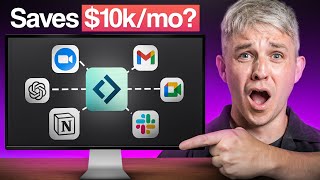
Flo Crevello, founder of Lindy AI, shows 12 ways AI agents can automate scheduling, CRM work, sales outreach, and meeting prep. The platform lets you build customizable AI interns that handle phone calls, take notes, and run in parallel to multiply your output. New users can install templates to get started immediately.
Chapters
What if you could hire an AI intern to book meetings, write emails, manage your CRM, and even negotiate refunds over the phone? Today we're joined by Flo Crevello, founder of Lindi AI, one of the leading AI agent platforms in Silicon Valley. Flo gave me a demo of Lindy AI today, and it is literally mind blowing. If you're wondering where the future of work is headed and how you can use AI agents to grow your business, you're going to love this episode.
Hello. It's great to finally have you on here.
Yeah, thanks for having me, Nathan.
Maybe first, it'd be great if you could just simplify it down as much as possible about what Lindy actually does.
Yeah, definitely. So we are a no code platform that lets you build your own AI agents and AI agents, we aspire them to be AI employees. For now, you can think of them more as like AI interns. It's like they're very eager, very hardworking interns. They're interns, like, don't give them too much, don't trust them with the keys of the kingdom, but they're pretty good. And look, because they're AI, they work. They're like 100x faster, 100x cheaper. So AI interns, you can give them tasks, like pretty much anything where you could have a standard operating procedure, anything where you could write a document, where you lay out, step by step, what the agent or intern is supposed to do. That's something that you could give to an AI agent. So sales lead generation, sales lead, outreach, meeting, note taking, meeting scheduling, CRM management, phone calls. You can use it as a receptionist, General data analysis and online research. Like, hey, go find Nathan's email online. Go find me 20 engineers in San Francisco and reach out to all of them and try to personalize the email that you write to them. Put your grain of salt in there for each person. That's exactly the kind of thing that you can give to an agent right now. I think people typically, I think they think that AI agents are sort of a pipe dream. It's like it's not real or whatever. And once they see these demos, they're like, wait, it is real and it's working and it's here now. And I'm like, yeah, it's not just a thing, it's just a pitch. It's here right now. So I'll just share my screen right now.
So if anyone's listening on audio, you probably should check out our YouTube channel. Just go to YouTube and search for the next wave and subscribe to us on YouTube.
This is actually funny. I'm literally right before this because I know that the Greg Eisenberg episode did go super well. And so I sent a message to I have a Lindy. So Lindy's, we call them Lindy's, but they're basically AI agents. And I sent a message, I have a summarizer Lindy. And I sent her a YouTube video of the Greg Eisenberg podcast. I'm like, what are the use cases that we talked about here? So, yeah, Lindy here is telling me you talked about meeting automation, executive assistant, tasks, recruiting, personal CRM. So I'm really just happy to go through these use cases because that's how I personally use Lindy all day. So everything meeting related. I love meeting use cases because everyone's got meetings all day. No one likes it. The entire workflow, the meetings themselves suck.
I can't do much about that. But even the workflow around the meeting is nightmarish. So meeting scheduling, I'll show you. Why don't we actually schedule a meeting right now? I'll send you an email, Nathan and I'll go like, let's chat. And then I'll be like, nathan, love your podcast, would love to talk soon. Plus Lindy. And so I have my Lindy here. Plus Lindy will help us find. And I'll introduce a random constraint like 45 minutes next week. Right. So I can just talk in very natural language. And you're going to receive this email and tell me when you've got it and just go ahead and respond to it. And just respond to it like you would to a human. Just respond all like, keep Lindy cc'd to the email. Yeah.
Quick question. I feel like I just realized something. Is this pretty much how like how Lindy started was like this basic email? I feel like I remember seeing something like this, like two years ago.
Was that you back then? This is indeed how we started. The first articulation of the product was AI Executive Assistant. Yes. And it's funny because the reason why we picked this use case was I kept saying like, oh, AI executive assistant is short term viable. Because it's like, oh, we can do it, you know, long term aligned. And the reason why we thought it was long term aligned is because people ask so many things from their executive assistants. And so I felt like it would force us to figure out how to make the platform generalizable.
That makes so much sense.
Yeah. So that's.
That's your assistant.
But then that you.
You're going, you're going with your assistant to do other things and you start building out those other things and then turn that to a platform.
That's exactly right. Amazing. And we were right on long term light. It was, it very much stretched us. We were wrong on short term variable. It took us a very long time to figure out how to make this generalizable. Yeah. Okay, so you can see here the meeting scheduler responded back onto the thread. What she did is behind the scenes she went, she looked at my calendar and she pulled some availabilities and so she was like, happy to help you find time on the books. Here are times when flow is available. And here you can just respond and you can be like, hey, Flo, happy to chat. And either you can take a time here or you can be like, ah, I can't make any of these times. Can we. Can we find another time for us to chat?
One thing I was thinking, because I live in Japan and I. I've used calendar and all those kind of different services and, you know, they're okay. I kind of hate just like giving people my calendar and like, it's just like, oh, you can just pick a time whenever on my calendar. I honestly hate that. You know, I like having like really set times. And then, you know, there's one day where I'm. I'm a lot freer than I thought. There's another day where there's some crazy business deals happening and like, okay, I need to focus on this for a week, so forget. And I don't want to even think about my calendar. Am I able to like, chat with like, Lindy and kind of give it advice on or give it feedback on how I want to structure meetings or like, or ping me first and.
Yeah, yeah, totally. So I was actually in Japan last week and I just sent a message to my Lindy and I was like, hey, I'm in Japan from date X to date Y. During these times you can schedule times. Like when I meet with people in California, it's between 4pm and 6pm Pacific. That maps to like 8 to 10am to Japan or something like that. That's when I can meet. So meeting Scheduling is 1. Then once the meeting is on the books, Lindy preps me for my meetings. This is what the Lindy looks like. It's pretty simple. And you can literally see, you can read it very easily. It's like every morning I wake up, I look at your calendar for the day and for every meeting on your calendar and for every attendee of every meeting on your calendar. I'm going to do some research, I'm going to look for their LinkedIn. I'm going to look at your email history with this person. I'm going to look at the meeting notes history, which that's funny, is these meeting notes are brought together by another Lindy. That's great. So these Lindis can sort of work together. And then I'm going to put all of that together in an email. And the way I get it to put all of that together in an email is I'm literally just prompting. In this case, I'm prompting Gemini. But you can use cloud, you can use ChatGPT, you can use anything you want. And I'm like, okay, at this point, you're sending me an email and it's the body of the email and here it's just a prompt. I'm like, it's a markdown table with the meetings I have today with start time and context for this meeting, you add the LinkedIn link, you add the link to my last notes and then I'm like, you add a header outside the table with the number of meetings that I have on this day. So I can wake up in the morning and I can be like, fml. I have like eight hours of meetings. So here it's like, all right, today you've got three hours of meetings. Wednesdays are particularly light for me. It's like, okay, you're meeting with Bob, he was introduced by X, this is what he wants to discuss. This is the previous meeting notes and so forth.
Wow, that's incredible.
So again, it goes. Basically it's the entire meeting life cycle. So it's like the meeting scheduling is the very first touch point, the meeting prep is the second one, and then it's the meeting recording. So Lindy actually joins my meetings. And that stuff is in today's day and age, it's more and more typical. People have these meeting recorders. Like, Lindy takes notes, she sends you the action items, she does all of that stuff. What Lindy does differently is that you can customize the workflow very, very, very granularly. So this is my Lindy notetaker. You can see I've added to it so much over the months and years that now it looks pretty complex, but it can do basically anything you want. So, for example, if you're in sales and you meet with the prospects, you can configure your Lindi to be like, hey, if at the end of the sales call, we said we would meet again and we agreed on when we would meet. Send the calendar, invite if we said we would meet again, but we did not agree on when. Send a follow up email with sometimes to meet. That work for me on my calendar. If we agreed, if they agreed to a proposal, it's like, hey, you're a salesperson, you just closed the deal, congratulations, $20,000 a year or whatever. Sends the docusign, sends the proposal, customize it for me, send this invoice, do all of that stuff.
Yeah, it'll do all that. Like, it'll even like create the docusign.
And yeah, absolutely, that's, that's what we do for ourselves.
Everyone, everywhere is talking about AI agents right now. But here's the thing. Most companies are going about it all wrong. This guide cuts through the hype and shows you what's actually working right now. HubSpot has gathered insights from top industry leaders who are implementing AI agents the right way. You'll discover which agent setups actually deliver ROI and how businesses are automating their marketing, sales and operations without replacing their teams. Get it right now by scanning the code or clicking the link in the description. Now let's get back to the show.
I mean, it feels like you could now. Like, I think, you know, most people don't realize how this is actually available now. Like, I mean, you know, it feels like you could probably do now with like two to three people. What maybe would have taken like 10 to 20 people before. Like, I mean, you would have had entire teams doing all this for you.
100%, 80% of everything that my assistant did for me just a year ago of things that Lindy is doing for me now and frankly doing better because she never sleeps. You can see the way she responded to this scheduling email. She responded in 60 seconds. It's actually so fast. Like, many people sometimes ask us to make her slower so people don't know it's an AI. So yes, it's, it's here now it's actually happening.
Put in some typos or whatever, like occasionally, like, oh, I messed up on the calendar, sorry, here's.
No, actually, actually we get that actually pretty often. Yeah. Okay, I'll show you a cool thing that like lindies do from time to time. So lindies can work together. And they work together by sending each other messages that are in English, like natural language. Wow. So my meeting recorder, for example, I've set her up. I use her pronouns, by the way. It's just a habit. I've set up my meeting recorder so that if I Interview a candidate that's applying to a job here, and the person is not good enough. They jump off the call. I stay on the call. I'm like, okay, bye. I'll call you back. But I will not call them back.
Bob leaves, and I'm in the zoom by myself with my meeting recorder. And I'm like, lindy, just let's not move forward with him. And now look, the way I've configured it is I have this condition node here, and it's all AI. Like, the whole thing is just AI all over it. So everything is just a prompt. So here I have a condition that's like, if I end it, the call by saying explicitly, let's pass on him, or let's pass on this candidate, Then you go down this branch, and the branch is my Lindy sending another message to another Lindy that's called my chief of staff Lindy. That's kind of like the Lindy I use for everything. Okay. And here, the text that it is sending to it is like, hey, let's pass on candidate's name in two days. Yeah.
One quick question. All these different workflows that you're showing, are you able to save those as templates or anything like that, or how does that work?
Yeah, so if you go to Lindy, AI templates, we have hundreds of those right here. So chief of staff receives a message from meeting recorder Lindy. And so here, what she does is she goes, she looks at my calendar to figure out who's David. And then she sends an email that's like writing to let you know that we've decided not to move forward with our candidacy.
That's crazy. And then probably in the future, like, their agent responds back, their recruiting agent, just like.
Yeah, no, I mean, we've actually. We've also had that happen. Actually, we have it happen more and more. Well, it's like we're finding Lindy's in the wild. Like, multiple users of Lindy's have their Lindy's find each other in the wild, right? So, for example, we've got. So people use Lindy for, like, sales outreach quite a bit. And people also use Lindy for email triage. And so we have. I can't say who, but there is a very big YouTube influencer that's using us. And.
Well, he receives a lot of emails with sponsorship opportunities from, like, random brands. Like, a lot. And he's got actually an agent that all day sifts through his inbox and decides who's legit and who's worth engaging with. And very few of these people are worth engaging with. There's also a lot of people who are asking to go on his show and all of that stuff. And so they've deployed a Lindy AI agent that basically sifts through the inbox for them, removes all the random people and when someone seems legit. So the Lindy actually also does reschille to bet the sender online is this the kind of person and the kind of brand that matches our audience's interest. That's just the kind of person we want to engage with. So it goes online, it's like, yeah, this is the sort of brand that we're down to engage with. And then the Lindi replies to the email saying, hey, thanks for reaching out. We're excited about partnering up. Can you tell me more? X, Y and Z. And it collects some more information and then if the person gives the right responses that are expecting a certain type of responses, Lindy escalates that to the attention of the agent, the human agent that represents the YouTuber. So that's what the YouTuber does. Then we also have some brands. There is another famous brand, it's like a jewelry brand and they do a lot of influencer partnerships. So what they've done is that they have a Lindy. Every day it goes online, it finds a bunch of influencers on Instagram, TikTok and YouTube. It finds their contact information and then it sends a personalized email to each of them that references that refers to the context, the content that they've done previously. It's like, hey, love your content. I really like this one video. I thought it was neat how you did X, Y and Z. What would you think of partnering with brand X? And so we've actually already had these two lindies cross paths. Like we've had these two lindies talk to each other.
One other thing I was thinking about was earlier you showed the different you could change the model, right? Can you change the model for every single step? Because one thing I was thinking about, obviously different models are good at different things. Some of them are better at writing, summarizing or whatever. Is that possible right now?
Yeah. So you can do it either on a per step basis. So here, for example, I can be like, hey, so Cloud fullsonnet is the default right now. It's my favorite model. It's just awesome. You can select anything you want. Gemini, O, three, four, mini, whatever you want. Right. But then you can also change it on a Lindy wide basis. Okay, so here you can just Decide the model. Another thing that my human assistant used to do for me. And by the way, I haven't failed him. He's still. Still around. Yeah.
I was wondering, are they still around? Like, how are they doing? Are they, like, retired on a beach somewhere or, like, what's.
He's, like, packing his bags, like, bye. No, no, he's doing. He's doing a great job. But he's. He does do very different stuff now. He's basically become sort of like the HR person for the company. He takes care. Like, we just moved to, like, a new office, and so he's been helping with, like, the move and, like, setting up the space. Like the, like, physical stuff like that that AI agents just can't do yet. But one thing that he used to do for me was helping me manage my personal CRM. So I keep a spreadsheet with people I know. And so I have this CRM, Lindy, and I'll show you how it works. So often I go to it and I send it people I know. It also wakes up every week. So this is an example of the time. It's done that on Friday at 5, it's woken up, it's looked at my calendar, it's looked at my CRM, which is just a spreadsheet, and then it's sending me a message with like, hey, looking at your calendar, these are the people you've met this week that you don't have on your calendar yet on your CRM. Do you want to add them? And then I can just be like, yes, add. And I'll do it right now. Like, yes, add number two here. Tag them with recruiter. Killer would hire. I do that. I have, like a tag for, like, killer or, like, Woodhire. Right. So, like, later on I can just go. And I'll do that right now. While it's doing this, I'll be like, who? Or marketing people, I think, or killers or people I would hire or that I would hire. You can see it's adding the entry to my CRM here. I was like, all right, I've added her, Christina. And in fact, since this notification, I have hired her. And so right now, it's like, all right, these are the killer people, you know, in marketing.
Wow, that's awesome.
It also does. Actually, this is cool. It does an interesting thing when I fly. When I fly, it notices that I'm flying somewhere because it looks at my inbox. So it intercepts the flight confirmation email and it sends me an email with the people that I am meeting. So Here it's like, oh, you're going back to sf. It's kind of silly because I live in sf. It's like, hey, you're going to sf. These are the people that you should meet in SF that are on your CRM.
Does it have any kind of memory features baked into Lindy yet? Because that's something I've been noticing recently is I'm in love with the memory feature of ChatGPT. Right. And also I recently saw this company, Super Memory, and the founder's amazing. I love what they're doing and I think there's a lot of potential there. Like an open source project.
Yeah, we do have a memory system. It's not as good as ChatGPT is yet, but it will be. Would it be useful if we just created the Lindy from scratch right now?
Yeah, sure, I think so.
Let's see. One Lindy we can create is. And that will demo a thing we announced a month ago that I'm super excited about. We call them agent swarms. So it's the ability for an agent to.
Duplicate itself into an arbitrary number of copies and to send each copy to do something. So I'll name this Lindy. I'll create an agent swarm that analyzes your YouTube channel. Okay. It's the YouTube channel analyst and our producer.
Love this too, that we actually use this.
Yeah, yeah, you should. Is there anything in particular you want to analyze in your YouTube channel?
I mean, one thing would be useful for me is, you know, I. I try to promote, you know, the episodes after they come out and having any information like, you know, transcribing it and then possibly putting it to some kind of format which I could then use for like a Tweet or a LinkedIn post would be super useful because I have like two or three templates I use for that and I kind of do it manually right now. If I could automate some of that would be incredible.
100%. Okay, so you want, when you publish a new podcast episode, you want to be able to get a thing that you can post on YouTube.
Yeah. Transcribe it and then put it through some process of like, here's two or three templates, you know, and give me, give me like two posts. Give me two social media posts. Whether I do it manually after that or not, whether they just hand it to me, I copy and paste, you know, whatever's fine.
Oh, yeah, that's super easy. I'll take like one minute. So it's like, okay, hi.
Well, then do something more incredible too. If there's something. If there's something way more amazing that you can do that, I don't know, then also show that, too.
Enter AI agent. And here I'm going to be like, transcribe the YouTube video that the user just gave you and give him a couple of examples of social posts that he could send on LinkedIn or Twitter. And here it's going to do better if you can actually give it examples of social posts. The more you give it, the better. So that's one thing that takes people by surprise. They always ask me, how do I prompt it? How do I prompt it? By far, the biggest thing, the most important thing is examples, examples, examples. And the thing that takes people by surprise is. And there's actually literature, there's been studies about this, when they hear examples, they're like, I've got you. I'm going to give it a couple of examples. I'm like, no, not a couple, a lot. Like 20. No one does that. They should. You should give it like 20 examples. Right? So take that time. It'll take you like two minutes. It's the equivalent of training a new intern or whatnot. And it'll just pay for itself in spades. So I'm going to give skills to my AI agent. Like, it's just like the things that it can do, but in this case, it can just transcribe a YouTube video and it can talk to me, but that's always something it can do. That's it. It took me. Took me two seconds. I'm going to go to the task here and I'm going to go to your. Your YouTube channel. YouTube. The next wave, right here. I'm going to select your latest podcast or, like, is there any particular one that you want us to maybe, maybe do the.
The third one, the one that's Clonus ass. I think that's a really good one.
Oh, my God. Who is this? Is this. What's his name? The guy.
It's Madan.
Yeah, I love it. Okay, awesome.
They sent me some merch out here in Japan.
Okay. So I'm just giving it to YouTube link right now. And it's like, all right, let me transcribe it for you. It's like transcribing it. It's done. And boom.
That's awesome. That's going to save me so much time.
All right, this is what's going on. They built a DocuSign, including 15 minutes social media post examples, LinkedIn posts. Option one, professional staff leadership. I just watched an incredible video where Factory AI was built option two, so it's even giving us multiple options. Twitter option one, option two, option three, option four. And here you can just give me feedback. Look, you were inquiring about the memory system and that's what I mean. It's good, but it's not as good as ChatGPT's memory system. That's really next level. But I'm just going to give the skill to Lindy to modify her own memory. That's one way. It's not good enough. You shouldn't have to do that. They should just be able to do it. But right now you have to do this. I'm going to be like, this is good. But I want you to remember to always speak like a pirate and it's like modifying its memory.
Exactly my voice. That's exactly how I do it.
Yeah. And now if I ask it to do the thing again, let's just wait until it's done memorizing the thing. I'm going to ask it to do the thing again.
Ahoy there, mate. I'll transcribe that YouTube video for you. Who is here, Captain? That's what he's doing now.
So, Flo, I promise you, when your episode comes out, I am going to tweet about it like this.
I love it. And you can see in the memories here, so if I reload the page, I can see its memory list and always pick like a parrot when communicating with the user. And you can turn on or off each memory, you can delete them and so forth. So it's like you have access to like the brain of the agent.
I remember you telling a story about using this to set up a restaurant reservation that I thought was like a great story.
So generally phone agents are huge and they're used for both personal purposes and work purposes, obviously. So the personal purposes is like, yes, I use it to make restaurant reservations. I use it for. Oh, this is an instance actually where we have had two lindies talk to each other because the context where it's used by businesses is obviously as an AI receptionist. Restaurants is a really good example because they're running around at peak hour. Restaurants are busy places and they. That's also the time when they're receiving the most phone calls. And the phone calls are so dumb. It's always, it's like, are you open? Like you have a table but you're like. It's always the same question.
But yeah, but I think the story that I heard was that you actually. So you had your, your Lindy call a restaurant in San Francisco and make a reservation, and it was talking to another chatbot that actually made the reservation.
Is that right? That's exactly right. This is also one funny story that happened to us. It's like when we released. Before we released this phone call ability, we were testing it. And so the team comes to me, and they're like, flo, we've got a beta of the phone call stuff. It's really rough. It's in beta. It's super buggy. But do you want to give it a spin? I'm like, I would love to give it a spin. And so I go, and I had a flight scheduled the day after for France. I was like, cancel my flight, but only if you can get a full refund. First of all, I did not expect it to work, and I did not expect to be able to get a full refund. I did not take a refundable flight. But lo and behold, it worked. And so now I did not have a flight. I need this flight. So I was like, okay, Lindy, just go back and book me another flight, please. And now she couldn't do that because she could get a refund for the original flight, but for the day after, she couldn't book a flight. It was way more expensive. So I sort of did this to myself. I had to pay, like, an extra thousand bucks for this flight.
I'm thinking, now I need to be giving my AI like, notes, like, all the negotiation books I've read in my life and things like that. And just, like, giving it all that context to help me.
It really does help. Like, I have this. Lindy. I can't open it because it's really sensitive, but it's like my decision log, Lindy. And so what it does is it pings me every Friday. It looks at the summaries of all the meetings I had this week. So it knows everything going on in my life. Basically, all my life is meetings. And it's like, all right, Flo, let's talk about the decisions you made this week. I see you made this big decision during this meeting. You want to talk about it? You want to talk about your thinking behind it. And it helps me sharpen my thinking because I firmly believe the job of a founder is just to make decisions. And then it pings me again six or 12 months later for each decision. It's like, flow. How did that pan out? The decision? Let's talk again about it, and let's see if we can debug your thinking. Actually, fuck, this was a bad decision. In hindsight, it's obvious. How could you have known at the time? And so it helps me sharpen my thinking. I think that's a huge use case.
That's interesting. I wonder if it could give you a weekend reading list or something. Here's the stuff that you're currently struggling with or trying to think through. And here's like, a good book that might be good for you to, like, read through or scan through over the weekend.
That'd be cool. I could literally just prompt it. It took me like 20 seconds. Could just be like, hey, if I'm struggling with the decision, give me a reading list.
There was another thing I thought was fascinating was I think there was like a Elon Musk one or Elon Musk template or something like this where Elon Musk would call you.
Yeah. Do you want us to do it now? Actually, do you want me to?
Yeah, sure, go for it.
I'll create an indie from scratch, actually. Okay. Well, the use case was it's a Lindy that wakes up every Friday, and so it calls every member of my team every Friday and it's like, what did you get done this week? Right. And it also has in its memory the conversations that it had with this person the last week. So it was like, hey, last week you said you would do X. Did you actually do it? It's actually holding them accountable. And then it sends me a report with all these conversations. So I'll just. Basically, it's like a timer trigger.
It sounds stupid, but I feel like if all of America did this, probably like GDP would go up like 1%.
100% every Friday at 5pm and I'm going to be like, you perform an action, you make a phone call. Language, just English, Ask the person on the other side of the line what they got done this week. So now this gets a bit complicated, but actually it's going to be real. So I'm going to pick a different model to power Elon Lindy. And the reason I do this is because for full cards, latency is super important. So if you use cloud for Sonnet, it's very slow. It's not a good phone call. I'm going to use Gemini Flash 2.0. I actually think we just released 2.5 Flash. Okay, we released it. I'm not even kidding, like, yesterday. So I've not tried it yet. Let's try to see if it works. I was going to say, though, the downside of Gemini Flash, it's a very fast, very cheap model, but it's kind of dumb. Which is always the case of fast cheap models.
It got a little bit smarter, but yeah, it's still in comparison to the best models.
Yeah, that's right. And so I don't know about 2.5 flash, like I literally just seeing it here for the first time. But 2.0 flash, sometimes you would do this hilarious thing where it would break the fourth wall so it would talk to the person on the phone. It would be like, I'm seeing that the user is struggling to understand me. I will now inquire. It's like, what the fuck?
What the hell is that? Being examined by this evil robot or something?
Right, exactly. So I'll be like, be aware that every. Every word. And this is not something you need to do for every model. And by the way, this is just, this is how you create agents. It's like you iterate, you learn, you iterate on the prompt. So here I'm going to be aware that every word that you say from now on will be said out loud to the user on the phone when the like first thing you say now, this is Elan. What did you get done this week? That's it. And I'm going to turn on this windy. I'm going to run the test.
I'm receiving the call.
Hi, this is Elon. What did you get done this week?
That's awesome. Are you actually using that now or is it just kind of a joke or is it a real thing that you do?
No, well, not using it in what you get done this week. But yes, we could do a weekly team stand up. So every week everyone in the team receives a phone call and it's like two or three minutes super fast. You wrap up the week, you receive a call from Lindy, you talk to it. It's like, what do you get done this week?
It feels like you're not going to need middle management. Right. Honestly, with this kind of stuff, it.
Basically does get to the middle management layer. Yeah.
Before we get off here, in your opinion, there's all these different templates for the average person listening today. What's the simplest way they could get started with Lindy? What's something that would be useful for most people? They could just try today.
So when you sign up, we automatically install the templates for you for meeting scheduling, meeting note taking and meeting prep. So you don't even need to. It's like three clicks. Like when you sign up, you'll see it's like, hey, meeting, note taking. Connect your calendar and Lindy's going to join your meetings and you can skip if you want, but that's a really easy, nice way to get started because then you can just, you got a meeting notetaker and then you can go to your meeting not taker and open the flow editor and open the hood and see what's happening under the hood and how it's working.
So one thing I like to ask people is what's your most controversial take on AI? Where do you think we're at?
I am long term, cautiously optimistic. I think short and medium term there is going to be significant, I would call it civilizational disruption. I'm a big believer in humanity's ability to adapt people. Very resilient. So I think it's going to go all right unless it really hits the fan, because it's not.
The last few years have shown how fast we adapt. Right. Like, oh, mid journey's out.
And yeah. Do you remember like the whole freak out about deepfakes just a couple of years ago? It's like, what's going to happen the day we can just pretend that any politician said anything. It's like, turns out we can and just happened and no one cares. It's perfectly fine. Right? Right. So I actually think like that kind of thing is totally overblown. I do think there's going to be something to figure out about jobs because at least over the very long term, I don't really see a reason why humans would need to work. Like, it just doesn't really make sense. So we're going to have to figure out something for how do we distribute the output of society?
Yes. I think about all that a lot as well.
My most controversial opinion. Yeah, I think people should be way more concerned. I do believe this is like, I compare it to like February 2020 for Covid where it's like, everyone's like, everything's fine, it's nothing. Yeah.
I was one of the people in San Francisco in a private chat group of 20 CEOs and I was one of the first ones saying, hey, yeah, we did take this seriously. Like, look at the data.
It's gonna.
This is an issue.
This is. Yeah. I think like, regardless of what happens next, like, I think it's fully baked in sheets. They get very weird very fast.
I agree. I think a lot of people, they just hear AI and they just go cool chat images, you know, and they, they don't think like the next steps of where this all going very quickly. I'm super optimistic long term, you know, like, let's say like 10 years, like, super optimistic about all this. And I'm also. Yeah, I'm also concerned, like, the next five years, I think there'll be a huge transition. And most people are not, you know, really thinking that through as of right now. 100 selfish question before we get off here. So my son's 11, and I always ask people, what should I be teaching him to, like, make sure he can, like, be successful in? A.J. maybe you're gonna say it doesn't even matter because he's not gonna have a job. But. But what would.
You know what, you know, what would you be teaching your son or your. Unless he sailed. I think sales is the one job that's going to remain forever because I think sales is about relationships. And I think people don't build relationships with AI agents. They don't want to be sold to by an AI agent. So for that reason alone, I think humans are going to remain in the loop for a very long time. And I think being a good salesperson is a combination of really solid human skills and business skills, which I think is just a powerful combination, period. So I'm bullish on sales. Bullish on sales.
Okay, interesting.
Last.
Last question. So imagine you have a time machine flow, okay? And you go to 2050, you step out in San Francisco. What's different?
Well, assuming we'll survive. Yeah. Whoa.
Okay.
You know, I mean, that's what I mean, that's what I mean. Like, people should freak out. Assuming we'll survive. I think it's really hard almost definitionally to forecast what happens after the singularity. Like, what's the name of this sci fi author who wrote A Fire Opens the Deep, Like Vilna Hinge or something?
He spent his career writing about a post AGI, post singularity world. And he ended up his career frustrated because he was like, every time I hit a wall after 20 or 30 years thinking about nothing but this, I hit a wall. There's a thick wall that you cannot go over. You can't forecast what happens next. And so look, you can paint multiple pictures. I think scenario number one is like post work utopia. Well, just like all of us hanging out, we're so young and handsome and healthy and rich and there's no problem in the world and all of that stuff that's like scenario number one. Scenario number two is like, well, all of humanity is dead.
Regardless. And the world is covered with solar panels and GPUs in data centers. And I think there's a scenario 2B, where it's like humanity is not totally dead while, like, in a reservation somewhere. Right. But the world is.
I'm laughing because I'm nervous about it.
Yeah.
100%. Yeah.
Awesome. Well, this has been great. We'll have to have you back on sometime.
Yeah. Thank you so much. Yeah.
Thank you.
Sam.
More from Matt




AI News: Dots, GPT-6.1 Sol, Sonnet 5.5, Gemini 4, and everything you need to know




