Use These AI Prompts Next Time You Make Content With Peter Yang
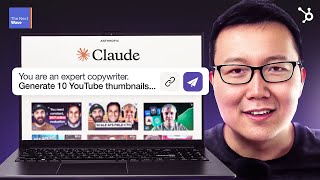
Peter Yang, a product manager at Roblox, shares prompting techniques that actually work: store long prompts, give many examples, ask for step-by-step output, include negative examples. He walks through real prompts for YouTube thumbnails and product specs, and explains why Claude works best for his team.
Chapters
When it comes to prompting, are there any specific, like, tricks or tactics to, like, actually get decent prompts?
It surprised me. It behaves kind of like a person. Right. Like, I think it's really valuable to give it a bunch of examples.
Are you going to give us all those prompts or.
Well, yeah.
Do you have any hot takes on where you see all of this heading?
The best AI features are actually like, smaller, more detailed AI features that actually just, like, make the core workflow easier.
Hey, welcome to the Next Wave podcast. I'm Matt Wolf. I'm here with Nathan Lands. And today we've got another amazing guest for you. Today we're talking to the principal product manager over at Roblox. He is the writer of Creator Economy. So, and today we're going to dive into some real actionable tips that you can use to leverage a lot of the AI tools that are out there. In fact, in this episode, Peter breaks down step by step, how to use specific prompts to get things done in your daily life. Like, he actually walks us through how to type the prompts and why these prompts work. We're also going to dive into all sorts of different use cases and ways that you could leverage these AI tools in your business. We've got some amazing stories that me and Peter and Nathan share about how we're using AI in your own business. I really think you're going to enjoy it. So let's go ahead and jump on in with Peter Yang.
Hey, Peter. Welcome to the show. Thanks so much for joining us today. How are you doing?
Yeah, I'm doing great. It's great to hang out with you guys.
Let's just dive right into this and learn a little bit about you. So you're lead of product over at Roblox and you're an AI enthusiast. You know, what we want to talk about today, I think, is some really actionable use cases for AI. You seem to have figured out some really good ways to leverage AI to just sort of make your life and your work easier and faster for you. So I think with this episode, it would be really fun to kind of lean into that and talk about some of the really cool use cases, because there is sort of this narrative people on the peripheral of AI, maybe not the people that are, like, in it, using it every day, but the people seeing all of the AI news going, eh, it's not really useful yet. Like, what is? What can AI do for me? Those of us are using AI every day to see the power, but I think a lot of people are still kind of going, I don't know how to use this in my daily life yet. So let's start as like from a content creator perspective. What are some of the ways that you're leveraging AI from as a content creator?
I use it for a lot of things. So I have this doc called like my AI writing assistant. It's just a Google Doc and I save all my long prompts there. Right. So let me read you some of them. So I have a AI prompt for making a, like a clickbaity LinkedIn post. I have AI prompt for generating YouTube thumbnails.
I have AI prompts for editing my newsletter. I also do these interviews, these podcast interviews. And it's kind of like a pain ass to clean up the transcript afterwards. So I have an AI prompt for that.
Are you going to give us all those prompts or.
Yeah, maybe if you buy my $3 prompt package.
Your course.
I'm just kidding. Just kidding. No, I'm just kidding. I also use AI to kind of like give me personal advice. Like, you know, kind of like act like a personal coach. I give a bunch of information about myself and I just ask it for advice.
I'd love to hear some of the prompts. I mean, you mentioned one for helping with like titles and thumbnails. I mean, I do a lot on YouTube. The next wave is on YouTube. Like, can you give us a sneak peek of some of these prompts?
So basically the prompt is like, you're an expert copywriter, you know, your goal is to generate 10 YouTube thumbnails and title combinations based on this transcript that I'll share with you next. Right? And then each combo should be two separate lines each. And here's some instructions. So common patterns create a curiosity gap. Use numbers to make claims more compelling. Use provocative or contrarian short quotes to grab attention. Imply insider knowledge is being revealed.
Highlight impressive transformation. Use you to speak directly to the viewer. And. And then I include a list of all the best thumb, thumbnail and title combinations. Right. Like both from my own personal channel and other channels.
I mean, that's really cool. When you do enter these prompts, where are you going? Is it. Are you using ChatGPT? Claude Llama? Like, what's your go to?
Oh, I have a churn from ChatGPT. I stopped using it.
Yeah. So where are you going?
So I primarily use Claude now. I use Claude every day. Sometimes I use Perplexity, but mostly Claude.
Yeah, I love Claude. I actually really, really love the projects feature because some of these things that you're talking about, you can just kind of save them as a project and then use them over and over again. Like, I do something like, pretty similar. I basically made a giant spreadsheet of like, all of my favorite YouTube headlines that I've come across. I've actually had a Google sheet going of all my favorite YouTube headlines for like a couple years now, just as like a sort of swipe file of headlines. And I was able to take all of that list of headlines, throw it into Claude, and let Claude sort of analyze what headlines, like, what are the patterns in these headlines that seem to make them work? And then Claude is really good at generating new headlines based on that information, it seems.
Yeah, it's fantastic. I mean, unfortunately I've noticed a pattern where like, you know, you basically, it seems like people on YouTube really want to make money. So you have to mention, like, this is like a billion dollar opportunity or like, you know, I wish I knew this earlier. So sometimes it gets a little bit too clickbait baity for my taste. But yeah, it's still useful. Oh yeah.
I mean, like, as a YouTuber myself, that's like one of the balances I'm constantly trying to figure out is like, how do I make a title that like, grabs attention so people want to click on it. I want to bait the click, but I don't want to be too hypey where people click on it and go, wait a second, I feel duped based on what that title was. That feels like of the hardest balances.
That's the same thing on Twitter and LinkedIn too, right? Like, I, I've tested, like, doing threads where it's like, I don't want to be overhyping something. I've, I've tested a thread like that and then tested one where like, I super hype things up or mention money or whatever. And then like, they do way better every single time.
So when it comes to prompting, like, are there any specific, like, tricks or tactics or tips you give to, like, actually get decent prompts?
A couple things that I try to do is I try to get it to proceed step by step, right? So I think it's really valuable to give it a bunch of examples to make it more personal. It's actually incredibly bad at just generating random shit from scratch. You got to give it as many examples as you can. And then what I like to do is I like to actually do two steps. So first look at all the examples that I give you and give me a list of bullet points of some common themes from These examples and then go ahead and edit my thumbnails or edit my newsletter posts or edit my stuff. And it seems to do pretty well with that.
Have you give me negative examples, like, here's something that's bad as well. That's what I've tried doing. It seems to work pretty well. Here's something that works well. Here's a format I like. Here's something that I hate for some reason.
It likes to use semicolon a lot. So I tell you, stop using semicolon, for God's sake.
Yeah. Stop delving into everything.
Stop delving. Yeah, there's like. There's like, definitely sort of common words that when you let it just write for you, you're like, all right, I can, like, I. I see it on Twitter all the time. I see it in blog posts all the time. It's like, I feel like those of us that are in AI now that. That pay close attention, can spot ChatGPT written stuff just based on the language it uses.
Yeah.
You mentioned that you always tell it to think through step by step.
What's the logic there? What's the reasoning? You're telling it to think step by step. Shouldn't an AI just do that naturally?
It surprisingly behaves kind of like a person. Right. If it's able to kind of summarize or do a step first and then do another step, it turns out that it does it better than if you try to make it do everything at once. And also if you flatter a little bit, saying, like, you're really good at this, or like.
You gotta have confidence in yourself. Give me like an 11 out of 10 answer. You can do it and I will try harder.
Let's talk through what AI is really good at. What have been some of the best use cases you've found for some of these large language models? I know you mentioned some as far as content creation for titles and thumbnails and things like that. But let's. Let's like expand it. Let's. Let's like, break open the floodgates a little bit and like, share with people who might be thinking like, I don't need AI in my business. I don't need AI in my, like, sort of daily life. What are some of the really cool use cases that can really help people if they just sort of lean into it a little bit?
I think the most common use case, so people think, like, AI is really good at, like, generating stuff from scratch. And I actually don't think it's the best at that. I Think what's really good at is if you have a bunch of information that you just don't want to read.
It'S really good at helping you feel lazy. Right.
I don't want to read all this shit or this whole post, so I'm just going to paste this stuff in and give it some constraints. Hey, give me the main takeaways in five lines. Or when I'm researching for guests for podcasts, I like to, I don't like to watch their past YouTube videos because I don't have time for that shit. So what I do is I just take the transcript from that video and I paste it into AI and I tell it to give me a list of nested bullets with the main takeaways and also include some quotes from the guest. And then it's basically like watching a one hour podcast without actually watching it. Right. Like, I can get the tlDr in like five, five, five minutes. Yeah, I mean, hopefully people don't use it for this podcast. But, you know.
Is there any easy way to get the transcripts with AI yet? Or do you have to like manually go download them and then you're copying, pasting, or uploading a file or.
I think there's some plugins, but I just go to YouTube and like copy and paste the transcript and I paste it into Claude to do it.
Yeah, you can use tools like, like Descript as well. And then I'll. A lot of times what I'll do too is I'll say, you know, I don't want to ask the same questions Lex Friedman asked Elon on this podcast. Based on this interview, what are some gaps in the conversation? What are some interesting things that I can ask this guest that weren't asked on this other podcast? And it actually helps find some new topics and side chains that they didn't get into. And I find that to be really valuable.
Yeah, that's super valuable because I think it's just so much easier to edit something like edit what AI's questions are or edit something from AI than to come up with from scratch by yourself. So it's a lot easier.
Look, in the next 30 seconds, I'm about to let you in on something that will completely, completely change your marketing strategy with AI. Back when we met with Greg Eisenberg, he summed up the widespread fascination with AI perfectly. Everyone from your barber to Jeff Bezos is interested in AI. So if you want to drop some AI knowledge during your next haircut, HubSpot has a new trend report that is packed with Original research and data on all the AI trends to watch for this year. This PDF is the ultimate resource for you. You'll learn the top 5 AI marketing tools everyone's talking about, the tools that are driving significant return on investment. And it answers the question on everyone's mind, is AI helping or hurting your career trajectory? You can steal the research findings from this report to revolutionize your business strategy and transform the way you work. So if you want it, grab your free copy from the link in the description below. Now back to the show. What are some of the other ways that you're using it to, like, really leverage your time?
So in my product job, we have discord or we have communities with a bunch of customers and we do alphas and betas with these customers. And sometimes I'll come back the next day and there's so many messages to read through, so I just copy paste the whole thing. I'm like, hey, what do people talk about? Or maybe someone tags you on a Slack thread that's like 50 messages deep and they're like, hey, Peter, what do you think? I'm not a real shit. So let me summarize this stuff. Like, what has been discussion so far, right? Like, people on Twitter keep sharing these templates about, like, oh, here's like 9 and 9 product spec templates that you should follow. Like, all this crap. I'm like, why even write a prospect? Just get AI to write. Write it for you. Just like, I actually tried this. I had like a few bullet points of like a product feature that I wanted to build. And then I basically started some discussions internally and some discussions with customers and they gave me a bunch of feedback and then I was just like, okay. Then I pasted my bullet points and all the feedback into AI be like, okay, now make a prospect for me.
And that worked well.
Yeah, it worked pretty well. I mean, I also gave it a template that I use for my specs, but I mean, it's pretty good.
Yeah.
And the last thing I'll say is, like, at work, at these corporate jobs, it's very important to become very good at internal communication, right? There's people who are not good at this. They are very verbose or they write these walls of text and before I would tell them to like, okay, here's some tips. But now it's like, hey, why don't you just put your shit into AI first and then it'll just make it more concise for you. There's like no excuse not to be super wordy.
Yeah, yeah, I do that a lot with my newsletter as well. And I think you mentioned you do it with your newsletter also, where I'll write my newsletter that I send out each week and I'll pull it into Claude and then I'll say, can you proofread this, Find any grammar mistakes, spelling mistakes, but also proofread it for readability, make sure it's as easy to read as possible for people and it will actually go and trim out some of the fluff for me and clean it up and it might add some delves here and there which I got to go back in and remove. But for the most part it does a pretty good job of like bringing it down to just the meat of what I'm trying to put out.
Yeah, it's fantastic. Especially if you give it like your best posts from the past that you're proud of. Yeah, it's really good at kind of matching that style.
Yeah. Personally I don't know if you found a way to do this, but personally I haven't found a way to make AI sort of write with my voice, you know, so like I can upload five of my emails into Claude and say write it to sound like me and it will.
Like it might use some of the same words but for the most part I'll read it and it won't sound anything like the way I write. But like, have you found a way to make that kind of thing work?
Not so much. I think it's better at editing my writing. Like no matter even like a really crappy draft. It's a lot better if you give it something than if you just try to write from scratch.
Now are you using any of the other AI tools that are out there? I mean, so far we've pretty much talked about large language models and chatbots like Claude and ChatGPT. Are you using other stuff outside of the LLMs?
So this is also why I think the AI startup thing is kind of like overhyped. Because the tools I actually come back to every week are pretty much much Claude and maybe Perplexity.
And that's it.
The other ones, there's some really cool stuff out there, right? There's like Suno for generating music, there's like Runway for generating videos and obviously midjourney, but I don't use it. These are stuff that I tried is kind of a novelty and then I kind of churn from it. There is one thing that I do somewhat use on a semi regular basis, which is this app called Super Whisper. It lets me go outside and take a Walk and talk to my phone and start a draft that way. So that kind of helps a little bit.
So basically you talk to it. It transcribes everything you say and then summarizes it or bullpoints it.
Yeah, it transcribes everything. It does have a local LLM that it uses to summarize stuff, but the LLM kind of sucks. So what I usually do is I just put. I just paste the transcript into Claude and tell it to make it better.
Yeah, I mean I use a lot of the like AI art stuff. I love, I love using like Mid Journey and Leonardo and tools like that for my thumbnails because for me it's like very Meta. I make YouTube videos about AI, so my thumbnails are mostly made with AI as well. And it's just like, I love that sort of like meta ness of it all.
Yeah.
But yeah, I totally agree. Like, I love Runway, I love Suno, I love playing with these toys really. But I don't really have a lot of practical use cases for them. I've used a couple Suno videos and like, or songs in like the background of some of my videos, but it's pretty rare that I'll do that. I. I think Runway and Luma and that kind of stuff is really cool, but it's not quite there yet still for me to feel like I want to use this as like B roll. That looks realistic, you know, like, I.
Think it's, I think it's getting closer though. I mean, like if you look at a year ago, it was so horrible and now it's like, it's pretty good. It's not good enough yet, but it's, you know, it's pretty good. I mean, there was that commercial. Was it the Toys R Us commercial that they used? Yeah, so AI video. So I mean, I think we're going to see a lot of those actually start to be used and, and even though, you know, maybe the AI startups are overhyped, whatever, but like that's kind of the nature of vc, right? It's like you need to be doing these experiments. It's good for the industry as a whole to be creating these startups and trying things. And yeah, most of them will not work, but hopefully they will all kind of move things forward for, you know, for everybody.
But the, you know, like the risk profile of the VC is very different from the founder. Right. The VC can just like have one out of 100 work, but the founder, if you put on like some sort of AI wrapper and doesn't work, then you're kind of screwed.
Yeah, yeah, yeah.
You know, so, yeah, I mean, it depends. I mean, like, you know, I've done a few startups. I mean, typically, even if your startups fail, there's other opportunities that arise because of that. I mean, not always. If you do something very uninteresting and you're. And you do a really poor job, then yeah, you, you might be somewhat screwed. But you. But usually there's a network of people and there's other opportunities.
But yeah, anyways, and I'll say one more thing about. Because a lot of these bigger companies are also trying to build AI, right? Not necessarily the Google and Microsoft side of the world. And I think what I've noticed is that the best AI features from these bigger companies, if I already have a product that people love to use, the best AI features are actually smaller, more detailed AI features that actually just make the core workflow easier. You know what I mean? Like, as opposed to actually like trying to build some sort of chatbot or like agent feature, just like think about your core customer journey and like pick the areas where AI can actually help you save a bunch of time or like make things easier. And those are kind of like the features that work the best. And an example of that is I talked to this product director from Shopify. His first AI feature was like, just generating product descriptions, like helping the merchants generate prod descriptions for like their hundreds of SKUs, you know? Right. And it's not super sexy, but like it saves them a ton of time.
Yeah.
So they're using it all the time.
I don't know if you're a gamer or not. Nathan and I are both gamers, so we talk about games from time to time. But did you hear about the new like, college football game that EA put out? But they used AI to sort of develop the game at rapid speed.
No, I am a gamer, but I haven't heard of that yet.
So basically, like in, you know, in the, in the NFL, right? There's hundreds of players, maybe in the thousands, but like not as many players that are in college. Right. In College Football and NCAA, there's over 11,000 players. Well, EA just released a new game with like pretty much all of the Division 1 college teams in that game. And they had to figure out, how do we get 11,000 players into this game? So they used AI and they basically took a single headshot of Every single. All 11,000 players and used AI to create characters that had each person's face on it. So like the Build of the person may not be exact, but they were able to get the face of all 11,000 players by using AI and just putting them all into a model that then generated a 3D character with that person's face. And I just thought that was like an amazing use case of, like. I don't really think it put anybody out of the job. It just made a really, really tedious task. Way less tedious.
Yeah, exactly. Those are like the perfect use cases. Just like doing something that no human wants to do, basically.
So there was a, there was an article that you wrote and I, and I saw you tweet about it and one of the bullet points of the article was, you know, why some AI startups gain traction whilst other AI startups fail. You know, what are your thoughts on that? Like, why do some AI startups gain massive traction and everybody's talking about them, while other ones just sort of fade into the night?
I think with AI startups there's definitely a hype cycle, so you might get a shit ton of users when you launch or you might even get a bunch of money, but then the people might just move on to the next thing. I think retention is very difficult with these AI startups. And I think a failure mode is a startups that get a ton of users and they go to VCs and they're like, okay, give me more money. And then they have this crazy valuation, right? Yeah, and then they had this like AI product for, you know, sales or marketing or something else. But then like the foundational models are always getting better and then just there's like no point in using them anymore. Like, what's the point? And because their valuation is so crazy, it's going to be very hard to actually survive and make a, you know, continue on. I mean, the ones that actually. You know, there's this guy called LevelCo on Twitter, right? Like he has like a headshot AI or something. I don't think he raised any VC dollars, but he just found like a really good niche use case and he's making a ton of money from it. So it's almost better to just like bootstrap to a certain extent some of the stuff.
Yeah, I think even he mentioned he's been using more AI himself versus building an AI product recently because he had a lot of churn of having these. Here's a AI for headshots or whatever. I know that's one of his products and he has other ones. But yeah, he said he was seeing huge turn because, yeah, as the technology gets so good people can very quickly copy you and make a similar service and make it cheaper. Right.
Well, you can do it for free in Meta now. Right. Like, so Meta just rolled out their Imagine Me feature like last week, where it looks at all of your headshots or your, you know, pictures of you inside of your photos on Facebook, and it essentially trains a model and you can say, imagine me riding a dragon and it puts me on a dragon. Right. So, like, tools like that just overnight seem to, you know, make companies obsolete, that we're selling that service. Right. We. We've seen OpenAI do that over and over and over again too. Right. You have like, so many tools that came out that were like, summarize my PDF tool or chat with my PDF tool, and now you can do that in the free version of cloud, in chat, GPT. Right. There's like, Yeah, I feel like a lot of the struggles of, like, the AI startups or the big incumbents can just roll it out and they've got so much capital available to them that they can do it at, you know, free or practically free.
Yeah, exactly. I mean, but, but then again, you know, if, if you bootstrap your PDF startup and you make it like a million dollars and then, you know, it becomes obsolete, like, that's not a bad outcome, right?
Yeah, yeah, yeah. So you just have a window of opportunity that you kind of, you know, capture, I guess.
And Zuck is like, you don't want to compete with Zuckman. He's like, unstoppable.
Meta is going to keep on putting out a lot of this open source stuff and just, for lack of a better word, democratize it all.
Yeah, I mean, I thought OpenAI was untouchable, but with Zuck and these other.
Players involved, yeah, he's very strategic. I remember back in the day, I had a lot of friends who were making fortunes on social apps and social games on Facebook, and Facebook really took advantage of that to grow at that moment. And they're like, oh, Facebook loves this. And there used to be parties where you go hang out with Facebook employees and everything. And then overnight when Facebook didn't need that anymore. No, you're all gone. Yeah.
So I would be, I would be.
Mindful of like, you know, just, you know, yeah, sure, Zuck has changed or whatever, but, you know, how much do people change? So, you know, yeah, sure, it's great he's doing all this open source stuff, but who knows what the real objective is?
I mean, he's into Win win, man. He seems like, you know, do you.
Think this is, this is a debate, you know, Nathan and I have had, and we've had it with other guests as well. Do you think, do you think OpenAI is falling behind?
I don't want to speculate too much, but I do notice that they went from just like dropping these products to launching stuff with waitlists and be like, oh, I'm going to roll this out slowly. And maybe it's because of a lot of drama they had, but it does seem like they've slowed down the product velocity. I mean, in comparison to Anthropic, which is like shipping stuff left and right.
I'm still of the belief that they're so far ahead and the new model is coming and it's, it's gonna make anthropic stuff look kind of silly in comparison. But there's also the election coming up. They brought on people from the government who are now part of OpenAI, apparently, you know, and so I think, I think we're gonna, as soon as the election's over, we're gonna see, you know, GPT5 and it's gonna be mind blowing.
Yeah, yeah.
They've also done a really great job with like, partnerships and, and marketing. Like, you know, I saw some stat like to. To. To. To us. Like, in my opinion, like, Claude is clearly better right now, but I think way more people are still using ChatGPT. Oh yeah.
There's like, if you go and look at like Google Trends, right, and you type in Claude or anthropic Claude and you type in chatgpt, it's nowhere even close. Claude just looks like a flat line down at the bottom compared to the amount of people that are still searching.
I mean, it's even a term. Right. Like in this conversation, Matt used the term chatgpt, like as a generic.
Yeah.
You know, like for like LLMs. Right. Where you could have said Claude but you said ChatGPT.
Yeah, yeah, yeah. It's become the Kleenex of AI or the band aid of AI. Right. Like people just use the brand name now is like a synonym for the, for the, you know, the underlining tech. But, you know, I, I don't know. I have a feeling that OpenAI isn't as far as ahead as I think Nathan believes. It's one of the areas that I think we kind of go back and forth on a little bit. I do, I think what we're seeing, but it's a very sort of closed bubble thing. Right. Like, we all pay attention to AI on almost a daily basis, so we're seeing it, but I get really, really frustrated by OpenAI announcing stuff but then never shipping it. Right. Like the GPT4O voice. We're still waiting, Sora. We're still waiting. You know, search GPT now, that's only announced last week, but nobody's got access to it yet. And, you know, among us AI nerds, that gets frustrating to me. And, yeah, I don't know. I don't know if they're as far ahead as everybody believes they are. And Elon Musk claims that he's further ahead because he's got the largest data center on the planet now. And I don't know. We'll see. I just like watching it all play out and eat my popcorn.
Yeah, I mean, I only have 20 bucks a month to spend, so whoever's.
Ahead, I'll spend on.
You know. One of the. One of the other topics that I think would be interesting to talk about is like, where we think all of this is going. Do you have any sort of, like, bold predictions? Do you have any hot takes on where you see all of this heading?
One of the things that I've been talking about a lot in my product stuff is, like, in this company is like, people just want to manage more and more people, right? Like, you know, getting more headcount and managing more people is seen as clout. Like, you have more responsibility, and I think that's just like, pretty toxic. And at least two companies bloating and eventually having to do layoffs, right? So my hope is with AI, and I think maybe Dan Shipper coined this phrase, but instead of managing people, you have people who manage AI agents, or you basically have individual contributors and crafters who can actually get a lot of shit done and do a lot more than they can before. And then you can keep the company small. If you keep the company small, there's less bureaucracy and bullshit and everyone can actually just like, believe in the mission and like, you know, execute on a product. So that's my hope.
In the age of AI, are product managers can be more important or less. Because I could see it going either way, right? Like, like, yeah, product managers always thought it was almost like a, you know, you know, sorry to say this, but like a, you know, necessary evil that you need the product managers to manage all these, These, you know, individual contributors. But like, I Wonder, like, are PMs not going to need those individual contributors as much and they can go off and create their own projects or features at companies?
I mean, product managers as much value, you know, like, it's hard for AI too. I'm just kidding.
Yeah.
Only product managers cannot be replaced. Okay.
No, yeah, gotcha.
I hope, I hope that like another thing that has happened as companies got bigger is like product teams have like before we're just like a pm, a designer and an engineer. And now there's like so many different roles. Like, you know, user, researcher, there's like data analyst, there is product ops, product specialist, there's all kinds of crazy roles like agile coaches kind of crap.
Yeah.
But people will learn to wear multiple hats. Like for example, I would love to become like a hybrid designer PM as opposed to just a pm. Or maybe like engineers can design too. But product managers do have one skill which is they're really good at, you know, writing detailed requirements. Right. So in some ways that's kind of like prompting AI. Right?
Yeah. You said the AI could do that for you. Right. Which means, I guess you have to go up and get the questions and get the spec. Yeah.
You know, if people are more productive and then companies can do, you know, do the same task with less people. Where do you think the like new jobs are created?
I mean, like, you know, one outcome is like AI and robots would do all the real work and then all the people become like influencers and just try to entertain each other.
That's what I'm banking on.
That's a very possible outcome, I think. But yeah, I don't know, man. I feel like AI is definitely starting to disrupt the white collar jobs. And then I think once we have robots that can do stuff in the real world, that's going to be when the real disruption happens, man. Instead of hiring a nanny, I can just hire a robot or something and.
It can teach my kid. At the same time, it has all this context about my child and what they know and their education level, speaks.
Every language, so they can, they can teach Japanese and English, you know.
Yeah, yeah, yeah.
I mean, we all have kids, so it's like, it's hard to imagine how education will change. I mean, the current system is so integrated. You know, I actually a friend of mine sending me this toy called Dino that has like a. It's like a stuff stuffed dinosaur that.
Has a. I heard of that.
LM building or something. So I'm going to try it with my daughter and see if she can ask it, you know, she can learn from it.
Yeah, I mean, I think the future of education is probably what Andrej Karpathy is leaning into. I don't know if you, you saw like his announcements about his New program. But it's like one teacher will be able to teach millions of people in millions of languages by sort of creating the educational course once, training it into a large language model. And then basically everybody has access to that teacher at scale because they have access to that large language model that can speak all the languages and, and understands the information that the teacher gave it. I mean, I don't know how that fares for, you know, teachers in the real world, but that to me feels like the future of education.
Yeah, I think you. I'd love to see like a combination of that and then you have like a real teacher, like taking the kids out to nature and talking about, you know, teaching them logic, teaching them how to think, how to be a good person, like having conversations, you know, and like the social aspect. And that's what the teacher does, you know, it's almost like, you know. Yeah. So that's what I'd like to see personally.
Yeah. I think one missing piece is in a classroom environment. The kid is forced to sit there and listen to the teacher. But what is the interesting motivation for the kid to actually talk to AI and learn stuff? Maybe just about topics that they're interested in. There's me some sort of motivation there.
Yeah. Is there anything just in the AI world that maybe you've gotten an early preview of or that you think is in the pipeline that's coming that you're really excited about? What excites you the most about the future of AI and where it's all headed?
I like this startup called websim. Oh yeah, Web AI.
Yeah.
It's kind of similar to Roblox. Like they let you just like type in some stuff and create a web page and people have created some really great user generated content from it. So I think there's like a lot of legs there. Usually it's stuff that feels like a toy that you want to play with that potentially ends up being very big. Right.
Yeah.
You know, I'm just hoping the foundational models get even better than they are today. And you know, I already talked to you like this stuff. I already talked to Claude more. If I'm being honest, I probably talk to Claude more during the day than my wife.
So.
Yeah, well, I'm using AI to help me translate things to talk to my wife, so.
Oh yeah, yeah. How did I tell her I don't want to do this without making her mad. Right?
Yeah. No, you know, she's Japanese and my Japanese is very, very basic. It's getting better. I'm actually using AI to help teach me, and it's also helping teach her English. But for, like, deep conversations, we are still. We were using ChatGPT. We're now using Claude.
You know, you should look at Nathan. They have, like, Samsung just released these new EarPods. They look just like the Apple AirPods, but they're called the Galaxy Buds 3, and they actually have, like, AI translation built in. So you could be wearing AirPods, she could be wearing AirPods. You can have conversations, and when you speak in English, it will automatically translate it into Japanese right into her ear, and vice versa. So I don't know. Something to look into.
I do wonder if that's going to improve our relationship or not.
I will. I will stop it from translating if it thinks, like. All right, maybe you shouldn't say that.
Oh, no, it does that.
Yeah, there you go. AI is going to save some marriages. Awesome. No, this has been a great conversation where. So I know you've got a podcast and YouTube channel and you're pretty prolific over on Twitter.
X.
Where should people go learn more about you and check out what you got to offer?
Yeah, just go to my profile X for different memes and then for my writing, go to creatoreconomy. So that's where I share my writing and my YouTube channel is like a noob channel. It's like, just getting started.
Awesome.
Well, thank you so much for joining us today. This has been a great conversation, and we really appreciate you taking the time to today.
All right, guys. Yeah, it was plenty. Pleasure being here.
Thanks, Peter.
More from Matt




AI News: Dots, GPT-6.1 Sol, Sonnet 5.5, Gemini 4, and everything you need to know




