What’s Really Powering AI (Nobody Talks About This)
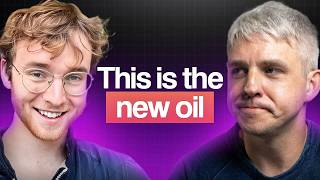
Evan Conrad, CEO of SF Compute, explains why data centers and power infrastructure are the real foundation of AI. US data centers already account for 1% of GDP, and adding 100 GW of power capacity is a major constraint. Conrad's company treats compute like a financial asset, similar to real estate, to lower costs and accelerate buildout.
Chapters
You know how everyone's obsessed with the new AI models, agents and mind blowing apps dropping every week. Well, today we're going deeper beneath all of that. Underneath the hype, the headlines and the glossy demos to the actual metal and concrete foundation that makes it all possible. We're talking about compute infrastructure, the biggest physical build out in modern history. And the scale of what's happening right now is absolutely wild. This is a fundamental transformation of how the world works. Let me show you what I mean. Apollo's chief economist says Data center buildout added 1% to US GDP in Q1 2025. That's insane. People are now putting data centers into space and every major country right now is racing to build their own AI infrastructure. And that's actually what I've been working on for the last several months now. So today I brought on the smartest person I know in data centers. Evan Conrad, the CEO of SF Compute. Understanding this layer of AI is like understanding the foundation of the Internet in 1999. We're going to talk about the US versus China, why GPU economics are completely, and what this all really means for the future. The next trillion dollar opportunities will be decided here. Let's dive in with Evan Conrad from SF compute. Cool. Evan, thanks for coming on here today.
Thank you. Thanks for having me.
You know, so I've been seeing all your, your posts on X about like how fast your company SF Compute is growing. You know, I think, you know, you said you're growing like 3x, 5x 7x. It sounds like SF Compute's been taking off. And then in the meantime I've been seeing all this news about Compute, like everywhere I look, you know, like Sam Altman's talking about creating factories. They're going to build 1 GW of compute per week, which for people who don't know that is a gigantic amount of compute. Elon Musk is saying he's racing to 100 gigawatts of compute in the next few years, which is just a crazy number. You know, one thing I've been thinking about a lot is, you know, I studied Mandarin in Taiwan, so maybe I'm biased, but and had some connections with people in the Chinese government in the past and things like that. And I definitely become a person who's like, okay, America needs to beat China, especially in AI. I wonder what are your thoughts on like where things are at with like the US versus China in terms of, you know, obviously the US has Nvidia, but it looks like now China's, you know, Huawei's creating chips, like are they close to being competitive? And since China has more power, are they actually ahead or like how do you see that?
My guess is you're going to run out of power before you're going to run out of chips. Basically the total capacity that people have been throwing around is like more than the current load of the US.
At any given rate. So the chips gotta go somewhere else or you gotta make more power in the U.S. would that be like to.
Serve like one country? Is that like. Or would that be like enough to serve the whole world?
Like it's like 1.3 terawatts in the US and so if you're talking about adding another 100 gigawatts, that is a really meaningful amount that you're trying to bring on in like a year or two. You're talking about.
And that's just for Xai.
Yeah, and that's just for like Xai. You're talking about like a single industry increasing load growth. If you were to put all the chips in the US you're talking about like a single industry increasing load growth by like 10 to 20%. And the rate of growth of that, if it were to continue would like double the load growth in the US or maybe to put it a different way, I think there's about a hundred nuclear power plants in the US you're like doubling that every year, like every few years or like over, over a reasonable period of time. But yeah, that's in order to bring on these chips, you either need to spin up power plants faster, especially really high power density power plants, so things like nuclear power plants. And I think for the US in particular, you probably don't want the chips to go outside the U.S. like, you probably want as much of it as possible within the US Partially just for economic reasons, but also because if you start to use these for higher security reasons, and I think there's reasonable like case to make that you would want to do that. You really don't want somebody to walk into a data center with a gun. Basically, like the physical security of the data center probably matters quite a lot. And you're just way more likely to maintain the physical security of a data center if it's on US soil than if it is not on US soil. And as these things get bigger and more critical to the world and the economy, you don't want to leak the weights. And a really simple way to leak the weights is to walk into the data center with a gun. Or for a government that doesn't have A lot of, you know, norms to just sort of say, hey, data center, you need to let us in now.
Or like an intelligence agency could do some kind of operation or whatever, you know.
Exactly. And you know, even if it's a government that today seems like a US Ally, maybe tomorrow they aren't. And so I would rather have them in the United States than not in the United States. But then also you've got the US And China competitiveness concerns and to solve for that, you need to bring on a lot of power.
Yeah, that, that's, that's where it feels like China has a huge advantage. Right. It just feels like with their government structure, they will just move way quicker. They'll just like, yes, we're doing all this. Yes, yes, yes. And they don't have to talk to anyone else. It's like literally you just, okay, getting started now, like, when are we getting started? You know, next week.
Also the, the work ethic, I think of the culture at least right now in China, I think people work quite a bit harder and, and they're expected to do a good job. And there's difference culturally there right now as well, which I think gives them an advantage.
I will say that San Francisco is probably the beacon for hard work in, in the country.
Yes. Especially now. Like, there was a bit where it had slowed down quite a bit, at least when I was there. Like when I first got there, it felt like everyone was working really hard. Then it felt like there was like a seven year period where, you know, everyone's talking about like work life balance. And I think it was because things had just matured and like, it was like, okay, the, you know, Facebook's won the social media war and this, you know, and Twitter and people had won their categories and it was just not as much competition for some huge thing that they were trying to win. Right. But with AI now it feels like everyone obviously realizes how big the stakes are. Like, okay, maybe Facebook doesn't even make sense in the future because of AI. Maybe these companies you thought they had won, like Google, maybe they no longer exist if they don't win this new race.
Yeah. I also think that it is a big enough shift for something important, enough that has caused a lot of people to just want to try more. If you think about maybe four to five years ago or the last cycle was like a crypto cycle and that maybe didn't have as much interest for a lot of folks as in it's just distinctly different.
Very different. Like I, I, I, I, I was involved in Crypto. Early on, I bought about bitcoin, you know, pretty early. Not enough, but bought a decent amount early on. And people got just so crazy in that wave of thinking. You know, when I. When I saw bitcoin, I was like, okay, at first I wasn't even sure, like, I came from, like, the game industry. So I was like, oh, maybe this is just some stupid thing that's going to just like, fizz out, fizzle out after a few months. But then I started realizing, okay, there's like, real uses in terms of rem, you know, remittances, like sending money to countries where maybe their governments control them using the currency. So that's the one use case that always made sense to me. But then after that, people made like another hundred use cases, and a lot of them honestly never made any sense to me.
Yeah, like, to steel, man, the crypto case.
Even in the cases in which there are great use cases, like, I think it actually is a very successful, like, I think just like being money and being a better version of money is like a totally realistic case, and that's like a really big and important deal. But being money or making a really great money just doesn't feel as exciting or interesting to a lot of folks. Versus, like, we're going to make robots, and we're going to make it possible for you to build a skyscraper for pennies. Because we've automated the entire system. Like, we're building the whole thing. All the sourcing of the materials, we did all the legal work automated as well. And we're mailed that skyscraper over there for the cost of the electricity. And by the way, we're also going to bring down the cost of electricity.
That, by the way, the stuff you're saying right now, I think, like, 99% of people have no idea that that kind of stuff is most likely coming.
Yeah, like, that's. That's the sort of pitch of like, what if we just. What if we just took all the costs of things and brought them to zero or just the cost of electricity? And I think that's a much more sort of compelling thing. And then also just the things that people end up working on are they just feel like science fiction in a way that a lot of other previous trends felt like we're going to do remote work or we're going to make things on mobile phones or we're going to make, you know, a bunch of characters in a social media app. And it wasn't like, we're going to cure cancer or we're Going to make a robot.
Yeah, totally. When I was a kid, I'd read like science magazines and sci fi magazines, everything else. And there was no, no talk about money. We didn't think about like, oh, it can be a new money. It's like, who, who, you know, who, you know, for most people, like, who cares? Like, you know, if you're in finance, sure. But for most people, whatever. But yeah, we definitely dreamed about robots. That was one of the biggest ones. Robots and space travel and building new kinds of buildings, beautiful cities using robots, which, you know, hopefully does happen.
Yeah, Technology used to be technology. It finally is once again, technology is technology. Right. Technology used to be the spacecraft and it used to be electricity, which was like actual technology. And I think it once again actually feels like technology. And so if you are in San Francisco, a lot of people have come here because it's once again the actual Mecca of technology.
So to get back on how the US beats China. So like, it's cool that San Francisco is working hard, but that still doesn't change it. We need a lot more power. You know, you're talking about robots. I've kind of wondered if that's the possible, you know, scenario where America could be China because we start using robots to produce these nuclear factories and everything else. And maybe if we get ahead of China. But then I see all these videos, at least on X where people are showing all these videos of robots in China. I'm like, I thought Elon Musk was probably ahead. Now I'm not so sure. Sort of China ends up ahead in robots as well. We're in trouble. And then me being here in Japan, I keep wondering, like, shabby, trying to help in some way to forge some kind of alliance between the US and Japan. Because I think Japan would be a natural ally to help build those robots to be China.
Yeah, I think the US just needs to get rid of its like autocracy thing or like feedoacase. I don't know how the right way to pronounce that is. And this is mostly a state or city level thing. Frequently like in California we have ceqa, which is basically just like a law that says when you want to build something you need to build, you need to prep this document. That's like every possible environmental thing that could ever go wrong, even if it's not actually a real thing. Because if you don't prep a long enough document, you can get sued for not prepping a long enough document. So like you build a bridge or something and your bridge needs to identify Every single possible bird species that could have ever had like flown into the bridge or whatever. And it's like all that stuff I'm.
Sure had good intentions when it started, but now over time it's gotten more and more. More ridiculous.
Yeah, it had good intentions. A lot of, a lot of California and in general, a lot of the US's problems, I think, are good intentions gone wrong. And I think oftentimes people are quick to blame a person when actually it's just like a lot of times you just make mistakes.
When you're saying all that, I'm sitting here thinking like Hitchhiker's Guide to the Galaxy. What is it, the, the Gorgons or something like that. I think maybe I'm saying it wrong, but like they, you, you need like a stamp of approval for like almost every single possible thing. It's like they even do anything. It's like, well, here you need approval for this. Do you have this approval? Do you have this one for this? And it's just, could be the most basic thing possible, but like you need approval for everything. And it feels like that's what America is drowning in right now. And I'm not sure how you get out of it because you kind of need approvals to, to get out of all of this.
A lot of the progress studies folks seem like they're pushing a lot that seems very effective. There's like new ways to organize groups of people. There's a thing called like Sway app or something which had got a whole bunch of folks. It's like a way to basically organize a bunch of people to vote on like niche issues, which seems like a useful thing, but I think you just, you just need to try.
Okay, let's be honest. Your AI prompts aren't giving you the results you deserve, but with a little coaching, you can transform from basic prompts to engineering conversations that get you exactly what you want from ChatGPT. That's what this Playbook delivers. Not just random prompts, but a step by step system with the exact techniques top AI professionals use every day. You'll have your own personalized prompt engineering system that delivers consistent results. Get it right now. Scan the QR code or click the link in the description below. Now let's get back to the show. I had some selfish questions, you know, so I think I told you. I'm planning on announcing that like the new direction of Lore.com is I'm going to be trying to acquire data centers in collaboration with Jesse Tinsley. Jesse's this guy who has built up mainstreet.com and employer.com he's basically done a roll up of like 10amazing like HR recruiting accounting companies. And he's done a really great job of that. And it's kind of saturated that market. And we're looking to kind of, you know, take some of the financial engineering he's learned and apply that to acquiring data centers and operating them. But we're still like at the idea phase and figuring out like, okay, what is our actual plan? And we have different ideas. If you were me, what would you be looking at? Would you be looking at like acquiring crypto miners and repurposing them or like finding places where maybe like the hyperscalers, they're trying to get so big that they had smaller facilities they want to offload or I don't know, how would you approach it?
It depends on what you want to do. Let's see.
Let'S say you're doing both the data center and the chips inside. We know more about the chips inside part. The things I would try to do is do everything in your power to reduce your cost of capital. And if you can own the data center and own as much as your supply chain as you can because.
You can compress your cogs by basically removing the margin from the vendor you just paid. So that's number one. Number two is you need offtake agreements for as long as possible. So you need long term contracts from somebody who's going to pay you before you buy the tips you should get.
That's what SF Compute comes in.
Or that is true, like SF Compute's business. So I joke about this on the Internet that nobody knows what SF Compute does. What SF Compute does is we're an offtake machine. We generate offtake for people who are setting up clusters. That's, that's what we do. And it's like not at all obvious. And part of the reason it's not at all obvious is because the way that we generate offtake, the way that we're able to get people long term contracts is by running a thing that looks like a cloud provider. And like no customer who has ever come to us looking at us like a cloud provider ever knows the word offtake or like they don't care. And so we try to very hammer focus on exactly what those customers care about. And then on a BD sense like us just going and talking to people, we pitch, hi, we're your offtake provider. Like we, you're the offtake generator. That's, that's the goal of the company, we're like a machine that creates offtake.
So are you partnering with a lot of, like private equity groups and stuff like that? Like, what are you seeing, you know, who are the main kind of customers there?
So we work with folks who own clusters and there are lots of different reasons why someone might own a cluster. But yes, there are many folks in traditional finance who see COMPUTE as an asset class and they would like to invest money in that asset class. Kind of like what you're considering as well. Our goal is to partner with folks like that and basically get them offtake. Basically saying, hi, if you set up a cluster, we will make sure that you get a contract on it at reasonable prices, so that way you can finance it correctly and you make money on it. Our goal is to try and help people make money on their clusters. So another caveat here is that we typically run the clusters. So to some extent we look like a property manager for GPU clusters. So that's the other complexity is we make all the software stack that a core reave or a lambda might have made for themselves and then we license it to people or we use it to operate their clusters and sell them. That's how we work with. So someone would set up a cluster, we let go, take over the cluster for them and sell it for them and give them offtake so they can.
Focus more on treating it like a real estate asset versus having to figure out how to manage it and find all the customers and everything else.
Yeah, and then you get a bunch of money and you take that money and then you go and set up another cluster and you just print cash. That's the goal. And that's why we say COMPUTE works more like real estate. It doesn't work like startups. A lot of people try to do this thing where they set up clusters and then they try to build a great product on top and they realize the customer is so price sensitive that it doesn't matter what product they build on top of the cluster, the customer isn't going to give you any markup on your GPUs, so you can't. It doesn't work like CPUs where CPUs you could buy some CPUs and make a great product and get like a 60 to 80% margin if you want on your CPUs by just building a really great product. But no one cares about your product. They only care about the cost of the hardware in GPUs.
So I think I get what SF Compute does now, where do you see things going like in the next five years with SF Compute, like if things are working well and you're doing great, like where do you see the company?
So we think of ourselves as kind of two companies in one. One is a systems engineering company, the, that builds the really low level stack of operating a cluster. And then the other part is a fintech company that's goal is basically to make financial products that make it easier to financially engineer a cluster and get the cost of capital down quite a lot. So that's our general goal. There's lots of stuff that we've got planned for that at the moment. The order book that we built today is the, that's our key product right now. But growing that order book, there's lots of things that you can do with that makes sense.
So you think that data centers are going to become a huge asset class just like premium real estate or like commercial real estate, building skyscrapers, malls and. But they're a little bit more complicated because all the technology. So you guys kind of simplified that so the people, the finance people can treat it more just like a traditional real estate play.
Yeah, I think everybody wants to treat it like soybeans and instead it's supercomputers. And so, so let them treat it.
Like soybeans and they'll take care of the supercomputer part. Correct.
Our goal is to wrap the, wrap the supercomputer into something that looks like soybeans so that way you can very easily finance it and you can simplify it down enough so that the gears of Wall street don't have to do as much complex financial engineering. And hopefully what this means is that you end up pricing the risk of owning a GPU cluster correctly and you end up with fewer bust and boom cycles and a broadly more stable environment in which lots of capital can flow in and make AI cheaper. Which is good.
That increases the chance that America will win. Which is what I came up. Sad. Correct. Yes. Cool.
Let's make America. America's greatest asset is, it's got, it's its depth of capital markets. And if we put those depth of capital markets to work, we can outspend anyone. So let's do it.
Okay, a few fun questions before we go. And this has been fun and definitely a different kind of episode than we normally do, but just to leave with some fun stuff. So my son here in Japan, he grew up in San Francisco, but he's in Japan now, he's 12 years old. And I'm constantly thinking about what should I be teaching him so he'll be successful in the future, like. Cause things are dramatically changing. What would you be teaching if you had a son who was like 12 or a daughter? What would you be teaching them to help them be as successful as possible in the future?
One thing is that I would probably want to make sure that they're using the various chatbots, the AI bots, to teach themselves or learn. They're super effective teachers, just incredibly good at teaching you things. I would also want to quote, question them a lot. Like, the ability for them to just say kind of whatever you want them to say is entirely dependent on the person who's making it. And that seems like a thing we haven't really reckoned with super well yet. And it's often, like, completely accidental. And I think.
Are you talking about the fact that you can lead the LLMs, like, if you say it in a certain way, that they respond back based on how you said it, or is that kind of what you're.
Yeah, like you're fighting with your partner and you say, I said this and they said this. And the way you frame the question encourages the bot to probably not give you the most wise advice, but instead to give you advice that, like, is the one that you would want to.
Hear, what you want to hear.
Yeah, but if you were using the same bot just a moment ago to ask it questions about, like, hey, I, you know, have this pain in my side, and it says, oh, that's, you know, this, this disease, and you should go check it out. And then you check it out and it's real, like, but you know what I mean? Like, if you've used it previously to get very accurate information, things that seem really quite correct because it's really good at that in particular occasions, but then you asked it on something else, you know, maybe a personal life question, you assume that it will give you a lot of accurate information, but instead it gives you information that it thinks you want to hear. Because, you know, maybe it's subjective. And I think that can lead people astray.
Yeah, I think a lot of people see it like it just answers things, but like, no, it helps you think it through. And like, so if you, you need to push back on what it says too. And like, and it should be a way, like, probably almost like, you know, extension of your thought process versus just giving you an answer to do that.
Because it will totally do that, like, if you tell it critical of the things I'm saying. And, you know, don't totally take my advice either. It totally can do that. It's great.
I think that's in my custom instructions, I think.
Yeah. So I could imagine that for like a 12 year old just being more aware of that is probably useful when you're like more impressionable.
Cool makes sense. That's kind of what I've been trying to do. I need to do it more. But definitely haven't been having him use all the different LLMs and even I've had him try things like replit and things like that to create apps, which has been cool. One last fun one. So you're in a time machine. You step out in San Francisco, the year 2050, what do you see? Is everything the same? Is it all different? Is there robots everywhere?
Okay, I'll make a bunch of predictions.
First.
I think I'm probably going to build a lot. San Francisco is maybe the first place to stop building and hopefully the first place to start building again. So I think you'll probably see more taller buildings or more denser buildings. I think self driving cars will probably get rid of parking lot. So I think one of the things you might literally notice walking out the street in 2050 is that there isn't street parking. I think that will genuinely be like a thing that it's a visual thing that you will notice quite immediately. I think you probably can walk on the road really safely because of that. Like just because if everything is self driving, one of the things that happens with Waymos is you kind of just like step in front of the Waymo. Like you don't exactly but like it's fine.
It's crazy how good they are. Like I saw that, I saw that there was a guy because like in Japan, one thing I noticed is in Japan, you know, I don't know why but like, you know people, you kind of can predict what they're going to do more. But like in San Francisco it's like man, this is chaotic. Some guy walked out in the street and then stopped and checked his phone and then he turned around like right in front of our Waymo.
Yeah, because like Waymo's not going to hit you. The Waymo saw you from like two miles away. The Waymo maybe in the future the other Waymo saw that Waymo and it's like sharing data with each other. Like they already know where everybody is, I think. So my, my most hopeful prediction of what could literally change and this might change everywhere is do you know what pipe dream is?
Geez, I've heard of it. I'm not sure.
I think it is the most interesting piece of technology that is obvious, possible and appears to be happening. And I really hope it happens. Which is basically underground pipes and then they have a little robot in it for deliveries. And so what happens is you end up in your house with a dishwasher shaped thing, a literal thing like a, a door that you pull out and then you can get your deliveries there. And that that changes a bunch of stuff about the way that you go about the regular world. So for example, you're ordering like Uber Eats or whatever. It doesn't like, they don't like send a car to your house for your burrito or whatever. It just like appears in like this weird dishwasher thing and it like does a little thing and then like you just have like burrito and like of course. And you want to order something from Amazon or something, it just like appears in your house. So there's no like, you don't have to worry about like the package getting stolen. It's just like already there I'm thinking about like the things that would physically change in your life. The other thing is I am super hopeful that all the AI for bio stuff works. I'm hoping we get just incredible new medications that just cure a whole bunch of diseases and make everything a little bit better. I have no idea because I have no conception of biotech. Like I don't know anything. But we have worked with a lot of folks who seem to need TPUs and I'm so incredibly excited for them to work. Like, I don't know about customer.
Like you give them a disc scaled like, you know.
Actually yeah, we, we've done stuff like that before. Yeah, we used to work with a lot of university labs that were doing stuff like this and we were one of the few places where you could get a lot of GPUs for a short period of time because that's what our order does. And that is a lot more affordable for a university than having to buy for a year or something like that.
Cool. Well Evan, this has been a, an awesome conversation. I've enjoyed it a lot. And where should people find you? Maybe tell them where to find you on X or your, your website, what they should check out.
So our website is sfcomputer.com and you can find me on the Internet at evanjconrad on Twitter or X or whatever it's called now.
Okay, cool. Evan, it's been great. Thanks for coming on.
Likewise.
More from Matt




AI News: Dots, GPT-6.1 Sol, Sonnet 5.5, Gemini 4, and everything you need to know




