Why Logan Kilpatrick Left OpenAI for Google
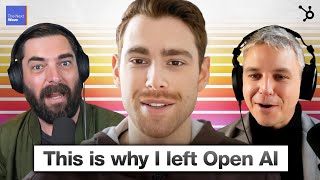
Logan Kilpatrick left OpenAI to lead product at Google AI Studio. He discusses OpenAI's shift from startup to large organization, why ChatGPT was built the way it was, and the tradeoffs between open and closed AI models. He warns that agentic systems and compute-driven threats pose real risks, and advises businesses to start with concrete use cases rather than chasing AI for its own sake.
Questions this video answers
May 7, 2024
Next Wave (hosts: Matt Wolfe and Nathan Lands)
Former head of developer relations at OpenAI; lead of product at Google's AI Studio (joined Google around the time the episode released)
Chapters
Was there any sort of catalyst that led you to leave OpenAI?
I think the company just changed so dramatically from when I joined. Like, I intentionally joined a small company.
It's crazy to think that a million active users as a small startup. The other sort of scary thought is the thought that maybe AI one day will be able to break encryptions.
We've got artificial superintelligence right now. There's 7 billion agents on earth that are focused on this problem. And, like, nobody has cracked those encryptions yet. I think it's much more likely that there's like some physical hardware innovation that allows supercomputers to really take off and break some of those things.
Hey, welcome to the Next Wave podcast. My name is Matt Wolf. I'm here with my co host, Nathan Lands, and we are your Chief AI officer. Our goal with this podcast is to keep you looped in on the latest news and everything you need to know in the AI world. And today we have an amazing guest for you today. Today we're talking to Logan Kilpatrick. Now, Logan used to be the head of developer relations over at OpenAI. Now he's the lead of product over at Google's AI studio. We actually recorded this episode a few weeks ago and we happened to catch him in this in between phase where he's not at OpenAI, he's not at Google yet. And we got some really, really cool insights from him. Now what he says on this isn't the opinions of Google or OpenAI, because he's not with those companies at the time of recording, but by the time you hear this, he's now working for Google in this new role.
And I think a lot of people, they only know, like Sam Altman, they don't know that Logan on Twitter has been like the main voice of, like, he's been talking to all the AI influencers, all the engineers. Like, anytime any big thing would come out, like he was the human, like, voice that you would hear on social media from OpenAI. And now he's left right after OpenAI seems to be doing great, but there's been a lot of drama. He's left to join Google. So it, it does seem like a huge win for them because if he can start making their products more, you know, he can be like a human, like voice for Google and explain to people like, how you can use it. I think it's such a big win for them.
Yeah, there's a lot of interesting things happening right now, both at Google and at OpenAI. In fact, Google is about to do their annual Google IO event. And last year that's where they made a whole bunch of huge AI announcements. We're expecting really big AI announcements again this year. I'm going to be there with Logan, so I will probably be doing a little bit of reporting from this Google I O event and keeping you looped in. We'll likely even do a follow up episode about what happened at Google I O and all of those announcements. There's also some rumors flying around right now that OpenAI is about to launch a AI powered search engine to go head to head with Google. We don't really totally know all the details about that, but it's unfolding right now. It's supposed to be happening the week that this episode is dropping. So if there's any big news around that we will be touching telling you all about that in an upcoming episode as well. But today, in this episode, we had a really fascinating conversation with Logan. He had some really good insights about OpenAI, the culture at OpenAI, why he decided to leave, why he picked to go to Google. And of course he has some amazing insights for you if you have a business or you want to use this stuff in your personal life. He has some great tips there as far as how you can actually integrate what he teaches and what we're talking about on today's episode. It's an amazing episode. You're really going to enjoy it. So let's go ahead and jump on in with Logan Kilpatrick. Thanks so much for joining us on the show today.
Yeah, likewise. I'm super, I'm super excited to be here.
So I'm curious how when it comes to OpenAI, I promise the whole conversation won't be about OpenAI. But I'm curious, you know, as head of developer relations in the early days, you were probably working with, you know, Jasper, Copy, AI, those kinds of companies.
Yeah. And a whole like, I think the most interesting thing to me about being in OpenAI was just the breadth of, of the work in the early days because of how quickly everything was moving and because of how everything was always on fire all the time, you could really just jump in. And if you were someone who loved fighting fires, which I loved, you could jump in and get your hands dirty like pretty much anywhere in the company. And that was something that I appreciated so much. And I think the natural tendency as a company grows, as things become more formalized, every additional hundred people who joined the company, there's just like less and less of an opportunity to do that. And yeah, it was interesting to see, like, when I joined OpenAI, it really, really felt like a small startup. And I think when I left open, I didn't feel like a small startup anymore by. By any means.
Yeah, no, it's crazy to think that, you know, a million active users as a small startup. But yeah, I mean, that was kind of the vibe in the early days, it seems like that's really cool.
I also think at the time ChatGPT was just like a demo. Like, I don't really think, like people had. Were like, just to like, at that time, the million. I don't think that was like daus, if I remember correctly. It was just like a million people had tried ChatGPT or something like that. So I'm guessing, like the attrition rate was super, super high and most people weren't actually converted, like weekly users or something like that.
Yeah, so. So basically the growth of ChatGPT when it first came out wasn't really expected. Right. OpenAI didn't anticipate that it would have that growth, you know, quick of an onboarding of so many people.
So at the time, the reason that ChatGPT was created, and there's a really great podcast interview with my former manager, Fraser, who led product for both ChatGPT and the API, and he talked about how. And again, this was before I joined OpenAI, but the GPT4 actually finished training summer of 2022, so the team knew, like, what was coming. And really the early explorations that Fraser and the team were doing and a bunch of other folks was thinking about what is the right form for this technology to actually be useful to end users. So this, this whole narrative that, like, the team just kind of threw together something random and then like published it and then it all went, you know, perfectly well, is actually not true. Like, and you should. Folks should go and listen to Fraser talk about this. But it was a very intentional process of, like, having a whole team of people who are like, constantly iterating for multiple, like, on the order of multiple months to like, ultimately come to the form factor that that was what ChatGPT was, which ended up being what we released to the world. So there's more nuance to the story, but I think people like to hear the story of, like, oh, it's just totally random and we have this together.
Yeah, I was going to, I was going to ask you, like, where did that narrative come from? Because that's what I'd heard as well. It's like, oh, they just threw it out there and like, oh, it blew up and they didn't expect it was going to happen. I was like, that doesn't sound right to me. But you know, I don't think they.
They people had the perspective on how quickly it would grow. But, but really the intent was to see whether or not this is something that would resonate with consumers. Like it was intended as a product release in a certain sense and like intended to see whether or not this like basic chat interface would be something that's useful to people that we could ultimately use when GPT4 came out to sort of be the thing to, you know, be the catalyst for people using that product. I think that's like, I don't know whether someone at OpenAI started perpetuating that narrative or whether it's just like a media narrative that, that took off. I'm not sure.
I don't know if it was like 10 years ago or so, but there was like, in Silicon Valley a whole wave of like chatbots that were released which obviously were way more primitive than what's out now. But everyone's all, was all convinced, oh, this is going to be the next thing is these chatbots. And it never worked. And so when ChatGPT came out, I think there was a big question like, will people actually use this? You know, because we people in Silicon Valley thought they had already seen that before. And then ChatGPT came out and like people were just blown away. And I was as well.
Yeah, same here. I was, I was an early Jasper customer. So I had sort of experimented with and seen the power of this technology early from, from using Jasper. And honestly like GPT4 is really what started to make it much more useful. Like I, I still think the highest leverage, like largest marginal value you can get from ChatGPT is if you're an engineer and you use it for coding. Like most of the other things are like useful and nice, but it's like from a raw economic output perspective, coding is the, is the most useful thing to use this technology for today.
Yeah, I told, I told Matt previously when I finally like started using it in code, I'm like, oh my God, this is such a game changer. That's like, helped me like, it helped me like change some code from like JavaScript to C and some other things I was playing around with. I was like, this is nuts that it can just do that.
It's crazy to me how that there's still engineers out there who haven't made that jump and like haven't had that aha moment. I'M like, that literally makes no sense. Like, even for. And, you know, not. I'm sure there's folks at all companies, so this is not like a representative data point. But, like, even folks I worked with at OpenAI, some of them, like, weren't using AI every day as a software engineer, and it was always crazy to, to see that, especially being so close to the technology.
Yeah, well, I mean, the two top, like, coding, you know, influencers like Jonathan Blow and Primagen, they're both like, saying that, like, AI is like. I'm not sure if they're calling it a fad, but they're like, oh, it produces shit code and like all this kind of stuff. And it's like, well, you know, it's.
Better at coding than I am.
Yeah, exact. Exactly. It's better than coding than most people are. It would bring the average level of code up. You know, not everyone's like the most senior developer who's been doing it for, like, 30 years. And obviously this stuff's going to just keep getting better and better.
So I'm curious, one last open AI question, and you don't have to answer it if you don't want, but was there any sort of catalyst that led you to leave OpenAI? I mean, from the outward perspective on Twitter, it looked like everything was cool, amicable, you just kind of wanted to move on to something else. But I'm curious if there was any story there.
I think broadly, like, my broad perspective is like, the company just changed so dramatically from what I joined. Like, I intentionally joined, like, I had worked at Apple and had intentionally joined us a small company, because I wanted a lot of the things that come with working at a small company, like being able to move really quickly, being able to have high agency to go and solve problems, having the green fields, all those things. And I think just like, very naturally over time, OpenAI became like, less of those things for me personally. And I think it was also like, you know, I don't remember if this was on camera or before we started chatting on camera, but, um, the comment about, you know, being a human voice at OpenAI, like, it was a really challenging position for me to be in. And I think, like, if you look around, like, there was not a lot of other people who were doing that type of work. And I think that just had its own whole host of challenges. And I think just overall, also, incredibly, like, as I started to have more conversations with people, just became incredibly excited about, like, where everybody else in the ecosystem was. And yeah, I think there's there's so much interesting stuff happening and I think like OpenAI for a long time has dominated the narrative of being the, the benefactor of this technology and also the people who are like giving the most value to the world. And I think, I think there's going to be more companies that are going to be able to like successfully do that in the next six to 12 months, which I find just as a consumer and as somebody who like loves the technology, I think that's such so incredible and I'm excited to hopefully, to hopefully get to help that from a different side of things.
I feel like OpenAI is really going to miss having you there because there is no one else right now who does that. Before on Twitter you were the only one I would look to when things would change. I'm curious. So you said that you left because of it no longer being a startup and you wanting there to be other competitors out there who can compete with OpenAI. But why Google? Why not doing an open source AI project or something like that?
I feel like there's still such an opportunity at the large language model space as I was exploring it was could go to an application layer company. There's a bunch of incredible companies doing interesting stuff at that layer of things, but it still feels like there's a lot of opportunity. I also think like, you know, to be candid for, for Google, like the, you know, they've had a challenging narrative as far as like what how developers feel about the platform, like what they've been doing with AI. Like there's a, there's just this incredible moment and opportunity at Google for someone who loves building products for developers to really come in and, and help support that ecosystem. There's also so many smart people at Google, like they have such an incredible roadmap and again, I don't know all the details because I haven't actually at the time of this recording haven't actually started that role. But I think they, at least from what I've seen externally, I think they're pushing in the right directions like the 1 million context window. Like the, those models being natively multimodal, like all that stuff gives me a lot of confidence and, and hopefully what the roadmap looks like for, for other things. And it's also just like such a core piece of their business. Like there's a lot of people and like I think I love what the meta folks are doing and I love that they're putting out the llama models. But in many ways, at least from like my outside Perspective, it's not clear that it's like the, the core driving force for their business. And I feel like in the case of Google and others, like, it is a core driving force for their business at least now. And I think for Meta, it'll probably evolve to be that over time as they build AI into their products and services. But today it's like, yeah, like do, do I need a chatbot for Instagram to be a viable product for me? Like, not really. Like they could essentially keep that product and keep going without AI. And I think Google's in a very different position with respect to search and some of their other platforms.
Yeah, let's, let's talk about open source versus closed source for a minute because, you know, there's, there's this big sort of storyline unfolding, right? You've got Elon Musk versus Sam Altman, the sort of public battle of open source versus closed source going on. But I'm curious to hear from your perspective, where do you see the value of open source? Why? I know you've been sort of outspoken, a proponent of open source, you know, on your Twitter account, where do you see that value of open source? What, what excites you about open source?
One, I think it's like fundamentally at the end of the day and people like to construe it in a different perspective. But from my, from my perspective, it's fundamentally like a business decision. Like do the, do the pros of open sourcing models and all the, you know, potentially infrastructure around those models end up outweighing the cost of doing that. And there are very real costs. I don't think people, everyone just assumes that open source is.
Positive in every direction. It's certainly not if you've ever been an open source maintainer. It is not fun in many cases to maintain open source projects. There's just people. You're essentially giving something away for free and everyone is asking you to do more things for free and you're not getting any of the value that's being accrued. And I think this is like the, the really difficult tension for companies that are making this decision. And I think like, I love the folks at Mistral and I think they're doing really important work, but it's, it's a challenging position for them as an example where you know, they open source a model and then, you know, you can now do inference on that model on any of the many, many different platforms that offer inference and know that led them to, with their most recent model, not making it fully open source yet or I think there's like some nuance about how, how open that the latest model that they did is. And I think like more companies are going to struggle with this because I do think at the end of the day, especially for the model layer, it's hard to have a business that does this. And I actually think this is why companies like Meta, it makes a ton of sense for them because like they are not a developer platform company. Them taking the model and putting it out to the world actually doesn't really matter. Like it's not negative for their business because their business is serving ads and selling products to the 4 billion people who use their platform. And like that's a very privileged position for them to be in. And I think there's a lot of startups who, who don't have that distribution and are still trying to do open source models. And you just run into these like very real realities of running a business that make it really hard to open source those models. I think there's also like the whole philosophical debate about whether the technology should be open source because it's super powerful. I think that like that's a very fair argument. I think there's also a bunch of very fair arguments on the safety side around not open sourcing some of these models.
We'll get back to the show in just a moment, but first here's a word from HubSpot. Curious about what the future of productivity looks like? HubSpot's AI tools make quick work of expediting content creation, optimizing workflows and elevating data analysis. Personally, I'm really impressed by the AI website generator. You can create a web page just from a few simple prompts. That's mind blowing. And the facts speak for themselves. Over 85% of marketers and sales professionals agree that AI enhances content quality and prospecting efforts. So what are you waiting for? Sign up for free by clicking the link in the description below. Now back to the show.
I do wonder like how regulation is going to hit open source because like it does feel like everything is going to more and more regulation. You know, Europe's like heavily starting to regulate AI in the, in America there's more and more people wanting to regulate AI. I'm kind of more on the like the E. ACC side of things of like we need to go as fast as possible. But I do understand like the concerns and so I do wonder like it feels like, okay, Elon Musk is like open sourcing all his AI but at some point when that gets very powerful, I have a feeling the government's gonna be like, yeah, we can't just have anyone having that. So I'm really curious how, I'm curious how that stuff's gonna play out long term because I think open source is very important because I don't, I love OpenAI, I love Google. I don't want like OpenAI and Google being the future of AI, which is like the future of humanity basically.
Well, it's funny because I think Logan posted something on Twitter the other day about can somebody bring me a hard drive with the weights for GROK on it? Because I can't download 368 gigabytes. So I mean the Grok open source I think still has some roadblocks for general consumers to just start using on their own computer.
Yeah, yeah, yeah, yeah.
This is part of the nuance that I think a lot of people miss is like there's this massive spectrum of what it means to be open. And I think like the, you know, to the OpenAI folks credit, and I forgot whether what blog post or whether where they talked about this, but I do think like having your technology cheaply available through an API and making that broadly accessible to the world for developers to go and build products and platforms like to me that is like certainly an element of openness and I think like putting the weights of a model available to the world, there's also an element of openness. But I think the, just because you make your weights available does not mean that like you're actually running an open source project. And at NumFocus we like when we evaluate open source projects to see whether or not they can be a part of NUM focus, like there's this huge list of things that you have to go through from like, you know, who are the people who are making the decisions about where the money is spent, you know, what are the like the governance policies, the code of conduct, all that stuff which like no one is looking at. They're like, oh, just because the model is open, you know, it doesn't matter that it's a for profit corporation or someone who's got a lot of money, who's driving and making all the decisions. And I do think it'll be interesting to see how the narrative evolves over time. I actually think in many ways open source models are much less open than traditional software is. If you look at any of the popular open source projects, many of them have distributed governance, it's clear how they make decisions, all those things and that's very much not the case for some of these open models, which is super interesting.
You mentioned Meta earlier, and it's something, I guess I haven't been able to wrap my head around is, you know, why a company like Meta would open source their models. You know, from what I understand, to train one of these models, it could cost millions of dollars to train with all the compute power required to train the models. What do you think, like, the motives for Meta to release models like this publicly? Why would they do that?
They are not selling a developer product and they don't have a developer platform. They have, I think there is some like Facebook app platform or something like that, but I think that's like all slightly aside. They don't. They're not like a cloud provider, they're not selling the model to end users for them to be able to. Or developers for them to be able to build that in their technology. So really it's like open sourcing the model. The only way that that hurts them potentially is somebody takes that model and then goes and makes an Instagram competitor or a Facebook competitor or a WhatsApp competitor. And I think if you look at their, like, they have deeply, they're deeply entrenched in the ecosystem. They have distribution, they have all the money, they have all the modes. So like, they actually don't really need to worry about that as much. And it's more of an existential risk for them if they were to not take AI and infuse it into their platform. Because then all of a sudden somebody makes WhatsApp with AI and Instagram with AI and Facebook with AI, and then, you know, they get disrupted. So it's much easier for them to justify that cost of just like essentially business as usual. This is the next technology frontier. Take AI, put it into those platforms, and then now, you know, potentially even, you know, they can sell services to people with AI on Facebook and Instagram and WhatsApp and things like that.
Yeah, it almost feels like there's an element of this, like Meta redemption arc happening, right. Where a lot of people were soured by Meta with the Cambridge Analytica and the data leaks and all that kind of stuff. And now Meta is kind of saying, no, we're good guys here, we're open sourcing our stuff.
I'm sure that's part of it. Like I, and I think that makes sense for them. Like there's, there's certainly like, they're definitely winning people over by open sourcing models. I think it's like it's been A viable strategy.
And they've been doing that for a while. Right. Like, that's been their playbook for recruiting talent with like GraphQL React Pytorch. Yeah, yeah. And that all kind of started like when like the image of Facebook in Silicon Valley was kind of going down, at least in like the, the tech press. They were like, everyone was hating on Facebook and then they're like, oh, we're open sourcing all this stuff and all these developers like, oh, we love Facebook. And so it kind of created this like kind of divide there where all of a sudden a lot of developers were lo. And I think this is a continuation of that playbook.
Let's talk about, let's talk about the potential risks of open source, right? So there's this kind of scary thought around open source, that somebody in their basement playing with open source tools could cause massive destruction and things like that. I guess let's speak about and talk about some of the risks and maybe some of the counteractions that can be taken to mitigate some of these risks. There was that story, I don't know, a year ago about Chaos GPT that tried to take over the world by tweeting to like seven people or whatever. But I mean, I think that's a real fear of a lot of people is that somebody in their basement could create some sort of AI agent that creates real chaos, real destruction.
Yeah, it's such a tough position. And this is why it's always been tricky for me to like, in many ways, like I, I align with OpenAI's principles about what the risks are with open sourcing models. I think there's also a way to potentially do the open even with some of those risks. I think very fundamentally I have yet to see any proof or any scientific evidence. Essentially there's all of this stuff that happens during the model training process to make it so that the model's outputs are not a net bad thing for humanity. And I think there's wide bounds of this and people can disagree about how much of that you should do. But that is the intent of how many companies train these models today. The challenging part is that once you take the weights of the model and you make it accessible, it is easy to essentially fine tune away a lot of the safeguards that have been put in. And I think today that's less of a problem because you can just get the model to say a bunch of bad things. And I think all the really, really bad capabilities are potentially less of a risk. I think the real challenge is you take a GPT5 or a GPT6 and if the same principle holds, you could really get a model that's capable of doing a large amount of damage. And because it's open source, anybody can just go and fine tune. You could make an open source training set with a bunch of bad stuff in it and publish it and share it with people and then they can go and do this themselves. And I think also with how compute efficient models are going to become over time, it'll just become easier and easier for people to do this. I think the only one, there could be some scientific breakthink.
There could be some scientific breakthrough that would make it so even if you fine tune, the model doesn't want to do bad things. That seems like a stretch. It's outside my realm of understanding how that would be possible, but I suppose that it's possible and if we could do that, then that would be awesome. I think the other option is it's likely that there'll be some amount of pressure that's put on people who are providing compute to do some moderation or some sort of security checking at the compute level, at the token generation level. I don't know how feasible that is either because you could just spin up a GPU yourself and do this on your own computer so you don't need someone else's computer. But for example, why I have conviction that OpenAI will successfully and safely deploy this technology, at least from what I've seen, is that there is some level of monitoring taking place on the platform so they can see if someone is continually asking how to make bombs or bioweapons or something like that. They can actually monitor what's taking place and go and proactively take action to keep people safe and keep the platform safe. And I think to me that's not possible in the context of open source. And yeah, it's a big open question, especially if you have your own GPUs. Like you can't, it's essentially impossible to stop somebody from doing something like that if you don't have any control over the compute from a cloud perspective or something like that. So it's a tricky situation and I think this goes back to. It's just a myriad of really, really tough trade offs, which is why I don't appreciate much of the narrative online, which lacks the nuance of all of these things. Like there's just, there's like a lot of very, very real trade offs to take into account. Everyone's like, oh no. Like they, they glaze over a lot of those things. And I think it'll. It'll also become more clear as the models become capable. Like, more capable. Like, today, it's, like, a little bit easy to be like, oh, like, what's the worst that happens? You get something that's going to write, like, mean jokes or stupid tweets or whatever, and then again, Twitter just has to take those tweets down. But I think, like, you know, you imagine a world where the agentic systems really take off, and there's a. There's great infrastructure to do that. And all of a sudden, at the push of a button, like, you have access to go spin up, like, millions of agents, like, you could genuinely cause. I could see genuine harm being caused in the world from that. And thankfully, I feel like we still have a little bit of time to, like, try to figure some of that out. But, yeah, there's real challenges.
Yeah, the other. The other sort of scary thought and this kind of bubbled up with the whole, like, Q Star rumors were going around, right? Is the thought that maybe AI one day will be able to break encryptions. And if I can break encryption, then everybody's bank accounts are at risk. You know, all cryptocurrencies are at risk. Like, pretty much the Internet as we know it is at risk because it's all sort of built on this cryptography. Do you see a world where the AI models are able to break the graphy that sort of runs the Internet today?
I don't know enough about cryptography to really be informed. My instinct has always been that it's, like, much more likely that somebody will use these models to, like, accelerate quantum computing research, and then that will be the catalyst for, like, I feel like it'll be like a hardware innovation. Like, just. And my mental model for this is, like, we've already got AGI right now. We've got artificial super intelligence right now. There's 7 billion agents on Earth that are focused on this problem. And, like, nobody has cracked those encryptions yet. So, like, I don't think it's going to be an LLM layer that ends up doing that. I think it's much more likely that there's, like, some physical hardware innovation that allows supercomputers to really take off and break some of those things.
Like, I hear the concern on, like, okay, there's gonna be, like, these rogue agents and all that, but I don't know. Like, I. I was born in 1984, and, like, I read the book many, many times, and that's like, you know, my concern is, like, okay, sure, all those things could happen, but also it seems very likely that, like, when you centralize power and you have like one group or two groups, they have all the power. And then, and then humanity starts kind of like, outsourcing our intelligence to the LLMs because they get so intelligent that they're more intelligent than us. So we're like, hey, GPT7, what do you think I should do in my life? And then now you've got the kind of government sneaking in there or whoever. You know, let's say it's not the US Government, but, you know, it could be. It could be other governments who are, you know, supposedly are more nefarious and, and they're all of a sudden kind of telling people how they should live their lives and like, actually kind of micromanaging people on an individual basis, like having. Having the AI kind of tell you, like, how could I make Nathan do this thing I want him to do? Right? And all of a sudden the LLMs, like, give me different results, you know, based on what they want me to do. I have a lot of concern about that. Like, more. More than the rogue stuff, because I think with all, like, the rogue AI stuff, you're going to have, like, this battle of, like, okay, there's bad people using AI in bad ways, but in theory, the good guys also have the AI. Maybe they even have, like, a slightly better model. And so I think those things are going to not be as big of a problem as people think.
I think Bill Gates said something recently to the effect of all of the problems that people are worried about with AI. AI also solves those problems.
Yes. Yeah.
And I feel like that's kind of like where you're going with that.
I think that's true to a certain extent, but I would. My. My mental model for this has long been that, like, they're the. Or like, we could have this technology today. It doesn't mean that there's so many humans on Earth in so many different, like, life and geographic and financial positions that, like, it doesn't even matter if we have this technology available to like, quote, unquote, everyone. Like ChatGPT is available to quote, unquote everyone, but it's really not like it's only available to people who have access to the Internet and know about what AI is. And like, I think, yeah, it's. It still feels like one. Nathan, to your point, I. I'm. I'm 100% in favor. I don't think that the best outcome for this technology, just from like a technological development perspective is that only one company controls this. And I think just the trajectory of where the ecosystem is headed, it feels like that's not going to be the case. Like, it feels like pretty much everyone has realized they have a vested interest. Like every company with any amount of technical, technical capacity is like, let's go train a model and let's go, let's go make this happen. I think the question is like, how far does that trend continue? And, but it does feel like people have woken up to this idea. And I, I would imagine, like, I don't think the open source layer of this is going to go anywhere. I feel like this idea that, you know, good people on the Internet are just like crusading into like the bad places on the Internet and like stopping people from doing bad things. At least in my worldview, like I've never, you know, seen that happen before. It's usually just like there's bad people doing bad stuff and like they all get together and do more bad stuff together. So it'll be interesting to see if like AI is potentially a fix for that.
So I wanted, I wanted to ask about the future. I wanted to kind of get your perspective on where all of this is headed. I'll read a tweet real quick that you put out. You said in the next 10 years we're going to have superhuman AI full self driving everywhere in the world. Humans on Mars, Internet everywhere on Earth, supersonic commercial jets and cures for major diseases. So what do you think is coming first of those? And you know, I'm just kind of curious to hear your sort of future scenario. And what do you think is kind of coming within the next few years? What do you think is still 10 years out? Like, how does, how does this story unfold?
All of this comes back to being like a physical hardware challenge, which will be really interesting to see how that plays out. Like, I imagine the main limitation on a lot of the progress that takes place is like, can we get enough GPUs? Or I'm guessing in 10 years it'll be some new iteration. It won't be GPUs, but some new compute to power all of these things. Because you can imagine, like even if you had, and this is the challenge with a lot of the narratives around like super intelligent AIs that are just like doing stuff for you all the time, like you'd basically have to have like a H100 cluster in your bedroom, like to power all the types of things. That like, people think will be possible with AI. So like, it really does come down to like, you know, can we produce enough compute for there to be an H100 for air or not even one H100, but like a rack of H100s for every human on Earth. And like, that is like a deeply physical problem, like, very abstracted, away from all the things that AI will be able to do. And AI will be able to solve parts of those problems. But like, I cannot solve the problem of like physically moving sand and rock and all this stuff. So like, there's a lot of like, very interesting, like traditional human problems that I think need to be solved to get to that point. My guess is like, the boom arrow is already going to do hypersonic, so that won't be the thing. Like, that's, that's for sure. Pretty much a guaranteed. In my mind, someone, someone's intelligently responded about how the windows for Mars. It seemed unlikely that we would get there in the next 10 years, which is really sad to me. I'm like, dude, another 10 years. How, how can they not get to Mars in 10 years? I feel like that should be super soon. But apparently we only have like, there's a window in six years or something like that, or four years and it's gonna be too long before the next window. So we probably won't get to Mars if that person is correct, in the next 10 years, which sucks. And it's not clear to me that AI is going to make that happen. But I really do think the abundance of intelligence is going to be so exciting, but also have very real challenges for society. I think the thing that gives me the most hope about this is how quickly humans seem to adapt to new changes. Like the fact that we have ChatGPT and all of a sudden, like, we're pissed that it's, you know, telling us to do work and are upset about like, it not just doing everything for us already after only a year and a half or whatever, however long it's been, I think is like a great example of like, our expectations continue to go up. And I, I think my hope is that the technology like continues on like that linear curve and doesn't end up like on some crazy exponential because I think that's just like where the highest chance for things to go wrong and people to be, you know, disrupted in a negative way. But if it, if we can stay on some not actual exponential curve, then I'm hopeful that like, society in the world will be able to readap. But we're also close to this technology that like if you rounded the percentage of people on earth who are like actively using AI every day, like it probably rounds down to zero. Like it's probably like 1 or 0% of the world and like that's just like speaks to the level of how far we still have to go with this technology to make sure that we get like the rest of the world on board using this technology, bought into it, actually contributing to the discourse. And like that is a really, really difficult problem. And it honestly sounds like it's a problem that's probably going to take 10 years.
And that's one reason we started this podcast, you know, is like there's so many people who have no idea what's going on with AI. You know, I moved from San Francisco out to Kyoto over a year ago and like I was surprised. Like I'm thinking like in my mind like oh, Japan, super futuristic. Which you know, I've been here a lot so I know it's not always like how people imag imagine it, but I would, I would go out to like local cafes and stuff and hang out with like locals and I would show them like mid journey or show them chat gbt. They were like what is that? They would just be like have no idea what the hell was going on. I basically just like pulled magic out of my pocket and they just were so completely mind blown. I was like, oh my God. So like the average person around the world probably has no idea what's going on. They may have heard like one or two like scary stories on the news and that's probably their entire context for AI.
This needs to be like a government level project. Like actually a part of. When I was, when I was exploring what's out there, I was looking like, is the government spending money to try to like educate the masses on this technology and like not just the US government but like global governments. Because I feel like it's just like, you know, I think your show is going to do incredibly well but it is likely to reach people who are like much more interested in AI. So I think it's like a really, really hard human problem. And like I think it's going to take like I would love to see some like international level collaboration to be like we need to educate humans about how to use AI. But it just feels like yeah, you can't get international governments to agree on anything. So that'll happen. But somebody should try like I feel like it would be super useful.
Yeah, I think a lot of leaders around the World barely understand the technology. I mean, I think that's one problem of having like really old people in government. You know, hate to get like political, like, but on both sides right now, politics, like, it doesn't feel like the great greatest spot to be in, like when the AI revolution is starting to have like leaders who just really can't even fathom what's going on with the tech.
I agree. My instinct is that like, that will be a major catalyst for like the next generation of leaders to, to try and run for office. Like, I actually know some folks who, who I worked with at like adjacently through open source and they were at the Schmidt Ventures, Schmidt Futures, the, from Eric Schmidt. And you know, the guy's running for, to his credit, running for the House of Representatives in Georgia, which is incredible. You should actually have him on the show. I hopefully connect you but like, specifically through this platform of like, the world is changing and like the current leaders, like, who are all great and have a bunch of awesome accomplishments, like, don't understand how this technology works and like, it's really difficult to adapt to that change if you don't understand how the technology works and you don't have your hands on it every day. And I think, yeah, it's a critically important problem for us to get right.
This is a HubSpot podcast and you know, HubSpot talks to entrepreneurs and business owners and things like that. And you know, in your role at OpenAI, you dealt with a lot of, you know, SaaS, founders and business owners. What advice do you have for business owners looking to work with AI as a piece of their business?
The, the biggest challenge with people who aren't like inherently like giddy about AI and technology is just getting past like the, the blank page problem. And I think this is like part of the challenge with ChatGPT fundamentally as a tool. As you show up and you're like, you basically are, it's, it's blank and you basically already need to know how this technology helps you. I think GPTs are like a really great step in that direction because they like, are a very tangible, small use case that like, I don't have an AI problem. I have like a finance problem and I need help with my books or whatever it is. I think all of those, like looking for those like very specific tangible use cases and trying to automate stuff around them. Like, I've always been a, I'll give my, my really quick shout out to the people at Zapier. Like, I think Zapier is going to be the, an incredible catalyst for people who are just getting used to this technology to like truly automate things. And there, there's so few platforms that are targeting that demographic of people and I, I, I actually think HubSpot is one of them. I've been a huge fan of HubSpot and Dharmesh and the whole team doing a bunch of incredible work around AI and I think like, more and more companies need to, to do that and I think more and more people need to go and find those use cases and it's just really hard. And I empathize with that a lot. Like, I feel this challenge for myself. I'm like, I'm always busy, like, how can I use AI to help me? And it's like not always obvious like what the, what the use cases are. I think the like real, the real tangible advice is like, go and play with the technology. Like, you have to, you have to like, get your hands dirty with it. You have to play with it. You have to run into the edges. You have to like, explore the tools a little bit. And like, that kind of sucks. And I think like, platforms like the one that you all have can like, hopefully be something to like, help get some of the right resources to those people. But yeah, you just have to play with the stuff and find out what adds value and like, hopefully find something that adds enough incremental value that it's like worth you spending your time continuing around it. And I think like ChatGPT and a bunch of these other tools, like really will add enough value if you spend the time to play around with them and, and get your hands dirty.
Yeah, I actually onboarded my dad onto ChatGPT by showing because he's actually a business owner himself, he does window covering, so nothing tech related. But I showed him how to use ChatGPT to help him respond to his emails, and now he uses ChatGPT to reply to all of his emails. And he's constantly finding like new ways to use ChatGPT in his business. But that email was that catalyst. So just like something really simple like that, like help me write my emails better is a, is a really good way to get into it, I think.
Yeah, I need to figure that, figure that out with my mom. I showed it to her and she was like, oh, that's so impressive. That's so amazing. And then it's just like, okay, now what?
It's that, now what? That is like the opportunity. I think like, like no one has really nailed that, like, now what piece? And I think if you can like help people with that now. What? Like, that is a huge opportunity that I, I think, yeah, there needs to be more thought put into.
Very cool. Well, this has been an absolutely amazing conversation. We've had a blast. Hopefully we can have you back on in the future once you've settled role at Google a little bit and maybe talk about what's going on there. But I really appreciate the time. Is there, is there anywhere you prefer people to follow you? Is Twitter the best place? Do you have a website, any. Anywhere people should go after listening to this?
Yeah, I'm posting on Twitter. I'm posting on. I try to post on LinkedIn because I feel like there's a underserved AI market on LinkedIn. Like everyone's, all the cool stuff's happening on Twitter. I'm like, we got to help all the, all the normies on LinkedIn. So I spend time on LinkedIn as well. And yeah, I have a website, but there's nothing as useful as on Twitter and LinkedIn. Fishal Logan K. And then on LinkedIn, it's just. Logan Kilpatrick.
Awesome. Well, thank you so much for spending the time with us today. This has been such a fun conversation. I can't wait to get it out to the world. And yeah, thanks for joining us today.
Thank you for having me. And congrats on the launch of the show. This is awesome.
Sam.
More from Matt




AI News: Dots, GPT-6.1 Sol, Sonnet 5.5, Gemini 4, and everything you need to know




