XR: The Next Big Thing? Your Job Depends On It ft. Alvin Graylin
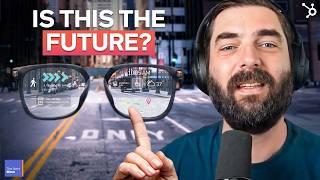
Alvin Graylin, author of Our Next Reality, argues the metaverse is an open network of 3D worlds where computing shifts from phones to headsets. AI powers avatars and NPCs; XR creates synthetic training data and new jobs. Risks include identity theft, addiction, and geopolitical fragmentation between US and China.
Chapters
So when we talk about Metaverse, what is that vision?
I'm optimistic long term about kind of human nature to adapt to a much more interconnected, interoperable metaverse platform, long term.
So who controls this world?
First of all, the metaverse does not exist yet.
Hey, welcome to the Next Wave podcast. I'm Matt Wolfe. I'm here with Nathan Land. And today we're talking with Alvin Grayland, the author of the book Our Next Reality. And we're talking all about the crossover of AI and the metaverse and virtual reality and augmented reality. And in this episode, he basically lays out a game plan of how we get to this metaverse that everybody's been talking about. And, well, quite honestly, a lot of people have forgotten about over the last couple of years. Well, we talk about how we get there. There's also some interesting discussion about what we can learn from China and what China can learn from the US Because Alvin has spent a lot of time in, in both of those countries. So there's some very fascinating discussion around the sort of dynamic between China and the U.S. i think you're going to love this conversation. So let's go ahead and jump on in with Alvin Grayland. Hey, Alvin, thanks so much for joining us today. How are you doing?
I'm good, yeah. Thanks for inviting me, Matt, and great to meet you, Nathan. I think it's going to be a fun conversation. Yeah.
So Alvin and I, we, we go way back to about a couple weeks ago. We got to meet each other at the Augmented World Expo. You were, you were out there, you know, signing copies of Book Our Next Reality, and you and I got to talking and I had to get you on the podcast to talk about the crossover of the AI world and the metaverse world. And so I want to talk a bit about the sort of crossover of AI and the metaverse. Right. But before we do, I think we kind of need to define the metaverse, because I think a lot of people have a fuzzy vision of what the metaverse is. You know, at one point, the metaverse was very tied towards, like, crypto, and, you know, Facebook went and changed their name to meta, and there was all of this stuff that was sort of muddying the waters. So how, how do you define metaverse, first of all?
Okay, so, so I, I think the easy way to think about the metaverse, first of all, the metaverse does not exist yet. Okay? So all those people who says, oh, we have the X and X Y metaverse, they're all just bullshitting you. Okay? The, the, the Metaverse is actually the Internet we've been building for the last 30, 40 years, but the 3D version of the Internet. And what that means is that it's a open, interconnected, global network of instead of websites, you go to 3D worlds. That's really the definition of the metaverse. In fact, the guy who invented or coined the word metaverse, and I checked with him, I was like, this is my definition. Does that make sense to you? And he's like, well, when I wrote it in 1992, there was no such thing. It was kind of. I made this stuff up. But what you're explaining is actually what I was trying to describe in the book, right? In terms of something that is a large network of worlds. It's not a single world. It's not something where you go and you sell NFTs or, you know, it's not just a game, right? And I think it's the ability for you to be able to access it on any device, you know, anywhere in the world with anybody else, right? That, that's what, that's where the value comes in. Because as we know, Metcalfe's Law, right? It's the value of a network is a square of its nodes. So in a particular game or a particular, you know, NFT world, you're going to have, you know, thousands of people or hundreds of thousands of people, that. That value is going to be significantly less than what we have today, where we have billions of people on a giant interconnected web, right? That's why the Internet's so valuable. That's why we go on it every day, because there's so much going on and so much potential, and that's what will happen in the 3D side. Because, as you know, I mean, we. We grew up, we evolved over the last several million years in a 3D space, there's no reason for us to be constricting ourselves to that 2D screen. We've done it because that was the only option available. But soon, when that 3D space becomes accessible, affordable, and ubiquitous, there is no reason for us to go back to a limitation of a 2D space. Right now we're looking at each other through multiple 2D screens, and I can see you, but I don't really feel like you're with me, right? When we get into that Metaverse space, we're going to be around a virtual table. We're going to see photorealistic potential of avatars of ourselves. If we want, we can make it more cartoony. But the fact that we will feel together and whatever memory we create will feel the same as we were together. I think that's something that is very powerful to bring people together and to allow us to collaborate more, to allow us to communicate more, to allow us to get rid of the miscommunication and differences that people have between cultures and languages and age.
And like, how do you imagine the multiverse? Like, you know, my background's kind of like in gaming. I actually was one of the top players on the game EverQuest when I was a kid. So I, I feel like I grew up in this like virtual world, right? Like, do you see, you know, it's almost like ready player one. But gaming's just one aspect. And like everyone's living in this virtual world for like a lot of their life and they're doing business there, they're meeting friends, maybe there's also gaming. Is that kind of how you see it?
So today, if you look at the amount of screen time we have, the average American is around 10 or 11 hours of total screen time, right? Between TV, desktop, phone, et cetera. And what we've seen is that over the last 10 years, people primarily moved from primarily on TVs to a lot of it on desktop, to now mostly on mobile. Most of our screen time is actually on mobile. What we will find is that in the next five years or so, we will start to transition from something that is in our pocket to something that's on our face. Why? Because that is already on our screen, on, on our heads. And half of the people in the world wear glasses on a daily basis. So it is something that's already natural. Now if I can turn the glasses they already wear into a display, into both an immersive as well as a potentially AR display. So you have both options essentially with a click, you can turn it into something that's see through versus pass through, versus, you know, completely immersive, you know. And when you have that, there's really no reason to pick that screen out of your pocket anymore. In fact, I think that we will essentially be having, I would say majority of our day viewing the world through the screen. Now it could be an augmented. You could actually most of the time be clear and just have some few augmented items. Let's say instead of having a monitor, I can have a giant virtual monitor and the rest of my office looks the same, right? And for a lot of people that that's enough. But you know, for, for us who live in the first world, we, most people say, oh, you know, I would never Want to spend more, more time in these virtual spaces. I know you're different because you're a gamer, but for a lot of the world, their physical world is not as beautiful and as welcoming as a potential virtual world. So for a lot of people who, let's say, live in a, you know, a dorm with 10 other people, you know, they may actually say, hi, I want to spend more time in this virtual space because it allows me to have the freedom to, to do virtual traveling, to talk to people around the world, to learn things in a space that, that is not distracted by all these other things. Right? So, you know, and, and I, I, I think that's the, the beauty of what this offers is that it allows you to pick the environment that you want to be in and you know, whether you want it to be for gaming, whether you want it for education, whether you want it to be for work. You know, we especially white collar people, spend so much of their time working with a 2D screen. The difference of that, now if you have that ability to do it in the 3D space, I think a lot of them would, you know, in fact, I know you guys are both users of the Vision Pro, you know, having that, that virtual environment that they have, it really allows you to feel more focused on whatever topic that you're working on, right? So even if you just had a, a screen of your computer and in that giant, you know, Yosemite park or whatever, you know, the volcano, you just feel like, wow, you know, I can be concentrated because I, I, I don't have, you know, dogs walking around or people walking outside a window. That, that in itself will allow us to be more productive. In fact, there were studies that we, we've done and we found that kids were six times more focused when they were studying inside VR than when they were in the classroom, right? And they were able to learn twice as fast versus having human face to face classroom education. Right? So I think those kind of things, it's a little counterintuitive because everybody's like, oh, there's nothing better than face to face. But the problem is when you're face to face, you have 30 other kids or 50 other kids with you that, you know, the teacher has one minute of time per class that they can spend on you. Whereas when you're in a virtual environment and you have that, that personalized face to face AI tutor that can be working with you the entire time and they can adjust and you can actually use your whole brain for learning. You know, as we know, although there's some, you know, visual learners, there's audio learners, there's tactile learners. And when you're in xr, all of that is available. Whatever medium is the best way for you to consume and digest and understand content, it allows you to do that. Whereas, you know, maybe if you're a really good audio learner, you do find in the classroom, but only about a third of people are that way, right? So we're leaving a lot of people behind. And in fact we did a study that showed when, when a class that was doing astrophysics, he found that the worst student in the class that was supplemented by by XR was better than the best student in the normal class. And they were already pre sorted beforehand to be having equal pre test scores. So it's not about, you know, oh, this class was actually better. It just the fact that, so the reality is that there's actually no dumb students. Everybody's a genius. They're just not being taught in a way that allow them to utilize a genius that's in them, you know, or they're not being cared for enough. So they paid focus and paid attention to the things. So you really smart kids and really kind of maybe divergent kids, they have the ability to do a lot more if you gave them the right environments. And I think XR can do that. And particularly if you have customized AI teachers or tutors that can help with that.
So I like part of the vision that you laid out, but not all of it like the idea that like, okay, so if you live in a shitty environment that we should just keep that environment shitty and you should now go into virtual reality instead. I don't like that. I personally believe that with AI we should actually make the physical world better. Right?
I cannot agree, I cannot agree with you more, Nathan. Here's the thing is that people have been talking about oh, how can we create greater equality around the world? How, how, how, how can we, you know, let you know, the, the rich nations help the four nations, et cetera and it just doesn't happen, right. And, or it hasn't happened yet. And, and you know, the, the key determinant of success today is where you're born more than, more than anything else, right? And now what, what happens when you actually start having a global metaverse ecosystem is that actually you start to create a parallel economy, right? So this actually creates a natural flow of income and wealth earning opportunity. No matter where you're born, if you have a headset, if you're connected to this global metaverse, Then I am actually judged by my capabilities to contribute to society, whether as a programmer, as a technical support guy, as a consultant, as a tutor to some child that's a thousand miles away. If I was born in Bangladesh, I could make maybe $10 a month or something like that. If I'm born in the us, the poorest people who are, you know, you know, probably making a thousand dollars a month or something, you know, in that order. So the fact that now you create a global workforce and it equalizes them because it's people will pay you based on your value, not based on what they perceive your local cost is because they can't tell where you're from. Right. That actually I think will help to achieve what you're talking about, Nathan, in terms of how do we make people's lives better by utilizing this technology? Essentially by by creating a layer on top of the physical layer so that no longer are you constrained by who your parents were or by where you were born. Right? Which are the two biggest characteristics that determine your future success.
Hey, real quick. You and I both know how quickly AI is evolving. So if you're tired of constantly playing catch up in the AI space, I've got just the solution for you. HubSpot's AI for Business Builders Guide is a four step resource that covers prompt engineering, API integration, fine tuning and and product development. If you want to get a grip on the tech, boost performance and get the most out of your AI investment, this guide will be your saving grace. They figured out a way to make this info easy for non techie folks to understand and they're giving it away for free. Read the guide, get your AI questions sorted and kick off the AI journey in your business today. Click the link in the description below. And now back to the show.
That's something I wonder about though like so if we spend more time in Virtual rally, like When I played EverQuest a lot, I was not good at interacting with people at all and I felt like a major detachment for other people, almost like they were not a real thing. My game was the real thing. And so I do wonder if we will see more of that with humans where people don't actually value other humans if they spend more time in virtual reality. So I kind of imagine that the best scenario is like yes, you have this amazing VR tech that we spend some time in, but we're so much more efficient with the time that we spend whether if we're working okay, we, we put on the VR headset for 30 minutes. The AI helped us a lot and we got a lot of our work done. Right. I know I can go off in the physical world and spend time with family and friends and things like that.
So, so I, I think those are two different ways to approach it. That, that actually would be different than what, what you probably experienced back when you were a child. Because, you know, I also played every quest and you know, you're, you're in front of a 2D screen, you're, you're, you're talking to fixed characters that had fixed lines and you're trying to, you know, get through this, this maze or this quest. Now the good thing about the, you know, a future metaverse which doesn't exist yet, that this future metaverse is that the other people in there are actually also real people. They're not scripted. They're not something where you're out there trying to solve and solve a fixed problem. You're actually interacting with real people. And we did a study on this. So we were doing AI based language learning inside with avatars inside VR versus the traditional classroom learning or recorded learning. And what we actually found was that when people were learning inside VR with, you know, AI avatars or that was teaching them, they actually learned the language twice as fast as when they were learning inside a classroom. And here's the, actually the more important thing, they were 10 times more willing to use it in the real world. Right? So, so why, why is that? Right? Because when they were inside the VR space, they didn't feel like they were being judged. They, they, they weren't shy about using it. So they, they, they got into the habit of actually using the language. I mean, you're, you're, you're living right now in, in Japan and I know a lot of Japanese who, they can read English great, but they hate to speak it because they're, they're always afraid that they're going to pronounce something wrong or whatever. They're feeling embarrassed that they may start saying something wrong. But when you're, you, you've actually got used to just talking and you're not being judged. You actually get more confident and the more you speak, the more confident you get. Right? And so I think that's something that is, that is, that can be gotten when you're in an immersive space that is a little bit more difficult when you're, you know, dealing with, dealing with kind of pre scripted characters in the game. Right? So I think that's one thing. The other thing that you did mention actually I think is really important is that these worlds will allow us to be so much more efficient. You know, like right now I spend probably 60% of my time on the road, right. And I'm on in, you know, in traffic, in airports. I'm just spending all this time, wasted time. If I didn't have to travel, I put on the headset, I'm in a room with you guys. I feel like we're connected. I have a lot more free time to spend with my kids, to spend with my friends, to spend with people I want to meet. Right. And to actually also stay healthy. I think that's one thing that I wish I had more time to go and exercise and play golf and tennis and other things. Because I'm working so much, I'm less able to do that. Right. So, so there's kind of combination of things where I think it's, it's natural to fear that, hey, you spend a lot of time in the virtual world, you get disconnected. I actually think that in some ways it could be counterintuitive that it may be the opposite effect.
I don't know if you guys have seen the clips recently. I saw one clip of like MIT and UCSD working together. And at MIT they had an Apple Vision Pro on and they were moving their hands around and a robot in here in San Diego was actually taking the same motions. And then like the very next day I was on Twitter and I saw another video that showed like a remote worker, I think, in the Philippines stocking shelves using a robot. In the US they had like some sort of headset on and they were actually sitting there going through the motions of stocking the shelves in the US So now it sort of like shrinks the sort of job market down to where if you have access to this technology where you are, you can actually work anywhere in the world.
Yep, yep. And in fact, I mean, you can see that example a couple of years ago. I know this is a little bit kind of crypto related, but the Play to Earn model, right, Where a lot of the Play to Earn people, the ones who are doing the work, were actually in Philippines and they were, you know, getting $50 a month. But $15, $50 a month to them is a full, full salary job. Right. Whereas here people will essentially pay somebody to have them do some things so they think they could save the time of, of, you know, grinding through the game. Right. So that's kind of an early example. I actually, I think that's probably not the best example because I think there's actually creating little real kind of social value to what they're doing.
But that was like the whole axie infinity thing, right?
Exactly. Once you have a global economy, people will gravitate to doing certain jobs that allow them to do something, to earn more than their natural environment gives them. Right. And I think that will actually create that rebalancing that we talked about. So I think that the world can be better and we just, you know, we. It won't happen all at once. Right. This is why I was, I was saying, you know, Nathan, I know, I know you don't want to hear that. You know, people in the kind of emerging markets may wear this to escape from their kind of physical space, but it's going to take time for them to change that physical space. So as long as we give them the mechanisms to then earn a greater income than to create that, that natural flow of wealth, I think we will get to that, that point where we were much more equal longer term.
When we talk about Metaverse, is do you see the metaverse as being like a bunch of separate platforms that all tie together? Is it like one single thing that everybody agrees this is the metaverse? Like is it decentralized? Is it centralized? Like, what is that vision?
Yeah, so, so there's actually, you know, just, just like in kind of the wealth and, you know, inequality issue, it's going to take time to work out. And just like today we actually have a lot of, you know, whether you're talking about gaming platforms or social platforms that all claim to be some form of metaverse, we will essentially go through kind of three or four stages. Right. So in the book, I actually equate this to the metamorphosis of a butterfly. You know, so we're at the larva stage or the egg stage actually. So all of these are single eggs, they're all separated from each other. Right. What we will get to soon is kind of larvae stage. We will have a few of these platforms will, will grow bigger and be more self sufficient, efficient, but you know, they're still independent from, from each other. Soon we will actually get to the kind of cocoon stage where they shut themselves off. So we'll have like a regional cocoon. So there'll be a China cocoon, there'll be a US cocoon, a European cocoon. Based on all the regulations, they will essentially create, you know, ways for its own population to encompass in its own policies. Right. And, but it will, it will probably create standards and regulation to allow these different virtual worlds to talk to each other. Right. Whether it's communication protocols or common ID systems or common currency systems or things like that. Right. And then the last stage will be completely open where there will be probably 90% of these worlds will be able to talk to everybody, will be able to talk to everybody. And then we'll have 10% that are these micro cocoons. There will still be a small China group of worlds that Chinese governments don't want to go to, and there'll be a small group of worlds that European governments don't want you to go to, just like today.
So who controls this world?
Who controls the Internet today? Right. I mean really there, there is no central party that controls it. There's a few standards. There's like the ICANN that controls the DNS systems or the URL system.
I mean the US used to control it, right. I think then we handed over control like maybe, I don't know if it was like five, six years ago.
I mean, even the U.S. i think helped to define it initially. Right. But I don' know if you would say it's fully controlled because right now the network servers and the data centers and everything is distributed. Right. So I think we will get to that type of a model, but it's not completely distributed in the sense of not every single data will reside on your local server or your local PC. There will still be data centers and there will be big pipes to those data centers. So I think we will continue to use the semi centralized networks that we have because it's efficient. You know, I know a lot of people want to have a fully decentralized, crypto focused world, but there's a lot of technical limitations, scalability limitations and so forth. And I actually think that there's some, there's some inequality issues that the current crypto system imposes on the world, but we can maybe go on that later. But I think a lot of the current things that make the Internet successful will make this future Metaverse platform or a Metaverse ecosystem success.
Right?
Because we're going to be based on the same infrastructure and we don't need to rebuild any of that, you know, just, just like right now. But I, but I think one thing we will have is that we will probably have a global universal ID that allows us to go to any of these worlds, bring our assets with us, bring our characters, we can be whatever, you know, avatar we want. And depending on what scenarios happening in these different worlds, just like when we, you know, we have a phone number that no matter where you're roaming, what phone device you're using, what network you're on, they can reach you. Right. I think we will need that type of a common identity. And in fact, I think having that will make the world behave better in the sense of the anonymity that we have today is part of why a lot of the kind of harassment and trolling that happens is because there's no ramifications. People don't know who you are, you're going to post something negative. And I know Matt said some, some, you know, experience with that, but you know, I, I, I, I, what we find that when, when people are face to face to each other, they actually are, tend to be nicer to each other. Right. Because you know, one, I think it's just, it's social norm. But the other thing is you don't want to be punched in the face if you're going to be rude to somebody, you know, and, and we also find that actually in, in VR worlds we, when, when people are in VR worlds, they, they tend to be nicer and more courteous and behave the way they do in physical worlds because they see somebody there and it feels to them, even if they're anonymous, it feels to them that they're talking to somebody and there's an identity hide to that, that other party that you're, you're interacting with. So, so I, I, I, you know, I, I, I'm, I'm optimistic long term about kind of human nature to adapt to this new environment and to, to get us from kind of these various siloed worlds that we have today to a much more interconnected, interoperable metaverse platform. Long term.
Yeah, hopefully, hopefully there's like a metaverse version of the mute button where if somebody is like trolling you in person, you can just like make them disappear.
They actually have that today. A lot, a lot of the social platforms today will essentially create a bubble where you know, people that can come within, let's say a two or three feet of your space. Because, you know, some people, I think there are some harassment issues online. You know, although I feel like, you know, people equate it to physical harassment, I think there, there's still a gap between that. Right, but, but I, you know, that the fact that you can actually mute any, anybody in these spaces where you can block them just like you do on the virtual, on, you know, digital spaces today.
But that brings us a good point though. Like if everyone's living in this and doing all their business in there, whoever controls that system, they can block people, right? And then you can basically exit Somebody out of the economy, which is kind of a, like, from my perspective, it's a pretty, you know, perspective, you know, know, possibility.
I agree with you. And in fact, in fact this was also discussed in the book as well in the sense of, you know, we're going to have, we're going to be a lot more dependent on this future digital economy than we are on our phone today. And you know, when you leave your house without your phone, you feel very uncomfortable. In the future if our entire world's wrapped in this, you know, glasses, form factor, immersive space and our unique id, you know, when somebody hijacks your ID or you get blocked out of the system, it can definitely have a lot of negative ramifications. So we need to be careful. How do we manage that? How do we govern that system? You know, who gets to control that system? These are, these are still kind of unknown questions that, that needs to be discussed.
Right. And I mean, we're still having those same debates right now with AI, right? In the AI world. We're sitting here going, should OpenAI have as much power as they have? You know, should Google have as much power as they have? I, I feel like the same discussions are going to come up if this stuff becomes as, you know, prolific as.
Yeah, I mean, I think we're having these discussions today, but even, you know, even OpenAI, we're talking about 100 to 200 million users, right? So compared to 8 billion, we're still a relatively small problem today. But when we start having, you know, 7 or 8 billion people on this, you know, global network, that's going to mean a lot more because that potentially that digital economy could be as big as the physical economy that we have outside of it. And in fact, the population of that is going to be bigger than any one country is today. In fact. Well, I mean, you have meta today, I think with 3, 3 billion people is already bigger than any country. But, you know, they're not able to govern them and control them as a, as a country does to its citizens. Right. But in this case, whoever's managing that platform could have a level of control similar to a national government does. Right. So it's actually quite important how this will be long term governed because of its social impact, economic impact, and in some ways, you know, by taking you out of the system, you're almost in digital jail. Right. And that, that can be, you know, if you're blocked off from interacting with everybody that, you know, there's mental impact issues, there's, you know, kind of Kind of just personal rights and freedom issues that associated with that. So there's a lot of things that are uncertain still.
You know, speaking of things that are uncertain, like, what do you see? Maybe you have an opinion on this, maybe you don't, but like, what is the path to this being like a global technology? Like, how do we get to a point where 8 billion people have this? If in third world countries they don't have access to the power, the technology, the, you know, how do as. How does everybody get their hands on something like this?
So I mean, you know, just like you say 20 years ago, very few people had cell phones, right? I remember. And well, maybe 30 years ago, like 1994, I had my first cell phone. And you know, it was, I think, you know, I was in China, it was like $10,000 for this phone. And it was, you know, the status of when you go to dinner with your boss, friends and you put it on the table and it's like, oh, my phone's nicer than yours. That was a big thing. You know, now everybody's got a phone, right? I mean, it took a couple decades, but. But the reality is that technology slows down and the cost of it, once you get economy of scale, we're going to get there. I mean, you look at, you know, devices like this are $1,000. You know, I know the Vision Pro is 3,000. It's a. It's kind of, I think, unreasonably expensive for what it delivers, right? Because you see, soon I think there'll be Chinese vendors are coming out with half the price and you know, Apple will come out with something that's half the price in another year. So these products will get to a point where it is no more expensive than cell phones today, right? You can go to a third world country and get a $50 cell phone that will go to all the websites that you do all, you know, smartphone, all the websites can use all the apps and you know, make all the calls that are safe, right. It may not look as nice. They may not have an Apple brand on it. But, you know, I think it will be accessible for most of the world. And the difference is the phone that you have today is really just for communication and going, you know, online to websites in the future. If you have a glasses that is, you know, you know, few hundred dollars, that glasses can be your car, can be your plane, can be your tutor, you know, it can be your assistant, it can be all the things that, that you need it to be in your life, right? It can be your entertainment system, you know, so I, I think we will essentially create the experience level of the wealthy class with all classes, right? Even, you know, the, the, the, the people who can afford, you know, $50 phones. That changed kind of the whole economy in, in Africa, right? Because all they needed was a cell connection and a phone. They essentially now had digital banking and they, they could pay each other, they could see the weather, they could go, go, go, go make trades, right? And they saved them hours in walking to get to a certain place, right. I think, you know, the, the transformational capabilities of a, you know, all encompassing AI device on your head that is also immersive. I think that that capability will be, you know, taking that an order of magnitude higher in terms of, of its impact. And I, you know, we talk about the haves and the have nots. We're going to release really more about haves and have soon, right? And the question is really how soon? And for some markets it may take five years, for some markets may take 10. But you know, given the speed of a reduction of costs on things, I don't think that will be a lot more than 10 years for this to proliferate.
I used to be more optimistic about US And China relations, quite honestly. I even like when I remember Mark Zuckerberg talking about Facebook and how he thought everyone in the world would be able to use it. And then, you know, there's like internal memos where they've basically given up on that idea. There's no longer an idea of this being like a global social network is because the divide between the US and China, in some way, in some ways we've gotten closer. In some ways we've grown apart. And so I do wonder, like you mentioned, like the whole US Cocoon and the China cocoon and all that. You know, I wonder how like, in reality, how that will actually play out, because I see it being more likely now, like, based on my, based on my current worldview, I'm open to changing. My view is it's way more likely that there's just a total separate China system versus the US system and the global system.
I think if you look at the Internet as an example, if you and I actually just came back last week from, from Taiwan and Shanghai. So I've been both the places that you're talking about and you know, you, you need a VPN to access a few places, right? If you want to access, you know, some of the social networks like Twitter or Google, you know, maybe New York Times, Washington Post, those things, but the majority of the web is available. If you look at the apps, the same.
But you're not supposed to do that though.
You're not supposed to do that though.
But the reality is that there are equivalents locally for those capabilities. Right? But if you wanted to, essentially for, you know, $5 a year, you can get a VPN service for you to access that. Right? But that's, you know, less than 5%, less than, less than 5% of the Internet is not available to Chinese people. So essentially that's what I was saying. At, at some point we're going to get to a point where there'll be 5% of these worlds that will be not accessible because of political or whatever issues, but then 95% of will be right, and then most of the things that brings you value are actually going to be that other 95%. And in fact, you know, I, I, you know, I was there when, when, when Zuckerberg came and, you know, tried to do all this thing. The, the, the, the, the reality is that he was not actually blocked from, from entering China. He was just given the choice that if you're going to operate in China, you have to put your servers here, you have to follow the local laws. And he said, no, I don't want to follow the local law. Right. Just like if you look at TikTok, what does TikTok do? Right? The U.S. government said to TikTok, if, you know, you have to follow local laws. They did that. And then they said, well, even though you're following local laws, I still want to ban you or I still want to make you the sell. So, so in some ways I feel.
Like, yeah, I mean, it's complicated, right, because like there's, there's more to that. Because like, putting your servers in China also could mean your proprietary data being sold off to someone. So it's not, you know, it's not.
Because I operated, I operated a social network in China, so I know nobody's really going in there and taking your proprietary data. What they will do, what they will do is every week or so you'll get a list and say here that, you know, 20 terms that are the sensitive terms for this week. You know, if people search for these terms, if people, you know, talk about it, you know, you know, don't, don't give an answer. Right? And I mean, yeah, honestly, you know, whether it is Google or, or if it's Facebook, it would have been better for China and for the world if they actually followed that. Because then for the other, you know, 1.5 million other words that people are looking for, they would have got a more diverse answer base. Right. So, you know, you know, if you look at Bing, Bing's available in China. Why? Because they. They follow these rules. Yahoo's available in China. Why? Because they follow these rules. So it's not that. It's not. You know, I don't want to sound like I'm defending the Chinese government.
Yeah.
I was like, let's not go to that debate because I'm definitely on the opposite side of all of that.
You know, I also work for a Taiwanese company, so.
Yeah.
So I'm not biased against, you know, or towards anyone because I'm a U.S. citizen. I was, you know, I was born in China. I'm mixed race between US And China. You know, I work for a Taiwanese company and I'm part Jewish. Okay. So the point is, I guess by having multiple perspectives, it allows me to understand that why are people prioritizing? Why is the government here prioritizing this? Why is everyone there and what do they mean by it? Instead of taking everything as, oh, that's a aggressive move to, to compete with me or to hurt me. You know, I think each, each country is doing the things that they are doing for the benefits that they see for their population. Right. So I get that. But. But I think as long as you see that perspective, instead of saying, oh, they're doing that to try to take over democracy or they're doing that to try to keep us down or whatever, whatever. The perspective that, you know, the narrative on the two sides are nothing is. Is that extreme. Right. So, so once you start to understand and, and at least, you know, and you know, like you said, if you know the language, it actually helps a lot because, you know, like two. Two weeks ago, I was at this US China kind of governmental dialogue, and there was, you know, everybody was. At least all the, the, the US People there were super hawkish. They're like, how can we slow down China? How. How can we keep them from progressing in AI? How can we cut off more chips on them? I mean, that was their whole thing, right? And I was like, you know, when you do this and you're public about this, you know, what China hears is that you're trying to slow down mycom. You're trying to keep me from developing the way. What am I going to do? I'm going to create a parallel ecosystem of technology. I'm going to try to hoard as much technology as I can while I still have access and it becomes a self fulfilling prophecy, right. Where we really should be thinking about how can we work more together. Because half of the world's AI researchers today are actually originated from China. A lot of people don't realize this. In fact, 38% of top researchers in AI in the US came from China and only 37% of US researchers were born in the US. So there's actually more top US researchers in the US brunch credit. So you know, there's already, that, that collaboration is already happening. In fact there was three times more AI research that was collaboration between US and Chinese academic institutions up to about two years ago and then it came down drastically. But than than any other country. Right. The next one was I think US with England, which was one third as many collaborative projects. Right. So, so you know, I think if you talked to the academic because there's the smartest people in this area are in two countries, right? But the politics is making it difficult for us to make progress. And then because of that everybody sees everybody else as an enemy. And when you see the other person as me and you say it out, then people behave the way that you expect them to behave. So again, you don't want to get too political, but I just feel like we need a balanced perspective.
I want to talk a little bit about like the, the crossover of, of AI and xr. Right? You did, you did kind of give one example of like you know, maybe AI tutors that look like you're talking to a real person. So you get that like one on one teacher experience with like an AI tutor. But where are some of the other overlaps of AI and xr? Like why is the sort of convergence of these two tools such a big deal?
So I mean first of all, pretty much everything that happens in xrp, it wouldn't be possible without AI, right? Everything from hand tracking, eye tracking, voice, real timing to world scanning. All of that is AI to NPC being powered by AI models. So AI is actually enabling XR to be even possible. Now if you take the other way, what is XR doing for AI? So a few, a few areas. One is in terms of a synthetic training data, right? If you look at what Tesla's doing, a lot they're actually doing now more training with virtual models inside AI in different situations than they are with physical. And they can learn faster. They can get billions of miles instead of millions of miles. The other thing is you are very soon going to have giant work job displacement. We're looking at let's say 10, 30 40% of people being out of work. There will not be a physical economy for these people to be moved into. So you have to create a parallel economy trap. And I think that's where this Metaverse ecosystem plays a huge part in terms of alleviating both the social, the economic, and also the mental health aspects of not having a work identity. Right. Many of us identify ourselves with our work. When you introduce yourselves, like, oh, what do you do? You know, that's kind of the first, first question where in. In the future, you know, maybe we're going to have, you know, managing a virtual world as my job. Or I could create, you know, virtual environments. I could be a virtual tutor to somebody that's a thousand miles away or whatever. Right. This now creates that parallel economy to give you an added purpose. Right. And it also allows you to be educated much faster. As we mentioned earlier, the education aspect of it to essentially, right now, probably the most rare asset is a good teacher out there, right? Because the most talented people usually go to where they're paid most and they're not teachers. I mean, I'm not downplaying. I think there's a lot of great teachers out there, but there could be a lot, and it'd be great if we had this now, virtual classrooms that people who really love teaching and love their students could then create an income for themselves that would be able to help and support students around the world. In fact, that is the epilogue of the book talks about kind of the educational scenario and how that plays out. So I don't know if I mentioned, but the book is actually a debate between myself and my co author. So I'm the optimist in the book and my co author is a pessimist. And so every chapter, essentially, we go through that. The two potential aspects of. Here's all the good things that can happen from this technology. Here's all the bad things. And, you know, a lot of people are like, why would you create this? That's confusing. I'm like, no, actually the problem is most people, when they buy books, they. They buy a book that. That coincides with their existing beliefs. And so when you read it, you actually don't learn anything. You just feel better because you're like, oh, see, that book says I was right. But you never really listened to the other arguments. And we want people to see both sides of the arguments because once they do that, then they actually feel stronger about their beliefs that. That they actually have. And then we give them actionable activities that they can do to help Bend it towards that positive outcome. Because it will never be as positive as the, as the utopia outcome. It will never be as bad as the whole dystopian outcome. But, but we, if we don't do anything, it actually will probably lean towards the dystopian, just like we've seen with a lot of technologies today, right? So, so, and this one, because of how powerful it is, we actually do need to take action. And particularly people, I think in policy, people that are corporate leaders, people that are in ALFs, they have such an immense ability to impact where the world is going and to make sure that we have the UBI and the UBS safety nets so that, you know, when people do lose their job, they're now out in the streets, you know, causing havoc. Because that's what happens when people lose their dirt. And we go back and we look at the Luddite movement, right? What happened there was, you know, actually I, if you have a chance, read the book Blood in the Machines. I used to think, oh, Luddites. You know, these guys are anti technology. Actually, they were not anti technology. They just, you know, over a 30 year period were, were kind of removed from their jobs. And the factory owners didn't give them options, didn't smooth out the transition and just said, okay, you know, you have, you're fired and you have no, no severance, you have nothing. And they're like, I have kids to feed, what can I do? And they just, you know, they, over several decades, this happened and then it led them to be like, okay, I, I gotta do something, I gotta stop this, otherwise, you know, my kids are gonna start, right? And so, so if there was a social safety net for that group of people who were being replaced, we could have prevented that whole thing because a lot of people died, you know, a lot of damage to equipment. We probably slowed down progress more than we could have or should have, right? So there's a lot of things that if we, if we learn from history, I think, you know, because so many people say, oh, you can't have, you know, this, the social welfare system is unfair to the people who work and blah, blah, blah. The reality is actually, if you hear another book, you should, you should if you have a chance. It's called a Utopia for realists. And it talks about the whole kind of the justification of the whole UBI model and how over time, there's actually been dozens of studies that's been conducted around the world that showed more value were actually created when you provided these kind of things than you put into it. So it's not a value depreciating type of an investment. It actually helped to create more stability. People learn more, they actually worked harder. You know, a lot of people say, oh, you give them stuff and they're going to stop being lazy and they're going to drink and they're going to smoke. And actually less money was put into drinking, smoking, more money was put into self education, buying equipment, starting businesses, you know, those kind of things. So it's, it's a, a lot of what we've been told is actually not supported by the evidence.
Again, it's all complicated. I, I, I, I'm, I'm at that point where like, I think socialism is bad. I'm worried because there's been a lot of examples of socialism going very, very wrong. And at the same time, like, yeah, maybe we do have to have something like UBI in the future because like, I don't know, there won't be enough jobs for people to like have food on the table.
You look at the examples of what happened today. You look at, you look at places like the Netherlands, you look at places like Finland, you know, Germany, you know, there's a, there's a lot of, you know, democratic socialism, right? And if you look at the education levels there, you look at the employment levels, you look at the fulfillment levels, they're all higher than the us Their income level is a little lower, but they're actually happier, they're more educated, they're more peaceful, there's less crime. There's a lot of other things that from a social level, you know, would you rather be 20% less wealthy or would you rather live in that place where, you know, your kids can, can walk to school and, and you're not afraid and, and they have, you know, they're, they're feeling good about their subject. There's less loneliness, there's less, you know, mental health issues. I mean, I think there's a, there's a, a trade off that we should think about. Right. And the reality is that what's made it difficult in the past was that we've had a relatively slow increase in productivity. What we will see now with AI and robotics coming in is that the productivity problem that has kept us from allowing these type of social services is going to, those obstacles are going to go away. Right? Yeah.
Elon Musk recently said that he hopes instead of UBI that we have, what was it, like universal abundant income or something like this.
I think, I think he's at universal high high income oh yeah, yeah, okay.
Yeah, okay, yeah, yeah, exactly. So I agree with that because I think his concern is like, if you do give people money that, and then you combine that with like, okay, yeah, then also virtual reality gets great. And then yeah, sure, hopefully people in virtual reality, they do a lot of business with each other. But look, I'm a gamer. Like, if you give me like, if you give Me Baldur's Gate 3 with like 10 times better graphics and I can create worlds forever, I could definitely, you know, if I didn't have professional goals or things that were going well for me, I could definitely see me just like, I'm just going to sink into that. I'm just going to, that's my new world. And so I hope that we do use these tools more and more to like give people things to do.
Not.
Yeah.
And then we actually, we've done studies on this in terms of, you know, is, is vrar. Is it more addictive than traditional 2D gaming? And what we did find was there's about 2X more addictive from various aspects of addiction. So, so it is something that, that we need to be conscious of. Right. But if you look at, I mean, I know, you know, here's an example that you know, you may not like, but in China they actually have this kind of child gaming law, right. Where children under 18 can only play three hours a week of network games. And it's tied to your, your national, yeah, it's tied to your national id. I mean, I'm glad, I'm glad you agree because I, I'm a parent and I, I wish there was these kind of laws in more places because I would rather studying and, and you know, even watching YouTube to learn things than to be playing a game that, you know, maybe has incremental value, but you know, there's a diminishing level of return that you get from, from most gaming. Right. So, and particularly today's gaming is really, it's, it's designed to be addictive. It's designed to make you, you know, go to the next level and keep trying. And you know, I think there's some things that teaches, but I, I, I think there's a lot more value that they could be had with their, you know, so, so those are the kind of things that we found was that to, to make this addictive medium less addictive, you actually have to create some system mandated policies. So, and these policies could be mandated by your parents. It could be mandated by, and you know, I think there's some things that teaches. But I, I, I think there's a lot more value that they could be had with their, you know, so, so those are the kind of things that we found was that to, to make this addictive medium less addictive, you actually have to create some system mandated policies. So and these policies could be mandated by your parents. It could be mandated by, let's say, government for some cases, you know, which actually for laws we have a lot of things like, you know, gun laws or whatever, pornography laws. I mean there's, there's rules that we already have in the world. I think having some rules where we know that, you know, if these things are going to do harm for society, we should protect society.
In some ways this has been fascinating, but I do want to, you know, shout out your book again. You got our next reality. A lot of the stuff that we talked about on this episode, you go into a lot more detail and you also have a lot of the counter arguments in here too with your co host or your co author Lewis, sort of taking some of the opposing viewpoints.
Yeah. Thanks again for inviting me. This has been a fun, fun chat between, you know, a few folks that actually know the space a little bit. And if you want to follow me, you can go on Twitter. It's a Grayland or alvangralin on LinkedIn.
Well, awesome. I have a copy of the book. Really appreciate the time. This has been a fascinating discussion.
Thanks again for inviting me. It's been fun.
More from Matt




AI News: Dots, GPT-6.1 Sol, Sonnet 5.5, Gemini 4, and everything you need to know




