Prepping for Outbound on the XDR Level Up
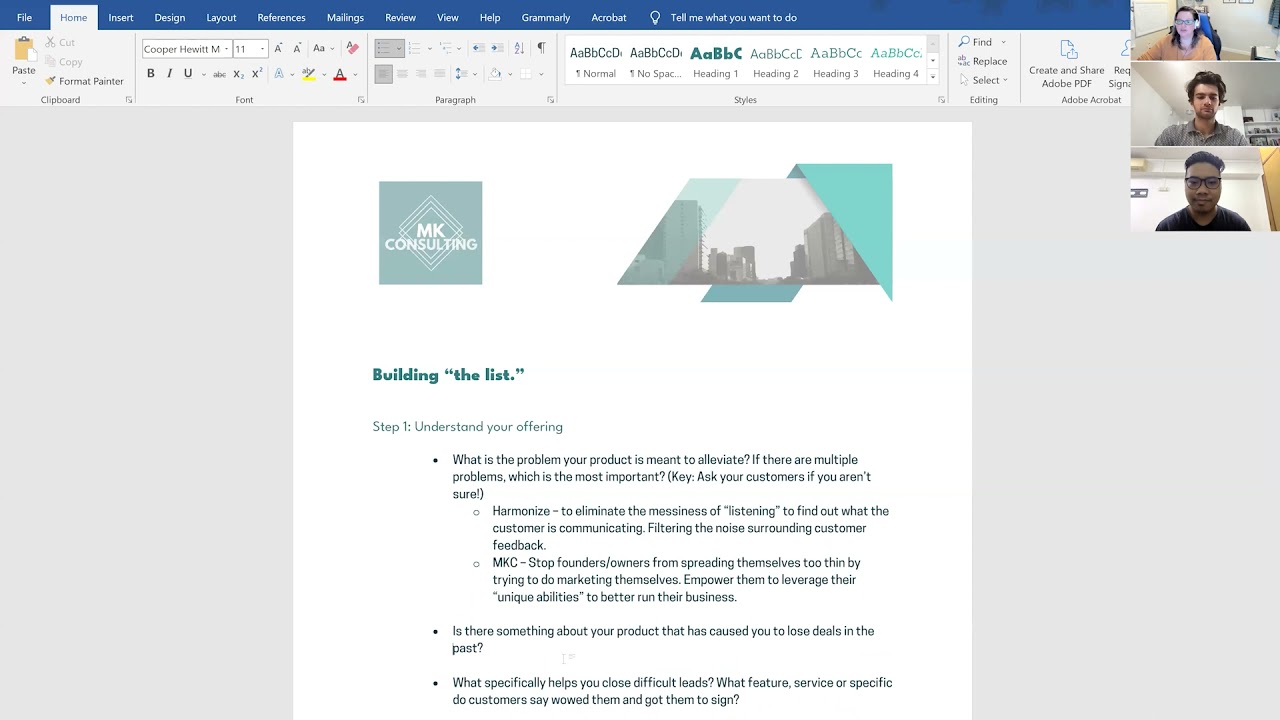
Megan Killion walks SDRs through building a target account list, defining ICP and buyer personas, and crafting outbound messaging. The session covers LinkedIn and email tactics, buying signals, common objections, and KPIs like churn and customer lifetime value.
Chapters
All right, good morning, guys. We have a couple more people joining us, so we'll kick off on time and let them kind of filter in. Um, for those that have not been here before, we start each week, um, with a positive power-up, which is just one win from the last week, professional or personal, doesn't really matter. Um, for me, my win is that we spent the day at Animal Kingdom yesterday as a family at Disney, and we all, uh, left in one piece. Um, Disney reopened a couple weeks ago, um, their annual passholder program, and in the beginning it was very, very calm and chill and not a ton of people were at Disney. But things have caught on, and as you know, things have been opening up in the state of Florida, more and more people have been showing up. So the parks are quite crowded now, and I was an introvert before COVID and now I am noticeably an introvert. When I go out in public, I'm like, oh my God, why are there humans? Why do they touch each other? This is terrible. 6 feet. Give me 6 feet all the time. Passing it forward to Nathan.
Yeah, I think yesterday what I want to highlight is just that I was able to link up with my grandparents for the first time in about 5 months. That was really awesome just because of COVID and all that's been going on and where I've been in the world. I hadn't been able to do that, but it was really awesome. I had dinner with them and just got to catch up. So that was great.
Awesome. Shafiq?
Hi guys, so similar to Nathan, I just catch up with some of my old, old primary school friends. So it's been about 8 years since I saw them. So yeah, we had like dinner and just catch up on some, I guess, life over the weekend.
Awesome, glad to hear All right. So, um, what I have prepped for today is building the list, not a list, but the list. Um, is that relevant for both of you right now? Because if not, we can switch to something else. But, uh, Shafiq, you in particular, uh, building the list relevant for you? Okay, awesome. So when I say the list, I mean the guiding list for the whole organization. This is separate and specific from your own outbounding list, right? So as SDRs, top of pipeline salespeople, We might be reaching out to dozens of lists of different kinds, different industries, different targets, etc. When I'm talking about this list, the list, I am talking about less than 100 accounts. Generally speaking, I think 50 is in the ballpark of what— where you want this list to be. That are your company's most targeted, most desired companies. Um, so there's a couple of things that should be true of any businesses put on the list. First and foremost, it should be a logo that you would separate— like, celebrate if you won it. Um, so unless your ISDP is truly a small business, the companies on your list will probably not be small businesses. Most likely they will be enterprise organizations. They should be in your ICP, your ideal client profile. So these guys should be like the crème de la crop of your ICP. And then most finally and most importantly, your list should be companies that you feel like you have almost an unfair advantage with because your product is such a good fit for them. You know that if you could just get in the door, if you could get them to talk to you, these people, they have to buy from you. You have a problem, they have a problem that you can solve with your product or service. Okay. So step 1 is to understand your offering. So first and foremost, what is the problem that your product is meant to alleviate? If there are multiple problems, which is your most important problem? Shafiq, can you answer that question for Harmonize?
I would say To eliminate the, uh, is a word for like messiness in terms of, I would say, uh, finding out what the customer is actually communicating. So it's more of lifting up a filter.
So filtering the noise.
Yes. Grabbing customer feedback.
So like, I totally hear what you're saying. Basically what Harmonize is doing is it's filtering for the most important pieces of customer feedback, right? And the program itself allows them to sort and organize the feedback in a way that they can take action on. So instead of just Like, for example, if I'm an enterprise organization like a Target, for example, right, you can imagine how many reviews Target gets. Like, they, they have that thing at the end of their receipt asking you to review them. So how do they filter all the noise that they get as feedback into action items, right? What is that feedback about? Is it about The aesthetic of the stores? Is it customer service? Is it the checkout? Like, what are people talking about, um, and how can they filter that? Nathan is brand new to my team, so I'm gonna help him out here and tell him that the problem we solve for is founders' time. So, uh, on the MKC side, what we're solving for is we stop founders and owners from spreading themselves too thin by trying to do marketing themselves. We empower them to leverage their unique abilities to better run their business. Okay, so my question, the next question is, is there something about your product that has caused you to lose deals in the past? Do you know if there is for Harmonize2Peak?
Not that specific, actually.
I can say that on the MKC side, Sometimes price and timing are our top 2 reasons that we lose deals. Normally, once a customer talks to us, we're unlikely to lose the deal, but we do sometimes. And more often than not, it's like just things changed internally. I've never heard feedback from a customer that it was the product. But it doesn't necessarily mean that it wasn't. Because buyers are liars. And just like, you know, when you're breaking up with someone and they're like, but why? And you're just like, it's, it's me. Like, it's not you, it's me. Buyers are just like that because it's, it's hard to tell somebody the problems, right? If someone's asking you for feedback, you don't want to give them negative feedback. So just because someone's not telling you that there's something wrong doesn't mean there isn't. What specifically helps you close difficult leads? What feature or service are specific to customers say wowed them and got them to sign? With Harmonize, do you know if there's anything in particular that really gets customers to sign?
I would say maybe the demos, like product demos, when it comes to the visualization of the consolidated data. Yeah.
Yes. So that's, I mean, ultimately, like, that's UI. It's their user experience, right? But really, like, UI/UX is really what they like. For MKB, it's a little bit different. But typically, it's, it's like the fully outsourced marketing. But they like the idea of just having it off their plate. Like, oh, I don't have to think about marketing anymore. Megan's team does that. Could you explain your product to your grandparents? The tough one. Shafiq, could you tell Grandma and Grandpa about Harmonize?
Honestly, I'm just like, oh, I'm working in the tech industry.
I know, I work in the tech industry. I get it. For most of my adult life, I've sold really complicated technical products that I had a hard time explaining to my parents and grandparents in the beginning. My parents are— were— they're both passed away now, but they were older. So like my mom, when she passed away, was 77.
Mm-hmm.
So she would often ask me what I did. And I ended up saying that I, I help make the internet work better. That's when I was working in CDN. That was kind of the answer. So when, when you're trying to explain to grandparents, young child, someone who doesn't have a concept of like the complicated things that you can do with your product, you try to slim it down to the most broad overarching Problem that you solve, right? So like, Shasik, if I was trying to explain to Grandma and Grandpa what you do, I would probably say I help businesses listen to their customers. Right, right, right.
Yeah.
Yes.
Nathan, it's actually not that hard to explain what we do. Like we just we do sales and marketing. It's not it's not a complicated sell. But like for Harmonize, for sure, I would say that you help businesses listen to their customers.
Yeah, now that you mention it, I guess, yeah, I was thinking too hard on how to explain AI and all that stuff.
Yeah, but you don't have to. So what it's not asking is like, this is where we tend to get lost, right, as salespeople. is that we jumped to the how before we explained the what. Extremely common in B2B technology sales because the product's cool, right? The technology's cool. It's like the AI is doing a bunch of complicated shit behind the scenes that makes Harmonize work, and that is really exciting. But if you're talking to anyone on the planet other than a technology person, They do not care. They care that they can listen to their customers better, um, or that they can take action on what their customers are saying faster. You know, like, those things matter. Um, if I'm the end user, right, and I'm the VP of customer success, and you're telling me all about how this AI works, it's fantastic, and all of this Wonderful stuff that it does and how it works and how it collects data on the web. I'm sitting here like, okay, okay, and why do I care? And at the end of the day, if I, if I'm the customer success person, I care because this product helps me to decrease churn. And that's it. That's all that matters. That's the only thing I care about that I have to take to my boss to be like, explain to me why you spent $50,000 this quarter on a new tool. Well, sir, we can decrease churn by 10%. Fantastic. Great. Everybody gets a pay raise. What would your top customers say is the most frustrating part of your product or service?
I think it's the initial wave of like information overload to get a grasp of what is or how to actually operate The platform itself. Yeah.
Product overwhelm, right? Um, so I haven't actually— I've seen Harmonize from a HighLevel demo. I haven't used it. I have, however, used Poseidon, and I can say for sure with Poseidon, the number one thing is like, I gotta set it all up myself. It's a lot of work up front. Um, I don't know if Harmonize comes out of the box in a similar way where it's just kind of like build it yourself. But if that's the case, people are definitely going to be overwhelmed. They're going to be looking at it like, okay, so it can do all these cool things, but how do I make it do cool things for me? What would those same customers say is the most helpful?
I think it goes right down to, like I mentioned earlier, the visualization aspect. So we're just Granting them the ability to actually see from a bird's eye view of what their customers are talking across multiple platforms and fronts.
So maybe the ability to organize the data, right?
Yeah. Yeah.
Would you be comfortable using the product or service you are selling in your day-to-day life?
Yep, I would. But I guess because I'm familiarizing myself with it.
Yeah. Um, so this right here, what we just reviewed, is your unique service offering. Um, so this is the part that if you don't have a marketing team, could be a little bit of work for yourself, right? Which is Like, how can you get more data from your existing customers on how they're leveraging the product and their feedback on it, right? So like, what do you like? What don't you like? Why did you choose us against our competition? That will help you sell to everybody else, because the most important and most valuable feedback you can get is from current customers. On the flip side of that coin, Anytime you can capture feedback from people who chose not to go with you, also incredible data points. Like, the only— the tool— the kind of like twist there though is that people who don't choose us usually don't want to keep talking to us. Customers, we have a little bit more leverage with to be like, hey, can you give me some feedback on how you're using our product today? Because they're a current customer, you can do things like credit their bill $100. Their time or whatever. Okay, so step 2 is to understand your buyer. I'm gonna drop this link into— oh no, the chat. Um, this is a very simple buyer persona builder. However, it's, it's visual, it's good, very easy starting point for understanding buyer personas. It'll get you through like the essential stages of creating a persona. It'll cover the industry that they work in, company size, job title, revenue. Um, I'm gonna let you guys kind of do that on your own too. Like, you can go into your CRM and find that information. Um, but diving a little bit deeper, because this is where I think you'll find the real meat of what a good customer looks like. Um, their most substantial challenges and pain points. So like, what issue do they use your product or service to solve? Are there multiple pain points they experience, and which can you solve for? So, um, for Harmonize, right, we already kind of reviewed what the main point— pain point is, but do they have other pain points that you aren't solving for? So like, let's just say you're talking to Your product team, right? When you're talking to someone who's in product, what other problems do they have?
Maybe the. Ability to actually contact, let's say, clients or customers like in real time, because sometimes it's a bit tough when it comes to differing time zones or there is no stable form of communication.
Right. There's no like customer management system built into Harmonize, right? So I can see how that would be particularly painful. Like I'm seeing I'm seeing what a customer had to say, but I have no way of seeing which customer that is.
Yes.
To reach out to them and then, you know, get more feedback or solve the problem.
Yes.
From an MKC perspective, I can say that there are a lot of problems we don't solve for our customers, like a lot. We don't do finance, and that comes up all of the time. We're, we're very lean on the reporting. So they're not getting a ton of analytics back from us. So key success metrics and goals. How, how are your customers measuring success today? Right. At Harmonize, what, what like key metrics, KPIs do your customers care about?
I think it's more of time savviness. So how fast they can actually get results. Currently it's based on, let's say, a few months or weeks of work worth versus maybe a few days.
Yeah.
Well, we don't—
maybe say some KPIs would be like Churn, not church, churn. Like, are they looking to lower the number of people that stop being customer? And then overall satisfaction rating. I think there's internal things too, like the teams are looking at, like productivity. And those are going to be things you're going to speak to. it during your conversation. But when we're looking at like what we're promising them that they'll get from Harmonize, I think like a decrease in churn and an increase in customer satisfaction would probably be your big like KPIs that exist in a dashboard, right? Like if I'm, if I am in customer success or customer retention, I have a dashboard that I'm looking at every day and Somewhere on there is definitely like how many customers are returning. There may also be, and this is one probably to ask Ash about, but there's likely a like average value per customer that they may also be looking at. One of the reasons to invest in customer retention and customer success is to be able to increase what we can charge each customer. And, and with Harmonize, if you're getting really good feedback from your customers, they may be able to use that to upsell. So that might be another one in there. And for MKC, we have some pretty straightforward ones. And we're looking at cost per lead. So that's lead acquisition. We are looking at conversion rates. So there's a couple of different conversion rates because conversion happens at different steps in the process. So probably the most common conversion metric that we talk about is website conversion. So visitor to lead. Conversion, people looking at the website versus people who actually will fill out a form or call you. That's the conversion we talk about the most. We talk a lot about just leads in general as like just a number of leads. We also look at leads per channel. So this is like lead attribution. And then we have some pretty, pretty basic like productivity, revenue. Those are the ones we talk about the most. There is one called share of voice that you'll hear me talk about a lot, which is very directly related to like thought leadership. and brand recognition. So share of voice is like how much of the general discussion around the topic is coming from me, right? So I would care about maybe my marketing share of voice. Our customers are more likely to care about CDN share of voice, managed service provider share of voice, like how much of their brand are they capturing? Product preferences. What do your customers like the most about your product? What do they dislike? What are their must-haves when it comes to new purchases? And I'm going to give you guys time to do this off this call. I'll send this document. But, um, when we're talking about this, it's— you really have to get the feedback from the customers about what they like and don't like, as well as like, what do they actually Have to have when they're doing new purchases. Technographic, which tools they already use. So for Harmonize, that's going to be the other, the other review platforms, right? They're already using Yelp, Google. Sorry, what was that?
It's pretty manual, like they use Google Surveys and Forms, but when it comes to the analytics of it. It's pretty manual.
Yeah. Yeah. So I'd say for Harmonize, right, they're using Google, Yelp, they may be using some kind of NPS internal system. So really quickly, because I have you, Shafiq, what are the number one problems of All of these things is that angry customers leave reviews whether you ask for them or not, right? If I'm pissed off, I will find a way to review you. Happy, satisfied— let's go with satisfied customers, people who feel like you did your job, they were satisfied. Extremely unlikely to leave a review. Raise your hand if you've ever left a review because you felt like someone did their job to completion, did not go above and beyond, and you weren't pissed off about anything. Do you ever leave a review for that?
Never.
No, me neither. Cool. Never have I ever gone to a restaurant, been like, that was fine, and felt like I needed to leave a review. The only people doing that are people who are professional reviewers, right? So people leave reviews when they're mad, especially if they're really mad. Like, if I have a really bad experience, oh man, we're getting in the car, I'm finding them on Facebook, on Yelp, on Google, I'm leaving a review on every platform. If I'm just a little bit mad, like I felt like they didn't do a great job, I don't know if they've got— if they've got the review at the bottom of the receipt, I might go fill it out, but I'm probably not going to go out of my way. If I'm satisfied but not impressed, 0% chance of leaving a review. If I'm impressed but not over the moon, I might leave a review if it's really, really easy. If it's one of those ones that I can scan with my phone and it takes 3 seconds, sure. If I'm extremely, extremely, extremely impressed, I'll probably leave a review. So you've got this massive hole in, in data collection. And a way to solve for that is a more conversational outlook on listening to our customers, right? So instead of waiting for them to go leave a review on a Yelp or a Google review or whatever, listening to mentions of our brand on other platforms, right? Like, what are people just saying about us on Facebook, on Twitter, on Instagram, right? Right. When, when someone asks the question, which airline provider do you like? What are people saying? And that's a piece that's not captured anywhere other than Harmonize. Right. People can't— they're not listening that way. Engagement, Persia. Oh, and for us, tools that they already use. Typically some type of CRM, although we have had plenty of customers that like come in and they're like, oh yeah, we're still using Excel spreadsheets. I'm just like, bless your heart. They usually have a website. We do particularly well with people who are using WordPress. Like they're, they're still using some type of like CMS or really base level marketing tool for their website, like WordPress, GoDaddy. Wix, that type of thing. And that's really it that's related to us. Engagement partialities. So here, this is hard, especially if you sell to multiple buyer personas, but it's one of the things that matters the most. So I'll use myself as an example. Like, If you're trying to sell to me, if you call me, I won't buy from you. If that's our first interaction, if the first conversation you and I have is on the phone and you're cold calling me and I didn't give you permission to call me, your deal is over, my friend. If you reach out to me on LinkedIn, almost a 100% chance I'll respond to you. Um, even if that response Now, I'm a marketing person. I'm a copywriter. A lot of times my response is to fix your messaging, but you got a response, right? Like, I will respond to you. I'm probably gonna fix your messaging. Email, it could go either way, honestly. Like, I might respond to you, I might not. Who knows? If you can get me on a Zoom, I almost always buy. I can't look people in the face and tell them no. I feel bad. I'm a very emotional buyer. I buy off rapport. If you can get me to like you, you spend some time on Zoom with me, I'll buy from you. That's one person, right? There are probably 15 different types of marketing buyers. People who like calls and hate it when you message them. In fact, if you go to LinkedIn And you just kind of like look at your feed, you will probably find some of both people who talk about like, pick up the phone and call me because I hate LinkedIn messages, and people that will tell you, if you call me, the deal's over. So what the fuck do you do? Right? As, as a, as a person whose job it is to reach out to people and get them to talk to you, how do you pick a method? So Here's my trick, right? Permission-based messaging. Okay, so if you ask people for their permission, more often than not, they will not be angry. So if your first message on LinkedIn is, hey man, you're on my list, that means I have to reach out to you. And I have a product that I know you're gonna love. But before we get started, I want to make sure I'm reaching out to you the way that you like. So let me know, you want me to email you? Do you prefer talking on LinkedIn? Or can I call you? You're taking a risk because they might just not respond to you. But there's a really good chance they're gonna say, give me a call, I like calls, or send me the message here. And at least you're being respectful. Then so this how many times does it typically take your buyers to engage with sales outreach? Super super important for your mental health. Okay, it feels like defeat when people don't respond to you, right? Shafiq, how many times have you been like, oh man, I haven't gotten any responses. Makes you feel sad. A lot, right? Yeah, all the time, right? So one of the most important things we can do for ourselves as salespeople to make ourselves like happy, get the good chemicals in your brain, is remind yourself what the industry average is, right? So I've been in B2B tech sales for 6 years. And in 6 years, we went from the average outreach being 3 To the average outreach being 12 to 15. Woof. It's a big— that's a big change, right? Just to remind, and I— you have to look up what it is for your industry, right? And your buyer personas. But at the end of the day, like, remind yourself that it's normal not to get a response to the first message. Even if you're really good at it, still normal. Um, so look that up for your industry, like B2B tech, B2B sales, whatever. Um, how many tabs typically take of outreach to get a response? And make sure you're going above and beyond that, right? So if the average is 12, then you need to be doing like 18 to 20, because there are people that are more than the average, right? Um, then communication styles. So this is really important when you're producing content. I think I've mentioned before that of my customers, 90% of my customers come inbound to me off of LinkedIn. Why? Like, why, why, why are people reaching out to me to buy from me? It's because I talk like they talk. About the things that they care about. So knowing what your customers say, how they say it, what they talk about, why they talk about those things— super, super important for you in your outreach, but also in your content. The most amazing thing that can happen as like an SDR is when you move from, I have to call and email and message all day to fill the pipeline, To my pipeline fills itself. It's incredible waking up in the morning and being like, oh, look at my inbox, it's full of people who want to buy things from me. Fantastic. I don't have to cold call today. And you can do that by using their jargon. Important caveat, if you use it wrong, you sound like an idiot. So make sure you understand the words and how they're being used before you use them. So, um, Shafiq, what types of content do you think your buyers consume? Um, let's see.
I think it's more of the performance aspect. So, I wouldn't say it's too niche or it's too specific. It's quite a generic approach currently.
Yeah. Do you have any like examples of words or sayings that are really popular amongst your buyers?
Oh, maybe like eliminate, let's say, So-and-so percentage in terms of time.
Yep, they definitely talk in percentages a lot.
Yeah, and we tend to use numbers as well. So maybe cut down from 2 weeks to maybe so-and-so numbers of days.
Yep, numbers and statistics. What this is called is like, it's very specific actionable language. So they're using like $300 million, or, you know, they're, they're being very specific in their language. Some terms they're probably using are like UX/UI, really commonly used. They're probably using a lot of different KPIs. And you can listen to what they're saying in order to kind of replicate that language right back to them. Um, highly, highly recommend follow the leaders in your industry on LinkedIn and just pay attention to their posts. Just start paying attention to the languages they use. How do they talk? Um, even formatting can be very hit or miss, right? So there's a very trendy thing on LinkedIn now where people are almost writing poetry with line breaks, like reading a haiku. Common in some industries like sales and marketing. This is becoming very powerful, very popular, and in customer service. But that's not happening over on the tech side of the house. Like, they're not talking like that. They're not changing their language. So just kind of watching for where the language is changing and why. Key motivations and buying triggers. So raise your hand if there is specific things that almost always cause you to start buying, right? Do you have like— let's call them triggers. Do you have buying triggers? I have buying triggers. Do you have any? Come on, you guys have to have seen like an ad That you know will work on you every single time?
I think like a chic like chocolate milk. I know that's pretty funny.
Chocolate milk. All right.
Every time, every time. Or honestly, any chocolate milk. It doesn't— if it's just like kind of bucolic or just like a nice little country label, or if it's even chic, the exact opposite, I'm just like—
So anything that isn't Nesquik, right? Like you're just like, oh cool, chocolate milk I haven't seen before, I'm buying it.
I'm like, this has to be incredible.
All right, we got it. Yep, absolutely. How about you, Shafiq? Any particular things that make you very likely to buy?
Maybe YouTube reviews, like when they pop up on recommendations.
Oh yeah. All right. So for me, Facebook ads, like, oh God, after midnight. If I am on Facebook after midnight, I'm gonna buy something so bad. I'm an impulse buyer, impulse shopper. So like inserted ads do incredibly well with me. Um, I've downloaded so many apps I've never used from those stupid, you know, like the inserted game app ads. I'm like, why?
Yeah.
I— you know what the worst is, is when I download one that I've downloaded before and then deleted because I didn't play it, but I still download it again. Like, I'm the perfect example of how well marketing can work when done right. Advertising can work when done right. Um, so there's one like breastfeeding mothers are impulse buyers so bad. Like, it happens. Everyone I know who has breastfed children has made like a mistake purchase in the middle of the night. Like, whoops, sorry, spent $800 on Amazon last night because it was like 2 AM and I wasn't thinking. Um, so there are times of the day that are buying triggers for people. Like for me, overnight, if it's past midnight, I'm so weak, so weak. Um, but a lot of people, it's the opposite. It's more like early morning. Catching someone in their morning is the best time for them to buy. Um, how about hungry? You guys ever bought something that you know you shouldn't have bought because you were hungry? Have you ever been to the grocery store hungry?
I would say that I definitely less, less at the grocery store, but definitely when I'm at like a restaurant or if I just see something on the street, if I'm walking in town, there's a bunch of restaurants or I see something in a window at a cafe and I'm hungry, I'll get it. And if it's terrible or like after working out, after doing some, some activity like that, I'll just buy something enormous, immediately regret the decision.
Yeah.
But still, still have done it.
For me, it's definitely— it's the grocery store. It's like grocery shopping when I'm hungry. I buy so many things that I'm just like, what? I don't have a use for this. What am I doing with this? Like, and weird stuff too, where it's just like you're hunger buying. So like tomato paste is one that happens almost every time that I'm hungry. I don't cook using tomato paste very often. I don't know why I buy that when I'm hungry. It happens. Crackers. A lot of like snack stuff. So this— these are all very consumer examples because that's what you can personally relate to. When we switch it around to business, what we're talking about is pain response, right? So when you're selling to someone who's in B2B, things like an annual report that didn't go so well, quarterly earnings being down, churn being high, the pain being very real right now. It's opportunistic buying, right? Um, so like my marketing agency, Fingers and Zazzy, the guy who reached out to me, Matt, who I love and he's fantastic, his outgoing message to me, not strong. I responded that his message wasn't strong. I was like, what are you talking about? I'm not even in cannabis. Because he had used clearly some type of automated software to to message me about the industry I was in. But what they got right, and I don't even think it was on purpose, is the timing for me was super super good. So I was literally in the middle of Googling like outsourcing some of my marketing to another agency, like which are Agency I should partner with because my current agency was too expensive for me to be working with right now. Lowen Stingus and Zazzy popped into my inbox, and they sold me one call close in one day because I needed it, and I needed it right now. So timing is the number one most popular buying trigger, and it is the hardest to solve for because how do you know? And in recent years, we have more and more of these buying signals types technology out there. Like, uh, have you heard of Bombora? Raise your hand if you've heard of Bombora. TechTarget. Okay, those are 2 different brands that listen to buying signals across the web. Things like Googling things, comparing pricing on things, etc. Those are buying signals. And they do something very similar to Harmonize. They're listening to the internet and then putting that into action. The problem with current buying signals is that there's about a week delay between someone Googling something and me knowing that they've Googled it. So it's— the AI is slow, right? It's not telling me the minute it happens. So by the time we get those signals, they're late. So at the end of the day, the only way to really solve for this is just to always be there, right? Like constantly be top of mind by being on someone all the time. Customer lifetime value is understanding the average value of a customer over the lifetime of being a customer. So you have to be able to do the math on all the averages. Like What's the average contract value? How long do they stay customers? Do they upsell? And then you get an average customer lifetime value. So at MKC, the average customer lifetime value is somewhere between $80,000 and $100,000. Um, Hashfly would be on the high end of that. They were a $450,000 customer. And then on the low end of that, we have customers that come to us for one project that might be $5,000, $10,000. At Harmonize, do you know how much on average a customer is worth for you?
We don't really have like a specific range actually, but we try to go maybe about $5 million and above, like in terms of revenue. Yeah, because that way they have like the, I would say, resources that they want or the mass volume of customer reviews that they need. in the next stage of product launch or product iteration. Yeah.
Perfect. Okay. And then referral potential is like how many referrals could a customer possibly give you? So if someone's an enterprise organization and you could get them to like post about you on your— on their LinkedIn, that's hypothetically thousands Thousands of referrals in one post, right? If it's more of a small business, like maybe you'd be lucky if they told five friends, right? So this is another thing to think about when you're building your list is you know how likely are they to refer you and how big is that reach? Like could they refer you to a lot of people? Product use is. Have you heard the term land and expand? So land and expand is a really common strategy in businesses that have multiple products, right? So if you're only selling one thing, less relevant for you. But like, let's say at MKC, right, we have a customer who's interested in lead generation. Right, and that's a relatively low-cost product for us that we don't make a ton of money on because we have to pay our people to do it. But that customer could also be an outsourced marketing customer, could possibly be a fractional CMO customer, definitely needs a new website. That's a land and expand, like we're going to land the customer and then grow into more parts of their business. So that is like the product use piece. It's a customer can be worth talking to about something if we think they could become a bigger customer over time. If, if you have a customer that you're like, they're probably going to buy this one thing from us, it's going to be a one-off and we'll never hear from them again, that's going to be worth a lot less effort than someone who's worth more money over time. And then advocacy is how likely they are to become a brand advocate. Like, would they preach the good word of Harmonize to other people? Um, and then brand value is whether or not they lend credibility to your company because of their brand value. So like, perfect example, this one is like a Disney. If you can land Disney, you will win other customers purely because their logo's on your website. And there's other brands like that, you know, um, the Johnson Johnsons and Walmarts and Targets, um, the big home name brands. So like, if you can get a household logo, you know that will make your brand better just because people recognize the logo. All right, I'm going to stop there for today and let you guys ask any questions you might have. Um, Anybody questions?
You did say that you're going to send over us that, that page you just went over. Awesome.
Yeah, we'll send. Um, that is all for today then.
All right, thank you.
Bye guys, see you next week.










