What is Hello Polygon? | Support for dyslexia, ADHD & Dyslexia | Meryll DinDin on Zero Hiccup Talks

Meryll Dindin, CTO of Hello Polygon, discusses a telehealth startup that diagnoses dyslexia, ADHD, and autism. Co-founder Jack got diagnosed with dyslexia late in life. They serve about 10 clients weekly across California and Florida, with plans to expand to 32 more states.
Chapters
Hey, hello Meryll. Hi, how are you doing today?
Doing great.
How about you? Yeah, doing good as well. Welcome everyone to this podcast where we are hosting Meryll Dindin from France and who is building his startup based in Santa Monica. Called Hello Polygon. Meryll, would you like to talk more about Hello Polygon, what it does and the problem it is solving?
Sure. Polygon is a startup here based in Santa Monica, a small human-sized team working on providing learning difference assessments. And so learning difference here would usually people refer to as dyslexia, dysgraphia, dyscalculia, ADHD, autism spectrum. And we just solve many of the pain points in the industry would it be in terms of accessibility, affordability, and just like a gold standard that tests can be administered. So we're just somewhat fixing this reproducibility crisis in psychology as of today.
Yeah, great. And, um, you know, what was your moment when this stuck, when this idea stuck to you, Meryll? Would you like to give a bit of background?
Yeah, so we, we were two co-founders, Jack and I, work in Polygon. We met at Berkeley a few years ago. Initially, the idea came more from Jack's perspective, given that he was diagnosed with dyslexia after university, which is a pretty fucked up moment, if I may, given that you go through academia for a long time and then realize that you were struggling on some matters for reasons that were out of control. But ultimately, the The other thing we're trying to do with Polygon is to really make sure that people understand that this is a concept with strengths and weaknesses, and this is not just about disability and that there are dyslexic self-made millionaires everywhere. Steve Jobs was dyslexic, Einstein was dyslexic, Michael Phelps has ADHD. So that's the kind of thing you want to understand, that you can harness some perspectives from the condition itself. On my side is more related to the neuroscience and neurodegenerative diseases. I used to— so I graduated in France in computer science as well as a bachelor at the med school concurrently to that master, then worked a few service projects for medical devices, specifically Parkinson's, Alzheimer's, and then just realized that neuroscience and neurodegeneration is a big thing. Turns out the test we use in learning difference is the same that we use in neurodegeneration. So, um, yeah, that's how I fell in love with the field. I'm more of the data tech wizard guy in the company. Um, but yeah, that's how, that's how it all came together at Berkeley. Once we met with Jack and he exposed the story and just resonated a lot with this.
Cool. Meryll Dindin, would you like to tell about the scale of your operations currently? Like what size? Your company is in and, you know, like what aspect of the journey your company is in right now today in 2022 and 2023.
Yeah, so as of today, I think we're 10, 3 psychologists inside the company, which gives us the ability to provide services for around 10 clients a week. Um, where we are at right now, we're at the scale phase, so we're post-seed and pre-Series A. So that's where we orient ourselves. And yeah, in terms of scale, for right now we're operating in two states, California, Florida, and where, um, the plan is to grow in 32 more states within the next 6 months.
Okay. I know you had some roots in California with the Berkeley education, so California was first choice. Uh, any reason for Florida as the second choice of your operation?
Uh, choice, uh, well, there, there were legal constraints we had to bypass and Florida turns out is easier than the other. Then the Florida is also very excited about the field of neurodiversity in the sense that they do provide a lot of backup for families who have children with unique abilities. So they have grants, the systems, and they're way more receptive to the concepts of strengths and weaknesses, personalized education, testing, you oneself versus in California, you're more in a world where people believe, let's say, have seen everything and are the experts in the field. So it's harder to come with the, with the develop props and say, okay, we're doing it better, more predictable, like it's gonna go faster. You're not gonna have to pay $12K, you're not gonna have to wait for 10 months. Um, but yeah, given that there are a lot of established psychologists here acting more of a Wild West strategy, California is a tougher market than Florida. And there are other nice states in the United States where they also have a lot of incentives for families to help the child thrive, um, by understanding the strengths and weaknesses.
Okay, great. So Meryll, um, you know, we'd like to move more towards the technology side of the company, so You know, as a health tech founder, you know, how do you see the technology roadmap for your company in 2023? What are your top priorities as a technical— in the terms of technology aspects of the product?
Yeah, well, tech-wise, we were lucky enough to be able to build our product from scratch. Everything has been built in-house. There's no no-code and it's fully controlled stack. Now obviously right now it comes with pros and cons. We have full custom customization of that stack, but right now in terms of scale, it becomes also a very nice, uh, interesting problem. How do you scale to 1,000 people? Do you scale to a million requests? How do you achieve that in a timely manner that's super robust? So right now I'd say the two, two main top priorities are scale and robustness. So performance tracking, like all the good stuff that comes on top of technology. The logs, um, and so forth, but also at the same time not compromising on security. So that's the big thing. We evolve in an industry that's very healthcare-focused, sensitive data. It comes with the data of very different people across the scale of time of everyone's development, childhood, family, and so forth. So that has to be secured, and we have to abide by COPPA, we have to abide by HIPAA, and SOC 2 and so forth. So this is like the kind of big targets we have, just making sure we are, uh, gold standard on like Soda on this perspective, and at the same time grow and scale without opening loopholes.
Right, right. And yeah, I mean, I, it's pretty much in line with what I have from many other healthcare founders as well. Like security in fact is one of the biggest theme I'd say, you know, like for everyone right now because One, there's just so much data right now. So what happens after collecting so much data? I think the biggest risk is data in that sense. So yeah. Okay. So Meryll, tell me more about, you know, like as a technology founder, a technology company founder, what were the challenges for you, you know, while building the platform?
Yeah. So there are many in-house problems. I can't talk about all of them, but ultimately the Challenges mostly ramping up a whole team to understand specific tech stacks. So for instance, tech stack here at Pelagon, we use Vue. Why don't you use React? Is a big conversation. Scale, in-house, real-time services, microservices. So there are a lot of, yeah, in terms of the problems we've had, we have had to rethink the way. So basically we have had to create something from scratch, whether it be a text editor, would it be a calendar solution, would it be payment solution, would be onboarding solution, forum solution, to make it compliant with our standards and our customs. The way we did solve it is just, yeah, we have a best-in-class team. It's just what it is. It took a bit of time, and that's for sure. Aside from outsourcing, we did outsource at the very beginning, would it be into the design or into the website implementation at the very least, but did end up not being as great as I was expecting. So just reverted to in-house for most of it.
Okay, and you had a full-time CTO, uh, in the team?
I am the full-time CTO.
Okay, okay, great. Because earlier you mentioned you were more taking care of the data, so that's why I asked if there was another person as well.
It's both. I'm taking care of the legal, the finance, the data, the tech, the HR.
So yeah, okay, yeah, story of Any founder. Yeah, I can connect. Great. Okay. So Meryll Dindin, like what, like in terms of technology advancement, was there a trigger that led to this idea being built now as compared to say 5 years back, or was it just, you know, was there an accumulation of such technology advancement or was it just a matter of timing for you?
Uh, that's a good question. Turns out it's kind of both in the sense that legally right now we're in a different system than we used to be. So we're a telehealth company. Turns out you could not administer learning difference tests via telehealth in the past. And COVID changed that. COVID changed the regulations, changed the scale, changed the cross-state boundaries and so forth. So that's a huge moment to be in for all industry. And then on the other side, tech-wise. Well, there's a lot of things we do with data. So we have internal projects that's specific to machine learning and that we could not have achieved in the past. Like the quality of speech-to-text, for instance, is not something we had 5 years ago. So right now we have the ability to merge speech-to-text and NLP to really have something that we can use internally. Similarly for report generation or whatever. Um, yeah, in terms of the rest of the tech stack, obviously there's a lot of the— those frameworks have evolved and matured. So like JavaScript frameworks for frontend, and like if you want to do the server-side rendering or prerendering just to make it more efficient, SEO optimizing type of stuff. So yeah, tech-wise, I don't believe we— we could have done it in 5 years ago, but we would have had to evolve the entire thing with time and to get as efficient as we are today. But ultimately it's more for regulations. Timeline.
Okay, great. And Meryll Dindin, what is the biggest technology theme that you see, you know, for 2023 for health tech and healthcare founders?
Well, the big thing I'm following because of my background is AI integration into the workloads of healthcare companies. So the big, the big theme is how to harness AI. So like right now, like for instance, Yesterday, today is good. They just released the DALL-E 3. It's like crazy generative text. So do you use that for like giving recommendations or like generating reports or that type of stuff in healthcare? You also need to train this very specific data schemas, like make sure that the data, like cleanup of the data, data engineering is a big team. In healthcare, cross-access to EHR has always been a big thing. So I don't expect it to reduce over time. But ultimately, it comes with how do you harness this AI and at the same time, how do you secure your data lakes? So this big conversation, which is the same problem I'm having right now, is figure out the compliance of the data lakes and how to use it, like how to analyze it, to see it, or to extract it from a— in a fashion that is legally compliant useful to the business, right?
Even, even data mesh is a concept that is coming up. Have you checked that one out? Like, even— yeah, yeah, data mesh is a new concept. Yeah, which you have been also hearing is a theme. Great. So that would be all for today, Meryll Dindin. But thank you so much, and this was really, uh, very informative. And for any healthcare founder, I think, uh, especially on the tech side, this is very, very useful. And, uh, you know, as all of us make plans for 2023. Yeah, thank you so much.
Oh, thank you very much, Aayush. It was a pleasure.
Thank you.
More from Meryll





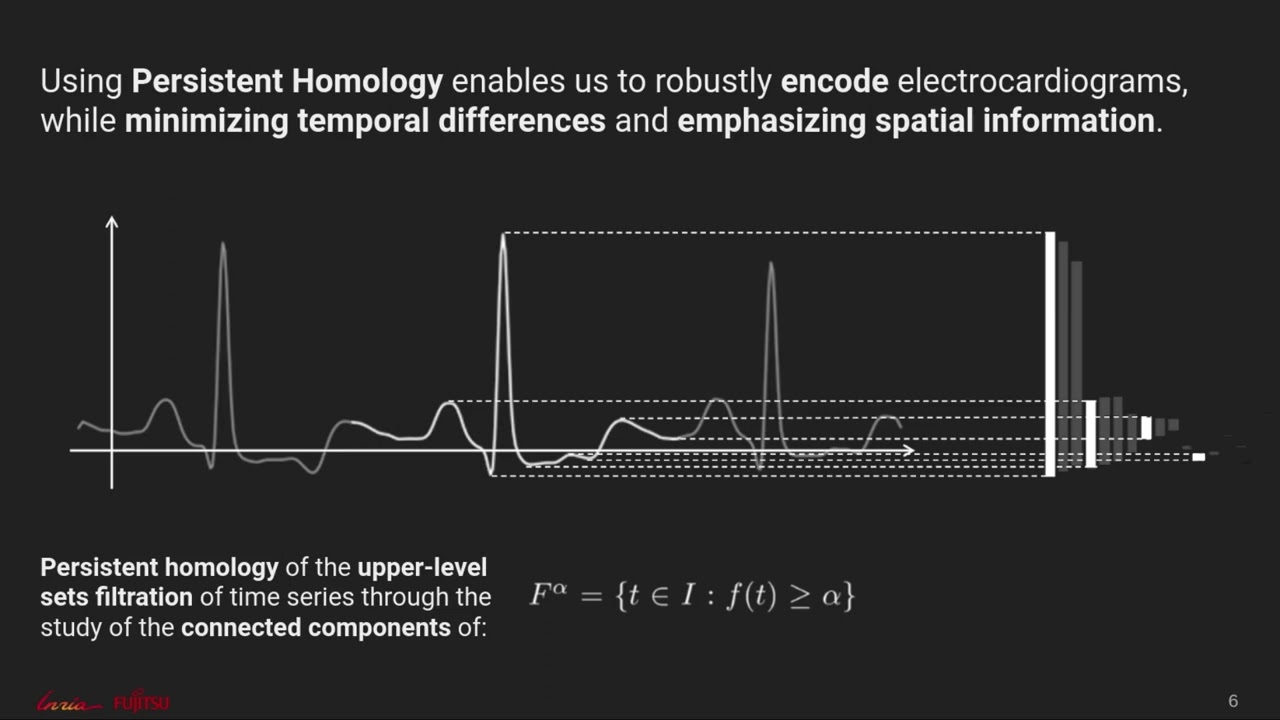
2020 - Topological Data Analysis for Arrhythmia Detection through Modular Neural Networks

