Full interview: Psychology expert talks about increase in demand for mental health resources
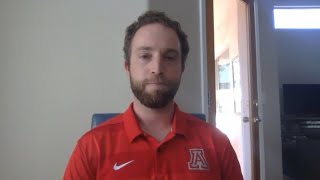
Psychologist Alex Auerbach discusses how COVID-19 hit student athletes hard, canceling seasons and creating uncertainty about their futures. Mental health services shifted to telehealth via HIPAA-compliant Zoom and email, and demand eventually spiked. Sports psychologists now screen for trauma and help athletes manage the return-to-play transition.
Chapters
So you're dealing with young adults, student athletes who are still maturing, they're still figuring out their view of the world, their place in the world, and what their future is going to look like. So for something like this to happen, how big of an effect can it have specifically on a student athlete?
I think for all of us, something like the whole world upside down, at least temporarily. But then certainly for student athletes who have been training for a full year, some of them to get to this point and to go out and to compete, some of them and potentially their final season, to have that sort of ripped away on the basis of a global pandemic is challenging both on a societal level, as many of our student athletes sort of appreciate the gravity of the situation, and then on a personal level, thinking about what this means for them in terms of next steps, considering do they return to school, do they not return to school and pursue their career, do they feel like they have unfinished business? And so there's that and looking to the future. And then there's also what was lost, the training was put forth. To get to this point, feeling ready to compete or earn a spot or whatever it might be. To have that change at the drop of a hat is really tough. Our student athletes have been incredibly resilient in navigating that, but have certainly faced some of those challenges.
So what are you doing to directly work with student athletes? Is it Zoom calls? Is it, you know, sending them materials for them to read? I mean, how are you now working with student athletes? And have you seen it sort of become, you know, just like coaches are sending them exercises and things that they can do to practice from home? Has it sort of become a part of a lot of these student athletes schedules now is to communicate with you too?
Yeah, we have tried everything within the bounds of our ability to at least reach out and offer support to our student athletes. So we've sent email messages, we've put up information on our social media, we've reached out through coaches, we've reached out directly. And so we're reaching our student athletes a number of ways. In terms of individual meetings, we are meeting with student athletes via HIPAA compliant Zoom to provide that. And there are some kind of cross state boundary issues to navigate dealing with. And you know, I'm lucky to work in a field that's sort of banded together to provide service across the country for student athletes if we've hit that hurdle. But then internally, you know, again, providing those resources through social media or email, our administrator has been incredibly supportive of Us jumping on leadership calls and providing information to all of administration to disseminate through support administrators and leadership of each individual program. And then coaches have invited us into their team meetings to share information about things we're all getting, but may be particularly challenging for this age group. Managing online classes now that everything's switched. Virtual learning things like managing sleep or maintaining. Coaches have done an incredible job of inviting us in and making it known that we're here and resource for them. And the student athletes have been very to that and have certainly reached out as they need it.
I would assume the answer is yes, but have you seen an increase in student athletes seeking some mental health services and other things that you guys do during these times?
Yeah, I think initially what we saw was a little bit of a decline as student athletes kind of settled into wherever they were. And now we're starting to see that increase. And student athletes who are experiencing the frustration of uncertainty around how long this is going to last, kind of, though still undecided and rightfully so about what they want to do for next year, some of them, and then just the kind of ever changing target in terms of returning to practice or returning to gameplay is really challenging. So we're starting to see that increase now.
I wanted to get your opinion. I was sort of thinking about it and especially the high school athletes. I've heard this a lot from them, but they say, you know, having something to still focus on even though their training or practice is limited, but at least they have sort of an outlet and something to focus on that can still train and that gives them sort of a sense of purpose. If anything, you know, if nothing else during these times, do you feel like maybe there's just athletes in general might have a little bit of an advantage over somebody who doesn't have that sort of outlet?
I think there's definitely a benefit for everyone kind of maintaining some sort of routine and activity. And I think the focus point you're hitting on is a good one. You know, athletes are talked to and trained in a sense to focus on what they can control. And in a situation like this, this is really challenging. But there's something for all of us to learn from that, which is really as much as is going on externally and sort of above our heads, if you will, having the ability to focus on what really matters to you, to engage in the present moment and to focus on what you can control each second of the day, can really help us all navigate through this difficult time. And I think our student athletes who have the opportunity to practice that really every day in season, whether that's in weight training or in their practices, I think do have in a sense an advantage and deliberate practice in that area.
How much do you think and I know you, you work with, with, you know, you work in college athletics but you know, NFL draft is coming up soon, NBA draft. We're still, you know, we're still moving on with the sports world as as much as possible right now. In general, how much do you think that your guys roles, you know, across all levels will sort of come to light and, and become even more important for the next year and beyond? Is whistle navigating this?
I think it's interesting that you ask. I've seen some stuff sort of circulating in our world about mental health professionals being the invisible first responders. And I think the question you ask is a great one, especially in athletics. I think people look to sport for a sense of normalcy and season and routine. And now we're getting a sense that things may not happen. And I think in that you'll start to see athletes come forward and talk about what their experience has been. Navigating this crisis and our role in terms of screening for things like trauma or grief and loss I think is going to be really important. And I think we will start to at least see some more discussion around and I've certainly noticed the increased discussion around mental health generally as we're navigating work from home and people balancing work and life and family. I think in sport the conversation is very similar as we start to navigate what it means to think about kind of returning to play or returning to normal, what that transition will be as there's a good likelihood that someone within any organization will have been directly impacted by this in some way, whether that was a loved one or a family member getting sick or whatever it might be. And so we'll really be on the front line of helping respond to that and help with the transition back to what this normal looks like. Part of our role is to help people best navigate transition and adjust to change. And I think it's probably not going to quite return to normal just like it was, you know, a month and a half ago. And so I think we'll really be at the forefront of figuring out what does that mean in terms of supporting student athletes as they return or if it's at the professional level. I certainly think my colleagues will be doing that. Navigating what it means to help those athletes return to play and return to practice I think will be really critical.
You mentioned A couple things, sticking to a routine being one of them. But what is some general advice that you've been giving some of these student athletes? I know every individual has their own situation, but in general, what are some advice that you're giving?
We've been sharing with our student athletes just the importance of doing their best and maintaining a routine, both in terms of coursework, physical activity and sleep. Sleep is the big one for an age group that's already sort of vulnerable to changes in their sleep dynamic. Working with our student athletes maintaining a healthy sleep routine and healthy sleep habits, knowing that their sleep situation has changed. We've talked about maintaining their course load so that they're basically taking their virtual classes when they would in class, in person to help maintain that routine. We're talking about getting up and having a healthy breakfast in conjunction with our nutrition staff or talking about training with our sports performance staff. And then same thing with like injury recovery prosthesis. With athletic training, we're also sharing some different resources that are available. Things like meditation apps that student athletes can engage with for free as an opportunity to help learn some stress management techniques and try a new skill. And then worked closely with our student athletes on figuring out ways they can effectively set goals during this time. Especially since we don't know how long this is going to go. Being able to break things down into a one week or two and setting something aside that the student athletes can really focus on that's meaningful for them has been sort of the the big picture thing we've been doing every couple weeks. Just do an athlete. We have the opportunity to talk to us about a goal that you have and help us frame the rest of these interventions, things like sleep and all that, in the context of achieving that goal so that we can really help them stay focused on moving themselves for whatever it is they prepare to do next.
More from Alex

Unlock Elite Performance: The Power of Motivation & Goal Setting, Momentum Labs x Exos Presentation




Talking Mental Health with Toronto Raptor's Director of Wellness and Development, Alex Auerbach


Matt Rhule, Dr. Brett Haskell Talk Sports Psychology and Mental Health Awareness
4D Athletes Podcast Episode 65- Alex Auerbach: How do we create an unfair advantage?


Hard Truths About Success Nobody Tells You: The Science of Winning - Brian Miles & Alex Auerbach