The pressure to perform in professional sport - Alex Auerbach – Toronto Raptors.
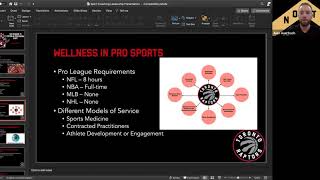
Webinar (Oct 2020) with Alex Auerbach (Director of Wellness & Development, Toronto Raptors) hosted by Cam Kiosoglous. Auerbach describes his transition from coaching to sports psychology after working in NFL/team operations and completing a doctorate in counseling psychology. He outlines the roles of sports psychologists (clinical counseling, performance skills, organizational consultation), distinctions among licensed psychologists, counselors, social workers and psychiatrists, and common service models (embedded sports-medicine team, contracted consultants, player development/engagement alignment). He reviews league expectations (NBA: full-time staff; NFL: part-time licensed provider; MLB/NHL varied), trends toward role expansion (interdisciplinary teams, mental health + performance integration, player development/life skills, program building), and COVID-related impacts (quarantine isolation, health anxiety, attention/focus difficulties). He emphasizes confidentiality balance, cultural leadership, EDI work, building psychologically informed environments, and practical coach-facing recommendations (use apps, focus on fundamentals, experiential learning, balanced critique). Q&A addresses cross-discipline communication, generational authenticity, cultural change, confidentiality boundaries, training coaches to have difficult conversations, and youth sport considerations.
Chapters
Hello everybody. Welcome to this evening's webinar with the Drexel University Sport Coaching Leadership Program. I am thrilled to welcome Alex Orbach from the Toronto Raptors to chat with us today about the pressure to perform in professional sport. And before we get underway, I'll just quickly run through a couple of slides. Next week we have actually in a couple of weeks we're going to give everyone the week off with the, the election coming up to go out and vote and do what everyone needs to do. But the following week, one of our graduates, Kim Chavers, who's now the head coach with the Michigan State rowing program, is going to join us. And then the following week, Asia Mahmoud is going to talk to us about what's going on with the program at Drexel. So we've had a star studded lineup the last few weeks. Ann Davis from tennis joined us last week and then Anna Swisher from weightlifting prior to that. And so, so we're thrilled, Alex, that you can join us. We're going to chat a little bit about your transition into being a sports psychologist and the transition particularly looking at theory to practice the research you've done and particularly your current situation with.
The.
MBA and then what you guys are doing moving forward. So I'll open it up and allow you to share your screen. And thrilled that, thrilled that you can join us and very much looking forward to this conversation.
Thank you very much for having me. I'm excited to be here with you. Can you hear me okay and see my slides? Okay.
All good, Alex? Yep.
Awesome. Awesome. So my presentation portion will be pretty brief. I'm hoping this can be more of a discussion as things go, but want to share a little bit more about my background and sort of lay the foundation around mental health and elite sport and talk a little bit about the ways that a sports psychologist might be helpful and then we can kind of unpack from there. So I want to get started by at least sharing a little bit about my background here. I'm pretty excited to be talking to this group because of my brief stint as a coach myself and obviously I think the role of coaches is just so critical in the development of college athletes where I used to work at Arizona and so certainly professional athletes and so my background, I really wanted to be a coach for a long time. I was a student assistant at the University of Arizona with football, graduated and took a full time coaching job at Rhode island and then did some brief stints in the NFL and team operations side and really pivoted into becoming A sports psychologist. After my stint with the Kansas City Chiefs, right around the time that I ended that internship, Jovan Belcher died by suicide. And that was a really pivotal moment for me in sort of determining what path I wanted to go down. And so I went and pursued graduate school. I have a doctorate in counseling psychology from the University of North Texas, which is one of the few sport performance and counseling psychology blended programs in the states. In my last role, I served as the director of clinical and sports psychology at the University of Arizona. So I oversaw all the mental health services there for about 500 student athletes. And we had a really comprehensive behavioral health team. We had sleep medicine specialists, we had sports psychiatrists, we had three mental health clinicians, and then a wonderful treatment team around us. And now with the Toronto Raptors as the director of wellness and development. And so sort of a brief overview of that role is that I'm responsible for all the mental health services for the Toronto Raptors, but I'm also responsible for player development. And so that's looking at things like sort of the business development or business of basketball, of our players, helping them understand and make the transition from being college athlete or international player to being an NBA athlete and what it means to be part of the Raptors culture. And so that role is sort of evolving. And there's a new position that I started in March, right before COVID struck. So I'm still figuring it out as I go. Covid has not made it the easiest transition, but we're making the best of it. I wanted to just share a little bit about the different backgrounds you might run into as a coach working with different wellness or mental health professionals. I want to hit on a couple of things that I think are really important as people start to consider the roles of mental health professionals, whether it's a psychologist or a licensed mental health counselor or. Or a licensed professional counselor in their organization. I think understanding who you're working with and what the backgrounds are I think can be really critical to making sure you're getting exactly what you're looking for, knowing that every program is different. And so you'll see here the difference between varying mental health backgrounds. So licensed psychologists are folks like myself sort of psychology. To become a psychologist, you have to have a doctorate, so PhD or PsyD in psychology. And it's really the gold standard of training as it pertains to providing mental health counseling. Of note, psychologists in the States can't prescribe medication. I know one of the questions that came in early was about medication, and medication Management psychologists can help manage medication and help clients understand the role of medication and treatment. But in most states, psychologists cannot prescribe. Then you have this next bucket of mental health practitioners. So this would be clinical social workers, professional counselors, marriage and family therapists. And these folks are also highly competent and highly qualified folks to provide mental health counseling. But they tend to have various bends on different dynamics or dimensions of mental health. So social workers tend to have sort of a slant around social justice and diversity and advocacy in particular. Marriage and family therapists have a bend towards family systems and family dynamics. And professional counselors, I think, are kind of jack of all trades. And then finally you have psychiatrists. And so psychiatrists, I think, is what most people think of when they think of mental health and medication. Psychiatrists typically have a one to three year residency where they really master medication for mental health purposes in therapy. But most psychiatrists do not provide therapy. And so if you're looking to build out a team, you may want sort of the full range of these folks, knowing that you're gonna get different expertises or different values coming from each area. And then the other piece that I think is critical here is the different exposures to sport. So I think for me personally, I believe that understanding the sport context, understanding the demands of sport, understanding the demands of being a coach or being in the front office, or being a GM or a scout, I think is really critical to understanding how the whole organization functions. And you will have folks that just want to provide therapy. And I think in that instance, maybe that full grasp of the sport context is slightly less relevant. But I would even argue against that. I think, I think as you're starting to build these programs out or consider this for yourself, I just think it's absolutely critical that the people you're working with understand the dynamics of sport, especially as we start to understand more and more how the environment around athletes is playing as much or a bigger role in their performance than anyone thought. I know recently there was just a study published on Olympians suggesting that their top five of their top six concerns, I believe it was, were all external factors. And the only internal factor was just sort of like staying focused. Over the course of the Olympic Games, everything else was getting, getting people tickets, managing family, managing coach relationships. And so understanding that environment is going to be critical for wellness professionals to intervene effectively in sport environments. So I'll talk a little bit about wellness and pro sports and just sort of an overview and then I'll talk a little bit about what I'm doing, sort of Specifically with the Raptors, to get a sense of what it might look like. So the different professional leagues all have different requirements for their mental health professionals. The NFL right now requires basically one full day a week to have a licensed mental health provider in the building. The MBA requires each program or each team rather to have a full time person on staff. And that person is expected to do a number of things to meet these sort of internal best practices, draft emergency action plans, understand and manage a referral network, those sorts of things. The MLB currently doesn't have a mandate, but there's some internal discussion about moving that direction. And same with the NHL, although they've done largely a pretty good job individually, the teams have in terms of providing mental health services to their players. And then you'll have different models of service. So as a coach, if you start to think about the way you operate and within your organization, I think understanding the service models will help you understand either how your practitioners currently operate or how you might want them to operate. And so the most traditional model is this sports medicine model where the sports psychologist is sort of part of the medical team. And that's kind of the gold standard of mental health treatment, is providing care within a treatment team where you have access to nutritionists or dietitians, sports medicine physicians, athletic trainers or physiotherapists, physical therapists. And providing confidential services within the context of a treatment team is what we found to be most helpful for providing mental health services for athletes. And that's true, kind of across levels, but certainly harder to execute that kind of level of treatment in middle school or high school, where the resources just may not be the same. You then have contracted practitioners. So this would be kind of like an outside consultant, someone who comes into your building, provides services for one or two days a week, and then leaves. Again, the really good outside consultants or contracted practitioners will make it look and feel like a sports medicine alignment and a sports medicine model. But it can be really hard to execute. And then the final model we're starting to see in pro sports is sort of the folding of the mental health practitioners underneath athlete development or player engagement. And I think it's a great way to introduce mental health professionals into the organization. And it's great to give mental health professionals an ally, particularly in these environments where people may not be so inclined to seek help. But I think as the roles expand and evolve, I think this will be a tougher relationship to navigate because of the expectations around confidentiality for our profession and what that means for navigating a Larger system. So I'll talk briefly now. Now that you sort of have an overview of the different models, just what can we do? What can having a sports psychologist do for you? What kinds of things do we provide on an individual or organizational level that might be helpful? So the most obvious one is mental health services. In my role with the Raptors, I provide individual counseling and available for individual counseling for all of our players and I provide a referral network for all of their supports. So. So family, parents, agents, anyone can call and we have people available that we can refer them to because I'm trained. And also sport and performance psychology. I also provide maybe more traditional mental skills training or sports performance services. So you can see in the bottom here maybe some different things we might focus on, things we might train athletes on as it pertains to performing better in their sport. Then as we sort of go higher level, you'll see some different dimensions that get introduced depending on how the sports psychologist is position in the organization. So in my role at Arizona and in my role with the Raptors, I provide a lot of kind of larger organizational dynamics consultation ranging from things like how do we pitch a particular message to the whole organization, to how do we structure a potential travel trip to optimize sleep, to how do we support our staff while they're on the road. And thinking about how we can sort of create this larger culture focused on performance excellence and making sure that coaches, support staff all see themselves as high performers. And that's something I want to spend a little bit more time on as we go here. Today is just starting to sort of make this mental shift as coaches to thinking of yourself as a high performer. I think we all appreciate the real demands that come from coaching. And I think this subtle shift in starting to think about what it means to take care of your own performance can set a really good model for the players in your program to understand how to take care of themselves. But many of us, myself included, have been around coaches. And when I was coaching, it was like the 5am to 11pm and sleep deprivation after a couple of nights makes your brain function like a third grader. And nobody would want me making any decisions for them at that point. And so starting to think about like, as a coach, what does it mean to take care of myself and support that, I think all falls under this organizational performance dimension here. And then the last thing that's come up, particularly in the last seven months, as we've seen the racism pandemic sort of overlap with COVID 19 so much of our work is touching on diversity and inclusion and just helping cultivate and create safe spaces for athletes. And that's happening at every level. But I think is particularly important right now as everything's salient but is going to remain very important moving forward. I don't think that this conversation is going away anytime soon, and I think it's great for organizations to have support around this. And who better than trained professionals to help facilitate that conversation and also understand their limitations to facilitate getting the players what they need if it's not something they can give themselves. So what to look for in your wellness professional? If you're someone that's going to evaluate whether or not you want to hire a sports psychologist, I tried to keep it simple. There are so many things that just come down to goodness of fit and how you feel being around someone and their ability to build relationships. But I think probably the biggest thing is this balance between confidentiality as a medical practitioner and willingness to collaborate. One of the realities of my job is I end up holding a lot of information about pretty much everything that I can't share with anybody. And still part of my role is to find ways to move the organization forward and to support the best interests of both the players in the organization. And so finding ways to balance that and work collaboratively I think is really critical in these high demand and high performance organizations. I think it's easy for wellness professionals to come in and stay focused on providing counseling, but I think if you're looking to really build a program, you want to try to find someone who is committed to your goals as well as the head coach or as a coach. We want to work together. And I think good wellness professionals will think about you as an ally and will commit to your vision and your goals and see themselves as helping facilitate that, assuming that those goals are healthy and productive, relationship oriented. And then of course, the last one, I think you're going to see a big movement toward this is licensed and trained. You know, the fact that there are a million ways to slice what falls into self help I think has created some challenges for sports psychologists or sport mental health practitioners. But at the end of the day, having a person who is licensed that answers to a licensing board that can be held accountable for their treatment is the best way forward for organizations to manage liability. But for also coaches to know that they're getting the gold standard in treatment. The same way that when you're hiring a strength and conditioning coach, you're going to likely look for certifications to support that that strength and conditioning coach can train the way that you'd like them to train. You should be looking to your sports psychologist to have the same level of credentialing and the same thing would go with the sports medicine professional more broadly. So I'll talk a little bit about kind of overall trends in wellness and how we're supporting organizations and then a little bit related to Covid and kind of the future and then we'll open it up here. So I think the number one trend that's happening right now across our profession is this role expansion. We used to be when sports psychology started just kind of like mental skills coaches, we would be in the building working with players one on one, helping them understand how to set goals or visualize or work on their self talk. And over the last, particularly maybe the last five to 10 years, the roles expanded to really include these other dimensions I mentioned before. Organizational consultation and organizational health, diversity and inclusion, working in an embedded treatment team. I think that what we're finding is the standard of care is better, the quality of care for the athletes is better. When the role is expanded, the teams and the diversity of the teams of mental health professionals is expanded and better and the organization generally performs better. And there is some interesting research that's coming out suggesting that the deeper embedded your sports psychologist is, assuming you trust them, the better people feel about your organization overall, which is sort of this interesting dynamic that's emerging and creating psychological safety. And there's all sorts of research supporting the different things that psychologists might promote amongst the team that would help with that. I've touched on interdisciplinary teams, but I think as we start to continue to build these portions programs out, that's sort of the way of the future. Having psychologists collaborate and not work on an island, I think is important. And thinking about medicine broadly as being compatible with training and compatible with coaching, I think is important. This kind of blended mental health and mental performance model is coming. I think in the past people have sort of bifurcated those two issues and considered mental health just out on a limb like it's its own thing. And you know, a lot of athletes would tell you they don't need that. And then mental performance is this really like I want to optimize everything I'm doing. But what we're finding is at its core you can't perform if you don't feel well. And that's true, particularly with all the social justice issues we're navigating now. For example, like if you're a person struggling with coping with that or Thinking about how the social justice issues are affecting you or your family, it's impossible for me to imagine that you could then go perform your best without addressing that. Like, at a certain point, that's just going to weigh on you. And so starting to think about kind of overall mental fitness and mental health, I think is really important. And starting to think about how we address the full continuum versus just one dimension, I think matters a lot. I think the next sort of wave we're going to see is kind of this reinventing of what's traditionally been called life skills on college campuses and is player development or player engagement at the pro level as people start to think about the qualities that they really want to cultivate in their players. I think what people are finding is that sports psychologists and sport mental health counselors are uniquely positioned to facilitate some of that development. If you think about people who are experts in facilitating behavior change and structuring learning, we certainly fit a lot of that bill. And so I think we may not be experts at all the skills that need to get developed, but we are experts in figuring out how to facilitate the introduction of those skills for the greatest stickiness and for players to really learn what they need to learn. And that's something I'm doing in my role with the Raptors, and that we're starting to see at different colleges, particularly across the United States. Some colleges have done a great job with this, and I think it's coming to as having their mental health or wellness person involved in leadership programming. Very similarly to life skills development, this dimension of leadership, understanding your character strengths, figuring out how to manage interpersonal relationships, all our things psychologists are trained to navigate. And so having an expert in that domain to help facilitate that I think is great. And then this last one is building programs which is really going from the one mental health person in the building to take care of 500 kids to three mental health people in the building to take care of 500 kids to, I think Nebraska up to like six or seven. So they're just crushing it. And I'm hoping that that trend continues because like anything, just like coaches, where not every coach is going to connect with every player, not every mental health person is going to connect with every player. And so being able to offer some diversity of staff and diversity of treatment modality the same way we would offer massage therapy versus traditional prehab and rehab versus strength and conditioning, this is the same dynamic to me. And so I think that's going to continue. And in the bottom here, I just threw down sort of if you can see kind of the overall trends, where things are heading. I think this organizational performance model is really kind of the wave of the future for sports psychologists as they start to function more in these kind of embedded roles with teams. But let's talk a little bit about COVID So since I think we're gonna be navigating it, unfortunately for some time to go, the most pressing one for me has been the drastic spike in and necessary conversations around diversity and inclusion. I think partly because we're all probably a little bit more glued to our phones than we've ever been and we're a little bit more stationary than we've been. I think news is incredibly salient right now. And I think this is just a really, really important conversation to be having. And I would encourage every coach to be having this conversation with their players. Age appropriate, of course, but, you know, thinking about the ways that your players can start to think about what it means to be a teammate, what it means to play with or work with diverse people, I think is really important and is a trend I hope continues. Because I think starting to appreciate and integrate an athlete's full person into their identity as an athlete, I think is a really critical next step for all of us in helping athletes be their best and develop sort of full, healthy selves. And I just don't think you can separate someone's identity from who they are as an athlete. And so addressing EDI as part of that, I think is critical. Here in Canada, one issue that we've had is the quarantine, the two week quarantine. And I don't think that we have seen the full scope of the mental health impact of the isolation of COVID yet. There's been little news leaks here and there about how isolation is affecting mental health. But I just don't think we've gotten to that point and I don't think we've seen sort of the developmental impact of younger kids not being able to be around their classmates and likewise professional athletes not being able to be around their teammates. And so I think figuring out how we manage return to play emotionally, I think a lot of times we talk about return to play as physical recovery from an injury. But I think we're all going to have these interesting ups and downs as it pertains to reintegrating socially in a more regular way. And so thinking really intentionally about how we might bring people back into a room together and what conversations we want to have first and what can wait and what needs to be expressed, I think is all really important for creating a healthy and functional return to plan play as an organization. Health anxiety and sort of tangentially related to this would be like climate crisis anxiety for this group. But I think for, even for players in the NBA and NFL players, I know there's a high degree of anxiety around contracting coronavirus and what it means for heart health, what it means for lung health, what it means for brain health. And we don't have any of those answers yet. Um, and so I think there's going to be this tension and there is a tension already that exists between wanting to return to play and fighting. Sort of like the, at least in the NBA or NFL and MLB and NHL, the sort of like hyper masculine norm around not being afraid and then this very real undercurrent that you may contract a deadly virus and that not everyone is going to feel comfortable running around sweating on each other and breathing on each other heavily. And we need to try to find ways to make that okay because I think it is a very real and legitimate concern that's sort of being pushed under the rug, but is there and is affecting the way players think about themselves and players perform. Focus. I know we've all been on like a million zoom meetings. Somebody said to me earlier today, canceling zoom meetings is my love language. And that really resonated for me. I think it's really challenging to stay locked in. And then if you think about developmental brains, people are saying adolescents now last till age 26 for men. And so for me, as a person who works with a bunch of young men between 18 and 26, helping them stay focused virtually is extremely challenging. But I think we're going to see new challenges as we come back together. And people are faced with being away from family in a way they haven't been for the last seven or eight months or traveling. I think focus will be a critical piece of. And then leadership and organizational issues are one and the same to me right now. But I think we're going to continue to see the emergence of EDI folks in leadership positions, which I think is awesome and much needed. And I think as all organizations, raptors included, we continue to think about how we can be leaders in this space, both in managing a public health crisis and what it means for us to send constructive messages about being healthy and what it means for us to send messages about the importance of diversity and inclusion. And so I'm hopeful that that continues to and that we don't sort of lose sight of these larger initiatives that we can continue to Make a difference on. I know Raptors wise, it's going to continue to be top of mind, but I'm hopeful in sharing this that folks who are leading their program are also able to sort of think about that for their own institution or their own program and what it might mean to sort of bring some of that to the forefront. And so what's next? I think I've touched on many of these, so I'll skip this one here and I'll provide some brief recommendations and then let's do some questions. So I think for coaches, particularly as we're virtual, I would think about the different technologies you have that are not zoom. So you know there are a bunch of great apps out there. There are some biofeedback apps that exist, there are some mental performance coaching apps that exist. I've worked on one as well and if anyone's interested, happy to sort of talk about that offline. There are meditation apps, sleep apps, diary apps. Like there's no shortage of tools that you can introduce to your players right now and would certainly be encouraging of that as a way to help them continue to work on their development as we're going forward and continuing to navigate virtual. At least for me and maybe some of you, I think a focus on fundamentals is critical. So giving your players things that they can tangibly do and feel proud of on their own I think is really important. I know early on in the pandemic for us there was even this hope that players would be able to like still practice on their own. And we had some guys that didn't even have access to a bike to ride at home. And so just sort of refocusing on what's possible and little things like setting goals, bi weekly goals to help your players manage their own progress I think can be great. I think as we move into this sort of new phase of like Gen Z players, this emphasis on creating a psychologically informed environment, this is a concept I borrowed from Dan Abrahams, but I think is really important is this idea that like this generation of athlete is so in tune with mental health, is in tune with the importance of emotion, is in tune with emotional intelligence, is in tune with diversity and inclusion issues, and they are responsive to people who are not. And so the more that we can start to integrate these concepts into how we do things every day, I think is really critical. Talking about the different impact of our experiences on a college campus or our experiences in a big city like Toronto as a white man versus a black man or a black woman or a White woman, I think is important for creating a high functioning environment. And I think similarly, talking about things like rest and recovery, talking about things like self care and how that matters for us as coaches, how that matters for us as players is really critical to sustaining high performance over time. And as part of that shift to being like a high performance knowledge worker as a coach is really emphasizing these different ways that you can make sure the environment understands and appreciates the dynamics of mental health. So I've touched on this before and I'll hit it again here. But the more that coaches can think of themselves as high performers, I think the easier it will be to put yourself in the shoes of an athlete and to put yourself in the shoes of everyone in your organization and think really about what's best for the organization. And if you're willing to take it a step farther, I'd encourage you to think about what that means for your daily life or daily routine. Are you a person that makes a decision to watch another hour of film or go home and have dinner for your family with your family? And is that a message you communicate to the rest of the staff to encourage them to do the same? Is that a message you share with players? Is that a message that you keep bundled up or you don't tell anybody about because you're embarrassed about it, whatever it might be? I think bringing some level of self awareness to the ways in which you are sustaining yourself as a high performer can really make a big difference in the overall health of your players and in the health of your organization. Ultimately, as a head coach, the organization revolves around you. And the same is true with us. And Nick is an absolutely wonderful leader for us and has done a tremendous job. And a big part of what makes him successful and what has helped the organization has been him being open about his creativity and his risk taking and his willingness to make mistakes and him emphasizing what he values and being clear on what those are and making space for people to have different opinions and still take care of themselves. All of those things, I think, contribute to us having a really excellent culture that prioritizes winning but also prioritizes people being healthy and successful. And then finally, I think, reach across domains. This me speaking to you as an example, right. Bringing in just someone with a different background, but like the military, just published this amazing holistic health and fitness document that's very long but pretty insightful in terms of how they think about readiness and getting people ready to perform. That I would think is highly relevant to everything we do as coaches or sports psychologists thinking about business and these other spaces where there have been some adoption of these principles already. I think business is sort of leading the way and CEOs are leading the way right now in terms of thinking of themselves as high performers, thinking about how prioritizing seven to eight hours of sleep might actually make them more productive tomorrow and might actually help them make better decisions tomorrow than does staying till 10pm to do the brainstorming session or write another report or make another phone call. And so I think there's a lot to be learned there and so I'll pause there. If you ever want to reach out to me directly. I'm pretty accessible, so don't hesitate to email me or see what's up on social media. You can reach out there too. Thanks again for having me. Cam, let's do some questions.
Absolutely. Alex, I really appreciate your willingness to really share so openly and kudos not only to you but one of our DOC students, Caleb Mezze, who without him we wouldn't have made the contact. I'm sure Caleb appreciates you being on his committee, but I have a couple of things that I'll kick off with and love to hear other people's questions. But I see in your future a book called the New Love Canceling a Zoom Meeting because I'm going to share that with my missus. I'm sure she'll, she'll love that. I also have my best takeaway is now I know why my brain acts like a three year old. That idea of how we look after ourselves is a critical one and I love the messaging here. I've got a couple to kick us off, but yeah, I really appreciate your insights here. The first one I'd love to hear you just share a little bit more. You know, this discussion about navigating the dialogue across across the performance services with athletes and coaches, we all speak our slightly different languages. How have you been able to work that into the different contexts that you've been involved with? Having a conversation with a coach is very different to having, say, the conversation with your orthopede or your other psych colleagues. How do you navigate that different language so that you're speaking to the level that the message will be received?
I think that's a wonderful question and I'm glad we're talking a little bit about this. I think for me the way I've managed to navigate has been when I'm in a shared space, that's myself, orthopedic surgeons, athletic trainers, coaches, front office, gm, whoever I'm constantly trying to emphasize what the team needs and what the team team goals are. And I think if I can package whatever it is I have to offer as being in service of the larger team mission, I think people have found it more digestible. I also work pretty hard to make my thoughts short and concise and simple and sweet so that I'm not going too crazy with the psycho babble or whatever. And I think that makes a big difference. And then I would say, like, there's a little bit of code switching as I go between groups. Right. And it's. For me, it's important since I straddle the whole organization and work with all these different departments, it's important to learn their language and then to translate what I'm thinking about into a language that makes sense for them. And I think there's always that balance of making sure what I'm emphasizing gets my point across too, and isn't sort of lost in translation. But I think there's a real benefit to being able to navigate those spaces that way. And so I think if I were to give sort of a key takeaway, for me, it's just making sure that whatever I'm communicating is in line with whoever I'm talking to's goals. Because ultimately I see much of my job as being about supporting the whole organization and achieving its mission. It's not about me and it's not about my agenda or what I want to accomplish. And that makes that much easier. Yeah.
And I love it. And take that a step further. What about across the organization and particularly the generation conversation? Josh asked a great question, just about maintaining authenticity. Particularly the older ones in the building, they know what they need to say, but how do we in all directions, how do we all maintain our authenticity? Literally by translating across generations?
I think a lot of authenticity gets lost in language and people get really afraid of making mistakes. And so for me, it comes back to leaning on your values and what you believe in. I think most people have generally good intention values. They want people to be happy, healthy, successful. They care about others, they value relationships, they value success, they value winning. And I think that would be true for most people in a high performance organization or a coach. The challenge is then, you know, sometimes we haven't necessarily done like the introspection or self reflection around how these values show up for me and what that looks like different for you. And so I think being okay to make those mistakes in what you say, but also leaning on those values and communicating that outwardly, I think can really help and then at least in the Raptors, for me, the reality is like, players can smell BS from a mile away. And so you don't gain anything from trying to hide, just ends up backfiring more in the end. And so to me, it's like just, just be you. Everybody else has already taken, show up and bring your full self to work. And players will appreciate and respect that. And if you make a mistake, just like we, you know, I've heard plenty of coaches say, like, if you're going to make a mistake, make a mistake going full speed. If you're going to make a mistake talking about something, make a mistake being fully you. And then embrace what you have to learn from that. Yeah.
And I think it connects with the stickiness in learning that you mentioned. Can you talk a little bit more about that just in terms of culture? And how many times do we need to make the same mistake over and over again before it's like, hey, come on, you know, what are we really doing here? So can you speak a little bit about that in terms of culture?
Yeah, I guess. To me, one of the things that I think is challenging is sometimes the standards or expectations are not clearly communicated. And so I think if we can't or don't clearly communicate the expectations and how people are being evaluated, players too, I think then we end up sort of expressing frustration about mistakes that get made when somebody's not meeting a standard that they don't know they need to meet. And I think that's really challenging. And so for me, in terms of the educational stickiness component, I try to really lean on experiential learning and I try to lean on that in the different environments I have the opportunity. So if I know that the organization, for example, really prioritizes high character guys that don't miss meetings, I will try to find a way to bring that lived experience into a room that I'm in where I'll like purposely have someone show up late to the meeting and then talk about what it feels like for everybody else that that person didn't show up on time. And then there's an opportunity for people to self reflect and think about, oh, like that's how the team sees me when I show up late. And so maybe I shouldn't do that anymore. And so that's one dimension. And then I think in terms of culturally, you know, just how we communicate about mistakes, for me, it comes down to a really simple intervention. I love to do and I do with all the athletes I work with individually is what I call a balanced critique and starting to build that into the organization. And it's really, what did you learn? What could you improve on? What do you want to do differently next time? That's it. Like there's no other things? No. Like, oh, it's good or bad or like, oh, I was great at this and I sucked at that. It's just, here's what I nailed, here's what I could do better, here's how I'm going to change it and that's it. And starting to build that way of thinking. Thinking. This sort of non judgmental growth, mindset, learning oriented approach to skills I think goes a long way because even for these players that I work with, like the reality is every. Every one of us cares what other people think and every one of these players cares what their coaches think about them. And so if we can move away from that judgmental sort of space, good, bad and into this sort of skill building tactical space, I think that that works really well for guys. Yeah.
There's a couple of good questions that have come in, Alex, about consistency in messaging and the time balance between one on ones, group meetings, the whole group, coaches over athletes. How do you. I mean, I guess this is a depends kind of question, but can you speak to a little bit of a couple of examples of. Of how you make those tricky decisions of. Here's an issue that I see across organization. Do I tackle it at the top? Do I tackle it individually? Do I tackle it as a group? How do you navigate that?
That is a truly, it depends question. I think the simple rule I try to operate on is I never ask for anyone's time, like for the whole group's time unless I think it's absolutely critical and if I am not sure that it's going to get addressed otherwise. And so for me, it's always hard to know because I can't know what everybody else is thinking. So I make that decision really based on something I value and that I think is important and that I understand might be important or impactful to the players. So the best example I can give is everyone was watching us and the Bucks as they boycotted in the bubble. And part of that process was just bringing up like, hey, this incident happened with Jacob Blake and I think we should talk about it. And of course everybody else was like, yeah, we absolutely should talk about that. That's really critical right now. But nobody was saying that. And so for me to be the one to say, hey, like I think we need to do this and get the group Together. I didn't know that everyone was planning on doing that already and people had different ideas about how to best execute that. But I think just finding some incident like that where I think it's really critical to get everyone together and share a space, those are the sorts of things I lean on or stand on. And it's just personally based on my value that I think this is important to the players. I care about them. And if I care about them and I think this is in their best interest, I'm going to advocate for it. And that's usually how I manage asking for everyone's time. And then in terms of individual time, I try to not speak very much so that when I do say something, it really matters and that's just my personal way of navigating it. But everyone's different. I don't know that there's right or wrong there.
Yeah, no, you definitely, definitely speak more with your actions here. I think then, then even as powerful as your words, I'm curious, you know, go a step into the, into the weeds on, on the social justice and equity, diversity and inclusion conversation on this one and just how the culture shifting. How do you. Because I think you spoke to it just a little bit earlier. There's nothing perfect about it. You've just got to, you got to give it, you got to go full out and if you mess up, don't do it again. How are you navigating that one in terms of the culture shifting? And I'll go even more directly. How are you navigating that personally rather than the whole organization?
Yeah, I'll try to answer both succinctly. So I'm lucky that I work with our vice president of organizational culture and inclusion. He's incredibly talented and he and I have really positioned our departments to be kind of this culture and wellness space that works together. And so we're tag teaming a lot of those conversations. And in many ways in the organization, I see my role as maybe bringing up things that like nobody else wants to say. And so that's some of what I'm doing in the organization is whether it's being the first white man to speak up about my ignorance around particular issues or my own identity development, like when I first recognized my whiteness and how long it took to get there. You know, I think I try to give voice to some of those things because I've had some training in that I've done. Feels like a little bit of work around that. And so I feel more comfortable with that. I also am the person that brings up that like, maybe not everyone is there. And I think it's important to have those conversations too, because you can't. I don't think this is a space where you can just pull everyone along. I think you have to sort of create, buy in and help people really appreciate and internally feel what that's like. And so, you know, I've talked about different initiatives or activities we could do, whether it be, you know, a privileged walk or just a candid conversation. I think finding ways to facilitate those dialogues is critical. And then for me personally, it's been challenging. Honestly, I think there's just not a lot about me that screams like I can really directly relate to the experience of a 19 or 20 year old black man in America right now. But what I can do is offer a listening ear and empathize and acknowledge that I may not fully know what that experience is like and to acknowledge that they may not want to talk to a straight white man that looks like me right now. And that's part of the reality also. And if that's the case, then how do I help them find what they need? How do I help them find what they're looking for? And trying to put myself out there as, hey, like, I don't have to be the answer for you, but I want to help you find one. And there have been times where that's been a really rewarding conversation and times where that's been challenging. And I think it's just about continuing to do the work and continuing to grow myself and understand the things that come up that cause me discomfort or make me pause or wonder about myself and think about why that is. And then also continuing to have those conversations and push myself to have those conversations because it would be easy and a privilege of mine to be able to check out of that. Like, as a white man, I don't have to necessarily feel that or do that all the time, but I think it's really important in building a relationship with the players and the rest of the organization that they see me standing with them and trying to support.
Yeah. And as you mentioned, there is no playbook on what we're going through right now. There's no, let's look over the fence and say, hey, let's adapt. What they're doing it very much is where are we right now and how do we move a little bit forward, even if we have to go back? What about just a little bit more on the, on the balance between building trust and, and, and that, that conflict between transparency but Also, there's confidentiality being, you know, being upfront and saying, okay, this is where we're at, but I can't tell you everything. I can't. It's specifically, I can't tell you who. How do you. How do you. How do you navigate that one, that. That trust building, knowing full well that no matter which way you go, you're going to upset somebody.
So the first step for me is always just trying to be transparent about it at the start that, like, I love where I work and part of working with the people I work with is means I can't tell you everything. And so if you like me and you want me to keep working with you, please don't ask me. Don't put me in the position of having to choose. But I think the other piece then is one I work really hard on the front end with anyone I meet with to get buy in around the importance of being able to communicate some things and what that process looks like. So individually, in my office, if I meet with anyone, and this has been true at Arizona, it's true at the Raptors, one of the first conversations we have is, I'm a confidential resource. I can't say anything unless you give me express written permission. Here are the reasons why I think me being able to communicate some of what gets talked about here would be helpful. If anything comes up that would be helpful for me to communicate, I'm going to take it to you first and we'll talk about what that would look like and sound like and you can help craft and massage the message. And I try to get buy in from the player to allow that to happen because it's all in the service of moving them forward, moving the organization forward. It's not really about me in that space, and it's about, if anything, me being able to be an advocate or a different voice if I don't have that permission. I try to find creative ways to make good suggestions that will benefit both the coach and the player in the long term, even if in the short term it's a little bit frustrating. So I think there's nothing worse that a mental health person can say than I can't confirm nor deny when most coaches seem to know pretty much everything going on. And so that ends up being a really tricky spot. But the way I just try to manage it is, you know, if someone asks me something about it, I'll either deflect or just redirect to. Here are the ways I think you could best be supportive right now and try to encourage really thinking about it that way. Because most of the time when coaches are asking, it's just because they care. It's not because they actually want the information and the deep nuance about, you know, what's happening in someone's life. It's really about wanting to make sure that that person is okay and offer their care and support. And so sometimes it's as simple as that, which is saying, you know, if someone asked me, hey, how's player X doing? I might just say, why don't you go ahead and ask them? I'm sure they would love to hear from you. And sort of facilitating some of those connections, I think, is one way to navigate that.
Yeah. One of the big ones I think that's coming up right now is, is not just you modeling that behavior, but how you're sharing those skills with those that perhaps don't have them, of how to have those difficult conversations, how to navigate that boundary to say, hey, don't put me in this position because we're crossing a line. But also, hey, how do I say that in a way that doesn't sort of put up the wall? So how are you taking that, that modeling of those skills? And again, it's not necessarily perfect all the time, but helping others have those difficult conversations necessarily without you around?
Yeah, certainly not perfect all the time at it. I think probably the best way I've done that is just make myself available for the consultation before and after. And it's kind of like almost in the ear coaching. Right. Like, if I have someone in player development who's talking with a player and wants help on a particular task, they might call me before. We might run through different ways to phrase questions or the pros and cons of asking things a certain way. And then I'll have them call after and I'll do with them exactly what I would do with the player. Right. Like what. What, you know, what did you learn? What do you want to improve? What do you want to do differently next time? And that simple sort of process of thinking through it, I think can really help. And then I think there is a place for formal kind of training and education around some of this stuff, whether it's empathic response training or, like, basic motivational interviewing skills, Just things that empower coaches and other support staff to really understand, like, critical mechanisms of communicating that can be helpful to the degree that there's openness to those conversations. I try to do that. Yeah.
And I think you mentioned that in your last couple of slides there, of creating programs so that it's not just a one and done. Hey, do this. And so everyone walks around with a hammer and looking for a nail to whack. But I think for me, the biggest message here is it's all about the culture. And you probably could smell that when you were going through the interview process that not every organization is a perfect fit for you and vice versa. But I'm respectful of everyone's time knowing that we're getting close to the top of the hour. So any final questions? If anyone wants to flick over to unmute themselves themselves. Love to bring any last burning questions to light. I've got one here from Mark. What are your thoughts about utilizing a mental wellness professional in the youth sports space?
The short answer is I think it's great. I think the long answer is it's really hard to find talented wellness folks who work with kids and there are some very different developmental concerns. I certainly would not be a person that would be great to work with kids. I just don't have the training in depth there. But I think introducing those concepts is particularly helpful. And there are some really good literature out there, good books even to read that I think even as a coach would facilitate some of that development. But, you know, the earlier we can teach kids about mental wellness and how to take care of themselves, I think the better we're going to be in the long run. And certainly things around healthy relationships, healthy expression of emotion, all that's highly relevant at that age. The mental skills piece is a little harder. Some things are a little bit developmentally more challenging, but I think delivered in the right way by the right professional, I think it can be extremely valuable. And Cam, just so you know, I'm happy to hang out a little over the hour. Not a problem at all to answer questions. I got nowhere to be. It's Covid just going downstairs.
Very good, very good. Well, we will stick around for a little bit, but I just want to be respectful of everyone's time. So we will close it out now and just say, Alex, thank you very much and specifically to Caleb. I really appreciate you making the connection with Alex and some great insights. And for those that are on, I am going to share this in whatever way I can and I hope you guys have been inspired as well because I think, Alex, your message needs to be heard by more than just those that are on the call right now. So again, mate, thanks very much and we'll continue this conversation for sure.
Thank you so much for having me.
More from Alex

Unlock Elite Performance: The Power of Motivation & Goal Setting, Momentum Labs x Exos Presentation




Talking Mental Health with Toronto Raptor's Director of Wellness and Development, Alex Auerbach


Matt Rhule, Dr. Brett Haskell Talk Sports Psychology and Mental Health Awareness
4D Athletes Podcast Episode 65- Alex Auerbach: How do we create an unfair advantage?


Hard Truths About Success Nobody Tells You: The Science of Winning - Brian Miles & Alex Auerbach