
Account Based Voting Decentralized Not Stakeweighted Voting
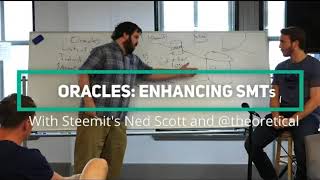
Account-based voting gives each unique account one vote, unlike stake-weighted systems where token holders get more power. Ned Scott explained that blockchain oracles can verify real people to prevent fake accounts, and the creator's BTM Bloggers project claims a 90% success rate at detecting spam accounts, though real tests showed whales still dominated.
Chapters
Hey you, welcome back to the channel. And guys, today I want to talk about why account-based voting is decentralization. So you have account-based voting and you have stake-weighted voting, and I think the differences are obvious that in account-based voting, that would mean an account has a vote. One vote, one account. In stake-weighted voting, your stake determines the value of the vote. And many of the platforms we use now use this stake-weighted voting method over a variety of these social network blockchains. The idea of these social network blockchains is a push towards decentralization, but stake-weighted voting isn't decentralization. Stake-weighted voting is the opposite of decentralization, right? So we're gonna play this little clip here as, uh, Steemit Ned Scott, the Steemit team tries to solve the problem of stake-weighted voting versus account-based voting. So I just let you hear a little bit of this.
I hope you can hear it easily written, the Steemit blockchain to do one account, one vote. The problem with that is it incentivizes people to just create a bunch of different accounts. If we have one account being one vote, that makes the voting system very easily gameable. So we didn't want to do this for STEAM. But what oracles gives you is an oracle— in the context of blockchains, oracles are often talked about in terms of prediction markets. You ask who's going to win the next election, and then you can have a contract that's worth so much if the Democratic candidate wins, or another contract that's worth so much if the Republican wins. And then eventually you need somebody to tell the system who actually won after the elections happened, and that person is calling Oracle. But in general, in computer science, the term Oracle is used to express something you can ask questions to that you don't know the answer to yourself. So the Steem blockchain can now go out to the Oracle and ask a question, and the question is, "Is this account a unique individual in some way?" And the oracle says, "Yes, that account is a unique individual from this list. They should get a vote." And the oracle is what's solves the problem of spam accounts because you offload responsibility for checking accounts— that accounts are actually individual— to the oracle. Does that necessarily mean that one account, one vote corresponds to one person, one vote? Not necessarily. It depends on what the oracle does, how rigorous its verification process is, whether anyone can slip by and fool people, fool the oracle into creating multiple accounts for a unique person. But that's something that lives outside the blockchain.
So assuming, assuming that we have an SMT and it's associated with an oracle system where the oracles together are producing a consensus whitelist of accounts where with almost pure certainty every account on that list is operated by an individual and those operators are not operating any second accounts. You truly have a proof of individuality coming in to apply to the rewards pool of that SMT. How can we then take that list, combine it with the rewards pool to produce a quality curation that we haven't yet seen cryptocurrency create in the context of content.
How can we do that? Well, I'd say you just— if you know that all these voters are true and unique, you just take the top voted accounts when whatever and apply whatever filters you want. Like maybe you want it to be a specific topic or tag or community or what have you. And because it's one person, one vote, that allows you a reward curve that looks like this. And the theory was that if you are one of these earlier contributors, then a lot of this later benefit would go back to you. Um, and so that would incentivize people to get in posts early. But that's Ultimately, that was the idea, but ultimately ideas have to be tested against the real world, and when we got this in front of users and had some actual user behavior, that wasn't happening to the extent we would like to see it. It was— it just turned into a system that benefited mostly the whales and made a lot of ordinary users feel discouraged and discouraged growth, which is one of our goals.
I'm gonna stop right there, guys. There's a lot of information, a lot of technical, uh, you know, details, um, what's going on here. But it's talking about the problems in association with account-based voting, but it's also talking about, uh, what happened with stake-weighted voting, where all the whales just— it just kind of went to the whales, and the whales took over the entire network And so now you just have these, what people, some people term as oligarchies, just running these networks. So it's not really decentralized. Right. And so the Oracle algorithm or program is designed to detect bad actors because the idea is that people would be incentivized to create multiple accounts, create spam accounts, which they would. Everybody's going to try to beat the system if they can. And so Oracle, this program is a way to determine who the bad actors are. And it goes into a lot of details about how it does that. So I'll leave a link. You can watch all the details, but I'm just going to get to the, the, uh, what, what are the most important parts, I think, to understand and that there is a way you can have account account-based voting. Now, there also was a breakthrough with EOS that talked about— from Dan Larimer— that talked about a very simple way that they found out how to do account-based voting. Uh, they're not the only ones. Recently, my project BTM Bloggers found out as well a simpler way to detect these spam accounts, these, uh, accounts that were not unique accounts. And here's the problem, uh, how this is done. The reason many people don't want to give out those details is because what generally happens is when, um, the people who are trying to game the system, beat the system, find out exactly how you're able to do this, they can reverse engineer things and they can find find out a way to beat, to get past it. And so you got to be careful, you know, you want to let people know that you are able to do it, but at the same time you got to be careful how you do it and what information you let out. So here's what I'll say about this. There are ways it can be done that we've discovered. And as long with our Bitcoin fork, there's a problem with us in the double spin. Interesting enough, the same way we found out how to deal with account-based voting issues is the same way we found out how to deal with the double spend problem of making BitcoinMYK and Bitcoin able to move the same value over, over the network without having someone set up multiple Bitcoin wallets and claim BitcoinMYK tokens and be able to move the representative value of Bitcoin from Bitcoin NYK. And, um, I'm not going to get into the details of that because, uh, I'm trying to keep this limited to account-based voting. But I could tell you it's the same elements that allowed us to achieve that, that's allowing us to achieve this. But what we can tell you is that at about a— I would say something like about— there's a 90% less than— it's 90% chance that this is pretty secure in our detection method. And so about less than 10% of people trying to beat our account-based voting system will be able to do it. Um, so it's not fail-safe, but it's, it's getting closer every day, and it would be a very limited amount of people who'll be able to exploit the system. Now Account-based voting is very important though, guys, because without account-based voting, we're not going to be able to have a really well-distributed or decentralized situation like what we're dealing with, with many of these upvote social networks. And that's very unfortunate because if that happens, if you watch this entire video, it talks about what's going to happen. And it has happened, and I can pretty much guarantee it's going to continue to happen, is how he speaks in this video about this big ratio of people leaving. And it's due to this, uh, you know, that's the thing people don't really want to talk about. But until it's solved, it's going to continue to work like this kind of broken system that doesn't really go that far forward into the future. Now Steamit is working on some ways to deal with this. They seem to be working very hard, and I think they will discover it, and things might get better for Steamit with this system as soon as it's implemented. Now, does have some kinks. Like I said, it's probably the one we're using that's similar to— I think maybe the similar to the approach they're probably using, or maybe EOS is using. It's, uh, about 90%, uh, from what I discovered, uh, to be effective. So not saying that some people won't be able to slip through, some people will be able to slip through, but it's very, very much smaller than that. And, uh, prob— it probably would— will still be less damaging to— than what we're getting with state-weighted voting and social networks. Uh, so I thought that was very interesting to bring that information to you all, but account-based voting is more decentralized. BTM Bloggers has this ability. They have— we have this method. We invite you all to try it out and see if you like it. We think that when people discover and start using it, they're going to like it a lot better than stake-weighted voting for good reason. But that's all I want to say in this video, guys. Guys, if you like content like this, don't forget to like, subscribe. Don't forget to join us over at BTM Bloggers. And until next time, take care.
More from Michael







UBI - CIA Agent Explains Why Americans Will Never Get Universal Basic Income?



