In this YouTube video, the host examines the growing risk that artificial intelligence poses to highly skilled medical professionals, using a pulmonologist with 20 years of experience who fears his diagnostic role will be replaced by AI and jokes about applying to McDonald's. The discussion introduces the psychological concept of over‑aggrandizement to explain why workers resist the idea of being replaceable. The video showcases AI’s ability to instantly read chest X‑rays, detect pneumonia, and potentially enable earlier cancer detection, arguing that AI can outperform human clinicians who suffer from fatigue, limited processing speed, and human error. It then moves to robotic surgery, contrasting the precision and consistency of robots with human surgeons’ susceptibility to fatigue, tremor, and even substance‑abuse‑related malpractice. The host addresses skeptics who claim AI is overhyped or will merely create new jobs, labeling such narratives as part of the same over‑aggrandizement. Finally, the creator promotes a “Universal Basic Social Network” that distributes a citizen’s dividend (UBI) to participants as a societal safety net for workers displaced by AI, urging viewers to join the platform. The overall message is a call to recognize AI’s real capabilities, accept the impending labor shift, and prepare through universal basic income mechanisms.
Chapters
Welcome back to the channel. I hope you're all having a great weekend. So, interesting video today. We're going into medical doctors who are losing their jobs to artificial intelligence. They might have to go apply for work at McDonald's, some are saying. So We're going to get into that a little bit today. We're on, um, our universal basic income social network, right? Social networks have reached valuations of literally trillions of dollars. Uh, we are looking for this to be a viable way to bring communities together to distribute the citizen's dividend to everyone who participates. Imagine that. You're actually getting tremendous value just showing up on social media. You're watching social media right now. You're watching the videos. You're interacting with me right now, but you're getting no value for it, right? You probably want to change that and don't waste your time on social media. That's what we're doing here with this project. Anyway, we're going to get into this very interesting video today. A pulmonologist with 20 years experience says he's about to lose his job to artificial intelligence. So let's see what's happening here. Let's take a look.
So I'm about to lose my job, and this is scary because I developed this skill over 20 years. I just boom, look at an X-ray and say, oh, here we go, we have a right middle lobe pneumonia, maybe left upper lobe consolidation.
I'm gonna stop the video right there for a second because we want to get into the details of this. So what we, what I've made a promise to do videos of the actual technical jobs that artificial intelligence is able to take and is taking. And, um, because we get a lot of people saying, oh, you know, it's just a parlor trick. Um, you know, it's overhyped. Uh, it's an AI bubble and this and that. Oh, it's not gonna really take the jobs. It's gonna just create new jobs that everybody can do. And so the AI won't affect these people at all. Uh, and the list goes on and on, right? These, these people. So psychologically, where does this stem from? So after doing some research, right, there is a term that is used called overgrandizing, right? Over a grand— overaggrandizement. And it's essentially the idea of when you set up, like for instance, your job, right? You make the job you do so much more important than it probably is. And the reason you do it, because of course it's the job you do. So as it's the job you do, you form a narrative that you're bringing so much value to the world, right? That, um, if you could just be replaced so easily, then that would mean that you're not actually bringing that much value. And this is a natural human thing people do, uh, and it makes sense why they do it, right? Because what else would you do, right? Would you go to work every day and then make a narrative about how your job's not that important and that you can't be replaced? Probably wouldn't be in your best interest to do that. So that's kind of partly why, uh, some people do that, right? It's the over-aggrandizing of their contributions to society, right? And I understand why they do it. I probably do the same thing. But when reality kicks in, we're starting to learn that, um, that's not really how things work, that you can be replaced, that you probably are overplaying your hand a bit with the job you do. And you have people who obviously want to put that narrative out there. But unfortunately, the reality of what these technical machines could do is going to supersede any narrative like that or any thoughts like that.
Patient is very sick. She has bilateral pneumonia. We need to take care of her. But here comes AI. And of course, of course they pick it up in a second.
So now let's stop again. So he says 20 years of experience, right? So in other words, it's taken him to get to the level he's at to look at these charts to give you a life-saving, uh, recommendation or diagnosis, right? Because if he's bad at his job and he doesn't catch the, the, the stages of what could be lung cancer and the various other ailments that could be life-threatening, that could cost you your life. So it's very important that he be as accurate and detect this as early as possible. So it's taken him 20 years to develop this skill. It's taken AI the ability to diagnose like an instantaneous diagnosis. And look how fast it picks it up. He would maybe have to look at those charts several times over. And because, you know, he can't— his brain can't process at a level the AI can, he's going to probably miss a lot of stuff. And it's going to have an impact on people's lives. Correct? Right. So also, these detections that these AI systems are able to do now, they believe is going to pretty much usher us into finding cures for cancers, right? Many cancers at the— and I could believe that because at the very least it's going to lead to very early detection. And as cancer treatments and medications get better, you're probably going to be able to contain these cancer growths as such and tumors to contain in the common cold or the flu or something like that. A lot of these diseases and ailments now becoming, uh, manageable, right? Even if they're not totally eradicated or cured, becoming so manageable that you're walking around like you got a cold or something.
You don't need professional eyes to look at these x-rays. You just have artificial intelligence, and they picked up the pneumonia. So, uh, I'm going to be applying to McDonald's soon. I hope they have some openings. So I'm about to lose my job.
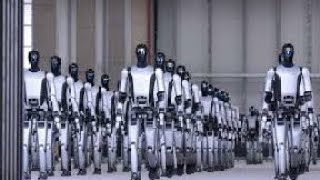
So the doctors talk about applying to McDonald's and, you know, it can sound a bit like, you know, kind of a sarcastic response in a way. But there's a lot of reality in it in that, would you prefer the AI detect your possible cancer or Would you prefer a human do it with human eyes prone to making many, many mistakes, right? Humans get tired, right? Their eyes get tired. Some of these medical professionals might be on shifts that can range 20, 30 hours or something like that, which I think is ridiculous. You know, even when you look at something like truck drivers and such, right? They have to— they can't be driving down the road tired. They have to pull over. They have to take these mandatory shift breaks and such. And you got a doctor in an operating room that long, right, doing medical work that's life-threatening that many hours, he's tired and so on, right? It can create many, many issues. So the, what the naysayers would say to something like this, okay, well, the AI can do this pattern recognition. It can detect a lot of these diseases through the research and development, can probably find cures to many of these diseases and such. But hey, you know, you still need a human doctor there to do surgery and so on and so forth and things like that. Many of these medical procedures. So let's continue on and look at some, um, other technical, uh, things that require high technical aptitudes and high-tech levels of operation and things in the medical field. So we can kind of put that to bed and put that to rest as well. So you're looking at what appears to be this, uh, robotic surgeon, right? So now not only do you got the robot who can detect the cancer, now he can go in and he can operate on the cancer, right? And as you can see, this is an egg, right? You know how delicate an egg can be. And, uh, um, you imagine a human being with his hands doing surgery. Now, human beings, they get muscle fatigue, they tire, right? They can make mistakes, right? They got to be really good. They got to have great hands. That's how come, uh, you know, when you watch those Marvel films like Doctor Strange, where he's, uh, you know, uh, his, his whole hero's journey is because he loses— in a car accident, he loses the ability to keep steady hands. His hand, you know, when he's performing surgery, he's a, he's a world-renowned surgeon and such. So the muscle control it takes to be a surgeon, right? You have to have talented hands, right? But that in itself is a, creates a lot of problems, you know. For, for instance, um, there was a, um, documentary called, uh, I believe it's called Docs on Rocks or something like that. It's about these surgeons and doctors that are operating on people And they had the old joke about, oh, he stitched up, he left a watch and he stitched over and the watch stuck in your body. And they make all these jokes about it. But what there has become is a great rise of medical professionals who are substance abusers, right? And so imagine some human being operating on you there. They're struggling with substance abuse, right? So you have that working for you. They could just be prone to many malpractice problems and issues with just botched surgeries, surgeries done bad from human error, right? And things that where the chances are probably going to be here in the near future, even now, where these machines are going to create less— the percentage of chances of error with robot surgeons are going to be greatly reduced in comparison to a human surgeon, right? So you could consider all those things. And when people come with that idea of, oh, you know, these are clunky, they, they always present the picture of a clunky robot that can barely walk, you know, and a robot tripping over himself and he's tearing up mirrors and tearing up the floors and all of these things, right? And so there is a, there seems to be a think tank, a group of people who want to push that narrative that, you know, this is all a trick, that AI is not really replacing jobs or able to replace jobs. And so, and fulfilling my promise to show some content and videos of just what problems you're facing and looking at. That's what the video today is about. So you can also see the precision of the robot stitching up the, you know, what would be the wound, right? And such. And again, you know, the question gets posed to you all, right? Would you do you trust the human over the robot doing surgery? And I know a lot of people instinctively, it's just kind of like, it's just like that, the driverless car thing, right? In a way, a lot of people would say, oh no, I think I would want a human being to, you know, to work on me. But again, consider, you know, human beings have a lot of inherent problems and mistakes and errors. That go with them. And that's how come over the years we've had so many malpractice lawsuits and such and issues in the medical field with treatments and surgeries and such. Surgery's gone wrong, gone terribly wrong, right? And on a percentile basis, then it becomes, is it going to be that more human error or more robot error, right? I think a lot of people are going to get to the conclusion that it's going to be less robot error and so on. But that's all I want to say in this particular video. Uh, guys, if you haven't joined my Universal Basic Social Network, uh, you should have already done so, especially if you're a regular watcher to the channels. No excuses, guys, should have done that already because, uh, your job could be up at risk, um, in this AI revolution. And robotics. And the faster we start to work on this problem, right, by helping awareness to our social media network, uh, through this distribution of giving you money, universal basic income, the more we get into practice and get structures together to meet these future challenges, the better off we're going to be. So very important stuff is important to you all as it is to us. And so keep all that stuff in mind, guys. That's all I want to say in this particular video. The link it be in the description. As always, take care of yourselves and each other.