
UBI - Are Humanoid Robots Ready To Claim Your Job?
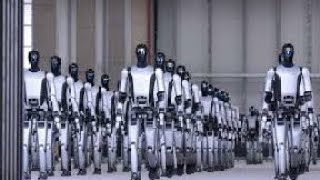
Boston Dynamics' Atlas robot does gymnastic flips and runs on battery swaps, showing humanoid robots are far more capable than most people think. As robotics costs drop and AI improves, companies will adopt them to automate physical and cognitive work, making UBI necessary.
Chapters
Welcome back to the channel, guys. I hope you're having a good weekend. Um, going to be a quite short video today. We're not going to go very long with this, but we wanted to talk about, in the conversation of universal basic income, are these humanoid robots really ready to take over replace you, take your jobs, right? Um, because this is, um, this is kind of one of those, um, questions that get, um, you know, kind of swept under the rug, is expressed like it's just another parlor trick. We see these like robots that are walking around, tip— generally we see robots that can barely walk, right? And they're walking around like a grandmother through, you know, through your household, through the factories, and so on, right? And, um, you know, you're looking at these things saying, okay, well, maybe in the next 10, 15, 20 years, maybe they can replace the human labor. And then what this does is it causes people not to have a sense of urgency about this or take this seriously, right? So today we're on our Universal Basic Income Social Network. And, um, if you don't know what that's all about, kind of think of a large social media telecommunications company meets or network meets a universal basic income in the Citizens Dividend, right? And there is, as it grows bigger, the value of it grows within the ecosystem, and there is a monetary system attached to it where the members of the site basically send these payments throughout the network wherever they wish, right? And it's generated through just them being part of the network, right? So they come on and they gain these currencies and so on. So very cool project. And we're gonna, we're gonna watch this video about this interesting robot. We're gonna watch it right from our social media site here. And and watch this robot backflipping, right, and doing various things. Because we always see these, you know, these humanoid robots that, again, that are moving very, very slow. They can barely open a refrigerator door. They're tipping across the, you know, the, the living room, you know, at, you know, moving at the speed of a turtle or what have you. So let's take a look at this and talk about where we are with this. Right. Okay.
Atlas just dropped another mind-blowing clip. This humanoid robot moves like an Olympic gymnast. Fluid flips, perfect landings, insane athleticism. Boston Dynamics and AI Institute are pushing humanoid limits to crazy levels. Can the production version keep this wild athletic DNA alive? Absolutely unreal.
Okay, let's, let's stop right there, right? And let me ask you guys a question. How many of you all can, in the workplace, you know, especially a lot of people who say, oh yeah, I, you know, I'm going, I'm getting up, I'm going to work today, and, uh, I'm looking at these crazy robots on TV they're talking about that are going to replace me, and, uh, that's not, I don't see that happening anytime soon. I I feel like I got 10 years, 20 years, I can retire and maybe they'll replace me then, right? Now, how often do you see, uh, you know, robots like the one, uh, here from Boston Dynamics, right? Um, and so, um, that might not be what a lot of these people have in mind when they when they talk about humanoids, these humanoid robots, right, in relation to their jobs. So I'm gonna, I'm gonna assume your answer to my question is you can't do that, right, that you wouldn't be able to move like that in your, in the workplace, right? But does it come to everyone's mind, right, through the process of deductive reasoning. Does it come to everyone's mind that if that robot can do that, right? What, why would people believe that that humanoid robot can't do anything else in the workplace? If it's already able to, to do a task that a human most of us can't even do. That is a heightened super athletic level of dexterity beyond most of our abilities, right? With the smoothness of it, right? The speed. And I've seen the movement of this robot throughout other work tasks, right? And they're just as impressive. Remember as well, this robot doesn't tire. Right. So why is it through deductive reasoning that people can't seem to connect the dots on the level of technology we've actually reached, right? We always— they always show these slow robots falling down, right? These— and I can see why people would believe that that's what the level the technology, the technology is at. You know, there used to be a time as well when there would be this kind of tactical to practical transition, meaning the military would develop certain types of robots and such, and what would occur would be that technology would pass down to practical use. The citizens would get this, um, use of this military technology, right? Similar to what's happened with most of the advanced technologies got from the internet and so on. So, right, then that means, right, if you're looking at a robot like the Atlas robot, what we just saw, And they're showing us the level it's at. It's obviously at a very sophisticated level, right? Did it used to always be there would be some kind of humanoid technology, right? Some, some that, uh, because I'm looking at that robot and are you guys thinking like I'm thinking that that would be like the type of robot that they would have as a ground, as a ground troop, right? You know, marching along with a platoon. Set aside on some— set on some foreign shores, right, through some military, uh, campaign. Um, and so you would think that the military would have something like that, uh, some prototype like that, and it would be further advanced than what we see now, and then that technology would get to us, right? But we seem to be seeing like it almost in reverse, or at least we believe it to be in reverse, where we're seeing something like Atlas robot, right? Because I'm thinking with a military use, right, just to kind of paint the broad picture of this, that it would, it would make more sense to put, uh, something like, uh, if you want to land troops on the ground, right, like we do oftentimes, it looks like it would make more sense to instead of risking human lives, sending like robot ground troops that can move like the Atlas robot. But we haven't seen how, you know, um, we haven't seen anything the military has, or maybe they do have something, they just haven't shown us yet, right? But then what that would mean is that would mean then that technology is even further ahead, right, than what we're seeing now. So it could actually be, um, a much more, even more impressive than what we just saw. And I don't think you can get I don't think you could get much more impressive than how a robot moves than what we just saw. Not to mention there are other robots in places like China that are even more impressive. So again, this goes back to my, my original question then. If you are in that mindset of thinking of scenarios like this where these robots are just like decades away of being able to perform human-level tasks like we're doing, right? Are we looking at something different, right? Because you do understand that every year, much like a depreciating vehicle in a car, many of these, uh, machines and robots price-wise are going to come down because I would imagine that the— not only is the technology and the chips going to improve and the dexterity of robots is going to improve, but the software and the models and the learning capabilities are probably going to improve as well. And the models we're seeing now value-wise are probably going to drop lower, right? And they're going to probably keep doing that. And much like a used car, you'll probably have some people who have, um, Um, you know, older models and later models, right? So, um, you know, looking at things like this and putting it into consideration, right? Do you— has it occurred to many of you all that, uh, the, the ability for a robot to replace you might already be there? In addition to that, When we, or we sometimes forget that many of these language models, right, are being integrated into these robots, right? And these robots are being able to use these language models like ChatGPT and Gemini as such, and all these new, very interesting ones coming out. So you think of something like in the workplace, right? First of all, if you're in a type of white-collar type job, if you're in a highly technical job, right? A lot of these jobs, right? If you're doing some type of programming or something, remember you can just tell these, um, machines to create these applications for you, right? They can make apps for you. They can make websites for you to do all these technical things. They could design engineering feats like bridges and all types of stuff, right? So Now you have a humanoid robot that can easily get the automated tasks down, right? You know, get the technical tasks down, the anything that's going to be involving use of a computer, that technology. But now as well, you have it where it can— it's very dexterous, where it can perform any physical task, right? And they used to say something like, you know, looking at like the Atlas robot, they used to say things like, Well, how long will this robot be able to, you know, you know, last? Does he have to go recharge himself? Well, they figured that out, right? These robots just know how to reach in their battery packs. They usually have two— they usually have two batteries powering them at a time, right? They take— when one's running low, they take out one before it goes dead, and then they put in the new one, right? And then that way they never have to stop operating, right? And so the physical limitations, it used to be that, okay, this robot can just keep working until the battery runs low, then it's got to put itself on charge. No, this robot now seemingly can just keep working on and on and on and on, right? So I'm going to just leave you guys with that. Um, But speaking to many of you all who I've had conversations with who says, oh, all this AI stuff is just a parlor trick. It's not going to be able to do this. It's not going to be able to do that. But again, I ask the question, what are we— are you viewing something I'm not viewing, right? Because I feel like you're not viewing these developments, right? And these abilities, these robots, like I am. Right, that Atlas robot, right, uh, the way it works in companies and such, um, I don't know if you want to call it corporate espionage or whatever you want to call it, but I can promise you this: whenever one gets, uh, a technology or the IP or the robots like this, it's not long before other companies are close behind with a very similar technology, if not surpassing that, which means that something like the Atlas robot's probably going to be popping up all over the place soon, right? And so that's going to make it more easily accessible for companies to get their hands on this thing. And what are companies going to do when they get their hands on it? They're going to be replacing the workers, right, with these dexterous robots enabled with these language models, right? And, you know, using deductive reasoning, right? And looking at the job you do now, uh, do you really think it's going to be that difficult for these robots to replace your job? And I don't mean in a decade, I mean in faster time than that, much faster time than that, right? Because it is a fact when you look at the money going into making these robots, you got to ask the question, why are they building these robots, right? What does Atlas, or I'm sorry, Boston Dynamics, plan to use this robot for? Why? They've been going on forever. They've been over a decade building these impressive robots, right? And we haven't quite seen the major breakout application yet. Like, we haven't seen these things in factories just going, you know, full of these robots and factories. But maybe the plan was to get them to this level, and they're going to be filling up these factories and different workplaces soon. Because bet your bottom dollar, they haven't been putting all these billions of dollars into robotics the last decades for nothing, right? We know that's got to be the aim, and they've been investing money in doing this for a long time. I don't think they're going to continue to do this without getting a return on your dollar very soon, right? So all those are things to consider. I think I'm going to stop the video there, guys. Tell me all what you think about, are these AI robots ready to replace you now? That's all I want to say in this video. Comment below, let me know what you think. And as always, take care of yourselves and each other. Don't forget to subscribe to the channel. Always gonna have some good information coming out that you need to hear. And if you're interested in universal basic income, universal basic income projects to solve the problem of what happens when these robots replace us all with worse, feel free to join our social network here, our Universal Basic Income Social Network that is striving to be a future model as to what some of the things we may have to do in the future. That's all I wanna say in the video. Until next time, as always, take care of yourselves and each other.
More from Michael







UBI - CIA Agent Explains Why Americans Will Never Get Universal Basic Income?



