
All Altcoins Are Securities?
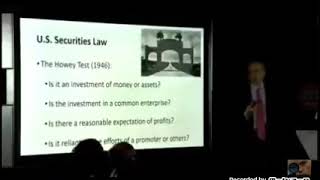
The video debates whether most altcoins should be classified as securities under U.S. law. Speaker A argues that the majority of initial coin offerings (ICOs) meet the Howey Test – they involve an investment of money in a common enterprise with the expectation of profit derived from the efforts of others – and cites Ethereum’s 2014 ICO as a clear example. He notes the SEC’s later 2018 position that Ethereum had become sufficiently decentralized to escape securities classification, but suggests the initial fundraising still fits the test. Speaker B expands on this, reviewing how the SEC has historically treated various tokens (Ethereum, XRP, EOS, Bitcoin Cash) and predicting that the agency’s newer, stricter leadership will likely pursue enforcement against large, profit‑oriented projects, potentially leading to fines, exchange delistings, and price impacts. The discussion contrasts utility‑focused cryptocurrencies (Bitcoin, Bitcoin Cash, the presenter’s BitcoinMYK project) with investment‑driven tokens, arguing that forks of Bitcoin that emphasize minting and use as a medium of exchange are less likely to be deemed securities. Practical advice is offered: investors should watch for profit expectations, centralized control, and fundraising mechanisms as red flags. The video concludes by promoting BitcoinMYK as a non‑security model—no ICO, mint‑on‑participation, free distribution—while urging viewers to conduct their own legal research.
Chapters
that most, maybe not all, but most initial coin offerings are securities because they're investment contracts where there is an exchange of money, there's a common enterprise, you're relying on somebody else's expertise for profits. This is why I've earlier this year said I think that most of them are. I think Ether, when it was done in 2014 would pass this test. When I say pass, it means it's a security. Now subsequently, the SEC has said by 2018 it's decentralized enough, and they've sort of said, you know, we'll let it go the other way. Ethereum started with a presale and an ICO, which we'll be talking about, about 72 million Ethereum. Vitalik wanted to raise money. He was maybe 19 years old. He looped in with a venture capitalist from Canada, Joe Lubin, who now runs ConsenSys. Lubin took about 10% or 9.5% of the offering. They put 9.5% in a foundation called the Ethereum Foundation, and the other 80% was sold to the public for $18 million. We'll talk later in the semester as to whether that was really a securities offering. I publicly said I think so, but that was in 2014, and in 2018, the Securities and Exchange Commission has Welcome back to the channel, and I hope you all are having a great day.
So today we want to talk about, um, are all altcoins securities, right? And, um, let me see if I can stop that just a moment. So are all altcoins securities? And we're looking at what seems to be this economic professor, and he's discussing, you know, whether Ethereum is a security, is XRP a security, you know, and the tests that are basically put in line to determine what is a security and what is not a security. Um, so first, uh, during the video, we'll try to leave a link in the description to the full video. Um, but it would seem that, um, his, uh, his findings are that, uh, most of the cryptocurrency space occupy an area of unregistered security. And that is because many of them have in some shape or form violated, whether it be, uh, uh, money was raised, or whether it be the secondary market, or whether you're relying on the skills of somebody else to create a profit. Now, um, apparently if we go look at something like Ethereum, because Ethereum seems to be being the second largest cryptocurrency that raised money, uh, $18 million, um, that, um, you know, basically, uh, you know, you had this pool of investors, you know, for the express purpose to create profit, you know, from their investment. Um, you know, most would believe that that does satisfy the, uh, the area of a security. It's kind of, the best analogy I can give is if you think about the border of a nation and you think about maybe a group of immigrants who have illegally crossed the border. And once they cross the border illegally, they then seek asylum. And so in other words, they kind of break the law in order to then, uh, basically, um, uh, you know, to, to adhere to the law, right? And then they do the proper paper filing. And in some cases, uh, it works out okay and they are able to do the proper filings and become proper citizens. In other cases, they may be deported back to their countries or held in some type of immigration camp until You know, basically certain things are satisfied. I think overall the problem with something like Ethereum would be it did many of the things that would make it a security prior to growing to a level where it has enough nodes and enough network to maybe be considered decentralized. but it seemed to circumvent the process. And, you know, I think overall the issue with that is, uh, you know, then if that's the case, would you allow then for other projects to be able to do a similar thing? Another very interesting thing, as, um, this video is some years old, uh, and this was kind of, you know, back in like 2018 or something like that. But what's very interesting is that the conversation has, you know, basically come back on the horizon because the SEC is now under new management, right? And this new SEC chairman is not as optimistic as some have been in the past, and he doesn't seem as lenient. He seems a little bit more determined to finally carve out where exactly cryptocurrencies fit, which ones are securities or not. And Ethereum doesn't seem to be getting the pass that it once got. Now, more than likely, and I'm just guessing here, I, you know, I can't, you know, really, you know, be a— no, at the end of the day, nobody really knows what the SEC will do. But, you know, my best guess is that that they would want to stick with earlier ideas about it, like, you know, but at the same time, it doesn't seem fair that Ethereum doesn't at least have to pay a fine. So I'm thinking that what you should see with Ethereum is something like you've seen with EOS and what you might see with Ripple XRP. And these are projects that have raised money and and there have been fines that have been had that are being paid out. I don't feel Ethereum should be able to dodge that bullet because I think it sends a very inconsistent message to projects, and I don't think it's fair to other projects who have been prosecuted for the same thing. So, you know, I think that there should be consistency, and there may very well be. Now, of course, what does this mean to all these countless cryptocurrency projects that are on Ethereum, um, that are probably going to be declared securities? Ethereum itself, that they depend on as a blockchain, might be declared a security. How it may affect their exchange standings and so on and so forth. Um, you know, well, certainly that would mean that they're going to be impacts on price, right? Many of the projects that have come in the headlights of the SEC haven't fared well overall. They just haven't. And so that's probably not going to be any different in this case with Ethereum. I could see Ethereum suffering. I could also see other projects, other forks of Ethereum, other competitors to Ethereum doing very well, right? You know, basically competition-wise, maybe Ethereum not being able to hold the number 2 position anymore, but now there being a collection of these other Ethereum-like projects, forks, other chains that are, you know, now able to compete more so with Ethereum. I could see something like that happening. And I can see that being very possible for people who are big Ethereum investors and supporters. Not so much that you should be afraid, but I do think you should be mindful of how the SEC works in relation to cryptocurrency and that this can impact your investments and it can definitely impact the future of many of these projects. Project. Uh, based on what, what was being said here and, uh, just looking at the nature of cryptocurrency, many, many of these projects would fall under unregistered security, which means, you know, you could have a situation with the SEC whereas they prosecute one, which is probably more likely going to want to prosecute the biggest first, the XRPs, the Ethereums. As they prosecute them, then they start to prosecute the smaller ones. Because they have prosecuted projects with very small market caps, projects like Liberi.tv, right, that, you know, it's very small market cap, several million dollars, but they have— they did raise millions of dollars in ICOs. And, you know, in some cases the value of these ICOs dropped dramatically below what investors put in, which is typically what happens in ICOs. Many cryptocurrencies lose over 90% of their value at some point. Now, according to the SEC, the only real cryptocurrency that was declared not a security that we know without a doubt is, um, we have to say Bitcoin, because in the language now of the SEC, especially a non-written, non-recorded statements about cryptocurrencies are probably not solid, right? Which means that the SEC, whoever the chairman is, they can probably reword it and they can probably make needed adjustments where needed, like in the case of Ethereum. Probably won't happen with Bitcoin because Bitcoin has a very different legacy didn't raise any money. It's a lot of mystery behind who owns it, and it's a lot, a lot of differences with Bitcoin. But that also kind of brings out, brings up the question of when you look at something like Bitcoin, then you take like Bitcoin forks, you take something like Bitcoin Cash, should it fall under that umbrella? I think it should, and I'm going to tell you why for several reasons. Specifically looking at something like Bitcoin Cash, I would first think, well, it is a fork of Bitcoin, right? So it did a lot of the things necessary to— once that, that chain was forked— to give that value to that Bitcoin community. Secondly, Bitcoin Cash functions more in the realm of a currency, which is something totally different than buying something with the express view and idea of the profit. The difference being currencies are a medium of exchange. Their use and value is in their utility. It's a little bit different than just kind of sitting there with something and going, we don't know the value of it, it can be whatever and anything, because then from your mindset you're expecting profit. So in a very strange way, you know, I would say Bitcoin Cash is more or less security than Bitcoin itself. So if you declare Bitcoin not to be secure, I would think some of those Bitcoin forks would have to follow, uh, especially if they're constructed like Bitcoin Cash. Uh, Ethereum, in my mindset, 100% of security. But, uh, in that way then, are you safer with the Bitcoin forks? To a degree, I think you might be because I would imagine the Bitcoin forks could then make this argument that, uh, you know, we are a fork of something you declared not to be a security. With all that said though, remember the SEC has a lot of precedence that has been set through securities laws, uh, certain specific incidents that they can look into, and they, they can interpret the law in many different ways. So it's very difficult to interpret what the SEC can do and what they may or may not do, right? So it's almost like this is all in the hands of the SEC. But at the same time, it's probably more likely the SEC wants to go after clear asset groups and classes, clear projects that are in violation of what they call the Howey Test. And so these are going to probably be projects that raise a lot of money. These are going to probably be projects that, uh, not necessarily, but more likely it's going to probably be those type projects. And it's going to be projects that, um, basically, um, have a, a lot of centralization and people who are trying to create profit and value. And so on and so forth. So my best guess looking at this, and of course this isn't financial or legal advice, uh, I'm not sure again if any legal party can really interpret what the SEC will do, but I can say, um, you know, that, that, uh, um, if you're in a cryptocurrency and probably the only reason you're in there is to make money and you think you're going to get rich, there's probably a 90% chance that's a security. If you're in a cryptocurrency project and you're more so focused on the facilitation and utility of what it actually do and what you actually do with it— again, another example like Bitcoin Cash. I'm not like Bitcoin Cash fanboying, but I just think the examples make a lot of sense. So if you look at something like Bitcoin Cash, Bitcoin Cash, if you think of it kind of how the language of the original decentralized Bitcoin is written, Bitcoin Cash works like a digital money. Bitcoin's white paper speaks of it like in the sense of a digital money. What do you do with money? You generally— it generally just facilitates a means of exchange, right? But a lot of people don't hold money and in holding that money look to profit from that money. You know, in other words, if I'm walking around $100 in my pocket and I want to buy $100 worth of goods, typically I'm not going, well, if I hold this $100 till tomorrow, it's going to be $200, right? The utility and purpose is to allow for transportation of commodities and goods and services without me carrying 50 cows across the border. So if you're thinking about cryptocurrency in another way, hence the root word currency in cryptocurrency, you're probably an unregistered security, right? And I would think that would apply to Bitcoin and Ethereum. But, um, you know, Bitcoin, the nodes, the size of the network, uh, some are trying to say it can be used as a currency. Although it is, you know, people who are in cryptocurrencies can see the difficulty in that, and in some ways the ridiculousness of that, that nobody's— nobody, first of all, nobody really wants to spend their Bitcoin because they are holding them for the express view of profit and that they go up in value. Secondly, if they tried to spend them, they generally end up paying, you know, exorbitant fees. And it's just not a good situation for, you know, for the end user. So these things feel like unregistered securities, they really do. The Bitcoin Cash, they kind of don't. Our project BitcoinNYK, another type of fork of Bitcoin, is all predicated on the idea of your participation in the network mints the cryptocurrency. So really, it's your— create— your production is creating the value of it, and then it could be facilitated as a money. This is a kind of backwards idea to you buy the cryptocurrency and wait for the price to go up, so you're expecting profit. This is more utilized like a currency, a local currency, and the idea that you are trading this off for the comparable like value. And in many cases, you've come in contact with this based on your, your minting of it, from similar to mining like what you get in Bitcoin and Ethereum. So these are, I think, very different ideas. No ICOs with the BitcoinNYK project, and we'll leave a link in the description so you can look at it. The white paper is available on the site, and so I think you can kind of see the difference between what we're doing with the Bitcoin MYK project and why I don't believe it falls in the realm of an unregistered security. But again, we're not lawyers, we're not SEC attorneys, and, you know, we should all just be mindful that the SEC, how they interpret these laws and what they feel is a security, you know, is going to be what it is. Like, you know, it's not going to be so much that there's a big argument Uh, with how the SEC is going to put this together, simply because, um, you know, they have so many precedents set on how— and so many securities cases, um, different variations, I think, of how many projects have been created, that they can match that up and, and have a standing case based on previous cases, right? You know, so, um Those are some things to be mindful of. The SEC will ramp things up, I think, going into 2022, 2023, um, you know, as well as our standard government will be. And we're hearing many of these things. So, uh, so be careful out there with your cryptocurrency, um, investments, guys, and participation. Uh, projects like BitcoinMYK, uh, is all about production and participation. And not about speculation and bringing your money in. The project would work just as well if nobody invested, if they did invest on like a third-party exchange someplace, right, that we don't control. Um, and so, uh, all very interesting things, but I think the more you look into BitcoinMYK, you'll start to get a better idea of projects that may not be registered securities because The only ones we know for sure right now without a doubt is Bitcoin, right? So Bitcoin's gonna always be your safest bet in cryptocurrency. But of course the problem with Bitcoin is Bitcoin doesn't quite offer, you know, utility-wise some of the more convenient features of cryptocurrencies like fast or free transactions. It doesn't, you know what I mean? It's a very it's a very congested system and a very outdated system according to some in the space. And so a lot of people feel they're getting less quality service with a cryptocurrency like Bitcoin when there are so many others out there that do such a much better job when it comes to the efficiency of cryptocurrency. And people who've been in the space, I think they kind of understand a lot what I'm speaking about. But if you're new to it and you're just kind of concerned about, are these unregistered securities and are you in one, it is probably likely you are in one. And the reason this matters and you shouldn't ignore it is because this can impact your investment. You know, a lot of cryptocurrencies targeted by the SEC, and we don't know when that could happen and to which ones. But a lot of people suffer a lot investment-wise because oftentimes that's going to mean that your cryptocurrency is going to have to be removed from the exchange, right, from any exchange, because they don't want to be in violation of the law. SEC, the law is going to come after them if they allow that cryptocurrency to remain on exchange. So that's going to affect your— impact your investment. It's gonna cause you some problems here. So you want to try to steer clear of such projects. You know, again, some pointers we brought up: if you're expecting a profit, if you're one of those guys that came in saying, I want to get rich, which is most in cryptocurrency, probably an unregistered security because it's probably then relying on somebody to make a profit for you. You know, again, going back to projects like Bitcoin MYK and the Bitcoins, the Bitcoin Cash is where there's probably mining operations. You're probably not going to have that issue, you know, and so in the interpretation of the law, it's probably gonna be different. But those are just some things to think about. You can always try Bitcoin MYK, which is going to be a free cryptocurrency, so you're going to already bypass a lot of legal concerns about that. Um, again, that doesn't mean it's not a security. Well, we're hoping it's not. Our understanding, as far as we can ascertain, is that it is not because it acts as a Bitcoin fork and it, uh, you know, you can obtain the cryptocurrency, uh, without purchasing it and so on and so forth. But, you know, do your own research, seek your own legal counsel on this, but be careful with many of these cryptocurrencies and scrutinize and figure out if your cryptocurrency is a security, because it can have an impact on the future of what happens with your project. That's all I want to say in this video. If you like content like this, don't forget to like, like, and subscribe. Until next time, as always, take care of yourselves and each other.
More from Michael







UBI - CIA Agent Explains Why Americans Will Never Get Universal Basic Income?



