The video opens with a clip from Joe Rogan’s podcast where he argues that societies must guarantee basic needs—food, shelter, healthcare—especially as automation threatens jobs, hinting at universal basic income (UBI) as a possible solution. The host expands on this moral argument, warning that future generations may view today’s refusal to provide basic needs as barbaric. He draws parallels to past labor practices, such as child labor, suggesting that what was once accepted will later be condemned. Shifting focus, the host discusses the Asian American electorate, citing NBC data that nearly 40% of Asian American voters are unaffiliated and that they comprise about 5.8% of the electorate (≈17 million people). He argues that Andrew Yang’s non‑partisan, forward‑looking platform aligns with the independent tendencies of Asian Americans, and likens their potential political empowerment to the Black community’s experience during Obama’s campaign. The host emphasizes respect for Asian American experiences, urging the community to consider supporting Yang without speaking for them. Finally, he promotes a blockchain‑based UBI project, inviting viewers to join for free, and ends with standard YouTube calls to like, subscribe, and share.
Chapters
food or shelter. Give them food. Like, make sure that no one's starving, that we— even though people are out of jobs, make sure that their needs are met so then they can go and find a way through this mess and then figure out a way to contribute and make an income and make a living and adjust. But to have nothing, to have nothing, like, what is that? Like, you can't just have people out of work because of automation. And people go back to the industrial age, well, hey, that happened during this and that, and yeah, okay, it did, but it didn't work out well for all those fucking people that lost those jobs back then. We shouldn't have to go through that massive chaotic situation again if there's a way to engineer a better way through it. I don't know if universal basic income works. Um, you know, I've talked to—
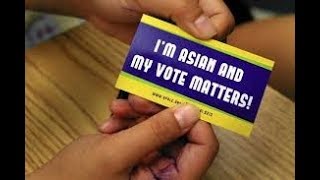
Hey, you all, welcome back to the channel. I hope you are having a great Sunday evening. Um, I just want to take a moment to speak with you all a little bit. I had a little bit of time this evening. I was going out to dinner with some friends. Um, and I want to talk about, um, I think that there's going to come a time, um, maybe 100 years from now, maybe 1,000 years from now, where we're gonna— our civilization at that time is gonna probably look back on us today and, uh, look at how our governments dealt with their people and look at it from the angle of, wow, you know, did you all really think it was a great idea not to give your people their basic needs, to make sure their basic needs were met, healthcare was met, uh, the very bare bones things that make sure the well-being of your people are okay? Why wouldn't you want to do that? and, uh, my fear is they're going to look on that, uh, as being this very barbaric way of looking at things. Um, Joe Rogan, that was an excerpt from his podcast with Abby Martin, and he talked about give the people food, make sure they have their basic needs met. Uh, we're not talking about living off the fat of land here. We're not talking about providing for people so they can take exotic vacations and, you know, and live the high life. We're talking about just the basic well-being of your people. Make sure people are healthy, make sure people are fed so that they can go out and find adequate work and prosperity. And I don't think that's too much to ask. I think it's the right thing to do. I think it's the human thing to do. And the fact that we got to try so hard to sell this to the American people, uh, makes me think that very soon in our future, maybe sooner than that, maybe 5 years from now, 10 years from now, I think we're going to look back on this, uh, um, particular time frame of our history and go, wow, you know, I can't believe we thought this way. Uh, even if you go back several decades, right, it was totally fine to work your children from sunup to sundown. And many of y'all grandparents probably told you those stories about how hard it was in their day. I'm sure you've all have heard that these children work from sunup to sundown. Now think about that. They have to come in with child labor laws and say, hey, you can't work these kids over 30 hours a week, uh, you can't work these kids to death. And it was perfectly moral, it was perfectly all right. But now if you see your neighbor doing that to their children, working them from sunup to sundown, you would call the CPS on them, you call Child Protective Services on them. You would look at it as barbaric and immoral. And I think we're gonna shift, um, at some point in our near future, uh, to that type of mindset. I think we're gonna be quite ashamed of how we have to fight to push these basic needs and ideas that your citizens should have. I think we're going to be very embarrassed, uh, and it's going to be very looked down upon in our futures looking at something like that. Maybe it'll be the year 3000, but I think it's going to eventually happen. Um, also want to just real quick talk about the Asian American vote. Now, I'm not an Asian person. I am an African American person. I'm a minority. And, um, you know, there are sometimes there's some similarities, right? I, you know, I can't speak for Asian people. I, I haven't walked in there, the Asian experience. They haven't walked in my experience. Um, but there might be some similarities, you know, in minority groups, you know, as far as being marginalized and a variety of things. What I don't want to do is succumb to, uh, what I— what happens a lot, and that's people who aren't part of a culture, uh, jumping up and saying, well, hey, you should do it this way, or you should do it that way, and they're forming this narrative as to understand. Uh, so I want to be very respectful with the Asian culture and just say I understand some of the, uh, situation the Asian culture is in in the United States, uh, that some of them may have been discriminated against and racial slurs thrown at them. So that's something I think we share. But we just want to explore some of the statistics of the Asian American vote, why I think it's so important to the Andrew Yang campaign, because every vote matters. And, um, You know, I'd very much like to see the Asian American community, uh, support Andrew Yang. And we are seeing that. I'm seeing people come across, uh, social media and a variety of platforms that are Asian American and they are, uh, supporting Andrew Yang and doing the very best that they can. Um, but looking at some statistics about the Asian American vote, Uh, this comes from NBC, so okay. But it says here nearly 40% of Asian American voters don't favor a party, and can the DNC change that? I think they do kind of more lean toward the Democratic Party, but for the most part, I think, you know, this kind of makes sense to the narrative of the idea of Asian Americans don't vote or something like that because Asian Americans may not favor either party. If you don't favor either party, you're probably not gonna find it urgent to vote, right? It may not as much matter to you. You know, as I've been covering some of Andrew Yang's campaign, African American people, or non-African American people, I should say, have kind of come to me and said, hey, can you just get the African American voters on board? You know, and, you know, I always tell this story about, you know, being an African American and speaking with African American people and telling them that when there are issues in the community that we need to be active, we need to go out and make an effort to change things through, you know, the structure of the government and things like that. And, uh, when that happened, you know, when that started to happen, it's very prevalent in this election with ideas like reparations and African descendants of slaves. When they finally did that, uh, then, you know, it's hard for me to then go to them and say, well, hey, you know, you should vote for Andrew Yang. You shouldn't just, you know, so, um, then I'd be a hypocrite, right? So, you know, the idea was to to be active and try to fix the problem. And so, you know, how the Asian American culture works and community works, we, you know, they have to decide what their issues are and what's important to them. And because of that, you can't just go, well, all Asian Americans can and should vote for Andrew Yang. But I will tell you this, looking at these statistics and saying something like Asian Americans don't favor a party, if we kind of draw that conclusion, let's kind of say they're like independents, they don't favor the right or the left. Well, what's a very strong part of Andrew Yang's campaign is Andrew Yang speaks about not being right nor left, but going forward, right? And I think that fits a lot with the Asian American community in that way. And that, you know, I think he would be— not only is he a competent candidate, you know, I think that the way that the— there'll be a frame in this political election that he would fit them as a candidate, not just based on race but just based on how they vote and not favoring these parties. But also, I think what comes out in this article— I'll try to leave a link in the description What comes on this article too is it kind of talks about how Asian Americans— there's kind of this stigma still coming from the Cold War on up about how many Asian Americans still don't feel like Americans. And I— that's a very similar idea to what happened with Black voters during, uh, when Obama was running. That before Obama ran, I think a lot of Black Americans didn't feel like, feel completely American. And then when they seen that candidate, that candidate that looked like them represent them up there, I think they then, Black Americans began to feel a lot more part of the process then. And maybe that can happen for Asian Americans too, right? Maybe this is the next step that makes Asian Americans feel totally American. You know, and part of this country that they're part of because, you know, we're all Americans, uh, even though we're not always made to feel like Americans, we are Americans. And I believe Andrew Yang not only does a well job of presenting their demographic just from a political sense, but you know, also I think it will be just the next step in Asian Americans coming into a full, uh, uh, um, you know, uh, feeling of being American, right, in America, to the point what they do matters, right? Because their votes do matter. Uh, over 5%, like 17 million Asian Americans, so that vote does matter. They represent over 5.8% of the voters. So their vote is very important. They could do a tremendous job on pushing Andrew Yang over. But the Asian American community has to decide that for themselves. You know, is this something that you feel is gonna be important to your community? I'm not gonna speak for Asian Americans. I'm gonna show them respect that I would like, you know, the African American community be shown. But I will say that just looking at the information as the statistics are suggesting, that those might be some things to consider. So certainly would love to see Asian American people support Andrew Yang. During the Obama administration, I voted for Obama and some of us You know, we're okay with that. Later on, some of us live to regret it. But what it did do is I think it did, for one time in America at least, make us all feel American, didn't it? Even if for a brief time. And, uh, that's some experience maybe the Asian American community can have in America, and I would like very much for them to have that. But anyway, that's all I want to say in this video, uh, guys. If you like content like this, don't forget to like and subscribe. Also, don't forget to join our Universal Basic Income program that uses blockchain technology to make this available to people around the globe. It's absolutely free to join. Your registration into it means so much, and it gives value to the network, it gives value to our cryptocurrency that can be used around the world to be traded for your local currencies. And we feel it's going to be a Uh, just a wonderful project that's going to give so much value to the world, uh, and we would love for you all to be part of it. Just your participation is all we require. We do not require a dime from you, but that's all I want to say in this video. If you like content like this, don't forget to like, subscribe, and until next time, take care.