
Andrew Yang - 3rd Democratic Debate Analysis
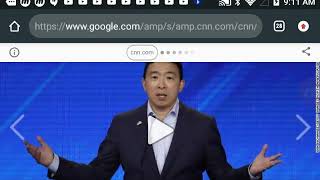
Andrew Yang's data-driven campaign steadily lifted his poll numbers despite skepticism about the Freedom Dividend. Critics frame UBI as free money to undermine it, but Yang positions it as a response to automation-driven job loss. On healthcare, China policy, and immigration, Yang's positions show promise, though he missed opportunities to appear tougher on defense.
Chapters
Welcome back to the channel. I hope y'all are having a great day. So we got it, we got the third Democrat debate. Um, Andrew Yang's still here. Uh, he's still running a good gradual climbing up campaign. He's starting to pass some people, and as we predicted, people are getting a little bit hot and bothered under the collar there. About the success of Andrew Yang. And we got to see some of that, uh, in last night's debate. So Andrew started off with his amp, his opening statement. And, um, of course, Andrew again not getting a whole lot of speaking time, not getting a whole lot of questions, but, um, getting enough to where he can make his case for the American people. So his opening statement, at first I was thinking in terms of, well, this feels kind of gimmicky, right? Uh, with the 10 families receiving the $1,000 per month, in the beginning I wasn't sure. I said, well, I don't think this was good. And I wanted to talk about how I didn't feel that was well presented in the opening statement. But after carefully considering some things and looking at the past results of the Yang campaign, how they do things, and looking at some interviews Andrew did about polling and data, I really started to get a more complete picture of how this campaign functions. Whereas before, I think I thought it was some inexperience in the management of the campaigns, uh, that they were making mistakes. I soon began to understand that the Yang campaign is not making mistakes, uh, even though it might come off sometime as a mistake. They are looking at the data, they have collected the data, uh, and everything that they do is deliberate. Now, Of course, some of the politicians on the stage, they tried to poke fun at it, say, oh, you know, here it is, he's trying to give American people free money again. It feels like something off of Oprah Winfrey Show. You get a car, everybody gets a car. And the demonization of ideas like this is, of course, a misunderstanding of inflation and trying to say that, you know, basically it's a cash giveaway is going to destroy the economy in the country, things like that. But remember, Andrew Yang is a businessman. He's going on data. His campaign team, they're using data. And although that might have didn't seem like it came off all right amongst the candidates on the stage, because right now they're trying to— they have no choice really but to try to come after Yang because they got to have some kind of strategy. He's going to beat them, uh, in the polls. He's beating them and they know he shouldn't still be there. If he's still there, if somebody's like Andrew Yang's campaign is still there on that stage this far in the game, he is a fundamental threat. And he is the type of threat they don't exactly even know how to face and deal with because the other candidates that, um, are up there, they have a past history, right? And they have a, uh, a past record where you can kind of go at them, destroy. It's, it's, it's a public record. Andrew Yang has none of that. How do you, how do you deal with somebody like that, right? You got to kind of just make the policy look stupid as far as, you know, giving away money to American people. Now, now that I have a full understanding of how this campaign is working more so than before, because I used to kind of demonize the campaign management. I kind of saw them as inexperienced and just kind of rising to the occasion to, to, to get Andrew where he needs to be. I don't think it's that at all. I think they are a great deal more intelligent and smart in structuring this campaign, because if you really think about it, if we're really honest about this, this is what they do, and they do this every day for months and years, and they do this all day, and this is their life. For things to be slipping under the radar this far in the game with them, I have to conclude that that is not the situation. So what's happening is a lot of people who don't know who Andrew Yang is, who they still want to— they need to vote to make that final decision over the Yang— what's going to happen, they're going to run to the Twitters and the websites and all of that to try to figure out why is this guy still in this and are the American people really going to go for this and, and, uh, elect somebody that's going to give them $1,000 a month of what is free money essentially in their minds. Uh, but what's going to happen, where the reality is going to happen, is when they start to delve deep into Andrew Yang and check out his policies, they're going to become believers. And I know this because it's happened so many times before. And we know this because as we've looked at the history of the polls, We're seeing Andrew Yang get 1% and go from 1% to 2% to 4% to 5%, right? That's not an accident. That's part of a good-run campaign. Now we can't see all the working parts behind the scenes, but the results are telling enough and they're telling enough to the point where these candidates are so afraid now they gotta try to attack Andrew Yang, right? And, but what they're actually gonna start doing is they're putting more popularity to Andrew Yang. Now people say, well, why is he attacking this guy that wants to give Americans $1,000? Well, what are they afraid of and what are they offering in comparison? So although it does sometimes come out gimmicky, there is a strategy to it as I understand it now. Uh, and as I've done some research and looked at a lot of past interviews about how the inner workings of the Andrew Yang campaign works. Um, now I will say in that, that, uh, the American people, like, when you're explaining it to them, like when you're talking about we're going to give you this money, I might propose this, the Freedom Dividend, although it's limited time. I think it's going to be always quite important to make sure American people understand two things. And the first thing is it's not free money. Right? It's your money. And the second thing is we're doing this because of automation and the dangers to the economy, right? Has nothing to do with just giving you free money because you deserve it. This is to save our job market and our economy. When we had the banking bailout and that big crisis, nobody, uh, was in an uproar about all this money being spent in these banks. Because why? Because at least the essential message was if we don't do this, the economy's going to crash. Even though these banks have gambled with our money and they've lost all our money, trillions of dollars, uh, and now they're asking us to give them more money to lose and destroy and destroy the economy. And we're going to do it. The idea is we're doing it because if we don't do it, according to them, according to their scheme, we're going to suffer something the, uh, like the great— maybe even greater than the Great Depression, right? So that was their selling point to that. And we all went into that and nobody was in an uproar about that. I don't hear one American now talking about when those banks got that money and when they went out and they gave it to their friends, uh, gave them bonuses, billions in bonuses from the American taxpayers' monies. I didn't hear anybody talking about free money. I didn't hear anybody talking about, uh, you Uh, you know, it shouldn't be right that they get this, but investing back in the American people, something like the Freedom Dividend, is not just giving out free cash, but something that needs to happen to deal with automation and the loss of what will be like over 40% of the jobs. This should be a no-brainer. And I would say that in Andrew's campaign, although I do understand now where they're going with this completely, What I will say is working on balancing— every time you say Freedom Dividend and you're getting the Freedom Dividend, balance some way, condense this to you're getting this Freedom Dividend because, right, it's, it's your money and we're giving it back to you because it's not free money, it's your taxpayers' money. And we have to send it back to you to circulate through the economy to boost the economy and have an ever-expanding economy because, right? So I think, I think that's the only issue I have with that. But as, as far as the opening statement and the rest, uh, that's kind of where they're at with that. And I, I kind of got to see, uh, we kind of got to see, you know, what the other candidates did because they don't really have anything else to, to, uh, they can't really fight Andrew on policy. So now they got to try to just kind of make it look— him look ridiculous and gimmicky and things like that. And so that's why they, you know, you got Pete Buttigieg up there going, oh, it's original, because he, he knows he got to try to knock Andrew down now because Andrew's, um, cut him down. He's, he's at his heels now. And if you look at Buttigieg's campaign several months ago He was polling a great deal higher than he is now. But if you look at Andrew Yang's campaign, it has been in gradual incline. And the great thing about a steady gradual incline is those type of campaigns run, they generally don't lose ground. Somebody like Pete Buttigieg could be at 11%, 12%, whatever, and now he's at 3%, 4%, whatever the case may be, falling out of favor with the American people every day. Same thing with Kamala Harris and many of the rest of them. Uh, so that, that's where we're at right now. So let's talk about what else they talked about. What else did they get into? They did kind of got into, um, I believe healthcare was next, came up next on the radar. And, um, you know, a lot of questions Andrew didn't get, but we're going to deal with the ones he did get, and healthcare was one of them. Now what Andrew talked about is the efficiency of what we need in the healthcare system, how to make it work better. And I thought all that was fun. I thought all that was fun. But one thing that is a little bit— I think might be going a little bit too much, and that is all these Asian examples, right? You know, uh, it's always something to the fact— and here's the thing about that. We know he's Asian. We know that's the 800-pound gorilla in the room. We know some Americans are concerned that he's not tough enough on China, and we'll get into that next, because he's an Asian man. We get all that, and Andrew reminds us that he's an Asian man because he knows that we know that he's an Asian man, and he knows that we know that he knows that we know that he's in it. So, but it's one thing to kind of, uh, put it, you know, deal with a serious topic like healthcare and then kind of, you know, maybe when it's appropriate and lends itself to it, then talk about, you know, oh yeah, you know, by the way, you know, maybe finish it off with, yeah, by the way, and I know this because I'm Asian and Asian doctors and blah, blah, blah, blah, blah. But in some of these framings that Andrew does, and they might need to dial this back, at least I'd say, you know, because Asian, I mean, because Andrew Yang, first of all, he's one Asian person and he may not speak for the entire Asian community. So we don't know how well this goes over with Asian people, all this commentary about Asians. But as far as him dealing with and understanding the waste of the healthcare field, coming up with what needs to happen in those areas of healthcare, he had talked a lot about in some of his policies using healthcare in a way, a competitive price and market. Uh, where, uh, the drug companies wouldn't be able to overcharge, right? It'd be like a set amount. And he didn't get to bring that out in there. It was, you know, limited time he talked about that. But he does have a good healthcare policy. Um, let's talk about the military a little bit because he got a question from this, and I can't remember the guy's name, but he's one of these, uh, well, he used to be one of these, uh, journalists, you know, uh, who cover a lot of wars and things like that. And I think he does the— is it the ABC News Nightly Show? I can't remember his name. But so he asked Andrew Yang, why does he have experience to be commander-in-chief and why should be commander-in-chief? And you know, the thing about this is this is probably the only area of the debate that I would say Andrew didn't do a good job on. The other ones, uh, I could see strategy in it and I could see where it was going. I could say, okay, well, that's fine. But now the military part, him being the, um, commander-in-chief, um, here's what I felt he needed to say and here's what he need to look at. So, Andrew, most of these people on the stage besides Pete Buttigieg, first of all, they aren't, uh, they're, they aren't veterans. Tulsi Gabbard wasn't there. So, uh, many of them have never been in the line of fire. They've never served in the military. Um, so Pete Buttigieg kind of has a leg up on them and all that. But, uh, what Andrew did was he kind of talked about kind of temperament of what the commander-in-chief should have, like, you know, not having John Wayne syndrome, being itchy to get us in the battles and the wars and all that. And that was fun. But I wish he would have did something colorful and showed that he has something, some character about the military, or rather some defensive plan. That's what I think the— they were asking it, and it was kind of unfortunate he didn't seize on that opportunity. Because if you go on his website, he has, uh, this idea about the military called the, um, the Legion of, uh of builders and the legion of destroyers. And a lot of people, you know, think that sounds kind of comic booky, but remember again, uh, Andrew Yang is a businessman, and be— and being a businessman and running the United States of America are— these are traits and skills that are valuable in that office. And in business, you have widgets and gimmicks, right? And they work. And so I wish he would have kind of did something like that with the military, that concept he has on his website, the Legion of Destroyers. Because what would happen, that Legion of Destroyers— what is this guy talking about? This guy is a no-nonsense guy when he needs to be. If we have a problem impacting the United States, he's going to send in the Legion of Destroyers. What's the Legion of Destroyers? I have no idea what the Legion of Destroyers are, but I'm going on this guy's site to find out. Because it sounds badass. So he could have did that with that. Then the Legion of Builders, right? That's, uh, using the military to deal with situations like what happened in Puerto Rico, natural disasters areas, or even how he proposes just going in there and tearing down the lapidary business, using some of that military budget in the United States to help improve its infrastructure, as opposed to being in hundreds of bases across the world costing us more money, getting us in more conflicts we don't need to be in, in other people's land, and etc. Right? I wish he would have did that, but that was his weakest part. And the sad thing is he already has the policies. He— that's what he's saying. But imagine how many people he would have drove to his, his platform, and, uh, people want to sign up. You know, we got a lot of impressionable young people, gung-ho young people who are, um, patriots who serve our country, protect us, keep us out of harm's way, that love to hear things like that. And we need to impart that message to Americans that, uh, you know, we're trying to build up our infrastructure, we're trying to build up our country, but at the same time, you're not going to mess with us because we have the Legion of Destroyers. Another thing that I didn't think was— I wouldn't say I thought it was really bad. I, you know, I thought it could have been better. And that was when he got the question about China. You know, he's going to always get questions about China, you know, you know. And so I think he should go into these elections or these debates without expecting to get the questions from China. And, and, and really driving home the idea of that he's going to be tough on Chinese. He needs to be because remember, he's an Asian man. And we, we had a video a few times back about the, um, idea of race and politics and him being related to the Chinese, although Taiwanese, and they're having some similarities in the culture. And so I think Andrew's going to be kind of under microscope dealing with China, and he's got to show that he's going to be tough on China. Now, with that said, uh, Andrew has also, uh, been very practical and logical in his approach to China, as to say, look, we're both suffering here, you know. What sense does it make for us to cause all this suffering in America to try to stop you from robbing us blind and stealing from us when the damage that the trade wars are doing might be greater than the amount of theft that you're doing, um, with the, with the World Trade Organization and all these various things that you're slipping through the cracks on. So we have to still be practical and make the best decisions to help the American people, right? Uh, at the same time trying to stop them from robbing our eyes out with, you know, I mean Uh, if you're on the Titanic and the Titanic's, you know, going down, trying to get a better, uh, a room on the Titanic is not going to help you. Titanic is still going down. So what you got to do, you gotta try to get to a lifeboat. And what the United States has to do, we have to negotiate with China on a deal, make a deal that we can— just like in business, Chinese, the Chinese are reasonable business people— make a deal that can serve both parties. So that's what was neat that happens with that. What else did he talk about? Talked about teachers, right? And he's got to do well with teachers because think about this, he wants to, you know, give teachers raises obviously, and, and he recognizes the tremendous value of teachers and the Freedom Dividend on top of that. So a lot of these teachers are going out, they got to buy supplies for children because the children come from poor families and the families can't afford to buy them school supplies. So they gotta get the school ball or paper, ball or pencils. Um, and, and that all goes to effect, and that goes back to how bad the American economy is, that these parents can't buy their children's school supplies, right? That has a lot to do with it too. And that's why teachers have to always do those type things. So if you— they have something like the freedom dividend, the effects would be, um, uh, great because it would now have more money in those households to feed those children, to help them get supplies, be more money in the teachers' pockets to show, um, them we appreciate them. Because let's think about it, uh, teachers are— oh man, these people are raising your children for you, right? They're raising your children and educating your children Now they got to buy their school supplies for them. Some do goodness knows what else for children, uh, because they think of them as their children, which they really are. In their classrooms, they're raising your children more than you are because you're sleeping 8 hours a day, you're working 8 hours a day, you know, and your kids in school 8 hours a day. So, you know, it's like, uh, you know, they're as much their parent as you are Right. They're, they're teachers at school and the job of a teacher is hard. You know, you gotta raise these children that probably some haven't been raised at home and then they gotta try to educate them. Then they gotta try to do it on a low salary, uh, you know, which is probably gonna have less teachers, you know, in those areas. And so you wanna raise those, um, those wages to show the teachers you appreciate them, but also make it possible for them to help the students. Right. So all that was good. I think Andrew's going to do very well with teachers and get a lot of votes from teachers and a variety of things like that. Um, and I'm feeling like it's one I missed. It was one other question I missed that he got. Um, one, one other area. Oh, immigration, immigration. I think immigration was the final one. So with immigration, you know, they, they try to— he's gonna always get immigration questions too. Like, you always get the immigration questions, and I always get the Chinese questions. This seemed like he didn't get the race— racism question, which I thought he should have got, uh, and he didn't get gun control, but, uh, he got immigration, right? And in immigration, I thought his message for immigration was, was fantastic. I, I give him a complete A in that, right? Because what Andrew did was he brought it back to the value of immigration and this country being built on great immigration, right? And immigrants and a variety of people who are, uh, who have, uh, basically contributed so much to this country in technology, in the sciences, and, and so many areas. That have made this country great. And some people say, well, yeah, but Tyra, you know, that was legal immigration, and you, you, you're all talking about letting in illegal immigrants and giving them a path to citizenship. Hey, well, you know, it's been many people around the world. I think, you know, you know, really what I think the people have a problem with is the fact that it's the brown people that are immigrating in, right? They don't care about if it's non-Brown people, if people want to defect from other countries in the world and come over here some kind of way, or just get here and stay, or whatever the case may be. Uh, you know, it's not— I don't— I think it's more about Brown people and people that come from certain countries they don't want that they really have a problem with immigration so much, to where, uh, you know, they make the big case about illegal immigration. But of course Andrew talked about letting more people in, a path to citizenship. Because you get that message back in America about people wanting to come here and, um, create so much great things. Sure, you're going to get some negative people coming in. Sure, you're going to get some crime and drugs and bad actors coming in, but you're going to also get a great amount of brilliant minds who might be that next scientist who's going to give an edge to certain groups and, uh, certain nation states are going to give that edge that could be a devastating edge to us, right? So we don't know who's going to produce that new super scientist, right? And we don't know where that new super scientist is going to come from because he can come from all walks of life. So immigration, expanding immigration policies and things like that, uh, I think are, uh, to present it the way Andrew did of the benefits of it over the negative parts of it, the scapegoating of it. I think made a lot of sense where he took it, and I thought he did quite well in that. I think that pretty much summed it up all with Andrew and what the night was like. But like I said before, I was going to come in and I was going to really demonize him on that opening speech or in that gimmick what I felt sounded like a gimmick, even though we all understand it. But it is very important that when we talk about the Freedom Dividend, we talk in a relational way and a balanced way about why you need the Freedom Dividend. So we can get people out of the idea of this is just a bribe ticket, a vote bribe, because that's how they're trying to present it. They're trying to oversimplify it into that. So they get people negative against it. Right? Because that's the only thing they have, right? They don't have any data. They don't ever bring up data when they talk about it. They just say, oh, free money, and it's going to cause inflation. They don't even understand what inflation is. You got to know what inflation is before you say, uh, some cause inflation. And by the way, no economist in the world says universal basic income causes inflation, and I think they know a little bit better than we do. But real quick, guys, let me tell you, BitcoinNYK, our project, our own universal basic income project that helps through cryptocurrency, some of the, uh, or blockchain technology, some of the most advanced technology in the world, helps to get these digital currency to you that can be traded in your local economies to help you do things like, uh, purchase bread, milk, uh, help you, uh, pay bills each month, uh, help you, um, take care of elderly, aging parents, whatever the case may be. Um, it is available to you and we're trying to grow the value of this and we can do it through ourselves as a network. Andrew Yang talks about our data being more valuable than gold. Andrew Yang talks about the new 21st century way of doing things and everybody else is behind, don't have a clue. That's what we're talking about. Don't sell yourself short. Make sure you participate in our project. It's open internationally. Uh, you can join today free. But that's all I got in this video. If you like content like this, don't forget to like and subscribe. And until next time, take care.
More from Michael







UBI - CIA Agent Explains Why Americans Will Never Get Universal Basic Income?



