
Andrew Yang - Marianne Williamson's UBI
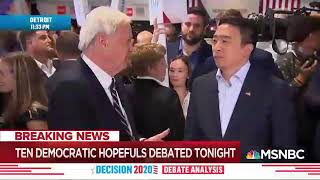
In this YouTube excerpt, former presidential candidate Andrew Yang defends his "Freedom Dividend" – a $1,000‑per‑month universal basic income (UBI) – by citing historical precedents such as the 1970s Family Assistance Plan and Alaska’s Permanent Fund. He argues that technology and personal data are the "oil of the 21st century" and proposes monetizing a slice of digital transactions (searches, ads, e‑commerce, autonomous‑vehicle miles) to fund the dividend. Yang explains why $12,000 a year (just below the U.S. poverty line) is a "sweet spot" that won’t distort labor markets but will empower families, caregivers, and the broader economy. The segment then shifts to a commentator who expands on Yang’s ideas, discusses the velocity of money, and frames UBI as a catalyst for economic growth. The commentator also compares Yang’s plan to Marianne Williamson’s similar UBI proposal, noting their political convergence and the likelihood that other candidates will adopt the policy. Throughout, references to media interviews (Chris Wallace/Hardball) illustrate how Yang’s messaging is shaped in the public arena.
Chapters
time.
And you're not the new kid on the block when it comes to ideas. George McGovern was going to give people $1,000 a year. You're going to give them $1,000 a month. How are you different? Because it didn't work.
Well, I agree with you that this idea has been with us for a long time. It was championed in the '70s. It passed the U.S. House of Representatives twice under Nixon. And Alaska's had a dividend in effect for almost 40 years, and they love it.
That was the Family Assistance Plan.
Yeah, the Family Assistance Plan and the petroleum dividend in Alaska. And what I'm saying to the American people is that technology is the oil of the 21st century. And what they're doing for the people of Alaska with oil money, we can do for everyone in the country with technology money.
But that's royalty money, basically. That's sharing the royalty of the mineral wealth of Alaska. What are we sharing with the $1,000?
In many cases, we're sharing our own data. But if you give the American people a tiny slice of every Facebook ad, every Google search, every Amazon sale, and every robot truck mile eventually, We can generate hundreds of billions of dollars to create a dividend for ourselves. And in the absence of this kind of move, more and more Americans are going to get left behind because artificial intelligence is about to come out.
I'm being serious. It's an attractive idea to get something, especially when you don't understand any chance of making money in this society except minimum wage. Of course people would like the idea of $1,000 a month. That's $12K a year for nothing. Why not $24K a year?
Well, $12K a year to me is the right level because it's right below the US poverty line. It's not going to distort labor markets because people are still going to want to work and need to work.
Yeah.
But it's going to be enough to be a game changer for millions of American families. And if you have two adults in a household, then it would be enough that maybe one of you ends up staying home with a child or starts some other form of work, or maybe you're a caregiver for an elderly relative. So to me, $1,000 a month is a sweet spot. But this is the move we have to make to build an economy that's actually going to work for us in the 21st century.
If you can't make this nomination, if you can't win this presidential election, you're an underdog. Would you like to see that in the platform?
Oh, yeah. I mean, that's—
in other words, that would be your legacy.
If I could help eradicate poverty in this country, which is completely unnecessary by the numbers.
Thank you.
We're at $20 trillion. One thing we have the money.
Everybody understands where you stand. It's very well done. Thank you so much. It's great. Thank you, Brian. A candidate who has understood as much as the guy that used to say the rent's too damn high.
Hey there, I'm Chris Hayes from MSNBC.
Good evening, good day, Yang Gang. And so I hope you all are having a great day. That was a clip from Chris Matthews of— I'm sorry, Chris Wallace. He's certain this guy certainly is not the singer, right? Chris Wallace from MSNBC's Hardball. And what he attempted to do in that clip was he thought he could throw some curveballs there at Andrew Yang and kind of dismantle Andrew's Freedom Dividend. But this wasn't the debates. This wasn't the debate floor. And Andrew Yang is very much in his element when he's in a conversation setting. So pretty much what we saw was a great delivery as always. And that's what's going to happen every time you put Andrew Yang in the proper setting. Now, uh, going back to the last debate, which was a great performance, we can see that Andrew as well is getting quite accustomed to that debate atmosphere. So Andrew knows how to play the game now. He's selling on— interesting enough, if you kind of look over Chris Wallace's shoulder during that little interview there. There's Cenk Uygur from the Young Turks. And the thing about it was that, and I don't want to speak too soon here, but Cenk was very quick to go up to Andrew Yang when he didn't perform so well in that first debate. From them not giving them enough time and want to talk about that. But I noticed that, and correct me if I'm wrong because maybe it's posted and I just haven't seen it yet, but I don't recall Cenk Uygur saying anything about Andrew's performance in the last debate as well. I did see him after the debates speak about Governor Inslee, he believes being the best candidate, which was kind of strange. I think he was the only person to kind of come up with that. But, you know, anyway, he tried to get Andrew with these ideas like, well, you know, we understand the Alaska Fund, which is based on the mineral richness of the state, is how they're provided with universal basic income with this dividend each year. from the Alaskan Permanent Fund. Um, but, uh, where's this money coming from? Because everybody goes, how do we pay for this? Where, where is it? Where's the, where's the money coming from? And Andrew, of course, with his great example of data being the oil of the future, that our data is valuable, it is sold, right? And so, so many people are, are always coming off with that idea of people getting money for doing nothing. But there is value in you and your data. If you think comparably to something like how social media works, right? You get on social media and what you do on social media, I'm sure some people would say or suggest that you're doing nothing. However, companies like Facebook have created almost a trillion-dollar company from that data. And that data is valuable, which is why Facebook is valuable, right? So we have to really stretch our minds a little bit to understand that value is, comes from many places, right? Our project BitcoinMYK, I usually speak about it at the end, I guess I'll get this in here real quick. Uh, when I started, a lot of people say, you're giving away this money, this cryptocurrency. If you give it away, nobody's going to buy it. It's a bad business idea. Doesn't make sense. Doesn't work. Right? However, if you understand velocity of money, and if you understand that data is the oil of the future through our project, which is a merger of a, uh, social media site and cryptocurrency, when that, when those dollars go from hand to hand to hand, just this quick example, understand the velocity of money and how the Freedom Dividend could affect our, uh, affect our economy. Uh, if you give 3 people each $1, one of those people spends the dollar, the next person spends the dollar, it's gone. What does the third person do? He does something that creates value in that dollar, whether it's start a business or invest, whatever it is. And now that dollar becomes $10. You've given out $3, but there's now 10 or 7 new dollars floating in that economy. That is how velocity of money works, and that is why our project is valuable. That is why ideas like the Freedom Dividend will work to make our economy even greater. So we need to do a little bit more research, but with Andrew Yang out there speaking to so many people, getting that point there, get in front of American people, uh, our mindset is going to change dramatically. And I think this is going to be a great new future, uh, for us and our economy, because I think this idea is here to stay. Now, another interesting question that was asked by Chris Wallace was that, uh, um, will you back another candidate? Will you support another candidate? If they embrace your platform. Because we gotta understand how the political game works. When they find out something works and American people are responding to it, and believe you me, everybody's paying attention to why Andrew Yang is surpassing all of these candidates in the polls, why he's getting ahead of O'Rourke and Booker and all these people, and they will begin to pivot because that is what they do. They don't have original ideas. They don't have fresh new ideas. They can only, uh, take over other people's ideas. But that's, that's good for us because that means it helps us to get ever so closer to that. And Andrew's fine with backing another candidate. He even said he liked Bernie Sanders, but Bernie Sanders doesn't support UBI. But now other candidates do, and one such candidate is Marianne Williamson, much like Andrew Yang. I support candidates who support universal basic income. So we're going to talk about, uh, Marianne's inclusion into, uh, that policy. Um, and just want you all to, uh, be aware and, and, and be mindful that, uh, don't be surprised if other candidates start to try to adopt this, this policy. So let's read a little bit on Marianne Williamson's policy and Is it exactly the same as Andrew's? How does it differ? And so we're going to get into that a little bit today. So Marianne's, uh, policy: immediate cash relief with a universal basic income. Under my plan, the federal government will pay $1,000 per month universal basic income to all American adults age 18 to 65. This will provide immediate cash relief to those who need it. It will give people a small but reliable stream of income. It will create a floor so no American needs to be hungry. It will also provide a big stimulus to the economy as people spend this money on food, clothes, and other essentials. The universal basic income will cover all adults until they reach the age for Social Security. Excuse me. And then she cites, see Andrew Yang's excellent book, The War on Normal People: The Truth About America's Disappearing Jobs and Why Universal Basic Income Is Our Future. So I don't think this surprised a lot of people that Marianne is on board. Marianne has a great amount of harmony with Andrew. Uh, they have— they're probably the only two candidates I'm aware of that actually, while running for president, got together in their own little conversation online and had just a great conversation.
That's—
isn't that the kind of politicians that you want to see? You know, if you got to see any, the ones that could come together and genuinely want each other to succeed and, uh, have the American people come first with policies that works, because all these career politicians we're seeing, they don't seem to have that. They seem to me to care more about their own careers and selves and advancing their own futures in politics than us, than the people of America. And so we can see, you know, American people aren't dumb. We can see what's happening and what's going on. But, uh, I like the sound of Marianne's policy. Now, uh, it doesn't seem like she includes Social Security recipients, whereas Andrew does. Uh, in Andrew's policy, it's about, uh, everybody gets the dividend. That's the idea of what the dividend is. Um, with Marianne, she's calling it universal basic income, but she's also calling it immediate cash relief. But it's clear that she wants it just to serve the basic needs of people, and that's pretty much what universal basic income is. Uh, but I, I, I think we can make some clarifications in that And Andrew's idea of a dividend, the Freedom Dividend, it's a dividend goes to every investor, right? Regardless of their— what they make or what they're worth. Uh, and it seems like with, uh, Marianne, it's every 18 to 65-year-old person that needs it. So if you don't need it, uh, doesn't seem like it's really geared towards you. So some differences there, but it's still great, still good. Uh, Also, you know, um, you know, up until now, I think they've tried to present Marianne Williamson as this kind of psycho guru wacko lady, uh, you know. And, uh, you know, of course they try to, you know, do that. Um, but I think Marianne is starting to resonate with people, and I can see they're starting to, uh, take her serious now, right? They're starting to turn from that, you know. She She speaks to feelers, right? American people are feelers, right? You know, when your children can't eat because you don't have a job because there's no job available, you don't worry about numbers then, right? This is going to cost this or this costs this much money. Nobody's concerned about that because you just want your kids to eat. You just want your family to be healthy and you want to get through that hardship. Americans are feelers. They understand that, and, and, and they emotionally connect with that. That resonates with them. Um, so even though they try to present Marianne as wacky, uh, that still will go over well with how she deals with people in the debates. And by being herself, being her authentic self, it will stand out, and people will respect her for that. And I'm glad she didn't try to change anything. She did the same exact thing she's always done, and it's working. It's beginning to work well for her. I guess the next thing that's kind of, would be a problem of some people. Let's just say, you know, if Marianne got ahead in the polls or something like that, and you supported her instead. Well, some people might not like supporting Marianne Williamson because of not her universal basic income programs, but some of her other projects and programs that she's geared toward, like reparations. Reparations was a, a big policy point for Marianne Williamson. Not everybody likes that because it's a very complicated topic. But, um, you know, I like to help people understand Marianne Williamson's reparations, that it might not be as complicated as you might think. Uh, how Marianne Williamson proposes the reparation plan she's speaking about is she's looking at the start at about $100 billion to $500 billion. Now I know a lot of people say, well, that's a lot of money. She's doing UBI, she's doing this, it's just too much stuff happening. But you have to understand that Marianne Williamson is talking about paying out $100 to $500 billion over maybe the next 30 years, right? Putting that money probably away in some fund. Now she says there will be a board of trustees she'd have in place to administer that. Um, but, uh, it will be done in a way, uh, as far as I can understand it, that won't put a burden on the economy in the way we're thinking about it in the terms of people who are worried about the cost of the reparations. So there's something entirely different. And how I see this thing is this to me feels more like the repair part— the repair part, excuse me, of damage done, of a debt old, uh, and that is important because you want to heal those wounds, right? And, uh, just sweeping it under a rug and keep pushing it to the side, that, that's not going to solve that. It is not the meaning of responsibility and acting responsible. So, and she's the only person who's, who's proposed a concrete plan, an actual detailed reparations plan. Um, and so I think that's a good start in the right direction. Will you support Marianne Williamson if she becomes the candidate? Uh, if she doesn't become the candidate, the great news is, uh, she will make a great vice president, as many of us have agreed, because her policies, her plans, her ideas will be so much aligned with Andrew Yang that there will be no friction. Uh, and because she accepts UBI, that will work well. Now, Andrew has also agreed to sign HR 41, which is the reparations bill proposed by Sheila Jackson Lee. Uh, and so what that means is that between him and Marianne, uh, if it got to that point, I believe they would all be able to work out a great plan that works for, um, the African descendants of slaves, the African-American, Black African-Americans, and at the same time provide universal basic income for people, uh, of the country who are suffering as well and need help as well. But, uh, Rob, that's all I guess I want to say in this video, guys. Um, everything's looking great with Andrew. I will try to cover some Marianne Williamson, uh, videos as well because the only reason I didn't cover the other politicians is because I believe in universal basic income. I don't believe that their policies will be effective, as effective as getting cash directly in Americans' hands and stimulating their local economies. Nobody can spend money better than you. Uh, America— I'm sorry, the government administering funds through programs, they generally don't do as well. Uh, they, they don't— their plans don't generally come to fruition as well as what you can do personally yourselves in your own lives with access to your own capital. But that's all I want to say in this video. If you like content like this, don't forget to like and subscribe. Also very important, guys, remember what we're trying to do here. We're trying to get this message in front of as many Americans as possible, right? We want them to see Andrew Yang every time they turn on social media. see an Andrew Yang video. So if you'd like to help Andrew Yang as well, let's start getting these videos out, right? Not just my videos, but all of the other Yang Gang videos. Let's share it to our social media. Uh, many of you, thousands of you, millions of you have social media accounts. Make sure you post these videos there, like, share them, uh, post them on a variety of social media sites, because even if you're only reaching 2 or 3 people. There are thousands of you, and collectively we can reach millions. So think about that. Let's get that done. And until next time, guys, take care.
More from Michael







UBI - CIA Agent Explains Why Americans Will Never Get Universal Basic Income?



