
Andrew Yang - Myths Of (UBI) Universal Basic Income #YangGang
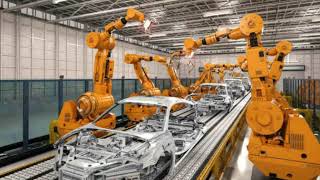
In this video the host tackles common misconceptions surrounding Andrew Yang’s proposal for a $1,000‑per‑month universal basic income (UBI). He begins by debunking the “we can’t afford it” myth, arguing that automation and robot‑driven job loss will strip tax revenue from workers while concentrating wealth in large corporations; a robot‑tax or VAT on corporate profits could recoup that lost revenue. He then addresses the fear that UBI will make people lazy, explaining that cash transfers increase the velocity of money, stimulate demand, and primarily benefit low‑income households who spend a larger share of their income. The host critiques simplistic economic arguments that $1,000 per person would be valueless, using a basic example to illustrate how money circulation can generate additional value. The video reviews the Finnish basic‑income experiment, quoting a Finnish commenter who notes that the trial showed benefits for people trapped in the welfare system, reduced bureaucracy, and highlighted a “benefits trap” that discourages work. The host expands on this, suggesting that UBI could lower crime‑related costs (prison expenses) and improve public health by providing preventive care, thereby reducing long‑term healthcare spending. Finally, the presenter promotes a blockchain‑based, borderless UBI solution (BitcoinMYK.com) as a way to make UBI a human right independent of government policy, and invites viewers to discuss the myths and share their opinions.
Chapters
Hey you, welcome back to the channel. And today we want to talk Andrew Yang. We want to talk some myths about universal basic income. So in this video, we're going to try to dispel some of these myths that are going around about universal basic income, get a little bit more insight onto how universal basic income will work under Andrew Yang's policies when he becomes president of the United States. So the first myth, let's look at one of the first myths we hear a lot about universal basic income, um, or what we believe to be a myth, and that, and that is, um, that we can't afford it. Where does the money come from, you know, and where will the money come from? So, um, interesting enough, Andrew Yang speaks quite a bit about the VA, the the VAT tax. Um, and, uh, that is of course going to be about taxing many of these corporations that profit from robots, right? Uh, so let's, let's think about that a little bit. Think about what happens with robots when they, um, they take a lot of jobs from American workers. When one robot can do the job of 1,000 people. So I'm going to read a part of this article from, uh, the, um, let's see if I can find it here, the ArabianGazette.com. I believe they're out of the UK, but let me read a portion of that. Another consideration here is that for each 1,000 jobs that are replaced by one robot, the government is losing the income tax revenue generated by those 1,000 workers. It must also pay some of them unemployment insurance payments or welfare or universal credit or pay them via other anti-poverty schemes. That's in addition to paying mega millions to cover the cost of homelessness in case of long-term unemployment and the crime policing, court costs, incarceration costs are associated with homelessness and drug use. One robot equals potentially 1,000 homeless individuals, or at the very least, 1,000 unemployed people. So for the people who always make or say things like, oh, we can't afford to pay this. Well, think for a moment. If one robot in these scenarios, as we've seen this happen, take all these people's jobs, that wealth and that value goes somewhere, correct? Now, it doesn't go back into personal income tax, uh, income tax revenue generated from these workers. It doesn't go back into the economy because these people aren't now going to be out there spending money, uh, in their local communities and a variety of places like that. So obviously that wealth is going to go to the, the huge and large companies like Amazon that control many of these, uh, robots, right? So some taxation for the robots or on the robots, uh, whether it be through some type of taxation to the corporations that benefit from them or direct, is only the right thing to do. To get back all of that wealth that's now been taken out of human hands, that are going into the hands of these corporations and avoiding the income tax and the revenue that's being pushed out through the economy to propel it. Keep in mind that these robots, this is not a ratio of labor output that is equal to what would be a scenario of, of fairness in the workplace to how people work. I, I would liken this to a similar situation of what you might get with a monopoly, where you could have a corporation come in and effectively control all of the business, and you have to only be able to buy through that corporation. We have antitrust laws that limit corporations from doing that, that breaks, breaks up and stops monopolies. Why wouldn't we have something for these robots that are going to take wealth from the human worker? So I think that's something to consider. And I think that that goes into part of one of the big myths of we don't have the money for this. If these robots are taking all of this money or will take all this money out of the job economy, then, uh, effectively that money has been, uh, taken away from the human worker. That's a lot of the money that is going— being put back to give us the money. So that's why I think that's a myth, uh, about we don't have the money and a variety of things like that. Uh, going into another myth that we hear quite a bit And this is interesting, like this article brings out here, telling people to get a job to sell to solve their poverty issue or quality of life issue just isn't the answer. And I agree with that. Now, another thing that, that happens quite a bit, or I guess we could say myth number 2, is, um, with universal basic income, with this $1,000 a month like what Andrew Yang's speaking of, there won't be, uh, or they won't have the desire, or they won't work. They're just gonna sit home all day. They're gonna play video games all day. They're going to, um, you know, uh, become, uh, freeloaders and don't contribute at all back to society. But let me ask a question. Do you think that they're gonna spend any of the money that, uh, they get. And what does spending do? Doesn't spending, uh, create a, a much better distribution economy? Money gets from one hand to another. Now you might not think much of that, you might not go that deep with, with the economics of that, but we're going to do that now. So let's think about what happens when you move money. There's a distribution system. Well, first The first part is there isn't an economy in the world that is a healthy, strong economy that doesn't have good distribution. When you have a situation where there is 1% of all the wealth in an economy controlled by one small centralized group, um, that, that is not the sign of a healthy economy. The sign of a healthy economy would be more or less a lot of that value money moving back to a middle class, right? And that's what you would be getting with universal basic income. You have a lot of this value circulating back to the middle group, and it will be this $3 trillion a year that they're talking about. Um, it would be well distributed because everybody would hold it, but more than likely, the poor groups of people will be the biggest spenders the middle group of people probably won't be the biggest spenders, right? And a lot of that money will feed into them or the upper classes, right? So there will be this healthy circulation of this money, uh, going around. Also, due to the velocity of money, when you move money from one hand to another, it doesn't necessarily just stay the same value or less of that value. Another problem with this economic idea is that If I have $1,000 and you have $1,000, I hear this a lot all the time over the internet. And this obviously comes from people who haven't studied economics well, but somehow then they come up with then the $1,000 would equal zero, right? And the money wouldn't have any value. But that's obviously not true because let me give an example like this. Let's say I have a dollar and you have a dollar and we both give our dollars over to somebody who has a dollar as well. Now he has $3. Let's say we get— he gets that money now, and now he turns that $3 into $6, right? Through his brain, through his, uh, ingenuity, through some skill he has with that money from myself and you, he's able to actually create more money. So that's not zero. That's— all of our dollars wouldn't be equal in that sense. And so that is a very Uh, what happens a lot with universal basic income ideas, they're very oversimplified, right? Because the narrative is that it is not fair for one person to have to go out and work and another person can sit home and collect money. He doesn't have to work. But we could, we can move that same narrative up to the, uh, video of the robots we just saw, right? The robots can work 24 hours a day. They don't get tired. The people who own the robots They aren't doing any work. So is it fair that they're making all the money off the robots and the robots are taking opportunity from other people to work and they're not getting any money? We could run that same scenario with that, right? So I don't think that works. But in comparable data, right? Because another thing is we've never done universal basic income, right? So how do we know all of these things will be true either side is saying. So we don't really have a great deal of data to go on, but let's go on, um, let's go on this data, right? The country of Finland. Okay. Uh, and you don't have it in front of your screen, but this actually comes off a YouTuber, uh, who a lot of people probably, uh, know. He was just on the Joe Rogan podcast talking about Twitter censorship. I believe his name is Tim Pool. and he has over 300 subscribers, does a channel called Timcast, right? So I'm pretty sure a lot of you all know this YouTuber, right? And he was speaking about universal basic income not very long ago, and he was, uh, pretty much on the idea of, um, that, uh, it would create all these lazy people. They just skateboard all day, they wouldn't do anything, and, uh, it wouldn't be of any use. They just stay home and become lazy. Okay. And whether that's the case or not, as we really don't have any comparable data that the United States to really go on, what I'm going to do is I noticed on his YouTube video that because he was talking about Finland, there were actually people from Finland in his thread and they were commenting on what exactly happened because with the news coming out of Finland and the universal basic income program, some of the conversation was that there were media sources citing that it was a success. And then there was people saying it wasn't a success. So who do you believe? Who's trying to spin it as a success? Who's trying not to? So I thought it would be interesting if we read a comment from some people from Finland who were there on the ground in this experiment, try to get an idea of what they thought about and what really happened. So here's what someone named Dank in this comment section wrote, and I'm just going to read on my screen a little bit what they were saying. but they read, Tim, I hope you read this. I'm from Finland, so let me elaborate on something. I like your channel, by the way. Good stuff. The basic income experiment made sense because the unemployed people already got the same amount of money on average from social welfare payments. The problem with this currently is that when you get too many hours of paid jobs, you will lose this. This creates a situation where it's more lucrative to stay unemployed, as you can loophole your way around not getting employed and still leech off. So basically, inflation would not be likely because of this here, at least. So the point of this experiment was to see that would— if I believe he's trying to say if the unemployed would get more workers. They don't fear losing the welfare they got. Also, currently the welfare system is massively riddled with bureaucracy, so universal basic income would also remove huge costs and make things a lot easier to everyone. By the way, I'm very much on the same wavelength with you on the political spectrum, taking into account that the left and right is not really the same here as in the United States. Not sure if I support basic income, but I do feel it can maybe work if figured out correctly. So that comes from somebody who's actually there from Finland, who's had some experience with that as we've had none. And what is clear, what, what they're saying here, some of the, the points they made are actually Andrew Yang pretty much touches on a little bit in his, um, in his, in his, uh, platform and policies. But if you notice what they said, this is very important as well, that a lot of the experiment, uh, was aimed at the people on welfare who are kind of trapped in this welfare system. And a lot of them can work, a lot of them could be very productive to the society, but they don't have a safety blanket to fall back on. So instead of work, they're going, well, you know what, if I get out there and I get a job, I could possibly lose that job any or something could happen, and, and then I've lost my benefits, right, that, um, were my safety net. And I know a lot of people go, well, you know, if you can work, you should get out and work, and that, and, and that is true, but the reality is people aren't going to do that because they're afraid to lose these benefits. So what you're going to have is a— in any way you go about this, you're still going to have a great deal of people who are not going to take the chance of working. They're going to stay keeping those benefits. So it's like a trap, and it's like a catch-22 for them. So what was happening with Finland is by them, uh, putting— making it out there so they can go to work and not lose those benefits— I think it was running over 3 years or something like that for them, um, you know, they, uh, uh, it would in that case at least produce more people working than had they not done that, right? So you'll be putting people back to work, uh, who weren't gonna work anyway. Um, the next part to that is, uh, it, it talks about the, the level of the welfare system and bureaucracy. You know, of course it would, it would cut back on that system as a lot of people now would probably be already getting that $1,000 they probably wouldn't even worry about going down to the welfare systems, overcrowding the system, going through all those things to try to get welfare when they're already receiving $1,000 per month and working on top of that. And that's all very interesting. Another part I want to throw into the mix of all of that, and this is, this is also something to really think about, is that —people try to put in place, uh, this idea that the universal basic income will cause people not to work. But my viewpoint on that is different. I think that's partially a myth. I think it's more like the people weren't going to work anyway, right? Because think about it, we don't have universal basic income now. It doesn't stop people from not working, not leeching off of welfare, uh, not living with people on welfare and leeching off their benefits, working, living under the benefits of welfare, hiding in the dark. It doesn't stop any of that. And, uh, so it— whether you're getting universal basic income or not, that's not going to make them work and stop leeching off the system. The next part is the welfare system itself, how it's structured and how these people live, it creates, uh, a great deal potentially more criminals, right? Because what you'll have next is then these people who will commit crimes to get money, right? And you might say, well, we shouldn't have to pay criminals to stop being criminals, but let's just consider this for a moment. And these are just the facts and the statistics. We right now pay in taxes about $40,000 a year just to keep one person in prison, in the, in the, in the, uh, prison system, right? In the penal system. So, uh, $40,000 a year per inmate. And, you know, for the most part, these people aren't contributing back to the system to cover that $40,000 a year, right? So that means the taxpayers are still out right now $40,000 per inmate. Now it's so bad that it's moved some to say, well, in fact, I heard this from a friend who's involved in the prison system. And he said, he made this comment about it probably would make more sense to just pay them to stay out of prison, right? Because you gotta pay $40,000 a year anyway. So you imagine somebody in the Universal Basic Income program, $12,000 a year, potentially keeping a lot of people out of prison that's gonna go, uh, and we're gonna have to still end up spending $40,000 a year on them. So I'm not saying that these are, uh, any kind of silver bullets or anything, or we do this to stop that and it should be right, we do this or that, but this is just the way things are. And this is just what, what it looks like and what it is like. And, uh, whether people want to come to terms with that or not, that's what it is. I think at this point in time, the only thing we could do is try to put together things that make it better for everybody as a whole, right? Make it better for everybody as a whole, uh, where, um, the benefits, uh, uh, outweigh overall. And what do we get —on the overall benefits, we get a great deal more things, right? We get more people potentially who are more healthier, both physically and mentally, which means that healthcare costs can be greatly reduced, right? Because one of the biggest problems with the mental disorders, like whether it be depression or whether you have some type of bad health issue that later turns into a large medical issue, due to the fact you didn't have preventive care measures in point, you couldn't eat the right food, you couldn't get to the right, uh, you're still going to have to pay more down the road to hospitalize these people. You got the people who are suffering from mental conditions, whether it be, uh, uh, uh, uh, uh, emphasized or magnified rather by, uh, economic stresses and disorders. And now they got a more severe mental problem that's going to cause insurance companies more money, going to cost us a lot more money down the line. You know, all those things have to be considered with this. You know, this isn't an oversimplified way to consider this. You know, you have to look at the entire board. You have to understand the entire economics that go into this and ideas. And $3 trillion does sound like a lot of money, Uh, but we— it's hard to quantify the benefits that come from this, right? I'm on the optimistic side to believe that we can afford that $3 trillion with all of the benefits that we get from the $3 trillion and what it does to the economy. Uh, so I hope some of y'all consider what I'm saying about many of these myths about Universal Basic Income. I also like to go, uh, put this out there really fast, that, you know, the idea of Universal Basic Income is great within a country, within a nation, but the problem with that is that that means that if that, uh, administration or those policies change, then the Universal Basic Income goes away. I'm more strong believer in that Universal Basic Income should be a human right. And one way we're finding out a way to make this possible is for blockchain technology. Using blockchain technology to create a system that is not controlled by any government around the world to allow people to receive cryptocurrency in the form of universal basic income void of borders. And the program we're using and project we're doing to make that possible is called BitcoinMYK.com. There is value already in the currency, the token we use, trading and exchange We invite you free of charge to join, get value in this platform, and start receiving universal basic income from our project. We will leave a link in the description, but that's all I want to say in this video, guys. I would love to hear some of you, uh, your guys' thoughts. Uh, do you, uh, believe that the universal— the case for universal basic income as far as not being able to afford it, uh, that'll make people lazy and not work, and a variety of things like that? If you believe they're true and why do you believe they are true. Uh, but that's all I want to say in this video, guys. If you like content like this, don't forget to like, subscribe, and until next time, take care.
More from Michael







UBI - CIA Agent Explains Why Americans Will Never Get Universal Basic Income?



