
Andrew Yang - Rachel , Marianne & Tulsi
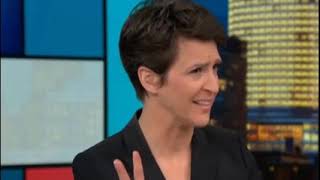
In this commentary, the speaker critiques the media’s obsessive focus on impeachment during the 2020 Democratic primary, arguing that it distracts from the looming economic recession and the need for substantive policy discussions such as universal basic income (UBI). The speaker praises Andrew Yang for refusing to be baited into the impeachment narrative on the Rachel Maddow Show, emphasizing Yang’s consistent advocacy for the Freedom Dividend and a broader view of the Trump administration’s foreign‑policy missteps, especially the abrupt withdrawal from Syria. The video calls for Democratic campaigns to demand balanced, wide‑ranging interview questions rather than allowing media outlets to dominate the conversation. It also condemns media bias that limits equal airtime for candidates, urging regulations for fair candidate exposure. The speaker briefly supports Marianne Williamson’s spiritually‑driven UBI proposals, notes Tulsi Gabbard’s pro‑UBI stance, and dismisses unfounded accusations that she is a Russian agent. The analysis then shifts to the Democratic establishment, portraying Pete Buttigieg as a “fail‑safe” candidate who represents continuity rather than change, and warns that his rise could undermine Yang’s campaign. Finally, the speaker promotes the BitcoinNYK.com experiment, a global, free cryptocurrency‑based UBI pilot, positioning it as a practical step toward a national UBI while urging viewers to like, subscribe, and join the project.
Chapters
Welcome back to the channel. I hope you all are having a great day. So want to talk Rachel, Marianne, and Tulsi. Of course, Rachel, we're referring to Rachel Maddow, Marianne Williamson, and Tulsi Gabbard. So as many of you all know, we recently, um, had, um, Andrew Yang on the Rachel Maddow Show, and a lot of people didn't like how that show went. Um, and I didn't really like how the show went either. Uh, I do like that Andrew Yang stuck to his guns, but you know, we can very much tell that Rachel Maddow, you know, her whole thing, such as many of the Democrats, is still stuck on this impeachment thing. And that's all she wanted to talk about, right? It was about the impeachment. They're still stuck on this impeachment thing. Now where I'm a bit confused about the impeachment, the whole impeachment situation is this seems to be what the Democrats are focused on because they believe that this is their ticket to defeating Trump, right? But I think a lot of people are misguided at this point somehow. And the economists know this, the economy, and a lot of us are already feeling it. Probably most people are already feeling that the economy is bad, right? But the fear has been that Democrats have kind of went with this narrative that the economy is good and Trump has this good economy and it's hard to defeat a sitting president in a good economy. But this economy is not good. Somehow it's been propped up, you know, by the Fed. And you know, all economists are pointing towards, you know, we're headed to recession and that's no longer gonna be the proper narrative. So what I'm trying to figure out is Why aren't Democrats doing more research and digging and understanding that impeachment is not the only thing in the toolbox, right? But they're just fixed on that. I mean, for weeks on weeks on, they really think so. They want the whole conversation to be based around it. So the Rachel Maddow Show is— that's all it is, right? A lot of these media shows are just like these opinion-based hit pieces this, right? That's all they are, and it's just hours and hours of that, you know. Nobody's really reporting the news anymore, um, and it's just so weird to, to look at these things. I don't really watch them, you know, but they're, they're really strange, these things where, uh, media and politics have merged, and this has just become the norm, right? But anyway, uh, Andrew Yang's tried to kind of get Andrew— you want to pull him into that, you know. He knows— she don't— they already know he's doing well with the Freedom Dividend. They know it's— that's gaining a lot of attention and support. They already know those things, right? So they don't want to focus on— they don't want to focus on the good parts of the Andrew Yang campaign. They want to push the narrative of this impeachment thing, and they want Yang to kind of, you know, be on board with that. So that could be their number one thing. But Andrew Yang being the problem solver that he is, he stuck to his guns. I really liked that. I really liked the fact that Andrew Yang didn't kind of take the bait and get pulled into that impeachment thing, but more so dealt with, hey, we gotta go back to everything that's happening with Donald Trump, the impeachment and everything that's been happening is a symptom of a huge, a more bigger problem. And impeaching Donald Trump does not fix the problem. I don't know how many ways that we can say that. I don't know how many different ways Andrew Yang will have to say that to get them to understand that, but that is the reality of the situation and everybody knows it. But for some reason they, you know, and I'm trying to figure out who are the strategists behind all this stuff, you know, and if Democrats are really trying to win this thing, right? You know, now I'm not saying that the impeachment shouldn't be brought up, but I think it should be handled in a way You know, that it's not the focal point of what's happening in our politics today. You know, night in, day after day, that's all we hear. It's just craziness. It's ridiculous. And so Andrew stuck to his guns. He let them know about that. And then of course, with everything that's going on in Turkey with the Kurds and this crazy pullout Donald Trump did, and Andrew Yang stuck to his guns again, because now of course the narrative is, see what it's become, really, really what it's about. Is that they're doing similar to what the Republicans did to Barack Obama during his administration. That is, everything he does, um, they're going to go opposite that, right? So if Donald Trump, uh, is, you know, pulling out troops, they're going to form this whole big narrative about, oh, well, you know, all the troops should stay there when we've always been trying to pull out troops, right? So it's not It's not about the pulling out the troops, but it's just the moronic behavior of Donald Trump that of course only he would do something like this where he's going to bring the troops home, but he's going to do it abruptly overnight, right? Like, you know, you know, anybody, every war we've been in, we're in Vietnam, Afghanistan, Iraq, everybody knows, uh, the process of how you have to withdraw troops, right? And of course, the moronic Donald Trump, only he would come up with something as crazy as he did, right? So they want the narrative to, you know, to be, uh, for, for Andrew Yang to kind of go with, oh, I wouldn't pull out the troops and leave the Kurds to fend for themselves that way. And, and, and what it does is it prolongs something on and on and on. And what you're eventually going to still end up with is the endless wars. Remember, endless wars are justified to no end in the same way. So that's what they wanted Andrew to say. But Andrew said no, at some point the troops do have to come home. It's not the problem of withdrawing the troops. It is the problem with the moronic way that Donald Trump did it. You know, anybody, you know, knows that, you know, I don't— you don't have to be a general, you have to be General Patton to know, uh, that's not how you would withdraw, you know, troops from a war zone. That is just ridiculous. But anyway, um, you know, Rachel kept trying to, you know, play to the impeachment withdrawal, trying to play that with Andrew Yang to kind of get him to move in that position. And I, I, I very much liked that Andrew Yang stood his ground that, you know, this is the candidate I am. I'm not really left, I'm not really right, but I'm forward. And that's what it's going to take for us to really solve the problems, deal with the problems, and not have these reality TV shows going week after week after week on these media stations, right? And of course they're getting high ratings. I, you know, I get it. They're, you know, this is the idea of their shows, they get high ratings. And we kind of have to play the game because, you know, uh, the, the power of the media is still reaching millions of people. And Andrew still needs to resonate with independents, people who just haven't quite got there yet. He still needs to be out there reminding Americans this is why, and, uh, he's relevant, he's here, and this is why you need to vote for him, right, coming election. So he needs to be, uh, in the media. But I, I, I like the fact that he sticks to his guns. He should continue to do, uh, what he's doing. As far as I could see, it was nothing really Andrew could really do different. You know, he was going to be kind of boxed in with the questioning from the Rachel Maddow Show. And here's what I think needs to happen too. This is what I think needs to happen when This is what I would do if I was the campaign manager of the Andrew Yang team. When they come on these shows, I would want to speak with these people first. Even though you do that sometimes, it still doesn't work. I want to speak to these people and say, well, look, hey, it is very fine that we answer whatever questions you may have, right? But we need a very balanced, broad view of questioning. And I would just tell them the whole story because look, You know, there's a lot of negative, uh, uh, uh, things that come out of the media, uh, and, uh, what we want to do is we want to make sure this is a balanced interview. We don't mind answering any questions you have, but we would like balanced questioning about the entirety of our campaign. And I think the campaign management should make sure that when we agree to go on these shows that, hey, you know, uh, look, we're fine with any questions you have, but are we going to get those important questions to our campaign as well, right? You know, uh, I— we would like to know what the questions are going to be like. We don't, we don't need to know exactly what the question is going to be or what direction you're going to be in, but we would like to know if there's going to be a broad range of questionings, right, questions about our campaign. And, and, and, you know, not just something that we feel is going to make us look in a negative, you know, light. I, you know, I, I hope those type of things would happen and would go on, right? But I think Andrew did a pretty good job. You know, of course, anytime Andrew's dealing with the foreign policy thing, that is still an area I think he does need to, you know, even if the idea is to have the domestic policy be this strong defensive policy, that resonates to the rest of the world. And then in that, it becomes a very defensive way to protect our country abroad as well. You know, but I think it's important that that message be delivered with efficiency, at least in a way where even if you're more so presenting a more of a domestic policy to a foreign policy, it is set up in a way that it addresses a lot of the foreign concerns, right, that come our way. So, uh, yeah, definitely still could use some brushing up on that. But overall, I get, you know, what direction of Andrew is in that area, and I just think he needs to fine-tune that for the questioning because millions of people are watching, you know, and, and make sure that, you know, he's kind of, uh, you know, pretty strong in that area. Let's talk about Marianne Williamson a little bit real quick. So Marianne was on The Young Turks recently here, and everybody knows I love Marianne Williamson. I really wish she could win this thing, uh, you know, uh, between her and Andrew, you know, if Andrew then Wing, obviously Marianne would be my next person. But you know, I just don't think it's in the cards for Marianne. But she did bring up some very interesting points, uh, on The Young Turks recently. She talked about— because of course she wasn't part of the last debate, right? So she talked about, uh, you know, how unfair that is. And I agree with her, right? And how the media has really, uh, got more of a big control over our democracy, right? Because to the point they're imbalancing it. And if you really look at this, that's what's happening. Because think about this, the media is so influential on how they present our candidates, how they chop up interviews by asking certain questions. They can make, they can make you look bad or they can make you look good, you know. And it's just too— it almost ought to be laws against it, right? That you have to do balanced interviews, you have to give the same amount of time to candidates. Now some people would raise the argument that, oh yeah, you know, we can't have all these people on stage. And some of them are obviously performing worse than others, right? Some of them, and they're just taking up space. You know, they can't win. They can only maybe split votes. They're the last on the polls. They're pulling at 1%, and we just can't have 30, 40 people on stage. And I think that's a, that's a fair point. But here's what I'm saying though. You can at least have it where everybody gets the same amount of time. Right. Or they mute your mic or something. Right. Cause people, some people just talk all their time to keep talking. There needs to be, there does need to be a way to just cut your mic off. So the moderator is not arguing and fighting with a candidate for 5 minutes later about his talking point time is over. So it should be something like that, but it should be to where everybody gets the same equal amount of time, uh, the same, uh, chance to answer every question that is asked and that done in an efficient way. To the point where then as candidates get eliminated, it's a much more understandable and fair, uh, uh, situation, a platform. Because these media events, oh man, they have a lot to do with who becomes the, uh, the candidate, the president, and all of that stuff, right? You cannot deny that. And that should be looked at as a threat to our democracy, you know, if I'm being honest about it. And, uh, right, it is kind of surprising to me because There are all types of, uh, uh, rules and regulations against candidates about how much airtime they can get, right? You know, if you're a celebrity, uh, you can't get as much airtime, uh, as, uh, uh, you know, a normal candidate because you're— if you're on TV too much or radio, there are rules against that, right? So if there's rules against that, why is it that these big media groups are able to let a candidate talk for you know, talk, uh, you know, linked, linked on in and, um, they're biased in their questioning. Uh, it should be something that we need to examine and it should— something should be looked at. But I thought Marianne made a good point of that. Uh, Marianne, you know, still talking a lot about the spiritual makeup of what's missing in the country and what needs to happen. You know, of course, you know, Marianne still is candidate Year 1 Million or Year 3000 because, uh, she's just so far ahead of our, our consciousness right now in that area. But, oh man, I, I just hope she, uh, I hope she gets a cabinet position in Andrew Yang's campaign. Talk a little bit about Tulsi real quick and we'll wrap it up. So of course we've heard everything that's been going on with Tulsi, uh, and Hillary Clinton. That is another weird set of events where she's calling Tulsi a Russian agent and you're trying to figure out where in the world is something like that coming from? It is crazy. And you're starting to understand, uh, that there was a history with Tulsi and Hillary, and Tulsi was kind of the it girl, right? And she was a war-decorated congresswoman. You know, Tulsi Gabbard has all the makings of the perfect candidate, right? And apparently she was kind of like the Golden Girl of Hillary Clinton in Congress. But after the debacle with Hillary and the corruption and going against Bernie and, uh, the Democratic Convention and Debbie, uh, um, Weiser— Weiser— Weiserhouse, is it? Um, after all of that, Tulsi went over to Bernie, started supporting Bernie. And I guess the story is Hillary got all upset, and now all this crazy allegations are— this is crazy— is coming out about Tulsi, which I don't, you know, which is ridiculous. You know, nobody— I don't believe anybody really deep down believes that Tulsi Gabbard is a Russian agent. Uh, but it is crazy. I'm starting to wonder what's going on with Hillary Clinton these days. Is she getting kind of older, starting to get kind of a little bit off there? Is something crazy going on with that. But, uh, craziness. But you know, between Tulsi, Marianne, uh, and Andrew, I, I see them as the perfect group. Of course, we know, uh, Tulsi in the debate, she's very supportive of UBI. Very good sign. We already know Marianne Williamson has adopted, uh, her version of UBI, different from Andrew's, but yet still a version that can help a lot of people. Um, and, um, you know, uh, you know, looking back at the Andrew Yang campaign, you know what, what it looks like about to happen here, it looks like Biden, Bernie, and eventually Elizabeth Warren are all going to fold away, right? And you know who's going to be left? Pete Buttigieg. I've always been worried about Pete Buttigieg, right? Pete Buttigieg is the safe play for the Democratic Party, right? And it's going to take the people— I don't know how they keep breathing life back into Pete Buttigieg. I don't know how he's done. I thought the South Bend incident was enough to stop him. He somehow got through it. And, you know, they're trying to build him up to be— he's going to be their fail-safe, right? Pete Buttigieg, watch what I'm telling you guys, is going to be their fail-safe, right? But Pete Buttigieg is so establishment, right? He's starting to feel so establishment. Uh, he is the continuation of the no-change Congress, right? And I hope a lot of people wake up to that. You know, I hope a lot of younger people who are maybe kind of drawn to Pete— I hope the LGBTQ community, I think, I hope a lot of them wake up to that, that they're kind of, I believe, use this image of Pete Buttigieg to draw them in. I don't think Pete I don't think Pete Buttigieg in himself is a bad guy, but I don't think he's going to represent any of the changes we need in this country to go forward to really get to solving the problems we really need to be solving. And I don't think Pete's going to do that at all. I think Pete's going to be a type of continuation of everything we've seen thus far. And even though he's a very eloquent speaker, he has the characteristics of what a poster boy, uh, uh, politician would be, right? You know, and even though— and even a, a, a soldier, a veteran, right? So he's not a coward. We know he's not a coward. So he fits the bill, and he's very dangerous to the Andrew Yang campaign. I really think that Andrew really needs to start setting up to, to focus and deal with Pete Buttigieg, right? And look at some of Pete Buttigieg's policies, as you know, as opposed to like Warren and Sanders and Biden, because I don't think, even though they're kind of leading the polls right now, I really don't think that they're going to get the nominations either. But that's all I want to say in this video, guys. Real quick, our project BitcoinNYK.com, if you haven't joined yet, why haven't you, right? There's a great experiment on universal basic income. It is global, it is totally free, and you gain value from it. That's right, you gain value, cryptocurrencies that can be redeemed in your local currencies, for other cryptocurrencies. Just a great project, great way to experiment and get your guys' feet wet with what ideas of what universal basic income is going to be like. Obviously, of course, we're still going to need a national universal basic income. Too many people, the problem's just too big. But this is a great way to get started, uh, and it can help a lot of people globally as well. So if you haven't joined yet, why haven't you joined yet? Make sure you do that, totally free. But that's all I want to say in this video. If you like content like this. Don't forget to like, subscribe, and until next time, take care.
More from Michael







UBI - CIA Agent Explains Why Americans Will Never Get Universal Basic Income?



