
Andrew Yang - Republican UBI/BTCMYK UBI
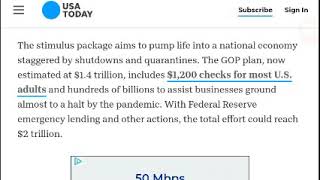
In this commentary, the speaker examines the parallels between Andrew Yang’s universal basic income (UBI) proposal and recent Republican‑backed stimulus measures, notably the $1,200 payments proposed by Donald Trump during the COVID‑19 pandemic. The discussion traces the historical use of direct cash payments by Republican administrations, challenges the misconception that UBI is "free money" or socialist, and highlights how conservative media and libertarian economists have begun to view cash transfers as economic stimulus rather than ideology. The speaker then connects the pandemic‑driven crisis to the looming automation/AI crisis, arguing that both create situations where workers are unable to earn wages, thereby justifying universal cash assistance. The narrative shifts to the role of nonprofit organizations—citing Andrew Yang’s own nonprofit—as alternative vehicles for delivering UBI, and introduces the BitcoinMYK project, which proposes using blockchain and cryptocurrency to distribute UBI globally. The speaker critiques the current limitations of cryptocurrency as a general currency, positing that its strength lies in fast, borderless value transfer, making it well‑suited for non‑governmental UBI schemes. Finally, the video calls for broader adoption of such crypto‑based UBI initiatives worldwide, urging viewers to join the BitcoinMYK project.
Chapters
Welcome back to the channel. I hope you're having a great day. So I want to talk about Andrew Yang and the relationship between the universal basic income he proposed and what is now seemingly to many people to be like a type of Republican-based universal basic income. So what are some of the similarities and the proposals and just this idea of $1,000, or in this case, $1,200 going out to most Americans. So I almost feel like Andrew Yang dropped out a little bit too early. I mean, he was almost a few weeks dropping out too early. If he would have just hung in there a little bit longer, I think that this would have been just so relevant to many of the things that Andrew Yang was addressing in universal basic income. But let's go over some of the details and try to see some comparisons here and get an understanding of this. So, you know, as we know, Donald Trump, in a means to create a stimulus back into the economy, has proposed to do this GOP plan where most adults in the United States are going to receive $1,200. Uh, now the term stimulus is quite interesting to what a lot of the basis was of Andrew Yang's universal basic income, because as we recall, Andrew talked a lot about the money that would come through Americans' hands directly through this $1,000 per month would be spent right back into their local economies. Now what that is, is that's a form of stimulus to your local economies, to your businesses, which gets the, the money flowing and can promote employment, can promote healthier people in the, in a given community, and so on and so forth. So one of the big issues or attacks against Andrew Yang was just the idea that it was just giving free money away and it wouldn't do anything. These people would just blow the money. So that was a fundamental misunderstanding of what was going on. In a similar fashion with the proposed stimulus package going out, the Republican version of universal basic income, which they have done several times already. We had the, it done back in the early 2000s with George Bush, of course. And so this isn't— Republicans giving away money isn't something that I don't think has ever really been a problem to Republicans. I think their whole thing has had a lot to do with money being mismanaged by the government itself. And so I think erroneously, a lot of people have kind of push the idea that Republicans have been against putting dollars directly in Americans' hands, but that's not exactly the case because they've done it before. Now, um, again, the comparisons being, uh, to stimulate the economy, but this is what universal basic income would do naturally. Also, what I found quite interesting is a lot of the conservative Republican-type media outlets who talked about universal basic income. To be fair, I didn't hear a whole lot of negative pullbacks from a lot of these conservative stations, as it were. I believe Andrew Yang appeared on Fox News several times and seemed to make a pretty good case about UBI. And I don't think they called it socialism a lot. At least now they're not calling it socialism seemingly at all. And more so going on the idea of that it is not socialism, but I think they'll be leaning more to the idea of what like Andrew Yang was saying, that it's capitalism that doesn't start at zero. So they're not interchanging any of those ideas of socialism and universal basic income, which was erroneous from the very beginning. Many conservative, like libertarian, economists have championed versions of universal basic income. And I think the real crux of it is that they understand that this is quite relevant to stimulating an economy. And during Andrew Yang's campaign, that just didn't arrive, didn't go over with the American people. It just didn't stick. And a lot of the American people misunderstood, I think, how universal basic income worked. And as well as that, this is a very new idea to modern-day Americans, especially after the 1950s, when anything that could be kind of feel relatable to any form of communism or socialism, especially after the McCarthyism, uh, era where they were just hunting down anybody who, uh, seemingly championed any ideas of communism or socialism. Uh, it was almost one of those things just like, uh, do the direct opposite of your enemy, right, during the Cold War and after World War II. Um, that it just became a total, uh, uh, breakdown and, and, uh, position of if anything seemingly felt like it was free money to some extent, that it was communism or socialism. And so today we kind of throw those words around very loosely without getting deep into the ideas of what they are. Of course, another comparison I think that could be made between Andrew Yang's UBI and Republican UBI is in the midst of crises, right? In this particular situation, directly dealing with the crisis, right? The COVID-19. And this has created a situation where people can't gather together. It's negative if they do because they can actually spread this virus more easily, of course. and, uh, it's, uh, more so being promoted to stay home. Don't even go out to work unless you're a necessary service worker, a hospital worker, or some to that degree, food services. Don't go out to work. So what happens when you tell everybody to stay home from work? It creates the same exact situation as what the crisis would have been in Andrew Yang's UBI, or what was leading up to, and that is this unprepared situation where you would have AI technology, uh, at some point or, uh, gradually pulling away from the American people's, um, jobs and, and livelihood. This would eventually lead to a situation where, much like how we're facing the COVID-19 crisis where people couldn't go out to work because there would simply be no jobs for them, the artificial intelligence or robotics would do it a lot, a great deal better. And I think a lot of people are still in disbelief about just how quickly something like that could happen. And it's almost like one of those situations where live for today and worry about tomorrow later, which is something that I think is something human beings tend to do. But, uh, when you start speaking of terms over the next 5 or 10 years, you're talking no time in, uh, the course of events. And before you know it, you can, you can have this artificial intelligence revolution. Another thing is we can't even calculate the speed at which, uh, technologies can advance and robotics and computers, but the basically the smoking gun to what Andrew Yang was trying to relate to us is that these systems exist right now, right? It wasn't so far conceived like this was a future crisis. The crisis is happening now and it's in our midst now. And so in these ways, if you can take COVID-19, not obviously not a virus, the virus itself and the impact it's caused on people's, uh, health directly. And, uh, unlike what would happen with artificial intelligence revolution where, where it would be, uh, going against our health, but it would be, uh, through economics, right? It would be through people not being able to, uh, basically take care of themselves because they would have no money to survive. Similar it is, um, in those ways they're very relational, right? And this situation just kind of boom sped it up right there in front of our faces, right? But for what seems clear is that now that people see what it's like to be in some type of crisis, whether it be the Fourth Industrial Revolution or this, uh, pandemic that's, uh, gripped the world. Um, what is clear is people are understanding the effects of what happens when elements like these stop people from being able to work, right? Whether it be a machine doing it or a disease doing it, the effect on human beings is going to be quite similar, leading up to the point of where the government will have to intervene and start sending out universal basic income checks, sending out stimulus package checks, and so and so forth. So, you know, this is just the reality of the situation, what's happening with us. But quite interesting. I wish Andrew hadn't dropped out as of yet. I'm understanding he is invited to speak at Congress to present many cases and data about universal basic income. But the idea of this situation and what it's meant in people's lives and how quickly things can change for, uh, families and, and people having to support themselves. I think what this does is it lends itself over to a more foreseeable set of circumstances that can put people in these situations. And what are we going to do when this happens, right? How do we survive? How do we go forward, right? A global pandemic like this could, you know, hopefully we'll be able to get it down and get it out over the course of several months. But imagine something like this that doesn't go away and it's years on end, right? So we would have to be able to evolve against this thing. And I can tell you now, diseases like COVID-19, this is not the last we're gonna see of this. This is gonna be repetitive in the future. And robotics are going to take people's jobs at some point in the future. I don't think it's a question of if, But I think it is definitely a question of when, and these things are going to occur. And at some point, we're going to still have to be prepared to deal with these type of situations. Real quick, I want to talk about our project BitcoinMYK. All right, here on BitcoinMYK, and I just want to say, I think that it's not only at this stage that it is government dependency to implement universal basic income, uh, in times that it is needed. But I do think that this is now, uh, going to be something that's going to be done with nonprofit organizations, with, uh, systems that, uh, create the opportunity for universal basic income and try to address this problem maybe at ways and levels the government can't. Andrew Yang right now has started a nonprofit that's doing exactly that. And I think that's a great thing. I'm glad he went that route. When I was hearing ideas like, should he be a mayor or should he be, or something in politics? I was like, this doesn't to me feel like the best way to spread universal basic income message because then Andrew will kind of work his way up through politics. Just don't have time for that. And I think Andrew has already, uh, went well beyond these, uh, other political positions. He's, he's done— performed well at the, uh, presidential level and, uh, show a lot of Americans that he could be their president. And so to take lower offices, I don't think that will work. And, uh, I— so I think this is approach of dealing with nonprofits for right now. And if he decides to run again in 2024, would be a great idea. But So that's opening up the gates to, there are things we can do, right? And Bitcoin MYK is a universal basic income project. Now what's great about Bitcoin MYK is it uses blockchain technology, cryptocurrency to deliver a universal basic income to people across the globe. Now in the cryptocurrency space, my peers, as it were, are trying to find uses of cryptocurrency, and unfortunately, uh, many of us are falling flat because the uses we're finding in cryptocurrency hasn't created any type of mass adoption. Um, even trying to use a cryptocurrency as a currency, uh, comes out as quite the inferior product because, well, for one thing, if you were transacting a currency and there was an issue with it. Of course, in the currencies we use in our fiat currencies, we have things like refunds and chargebacks, right? And this is something that couldn't occur in cryptocurrency properly. And so that leads me to believe that cryptocurrency didn't exist better as a money delivery system. It exists better as a universal basic income delivery system. The one thing that cryptocurrency is good at is sending money and value across borders, doing it fast and efficiently and safe and secure. And, um, you know, getting money one direction works awesome for cryptocurrency, and that could be quite useful for non-governmental groups that want to do this. Um, and that's the difficult part to, you know, as a lot of the cryptocurrency community, as I propose this to them, a lot of the argument I get is that this is free and it's not going to work. Giving away free money doesn't work, right? But it's so relational to what they were saying about Andrew Yang's campaign, that giving away free money wouldn't work. Um, and they couldn't at this point in our political system even see someone like Donald Trump giving away free money, right? So that just shows you how quickly things change. The idea is, are you, uh, ready to change with the times and change with the situation, uh, when it comes to it, and let go of maybe ideas that many of us thought maybe would work but don't work. And, um, cryptocurrency, uh, for the most part is not working. And if it is working, it's working only for a few people. And that's part of the issue. And that's what's going to be the downfall and stop cryptocurrency from growing. My belief is it's only going to work in relation to something like universal basic income, right? Uh, where it can be this non-governmental type of system where it could be delivered to people around the globe and then become this functional currency amongst people because everybody would have it and people would be more apt to accept it and so on and so forth. But now's the time to embrace different systems, private systems that, uh, I apologize guys, notifications going crazy, but this is the point in time we should start to address many ideas of universal basic income across many spectrums, and together I think it can solve many of our issues. All these systems working together. And being the answer to our problems. You know, the fact of the matter is, even if we get universal basic income in the United States, um, you know, we have also the responsibility to our brothers across the globe, right? They're gonna need universal basic income too, because if it works well in America, uh, it's probably going to be, uh, something that's going to need to work across the globe. And of course, this is probably not going to be possible for everybody, but together we can create a system that can work better for the entire globe. And that not only represents a good use of cryptocurrency and actual real use that people can actually find use in, that there can actually be demand for something that we lack now in cryptocurrency, which is a lot of demand The reality of the situation is people just don't have to use cryptocurrency and probably won't, can't even see themselves using it. And I think in the cryptocurrency space, that's something we're having difficulty coming to terms with. But you can join our BitcoinNYK Universal Basic Income project today. It's absolutely free. Um, I think the more, uh, universal basic income projects that exist, the more we're part of together we can go forward and change the world into something that can work for most of us instead of some of us. But that's all I want to say in this video. If you like content like this, don't forget to like and subscribe and share. Share with your friends across all social media. We'll leave a link in the description to join the BitcoinMYK Universal Basic Income Project. If you have any questions, let us know in the comment section or on live support on the website. But that's all we want to in this video. And until next time, as always, take care.
More from Michael







UBI - CIA Agent Explains Why Americans Will Never Get Universal Basic Income?



