
Andrew Yang - Twitter CEO Donates/Bernie Minimum Wage Problems
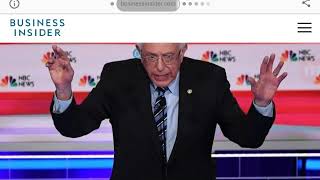
Jack Dorsey donated $1,000 to Andrew Yang's campaign. Bernie Sanders' field organizers demanded the $15-an-hour wage he publicly championed, but the campaign was slow to respond. Yang argues UBI beats minimum wage because raising it accelerates automation and hurts workers.
Chapters
Hey you, welcome back to the channel and I hope you all are having a great day. So I want to talk about some latest news with Andrew Yang. Uh, we now know that the CEO of Twitter, Jack Dorsey, has began donating to the Andrew Yang campaign. Now of course that's good. Um, we want to see a lot of these people, especially a lot of these tech giants, really get behind Andrew Yang because, uh, you know, they're the— a lot of people who are in, um, uh, tech and AI recognize the problem of their inventions and what it's going to mean to society. So many of them are trying to work toward a solution as as well, which I think is quite the responsible thing to do. And so it's good that Jack Dorsey is now recognizing the Andrew Yang campaign. Now, the only problem I have with it is that he only donated $1,000 so far. I also believe Nicolas Cage donated $1,000 to the Andrew Yang campaign. He can max out at $5,000 because of the campaign rules. So he hasn't done that yet. Maybe he will. Uh, I do know that he donated $5,000 to the Tulsi Gabbard campaign, so he maxed out on Tulsi. So he likes Tulsi. Kind of weird that he doesn't like— he hasn't donated as much to the Andrew Yang campaign, saying that he's in tech as well and that, you know, he should be more, uh, concerned about what technology and AI is going to do to jobs in the future. But the fact he is donating to the Andrew Yang campaign It does show he is concerned about it and he does recognize the Andrew Yang campaign as a good campaign. So that, those things are great. Um, you know, um, interesting enough, well, what's been going on, probably many of you all have heard about it, and that is, um, Bernie Sanders had, uh, quite a bit of complaints come out of his camp. Saying figures were coming across like he was only paying $11 to $13 on average per hour, uh, for people on the campaign trail. And what I want to say about that, um, in relation to Andrew Yang, because, you know, of course Andrew Yang was against the minimum wage from the beginning. He thought it was a better way to go about it. And we've done, um, videos in the past that discuss some of the issues with minimum wage Um, and so want to talk a little bit about that today, but to also say that, um, you know, Bernie Sanders has come out and wanted to try to correct, uh, the problems and issues with, with his, um, with the people from his camp to try to get that resolved. And again, I think Bernie Sanders is a good person, um, you know, and, you know, I by no means, you know, wouldn't, you know, would want, you know, to attack Bernie in any way, you know. But the, you know, but the thing is, it does come up. It's gonna come a point in time in this election process that we do have to distinguish amongst our candidates, right? We have to, and there's a proper way to do that. And what happens in these elections is Sometimes candidates don't do that properly and we get a lot of things happening in bad form. But we do have to distinguish our candidates because the American people deserve the best candidate at the right time. And some of us feel Bernie Sanders' time was in 2016 and he's slipping greatly in the polls and a lot of people believe his time may have has. Um, but anyway, let's talk about that a little bit and contrast that to the Andrew Yang Freedom Dividend. You know why minimum wage maybe wasn't such a good idea, maybe isn't quite the best idea, and if it isn't minimum wage, then what else can, uh, would be the solution to that? So in this article done by Vox, and there are several articles about this, um, and we all pretty much know the story about Sanders championing, uh, the minimum wage. But let's read a little bit from the article. Senator Bernie Sanders responded to a Thursday Washington Post report that indicated field organizers within his campaign were unhappy with their compensation and demanding the equivalent of the $15 an hour pay that Sanders has touted throughout his presidential campaign. I'm very proud to be the first presidential candidate to recognize a union and negotiate a union contract, Sanders told the Des Moines Register on Friday. And that contract was ratified by the employees of the campaign, and it not only provides pay of at least $15 an hour, it also provides, I think, the best healthcare benefits that an employer can provide for our field organizers. He added, it does bother me that people are going outside of the process and going to the media. That is really not acceptable. It really is not what labor negotiations are about and it is improper. Okay. I, you know, I think Bernie had to come in and do some damage control on that and that's understandable. And I'm glad that they got that resolved. But there is a more broader issue. The issue, you know, why couldn't this have been resolved in the first place? You know, why would it have to get to the negotiation on the table part? You know, when many stories was coming out, these people could barely live, they could barely eat, they didn't have any healthcare benefits. And you know, it's very negative on the Bernie Sanders campaign. Again, I'm glad he fixed it, and I don't know all the details of what happened there, you know. Only that these people felt it was necessary to go to the media. They felt they couldn't speak with— speak within the Bernie Sanders camp to get that resolved. So the image of that doesn't look good. It definitely doesn't, you know, help the Bernie Sanders campaign. You know, he did fix it, but it seems like, you know, he was a little bit late to the party with that. And You know, I think it begs a much bigger question though too, and that is why was this such a complicated process to begin with? And I think it probably goes back to, or many of us believe that it might go back to some of the fundamental issues that occur within the minimum wage structure. Now, some would assume that by implementing a minimum wage, it's gonna make everything right. Everybody shows up to work, they get the $15+ an hour, and everything is great. But some also believe that this could actually, as Andrew Yang has proposed, expedite the automation process. Meaning, and that makes a lot of sense if we were to compare, if you look at something like a McDonald's worker, right? We're going to be paying these people say about $30,000 a year, and you can probably purchase a, uh, a, uh, kiosk for the same thing, an order-taking kiosk that they now have at McDonald's that, uh, is more efficient than an employer, um, or, or an employee rather. It doesn't get tired, it doesn't complain, it doesn't call in sick or anything like that. Um, And as far as, you know, the way that McDonald's is set up, as far as even food prep, there's no reason why a machine couldn't handle all of the food prep for the most part. There are some great technology out there. And I should actually post the video I have done in the past that shows these very advanced robots that could prepare meals, even gourmet meals, meals a great deal more complicated than a McDonald's meal. So, you know, Uh, this is something greatly to think about, that this could actually cause the loss of many jobs. And many of us who have been at entry-level work before— the only people I think that don't understand the concept of minimum wage are people who've never had an entry-level job. They must all start at professional level, because many of us who've held entry-level jobs pretty much understand and know that, uh, well, a lot of times what happens on the job is when there's a raise, uh, they don't hire more people. They put the grunt of the work, uh, on you. So now you're doing twice as much work, so you're earning every dime that your raise was because now they got you doing 3 or 4 more extra jobs, right? They're not hiring any more people, uh, they're trying to find a way to cut corners, uh, they're definitely not going to be paying everybody a $15 minimum wage. And, um, you know, and, and in some cases it could very well be that not every job deserves $15 an hour. You know, it's, you know, many of us do feel it's fair and appropriate that if you work 40 hours a week, you should be able to have a living wage. And I agree with that as well. But then there are some jobs, and many of us know the jobs I'm speaking of now, where people just kind of show up for work and you're gonna have to pay those people $15 an hour no matter what the job is. And that's going to be part of the problem because that's what's going to cause a lot of people to become unemployed, and the people who are in the job capacity to have to struggle to now carry on the extra load, um, and do more work than they had to do prior. So that's— that also could happen like that. Not to mention a lot of, uh, younger people who depended on part-time work and a variety of things like that, uh, trying to get in on their first job, trying to learn, trying to go to school. Many of them probably won't have that opportunity. That is also a possibility. So the Freedom Dividend under Andrew Yang addresses all those issues. It doesn't discourage employers or hurt them in any, in any way to that effect. Uh, and I think there's a broader, a much broader problem with this election process and with the candidates, and that is all of them have a very myopic going forward idea of increasing minimum wage and that solving job problem. That does not just solve the job problem, it does not create more jobs, it does not stimulate the economy. What does that is something like the Freedom Dividend that gives buying power. So Americans who are going to go out, spend this money into local businesses. That in turn is going to create more new jobs, right? So you're, so you're solving all these problems in one stroke. Uh, it's going to give safety net to people, um, who have jobs and who don't have jobs to go out and get jobs, right? And so it's got to do a lot of things in that area, uh, that's gonna work uh, my beliefs better than what the other candidates are proposing. But again, it goes back to the problem is the other candidates aren't proposing a solution to any of this. They're all going forward with the same ideas. So that's why it's very difficult for me to support people other than Andrew Yang, because from what I can see, they do not have a different approach to it. To the problem or the process. Uh, they just simply have the same ideas. They're not fresh new ideas. They're saying the same exact things and they're not solving new problems that are on the horizon or even effectively and efficiently dealing with the ones that are here. So love to hear you guys' thoughts about it. Uh, do you think Bernie Sanders could have handled the situation better with the minimum wage, or is it a situation where the minimum wage idea, it just proved how inefficient it can be that the Bernie Sanders camp couldn't handle it properly in a way that where they were doing right by their workers? Because I'm sure these people worked very hard, and if they were up there on the campaign trail, they really did support Bernie, but somehow they felt rubbed the wrong way. And didn't seem like they could get answers any other way. But I would love to hear you guys' thoughts and opinions. Don't forget about our project, BitcoinMYK.com, our own universal basic income program. Use the most advanced technology in the world to distribute value globally to us. We control our own value, our own money, tradable in your local currencies. If you like content like this, don't forget to like, subscribe, and until next time, take care.
More from Michael







UBI - CIA Agent Explains Why Americans Will Never Get Universal Basic Income?



