
Binary Options - Short Term Or Long Term Trading?
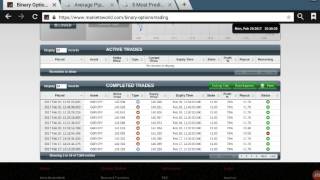
Binary options trading works two ways: short-term on volatile pairs like GBP/JPY using the Marcus Rule ladder ($1 to $200 bets, $325 total) on 2-minute windows, or long-term on stable pairs like EUR/USD with research time. Short-term needs a $10 deposit and psychological discipline; long-term suits traders building to $500 before moving to Nadex.
Chapters
Hey guys, welcome back to the channel. And today we want to discuss short-term trading strategies versus long-term trading strategies in binary options. And so, you know, I guess one of the questions is which one works better. You know, should I be a short-term binary options trader or a long-term binary options trader? And What I want to do, I want to cover some strategies with short-term trading that has worked for me, and then want to discuss some long-term strategies, kind of get an idea of where you should start. Should you use one over the other, or maybe a combination of two? So we'll discuss that a little bit. And this is some, you know, these are some trades that was posted today, you know, in my demo account here, and You can see it's like 90% of the trades hit right on. And I want to explain a little bit why that, you know, why that is and why that happened. And basically it has to do with, you know, we discussed that, you know, some of the earlier videos when we trade options this short term, these are like 2-minute options. Um, when we, when we trade this short term, very little data can be, uh, gathered that's going to allow us to be able to really make an informed trading decision. So in that regard, it starts to get closer to gambling, and that's something that, you know, we don't want this to become. You know, we, we want to take this as a serious business. And whereas, um, um, Minute options aren't something that, um, you know, I would want, uh, a serious binary options trader to stay with, you know, for the career of his trading. Uh, I can see the necessity of it on smaller accounts, especially starting out when you need to be aggressive and you want to build your account up, you know, over, you know, a more rapid period of time. And so, um, it can work, but let's go over some of the things we need to know about it, some of the things we need to avoid, and how if we have a much smaller balanced account, uh, some ways we can grow it a little faster. And then we'll compare that, you know, uh, or contrast that against long-term, you know, trading, and, you know, the differences and which one may work better for your particular individual situation. But, you know, if, as you can see on this short-term trading strategy here on the Marcus Rule system, you see that I'm just only trading with one currency pair, and that's the pound-yen. And there's a reason for that, and that the reason is the pound-yen is Uh, it's one of the currency pairs that gets the most pip movements through, uh, you know, the day. So it has a lot more volatility. It moves, uh, a lot during the, during the trading session. And that's very important because what can very much cripple you in binary options trading is currency pairs that don't move enough and create a profit margin between the spread. So we need these currencies moving. We don't need them to get stuck in one direction or not move at all, you know, you know, which is called like a sideways market. So we need movement. Doesn't matter if it's up or down. We just need it to move. And the pound-yen, it does that well. And so in, in minute options trading, because We don't really have the ability to apply our research properly. We got to depend more on probability, movement, patterns, and things like that. So we need this thing moving enough in an upwards direction or downwards direction so we can kind of get that pattern and, you know, trade accordingly. So that with this is also creating more chaos. Ability. Chaos is a good, is a good thing for our trading strategy because in the Markets World platform, because you can place trades up to $1, as low as $1, you can take many positions if you lose on a trade. And, uh, you know, by the time you've spent $50, you've had to, you know, lose like 5 times in a row to lose any money. So that works very well for us, um, in order to, uh, if we make a mistake, we don't catch the first trade or the second trade or third trade or the fourth trade or the fifth trade or what— or whatever the case may be. Um, we keep these trades in a string when we're doing minute options, you know, with the strategy I found that works best. You know, otherwise, uh, um, you know, if you're doing minute options and you don't have a strategy like that and you can't really do research, then you're, you're depending a lot on technical analysis, and that, uh, you know, that can be a tough thing. Um, that can be a tough thing to depend on. So we need some, you know, fail-safes and some backups to kind of help us to get it right. So as you can see here, what happened, you know, I only missed one trade in this lineup. But when I missed it, if you look at the trade I missed, you see I went to $2 and then I won on that second one. And I'm not gonna go over the, you know, how you find what direction to trade in. If this is your first time to the channel and watching these type videos, I would recommend watching my video on when to enter and when to exit the market, and that will give you a pretty good idea how we pick the currency pairs, when we enter a trade, and when we exit it. So, you know, that's what we're looking for. We're looking for on the short-term trading, we want that currency pair that's just going crazy, creating that chaos, because the last thing we want is our trades to be consecutively, you know, us losing trades consecutively in a row. And, you know, it's a little bit different when we're winning in a row, you know, you know, combining probability and chaos, you know, into the formula because we are using, you know, instruments to basically tell us where the market should be. So there is some you know, analysis being done. It's not like we're, you know, it's not like a traditional martingale type situation where you're just going, uh, you know, double up, double up for no reason. Uh, there are indicators letting us know we should be going in this direction, but you know, the fail-safe is if it's wrong or we are for whatever reason, that, um, you know, this, this will kind of come in there and save our butts in the end. So, so, you know, we're using this with MinuteOptions. If done properly and if done in a calculated risk mentality, it can work out, you know, as it did today. So let's get a little bit more into that strategy and then we'll compare how it works in the long term, you know, versus the short term, which one may be better to use, and And we'll go over that, but let's look at how much currency pairs on average move during the day. And, you know, how we were able to, you know, determine, you know, where we need to be. So if you look here, and as you see, got 3 market trading sessions that are open here, and I recommend trading in about 5 You get 2 times the markets, they overlap. There are 2 additional overlaps where you get markets where they overlap together, and then one is just opening, you know, during the convening of another. And then you'll get a lot of movement as, you know, different trading sessions are opening, you know, simultaneously with other markets. So that activity is what you need, and the activity is what creates the profits. But if we look down this chart and we can look across 3 trading sessions here, New York, Tokyo, and London, um, if we go down here to the pound-yen currency pair, you see that in New York it's at 132 pip movement, uh, during that trading session. Then in Tokyo it's at 118, and then in London it's 151. So the thing is, you notice in comparison to the other currency pairs The pound-yen, uh, numbers are a lot higher, which means it's, you know, it's moving all over the place a lot better. And that's good for our situation because it's giving us a better opportunity to predict, uh, you know, um, you know, what direction it's going to move in. And it's also creating a lot of chaos because it's going up and down. And that movement is great because that chaos is going to keep us, uh Hopefully from having a situation where, you know, we're consecutively missing in a row, we don't, we don't need to consecutively win in a row to win the trade overall using this strategy. So that's the good thing about that, and that's why we need a lot of movement. And then you can also see what currency pairs are a bit more stable. Uh, let's also look at some of the more— well, I'll save that for the, the long-term trading comparison. So we kind of got an idea of how that works. Let's look at, as well, let's look at some examples of the, the Minute Option trading strategy that we use, and you know how it can be very profitable in a short period of time and why it's hard to lose in this strategy. And let me get to my notepad here and we will look at that strategy. Okay, all right, it's right there. Okay, so as you can see, on a balance of $325, uh, you know, as we discussed that, uh, when we get to a certain balance that we want to trade with because Why I like the Markets World platform is you only need to deposit $10 in. So, you know, I recommend that if you want to trade binary options after you've traded your demo account several times, go ahead, deposit $10, start trading. Because what that's going to do, that's going to give you, you know, to put you in the mentality of what happens when you start trading with real money. And that psychological effect, you know, is very important to grasp and have. And then if you lose $10 doing it, hey, you know, you've only lost $10, which is a heck of a lot better than losing $250 or $1,000 or $5,000, which a lot of binary option traders have done because they've been forced to come into other trading platforms with large initial deposits. The money is there available. Now they can take that additional funds and they can use it to further trade as they further spiral down the rabbit hole, or, you know, fall into the bottomless pit and bankrupt their account. So with Marcus Royal, you only need $10. So, you know, if you can't deposit $10, binary options trading is not for you. But anyway, guys, This is using a balance of $325, and this is what we mean by 7 positions. I like using 8 positions, but 7 positions, you know, I think is pretty reasonable. And if you lose 7 trades in a row losing this system, that pretty much means the system's not going to work. Also, um, be sure to watch my other videos that discuss passive income streams where you can pretty much be make money like this doing nothing but, you know, doing no work, just, you know, doing nothing. And you have money like that coming in that you can trade, and then if you lose it, you're just losing something off of your passive income stream that doesn't affect your pocketbook directly. So that's something to look into on my other videos that could be helpful. But let's look at this, let's focus on this strategy right now. So what happens is using that strategy I showed on the Marks Royal platform with the pound over the again. If you lose at $1, you go to $2. If you lose at $2, you go to $5. If you lose at $5, you go to $12. If you lose at $12, you go to $30. If you lose at $30, you go to $75. If you lose at $75, you go to $200, um, and that equals up to $325. Now be mindful and remember that you will only trade the pound over the yen because, as we discussed it, uh, it's going to be moving around a lot And that's gonna create a lot of chaos and it's gonna make it even more difficult to make it so that you will consecutively lose every trade in a row as well as combined with the research or the very little research we can accumulate, you know, over MinuteOptions. And again, you know, on my other videos, it explains how you can go to investing.com. And if you, you know, if you've been watching the channel consistently, you probably already know some of these things, This is important to understand pip movement and the pound over the yen and why we need to stick with the pound over the yen. In earlier videos, I did use a more, um, uh, a more, um, uh, uh, diverse, a diversified approach where, um, you know, because sometimes what will happen, um, you have unpredictability in a currency pair and you might stay on that currency pair And indicators just can't get it down for that day, you know, what it's going to do, what direction is going to, you know, be in. And that happens sometimes. And then you can end up sticking to one currency pair and you will have that problem. But what's unique about the pound-yen situation is because the movement is so big, the pip movement is so— it's such a chaotic currency, that's going to be very good in our probability model. You know, so that we don't get these perfect wins and losses in a row because we want it to be inconsistency in our wins and losses, you know, because, you know, then that way, uh, we can win that way, you know, based on our model. Because, you know, what will happen if you lose at $1, you'll come in at $2, and then that $2 will cover the dollar you've lost plus give you a profit over that. So that's how that works. And That's, that's how come in the short-term trading situation, um, you know, there are some advantages to that. And you know, as we go back here to, uh, the trading platform real quick, uh, we can see what our profits, you know, are looking like when we're using this model. So we can see how we can gain a large number of profits over a short period of time. And that's going to be very, very important as well. What we need to keep in mind here is every trade that was placed here was done over a 2-minute period. So, you know, when you're trading, that means that, you know, there's like 10 trades or that's like over 20 minutes that money was made. And you can use any trading amount you're comfortable with, but I say in the beginning, take advantage of the low wagers because the low wagers are giving you this opportunity to miss so many trades in a row that it becomes very, very difficult to lose. And I'm not saying that you can't lose, of course you can lose, but this is a great way to win consistently yet minimize loss. You know, as well as something I missed over in the notepad section for short-term trading that I want to go over on. Let me just cut back over there. Uh, this was very interesting, and this is something that is unique to, uh, Markets World over maybe like the Nadex system, which I praised a lot and I still do. And ultimately we want to end up on the Nadex system, but you know, I tell everybody who does binary options and who follows, you know, for various reasons, that I wouldn't want to trade on Nadex until I had about 25 $500 because Nadex is dealing with contracts, uh, you know, which is a little bit more, uh, you know, uh, you know, complicated than just this type of option trading. But if you look down here at the bottom of my notes here, you see that every time you trade $500 on the Market World system, they give you $10 back into your account, um, you know, that you can do whatever you want with it. You can withdraw it and you can, uh, you know, take it home, or you can reinvest it into your trading balance. You know, I would recommend that you withdraw it, take the money out, maybe put it in a mutual fund or something like that, or put it on your, you know, put it towards your long-term savings. But if you get, if we look down here, if we do, if we do $500 worth of trades per day, we got about a 6-day trading week on the Markets World platform, that will equal out to $240 per month. And $500 in trades per day, it might sound, it might sound like a lot, but believe it or not, that's a lot easier to do than you might think, especially using a system like this where you keep wagering up. You know, if you just think about if you went out 7 positions like only 2 times, you'd already almost be at that amount now. And it does add up pretty quick. So that's just something interesting to note. Something, a bonus, some bonuses on the Markets World system. And they do pay, and Markets World is pretty reputable. They do do a really good job, you know, uh, you know, for the, the type of binary option broker they're designed to be. I think they do an excellent job. I think they're probably, um, definitely one of the best in the top 5 out of the ones out there, you know, that exist, you know, today. Uh, but anyway, that's just something I want to add. Another advantage to short-term trading options on platforms such as this. Now you can do short-term trading on Nadex as well. I'm not a big fan of that. I see some people do like 5-minute options on the Nadex. I don't like that because Nadex contracts are so expensive. Uh, Nadex contracts, you're going to be paying at least about $50 per contract. And I just want to, you know, be clear about what this channel is about because I know some traders look at this and say, oh, you know, this is this really small cash, this looks like, you know, piggy bank money, and, you know, I don't want to trade this way. But this, this channel is about making binary options trading available to, you know, you know, pretty much accessible to everyone. You know, a lot of times when we talk about investment and trading, A lot of people count themselves out because they don't feel they have the money to invest. The average American has less than $2,000 in savings in the bank. So it's not going to be very realistic to, you know, have this type of information accessible to only a certain group of people and a certain amount of people. So What we try to do on this channel, we try to make it accessible to anyone who watches it, you know, that, hey, this is something I can try or do. And later I will do a video that talks, you know, about who should be trading binary options. And, you know, from the, you know, from corporate trading people who use binary options trading to maybe the guy who works at McDonald's who wants to do binary options trading. And so we're going to discuss, you know, things like, you know, who should be doing that. And, um, you know, uh, how you should consider your financial tolerance and if you should be doing it at all, because there are situations where people should— it's a lot of situations where people shouldn't even be doing it at all, and they should have a certain mindset if they should do it or not. So we'll cover that. But now let's compare what we've learned a bit about this strategy and, uh, minute trading on binary options, or very, very short-term trading as opposed to like longer-term binary option trading, options, and things like that. So let's go back here and open up the page. And, you know, let's just take this short-term example where we were looking for these highly volatile currency pairs that can make us create profits quicker, and we take advantage of these short-term options. So in that very little window of a minute or 2 minutes or whatever you're trading, you got a lot of movement because you didn't have the opportunity to try to hit your strike price and make some money back. Now, if you got a real stable currency pair and you're only trading out 1 to 2 minutes, that could make it very hard for you to get movement in the direction you need in the time frame that you have specified. So what we want to do here is now swap it a bit and see this with a longer-term option, and then we can discuss some of the pros to the long— pros and cons, you know, on both, you know, versus each other. So, um, with long-term trading, it's going to be a lot different because in long-term trading, the last thing you want is highly volatile currency pairs because, you know, it's going to be very difficult to determine where the price will be next week because, you know, it's going to be moving up and down, up and down, and by the time your option is about to expire, you may not be able to really, uh, you know, uh, you know, you know, hit your strike price and things like that. So with long-term trading, I, I, I recommend a strategy that's going to deal with a lot more predictable currency pairs. These are going to probably be very stable. They're probably not going to jump around a lot. You know, their pips are going to probably be a lot less than, you know, the pound-yen combination. And we're going to look at some options like that that are, you know, the most predictable and the ones you want to use with this long-term trading strategy. So predictable pairs are on average here. And, you know, we kind of see some of the ones that we probably, if we've been trading already, would expect to make this list. You know, you got the Australian dollar, uh, pound, uh, US dollar combination. You got the New Zealand dollar combination. You got the US Canadian dollar combination. And you got the euro, uh, US dollar, you know, combination here. And very stable, you know, currency pairs. Uh, I myself long-term, I like to pick the pound, and I usually pick the pound and the euro. But the euro, you know, hasn't worked out well for me, you know, in the past and things like that. So I think, you know, I'll probably be switching to maybe like the pound and the Australian dollar. You know, I have had, you know, some success, you know, with those. And so, so you're kind of doing the opposite with the long-term you know, trading. And this will give you more, you know, opportunity to, you know, more stability. So if you get a move going in one direction, hopefully it'll gradually move in that direction and, you know, won't, you know, be going all crazy on you. But, you know, that's what you get with long-term trading. And of course, advantages to long-term trading are— is the stability, you know, is the fact that, you know, you got a lot of time to you know, get your movement in your direction. You got a lot more time for your research to pan out and for that research to take effect. And, you know, things like that, things you won't get in the, in the short-term trading situation. So, you know, so overall, what— which one is the best? Um, so, you know, I'm gonna say it's gonna depend on your current situation and your present situation. You know, if you're an aggressive trader, if you have a very low balanced account, um, you know, and you want to grow your account more rapidly, uh, you know, for whatever reason, you know, you just can't put in, uh, you know, the time or things like that, then, you know, you might want to consider a short-term trading approach with the minutes and things like that. Um, you know, in conjunction with, you know, some system like the one I've, you know, I've, you know, shown you there. Because, you know, you know, as we can see with the Marcus World platform, you're going to get a lot of, you know, you know, you're going to be able to make a lot of trades. You're going to be able to, you know, double, you know, double up on a lot of trades and, you know, hit a lot of trades and things like that. And you can just go trade after trade after trade because, uh, you know, you're gonna have to miss so many consecutively in a row, you know, in order to lose your investment. Um, you know, and so it's gonna depend on that. Whereas if you've had some moderate success with binary options trading, you don't have to be as aggressive. Um, you know, you can use the long-term trading strategy that will be best for you is the one I would like best. But I understand that if we're trying to make binary options trading accessible to everyone, it's unreasonable to think that people are going to be able to come in with thousands of dollars to invest, and, you know, just on this with the tremendous amount of risks, you know, that are, you know, attached to binary options trading because You know, at the end of the day, whatever you come in with, you can lose every dime of it, or just about every dime of it. Even early, like on the Nadex system, you can still lose over 50-70% of your investment, which is pretty much all of it. So, you know, you know, even though other platforms in that regard may be a bit safer, um, being able to make a $10 deposit, I will take that as safer over any other trading platform. So I, you know, so I still support Marcus Real in that regard to have people, you know, able to come in with smaller amounts of money and, you know, not risk, you know, potentially large sums of money they can't afford, you know, even if that be $250. But again, I will do a video about who should be trading binary options, you know, from corporations to just the individual average Joe. And, uh, so, you know, in conclusion, I would just say that it's going to depend on you. You know, if you fall under that, uh, I got a very small account but I want to grow it rapidly, short-term is probably going to work for you. If you fall under that, um, you know, I want to, um, I want stability, I don't want to, you know, uh, you know, you know, be losing money, I can't afford to lose money like that, I want to grow my account steadily over time, then long term. Uh, if somewhere in the middle, then maybe a combination of the two. You know, watch some of my videos that, you know, tell you a bit, uh, how to do that. Uh, but anyway, guys, that's gonna pretty much conclude the video. If you have any questions, comments, please feel free to leave them. I enjoy answering your questions. And like many of you, um, you know, I'm searching for the best, uh, trading strategy as well. I don't have a crystal ball into the market. I can't promise you that I'll make you thousands or millions of dollars, but I can share with you some information that has worked for me. And I can, you know, try to make this accessible to people who didn't think it was accessible to them to trade, you know, investments and things like that because they just, you know, can't do it. This system allows you to trade for $10. And, um, maybe you can turn that $10 to $50 or $100. You never know until you try. But, uh, guys, thanks for watching. Be sure and like, subscribe, and until next time, take care.
More from Michael







UBI - CIA Agent Explains Why Americans Will Never Get Universal Basic Income?



