
Bitcoin - Bitcoin Myk Will Surpass Due To Demand
Bitcoin's volatility and complexity limit real-world use, so BitcoinMYK proposes a fork that issues new tokens alongside mining to create price stability and fund universal basic income in struggling economies like Venezuela.
Chapters
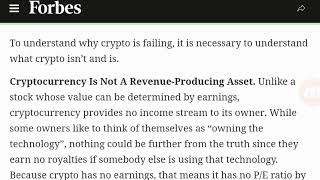
Hey you, welcome back to the channel. And guys, today I want to talk Bitcoin and I'd like to talk to you all about what the demand is for Bitcoin. So I guess I'll pose it as a personal question first and ask you to think about when you last used Bitcoin, what was it for? Did you go out and purchase something? Was it necessary for you to use in your everyday life to be a functional adult? And so many of you will probably come back, you know, with the answer that probably not, but you believe that Bitcoin will be this new technology or this new, asset that is used, money, store value, whatever you want to call it, that will be used in the future. And this will be the way of doing things and doing business. So, um, we want to talk today about does Bitcoin have the demand that's going to make it get to that point? And if not Bitcoin, does something else have that demand? So from the video title, you can tell that BitcoinMYK, a project I'm working on, I believe it has a great deal more demand than Bitcoin. And some of you might, you know, gather that, you know, hey, it's just some guy, you know, promoting his, you know, his token or his coin. And, um, but first I want to say this about— I want to say that even if that's the case and that turns out to be true, that that's not bad for Bitcoin. Because Bitcoin MYK mirrors the Bitcoin ledger continually, meaning the more Bitcoin you mine, the more Bitcoin MYK tokens you get. The more Bitcoin you purchase, uh, that's over your balance of Bitcoin, you get those Bitcoin MYK tokens as well. So it works, uh, as a companion with Bitcoin. It doesn't, you know, it's not necessarily a negative thing for Bitcoin holders. Now But we have to really examine this because we need to understand, you know, where the demand is for Bitcoin. Because without demand, uh, there is no mass adoption. There, there isn't going to be this idea of a future Bitcoin that goes up in value. Another thing with mass adoption, there are some economic principles that suggest Bitcoin should go down in value as it gets to mass adoption. In fact, like what we're doing with BitcoinNYK, the more people use it, we believe, our theory is that it reaches a point where it becomes this viable money, but it becomes a stable currency. And so in that, that's a good thing because now you can use it to purchase things and do many of the features that Bitcoin was meant to do. And you don't have all these large margin gaps and where you don't, you can't really purchase anything because people are afraid to sell you something where it may be worth a lot less tomorrow. And so I know over time the value of Bitcoin has got more stable in the trading. However, just last year alone, you know, Bitcoin's lost over 85% of its value. That is a huge, huge problem, right? So that meant if I bought something and I was paid in Bitcoin last year, of let's say if I traded you with Bitcoin for a car or something, you know, you got my car and now I only, you know, I have less the value of that car, a great deal less. So I've lost a great deal about it. So according to Forbes Magazine, it's underlining many reasons and Forbes Magazine, they're part of the institutions, I get it. But there are some economic practices and ideas that are very relevant to how we look at crypto. Cryptocurrency because the core idea of money is a very universal idea. So they speak about how cryptocurrency is not a revenue-producing asset. They speak about how cryptocurrency is not a commodity. It's not a store of value. But they seem to suggest it is a currency of exchange. But the problem in demand of this, let's, let's say Forbes is right and let's discount all those other ideas and let's say that's the reason why Bitcoin lacks the demand it has and that why it won't mass adopt. Well, even in that, saying it's a currency or believing it's a currency, then is then Bitcoin a good one? And then it goes on the article Goes on to talk about all these different mediums of trade and how we have to still go through various banks and all these other, you know, areas before we can even, you know, trade Bitcoin properly. So it creates a lot of problems with the demand and mass adoption of Bitcoin. And it only then leads us to the speculation of the future of the use of this blockchain technology. But now if I, if I ask you a direct question, a more direct question about Bitcoin, if I were to ask you, um, when last time you used Bitcoin, what was it for? And did you need to use it? Could you find another way to get something done as efficient without using Bitcoin? And many of us will say, sure, I could have just, you know, handed over a dollar to someone, or I could have, um, or I could have basically used a Visa or MasterCard or wire transfer. And the differences with, with all of these services would been had I lost some money, had it been compromised. I could have just called the police and, uh, right, insurances would have covered it and I would have gotten all my money back and maybe lost a few dollars and, you know, uh, you know, no problem. You know, of course that's not what happens with Bitcoin. So now we got a money that can't do things something else can do and it's doing it quite well still at this point in time. So you don't get a need to use it, right? You can just use something else. Even some people who had described if they were to do a drug deal and they want to purchase something illegal, that they could maybe have this demand and use for Bitcoin. But, you know, we're finding out that in some cases it might just be easier to even do those things with the red cash or under the table or some type of way. And that is because of the great fluctuation in these cryptocurrencies, if I did do some kind of illegal activity with you, uh, the value might not be there, uh, in my exchange tomorrow. Whereas if it was money, I could just, you know, put a briefcase somewhere, do it traditionally how they're doing it. And that's why maybe, uh, drug dealers don't really use, uh, Bitcoin, you know, in these cryptocurrencies. Um, so Why do I think BitcoinNYK, Danny, when we factor all those things that the demand is not strong, that we're not sure if the demand will ever be strong for Bitcoin in that way, uh, based on some of those ideas? So why would I think BitcoinNYK would be any different as essentially just some other altcoin that is a fork of Bitcoin that may give more advantages than most Bitcoin forks, but at the end of the day, it's just still altcoin? Well, let me pose another question to you along the same lines of the demand for Bitcoin. You got two questions you can ask the general public, and one is which would they need more at this point in time? Would they need to transfer money over a Bitcoin service at this point in time more so, or would they, or would they have more value in $1,000 being given to them? Right? And so most people are not only gonna tell you that they would prefer that $1,000, but they're gonna be willing to jump through a few more hoops to find out how to get it. And so generally what happens with cryptocurrency is besides it just not being the best way to send money at this point in time, you gotta learn a heck of a lot of stuff to be able to do it. You know, it's just not, it's just not like this, novelty idea of where I'm using my credit cards and banking, traditional banking. I just go, well, you know, I don't like the banking cartels. I don't like how this works, even though how I'm sending my money there is quite convenient. Let me try this cryptocurrency thing. And then you have to go through these horrible interfaces and very complex ideas for something you may or may not even know if you need it or not, or don't feel you need it. So you're probably not going to do it, right? But with the $1,000, the next question would be what I have to do to do it. And if it's got to be some learning or education about it, well, it's worth my time to do that. It's worth the value to do that. And so you're doing that. You're taking the time to learn how to do it, various things like that. You know, in addition to that, the reason that I believe cryptocurrency would be a great demand in that area is because the delivery system. How would you deliver it? Let's say if you were to be able to give every adult $1,000 per month, every month from the system. And, you know, of course we're talking about ideas like universal basic income, but I'm not gonna get into how to pay for it in this video. I would invite you to watch the other videos about how very intelligent people, economists like Milton Friedman, have advocated for it. How, you know, even like Mark Zuckerberg, Elon Musk are for it. Just a lot of brilliant people, a lot smarter than myself, and maybe many of you all, you know, say that it may be necessary and that, you know, it may be possible and that with our big budget that we're able to afford it on certain degrees. But, um, it would need a delivery system, right? And so you have a few options. You could have it delivered much like how the government would deliver, uh, uh, different, uh, uh, checks and payments today, whether it's through your banking system or, uh, through mail or however they, they would do it. But the, the biggest problem would be with the government handling what I believe 80% of the entire globe would be willing to adapt cryptocurrency to do. And I need you guys to listen to me carefully because, you know, we're— what we're trying to do now is we're trying to understand the demand, uh, actually having a demand and a need to, to want to use something to the point where it's not so much a choice for you to make anymore. It's just that I'm going to do it, and how do I do it? And I think this is how we get to that point. But, um, anyway, getting back to it, so you have a few delivery systems. You can either do it publicly or privately, meaning you can either have the government do it or the people could do it through some type of system. But what kind of system would they use if it was the people? Let's get back to the government. If the government were to do it Of course they would use the systems they use to handle all their federal budget, getting it back to the people. But here's the problem, guys. If you're in America especially, um, and I'm sure similar things happen or happen in our far worse in other places, but you would know that, um, at this point in time we have a dysfunctional government. Let me tell you the reasons why we have a dysfunctional government right now. We have a dysfunctional government right now over about $5 to $6 billion. Now, anybody who studies economics will tell you that $5 to $6 billion is quite trivial when it comes to our federal budget. To contrast that, during the Iraq War, all those years the Iraq War lasted, do you understand that the Iraq War costs $4 to $5 billion per month? Per month. And again, I'm not, I'm not trying to politicize this. I'm not trying to advocate for Trump, support Trump, or, uh, you know, say he's doing the wrong thing, or say the Democrats are doing the wrong thing, or anything like that, because there is a problem in the government. We don't want to at the time have a leader holding us hostage to do something he wants to do. But at the same time, uh, the, the destruction and damage is causing for $5 billion would show me and point to we have a severe dysfunctional government. So then the question would come, would become, I think a lot of people— excuse me for dropping that mic— but I think a lot of people would agree that The government doing this would be— it would be some fear for, for them doing it. It would be some concern for a government that can't even stay open for the sake of $5 or $6 billion, which is nothing in the— in our budget, is ridiculous. Uh, and I think people would have a demand to have a better option available than that. And I think that's where cryptocurrency and blockchain technology comes in. Um, this would be a way for people to deliver something a lot of them want, over 80%, but to be in this trustless monetary system that can be done so they don't have to rely on the government can do it. And I, and I think it will present one of the best use cases. We also have to keep in mind that this is a huge demand, a huge problem over the next few years. Uh, how many times have you walked in Walmart and there was no cashier available and you go through this machine? Same thing's happening at McDonald's and a lot of these restaurant chains. Uh, about to start happening in the, um, the transportation industry. How you think we get all our food, guys? We get all our food from delivery trucks. Going to be a robot delivering that stuff there. Amazon. Amazon has a whole warehouse, thousands of square feet long, full of robots doing what humans used to would have done, right? You, you don't think this is serious? You don't think that people smarter than us are saying the same things? You don't think that there are presidential candidates running their entire campaign on this? And you don't think that, uh, this is a big demand to people and we need— if we do decide to do something like this, we would need a delivery system for, a demand for, and BitcoinMYK, uh, provides that through unclaimed Bitcoin fork coins. And I'm not going to go into great detail about that, but I'm just trying to make this point that that creates a mass adoption vehicle. We don't need to use Bitcoin. We don't need to use these cryptocurrencies. We can just as well do something as efficient using something else. But one thing we're going to need is, and people are going to really care about and feel they need, and 80% of the world is already in this state, they're going to need a way to support themselves when there's less jobs. They need a way to support themselves now because it's less, um, uh, they have less, uh, value and resources to do it right now. And it's not all due because they just aren't being innovative enough or working hard enough. We know there are many other factors involved in there, and I'm not trying to push some type of socialism because the way this system is set up is business as usual. There's only a small percentage of the coins, uh, that are outside of what's happening with the project that are doing this. But if you understand how the cryptocurrency economy works, it really doesn't matter the amount of coins. It matters the value and the use case and how many people are using it. And we could potentially have entire nations using something like Bitcoin NYK where there would be no need for to even worry about price at this point because it would just be this value and we could just release this kind of money, right? If that makes sense. But I'm not going to go deep into detail about it. We have a complete video series that breaks down different aspects of how it's paid for, why it's a good Bitcoin fork, why it works better as a transactional money right now than Bitcoin, why it's important that they all work together and I don't have to use Bitcoin and some other altcoin to send money across the network. And so I can go on and on about it, guys, but I would prefer that you subscribe to the channel watch all our videos, ask questions, because this is very important. We want to put $1,000 in your pocket if you need it every month and make this a mass adoptable token. And, um, you know, of course this is a process. We want to grow this. And I'll throw this stat out here real quick. If you don't think something like this will work, keep this in mind. There are 30 million people in the nation of Venezuela. Venezuela. All their basic needs can be met for about $12.50 per month. You don't think that's achievable with a cryptocurrency? Um, I used to work in the downtown area of my city. Cost me about almost about that to just park my car every day. I had to pay it every day. And one of those payments could supply an entire adult human being in a nation like Venezuela. And there are other comparable nations that could do the same. You don't think that's a great use case? You don't think that would be of demand to people? Um, so that's what I want to say, guys. Bitcoin has created a great platform for us to build off, and there's going to be some future uses and great uses of Bitcoin. Where I disagree with many of us in the cryptocurrency space now is what we're looking at and how we're focusing on cryptocurrency And I don't mean any disrespect with this in projects or where you're putting your money or what you're investing in. I find it quite trivial. Uh, it speaks volumes to me that even with like many of the gaming applications, you don't have that many, uh, people that use these apps daily. If you look at the numbers, they're very low, the people who are actually using these blockchain applications. There's a reason for that. Doesn't seem to matter how much money we invest in these projects, how many millions and billions of dollars these ICOs collected, The adoption with these projects seem to be ongoing and did not— people not using them. And so I just want you to think about what I'm saying, guys, and really, really think about the demand for the coins you're using. And you don't even have to go that far. Just think about if you have to use them and if you're using them and if you're going to be using them. And if the answer is no, guys, Then I think you really need to consider and evaluate what are you in crypto for? Because if you're in crypto for just to be a casino of going up and down, we got penny stocks for that. We've, we've had stuff like that before. You can get just as good of odds at this point in time as probably going to casino. Uh, put your money on red, it's guaranteed to go up 100% if you hit the right chip, you know, the, the right color, put it on the right board, you know, hit the right number. It's guaranteed to do that. If you're in the same thing with cryptocurrency, oh, because if I hit the right thing, I'm guaranteed to go up. If I don't, I'm guaranteed to go down. So is that what you're doing? Is you're playing the house casinos with the odds against you? Or do you want to invest in something that can really make a difference and be growth adaptable on levels I've never seen before? And that's quite possible because the numbers are in our favor. And that's how come I think we'll outdo Bitcoin at some point in time. Might not be right away. Everything gets bottlenecked, takes time for people to catch on, uh, but people do come to their senses and they see things for what they are. And people want to be involved in stuff they get value back out of. Now, a lot of people jumped in. I don't know what the numbers are, it's probably a lot, but I know as a lot of people jumped in, and I know a great deal of people jumped out and said they're not coming back to cryptocurrency because of their bad user experience. But now, if you would have told those people they invested in something that, hey, it's down, but look, look what you did. You fed just about an entire country of people, right? And it's growing every day. Now these people are using that cryptocurrency as their money, and it has value, right? And it has stability of price and all those great things. So you have this great system that's working out, and it's growing because the growth rate is hammering against a finite amount of coins. So it has to grow because you're in this very tight box of finite coins that there are only so many. It's not inflationary, so it has to grow. And so that's the kind of projects you need to be in, guys, in my opinion. If you agree with that, If you don't agree with that, I love to hear your comments about it. Tell me something better. Tell me, um, the demand you're finding cryptocurrency, how you're going about your life using it every day. And I will be very interested in hearing about that, guys. But guys, that's all I want to say in this video. Would love to hear from you. And if you like content like this, don't forget to like, subscribe. If you're interested in projects like this, head over to our website get involved with us, uh, it's available there for you. And until next time, take care, guys.
More from Michael







UBI - CIA Agent Explains Why Americans Will Never Get Universal Basic Income?



