
Bitcoin Conspiracy - Controlled By MasterCard -Fed Reserve -Bilderbergs???
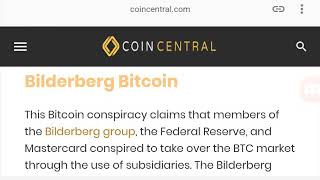
In this YouTube commentary, the host acknowledges a general dislike for conspiracy theories but explores a specific claim that the Bilderberg Group, MasterCard, and the Federal Reserve are conspiring to control Bitcoin. He cites a Coin Central article alleging that the Bilderberg Group, via its subsidiary AXA Strategic Ventures, invested $55 million in Blockstream, and that individuals linked to the Bilderberg Group (e.g., Henri de Castries), MasterCard, and a Federal Reserve member have ties to Bitcoin Core development. The speaker evaluates the plausibility of such a strategy, arguing that large financial entities might buy up Bitcoin at low cost to prevent it from threatening their business models. He notes that only a few Blockstream members are currently involved in Bitcoin Core, suggesting limited current control but warning of potential future infiltration. To counter such a threat, he proposes increasing Bitcoin’s distribution through hard forks—highlighting his own Bitcoin MYK project—and a universal basic income scheme to decentralize value. He also critiques alt‑coins, pointing out their reliance on Bitcoin’s security and their vulnerability to similar takeover attempts. Throughout, he maintains a cautious tone, presenting the theory as “common sense” rather than pure speculation, urging viewers to stay informed and consider the evidence, while acknowledging the lack of definitive proof.
Chapters
Hey you, welcome back to the channel. And guys, I have to tell you that I'm not a big fan of conspiracy theories. Um, I don't like conspiracy theories because they go on and on without end. But though the fact remains that conspiracy theories have come true, right? Watergate, um, Enron. A lot of these were conspiracy theories that were found out to be true. So conspiracy theories can be true. So last video, I kind of think I was putting some people to sleep. I got comments of people yawning in there, right? So I think they wanted some a little bit more juicy, apparently. The market roller coaster hasn't been enough for them. So in this video, I'm going to give you something a little bit juicy. Um, Bilderbergs, MasterCard, the Federal Reserve, are they the real owners behind Bitcoin? Are they the real power behind Bitcoin? And interesting enough, guys, this is another one of these videos where it kind of came out of nowhere. Uh, Strangely enough, where a lot of this information is coming from in recent times for me is much like how many of you get your information, just looking at some of your favorite YouTube crypto people. And strangely enough, the information is coming from our big, uh, YouTubers, Bitcoin supporters, uh, someone probably I would say are Bitcoin maximalists. And I'll leave some of their links in the description as well so you can look at some of the information they've gathered on this, but a lot of it's come from me just being a fan like much of you and surprised to see that they're reporting this, you know, information, uh, and some of it is a little bit concerning. And, um, I think we do need to pay attention to it. Make your own judgment about it at the end with the information that, uh, you know, is, uh, you know, available to us. But there are some warning signs there. There are some indications that we might need to pay attention to something. So one of the biggest conspiracies, of course, being that the Bilderberg— the Bilderberg Bitcoins. I'm just going to read this little passage from Coin Central. It says this Bitcoin conspiracy claims that members of the Bilderberg Group, the Federal Reserve, and Mastercard conspired to take over the Bitcoin market through the use of subsidiaries The Bilderberg Group is a private organization that consists of many of the most influential people in the world. The theory is that the Bilderberg Group, through its subsidiary AXA Strategic Ventures, invested $55 million into Blockstream. And they're showing here a picture of the Bilderberg Lodge here. Um, now as I looked at some of the the, the evidence, you know, of what was happening here. Uh, some, some channels went very much in depth and they actually found out the names of the people. I believe one gentleman's name, he's actually the chairman of the, uh, Bilderberg Group, by the name of Henri de Castries. My French is terrible. This is, um, I think that might translate to something like Henry of Castries or something. But anyway, uh, apparently he was all— he was involved along with Mastercard and members of the Federal Reserve. I forget the gentleman's name who's a member of the Federal Reserve, um, but, uh, they all conspired together. Now you think about Mastercard, you know, obviously you're thinking Uh, well, you know, MasterCard might see, you know, this is a threat to their business. Uh, you know, they, they're probably valued somewhere around about $300-400 billion or something. And, uh, now you got a Bitcoin out like $60 billion, and they probably bought in early. But let me just rationalize it this way. Let's, let's give this example. Let's look at it from this standpoint. Let's say there was a new technology emerging on the scenes, and the, the future possibilities of it was that it could overtake your business, it could overtake, um, uh, the banking cartels, it could pretty much just overtake everybody. And right now, this future technology is pennies on a dollar. So you can just buy it all up and pretty much control, control the whole thing at every interval of its success. Or, you know, you can do nothing and just go, oh, okay, well, you know, we'll just wait and see what happens with this. What do people do with this? And just hope over the next 40, 50 years they're going to continue to use Mastercard in the banking system. So at some point, doesn't this kind of become, uh, I don't even know if I would call this a conspiracy theory more than I would just call it kind of common sense. Guys are kind of taking a strategic position, you know. Just think about the same with any kind of competitive business that has a technology too that can destroy you, uh, at some point in time. It would just simply make more sense for you to— if you can buy it up for pennies on the dollar, They haven't overtaken your position yet. You're billions and trillions of dollars ahead of them, and you can buy up, buy them up entirely, and you can control their success at any interval. You can crash the market on them. You could do whatever you wish. Very interesting theory. Now, when it comes to hard evidence, they have found some hard evidence because they're finding that the people who are associated with them, uh, through Blockstream, are actually part of Bitcoin Core, right? So they can always say this is evidence that they have people in. Now the problem is when they go into very much in-depth investigation, they find out it's only like 4 members of Blockstream. So it's, you know, so they're not able to control the code and the power. You know, without, you know, they just don't have enough people in yet. Not yet. But the fear is they will move to get more people in over time. So now they want to monitor, uh, the situation. Um, and we know they own a lot of— because they've been investing money like this since the beginning of Bitcoin. So, you know, they own a great deal of Bitcoin, right? And this has drove many to Uh, you know, go to, hey guys, it's time to get out of Bitcoin and just, we have to, we have to get another cryptocurrency. And this has to do with why I have been saying in earlier videos that Bitcoin forks, as much as people don't like them, that Bitcoin forks and hard forks, this might be, these might be good things, these might be security precautions against happenings like this. And these, uh, these threats, guys, are very much real. I, like I said, I don't like conspiracy theories, but to me this doesn't even look like conspiracy theory. It just looks like common sense. I deep down kind of felt like something like this was possibly happening anyway, but, uh, you know, I just never really looked into it. But since it's been brought to my attention and I think more and more about it, I see the issues with this. And unfortunately, if this is true, guys, it's really no saving Bitcoin as we know it. So how do we— how would we fight this? How would we deal with a problem like this? Uh, what can be done? Well, you know, again, my— you know, when I think of a solution, I would think of something like a Bitcoin fork, certainly similar to the project I'm doing in Bitcoin MYK. And I keep bringing that up because in these particular situations or the content that's coming out, it seems very relevant to it because how— the only way that you would be able to fight something like this is good distribution, right? There's no other way you would be able to deal with powerful, powerful entities like this that are already well positioned, and they're not going to let this overtake their enterprises. You know, you know, no, people who have power seldom will give up all their power and money and influence without a fight. So this is almost too easy, uh, to kind of quote a movie type, uh, or cinema, or kind of take an example from that. Kind of reminds me of The Matrix a little bit, The Matrix films. And what you would get in these Matrix films, you would get where the machine world figured out the way to control the masses of people was not to, uh, destroy them directly and take away things, but they would let— make them think that they were in control and that their systems were opposing the other systems. And then they reach a certain zenith, which the Machine Rollers, we got to see, would destroy them totally. And then they start over from 7 human beings, and it would repeat. And they kept them in this controlled false environment where they thought they were actually fighting against the machines and they were but part of the system. And that— and I kind of think about that the way sometimes I look at Bitcoin with all the mystery behind it, who's involved. And sometimes when you don't know— they didn't know who was in, who's in control of the Matrix. It's the same thing. Sometimes when you don't know who's involved or who's in control, it's good and bad. It's, it's bad because you don't know if it's the bad guys, and it's— and sometimes it's good if you don't know who's in control because then you can't go to them and put a stop to them. And if it's a good project, you don't want it to be stopped. So the evidence they found all tied back to Blockstream and this company AXA8. But it does pose the question, if you were MasterCard, if you were the Federal Reserve and dealing with banking going up against technologies that can one day destroy you, Why would you want to invest in them in the first place? If you're going to develop some blockchain technology, wouldn't you just develop it on your own, uh, for your own sake? You wouldn't be like investing in Bitcoin Core, would you? Um, I mean, I'm not a developer. I'm not a super technical person. Maybe some of you guys who are developers who know a great deal about technology behind Bitcoin and why they would do this, maybe in the comments section you can give us a much better explanation as to this, but I am going to leave the link to two great videos that talk about this, uh, big YouTubers who definitely aren't Bitcoin FUDsters. Now I like Bitcoin, but I have seen my share of problems in Bitcoin, and that's why I fork Bitcoin, which is— which also poses another question. Everybody who forks Bitcoin, Bitcoin Cash, Bitcoin Satoshi's Vision, all these various Bitcoins, Aren't they really saying that they don't believe in Bitcoin? That they don't believe that Bitcoin is the right Bitcoin going forward? And so that comes up with a lot of questions. If you don't really believe in Bitcoin, why are you investing in Bitcoin? Why are they holding Bitcoins if they don't believe in it, right? Shouldn't they be putting all that value back in their versions of Bitcoin? So just questions after questions, guys. But from a business strategic point of view, It makes me suspicious. I'm not, I'm not saying that it's true. What is true is that affiliated people with these groups are involved in Bitcoin greatly value-wise as well. So, you know, I'm not saying that they, you know, that it's a big diabolical plan here, but I am saying there is evidence to what people are suggesting that we should pay attention to this and that from a business strategic point doesn't seem to make a great deal of sense to me. But guys, anyway, tell me what you think about this. You know, again, my solution would be because a lot of people make a lot of FUD videos. People make a lot of videos that talk about problems, but they don't have solutions for them. I've tried to create solutions for our Bitcoin problems. And I can tell you this, one way to fight if something like this does happen, and it's possible it could happen because value-wise Bitcoin is only like $60 billion, guys. That's a drop in the bucket compared to the markets it could overtake. These guys have trillions of dollars and they can buy just about every— they can buy Bitcoin out, you know, and control all of Bitcoin, right? They don't have to destroy Bitcoin. But from my standpoint, the only way to defeat this, to combat this, if it were true, would be, would have to be using a concept where distribution is so great that it would challenge these powerful monopolized centralized powerful entities that control these networks to the point it would be hard for them to fight back. Um, and how we've planned to do that is, or what we're doing is we're doing it through both a Bitcoin for and both a universal basic income program that they tug a war at each other, but through the process it creates this decentralized value that's very important to weakening control of centralized authorities that could mean to do us harm. And so a lot of people, again, guys are saying pick another cryptocurrency if this is true. Unfortunately, who would you pick? Because many of these altcoins, unfortunately, they're only known because Bitcoin is known. And because their markets are so small, they have to move with Bitcoin, right? And then their networks, security-wise, are very weak, you know, and so they could easily be compromised. You know, even if you take something like Bitcoin Cash, they're, you know, they're only about 6% of the hash power of Bitcoin. Bitcoin. So they could— all of these people could easily be jeopardized security-wise and control, uh, a lot to think about, guys. I'll leave the link in the descriptions, but we should be aware as aware as possible is what we're involved in. And the hope is this isn't true. There isn't, uh, uh, I would say strong enough evidence to say it's 100% factual, but it does make things quite suspicious and make you think. So guys, maybe this video was a little bit more juicier and interesting than the last one. Since I got a guy yawning on my video, I hope he's watching. Maybe this will wake him up a little bit, taking a look at this Bilderberg beautiful lodge set to the backdrops of the mountains in, um, where's, where's it take place? Somewhere in the Netherlands. I forgot where it is. The prince of one of the princes of the Netherlands, I think he He's one of the head guys behind this or something. But anyway, guys, that's all I want to talk about today. Guys, you like juicy content like this, don't forget to like, subscribe, and until next time, take care.
More from Michael







UBI - CIA Agent Explains Why Americans Will Never Get Universal Basic Income?



