
Bitcoin - Engineering More Important Than Marketing?
In this vlog‑style commentary, the speaker examines the long‑standing debate of whether engineering or marketing is more important for cryptocurrency projects. He begins by comparing corporate structures where engineering and design are separate, then argues that in the crypto space the two functions are inseparable. Using Bitcoin and Facebook as case studies, he shows how strong branding, network effects, and community zealotry can outweigh pure technical superiority. He stresses that engineers must focus on user experience and that marketing must start from day one, otherwise projects fail to gain traction. The speaker also shares his own initiative, Bitcoin NYK, which aims to create a universal bridge cryptocurrency and a basic‑income‑driven network, illustrating how demand‑oriented engineering combined with early marketing can succeed. He concludes with practical advice: projects should assess their strengths and weaknesses, bring in marketing expertise early, and align product development with community needs.
Chapters
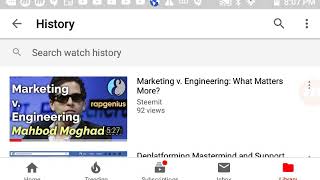
Hey you, welcome back to the channel. And today I want to talk, tackle a big topic. Um, is, um, marketing, uh, or rather is engineering more important than marketing? Uh, we're talking specifically about the within the cryptocurrency space. And, um, I was watching a video earlier, um, from the Steemit.com channel And they, you know, entertained this question of, is marketing, does it matter more than the engineering? And of course, that's a very complicated, you know, question the more I look into it. And I think I would just kind of start off this way. Generally, in big corporate structures, How things generally work is the engineering department may not be responsible for the ergonomic solutions to a product. It might not, as far as design and how it was, you know, and the design of it and how we use it and the, and the aesthetics of it. The engineers may not generally be responsible for that, right? They might just design the mechanics of it. Uh, but when it comes to packaging it, uh, that's, you know, that's another department. So I, I say all that to kind of view this through the lens of, are they separable? They, they, they might not be separable. Now, where I think it's a problem is that, um, I think that there, in that example I just gave, there might be a reason that there is a difference between the engineering department, uh, and the marketing department. You know, and what have you, right? And that is because, you know, people might be specialists in one area. So I think the problem is when you have maybe what you might get with a development team that has simultaneously become the marketing team, right? Or, or they might believe in an idea like if you build it, they will come. 00:07:07 And this is where things start to get very, very complicated. 00:07:13 And so what is more important? Can we point to— so let's try to hone in on, you know, what we get with the usability of products and projects. 00:07:24 So if we take a look at Bitcoin, you know, we know Bitcoin has been around for for over a decade now. And because of that, it's pretty well branded. Like, you turn on a television, you might hear people talking about Bitcoin. Interesting enough, you might hear people talking about Bitcoin, but, uh, there are probably thousands of, um, other cryptocurrencies that don't get mentioned. It's only Bitcoin. And there's a reason for that, um, and I think that reason comes down to a type of branding and marketing Uh, and which you might get a similar situation with Facebook. Within the idea of Facebook, when people think social media, the first, first thing's going to pop in their head is Facebook, although there are millions upon millions of social media websites, right? So they think, um, Facebook, they think Bitcoin. These are branded, uh, projects that encompass something called the uh, the network effect, right? And the network effect is, uh, I, I would put that under the marketing umbrella. I'll put that under the branding umbrella. And these things, uh, are what drive communities and keep communities going. Now, interesting enough, like what came out in this video, they talked a lot about this, this community of zealots, right? This, these religious fanatics. And, uh, We get to see that within the scope of certain social media, especially in cryptocurrency. And we've seen those things happen where you have these kind of diehard zealot-like, religious-like, fanatical-like communities. And these communities drive these cryptocurrencies, and these communities make these cryptocurrencies relevant outside the scope of engineering. So does that mean engineering is less important? No, because we need the— to even have a cryptocurrency, we need engineers to develop these systems. We need technical people to, you know, be able to run this technology. So if it breaks down, uh, a zealot-like, religious-like community, if it breaks down, they're not going to be able to do anything about the structure of it. They're not going to be able to speed it up or, or any of those things, right? So these are two things that are joined at the hip. Now I think where the problem again is, is when they separate in a sense to, or rather not so much separate, but they think one encompasses the other. You might have a situation where a developer really thinks that if he puts together enough algorithms and numbers and builds whatever is in his mind, that that's going to answer the call of usability from a community. And we're— and if that were the case, I'll just give this example. If that were the case, then every time a product was designed and built a little bit more advanced than the other, then it was— it would appear or would seem that people would then just move to the most advanced project. If it is true that it's all part of engineering and the quality of engineering, that everybody would move to the most advanced technology. If there is a car that's the most advanced car in the world, let's say that you got some type of, um, high-end luxury automobile, uh, it could be a Bentley SUV, it could be a Rolls-Royce Phantom, it could be a Ferrari, it could be a Lamborghini, right? If it's just based on engineering and the top quality of engineering, then a lot of people would move, right, to those particular products. But does that happen? No, we know that doesn't happen because we know very wealthy people who can afford any type of vehicle still in some cases choose a more practical car, um, for a more, uh, a more economically friendly car, uh, a more family-style car, a vehicle that is more in the culture and the social acceptance of what they believe and the communities in which they believe in, uh, or live in might believe in, correct? Um, so that would mean that engineering is not the necessarily the driving force to what makes people, you know, uh, you know, uh, want to, you know, want to use a product or make it even more important. I, I, you know, I always think back to the words of Steve Jobs when Steve Jobs said, go to the user experience. You know, I think that, I think engineers have to always go to the user experience, right? Because what can happen in marketing, uh, is marketing could do a lot of strange things to people. Think about the back in yesteryears, they would have the vacuum salesmen, the vacuum cleaner salesmen come to your house. He'll sell you a vacuum cleaner. He'll sell you something you wasn't thinking about or needed, right? He might sell you something to put in your toilet bowl so your toilet bowl works better. Something that wasn't really on your mind that you didn't think you needed. So the marketer comes in and now he's got you buying stuff. So marketing can kind of do things maybe engineering can't do. In that sense. But still, marketing is very limited to how far it can go, just like engineering, uh, in itself is somewhat marketing as far as it can go. So, uh, they're very much joined at the hip in, in those ways, uh. And just like this video, uh, brought out— I, I listened to today— yeah, it's very important that everybody understands that projects have many working parts to them, and the best projects are the ones that can recognize where they're weak at and where they're strong at. Right. And where you're weak at, if that's marketing, then in my opinion, the best thing to do is find people within your project or seek out people who are good at marketing. Don't try and attempt to, you know, think you're going to build something and people are just going to rush off and use it because you really haven't addressed necessarily the issue of why they're using certain products in the first place, right? That's just like trying to understand why people still use Bitcoin or Facebook over other coins, right? I'm sure many arguments can be raised that, hey, well, you know, Bitcoin's kind of slow and I could do this or that with this other cryptocurrency. Uh, and, uh, Facebook, uh, you know, I, I can't stand, uh, the Facebook, the— this big corporation in control of all our data, but yet everybody's still on Facebook when there are millions of social media sites they could move to, but they're not there. And I think this is a misunderstanding, um, of, uh, you know, what people actually want and need. And as an engineer, being able to or as a project rather, being able engineers and marketeers together to be able to come together and solve that problem, all in which go into the user experience. A marketeer can only do so much to convince a person they need a product that they don't actually need, right? They, they can do some amazing things, but there is a limit to what you can do when a person doesn't need something, when the demand isn't there. And with engineers, engineers have to understand that what they're building has to meet the demand of the community, right? You know, you can't just build whatever you want. You can build whatever you want, but you might find that there are reasons why it's not as successful, it's not as popular, and reasons as to why it's working. You know, so like with us, we kind of look at statistics. My personal project, Bitcoin NYK, we look at where the biggest demand is, right? And so two big places we've seen quite a bit of demand specifically in the cryptocurrency space, has to do with Bitcoin and the efficiency of moving Bitcoin and a variety of things without losing your Bitcoin value by being a universal bridge cryptocurrency. Because generally the idea, uh, with moving Bitcoin is you have to deposit somewhere or you have to swap it for some other cryptocurrency or you have to exchange it, which at that point you no longer have Bitcoin, right? So we cleverly Created a way where you keep your Bitcoin in your wallet, and yet you have this kind of represented value cryptocurrency bridge, universal cryptocurrency that can move through several blockchains and a variety of things. And then we looked at the value of the network and where some of that value could be placed. And we figured out that 80% of the globe needed universal basic income or would not turn it down, meaning that it would create a demand yet at the same time kind of creating this network that was sustainable. So approaching ideas like that from the standpoint of, you know, we're going back to the user, I think is gonna be very key to not only engineers but marketeers as marketers as well, right? And so it's kind of a conundrum where they're kind of stuck together, stuck in the, But you know, again, the best thing they can do is find this way to work together. Know your strengths, know your weaknesses. If you're a great engineer, you might be a horrible marketeer. And how you can tell that is by the success of your product, right? If you're constantly going, well, the marketing hasn't started yet. First of all, marketing starts from day one. Even if you don't have a product, marketing should be have started. So when I hear projects say things like that, I automatically know that this is a project that probably is not really great at marketing, or they're not going to be as successful as I probably would think. Um, you know, and, uh, and with the— and with the marketers, they have to, I think, understand that in the scope of, uh, what they're trying to create, uh, what they're trying to pitch and what they're trying to get people to understand has to be in the scope of the, the development of the project they're pushing. So they either have to do two things: they'd have to adjust, or they'd have to to move to a product that encompasses those things. Where it's a little bit easier for marketing, the market— the marketeers can just— the marketers can just kind of go and they can just kind of adapt and latch on to projects and development that's kind of already there. Whereas an engineer, if he's working on a project, he's kind of, you know, got to make it work, uh, hopefully to that user, not just hope it works to what he has in his mind as far as plans, patterns, and algorithms. But yeah, these are two things that need to work together, definitely. And I, you know, so it's a tough question, but I think that's where I'm at with it. Tell me guys what you, tell me all what you guys think about that. Do you think that just building a project that an idea in theory meets the, you know, meets the needs of the people is going to be enough? Why, if that's the case? Why is Facebook still prevailing, um, and other more technical, technical projects aren't— haven't surpassed it yet? Other social networks where I could do a lot more things on hasn't quite took over Facebook. Uh, why is Bitcoin still the dominant cryptocurrency when there are many other projects that are experimenting, doing a lot of great things that Bitcoin can't do, yet Bitcoin is still on the top? But, uh, that's all I got in this video, guys. If you like content like this, don't forget to like, subscribe, and until next time, take care.
More from Michael







UBI - CIA Agent Explains Why Americans Will Never Get Universal Basic Income?



