
Bitcoin Hex - Best Review! - Adam Stokes
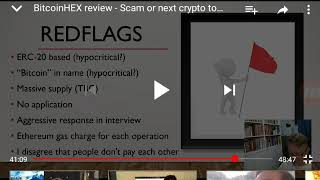
In this video, the host (known as Bitcoin Hex Jesus) reacts to Adam Stokes' hour‑long, slide‑rich review of the Bitcoin Hex (HEX) token. He commends Stokes for delivering an objective, well‑produced overview, then delves into the "red flags" that Stokes raised: the token’s ERC‑20 implementation despite being marketed as a Bitcoin fork, its massive supply, the perceived lack of a concrete application, an aggressive interview moment with Richard Heart, high Ethereum gas fees, limited liquidity and the tentative IDEX listing. The host expands on each point, arguing that the fork label can be defended on semantic grounds, that a large supply is not inherently a flaw, and that network effects and community belief can create value even without a defined utility. He also critiques the broader crypto community’s tendency to dictate what is "valuable" and stresses that value is ultimately determined by user consensus. The latter part of the video provides a step‑by‑step tutorial on using the Coinomi wallet to sign and verify messages required for claiming HEX tokens, highlighting the importance of this feature for users whose wallets lack it. Throughout, the host weaves personal reflections, regulatory considerations (Howey test, decentralization), and encouragement for viewers to watch Stokes’ original review.
Chapters
Hey, you all, welcome back to the channel. Bitcoin Hex Jesus here, and I wanted to speak to you all today about perhaps the best Bitcoin Hex review I've seen. I believe the gentleman's name here is Adam Stokes. He's either from Australia or living in Australia, so hello to our friends down under. Um, and he gave this very objective review about Bitcoin Hex, and, uh, I, I could tell he, he invested quite a bit of time in this video. It's about an hour long, and he uses quite a bit of slides and, um, things to represent and help people understand exactly how Bitcoin Hex works. So I'm going to leave a link in the description to his video. I, I wanted to comment and tell him how good of a job I felt he did, uh, explaining Bitcoin Hex. Um, but I, I just felt like, uh, comment wasn't, you know, going to be, uh, able to discuss enough details about, uh, some of the things he said in the video and some of the very helpful details he mentioned in the video. Um, and so that's why I just decided to go ahead and do this video. But I wanted to— I'm not— and I'm not going to show any of the video or play any video. This is just kind of a list at the end he because he gave a very objective view about Bitcoin Hex. You know, it was a, it was a fair review. I thought he handled it well. He didn't just try to shill it, you know, like a lot of people are doing now, probably myself included. I might be a little guilty of some shilling too. You know, that's kind of nature of the game. But, you know, I've all— the only reason I think I'm comfortable putting Bitcoin Hex out there because, uh, similar to my own project, you get the cryptocurrencies without paying for them. So, uh, as long as you, you know, are on that level with it, uh, I don't see where the risks are off, you know, or set on you. But once you go further with that and your desires start to take over, then it kind of becomes, you know, your own device. But, um, I think, um Adam does a great job and he talks about all the pros of Bitcoin Hex. So it's a very fair review and I'm not going to go over all of that, but what I'm going to try to— what I want to focus on is what he brings up is the red flags. And no particular reason, because much like myself, Adam is a, you know, he's a Richard Heart fan, believes he's a smart guy, knows exactly what he's talking about. And we, I think we both believe this project will be a very good project, But there was just some things that came up in the video that maybe I can shed a little bit more light on, or maybe some information I picked up by watching some of Richard Hart's videos that maybe weren't in this video. I can kind of throw it in there a little bit. And, but I mean, it's just an awesome video, guys. The way it's done, the time he spent editing it and putting it together. Make sure you watch the full video. The link will be available in the description. But, um, he, he, he really explains a, a lot of, um, and, and it's not that Richard Heart doesn't do a good job of explaining, you know, but the quality of this explanation that Adam does, uh, and I think because, uh, I myself am very audiovisual, I, you know, I learned from You know, being able to see what's going on and pictures and descriptions. And so that really was, you know, was right down my alley, right? I'm a video audio person. I don't like a lot of reading. But anyway, he does all these little cool images and things and makes the video look really nice. And Richard Heart explains it great, But I think this type of learning and educating people on Bitcoin Hex does a really good job. So let's look at some of the red flags Adams came up with in his very fair objective review. And I just want to talk about a little bit. So he said it was, uh, because it's an ERC-20 based token, it's somewhat hypocritical. And, and that was based primarily on um, uh, you know, that it's like this Bitcoin fork and it's using Ethereum. But, uh, you know, I just wanted to add to that, that Richard Heart does explain that, uh, the, the only components of Bitcoin related to this project is the, uh, the, as the, um, the, um, the, uh, fork itself when the tokens are rewarded, you know, from the Bitcoin holders. And that's it. After that stage, there is no, uh, connection to Bitcoin. But here's the only thing I, I, I want to interject into that, where he kind of has the question mark and hypocritical. I would have to say that I don't believe that's necessarily hypocritical because, um, you know, there are several definitions of forks. There are hard forks, there are soft forks, and then there's this type of version of a fork. That's mostly like an airdrop. And, you know, probably most people just call it airdrop, but it's not inaccurate to call it a fork because one basic definition of a fork is that it to some degree, uh, inherits the Bitcoin ledger, which is what Bitcoin Hex does. It inherits the Bitcoin ledger, right? And even though it's, uh, you know, running on ERC-20 it still, you know, um, can kind of, kind of take that definition and not be inaccurate, right? You know, even though I know a lot of developers and technical people will say, oh, that's bogus, uh, it's nothing to do with Bitcoin, it's all Ethereum. But, uh, what do you want to call it, semantics or not, that is the definition of a fork as well. So, you know, then he talks about the Bitcoin and then is it hypocritical? I think that kind of, you know, answers the question from, um, you know, from what I just said about, you know, it being based on ERC-20, uh, unless he was speaking of the idea of it being based on ERC-20, uh, that, you know, Richard Heart had spoken, you know, negative about Ethereum, which I think he still does to a great degree, to some degree, but he says it's the best thing that's out there. That's available, right? And so he uses that for example. Now, here where he says with the massive supply, yes, I have to agree with him on that. I would say, you know, not necessarily I would consider it a red flag because a lot of tokens have massive supplies, right? But it would still be a turnoff. I would just say it that way, right? I would still consider it a turnoff. I think I would have preferred something more like just like it being, uh, like matching the Bitcoin ledger all the way, like 21 million tokens. But because I don't fully understand the, the, the, uh, programming in this and the math in this, maybe it's a, you know, I'm sure it's a, it's a, it's a reason why that, or maybe it's just attractive pricing or appealing pricing. Here he says no application Right, he's, you know, basically saying that, okay, you know, it's not gonna really do anything except just stake these coins, right? But, uh, kind of covered that in some of my other content and videos as well. And I, I just wanted to say that, you know, that's kind of a matter of perception because when you say no application, um, you have to kind of look at it like, uh, you know, when there's a network effect or something, and I can kind of say there is because Richard Heart is kind of a brand and a network onto himself, and he has people who believe in him and his project. It kind of creates value in him, in the project. And so, you know, it really doesn't matter if it's not designed to have a specific application or be a money or anything like that. As long as people are willing to believe it has value and people are even willing to perhaps eventually someday accept it, you know, and trade it back and forth, which is probably what they'll be doing on an exchange, uh, it can be kind of used as a, you know, as a, as this way to move your value. And so to that degree, uh, even though it may not be one of the best, uh, ideas of a utility or use case or application that you might like, uh, it is and still can be that based on him already having that network effect there. So his— the next negative thing he, he was saying was that it was this aggressive response in an interview. And I actually saw that interview. It was the, uh, I think it was the guy who does his Philosophy House or something like that. And he had another gentleman, I believe, there with him who pretty much, you know, was saying kind of related to the no application definition. He was pretty much going to the idea that this didn't have a use case and where's the value in it, which is a common, you know, thing that's done in the cryptocurrency space. I've had the same type of, arguments with some developers about where value lies. And, uh, you know, it just kind of goes back to, um, uh, if there is a community someplace, it could be any place, and they decide that some object, something that they consider to be money, is going to be the, the, uh, their local community money or token or what have you, uh, and they agree upon that, there's a consensus on that, and then they can find a way, uh, for it not to be counterfeited. You know, if you kind of like even go back to like the, in the United States, the Civil War era, when the United States, uh, split in half through the Civil War, then you had kind of federal dollars, they had like these Confederate dollars, right? And so, uh, you know, you know, it really didn't matter, you know, even though they had kind of split in the, in the federal government still saying they're part of the United States, it kind of didn't matter because at that point when they formed these Confederate States and this idea to have their own money, they agreed upon that that was going to have value and that was going to be money, you know, whether the Union felt it was or not. And so it's the same idea with a community. You know, once you got a network in a community that says, okay, we decide that this is going to be valuable, or we like the idea of this, I mean, that's pretty much, you know, the end of it. You got a functioning economy as long as you got people, uh, willing to trade the value. Oh, where was I? I'm sorry, a dog tried to get my cat here. So, um, yeah, going back to the aggressive response in an interview. So this, um, This young gentleman, uh, he kind of came in with that idea of the— of a use case, uh, not being there with Bitcoin Hex. And because of that, um, um, uh, you know, he, he didn't think it, you know, had that. And so I think Richard got a little frustrated with him. But, you know, to, to be honest, I, I have kind of been in a similar situation where I've got kind of a little bit irritated as well. I didn't, you know, I didn't, you know, I didn't, you know, you know, become aggressive to the developers and various people in the space asking the questions. But the thing is, what irritates me about what that young man did in that interview, this is a common thing that happens in the cryptocurrency space, and it's where developers and a variety of people try to implant in you what is supposed to be valuable, right? And they don't really have the ability to do that, right? The, the public decides what's valuable, right? We as the people, the community decides what's valuable. Just because a token or a project doesn't follow certain protocols that you designed to put in place, or, uh, are part of ideas of how you think things should work, right? Like, you know, like if it, like some people, if the token doesn't have a blockchain, right? They, you know, they kind of go on and on about that and the token not really having value, that it doesn't even have its own blockchain. But there are many projects that build blockchains just for tokens to run on them. You know, isn't it a little bit ridiculous to then demonize the tokens that use them doesn't mean it's not a good blockchain they're running on, right? So for people to then go, well, it doesn't have its own blockchain, thus it's not valuable, I think it's a very ridiculous notion as well. But yeah, it's just this kind of forced idea of what should be valuable and what shouldn't be valuable. Uh, so it is very irritating, right? So I've been essentially— which I've been as irritated as well, but you know, at the same time, uh, you know, I would have been civil about it. And I don't— I don't— I, I've seen Richard far at, you know, far worse, handle things far worse than that. But, uh, you know, I could tell it was kind of frustrating. It was frustrating for me too, simply because I've gone through that a great deal. So If you've gone through that a lot, then it'll, you know, you'll, you'll, you'll understand it more. But you know, just kind of looking at how the conversation went. Yeah. You'd probably be like, okay, he's getting a bit defensive about the project. Like, you know, it's questions he doesn't want to answer, but I don't think it was that at all. I think it's just these group of people who want to force their idea or concept of what is and what should be valuable on others and value. And how people find value in projects and products doesn't quite work that way, right? Just 'cause you go put a ton, a ton of work in building something, it's all about function and utility and use, right? And when you achieve that, it's not always necessary to go spend another million, a billion dollars just to build some type of project or blockchain so developers can make money when it might not have even been necessary to do that, right? Maybe you should have piggybacked off of another blockchain or used those services that they were created for. Maybe you didn't have to go out and create another blockchain. So that's just my take on that. The Ethereum gas charge for each operation. Yeah, you know, with Ethereum, that's, I'm not a big fan of Ethereum. I'm not sure if that's a red flag or just a, bad, you know, uh, uh, you know, as far as it being a scam. I don't— I think it's just maybe just a shortcoming on Ethereum, right? I'm not a big fan of Ethereum, but you know, I, I believe Richard Heart knows what he's talking about, and Ethereum, he's— it's the safest, he says, for this particular project. The second largest, uh, most secure block— excuse me, blockchain. And that may very well be the case. But I still very much hate Ethereum. I do not like Ethereum, right? Um, I think I'm a Waves man. I love the Waves decentralized exchange. I know some people don't like Waves, but all right, too bad. I like it. And on this part, he goes that he disagrees that people don't pay each other. Um, that's something he's going on what Richard said, that people don't really pay each other. And I'm trying to remember that part of the interview specifically. It's getting a little bit cloudy, but I think it had to do something with how people give all their money to corporations, but they don't really have a direct payment to one another. So it's really no point in, um, you know, uh, uh, paying, uh, each, each other. And, um, Mr. Adam Stokes here, he disagreed with that. He said he gave some, some very interesting examples of how people, reasons how people pay each other, and they were valid. And I'm trying to remember exactly what they were, but I do remember that I understand, understood the full context of what Richard was saying about it because it was more of this very significant, large group of people who use the corporations, send their money to the corporations more so than we do each other, to the point that it was very minuscule to the methods in which we pay each other. And I need to watch that part again to, to read what Mr. Stokes' examples he gave on that. But, uh, other than that, I just thought this video was awesome. Oh, I just wanted to add one more thing too that, that happened in the video. He did say something to the effect of that these tokens won't be liquid, that they won't trade on an exchange for probably about a year or something like that. And That's a very common thing that's been coming up in my, um, um, in my projects as well, uh, or I'm sorry, on my thread as well. People asking me, well, well, is this going to be a liquid token? And the importance of it being liquid. And if we put our money in, we want to be able to get it out. We don't want to be stuck here staking for a year or 2 years or 5 years, right? That's a great concern to a lot of people. And, um, so What I recall that Richard Heart has said in several videos now, so I, I'm pretty sure that is the case, and that is that IDEX, the IDEX exchange, wants to list, um, Bitcoin Hex. Now I don't know what time frame we're talking about here, but it does come up quite a lot that it is a desire that IDEX wants to be listed. And I don't think Richard Heart would keep mentioning that from interview to interview if that wasn't part of the plan. So I would have to say that, you know, Bitcoin Hex, based on seeing several interviews with Richard Heart, mentioned that. And I understand his position, you know, he— this is a decentralized product. He has to be careful what he says to keep it very decentralized so that he passes the Howey test, the SEC test, so he's not considered a security, right? He doesn't want to you know, fall under the umbrella of a security, then you have to go through all the various regulations, right? So he's very careful with how he says things. But from what I gather, IDEX has been mentioned quite a, quite a bit, and that it will be traded on IDEX. And, uh, the time frames of that aren't given, but it does— if IDEX wants to go ahead and list it, I don't see any reason why it shouldn't be a pretty much a fast process with that. But, um, I think that's pretty much everything in this video. Other than that, this video is awesome, guys. I want to link it. I'm going to send a comment over to Mr. Stokes and have him, you know, take a look at the video because I want to make a comment to him, but I just didn't feel it would be adequate enough to try to write this down. I thought it'd be easier just to make a video and I can kind of go into detail a little bit about some of his points. But great video, guys. Gonna answer a lot of the questions that you all, uh, were asking. Uh, oh, I just want to do one more thing. Let me see if I can do it here on my device. Just hold on one second here. I'm going to attempt to get over to Coinomi because there was this one thing that, that happens a lot when people ask the question how to trade their Bitcoin, uh, HEX, right? How to, and I'm already in there, but, uh, uh, how to, you know, how to, uh, sign, you know, how to do it, how to sign, right? And this is inside Coinomi, right? And Coinomi is very easy to get, but there is a button and I don't wanna show any of my account information. It, I already had the screen open, but you're gonna go into, you're gonna download Coinomi. And when you go into Coinomi in the top right-hand side, there's like, I believe these 3 dots, you hit those, and there's going to be a button that says sign verify message. Now a lot of wallets don't have this function, and that's going to make it very difficult for you to claim. But as you can see how it looks, because no, I've seen no videos where people actually show you what it looks like to go inside your wallet and sign, but it's real simple right here on the, on the signing address. And I actually got a video too, by the way, I'll link to in this uh, that shows you, uh, how to exactly, you know, do it step by step. But you see, here's the signing address. You're going to put your wallet address here, and you're going to write that little message there, and you're going to put a signature. And then when you hit verify, it's going to be— or sign, rather— it's going to be on the blockchain with a message. With that message there, it's going to be communicated back and forth between you and Bitcoin Hex, and you're going to put that message there. It's going to actually Uh, you're gonna, you're gonna sign that. You're gonna, you're gonna get the signature key. You're gonna put, you're gonna put whatever message that Richard Heart wants you to put in there. It's gonna tell you on the site, Bitcoin Hex. So you're gonna put your address on the top bar. You're gonna put the message that he's telling you to put there. And then when you hit, when you hit, um, uh, um, sign here, it's gonna send it over the blockchain. So when, uh, you hit verify, you're going to get this key where you can put in this key. It's going to— you're not going to put the signature in. The signature is going to generate itself, and you're going to actually put the signature over at the Bitcoin HEX claiming site when it's, you know, when Bitcoin HEX are ready to claim. They aren't ready to claim yet, but you know, they will be when, when they're done with the project. You're going to put it in there And so I just wanted to show you all how this works. And I'm pretty sure he made— he said that Coinomi is a wallet that you can use in Bitcoin to do this. And, uh, it's— it's— I'll be honest, it's a pretty— it's kind of, for a person who doesn't know how to do this, it's a little bit confusing if you've never signed with Bitcoin. And some wallets are very complicated to do it. Not real complicated, but probably more steps than you want to take with this project. And so, um, with Coinomi, it just has the signed verify message, and it's a few other good wallets that do have it. Um, and, and, uh, um, but, uh, that's how you have to do this. But if you're in a wallet that doesn't have this feature, yeah, it's going to be a problem for you. You will need to probably use a wallet like this that does that. But, uh, other than that, that's all I want to say. Uh, Adam Stokes' video is a great video. Does an excellent job of just breaking down everything in such beautiful details about how Bitcoin Hex works, what you need to know. But guys, that's all I wanted to say in this video. If you like content like this, don't forget to like and subscribe. And until next time, take care.
More from Michael







UBI - CIA Agent Explains Why Americans Will Never Get Universal Basic Income?



