
Bitcoin - Latest Fork Up 300,000%
BitcoinNYK, a Bitcoin-linked token, surged from $0.001 to $1.30 when its gateways opened, a 300,000% jump. Unlike a traditional fork, it uses a transaction-based burn mechanism to fight inflation and lets Bitcoin holders claim it free on the Waves exchange.
Chapters
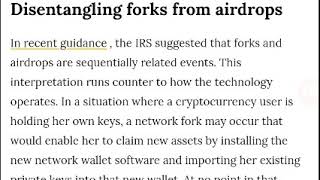
Welcome back to the channel, and today we got an interesting topic here. We want to talk about the latest Bitcoin fork that's hit over 300,000%, uh, or it's up over 300,000%. Now that number sounds crazy, um, and had never really heard a number like that before, at least I thought I had not. Until it came to my attention that Bitcoin itself had went from about 1 penny to about $20,000, and that represented about a 2 million percent return. So these fantastical astronomical numbers are possible in cryptocurrency, and it's the only situation that I think exists in the world at almost any time where something like that is possible. Now from the title, we're talking about the latest Bitcoin fork, but I think it's also important to note that this isn't really a fork at all. And so I want some clarity there so people do understand that, um, the idea of a fork and what might just be an airdrop has been interpreted many different ways. Some people have interpreted forks as anything that inherits the ledger of the existing— of an existing token. It inherits this ledger and there is some type of direct correlation between that. Looking at this article from Coin— what's the name of the site again? I already forgot it. It's called Coin— ah, is that Coin Telegram? I will leave a link in the description, guys. Sorry about that. But I, I happen to come across the article here and it was talking about distangling the differences between forks and airdrops so we can have a little bit of clarity on that. If I could find it here. Okay, here it is. So, um, it's saying here that in recent guidance, the IRS suggested that forks and airdrops are sequentially related events. Now this interpretation does run counter to how the technology operates. So I'll leave a link to this article. It's quite interesting. But, uh, you know, before we get, you know, too much wound up in what's the difference between a fork or airdrop, or this isn't really a fork what we're talking about here with this particular project, uh, it could just be that you're very well 100% a thousand times right, and we're willing to accept that. That's no problem at all. Um, but, um, online this definition has been, uh, I guess you could say, uh, up for interpretation in many several ways. Of course, there are clear, uh, ideas of forks like hard forks, uh, where the actual block is involved, was forking at that block. There's like soft software forks, soft forks where there's like these just as simple as a system upgrade of some sort of update. And then you get into these weird territories like forking and airdrops mixed together, being part of the same thing. Now ultimately, I think it just kind of is going to boil down to, um, you know, in the end, what's this going to be about, right? Is it going to be about, uh, you receiving relational, uh, these free, uh, cryptocurrencies that have now become part of this new chain, or something or another? However you want to look at that, that's going to be a lot more important to some people than others. And, um, you know, again, uh, we're open to discussing any ideas of that, but I just wanted to get that out of the way. Now I want to talk about something that is probably quite interesting to a lot of people in cryptocurrency, and that's the value of their cryptocurrency going up and why it goes up at all. So we're going to talk a little bit about that today. Okay, so the latest fork we're talking about, if you want to use that word, that interpretation, is the BitcoinNYK project. Now, um, the Bitcoin NYK project is quite unique in idea of how cryptocurrencies operate, specifically in relation to Bitcoin. Uh, and what I mean by that is that Bitcoin being a store of value, one of the main ideas have been that It's this great store of value, and as it goes up in value with this very deflationary quality, it not only preserves value, but it gives you some of the greatest returns ever done in investing, right? Like we mentioned earlier, how it was able to go from 1 penny to $20,000, just phenomenal. Now, now we're talking about this latest situation of some type of Bitcoin something that is allegedly up or went up 300,000%. Let's talk a little bit about how something like that occurs and what needs to happen for that to occur. So, so to be clear and to try to help you understand is how something like this happens. The idea of BitcoinMYK is that it is connected in Bitcoin by sharing that the Bitcoin ledger, meaning the Bitcoin holders, they own Bitcoin MYK right now. What's a bit unique in this type of Bitcoin fork, and, and now what I'm talking about fork, to, to really understand the core idea of a fork too, it's not just so much technically what happens across a blockchain or with a block It is also the statement, if you will, that there is something going on in that particular cryptocurrency that the new cryptocurrency or the new version of cryptocurrency disagrees with, right? Because if that weren't the case, then you wouldn't need the fork, right? In something like Bitcoin Cash's situation, there was the idea of, okay, then Bitcoin should be more useful, should act like a money, a payment, and not just sit there and be a store of value. And so, and thus Bitcoin Cash set off to be this payment type more system that's more used as a money, right? Whereas Bitcoin just kind of sat there. That was the difference. So what is the difference in the Bitcoin NYK and Bitcoin fork? What is the difference? Well, to sum it up in one word, The difference is inflation. We've been under the false idea that the Bitcoin inflation rate as compared to something like the US dollar, uh, that the US dollar was just this very highly inflationary, um, financial instrument that didn't preserve your value at all. And data suggests, would suggest that this is not true. Um, not at this time, that the US dollar has held, um, uh, an annual inflation rate of around about 2%, whereas Bitcoin has, uh, over the last several years been very high up in the, um, inflation model, right? It's been above 3%, and now it's only in 2020 that Bitcoin is going to settle around maybe about on par with the dollar, somewhere around 1.8%. All right, so this is very important information, and it may come as a shock to some of you all, but I would invite you all to look up the data, look up this information, and, uh, you know, then you can, you know, make better informed decisions, um, and have that information available to you. Because, uh, you know, I, I know how it is in cryptocurrency. You know, we, we, we go on these narratives about about, uh, how inflationary the dollar is and how bad it is. And, uh, well, we obviously at some point in the future, all of us in cryptocurrency, see that a cryptocurrency is going to work better for us and it's not going to have all this inflation. But the reality of the situation is, um, up until now, or even now, Bitcoin hasn't performed as well as the US dollar. And in the inflationary, inflation area. So it's not very helpful at all to us in that area. And as it does run up here from time to time, uh, there are people who obviously who have bought in well above the price target you see here with Bitcoin now, right? Just recently, um, less than 3, 4 months ago when Bitcoin hit around $13,000 there were people buying in then when it hit around $20,000 back in 2017, they bought in then. So what's the problem here? What, what are we trying to help y'all understand? Well, what we're trying to help you understand is that what BitcoinNYK does differently in this fork is it's come up with the idea of as the cryptocurrency is transaction, or I'm sorry, transacted, it is burned against the transactions, right? Very aggressive at a 1-to-1 ratio to control the level of inflation, right? We've seen ideas like this before, but some of these systems haven't really been, uh, quite useful in means of a use case to where people would want these to be something that's going to be useful for them at some point in the future. Bitcoin NYK is different because it uses certain blockchains to facilitate the movement, almost like if you might picture the Bitcoin Lightning Network, to move this value from chain to chain. And in doing so, it kind of creates this overall use case for Bitcoin NYK besides just being a store of value, but also has this very deflationary quality, right? Um, where it's burning and it's going against that deflation or rather inflation rate. So this is very important. This is quite radical, quite, quite important. You really have to think about what's going on here to, to begin to understand how this version of Bitcoin gets to 300,000% like it did. So we have to look at what happened here Besides understanding the deflationary nature of BitcoinNYK, how much more aggressive it is, you have to understand that BitcoinNYK piggybacks off of blockchains, and it basically uses blockchains like Steem, the Waves network, to do these fast and if not free, almost free transactions, which can make it very useful to many communities. In addition to that, it's burned against these tokens. Now again, the only thing that really points it back to the Bitcoin is that in all of the networks that it inherits, the Bitcoin network is the one that the majority of holders own it. And because of that, it makes Bitcoin MYK hold the Bitcoin MYK Ledger and makes it so Bitcoin holders can claim it absolutely free automatically through the Waves exchange. Um, now the reason this is all important, because when you're dealing with this level of use and you're dealing with this level of deflation at this aggressive rate, look at something like where Bitcoin NYK was trading over on the Steam exchange around 0.001, which is peanuts, which is nothing. When the gateways open up, uh, like we just did today, which means that basically, uh, you're basically able to now send your Bitcoin NYK tokens over to the Waves exchange, and, uh, there are dozens of trading pairs there for Bitcoin NYK against every major cryptocurrency out there. It created this, uh, situation out where it was this expansion against an ever so decreasing supply of tokens. Um, and, uh, basically what you got is you got this explosion from the 0.001 to on Waves at about over $1.30. That represented well over a 300,000% return. Now, will it hold that? Um, no idea, probably not. Right? When, um, whenever there is excitement and something first comes out, it generally hits some ridiculous number and it falls back down. That is very true, and that's very much the case. But here's what you really need to pay attention to with the BitcoinNYK project. Remember that it is quite deflationary, and it is based on the transactions. As the transactions move, the tokens burn, The higher the price goes, the less tokens burn because you're moving less tokens, as the burn rate is against the token transaction themselves. And when the token value decreases dramatically, the burn rate increases to keep pace with that. So you're basically pushing out inflation to meet the lower cost of the token, the, the lower prices. To, to raise the value. And when you're dealing with higher prices, right, that means you're getting less inflation in. That's allowing the token to go up in value. Now you have less, a less burn rate. So some very interesting dynamics going on here. Very exciting, very interesting to watch, very experimental. But we think at this point in time, to even expect returns like what we're seeing or what we're hoping to get in Bitcoin. If we're looking to get something like, uh, 1,000% returns or 10,000% or whatever the case might be, it may be very much the case that we've missed the boat on that and that's not going to happen. Or some believe it may happen, and I, and I could be wrong, but the reality of the situation is Bitcoin NYK at 0.001 over on the Wave Exchange at over $1.30, it's probably going to keep that up. And it's probably going to be a lot easier for a project like Bitcoin NYK to go 300,000%, 1 million percent, 2 million percent, than Bitcoin to, to, to even go 10,000% or 1,000% or 100%. So very interesting here, very interesting dynamics. We're going to leave a link in the description on how to get involved with this project to claim your Bitcoin NYK absolutely free. This is an ever-expansion network that is based on the value of the network. And so in that way, you know, this project doesn't really seek, you know, any direct you know, investment or anything like that. It is a network that belongs to Bitcoin, belongs to the Bitcoin holders, very much experimental. And, uh, it's been working quite well, uh, without needing to sell the idea of come buy this token, right? Um, it works on a proof of participation model, which means people can just come in, they can, uh, claim it through their Bitcoin holdings, or they could complete several tasks here and there, they can earn some. That's in our treasury with the project. So it's very interesting, very exciting to see if it's going to keep up those type returns. The math would suggest, if in looking at similar like idea projects like this, that they do perform quite well. So will be quite interesting to see what happens with this project. Very exciting, very radical, a project that finally looks at the high inflation that is actually in cryptocurrency that I think we've dismissed, uh, and it's caused, uh, us to have problems in, um, appreciation of our value in cryptocurrency and Until that's addressed, I think we're going to continue to have issues with the growth and the seeing our prices go up like we like. But this is kind of interesting. I think it addresses a lot of that. Be sure and check it out. We'll leave a link in the description. It's going to be interesting to see how it performs over the next several months. But that's all I want to say in this video. If you like content like this, Don't forget to like and subscribe, and until next time, take care.
More from Michael







UBI - CIA Agent Explains Why Americans Will Never Get Universal Basic Income?



