
Bitcoin MYK - Burn Report Over 42 Million Tokens Burned
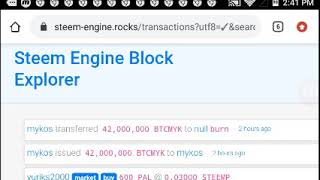
In this video Michael Joseph Presley presents the monthly burn report for the BitcoinMYK (MYK) token, revealing that approximately 42 million MYK tokens have been destroyed – nearly half of the circulating supply. He explains that BitcoinMYK is a fork‑like project that inherits the Bitcoin ledger, allowing holders of Bitcoin to also hold MYK, though the token could theoretically be attached to any blockchain. The core premise is to amplify Bitcoin’s deflationary nature: while Bitcoin has a fixed 21 million supply, BitcoinMYK continuously reduces its supply through transaction‑linked burns, creating an ever‑deflating token. Presley discusses the economic rationale behind scarcity, referencing Austrian economics and contrasting inflationary fiat or crypto models with deflationary ones. He acknowledges the difficulty of modeling human psychology in markets, noting that external life events can drive selling pressure regardless of supply‑demand math. The video outlines the “Proof of Participation” model, where “simulated miners” earn block rewards without the energy‑intensive proof‑of‑work or the staking knowledge required by proof‑of‑stake. This aims to increase decentralization and lower environmental impact. He reports a recent reduction in the daily mining reward from 78.15 MYK to 36.15 MYK, reflecting the burn’s impact on issuance. Potential utility cases for MYK are listed: advertising, tipping, music streaming, and gaming. Presley compares BitcoinMYK to Bitcoin and gold, arguing that a more aggressive deflationary mechanism could avoid the pitfalls of large holders dumping tokens, while also noting that Bitcoin’s anonymity and concentration of wealth remain risks. He invites viewers to read the white paper, join the project, and try the simulated mining system, concluding with a disclaimer that the model is experimental and outcomes are uncertain.
Chapters
Welcome back to the channel. Today we want to publish the burn report for the BitcoinMYK token this month. So as you can see here, an extraordinary number of 42 million BitcoinMYK tokens have been burned. That is not a mistake, um, that is the number There's a large amount of, of our tokens, almost half that have been burned. And, uh, this is something expected and normal in our project, but we just want to talk a little bit about what that means and why would we do that and why is it so important, um, in the project, um, that we do this. Okay. So to, to explain, this is part of the Bitcoin MYK mechanism. So a lot of people, uh, interested in the Bitcoin designation, and we want to be clear to help people understand, we use the Bitcoin, uh, term, uh, quite loosely. Uh, if you're thinking, uh, of something like Bitcoin Lightning, you have to understand that Bitcoin Lightning is not just Bitcoin Lightning. It is the Lightning Network, but it could be Bitcoin Lightning, it could be Ethereum Lightning, and so on and so forth. And whereas we use Bitcoin in relation to Bitcoin MYK, our cryptocurrency, it is important to understand, that the Bitcoin MYK project uses the Bitcoin designation because it inherits the Bitcoin ledger, right? Meaning everybody who holds Bitcoin holds Bitcoin MYK. And so some people might think of it as a fork. Some people might think of it as an airdrop, but the relational value between Bitcoin MYK and Bitcoin is just that. And that's why we have the designation. Keep in mind Bitcoin MYK could be anything. It could be Ethereum MYK, it could be you know, many other coin designations, uh, besides just, uh, Bitcoin. So I want to kind of clear that up, that it does serve as a fork. In some definitions, it might be classed as a fork. It does inherit the Bitcoin ledger, um, you know, but it could just as easily have done this with any other cryptocurrency. So try not to get too hung up about that. Or misunderstand that. Now, one interesting feature about BitcoinNYK project is that in looking at something like Bitcoin, what's worked with Bitcoin is the idea is only 21 million, um, coins. So the 21 million coins in Bitcoin the, uh, the idea of the deflation, uh, deflationary quality that makes Bitcoin valuable. The rarity, the scarcity, uh, these things are why Bitcoin has a fixed supply. And, uh, this is very important to, um, you know, being relational to why Bitcoin has value. So to contrast that, if there was a cryptocurrency that was quite inflationary and you just continued to create more and more coins, kind of similar to what we get with fiat currency, right? They can introduce more of it into the money supply, and what it can do is it can become inflationary. To where your value becomes diluted. And that's why the idea of a fixed amount, um, a, uh, a— sorry about that, um, my notifications. But that's why the idea of a fixed amount— yeah, thank you. Sorry, guys. But that's why the idea of a fixed amount, um, If you look at something like Austrian economics, you know, that's why it makes sense to value and scarcity in that economic model that some feel is a better approach than, you know, what we get with our traditional monetary systems, right? And so if you believe that, then an idea like a cryptocurrency with a large supply or an idea of a cryptocurrency that is inflationary and creates more coins, would be, uh, not something that you would care a great deal about. You probably would be, um, not interested in such a project. And so, uh, because the deflationary quality of Bitcoin works, we believe if we exploit that even further that we could have a better result in that. Now, of course, this is experimental. We don't know everything that's happened since we've been running this model. Uh, we've actually had things introduced in the model that, uh, was something that hadn't been factored in. Things that have occurred that we didn't expect. I'm going to talk a little bit about that as we go on. But if you believe in the model of deflation, uh, then a project like this and why we're burning so many cryptocurrencies will probably make a great deal of sense to you. Um, keeping in mind that as we're burning against the entire network, uh, per se, it really doesn't matter. It's like if you were to take a house and you were to compress the house, let's say the house got smaller and smaller, and let's say you owned a wall in the house, 4 walls in the house, and we gave you a wall. No matter how much we compressed that home, you You still own that one wall, right? Um, so even though it would seem that it's less, you will still occupy the same ownership of that home, right? So, uh, in looking at like that, nothing really changes until you include the factor of if you were in this dimensional space where you, you could, you could opt out of one, you could move from one to the other, right? You could be in one and you could take advantage of when the house was at a bigger size. And then although it's the same house and you own the same percentage of the house, through this dimensional whatever, there's a change in the, in the size of the house, right? But there isn't really, right? You're just kind of taking advantage from it from another dimension. We call that dimension time. And what do I mean by that? Well, it means that if you were able to generate more tokens yesteryear, then today you would obviously have more in this space, even though the network itself would have reduced overall, right? And, uh, that's just a simple way of saying that if you have more tokens yesterday, you're gonna— and you still have them today, you're still gonna have more tokens, right? Uh, but not to get too confusing with this or, or go too far off, the bottom line is, um, you know, the size of the network and the amount of cryptocurrencies don't particularly matter within themselves. But of course, what we're finding with these type projects is, uh, basically that, uh, there are many other dynamics that play into this. That could change the verdict on certain ideas and perceptions of the value of this project. Uh, we oftentimes forget to include psychology into the marketplace. And what do I mean by that? Well, logic and math is generally calculated in supply and demand, but the one thing that we cannot calculate is human behavior, right? We cannot calculate what will make a person make certain decisions. Anything could cause it. When in the paradigm of the situation they have within a cryptocurrency market, maybe someone could be holding a certain amount of cryptocurrencies and maybe something comes up. Maybe they have to leave the market. Maybe they have to remodel a kitchen. Maybe they just had a baby. Maybe they're getting married. And even whether it's a good investment or not, it may cause them to sell the cryptocurrency at prices that are discounted. You know, as to say, now that they've made a decision out of logic and math, so to speak, uh, as to say maybe you would have kept holding the token if it was going up in value, then somebody just starts to dump the token. There's nothing that can really counter those factors, and it's— we can only include them into the equation. So it's hard to make very good models of what happens with this, but we can point you to the model of Bomb token, um, which, um, was trading around 30 cents when it first started, went from 30 cents to $14 using a similar method where the transactions reduce the token supply. So every time there's a transaction, uh, the cryptocurrency is burned. And it's burnt in direct relation to the transactions. The transactions representing activity, interest, right, attention value, all these things folded up into one. And then the supply being reduced to create that scarcity and rarity psychologically. Now adding that component into the market, we believe will give, uh, certain favorable conditions. We don't want to use words like expecting returns or anything like that, or expecting some kind of profits because of the utility of the project, because of we believe it being more like a Bitcoin fork, and Bitcoin was declared not to be a security, uh, and to be a security you have to really get into the idea of, uh, expecting a profit. I would say that in BitcoinMYK, uh, the way that the project is designed, that it works more so like a digital currency. All right, now there are certain aspects that, uh, may come into the project naturally that are just a byproduct of the project, similar to what you might get with, uh, if something like the US dollar— if everybody starts to hold and trade the US dollar, the US dollar value-wise will become more valuable, right? Its value to the market will become more valuable. It will gain strength against other currencies. But the reality of the situation is when we put dollars in people's hands, they don't go, I'm going to hold my $1 bill and in a year from now hope it's $2. No, that's not really how it works, right? The dollar that they're given, they accumulate more dollars to do the things in a marketplace they want to do. They see something that requires more than the dollars they accumulate more dollars. I would like to think we're more like that and not along the realms of a security, you know, but, you know, with this model, you know, it's possible that some people might think it's a profit gaining model in that way. And the data, we'll just have to look at the data and research and we'll have to see what happens with that. But from this point, we're seeing some interesting results. We're seeing things we haven't factored in, but we're also seeing things that make a lot of sense. So what we're looking at now is, um, much like Bitcoin where you have miners and you have this decentralized network, we have miners as well, but these are what we call simulated miners and they serve the same purpose of miners, right? As far as distribution of the network, as far as keeping a network decentralized. I guess the only thing simulated miners don't really fulfill is the security aspect. And that's something we don't have to really worry about because we piggyback as a universal bridge cryptocurrency off several chains. Um, and if you're a little bit in the dark about that, maybe this is your first time watching this video, you can look in our white paper. It'll be, uh, here in the menu. But what these miners do is what the BitcoinMYK project has attempted to do. It has attempted to take all the pros of cryptocurrency, keep the pros, and try its darndest to eliminate the negatives. And what is a negative of, um, cryptocurrency mining? Proof of work, what you get in Bitcoin. Our best model to date is actually one of the most negative things against cryptocurrency, and that is the huge energy consumption that we can count on with, um, proof-of-work algorithm. The amount of electricity consumption that is used is, um, is, uh, quite concerning to environmentalists. Uh, try as we may, we can't find a proper enough justification for it. And even the big networks like Ethereum, who may be in danger of now crossing over that security line, are switching from proof-of-work the proof-of-stake models that will do a great job in keeping the environment from consuming too much waste and energy. So where do we fit in here? Well, we believe with our simulated miner program, we take it a step further. Not only do we skip the, um, the environmental costs to cryptocurrency, we skip the high amount of mental aptitude it takes to be a miner for some people. When you think about the average person, they probably don't know much about mining and cryptocurrency. They don't know much about mining rigs or data centers. Um, and in many cases they don't participate in mining. And what we end up with is a lot less representation through our miner community, and we end up with only a few people running miner data centers, and that's very little representation, and that's very little decentralization. By being a simulated miner, you don't have to understand anything. All you have to do is get one of our mining rigs, we turn it on, and you're already, uh, basically mining our cryptocurrency. You don't have to do anything else. Hit a button and you're doing it. So that skips the mental aptitude, which what it does is gives us more minor representation, something we don't have in Bitcoin. It skips the environmental costs because it's all simulated. You're really not mining, uh, energy consumption-wise. There's an algorithm selecting miners that win the block rewards, similar to proof of stake. But not proof of stake. We call it the proof of participation model. It is a new model in cryptocurrency. It is a new algorithm, and we believe in the future we're going to see more models like this. What happens when we use this deflationary model that is more deflationary than Bitcoin? And what I mean by that, well, Bitcoin only deflates or is only fixed at a supply of, um, 21 million coins, right? BitcoinMYK is ever deflating, right? So it can deflate beyond 21 million coins. It can get down to 10 million coins or 5 million coins, ever reducing that supply against what's on the market. Why is that important? Well, because if the model of Bitcoin is successful based mostly on its deflationary quality, then the next logical leap would be to determine that further deflation, exploiting deflation, would create an even more successful model, if that makes sense. So By the project being linked direct to the transactions in the burn rate, as that happens, the miner rewards through our simulated miners every day reduce by the amount of burn, or every month rather. And so we've just had a burn that has created, uh, a mining rate of about 36 of our tokens per day. It was at 78.15, and it's went now to 36.15. Start at 100 tokens per day, and it's going to ever get lower to meet the burn and deflation rate, to meet that quality. And if we're correct, then what is happening is we're creating a valuable product hopefully that is being contained into a limited supply. And, uh, the people who have these cryptocurrencies from yesteryear hopefully will have more opportunity, uh, tomorrow. So it's a very interesting idea, right? It's a very interesting idea, but this is also a very utilized token, you know what I mean? It could do several things on the platform. It could be used for advertising. It'll be used to tip, listen to music, play games. And so there are many, uh, very interesting, uh, things you can do with this cryptocurrency. The mining rates now are reduced to 3,615 BitcoinMYK tokens. There's a large, large reduction. It's about almost 50% of, uh, in fact, it's It's over 50%. So that's over a 50% decrease in the mining rate, and it's over a 50% drop in the amount of cryptocurrencies that go out a day. So these are very exciting times for us as we get a chance to look at the dynamics of what this very interesting model can do, the Proof of Participation model. And if you haven't tried it yet, we hope you will. If you believe that deflation, or if we were to have a head-to-head of deflation versus inflation. I think at the end of the day, it's going to come down to which one do you believe is more, um, uh, opportunistic? Which one do you, you believe works better in the end? Um, if you're looking at examples of our fiat currency system, I think by default many of us are saying, um, that how inflation works or who makes the decision to print more money in our economy, uh, has been a negative for us. And I think many of us do lend ourselves then over to more of an Austrian economics angle of fixed supply economics, right? And not saying that those are models are always the best in every instance. In fact, I can give you an example of where it wasn't, and that was going back hundreds of years, thousands of years, to when we use gold. The problem was when we used gold was that there wasn't enough gold to go around to everybody, right? And so whenever there's not enough economic prosperity or, or, um, accessibility to the masses of people, a lot of times that's going to sell, uh, that's going to spell lack of prosperity. And so it was much more difficult for a person to conduct business in gold if he didn't have any. Right. And so with a deflationary model, a fixed supply model, you could run into those type issues. Now, of course, now that probably won't ever happen because most of our money is digital and it could be divided up into decimals a lot easier. But just trying to give an example of when deflation was negative, my personal opinion is that it's going to always trump inflationary projects. And what I mean by that, Talking about these projects that have a billion cryptocurrencies, a trillion cryptocurrencies, hundreds of millions of cryptocurrencies. Why is that a problem? Well, the big issue with that is what happens when, uh, you want more value in your product but you can't get it because somebody's holding a trillion tokens over your head, right? They're going to dump on you. Even, even in the fixed supply of Bitcoin, and that's why I think Bitcoin MYK may even have the leg up on Bitcoin. Bitcoin only has 21 million coins, that is true, and that is, uh, better than every other cryptocurrency just about out there that's, uh, valuable enough because Bitcoin has a very low supply but it has the most volume, or some of the most volume in cryptocurrency, has the most trading, most transference of dollars every day, or in dollar value, transference of Bitcoin, right? But what's the problem with Bitcoin? Well, we have a very anonymous creator and founder who has billions of dollars worth of Bitcoin in a wallet. That he could surface at and dump anytime, right? And what would be the solution against that? Where there isn't one, and the price would suffer tremendously. But in Bitcoin MYK, although it too is somewhat confined by that idea, in Bitcoin MYK it is able to deflate even lower than Bitcoin. And we invite you all to read our white papers on how that works and why we believe a model like this with the simulated mining and with the idea of, um, of an even more so deflationary Bitcoin, how this could be more advantageous, uh, in the future. But that's all I want to bring you in the mining report. Uh, if you haven't joined our project yet, be sure to check it out. You can register, you can start earning free, our tokens free, just by joining, just by participating. Uh, and if we're right about our model and if it does work Uh, you might be in a similar situation to what early Bitcoin was like if we're right. And of course, if we're wrong, then you've probably only lost just some time here. But that's all I want to say in the video. If you like content like this, don't forget to like and subscribe. And until next time, take care.
More from Michael







UBI - CIA Agent Explains Why Americans Will Never Get Universal Basic Income?



