
Bitcoin - To Pump to $15,000 and Dump $6400?/ Manipulation End
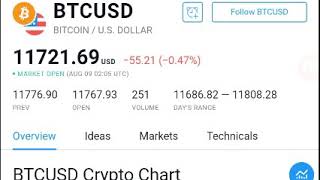
Bitcoin could rally to $15,000 then crash to $6,000-$6,400, the presenter argues, citing a Bitwise/SEC report showing only 3% of reported trading volume is real. He critiques crypto valuation based on price alone, pointing out Bitcoin has 50 million wallets versus billions on Facebook, and proposes network size matters more than speculation.
Chapters
Welcome back to the channel. Bitcoin to pump to $15,000 before having a major crash dump to about $6,400. So let's talk a little bit about that today. What's happening with Bitcoin? Uh, why are these type figures coming in? And, um, if you're a Bitcoin holder, where are we at with that? You know, of course, as always, this channel is more about education of the cryptocurrency space. We don't sell trading programs. We don't teach trading academies. We're not day traders. We are more interested in platforms and products that people actually use and find value in, right? So we kind of leave that area of commerce up to of the channels that do that. But a lot of the data that gets put out in cryptocurrency obviously comes from technical analysis, right? And from the amount of years I spent in the investment business, never was it ever a rule of thumb for there to be relational technical analysis Without fundamental analysis, these were things that were very much conjoined that we use. And around cryptocurrency, I tend to just see a lot of technical analysis and charting. You know, I can understand that because many of these ops— the obscurity of cryptocurrency hasn't really produced compelling use cases. The cryptocurrencies themselves are aren't used with merchants and vendors and not used very much at all for anything. Bitcoin primarily is used to buy other cryptocurrencies, right? So this is very strange set of events that makes this a difficult space to navigate. But looking at some of what we're seeing here with the charts, and doing the best we can to take the fundamental analysis we do have in comparison with that data. We can see where Bitcoin here is going to be testing, uh, some limits coming up, uh, possibly if it can break out and, uh, push on to, uh, what some believe to be all the way up to about $15,000. Whereas at the same time, some believe it's just going to do a gonna crash, and this is gonna probably be a significant crash unlike we've never seen before. Uh, we may test, um, uh, bottoms as low as, uh, some people are going as low as $6,000. Some people, uh, around, uh, I think a more practical, probably more realistic range gonna be about $8,000 to $9,000 range. But, uh, what does seem to be clear is many of us are Uh, in agreement that, uh, this ride will end. Let's mix up some of that with the, uh, fundamental analysis of what's going on. So within Bitcoin, we first have to understand Bitcoin— a lot of trading that we're seeing is being reported. It's only about 3% of that, uh, that is, um, accurate, and that's not being made up. This is, uh, actual reports, uh, published and sent to the SEC from Bitwise, um, that talk about, uh, how much of the trading, uh, about 97% is false. What that means, um, is basically that the money is not there to sustain these prices, right? So you're going to see the pullbacks, and you're going to see major pullbacks. Try as I may, uh, we try to explain this to people in the cryptocurrency space, but generally, typically, we're overcome with wishful thinking. Uh, unfortunately, wishful thinking doesn't always defeat rationality. Uh, and, uh, you know, if you just understand that that's what's going on and that's what's happening, then it's It's easy to understand why these things occur and why the price of Bitcoin doesn't just keep going up and up to the moon, right? The money is not there for it to do that. Um, so how should we look at this? And not investment advice, you know, we're— what we try to do, the channel, just give you all the tools we can, right? If we think a project is good, it's going to go up in value, we tell you that. Um, you know, we're not shills. Um, I am involved with my own cryptocurrency project, but I love creating models, and our cryptocurrency project is about participation. It's a proof of participation model, and I do believe those type things work. So it's, it's, it's totally different from, I think, what— when information gets relayed by some out here in the cryptocurrency space that are holding a specific cryptocurrency, and they are hoping that by either talking good about it or doing some type of candy evangelizing about it, that, you know, uh, it will help to improve that project. But the fact of the matter is, um, if the money's not there, if the, if the value's not there, that's not what's going to happen. You are— the markets will crash, and that's just going to be how that plays out. In saying all of that, um, I think it makes it ever so more clear, uh, that we need to understand that we need to have these fundamentals and technical analysis work together so that we can create a complete story about what's going to happen with Bitcoin and why this is happening now. Um, so the manipulation is rampant and, uh, there seems to be no getting past that. I think the only way we can deal with that is by facing the reality of what's happening with Bitcoin. Um, doesn't mean the price won't go up, but it does mean that the value is not going to sustain. It won't be able to do that. The emperor has no clothes on, so to speak. Um, so what do you do if you're in Bitcoin and you're testing these new highs that you, you're, you're at least on paper, uh, able to, uh, now execute, uh, orders at, uh, in profits? Uh, should you be, should you be selling or buying? Well, Again, I don't want to give investment advice, but what I will say is that if given a scenario where you knew that the reality of the situation was that money is not there in a particular asset, uh, what would you do? You know, would you, you know, sell it at the value which you think the Bitcoin is actually at, or would you continue to let it appreciate if that's what it does. And what is the actual value of Bitcoin? That's a huge part of the problem. Huge part of the problem is the market can't determine that, and that leaves room for a lot of this. Uh, some people say the value of it is whatever the market suggests, and at the very, uh, very basic level, that is true. But the more accurate idea is it's going to come down to what it costs to produce Bitcoin. It's going to come down to, you know, because as long as Bitcoin can be produced at a fairly low rate, then there's got to be more incentive to mine it. And miners have to sell. It's the tragedy of the commons. Miners have to sell to pay for electricity, to pay for their lives, and so on and so forth. So you're going to always have that downward sell pressure created by the mining operation itself. So there is a reality to this other than Bitcoin is going to go to $100,000, $200,000, $1 million, right? I hope we can— I hope we can all understand that and really be realistic about that. Um, because if we can't, then, you know, unfortunately when Bitcoin value drops, right, you, you, you have to imagine and understand that somebody's buying in at these, uh, what could possibly be inflated prices, right? Um, so somebody's buying in, you know, at the $15,000 mark when it— if it should touch that, right? Buying in at $15,000 drops to $6,400. There's a lot of money. It's a lot of money being lost. And where are these numbers coming from? Well, You know, again, when you understand— I did a video some time back that showed how much it costs to mine bitcoins in every nation on earth, uh, certain market mechanics and conditions that allow certain markets to trade twice their value, 3 times their value. And from that, um, I'll try to leave a link in the description to the video because that's a whole nother video and I don't want to go into great detail about how we arrive at those numbers, but Uh, at this point in the game, we come up with something like about around $6,000 being the more accurate value of a Bitcoin, actually being, uh, uh, much less than that, being probably actually somewhere around $1,600. But due to certain market mechanisms, it's probably allowing it to, to trade, uh, you know, twice as high over its its market value, and we arrive at something like around the $6,000 mark, which is kind of on par, uh, you know, when we look at and we break everything down, it's very much on par with, uh, many of the predictions being made that will probably touch $15,000 and will drop to about $6,000 range. When we think about, that's probably the more accurate trading range of Bitcoin right now. And so that's all, it's all very interesting as we look at the map, but again, we'll try to get that in the video because I don't want to spend 30 minutes talking about how we came up with that, with those numbers. If you, if you can understand, uh, the, those, those ideas, those, the basic function of Bitcoin, what people are doing with it, um, I think it'll make a lot of sense to you. The reality of the situation is Bitcoin is mostly being used to purchase altcoins. Coins, right? Hey, you know, you're not going out and you're not buying merchandise with Bitcoin. Uh, in the very beginning of Bitcoin, people were— a lot of the miners and, uh, people who were in possession of Bitcoin were able to go out and buy software and, and things of that nature. Um, but, um, at this point in time, um, that isn't probably what's happening. And there's not commerce with Bitcoin. There's not this acceptance of Bitcoin pretty much anywhere. It's just so problematic. Even if it could find this useful spot as a currency, you would have issues with it, right? It would be a minoritized group that would really have a need to use Bitcoin. You know, it wouldn't be your standard commerce because you have trouble with chargebacks. And so on and so forth. If you were a nation that were a group of people who, uh, were on banned lists and were part of, uh, global scamming networks and many, uh, countries didn't want to do business with you, then probably something like Bitcoin where they wouldn't have to deal with as much, uh, security threats and, uh, liability would work better, right? Because Bitcoin, they wouldn't have to worry about. The money not being here and this, that, and the other. But anyway, let's move on to that. So, um, looking at this, can kind of understand that 97% of this trading is false. And what are we doing here with our money? You know, for the people who are not here for the, uh, you know, the, the purity of cryptocurrency and being interested in blockchain technology Also, when we talk about Bitcoin, I think we have to be clear that, uh, uh, especially coming from me, I have a lot of respect for Bitcoin. Um, you know, but I also understand that, uh, when you're the first at doing something, sometimes you have to step aside. And sometimes you're the pioneer to something, and, uh, at the time you created, you're the best at it. But as time goes on, your model no longer works and new models pop up and you have to come to terms with that, right? We've, we've seen this happen with many networks before where the first people out of the gate, um, you know, times went on, times change, technology moves fast, and, um, they had to switch over to something else. And I think Bitcoin is going down a tunnel like that, and I think a lot of people don't want it to because they feel the alternative is going to be there's more crap coins. And, and they're, they're right to a great degree to think in terms like that, but they're absolutely wrong to think that technology, uh, and usefulness, use cases, and adoption should be contained and left with Bitcoin, because that's not how technology works for moves, and that's not what's going to happen. Uh, let's take a look at, uh, something, um, a direction I, I would propose we look at to get a better scope of when we value these cryptocurrency projects, what we're really trying to accomplish here, you know, that we're not just hoping we're on— we're, we're, uh, tied to some rocket ship to the moon and just, you know, just hoping it happens, like not having any real fundamental analysis with technical analysis to back any of this up, uh, knowing that it's 97% manipulated, knowing that uh, there are big entities that control the value of Bitcoin, right? And, and all of these things, knowing it's impractical for many uses because of the exorbitant fees and the fact that many vendors just don't take it and are not going to take it, right? So we have to come to terms with a lot of this. But let's take a look at something and see if we can kind of, uh, I can get you guys moving in a direction of where I think maybe we need to be in this space. Okay, so let's take a look at, uh, some of these platforms, some of these social media platforms. I, I want to kind of tie this into, uh, how, how I think we should be looking at cryptocurrency and, and, and not being bent and moved around like the weeds— like the reeds, rather— in the, in the wind. right? So these numbers aren't accurate either. As you can see, I just pulled up something. Um, I, I couldn't find a list for all of these social network values at this time, but I can tell you that since 2020 and after the COVID uh, during this COVID crisis, Facebook is now valued to be at $650 billion, right? So I'm assuming that all of these other, um, sites here are valued to be a great deal, you know, higher than that, right? So you tell, this is a very old article and I'm, again, I'm just putting this up here for reference just to, just to make this point, right? Um, and, um, I think they show like YouTube at $90 billion. That might still be accurate. I think last time I checked, YouTube's like something like $100 billion. Facebook, uh, $650 billion. Now the reason that, uh, and they're talking about, you know, Facebook, how it went up and the IPOs and all that. Now, now the reason I'm talking about all that is because when you look at social media value, right, in, in the idea of a network, it's easy for people to go in and kind of see how many people are using these platforms and we can get to gauge the value of that and we have an idea of what the price of this is and, and then that, that creates a a more, uh, accurate area of trading and value, right? The reason people like cryptocurrency is because we can't really do that, because in a lot of cases they're talking about the value of this technology that nobody knows what the value of technology is, because oftentimes the technology is only relational to the people who using it and find use in it. So they, they make up all this stuff about technology, and the technology is worth this and that and the other, and it's worth billions, and it's worth what a small pool of people probably at the top or institutions are willing to pay for it, and they pump the price up and, and so on and so forth. And you, you get all this craziness. Um, but with something like social media, right? Uh, social network and transmission of value, right? Social media is one of the, uh, the top ways I think in relation to cryptocurrency, uh, because we're a network at the end of the day, right? To, to transfer that value, right? You have the Bitcoin network, the Ethereum network, all these things. And then it's a question of how do you make these networks better? Well, Bitcoin isn't doing a good job of making this network better. It only has about 50 million wallets. Uh, looking at these numbers of the Zerodot data, you can see that Bitcoin itself pales in comparison to the value of many of these social network platforms, right? Um, you know, it's struggling to be more valuable than YouTube, Instagram, all these various, uh, platforms, right? If it is so difficult for us to obtain the value of Bitcoin in this way to where, uh, the money is actually there and we could be better investors, right, why not move social media into areas like that, or move into, uh, products that are like that. And the question might come up, well, there are no such project— products like that, right? But you would be wrong in that. And let's go a little bit further to help you understand why. All right, so Bitcoin MYK, right? This project comes to mind. This is a project I'm involved with. That combines the elements of Bitcoin with social media. And in a situation like this, if we look at the news with Libra coin, Facebook's relation to the Libra coin project, there have— there has been all this mayhem about Facebook not being able to function because the governments know that Facebook in a cryptocurrency is dangerous for them, right? They are the biggest threat. Uh, we formed this narrative about how Bitcoin was the biggest threat to these governments. Totally inaccurate. Facebook is the biggest threat to these governments, right? Because of the size of the network. 50 million wallets is nothing in comparison to 2.5 billion people. The direction I believe Bitcoin-like products should move in, like Bitcoin MYK, is this relational value between social media and Bitcoin, right? The Bitcoin network. And you achieve that through a type of fork, which the Bitcoin MYK product has done. Now, the other cool thing about it is it takes the elements that have made Bitcoin valuable, like its deflation. But it goes one step further. It, uh, will meet the value, the, uh, the, uh, the, uh, the coin supply of Bitcoin at 21 million. But after a period of time, to add to the gamification and tokenomics, it will reduce that 21 million ever down to lower amounts, to $10 million, to $5 million, to $1 million, right? Um, and that is creating the attractive pricing that has worked through many investment products. If you go look at many companies in the stock market, they do a similar thing with stock splits and so on and so forth, right? These are— this is all working together to entice people, to incentivize people to be involved in these products, but it just makes sense. What makes more sense? And let's really sit down and think about this for a moment. Does it make more sense to invest in cryptocurrencies and products like Bitcoin and some of the others? We have no idea what the value of these things are. When you just sit down and you can, through analysis, find out how many active users a platform has, how many people are there, and you can gauge a, a, a respectable value in relation to that. And you can be able to do— achieve many of the same elements of Bitcoin, yet know the value of this stuff and know the use case to the people because of the size of the network, right? And these are things that, uh, Bitcoin cannot do and certain restrictions to it, um, how it's set up to be totally decentralized. But we find out that the centralization, how it is explained, is primarily a myth. And it cannot be, uh, a set of circumstances where there's some type of true idea of decentralization, right? So it becomes more shell games and more, uh, semantical information about segregated machines and servers. But at the end of the day, it's not much being said to decentralization and what it actually is, right? So, um, Bitcoin MYK, I think, is a product that gets many of these things right about where I think we're going in the wrong direction with many of these ideas, right? I don't know if you want to stay on this roller coaster ride, right? Um, you know, uh, and unfortunately, that's what's happened to a lot of people getting into Bitcoin. I believe Bitcoin has reached its zenith. I don't believe it can break $20,000 again. Some people believe it's gonna do $100,000, then they get in these ridiculous numbers where now you got Bitcoin being worth more, more value than the entire US dollar and entire global fiat currency system. And so it just gets crazier and crazier. So there has to be a dial back and a type of a reality check, uh, in this to where we can come to terms. Not to mention Bitcoin, for many people involved, it has become impossible now for you to become, uh, wealthy or a millionaire or anything like that. Because you just think of retrospect, even Bitcoin being at over $11,000 right now, just for you to double your money on it, you have to hit over $27,000, right? Just for you to double your money, right? Something you can probably do in traditional investing if you play your cards right and if you take enough risk. There are instruments out there that are regulated that you can do that with in a calendar year. So there's a lot to be desired in cryptocurrency, and unfortunately I don't think my videos are going to be very popular except for people who really are interested in being educated about this space and, you know, and not just being on that rocket ship to to the moon. Because a rocket ship to the moon, it's fun. It's just like going to Las Vegas and the casinos and having a great time. But the reality of the situation is most of us won't get there on that rocket ship, right? If it's that easy, all of us would be doing it. All of us would be driving Lambos and doing this, that, and the other. That is not what's going to happen. It is a type of opium and, and things like that. But you could possibly if composing the right product, build a platform that could be worth billions of dollars, right? We've just started with BitcoinMYK. It's worth very little, right? But conceptually, uh, it is accurate to, for us, I believe, to state based on all the data that is out there that we can duplicate the building of social network value
More from Michael







UBI - CIA Agent Explains Why Americans Will Never Get Universal Basic Income?



