
Black Americans Reparations Crypto Payments
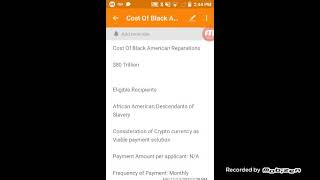
A proposal to fund Black American reparations through cryptocurrency, specifically the BitcoinMYK project's universal basic income system. The estimated debt is around $80 trillion. The plan would deliver monthly payments to descendants of enslaved people, funded by the network's value and verified through social media profiles.
Chapters
Welcome back to the channel. I hope you all are having a great weekend. So today, this is going to be a very interesting video. Um, this is a, a topic I think that has really picked up a lot of steam over the last several years, and, uh, it's a very interesting topic of conversation, but it's also a very— can come out as a complex puzzle to put together in how to figure out the topic of reparations, more so in relation to how do you determine who's even eligible for reparations? in the event that society, uh, decides that there should be reparations declared, right? And of course, we're talking specifically in this video about, uh, what some refer to as Black Americans, African Americans, foundational Black Americans, any specific group within of the United States who have felt they've been part of some wrongdoing, right, where there needs to be some type of atonement or legal recourse, right? Um, and this has been taken to Congress. There have been, uh, bills proposed with congressional, uh, uh, support. Uh, so this isn't just something that, you know, a casual conversation that might be a good idea. This is become an, an actual proceeding now, uh, where people are seriously wanting to solve this problem and put it behind us. Now, many of you who watch the channel, of course, you know I spend 90% of my content on cryptocurrencies, right? Uh, when you relate economics to the social aspects of what's going on in the world today, uh, it is very difficult to, uh, pull apart the social from the economical, the socio-economic landscape, right? As to say, your— the economics in which you live is going to have a very vast effect on how you interrelate with the world, how you, uh, navigate the world, right? You know, obviously, um, your education is going to be affected, uh, your ability to raise your families properly are going to be affected, maybe even your morality to a degree may be affected by this. So it's a very important topic. Of course, um, in cryptocurrency, we've kind of figured out this idea of magic money, right? How to create this magic money. And we were quite successful with one particular, uh, form of this magic money we created that many of you all know as Bitcoin, right? So that proved that Anybody in a sense, right? Anybody out there, right, with the know-how, uh, outside of government influence could create an economic system out of the reach of governments to a certain extent, to the tune of reaching a trillion dollars and beyond, right? Trillions of dollars. And that's what we were able to achieve with cryptocurrency. Now unfortunately, I think the idea of Bitcoin became so immersed in today's versions of capitalism that Bitcoin has kind of been smothered a bit, right? It's been smothered because being so specific to a system like capitalism, dealing with its problems, then Bitcoin becomes limited by those problems. But if you look at Bitcoin from the very beginning of it, what you got with Bitcoin in the very beginning— I'm sorry, guys— was it was a, it was this kind of social movement that combined economics, right? One wasn't necessarily more important than the others. You would get development teams, very smart people, working even without pay, right, uh, to create a system, uh, that they believe to be a freedom and, uh, to create opportunity and access and so on, right, uh, to protect you even from your government if need be, right. As we know, sometimes governments can be the biggest enemy to certain groups. But the bottom line in, in, in all of this is to say that Uh, we have seemingly now come to this situation where we can come up with many more solutions than we've had, uh, before, right? And so one solution that's been kind of going out there, um, is cryptocurrency in relation to dealing with payments to reparations, specifically to groups of people who were targeted. Some harm was done to them, some level of injustice, right? And the reparations argument is a lot more complicated than say like what we've tried to bring to the people, the idea of universal basic income, which is actually a very conservative idea championed by Thomas Paine. The idea of the citizen's dividend Being in which you view the citizens of your groups or countries or nations as contributors to society, right? For example, uh, if a trash man, the garbage man, if you put your garbage out, uh, Wednesdays or a certain day of the week, uh, the trash man, when he picks up your trash, right? The fact that there's something, somebody to do that and dispose of your garbage, he is contributing as a whole to society, right? Uh, to the point it becomes trash in itself can be one of the, one of the biggest problems in a society. Uh, disposing of trash, right? And in that event when certain, uh, uh, cogs on a wheel, uh, become so much important to the functioning of that society that, uh, the trash man can be in a sense equivalent to a doctor or a lawyer or so on and so forth. But the bottom line is that these, these all become very important, uh, aspects of society that need to be addressed. All right, so the idea of universal basic income feels that way, but the problem with universal basic income is that some people don't believe that citizens should receive it, or they may worry about who's going to pay for it, or who should be paying for it, and who should be benefiting from it, right? All valid concerns. When you get into something like reparations, there are very similar components there about how do you pay for it, who gets this, who should get it, who deserves it, and so on, right? Um, the biggest problem generally then becomes the logistics of how to, how to deliver it and what exact type program it could, it should consist of, Right? Uh, many problems, I think, in this consideration of cryptocurrency. And let's, let's get you over to, uh, our little, um, our, our little, uh, notes here we've taken to, um, underline the most important, uh, events. So let's just talk, give you a little quick history because I don't really want to go deep into it right in this video. This is more just like the consideration of it and what the BitcoinMYK project solution is for and what we have the ability to put in place. As we've discovered this magic money, for lack of a better word, right, in cryptocurrency, right, It's very interesting how cryptocurrency can meet the demands of, uh, or in this particular case, uh, create this justice, right, for groups of people who have, uh, been, uh, taken advantage of, right? Um, How do you decide who gets it? Why should they get it? And how much should it be, right? These are things that complicate things so much. So let's, let's give you a, a basic, uh, outline of how we're viewing this particular issue. So I'm just going to kind of speed past How do— how do certain groups in America get at a point of requesting or demanding some type of reparations, uh, in that it's not something that is abnormal. It has happened before, it's been done before. And groups in particular who have received reparations for, uh, injustice in America have been uh, basically, uh, the Japanese Americans as well as Jewish Americans, right? Uh, and, and, and these, um, reparations were done so in their, uh, based on certain injustices committed against them and so on, right? Uh, directly to the people, right? It was impacting, affecting those people, uh, in most cases directly. The Black American situation with reparations can be a great deal more difficult in that the events occurred, although in modern history, not necessarily in the lifetimes of the people that have been impacted by it. And that being so, then it becomes, well, then who gets it and under what circumstances as the debt in this consideration still hasn't been paid. And, uh, just because, uh, a debt isn't being paid doesn't mean that the debt isn't owed, right? Um, so I want to deal with the mechanics first of just— and then we can get into in later videos or at the end of this video, uh, the one big conversation of should people get it at all, right? That's, that's, this is, this is more dealing with the mechanics of the problem if people did receive it, right? So let's, let's go there with it. Uh, so first we would look at many, uh, or there have been several economists, right, who've studied the models and come up with fantastical numbers, right, that could be accurate numbers, uh, that could— because it's hard to be an expert, obviously, in this— but where chains of events leading from whether it be slavery to Jim Crow have created what could come up to something like $80 trillion and possibly even north of that in debt. Now, of course, listening at a number like that, the first thing people would say is that's ridiculous, and it just becomes so overwhelming, people just want to bury their heads in the sand, right? But I think it's also very important to note, as, as many experts into this particular area have viewed it, to understand that, um, that $80 trillion in reparations in general doesn't all encompass just direct cash payments. I think in a very simplified example, using magic money, right, which is our cryptocurrencies, uh, that you can come up with these aggregate numbers, right, directly. But, um, you know, basically I just wouldn't want people to try to fine-tune it down, right, to just, oh, it's going to be this exact dollar amount and that goes out in a check to certain people, because it can be many other things, right? But anyway, let's look at $80 trillion and let's consider who would be eligible for that, right? And How would like a project like what we're doing with BitcoinNYK that does universal basic income treat this separate from universal basic income, but because they're so similar in a similar ecosystem that they can work in, in tandem with one another, right? So the first part would have to be the eligible recipients or the African-American descendants of slaves, right, uh, will probably be the first best candidates, right? Uh, in that they would bear the grunt of the, the, the most of the injustice, uh, as well as, uh, uh, many parallel events happening after that that impacted people. Because you, you have to remember as well, uh, when the system of slavery ended, uh, slavery didn't end in many of the negative impacts. Slavery obviously probably took hundreds of years, you know, after that. For, uh, you know, it to, to even, uh, be settled, right? Or even to get people, uh, many of those negative, uh, aspects of it away from people, right? Um, so it obviously would have to be some person of African descent, right? How would it be paid, right? Uh, and I also want to say that in the consideration of cryptocurrency, that doesn't mean that it should be a solution outside government solutions or any other type solutions. But that just has to say reparations could end up being an umbrella of things and they may have to work together to, you know, to, to, to deal with it. The consideration of cryptocurrency as a viable payment solution, right? Would, you know, obviously be a good idea. Bitcoin has created over a trillion dollars itself from its inception. So there's no reason to think that we could not in some sense mirror a similar situation with a cryptocurrency. And I think BitcoinMYK, the project I've been working on for some years now, Fits it well because it's already came in with universal basic income. To kind of just give you a quick idea of how money can just kind of pop into existence like what we're talking about, think in terms of like something like Facebook or Twitter or Instagram, how seemingly when you go online and you use these systems, you can get tremendous value out of them, right? Having a good time. You're, you're talking with your friends, you're reaching family members you haven't, uh, been able to get across the globe that you want to get in contact with. You're, uh, finding friends from generations past that, uh, you're, you're, you otherwise you probably wouldn't be able to find them so easily, right? And all of these conveniences are quite valuable to the people who are using these systems. But on one hand, you can look at it from a, at a very, uh, uh from a very simple way and just say, well, hey, I use this and I do all these things, but it doesn't cost me anything. I don't have to pay, uh, $29.99 per month to use it, right? I don't have to get any special subscriptions or do any special things. I just jump on it, I get the free account, and so on and so forth, right? And that creates access to billions of people. Uh, but through that access, it also creates value, right? Because you got all these people in one location, which means your communication networks become larger. Communication being one of the most important valuable tools in human use, right? So there could not be any prescribed value to a certain network congregation like that. Uh, if you have a situation like that. Uh, so one way is you're creating this money through networks coming together. For instance, if all African-American people come together under one umbrella, under one network, under one system similar to the site we just showed you on BitcoinMYK, then that would create tremendous value. Now also, I, I think the makeup of how this social media cryptocurrency system could work would help so many people without, uh, taking away from groups who have had specific injustices done to them. For instance, if most of the world is getting the citizen's dividend because we are contributing to the world, right, through the work of our hands or through volunteer work or whatever it is, Everybody's doing something, even if it's the wife who's just sitting home taking care of her children. Everybody's sitting home and they're bringing some value, hopefully, to the world. Hopefully more people than not. Uh, in that sense then, something like a UBI or citizen's dividend, everybody would get something because everybody would deserve something under that sense. But one problem that's went on with reparations specific groups is that sometimes they can group things together, right? Like, you can put maybe impoverished people together with Black people who were victims of racism or something. So a poor person who's not a victim of racism obviously shouldn't deserve something, uh, that group would deserve, right? So how do you balance it where you have two systems that can help people in society and the mechanisms of how society looks at them and deals with them may be similar in some sense. Well, I think you can do both. Uh, in our particular case, I could see universal basic income being granted to all participants, but obviously there being additional funds going to Black African American people, right? And so that, that sounds fair to me. That seemingly makes sense. Now, how much would the payment be? Would it be a number as high as $80 trillion? Well, one way I could see us going after the system as these numbers, um, in cryptocurrency, even if we look at something like market cap, can become quite trivial any amount of money you can create. They're just digits on the screen. It's as difficult as you just punching it in. And consequently, that's the same way that the American government works in the Federal Reserve and so on, so forth, right? But as far as how much each applicant would get, right, uh, I— my best guess would be, or how we— our system is to be constructed, is that let's just take for instance this $80 trillion right? That would be a fund of the cryptocurrency that will continually go out to all the people in the particular group, uh, until the funds are depleted, right? Until, until the entire amount is, uh, received by that group, that is the time that that would stop. Whereas universal basic income will go on for everybody in the group, right? So we don't want people to feel left out as well. Uh, we just want people to in these particular ideas get what they deserve. Uh, but in, in that everybody works together, everybody gets what they deserve, right? Because together as a network, we create the value to give everyone the citizen's dividend who's participating, to give, uh, the African-American people the reparations, uh, monthly payments, right? Um, which kind of answers the idea of the frequency of the payment, which would come monthly. Uh, now, uh, again, cryptocurrency is a different animal in dealing with the complexities of what it takes for a government to do something like this, right? Even if that government may be responsible. I also just want to say, so that's why I say it should be many approaches in that Cryptocurrency should be just but one of those, right? So not looking at it for a replacement of anything else, but I think it can help tremendously in that. The other part would be, as far as other groups who don't feel they get anything out of this, again, that would be incorrect, as they would kind of work together and feed off each other. Everybody would be eligible for the citizen's dividend. But other groups of people coming in with issues, you know, whether it be, uh, maybe refugees from a country in war, uh, or whether it be, uh, uh, the slave trade in the Atlantic, in the Caribbean nations, right, where, uh, that isn't included in this particular target group we're looking at now, which is the, um, the African Americans. Uh, that doesn't mean that we won't address those, uh, in stages, right? And so they— many issues could be addressed in that, but in particular, uh, right now, uh, we're focused on the Black American simply because it's— I think because it's a hot topic right now with the United States being the leading Western nation in the world, uh, it could set the precedence for what happens down the road for other groups of people, right? So it's all very interesting, uh, but we will be opening up this program to people, whereas they will still receive a universal basic income and on top of that, a reparations payment in these cryptocurrencies. And who will fund this? Well, Everybody around the world will be able to fund it, the network value itself. Again, like the example I gave with social media and Google and so on, have an intrinsic network value to fund it on its own by the machine that it is on its own, right? So money can be very complicated and so can economics, but the principles that are underlying are the same. That if you can create magic money like what they've done in Bitcoin, Right? That these things can be a solution, right? And solutions are always going to be better than conversation, right? Uh, platforms are always going to be better than conversation. Working prototypes are always going to be, uh, better than dreams, right? And so the point I'm making is that the layout for our project Bitcoin MYK with Universal Basic Income is so very much similar relative to, uh, reparations and, uh, having an effective process to deliver people money, um, uh, and value in some form or way or another. Because remember, value can be a vastly, uh, encompassing idea. I know a lot of people just tend to think about the only value being a paycheck or a digital currency of some sort. But it doesn't quite work like that because value is so expansive in that we get value in so many different ways, right? But we think this is a good approach to a problem that I haven't seen much progress yet on. There have been conferences done, there have been, um, you know, marches and such, and conventions. But there's nothing better than a working money transfer system like what we have in Bitcoin MYK to make this happen. The other thing you have to remember is that when you're dealing with money, money has as much value as we put into it. In other words, if everybody start to take the Bitcoin MYK dollar, right, and we paid out reparations with it, we paid out the scissors dividend with it, and everybody felt they were treated fairly, right? There wouldn't be one group getting something another group shouldn't be getting. Then I think that that would present a very digestible situation for many groups of people, right? Now, of course, it's going to always be some, uh, controversy with this. I was going to be some people who don't quite agree with this or don't think people deserve certain things or don't think that they should pay out certain things. And that's the very interesting thing about networks, right? That how the money is generated within a network, uh, it's not— it, it doesn't work like how a government taxation system would work. And again, I'm not saying don't— the groups who are seeking reparations, I'm not saying don't use the government as a means to obtain it. I think that that's still a good idea and a necessary idea, but I'm just simply saying that these type systems can present a much, uh, uh, understandable way for people who may feel that they don't, uh, they don't feel they done contributed to the problem, uh, in that sense, right? So it's all very interesting. I'm going to be very interested in examining some of the economics and ideas and proposals that go into this idea, uh, over the next— because I love puzzles, I love complicated economic problems, as many of you all probably know by now as I've been putting this together here. So it's very interesting for me to watch, but more so than that, I like solving problems. And, uh, unfortunately for us in cryptocurrency, I think many of the things we've done have been quite trivial, right? As to say, we've created currencies for games, we've created you know, currencies for, uh, uh, Ponzi schemes and so on. You know, it's just been crazy. But it's odd to me nobody has really seriously put together economic systems that really contribute to the world, uh, more so than just helping a few people at the top. Because I think if we're honest about it, many of our cryptocurrency projects have only been able to do that. And many of those people who've been at the top Even they have lost their fortunes, right, under not well put together systems. Even what's going on with FTX right now, the exchange, right? And so won't get into that though. But I will say, if you like the sound of things like this, be sure and subscribe to the channel. Join our site that's going to be doing this very, very soon. We'll probably have the reparations portion of this going out by the next week or so because it's going to be easy to just increase the payments. That people are already receiving for universal basic income to those groups. Now, there are going to be many questions like, you know, how do you prove this person is African-American and so on and so forth? What you have to do, KYC. So under— yes, under normal, uh, government systems of taxation and where you're spending the people's money directly like that, sure you do. But I think with us, we can have a much more lax system on using certain social media profiles to prove that people who want to seek their reparation payments and universal basic income payments and so on, whereas using those will, it'll be a more lax system to identify them, right? But I think overall network-wise, it really won't matter because the value that we can create by creating awareness to this and a vast network will be very, uh, uh, will be, will be so valuable that the benefit to the cost, uh, will balance more on the benefit side, right, where it's very helpful to us. And so I think that's the way we look at that. But obviously there's going to be some technology into this to how we get the money out to people and how we identify who's who and how we use a governance model to disqualify people who don't fit the criteria or who have abused the system in some way. So I think it's going to be very interesting to get into this. Check this out, and we invite you to join. There's something in the program for everybody, even if you don't fit certain particular groups. Uh, there is some program that does work for you and fit you. And also remember, the best benefit that comes in the world is a world where everybody is to a certain degree taken care of and safe to the point that they want to help others and keep everybody else safe, right? You know, a disadvantaged world that creates high crime lack of opportunity is a very much more so unsafe world for those of us who occupy it, right? It's not a, uh, it's not a desirable world for us. So the benefit, uh, is that we have a much more better socioeconomic planet to live on, right? But that's all I want to say in this video, guys. If you like content like this, don't forget to like, subscribe. Till next time, as always, Take care of yourselves and each other.
More from Michael







UBI - CIA Agent Explains Why Americans Will Never Get Universal Basic Income?



