
Black Mirror - [Striking Vipers] Review Analysis
A review of Black Mirror's "Striking Vipers" explores how two friends use a hyper-real fighting game for sexual intimacy, complicating one man's marriage. The analysis maps the characters onto three types of virtual-world engagement, then examines how the episode interrogates Black masculinity and homophobia through its casting of two hyper-masculine actors.
Chapters
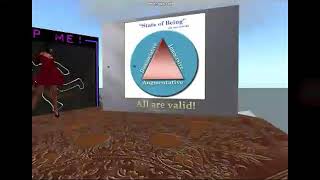
Because this translates very closely to what happens in real life. And I'll give you— right. And dissociative, immersive, and augmentative are all valid states of being. And something that is actually already stated in a way that I find comprehensible, I will create my own words and make the definition for them. Therefore, nobody can tell me it doesn't mean what I want it to mean because— and I have all the backlash stuff that everybody brings with cognitive dissonance about my verbiage because I've created the word. It's my word. This is the definition. We understand. When you come into a virtual world— okay, well, this is— I guess I should tell you about me. One of the major things that I know that psychiatrists and psychologists here are interested in things far more brilliant than I am. I gleaned my information, and a good portion of my learning is my ability as a professional clown for 17 years. Being a humorist and talent in presentations of being a professional clown. Okay, you come into world and tell me this is not what you hear. How many times do you hear this? It is just a game. No, it's social media with real-life people.
Now fertility. This ate so much, I don't know if I can. I'll— want to know where I'm going after I leave here? You know the thing about you, sometimes you just— I love you too. There's something going on. Something going That's what I said, not one minute more. Nothing is going on.
To the channel, and today I want to talk about, uh, a review long overdue: Black Mirror: Striking Vipers. So I've watched some of the greatest reviews on this, on this particular episode of Black Mirror. Of course, I was excited when Black Mirror's new season came out. It has become one of my favorite shows. It's, you know, it's right up there. If it's not surpassed, it surpassed Game of Thrones, it surpassed American Gods, actually. Uh, and I thought this season did a great job, although it was short. I thought it had some quality episodes. So I'm going to talk a little bit about— for a lot of people, a little bit— some of the people who have been in the dark about what's going on here, the Education Entertainment Television Show channel, um, started— a lot of it started off on, uh, some of my hobbies, which had to do with, uh, reviewing cinema, um, television. And I would like to think I'm, uh, I'm good at choosing some of the best television and cinema out there today. You know, in a perfect world, I'd like to think that. So, you know, every so often, some of my hobbies get involved in the channel as a variety channel. And I know some people are more focused on the cryptocurrency portions of it, which has to do a lot with my background in finance and, you know, moving some of those elements to the channel. But also sometimes we sneak in some of my other hobbies like television and cinema and agriculture and gardening and farming. Something I got into after I moved out in the country. And hopefully for some, those of you all who are part of my subscriber base who don't like this particular part of it, I hope you all will forgive me and we will, it will be back to regular scheduled programming. But every so often we do involve the entertainment into the education part. So for the Black Mirror fans, we're going to continue with our Black Mirror reviews, and this is Striking Vipers. So what you got to see in the beginning of Striking Vipers— I'm going to try to go a little different direction with my review of Black Mirror because there have been so many excellent reviews done on the subject. So I think what we want to try to do is get a little bit more into the psychology behind the, the episode and uh, the Black Mirror world and, uh, you know, kind of, uh, talk about that a little bit, get a little bit fuller understanding of, uh, maybe where we're going with technology and how it affects us psychologically. Uh, I'm not a psychological— I'm not an expert in psychology, but as a hobby I do study it. And the clip that you saw in the beginning, uh, came about from a virtual world called Second Life. And I think it's kind of important to the, uh, conversation. I think it relates well to what we get to see in a lot of the Black Mirror universe. But this was years and years ago, years and years ago. Um, you know, a lot of people who watch channel know, uh, my background is in finance. I've worked for several major investment firms around the country. Um, and I happened to, uh, be at the office one day and I had a buddy tell me, you know what, uh, because we were all gamers, you know, Finance guys, a lot of finance guys are gamers. So one of my buddies was telling me, hey, you know what, there's this virtual world that, you know, you can make millions of dollars in it and it's a game. And I said, that's weird, but we were into crazy stuff like that. And I was like, how do you do it? And he was like, well, what I'm doing is I'm buying a bunch of the real estate up. And I was like, well, how do you buy real estate in a virtual world? Well, it's by means of computer servers. And you take these computer servers and they can create these 3D depictions of islands, getaways. You can put beach resorts on them, mansions, casinos, banks, and a variety of things. And, you know, being a gamer, I was like, wow, this is great. So I wanted to understand that, and people were going into this and making millions of dollars. And the way they did it, well, they had a game currency that you could convert to actual dollars. People would, because they could buy essentially virtual goods. They could buy these islands with them. They could dress up their avatars, which were these, uh, that could represent them exactly, or it could be some version of them, or it could be something totally different from them, or maybe something, a person they wanted to be, right? And of course, this is very primitive technology. It's not like Black Mirror universe technology. As you can see, it looked quite cartoonish. But for people who have explored the world of Second Life, they know that it has advanced a lot. And Second Life is probably going to be one of these virtual worlds that are the precursors that advance to what we might see in the future of virtual worlds, where it's possible they may become indistinguishable from reality. And, uh, a lot of Second Life, the virtual world, was based on the game, or I'm sorry, the novel by Neal Stephenson called Snow Crash, where very, uh, similar to what happens in many Black Mirror episodes, technology merges with you as well as drugs, and the drugs enhance the virtual reality experience. And that's what Snow Crash was all about. And so I wouldn't be surprised if Charlie Brooker has borrowed a lot from Snow Crash and worlds like Second Life because there are many similarities, uh, you know, in the field of that. So, uh, I took my investment experience into this virtual world and I excelled very quickly in it. I was able to set up stock markets and casinos and a lot of things related to their money and finance, and I did pretty well in there actually. And, uh, when I did so well in there, I started to have a lot more time to think about the, let's say, scientific things that happened in the, in the world of Second Life. And so I began to explore, and I met up with this person that you see in the beginning clip of the video. I'm actually the cameraman. I was a poor cameraman at the time, but I met up— I was actually at one of her philosophical conferences there. Events, and I wanted to record some of the things she had to say. And it was a lot of great information recorded, but I believe something happened to my computer I had to store it on, and I lost a lot of data. And there are very few clips remaining of a lot of that that I've published on YouTube. And I'll try to leave some links in the description, but I want to get into the review because I know many of you all are wondering why this is relevant to this episode of Black Mirror, but I think it's quite relevant. And the reason being is that her husband was a professor at a university, and he had been studying quite a bit of psychology in virtual worlds. And along with his help, she came up with 3 categories of what happens when we engage in virtual world interactions. And these 3 categories stem from ideas like augmentatives, disassociatives, and immersives. And I'm going to briefly explain these definitions because the reason I think it's so important, because I think we're going to begin to see how in Black Mirror that relates so much to these ideas. So an augmentative who entered the virtual world, I guess I would say augmentative was somebody more similar to what I was. People who are augmentative had a goal and a purpose for going into a virtual world. In my particular case, It was the business aspect of it. Many major brands and corporations had come into the Second Life world— BMW, IBM, Foot Locker. Universities were set up in there— Harvard University, Princeton. But not only that, even governments had embassies set up in there. Believe it or not, in virtual worlds, embassies where you can actually apply for a visa. Through this virtual world. And because it was all 3D generated, you would have these programmers come in, these builders who would build these exact replicas of these real-world landmarks and places and locations. So your avatar would move through there. So the augmentative version of this was more so related to, uh, people who had a purpose to go in there. Could have been business, it could have been like IBM the representatives they would send in there to represent their brands and companies. The next category was a disassociative. That was a person who, I guess you could use terms like escapism. Maybe they saw virtual worlds as a way to escape their mundane realities, their lives in the real world, to kind of vacation away, if you will, on these 3D-generated islands. That I had purchased some and had quite a lucrative business renting them and leasing them out. And they were people totally detached from the reality of the real world. So in essence, the avatars that they would create and the people they would be in there weren't anything like their counterparts in real life. And lastly, you had the immersives. The immersives were people whose avatars were modeled exactly like them, kind of like the host of the, uh, at the beginning of the clip, who was a person who was no different from the person typing on their keyboard. They were exactly that person, and, uh, even down to how their avatar looked, and their personality was the same, and they could be heard and harmed similar to how they'd be heard and harmed in real life. And there was quite a bit of emotional attachment in her that had entered into this world. So now you kind of have that setup. Let's talk about Black Mirror: Striking Vipers. So in Black Mirror: Striking Vipers, we get two friends from the college years. One name is Danny, who's our main character, and the other is Karl. Who's his friend, and then there's Theo, who's Danny's wife, you know, as we got to see in the episode. So what happens is we go from Danny, our main character, who's much like many of us have been in our lives when we go through our school and college years— these fun, very outgoing people, still a kid growing up that then has to venture into the real world— and then we become these people that, that, you know, are— I don't want to use terms like boring, but maybe kind of you become stuck in this boring, mundane life sometimes, where you're a serious, responsible adult. I think that's the word I wanted to use— serious, responsible adult. Um, and, uh, some, you know, no spice, no flavor to your life sometimes, and Uh, you know, he had been with Theo, his wife, since the college years. And, uh, you know, I remember having a buddy who got married at 18 years old, and when he got to about 40 years old, he actually started to kind of have some problems, uh, you know, being married at such a young age. But, you know, we get a clear distinction between the life of Danny back then and what he's become. Right? And it's just kind of same old mundane thing, uh, you know, you're, you're at the cookout, you're, you're at a picnic, and, uh, your, your wife is trying to get you to talk, is trying to get you a new friend, trying to force it upon you because, uh, you know, they know you need something, something that's missing, but they don't know what's missing. And that's what was going on with Danny in this episode, uh, but his friend Carl hadn't seemingly lost that. He was still this almost the same person he was in the college years, you know, although now he has a, a good job with a good earning capacity and he's able to, uh, you know, live there. They're able to live pretty much the American dream or more, you know, a more, uh, middle-class life. And, and Carl's, uh, still this outgoing individual, but he, he, he lives a very superficial life, right? He dates the models. He, he has the ability, as he doesn't have a family, to move around and do the things he wants when he wants. But there's still, uh, a void that isn't getting filled in his life. And so that's when we get into the episode, uh, we get into the technology part of Black Mirror, and that is the game they used to play back in college, Strike and Vipers, that has advanced uh, technological-wise with Black Mirror technology. So it's, you know, it's pretty much become indistinguishable from real life when they go into this game that is a fighting game, right? Uh, and in the fighting game, it's also— you're able to move around and interact much like a virtual world. Now, it is character-driven Uh, and just a quick comparison of what happened, uh, in the beginning of the, uh, the video with the Second Life virtual world. I want to give some comparisons to the kind of gauge into some of those psychological ideas about what was going on in this episode. But, uh, you know, uh, in the world of Second Life, where it, it does, uh, uh, very much compared to this Striking Vipers game, because in the Second Life world you do have a host of uh, uh, virtual worlds where they're like video games and you engage like a video game character, but then you could take those same characters off and you can interact in a normal setting where there's no objective. And that was the idea. Second Life was a virtual world and game that had no objective. It was nothing to do, it was nobody to be. It was just some version of you, some depicted avatar character that somehow represented something that was important to you. So in the Striking Vipers game, they could do that. They can fight, then they can interact, and they can do a variety of things, although it's this kind of character-driven game. But interesting enough, uh, there— these— they inhabit the body of these characters, and these characters have their personalities, although they inherit the body of these avatars. And, uh, the way that Black Mirror gets set up a lot of episodes is the way the episodes is going, we're kind of led to believe that we're going to break into a, uh, a relationship of infidelity, which is something that has happened quite a bit in the Black Mirror universe where people, you know, basically with this technology are either cheat with it, are able to cheat with, or are able to use the technology to be able to cheat in a series of things. So we're kind of under the impression that Danny's wife Theo and Danny— I'm sorry, uh, and Carl— are going— it's something going on with them because it's a gap in the college years to the modern day. And I was kind of led to believe in the episode that maybe because of now they're now in this boring life that she's looking for excitement and she's looking for somebody more like Carl. Right? Um, and so we get a lot of opposition with Danny about meeting up with Carl again. It's almost like something unsaid has happened over the years. And so I'm thinking, well, maybe he's concerned about maybe his wife has some affection for Carl. But it's not long before we get into the episode when they reunite and they start to play this, this old-time game that's presented as a gift to Danny from Carl. It's not long after that we get to see and understand that it's something else that was going on with Carl, that Carl always, uh, now inhabiting the, the body of this woman fighter character, uh, that he had an attraction to Danny, uh, and they start to engage, um Well, excuse me. I'm sorry, guys. I didn't turn off my notifications. Sorry about that. And they start to engage in this virtual world in a sexual manner. You know, he goes up, he kisses Carl, or Carl kisses Danny. And so you're kind of like, whoa, what just happened here? You know, what's going on? There's— it's Carl, then the reality was he a, uh, basically this, uh, uh, a, um, a homosexual, right? And, um, you know, we start to see that it's not really answered that Carl is a, um, is a, is a homosexual, uh, but that— or if it's just that Carl is a character in this other virtual world. Now this is where the psychology of it kind of breaks down. Uh, you know, uh, is Carl then some— is a, uh, a, um, asexual? Is he, um, you know, uh, pansexual? You know, it never really gets resolved. But where many reviews I haven't seen things go is the, uh, the idea that Carl— or rather, I'm sorry, Danny— didn't really want to meet up with Carl after all those years, right? They hadn't spoken in years. And I, I was, I was wondering, and I don't see it brought up in many reviews, I was wondering, was that because, uh, maybe something happened between Danny and Carl in, you know, back in the years? Uh, that was never said because when Carl kissed him in the virtual world, uh, you know, it— I'm wondering, was that something he always wanted to do, right? Or was it more so that either way, he, he had this attraction, the sexual attraction to the character of Danny in the virtual world. So Danny is struggling with this a lot because obviously he's married, you know, it's feeling like cheating. And this is kind of where I want to talk a little bit more about the psychology in virtual world interaction, uh, in the Black Mirror universe, and, and, and trying to fully understand this a little bit more. So, um, the idea is when you go into these virtual worlds and they can pretty much become whatever character they want, right? Uh, in the real— in their, in their real life worlds, they can't always be the person, the people they want to be. So they have to hide in the real life world, but they're free to be who they want in the virtual world. So this psychologically begs the question, then, are— is the virtual world the actual real world for these people? Because they're not being who they really want to be in the real world. Or is it more complicated than that? Are they kind of split into different characters psychologically and ideas where there exists two versions of themselves, right? And they just kind of inhabit these avatars. So, you know, going back to some ideas, you know, we found in our little research we did in these virtual worlds, you could have that type of dissociative personality. Which means in that sense you are able to split these characters. So in the, in the, uh, Black Mirror episodes, we don't really quite get that understanding of is Carl then a dissociative? Does he just become this character in the virtual world? And it seems that he might kind of be dissociative. And the reason I say that is because, uh, in the real world they don't have any— they don't have any attraction to one because we get the scene where they try to kiss each other and it doesn't quite work out. Uh, and that scene, that sounds very much like a dissociative— a person who enjoys and is this character within the virtual world, but outside the virtual world they aren't, right? So they definitely would sound like they had these dissociative personalities in that manner. Now Danny, I think, exhibited more of the ideas of, uh, a type of, um, uh, I guess you could say immersive personality. Because, you know, for him, he— I think he was really looking at it, it was a big struggle to him. He was looking at that cheating, where Carl was more so going, well, this is just what's happening in the game. The other issue and problem with that is, can you separate them really psychologically to the point where, uh, they don't reflect who you are and they aren't who you are? So it becomes this big, uh, conundrum, right? Trying to, trying to figure this out, what's going on with these characters, right? And, uh, and we're kind of left in the dark about it. I think that's the great writing of, of Black Mirror and Charlie Brooker, that we kind of walk away with our own ideas about this and what does it mean, right? Another thing I like to touch on about what I found interesting about the episode and the characters chosen in this episode is that. You have two Black men who represent the height of masculinity, uh, you have, uh, Danny, who actually plays the Falcon in the Avengers movies, the Marvel films, and he's also actually the new Captain America in the comic books. And then you have, uh, Carl, who actually played the Black Manta in Aquaman, right? And, uh, right, I feel he was a great masculine character in that. So Charlie Brooker was very wise in choosing the most masculine of actors out there to portray these roles because there's this big stigma in the Black community about sexuality, particularly, um, gay men, gay Black African-American men. Um, and I think to be fair, where some people don't feel, you know, the, uh, Black population should have a problem with that. Black culture have a problem with that. I, I think to be fair, uh, with that, and maybe to shed a little bit more light on that, uh, even if you look at somebody like Tyler Perry, who I think got a lot of backlash for playing Madea in, in these movies, making a lot of money and a lot of families, Black families enjoying the films, but a lot of pushback to them. I think part of the issue and part of the problem is that, um, the Black culture, when you go back to civil rights and prior to that, is looked at, um, under slavery, under the civil rights, pre-civil rights, or was looked at as men who were forced into or emasculated, rather, under the control of white supremacy, uh, white supremacy. And because of that, uh, it was very important to Black culture that there be this, I think, definition of man, masculinity, and being a manhood. And what's happened over the years is that what would happen with the, uh LGBT communities and such is, uh, there was this idea always kind of pushed that being homosexual, um, and having those type preferences, uh, were related to being effeminate, right? And I think it's only in modern-day terms that we're really starting to, uh, see that even the most masculine of Black men, of men in general, are homosexuals, right? And that, I, I think that scares the Black community a lot in the idea of that, of needing that clear line and definition of what masculinity is after suffering so many years of being emasculated. And so that's why I, you know, I thought it was great that Charlie Brooker did pick masculine people to represent this. But also, I would say that, you know, for people who find issue or look at the Black community, it's kind of backwards, uh, in acceptance of homosexuality in the Black community, that they understand and they be sensitive to and mindful of that. The portrayal in Hollywood of Black men, I think we have to get to a point before we can really do this in a comfortable way that's going to work and resonate well with the Black community is first have proper representation of Black film and cinema in American culture. And we're working on it. We're getting there. But, you know, even if we go back years ago when they had the big Oscar thing and a lot of people had a problem with still how Blacks are portrayed in cinema and movies, I do think we have to get to a place of where we're really seeing that in an equalized way, that we can, uh, comfortably present African-American Black men in these type roles. But that said, I'm glad they picked masculine men so we're not confused with between the ideas of, of masculinity and confused with ideas of being effeminate. Right, or having this more feminine-like, uh, uh, you know, personality. So, um, what we get to see in the end is we get to see Dani and Karl and Theo come to some arrangement and agreement where she can get this excitement in her life that I was kind of right about, about the excitement part. But how they set the show up, I thought it would be more about Theo having this thing for Carl, right? But, uh, of course, in Black Mirror fashion, they were able to be clever and pull the wool over her eyes a bit. So she gets to go out in the real world, and this also kind of parallels what I'm saying about virtual worlds and how this video starts off that. Now Theo gets to go out in the real world, and I'm assuming that she's sleeping with these men in the real world. She's taking off her ring, right? So here's the question to that. By her being able to do that, is the idea then that Theo, Danny, and Carl are all saying this is all validly real? They are validating the virtual worlds because what they're saying is, because we can go in and we can have what is essentially this sexual relationship in a virtual world, you can now go to this other world and have a sexual relationship, and they're both equally valid. It's not considered cheating. We get one day out of a month, or whatever the arrangement or agreement was reached to do this. And that is quite, uh, shocking, but quite, uh, interesting to how we view these virtual worlds. And not only that, how we will view them in the future, right, when they're indistinguishable. Even now, there are many cases where through interaction, through social media and the internet and virtual worlds and just meeting people online, that people get emotionally attached to people. And it gets so serious that husbands sometimes leave their wives and wives leave their husbands, right? And people garner up these feelings and they meet in real life, and some get married and some fall in love and a variety of things. Getting back to the idea of, of, uh, Black Mirror in relation to this, then it's, it's kind of scary because then I'm, I'm forced to think that it is— Danny and Carl's relationship is real. It's real. It's as real as the real world, although it's going on in this virtual world, but the people they are in there are real. Are they the same people? I guess yes and no, right? Are we different people? Maybe it could be said that we're different people throughout our lives, right? That we're not the same people at 20 or 30 or 40 or 50 or 60, right? And so we're changing in this world, uh, much like these characters change in their worlds, but they're all equally valid. And I find that so very interesting. Uh, and a lot of this, the episodes left open-ended, and I think it's maybe left that way so we can kind of figure out or input our own ideas about what, what was involved with. But I enjoyed this episode. I think it goes down as probably one of the greatest Black Mirror episodes. I don't, I don't know what many of have ranked it at, but It feels like San Junipero. Uh, interesting enough, I'm kind of finding a pattern here. Just give me a second here. Oh, here it is. This is what I want to read to you all. So it says, uh, on Wikipedia that Striking Vipers, the third Black Mirror episode directed by Owen Harris, previously directed the series Be Right Back and San Junipero. So that's very interesting because those happen to be my favorite Black— some of my favorite Black Mirror episodes, some of the highest-ranked Black Mirror episodes, all from the same director. Striking Vipers is one of them. And interesting enough, it plays a lot into, um, uh, you know, really what I think the heart and soul of Black Mirror is. Uh, who is the author who wrote No Story Is Worth Telling? And I can't remember his name. Was it Yeats? Who wrote, no story is worth telling unless it involves the human heart. And what Oran Harris does as a director of what I believe to be the most highly ranked episodes in Black Mirror is he has a good way of attaching the emotional connection we have to technology into us, more so than many of the other Black Mirror episodes. And I think that's very important because Uh, remember, the technology is not good or bad. The technology is only a reflection of us. Hence the idea of Black Mirror, the black mirror that gives off the reflection to us of who we are. And the technology enhances that, but the technology is not responsible for that, right? So what we do in these virtual worlds and these internet interactions, these online interactions, are only a reflection of who we are, right? And, uh, the question is, how valid are these personalities we engage in online, right? And some people break it into categories that some are 100% valid, some are versions of ourselves, but I'll give this weird idea. Let's say if we tapped into some type of 5th-dimensional, 8th-dimensional powers and you could augment your reality, you can change the world how you see fit, you can be whoever you want to be, you can do whatever you want it to be. Who would you be, right? Because seemingly, in an idea, you could do that in virtual worlds. And if you did that in this world, if you had the power to do that, Would that person you chose to become with all that power without restrictions be the real you, or would it be the one that is restricted? I love to hear you guys' thoughts and opinions about the episode. That's all I got to say in this video. If you like content like this, don't forget to like, subscribe, and until next time, take care.
More from Michael







UBI - CIA Agent Explains Why Americans Will Never Get Universal Basic Income?



