
Black Mirror: USS Callister Review (Spoilers)
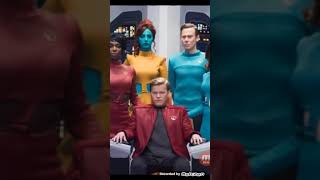
In this YouTube video, the host delivers a detailed, spoiler‑filled review of Black Mirror’s Season 4 episode “USS Callister.” He opens by questioning whether the episode represents a far‑future setting for the series, then walks through the plot, emphasizing the episode’s Star‑Trek‑style aesthetic, the mind‑linked gaming platform “Infinity,” and the DNA‑based virtual‑copy technology that lets the creator, game‑designer Captain Daly, imprison digital replicas of his coworkers. The reviewer highlights how the episode’s visual style feels deliberately cheesy and dated, contrasting it with the advanced technology depicted. He draws extensive connections to other Black Mirror episodes—San Junipero, Playtest, Men at War—as well as to external sci‑fi series like Westworld and Caprica, arguing that “USS Callister” reinforces a shared universe of neuro‑interface tech. Character analysis focuses on Daly’s god‑complex, his insecurity, and his rivalry with co‑founder Walton, while praising the rebellion led by the copy of Cole as a commentary on AI rights. The host also speculates about a possible spin‑off, noting the cameo‑like voice of Aaron Paul at the episode’s end. Throughout, he intersperses personal enthusiasm (as a Star‑Trek fan) with critical observations about writing, pacing, and thematic depth, and concludes by urging viewers to comment, like, and subscribe while teasing upcoming reviews of other Black Mirror episodes.
Chapters
Hey you, welcome back to the channel. And guys, today we're gonna review Black Mirror episode USS Callister. And guys, um, as soon as I seen this episode, the first thing came to mind was, is this the far future of the Black Mirror series? Or, you know, are they actually, uh, going to be this far into the future? And so, um as the only thing we saw with the previews and trailers were taking place pretty much in the future. And so it's kind of under the assumption that that might actually be happening. But with how Black Mirror is done, we quickly have come to realize that things aren't always as it seems in the Black Mirror universe. Also, what I found very, um, interesting is that this episode is very close related to many others as far as the technology and the direction of where the show went. This is season 4, and although this is an anthology series, we can see a lot of connections to the other episodes. And, um, that's why I'm here in season 4 now. I did finish season 3, but I was so excited about this episode, guys, being such a big huge Star Trek fan that I actually, uh, skipped to do this review over the last one from season 3 and an earlier one from season 2 called White Christmas. Uh, the other one called Hated in the Nation, which I've seen and I will be bringing a review to you on. A little bit out of order, but as this is an anthology, uh, these episodes can all stand alone on their own. I really enjoyed this episode, um, and, uh, you know, it opened up basically, uh, with this kind of cheesy-looking parody of the Star Trek universe, uh, looking very, you know, much kind of like, uh, 1960-ish. And the actual, um, CGI we got to see, it looked pretty dated as well. And so I was like, okay, this is kind of weird if it's taking place, uh, in the future. But what I found interesting is that there was kind of an online copy and a copy that is, uh, that we found that Daley had of his own. And this copy was much more, um, uh, you know, up to par with what I, you know, would think that the technology of that date would be. However, as we got to understand that —this isn't the actual real world that Daley works in for a gaming company, and that this is a type of escapism situation for him. And we've gotten to see that this play out in many Black Mirror episodes so far. So how he escaped is by becoming this character in a type of online game with advanced technology called Infinity, and he's the inventor of it. He wrote all the code for it. And so inside this game, you're basically able to create your rules and do the things that you want to do within the confines of this game. What also I found very interesting was that the technology they used, they would kind of attach this orbital-looking device to the side of their temples, and they get the glazy eyes again, like we've seen so many Black Mirror episodes. Now, This particular type of technology bared a very striking resemblance to what we got to see in San Junipero, and that, uh, basically used a type of chemical or drug similar to what we got in Playtest as well. Uh, use this type of chemical drug as you're transported to this area. We also got to kind of have a similar technology in Man at Fire, or Men at Fire. But in the particular Men at Fire episode, this is military technology. It's actually inside the brain. So I found all this very interesting. Pretty much points to that this is a shared universe. It definitely feels like a shared universe. And this is where it being an anthology series, especially in a situation like me where you may be a reviewer, this is where you can run into some issues because even though these episodes do stand alone, being able to pick up on the shared technology and the shared universe, I think it does, you know, give over to a bigger picture, a better understanding of the Black Mirror episodes. Although not totally necessary, you can watch each one of Black Mirror episodes and just walk away with it fully standing on its own and get the full understanding of Black Mirror without the connections to the Black Mirror universe. But anyway, what we start to find is that this very overconfident Captain Daly who does everything correct, kind of like an episode of Star Trek, you know, in his real life is nothing like this. He's the polar opposite of this. And it's starting to— starting to get to him. You know, as we got to see, it reached his breaking point when he meets this character by the name of Cole, who is really, uh, very impressed with him, with what he's accomplished in the coding world, what he's accomplished, uh, in the company, the Infinity Company. But, uh, it would seem that Cole's admiration for Daly pretty much goes there and stops there. Daly kind of goes into a type of jealousy when he sees that his partner Walton, who was the CEO of the company, which is also called Callister, which derives its name from the actual, these kind of Star Trek-like Enterprises that Daly was inspired by as a child. What inspires the name of the company, Callister. And as the new employee, the new girl Cole comes in, uh, she's kind of, uh, you know, more so, uh, Walton steps in. And as he's, uh, uh, more socially, uh, in-depth, uh, unlike Daly in the real world, uh, you know, he's able to pretty much take away from his shine. And Daly doesn't like that. He, in the real world, Daly takes a lot of things he doesn't like from, uh, you know, even the employees, whereas he should be on an equal level with Walton as they both started the company together. Daley lacks the confidence, he lacks people skills, social skills in the real world, and so Daley, uh, resents Walton for that. And, uh, we find out that Although the world that Daly occupies, or this, you know, particular time frame that Daly's in, uh, inside this particular Black Mirror episode, that the technology is very far advanced, even though it doesn't quite look it as much as it looked on San Junipero. But it's very much on the same level of San Junipero. If I had to guess, I would say that this technology either comes out shortly, uh, in a short time frame before the San Junipero episode, or it's happening in the same— around in the same time as the San Junipero episode. Not sure, but the technology we can tell is super advanced because Dale is able to extract DNA, and when he puts the DNA into the computer, it's almost like putting DNA into, uh, or, or putting a device, a flash drive into your computer, or putting a CD into a computer. It's able to process the DNA of an individual, recreate these people a virtual artificial copy of them that is an exact replica of them inside this virtual space. And we find that within this virtual space, the aliens controlling copies of real people that are these sentient beings within this artificial world. And that kind of as well goes back to the San Junipero episode for me. Because if we think about what happened in the San Junipero episode, after people pass over, there is a type of download of their consciousness into the computer. Another version or copy in a sense of themselves, their DNA if you will, that's been preserved into this computer and recreated. So although it may not be the exact same technology, it definitely reminds me of that. So now within this world, uh, Daley, we get to see, can make people do what he wants as he's the game— he's the controller, uh, of the game. Uh, even though they're real in a sense, trapped in the game, uh, as he has a recreation of their DNA within the game, he's able to create these perfect situations for himself within the game. Everything he couldn't do before, he now has power over his environment inside this world. And because he pretty much has the hots for Cole, he has put her in there. But as she's pretty much herself waking up in this world, we get to learn that Daly was able to uh, convinced them all to be like these characters, these actors on the stage, uh, in his, uh, virtual world he created because he has these godlike powers over them. He can control them, he can make them do what they want, what he wishes them to do. And this was all just so very interesting. Uh, I love this, the writing of this episode. I'm such a big Star Trek geek and fan that, uh, I almost want to say it's my favorite episode, and it's pretty darn close. I mean, it's pretty darn close. It's probably— I did like Man at Fire, I did like San Junipero, but this is either somewhere in the middle or it's somewhere up there. But I really love this episode, guys. Uh, it's a bit kind of cheesy at points, but this is the mine in the world created by Daly. And, you know, and, and this is what inspired his particular character in life. You know, this is what he looked for as what would be the perfect representation of the person he wanted to be and what he would, you know, want to do. And, uh, as these, uh, beings are actually really living beings, as they're copies of beings in real life, they start to rebel. And Cole kind of leads the rebellion, and she attempts— they all attempt several at times, but we find out that because Daley's so powerful in the physics of the game, he's able to do all types of things to hold them at bay. It's not until they get really smart and find out there is a way to contact people outside of the virtual world— Cole is able to discover this. Now, what's obviously— what's very terrifying about this is imagine being trapped inside, uh, you know, a virtual world. This reminds me of the show Caprica when one of the Odama's daughters was found herself wakes up trapped in a virtual world after she dies and her consciousness is moved over to this place. And this is also very reminiscent of the show Westworld. Also interesting enough, Walton, I believe his name is, who played the CEO of, uh, Callister, uh, actually played William or the man Black in Westworld. And here he is again in another situation where we have these artificial beings that have become conscious and are trapped in a world that they can't escape from and are held bay by the whims and desires of human beings that are gods to them. But that aren't benevolent, that are jealous, and that have all of these negative tendencies that make for bad gods. And I found all that very interesting. And, you know, Cole being very intelligent in real life and her copy in the world, she finds a way to send a message out to her real life self to kind of blackmail herself others we got to see. And, uh, through that, she is able to get herself to go in, steal, uh, the DNA so that, uh, Daly can't keep recreating them, as he has the power and ability to keep recreating them. As they're on a mission now to try to destroy and kill themselves, as we got to see, is that's their only way to escape, uh, this, you know, this space. Um, you know, and, uh, what, what, what just I found, uh, also, uh, amazing was, uh, we get to see Daley, uh, in the end as he loses out. You know, as we got to see, they, they're headed to the update and they get out, you know, of the, uh, out of his particular virtual game space, and he doesn't have the controller in his mind to disconnect his mind from the game. And daily, we're under the assumption pretty much how the scene's left, he dies in that scene, right? But if we go back to playtests, we actually see a very similar situation where someone dies in the game. Now, interesting enough, is that the same technology later, uh, years later or sometime later? Uh, we also have another situation with a video game company that is trying to create this software? Were they kind of the precursor to what we get in this episode? I just found all that so very interesting. But he actually dies, you know, in this game. And, uh, you know, trying to keep humans or, um, artificial beings that have consciousness trapped in his video game world. Again, going back to the Westworld theme of, uh, taking away the rights of artificial beings to serve as slaves to us. And we always get the artificial being robot rebellion, right, at some point. Uh, but in this particular case, he's trapped in this virtual space and he can't get out. He can't— he's trapped in his mind. This is a very sophisticated game that's connected to his mind. There doesn't seem to be any type of failsafe to, uh, to, to, to stop or, you know, to, to prevent such a thing from happening. And he's almost kind of in a lobotomized state, right? Kind of like how we got the, the cell phone signal coming through in the episode of Playtest. And guys, just an amazing episode, definitely one of my favorite, favorite episodes. Um, also, interesting enough, guys, I'll have to do a little bit more research on this, but you know, we get to find that this show may actually go on to be its own independent show, kind of like a spin-off of the Black Mirror series, and, and it but yet still exists in the, uh, Black Mirror universe, which I find also very interesting, uh, as we kind of got to see at the end. Aaron Paul from Breaking Bad, the Breaking Bad series, a lot of people speculate he was the character at the end when they actually break free from Daley or going through various different universes controlled by other gamers, but they kind of have a freedom to navigate through these as like it's almost like they're another gamer, like they've broken free. And, and so now they're not under control of anybody, but kind of like what you would get in a multiplayer game setting where you can share servers with people and participate with them. There just seems to be what may be going on in this this particular instance. So we get to see them warp out of there, and we get to hear what I believe to be the voice of Aaron Paul. Uh, but guys, great episode. Uh, tell me if you like this episode. Tell me what your favorite Black Mirror episode is. Uh, as this is an anthology, I'm kind of skipping around now. I'm kind of grabbing the ones that, uh, might be some of the best I've heard so far. But I will be, uh, pretty much staying in order, guys, like I've done so far through the series. I, I had to just jump ahead and do this one. I seen this one, I said I gotta watch this one. This looks like something I'll definitely be interested in, uh, and, uh, so, um, we'll be, um, releasing the review on White Christmas and Hated in the Nation very soon. So stay tuned to watch those episodes, guys. If you like content like this, don't forget to like and subscribe. And until next time, take care.
More from Michael







UBI - CIA Agent Explains Why Americans Will Never Get Universal Basic Income?



