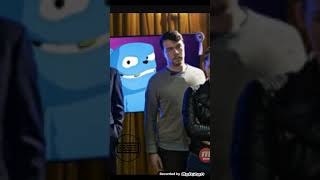
In this YouTube review, the host analyzes Black Mirror Season 2, Episode 3 “Where’s Waldo?” arguing that the episode eerily anticipates the rise of celebrity‑driven populist politics exemplified by Donald Trump’s 2016 election. The episode’s central figure, Waldo, is a cartoon avatar controlled by a struggling comedian who unintentionally becomes a political frontrunner. The reviewer highlights how the show critiques voters’ emotional investment in charismatic personalities over concrete policies, the media company’s exploitation of the avatar to sway elections, and the broader danger of ideas or virtual images gaining political power. The host draws parallels between the episode’s plot and real‑world events, discusses the comedian’s moral conflict and eventual downfall, and speculates on a future where virtual avatars or pure ideas could dominate governance. The review concludes with a call for audience engagement and a warning that political landscapes may never return to their previous state.
Chapters
Hey you, welcome back to the channel. And guys, today we're going to review Black Mirror Season 2, Episode 3, Where's Waldo? And guys, uh, this episode in a very scary and uncanny way kind of predicts, uh, a presidential election. And that's what a lot of people, uh, who've watched this episode have identified with, that this is, uh, bears a striking resemblance to, uh, the, uh, the Donald Trump election. And that is because of, uh, what we get with, um, the character, uh, of Waldo, who is actually a cartoon that is controlled by a comedian with a failed career who's trying to come to terms with, um, you know, where does he go with his life from this point on. And he gets tangled up in a political campaign where he's actually become a prime candidate. And it's, of course, it's all accidental, but he finds that through this type of use of what can be termed as not being politically correct, which seems to be happening quite a lot in politics, is kind of The course has been set that now politicians want to speak their mind as people, basically like a volcano, have erupted. People have become distrustful of their governments and politicians more so than ever. And it has become very necessary that a forthright candidate that they can support and believe represent them. And in this particular episode that came out in like 2012, which was very interesting as it was going in the direction of, you know, what was— what would kind of become the actual reality, um, uh, you know, it is quite amazing. Um, but Waldo, he, uh, does get the support of the people by saying all the things that basically are on people's minds. And, um, the comedian— and fail me, you know, please forgive me if I forget the character's name because I think Waldo was such a big focal point— I only, you know, basically focused on Waldo and Monroe, who was the main opposition, his party, uh, which appeared to be more so— I guess I can kind of consider Waldo as a type of right-wing conservatism. When that, it was more so less from the liberal platform. But so this comedian, he doesn't, after he finds that he's becoming this huge voice for the people, he doesn't really want that mantle. He doesn't know anything about politics. He really doesn't go down that path, but at this point, Waldo's become such a large representation from the people, of the people, that it's become bigger than him. And so, you know, Waldo has become this entity of its own. Now, I found it very interesting in that particular setup because In these type situations, in these, uh, political landscapes, it can become to the point where people become so much emotionally invested in saying what's on their minds and, you know, this type of celebrity personality type image, if you will, that they can also forget what the platform was all about, the importance of the— And so what's brought up that I thought was an excellent part of the episode is when his love, the comedian's love interest, is actually confronted to the point where she goes where, well, you basically don't have any solutions for all of the complaints and problems that exist. You only have this political comical satire you do, and that is the extent of it. And after that, you go home and nothing changes, nothing gets done. And I thought that was very important. And I thought it very much mirrored the elections as we got to see a lot with what happened with the Donald Trump election. Uh, you know, as far as the topics that were, you know, that were brought up, and that is, uh, you know, can we become so emotionally invested in, uh, personalities and celebrities and glamour that we forget the issues and we're voting on that and not really voting to solve a problem, not really putting forth a concrete plan? That solves an issue. And so that was, uh, I thought that was a very good point that we got to see in this episode. And so after coming to terms with this, you know, obviously the comedian, he wants to give up Waldo, uh, and, uh, not have people vote for Waldo because he knows that Waldo doesn't really have the solutions to the problems, but that Waldo is just a, uh, you know, basically just this frustration of the people, just this, uh, this, uh, uh, you know, like when a person becomes, uh, frustrated, you know, with a situation and needs a let out. Waldo is a type of, uh, you know, a place where people can put that energy in. And so the comedian comes, you know, basically comes to terms with that, and he, you know, wants to say, hey, don't vote for Waldo. Waldo can't help you, can't solve the problems. But at this point, Waldo has become Waldo is so huge as a political tool that they're actually approached by people, and I'm not sure who this person is. I may need to rewatch the episode to figure out who he was. I'm not sure if he worked for some type of State Department, but he wants to take Waldo and basically create this image of influence to sway votes and also talks about how Waldo can be used in South American countries, I believe, and where he could be, actually can win elections and sway voters. So found that all that very, very scary and interesting. And the comedian, obviously, you know, as he's, you know, come to this change of heart about the situation, you know, he's pretty much jeopardized the media company he works for, that wants to use Waldo to control the people. And that's another issue that's come up a lot in politics, is the media's ability to control the people, and that the media is very powerful. And we get the comedian struggling with his media company that's taken control of the personality of Waldo and are attempting to do and use Waldo without him at all, to the point they're using Waldo's power to basically get him injured. And we get to see in closing that he's homeless, he's lost his career, and Waldo imagery is everywhere. It's almost like Waldo's taken over the world and is now leading the people and has basically won. And interesting enough, when Donald Trump won the election, a lot of people kind of felt that that's what had happened. They felt like there's not this real person, but this, uh, this, uh, this personality, this, uh, this reality TV star had basically, you know, taken over, uh, the world. And this is similar to what happens in this episode with Waldo, but Waldo comes out— came out in 2012, you know, uh, 4 or 5 years before, uh, the— this actual event happened. And, uh, wow, just an amazing, amazing episode, guys. Um, and, uh, um, you know, just quite interesting what the political landscape has become like, uh, and, you know, where it's going from now. I don't think it's ever going to be the same. And, uh, crazy enough, you know, a future situation where maybe images, uh, maybe just ideas themselves, you know, run, um run the world. Uh, it's— there's actually been a lot of dystopian type, um, uh, movies and stories where just kind of images and people who don't exist and just ideas, uh, run the world. So all very interesting, guys. Um, guys, tell me if you like this episode of Black Mirror. Uh, you know, tell me Uh, how do you feel the future of politics will be? Will we have these virtual avatars just created out of the ideas and frustrations of people running the world? Guys, if you like content like this, don't forget to like and subscribe. And until next time, take care.